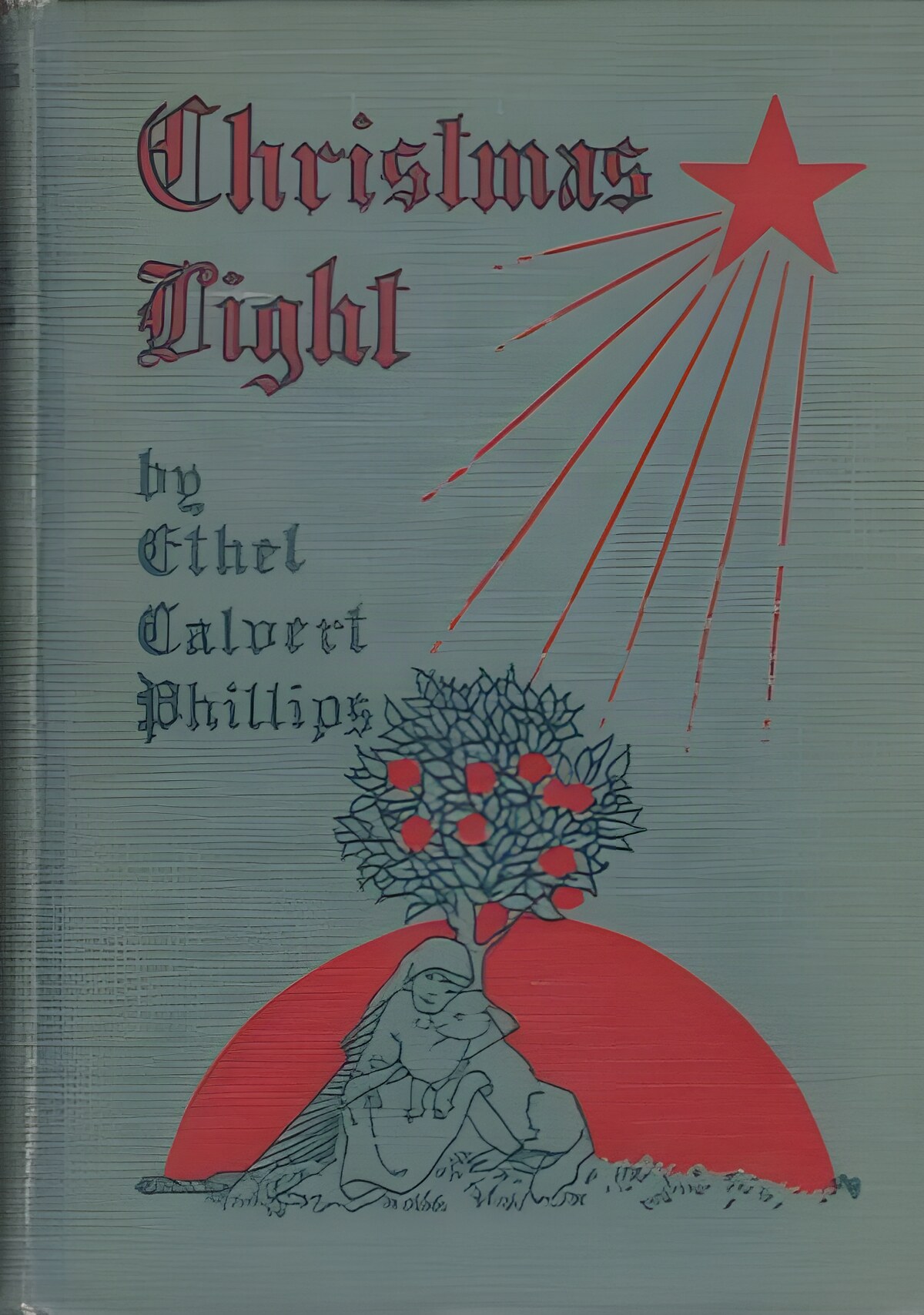
Softcover. Berkeley, University of California Press, 1st pbk, 1987, Book: Very Good, Dust Jacket: None, Softcover, 839 pages. Traces the history of bribery from ancient Egypt to ABSCAM, examines changing perceptions of bribery, and discusses the legal, ethical and religious injunctions against bribes. Clean, bright copy.
Hardcover. Oxford UK, Oxford University Press, 1st, 2015, Book: Very Good, Dust Jacket: Very Good, Hardcover in a bright dust jacket, 286 pages. Sarah Hutton presents a rich historical study of one of the most fertile periods in modern philosophy. It was in the seventeenth century that Britain's first philosophers of international stature and lasting influence emerged. Its most famous names, Hobbes and Locke, rank alongside the greatest names in the European philosophical canon. Bacon too belongs with this constellation of great thinkers, although his status as a philosopher tends to be obscured by his statusas father of modern science. The seventeenth century is normally regarded as the dawn of modernity following the breakdown of the Aristotelian synthesis which had dominated intellectual life since the middle ages. In this period of transformational change, Bacon, Hobbes, Locke are acknowledged tohave contributed significantly to the shape of European philosophy from their own time to the present day. But these figures did not work in isolation. Sarah Hutton places them in their intellectual context, including the social, political and religious conditions in which philosophy was practised. She treats seventeenth-century philosophy as an ongoing like all conversations, some voices will dominate, some will be more persuasive than others and there will be enormous variationsin tone from the polite to polemical, matter-of-fact, intemperate. The conversation model allows voices to be heard which would otherwise be discounted. Hutton shows the importance of figures normally regarded as 'minor' players in philosophy (e.g. Herbert of Cherbury, Cudworth, More, Burthogge,Norris, Toland) as well as others who have been completely overlooked, notably female philosophers. Crucially, instead of emphasizing the break between seventeenth-century philosophy and its past, the conversation model makes it possible to trace continuities between the Renaissance and seventeenth century, across the seventeenth century and into the eighteenth century, while at the same time acknowledging the major changes which occurred.
Hardcover. Philadelphia, David McKay, 1st US, 1929, Book: Very Good, Dust Jacket: Good, Hardcover, 123 pages, 20 tipped-in black & white plates by M. Boutet De Monvel. Dust jacket worn, soiled, chunk gone from front panel.
Hardcover. Philadelphia, David McKay Company, 1st, 1929, Book: Good, Dust Jacket: None, 133 pages, illustrated throughout with tipped in b&w plates by M. Boutet De Monvel. Purple cloth with gilt titles. Sun-fade to covers, light tanning to pages opposite plates, else a clean, tight copy.
Hardcover. New York, Doubleday, 1st, 1961, Book: Very Good, Dust Jacket: Very Good, Hardcover, 95 pages, b&w cartoons by Chon Day. The third collection of Brother Sebastian cartoons which ran in Look Magazine. Dust jacket with light edge wear, price clipped. Clean copy.
Hardcover. New York, Doubleday, 1st, 1959, Book: Very Good, Dust Jacket: Very Good, Hardcover, 95 pages, b&w cartoons by Chon Day. The second collection of Brother Sebastian cartoons which ran in Look Magazine. Dust jacket with light edge wear, price clipped. Previous owner's inscription on front fly leaf.
Hardcover. New York, Hanover House, 1st, 1957, Book: Very Good, Dust Jacket: Very Good, Hardcover, unpaginated, b&w cartoons by Chon Day. The first collection of Brother Sebastian cartoons which ran in Look Magazine. Dust jacket with light edge wear, price clipped. Clean.
Hardcover. Delhi, Motilal, 1st, 1982, Book: Very Good, Dust Jacket: None, Hardcover, blue cloth, gilt lettering on spine, 320 pages. All forms of Buddhism--The Theravada, the Mahayana and the Vajrayana--affirm the perfectability of the person, and one finds this notion of perfection embodied in three images; the arahant, the bodhisattva and the mahasiddha. Reader also finds, in scholarly treatments of Buddhism, much made of the perceived differences among these three `vehicles` (yana). By close textual analysis as well as by extensive field work, Katz criticizes this emphasis on difference and prefers to treat Buddhism as a whole, a position he finds in accord with the teachings of both Buddhists and Buddhist texts. By a close examination of these three images of human perfection, bridges among the Theravada, the Mahayana and the Vajrayana are built and continuities within Buddhism are explored. This comparison involves pioneering discussions of Buddhist philosophy of language and hermeneutics, which are facilitated by Katz`s familiarity with Pali, Sanskrit and Tibetan Buddhist texts as well as his sympathetic involvement with the living Buddhist tradition. Light pencil marking to several pages in the margins. Otherwise clean, no dust jacket.
Hardcover. UK, Oxford University Press, reprint, 2003, Hardcover in pictorial boards, 309 pages. Byzantine philosophy is an almost unexplored field. Being regarded either as mere scholars or as primarily religious thinkers, Byzantine philosophers have not been studied on their own philosophical merit. The eleven contributions in this volume, which cover most periods of Byzantine culture from the 4th to the 15th century, for the first time systematically investigate the attitude the Byzantines took towards the views of ancient philosophers, to uncover the distinctive character of Byzantine thought. Clean, bright copy.
Softcover. Evanston IL, Northwestern University , 1st, 2002, Book: Very Good, Dust Jacket: None, Softcover, 325 pages. Devoted to the most important American Continental philosopher of his generation and one of the discipline's founding fathers, and featuring some of the field's most distinguished luminaries, this anthology constitutes a critical document in Continental philosophy, reflecting its recent history, its present state, and its debt to Calvin Schrag. Taking up themes central to Schrag's own philosophical concerns, these essays refer throughout to his salient "interventions" in the dialogue of late twentieth-century thought characterized as "postmodernity." In doing so, all contributors address, implicitly or directly, the question of philosophy's role and responsibility, or "task." The volume begins with an overview of this task and of Schrag's contributions to it, written from the perspective of a resolute defender of the phenomenological tradition that Schrag's work has extended and reconfigured. Clean copy.
Hardcover. Dublin, Hodges Figgis & Co., 1st, 1908, Book: Good, Dust Jacket: None, 106 pages, 51 plates, 6 in color. Large format, bound in green cloth covers with gilt lettering. Ex-library with usual stamping and residue to end papers, sticker to bottom of spine. Covers show corner wear, top of spine frayed with a one inch tear to cloth at top. Interior of book is clean and tight. Green of cloth spine faded.
Hardcover. Israel/New York, Steimatzky/LeonAmiel, 1st, 1983, Book: Very Good, Dust Jacket: Very Good, Hardcover, 191 pages, 50 color and 40 b&w plates. Includes color lithograph at front of book. Blue cloth covers, gilt lettering on spine, bright dust jacket.
Softcover. Ann Arbor MI, University Microfilms, reprint, 1974, Book: Very Good, Dust Jacket: None, Softcover, 211 pages. Reproduction of a thesis written in 1970 for a PHD at Syracuse University. Previous owner's signature on front fly leaf.
Hardcover. Bristol UK, Thoemmes Press, reprint, 1995, Book: Very Good, Dust Jacket: None, Hardcover, red cloth with gilt lettering on the spine, 375 pages. VOLUME 2 ONLY. A facsimile reprint of the Grant Richards 1900 edition.
Hardcover. Bristol UK, Thoemmes Press, reprint, 1995, Book: Very Good, Dust Jacket: None, Hardcover, red cloth with gilt lettering on the spine, 338 pages. VOLUME 1 ONLY. A facsimile reprint of the 1698 and 1900 editions. Pencil notations to about 40 pages in the treatise dealing with Enthusiasm.
Hardcover. Philadelphia, Presbyterian Board of Publication, 1st, 1890, Book: Very Good, Dust Jacket: None, Hardcover, brown cloth stamped in black and gilt. 4 b&w plates. Covers with edge wear, gilt slightly faded. Library bookplate inside front cover, otherwise clean, no markings.
Softcover. Chico CA, Scholars Press, reprint, 1985, Book: Very Good, Dust Jacket: None, Softcover, 374 pages. A collection of essays first published in 1869. Clean copy.
Hardcover. London, John Bennett, reprint, 1832, Book: Very Good, 366 pages photocopied from the 1832 Seventh Edition, xeroxed two leafs per page with the reverse side blank. Bound in oblong black cloth covers. Volume 1 only (of 2).
Softcover. Cambridge, UK, Cambridge University Press, 1st, 2006, Book: Very Good, Dust Jacket: None, Softcover, 331 pages including index. Who would the Saviour have to be, what would the Saviour have to do to rescue human beings from the meaning-destroying experiences of their lives? This book offers a systematic Christology that is at once biblical and philosophical. Starting with human radical vulnerability to horrors such as permanent pain, sadistic abuse or genocide, it develops what must be true about Christ if He is the horror-defeater who ultimately resolves all the problems affecting the human condition and Divine-human relations. Distinctive elements of Marilyn McCord Adams' study are her defence of the two-natures theory, of Christ as Inner Teacher and a functional partner in human flourishing, and her arguments in favour of literal bodily resurrection (Christ's and ours) and of a strong doctrine of corporeal Eucharistic presence. The book concludes that Christ is the One in Whom, not only Christian doctrine, but cosmos, church, and the human psyche hold together.
Hardcover. Oxford, England, Oxford University Press, 1st, 2010, Book: Very Good, Dust Jacket: Very Good, 328 pages. Hardcover. B/w illustrations throughout. Previous owner's name on front flyleaf. Black cover boards, gilt title on spine. Binding tight. Spine straight. Pages clean, unmarked, bright. Dust jacket unclipped, excellent, glossy. Assesses the comexity and fluidity of Christian identity from the reign of Elizabeth I and the early Stuart kings through the English Revolution, and into the Restoration, which the English Church and monarchy were restored.
Hardcover. London, Routledge/Thoemmes Press, 1st thus, 1995, Book: Very Good, Dust Jacket: None, Hardcover, maroon cloth with gilt lettering on spine. Facsimile reprints of the two works (1696 and 1697). Introduction by John Valdimir Price. Approx, 430 pages, light pencil markings to about 20 pages. Otherwise clean, tight copy.
Hardcover. Boston, Houghton Mifflin, 1st, 1922, Book: Very Good, Dust Jacket: None, Hardcover. 128 pages. Color frontis, black & white illustrations by Louise Roberts. Green cloth covers with red & black decorations, lettering. Light wear to spine bottom edge, corners.


 "British Philosophy in the Seventeenth Century by: Hutton, Sarah")
 "Brother of the Birds - A Little History of Saint Francis of Assisiby: Green, Louisa Meigs")
 "Brother of the Birds: A Little History of Saint Francis of Assisiby: Green/ M. Boutet De Monvel, Louisa Meigs")
 "Brother Sabastian At Largeby: Day, Chon")
 "Brother Sabastian Carries Onby: Day, Chon")
 "Brother Sabastianby: Day, Chon")


![Byzantine Philosophy and Its Ancient Sources by: Ierodiakonou, Katerina [Editor]](https://www.browsingisarousing.com/shop/images/Byzantine-Philosophy-and-Its-Ancient-Sources_by_Ierodiakonou-Katerina-Editor386262-438221.jpg "Byzantine Philosophy and Its Ancient Sources by: Ierodiakonou, Katerina [Editor]")
 "Celtic Illuminative Art: In the Gospel Books of Durrow Lindisfarne and Kellsby: Robinson, Stanford F.H.")
 "Chagall in Jerusalemby: Amiel, Leon")
 "Challenge of Dissent, The: Religious Conditions in New Hampshire in the Early Nineteenth Centuryby: Hudson, Richard Lloyd")

 "Characteristics of Men, Manners, Opinions, Times, Etc. - Vol. 2by: Anthony Earl of Shaftesbury")
 "Characteristics of Men, Manners, Opinions, Times, Etc. - Vol. Iby: Anthony Earl of Shaftesbury")

 "Christ Alone Exalted: In the Perfection and Encouragements of the Saints, Notwithstanding Sins and Trials - Being the Complete Works of Tobias Crisp Containing Fifty-Two Sermons - Volume 1by:")
 "Christ and Horrors: The Coherence of Christology by: Adams, Marilyn McCord")