Softcover. UK, Oxford University Press, reprint, 2006, Book: Very Good, Dust Jacket: None, Softcover, 435 pages. Cicero's Topica is one of the canonical texts on ancient rhetorical theory. This is the first full-scale commentary on this work, and the first critical edition of the work that is informed by a full analysis of its translation. Marcus Tullius Cicero was a Roman philosopher, politician, lawyer, orator, political theorist, consul, and constitutionalist. He came from a wealthy municipal family of the Roman equestrian order, and was one of Rome's greatest orators and prose stylists. Name on front fly leaf otherwise clean.
Hardcover. NY, Octagon Books, reprint, 1971, Book: Very Good, Dust Jacket: None, Hardcover, blue cloth with gilt stamping, 224 pages. First published in 1933. Name on front fly leaf, otherwise bright and clean.
Hardcover. Canada, McGill-Queen's University Press, 1st, 1982, Book: Very Good, Dust Jacket: None, 227 pages. Hardcover. Brown cloth cover boards, black title on spine and front cover. Pages clean and bright. Spine straight. Binding tight. Previous owner's name on front flyleaf. Brown endpapers. This book challenges widespread asumptions about common-sense philosophies and provides a major reassessment of an influential segment of the history of ideas.
Hardcover. Oxford UK, Clarendon Press, 1st, 1935, Book: Very Good, Dust Jacket: None, Hardcover, blue cloth with gilt lettering on spine, 347 pages. Light pencil notes on rear fly leaf, otherwise clean, tight copy. Volume 1 only of a two volume set.
Hardcover. Oxford UK, Clarendon Press, 1st, 1935, Book: Very Good, Dust Jacket: None, Hardcover, blue cloth with gilt lettering on spine, pages 349-708. A clean, tight copy. Volume 2 only of a two volume set.
Softcover. Cambridge MA, Harvard University Press, 4th pr., 2001, Book: Very Good, Dust Jacket: None, Softcover, 656 pages. John Rawls's work on justice has drawn more commentary and aroused wider attention than any other work in moral or political philosophy in the twentieth century. Rawls is the author of two major treatises, A Theory of Justice (1971) and Political Liberalism (1993); it is said that A Theory of Justice revived political philosophy in the English-speaking world. But before and after writing his great treatises Rawls produced a steady stream of essays. Some of these essays articulate views of justice and liberalism distinct from those found in the two books. They are important in and of themselves because of the deep issues about the nature of justice, moral reasoning, and liberalism they raise as well as for the light they shed on the evolution of Rawls's views. Some of the articles tackle issues not addressed in either book. They help identify some of the paths open to liberal theorists of justice and some of the knotty problems which liberal theorists must seek to resolve. A complete collection of John Rawls's essays. Owner's name on front fly leaf otherwise clean.
Hardcover. London, Princeton University Press, 1st, 1981, Book: Very Good, Dust Jacket: Good, Volume 13. 420 pages. Dust jacket spine shows sun-fade, light rubbing and some edgewear. Book itself is in very good condition with only minor foxing to the top edge. Clean, tight copy.
Hardcover. UK, Oxford University Press, 1st, 2013, Book: Very Good, Dust Jacket: Very Good, Hardcover in a bright dust jacket, 280 pages. Adolf Grunbaum is one of the giants of 20th century philosophy of science. This volume is the first of three collecting his most essential and highly influential work. The essays collected in this first volume focus on three related areas. They discuss scientific rationality-the problem of what it takes for a theory to be called scientific, and ask whether it is plausible to draw a clear distinction between science and non-science as was famously proposed by Karl Popper. They delve into the debate between determinism and indeterminism, in both science and in the humanities. Grunbaum defends the position of the Humane Determinist, which then leads to a thorough criticism of the current theological approaches to ethics and morality-where Grunbaum defends an explicit Secular Humanism-as well as of prominent theistic interpretations of twentieth century physical cosmologies. Name, date on front fly leaf otherwise clean.
Hardcover. NY, Architectural Book Pub. Co., 1st, 1931, Book: Very Good, Dust Jacket: None, Hardcover, blue cloth, 291 pages. Measured drawings by William Allen Dunn, Many b&w photos, ex-lib but very clean, tight. stamp on foredge, small envelope on back end paper
Hardcover. Geneva, Labor et Fides, 1st, 1960, Book: Very Good, Dust Jacket: None, Epitre aux Romains. Texte etabli par Jules-Marcel Nicole avec la collaboration de Pierre Marcel et de Michel Reveillaud. Edition nouvelle publiee par la Societe Calviniste de France. Hardcover, gold cloth stamped in gilt, 380 pages. FRENCH TEXT. Name on front fly leaf otherwise clean.
Hardcover. Mansfield MA, The Franciscan Archive , 1st, 2014, Book: Very Good, Dust Jacket: Very Good, Hardcover in a bright dust jacket, 870 pages. Color frontis, ribbon marker, clean bright copy. DUE TO WEIGHT, DOMESTIC SHIPPING ONLY.
Hardcover. London, Oxford University Press, 1st, 1959, Book: Very Good, Dust Jacket: Good, Hardcover in a lightky worn and soiled dust jacket. 228 pages, b&w illustrations including several fold-out charts. Extends the study begun in her earlier 'Rituals Of Kinship Among The Nyakyusa' to include detailed accounts of traditions of origin, cosmology, and moral values. Contents: The Mythological Charter; The 'Divine Kings'; The Ritual of Chieftainship; Sacrifices at the Groves of Chiefs; Land & Power; Cleansing the Country; Rain-making & 'Sprinkling the Homesteads'; Kasitile the Priest; Medicines; Nyakyusa Cosmology; Pagan & Christian; Twenty Years' Change; Religion & Social Structure. Previous owner's signature inside front cover otherwise clean.
Hardcover. University Park, Pennsylvania State University Press, 1st Edition, 2012, Book: Very Good, Dust Jacket: Very Good, 346 pages. Hardcover. Dust jacket with only minor wear. Clean, unmarked and tight copy.
Hardcover. NY, Oxford University Press, 2nd pr., 2003, Book: Very Good, Dust Jacket: Very Good, Hardcover in a bright dust jacket, 493 pages. Truth is one of the most debated topics in philosophy; Wolfgang K?nne presents a comprehensive critical examination of all major theories, from Aristotle to the present day. He argues that it is possible to give a satisfactory 'modest' account of truth without invoking problematic notions like correspondence, fact, or meaning. The clarity of exposition and the wealth of examples will make Conceptions of Truth an invaluable and stimulating guide for advanced students and scholars. Kunne expounds and engages with the ideas of many thinkers, from Aristotle and the Stoics, to Continental analytic philosophers like Bolzano, Brentanoand Kotarbinski, to such leading figures in current debates as Dummett, Putnam, Wright, and Horwich. He explains many important distinctions (between varieties of correspondence, for example, between different conceptions of making true, between various kinds of eternalism and temporalism) which have so far beenneglected in the literature. Kunne argues that it is possible to give a satisfactory 'modest' account of truth without invoking problematic notions like correspondence, fact, or meaning. And he offers a novel argument to support the realist claim that truth outruns justifiability. Clean, bright copy.
Hardcover. New Haven CT, Yale University Press, 1st, 2016, Book: Very Good, Dust Jacket: Very Good, Hardcover in a bright, unclipped dust jacket. 1176 pages. We live in an age of disenchantment. The number of self-professed "atheists" continues to grow. Yet many still feel an intense spiritual longing for a connection to what Aristotle called the "eternal and divine." For those who do, but demand a God that is compatible with their modern ideals, a new theology is required. This is what Anthony Kronman offers here, in a book that leads its readers away from the inscrutable Creator of the Abrahamic religions toward a God whose inexhaustible and everlasting presence is that of the world itself. Kronman defends an ancient conception of God, deepened and transformed by Christian belief--the born-again paganism on which modern science, art, and politics all vitally depend. Brilliantly surveying centuries of Western thought--from Plato to Augustine, Aquinas, and Kant, from Spinoza to Nietzsche, Darwin, and Freud--Kronman recovers and reclaims the God we need today. Clean copy.
Hardcover. New York, Abaris Books, 1st Thus, 1979, Book: Very Good, Dust Jacket: None, 221 pages. Hardcover. Previous owner's signature on front endpaper. Text in German and English. Translation by Mary J. Gregor. No dust jacket. Light foxing to top edge. Otherwise, tight clean copy.
Hardcover. Oxford UK, Oxford University Press , 1st, 2016, Book: Very Good, Dust Jacket: Very Good, Hardcover in a bright dust jacket, 240 pages. Shelley Weinberg argues that the idea of consciousness as a form of non-evaluative self-awareness runs through and helps to solve some of the thorniest issues in Locke's philosophy: in his philosophical psychology and in his theories of knowledge, personal identity, and moral agency. Central to her account is that perceptions of ideas are complex mental states wherein consciousness is a constituent. Such an interpretation answers charges of inconsistency in Locke's model of the mind and lends coherence to a puzzling aspect of Locke's theory of knowledge: how we know individual things (particular ideas, ourselves, and external objects) when knowledge is defined as the perception of an agreement, or relation, of ideas. In each case, consciousness helps to forge the relation, resulting in a structurally integrated account of our knowledge of particulars fully consistent with the general definition. This model also explains how we achieve the unity of consciousness with past and future selves necessary for Locke's accounts of moral responsibility and moral motivation. And with help from other of his metaphysical commitments, consciousness so interpreted allows Locke's theory of personal identity to resist well-known accusations of circularity, failure of transitivity, and insufficiency for his theological and moral concerns. Although virtually every Locke scholar writes on at least some of these topics, the model of consciousness set forth here provides for an analysis all of these issues as bound together by a common thread. Clean copy.
Softcover. Los Angeles, Augustan Reprint Society, reprint, 1990, Book: Very Good, Dust Jacket: None, Softcover, 23 and 27 pages, introduction by Claudis Johnson. Facsimile reprints of two pamphlets written to benefit priests who were expelled by the revolutionary French Government. Both authors championed causes to relieve their plight. Clean copy.
Hardcover. Bristol UK, Thoemmes Press, reprint, 1997, Book: Very Good, Dust Jacket: None, Hardcover, red cloth with gilt lettering on spine, 535 pages. A facsimile reprint of the 1820 Edition. Clean copy.
Hardcover. Princeton NJ, Princeton University Press, 1st, 1988, Book: Very Good, Dust Jacket: Very Good, Hardcover in a bright dust jacket, 250 pages. This book examines the "constitutional faith" that has, since 1788, been a central component of American "civil religion." By taking seriously the parallel between wholehearted acceptance of the Constitution and religious faith, Sanford Levinson opens up a host of intriguing questions about what it means to be American. While some view the Constitution as the central component of an American religion that serves to unite the social order, Levinson maintains that its sacred role can result in conflict, fragmentation, and even war. To Levinson, the Constitution's value lies in the realm of the discourse it sustains: a uniquely American form of political rhetoric that allows citizens to grapple with every important public issue imaginable. Clean copy.
Hardcover. Albany NY, State University of New York Press, 1st, 2004, Book: Very Good, Dust Jacket: None, Hardcover in glossy boards, 95 pages. Clean copy.
Softcover. Ann Arbor, University of Michigan Press, reprint, 1995, Book: Very Good, Dust Jacket: None, Softcover, 204 pages. Translated by Roxanne Lapidus. Clean, bright copy. Although elected to the prestigious French Academy in 1990, Michel Serres has long been considered a maverick--a provocative thinker whose prolific writings on culture, science and philosophy have often baffled more than they have enlightened. In these five lively interviews with sociologist Bruno Latour, this increasingly important cultural figure sheds light on the ideas that inspire his highly original, challenging, and transdisciplinary essays. Clean copy.
Hardcover. NY, Oxford University Press, 1st, 1994, Book: Very Good, Dust Jacket: Very Good, Hardcover in a bright dust jacket, 206 pages. Marian David defends the correspondence theory of truth against the disquotational theory of truth, its current major rival. The correspondence theory asserts that truth is a philosophically rich and profound notion in need of serious explanation. Disquotationalists offer a radically deflationary account inspired by Tarski and propagated by Quine and others. They reject the correspondence theory, insist truth is anemic, and advance an "anti-theory" of truth that is essentially a collection of platitudes: "Snow is white" is true if and only if snow is white; "Grass is green" is true if and only if grass is green. According to disquotationalists the only profound insight about truth is that it lacks profundity. David contrasts the correspondence theory with disquotationalism and then develops the latter position in rich detail--more than has been available in previous literature--to show its faults. He demonstrates that disquotationalism is not a tenable theory of truth, as it has too many absurd consequences.
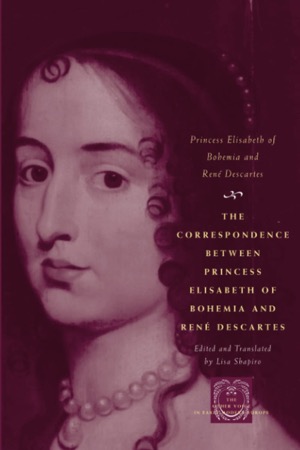
Softcover. Chicago, University of Chicago Press, 2nd pr., 2007, Book: Very Good, Dust Jacket: None, Softcover, 246 pages. Between the years 1643 and 1649, Princess Elisabeth of Bohemia (1618-80) and Rene Descartes (1596-1650) exchanged fifty-eight letters--thirty-two from Descartes and twenty-six from Elisabeth. Their correspondence contains the only known extant philosophical writings by Elisabeth, revealing her mastery of metaphysics, analytic geometry, and moral philosophy, as well as her keen interest in natural philosophy. The letters are essential reading for anyone interested in Descartes's philosophy, in particular his account of the human being as a union of mind and body, as well as his ethics. They also provide a unique insight into the character of their authors and the way ideas develop through intellectual collaboration.


 "Classic Deities in Bacon: A Study in Mythological Symbolism by: Lemmi, Charles")


 "Collected Essays (Volume 1) by: Bradley, F. H.")


 "Collected Works of Samuel Taylor Coleridge, Volume 13 : Logicby: Jackson, James Robert de Jager (Editor)")
 "Colonial Churches and Meeting Houses/ Pennsylvania, New Jersey and Delawareby: Wallace, Philip B.")
 "Commentaries on the First Book of Sentences: Book 1 - On the One & Triune Godby: St, Bonadventure of Bagnoregio")

 "Companion to Michael Oakeshott, Aby: Oakeshott, Michael/Paul Franco & Leslie Marsh")

 "Confessions of a Born-Again Paganby: Anthony T. Kronman")
 "Conflict of the Faculties - Der Streit der Fakultaten, The by: Kant, Immanuel")

 "Constitutional Faithby: Levinson, Sanford")
 "Conversations on Science, Culture, and Timeby: Serres, Michel with Latour, Bruno")