Hardcover. College Station, Texas A&M University , 1st, 1994, Book: Very Good, Dust Jacket: Very Good, Hardcover in a bright dust jacket, 318 pages. In their own vivid words, the women members of the Soviet air force recount their dramatic efforts against the German forces in World War II. These brave women, the first ever to fly in combat, proved that women could be among the best of warriors, withstanding the rigors of combat and downing the enemy. B&w illustrations. Clean copy.
Softcover. NY, Farrar, Straus and Giroux, reprint, 1986, Book: Very Good, Dust Jacket: None, Softcover, 192 pages. Roman Vishniac's A Vanished World is an extraordinary record of the lives of German and Eastern European Jews in the years immediately preceding the Holocaust. Vishniac, a Russian Jew, began to take photographs of village life during World War I, when Russian Jews who lived near the front were accused of being German spies and were deported to Siberia. He later moved to Germany, where he witnessed the horrible events of Kristallnacht and the anti-Jewish legislation that allowed Hitler to declare his enemies stateless and therefore unworthy of international protection. As we study Vishniac's photographs--a surviving fraction of the more than 16,000 he took--we are aware that we are seeing the faces of those soon to die, witnessing a world that has all but perished. Yet that world, of shops and schools, of busy streets and quiet farms, remains with us if only as a ghostly memory, thanks in part to Vishniac's compassionate eye.
Hardcover. NY, Oxford University Press, 1st, 2004, Book: Very Good, Dust Jacket: Very Good, Hardcover in a bright dust jacket, 297 pages, 15 b&w photo illustrations. For decades, a great number of Americans saw Alger Hiss as an innocent victim of McCarthyism~a distinguished diplomat railroaded by an ambitious Richard Nixon. And even as the case against Hiss grew over time, his dignified demeanor helped create an aura of innocence that outshone the facts in many minds. Now G. Edward White deftly draws together the countless details of Hiss's life~from his upper middle~class childhood in Baltimore and his brilliant success at Harvard to his later career as a self~made martyr to McCarthyism~to paint a fascinating portrait of a man whose. life was devoted to perpetuating a lie. Clean copy.
Atgen PA, Schiffer, 1st, 2017, Book: Very Good, Dust Jacket: Very Good, Hardcover in a bright dust jacket. 144 pages illustrated in color and b&w. In 1942, Ed Vebell landed with the US Army in North Africa and was recruited by Stars & Stripes, the US armed forces newspaper, as their official staff artist. Daily, he drew illustrations and reported on the progress of World War II throughout Europe. This book offers a selection of his sketches, drawings, paintings, and photographs from that time, and presents one artist's view of the war from North Africa, through the campaigns in Italy, France, and Germany. After the war, the author spent two weeks with the Russians in Berlin, and was then assigned as the courtroom artist during the Nuremberg War Crimes Trials. Along the way are Ed's reminiscences about such personalities as famed war correspondent and artist Bill Mauldin, singers Josephine Baker and Edith Piaf, Charles de Gaulle, Gen. Teddy Roosevelt Jr., and many others. Ed also reminisces about his two years photographing backstage at the Folies Bergere in Paris, as well as his time as an Olympic fencer. Clean copy.
Softcover. NY, Aperture Foundation, 2003, Book: Very Good, Dust Jacket: None, Softcover, 80 pages. A large, beautifully designed photography publication with many full page photographs in black and white and color. Glossy wraps. Don McCullin on Aids in Africa / Japanese Photography in Houston / Baryshnikov on the Light Fantastic / Cold War Relics / John Coffer's Tintypes / Russian Pictorialism
Hardcover. London, The Bodley Head, 1st, 1972, Book: Very Good, Dust Jacket: Very Good, Hardcover, 645 pages, fold-out map in rear, translated by Michael Glenny. The work tells about the beginning of the First World War and the unsuccessful offensive of the Russian army in East Prussia. The author uses the methods of documentary narration within the framework of a work of fiction and describes not only the military campaign, but also the experience of people caught in the middle of events. Red top edge. Edge wear, small pieces missing from dust jacket; in brodart. Else a clean, tight copy.
Hardcover. Stanford CA, Stanford University Press, 1st, 2006, Book: Very Good, Dust Jacket: Very Good, Hardcover in a bright, unclipped dust jacket, 559 pages. "Behind the Bamboo Curtain is an important collection of essays on Sino-Vietnamese relations during the Cold War An excellent contribution from a Vietnamese historian and well-documented chapters on Soviet and French policy further augment the importance of the volume. The contributors make extensive use of primary documents from the United States, the People's Republic of China, Vietnam, and Russia and offer authoritative analyses." -- The Journal of Cold War Studies. Claen, unread copy.
Softcover. London, Greenhill Books, 1st, 2022, Book: Very Good, Dust Jacket: None, Softcover, 159 pages. More than 200 images, together with the original German captions and English translations, portray the life and times of a career officer, from the German annexation of the Sudetenland in 1938, to operations in Russia, Greece and the Balkans during 1941-44. In comparison with other units of the Second World War, relatively little has been published about Germany's commando forces. This unique collection of rare images was sourced from the photograph album of Wilhelm Walther.
Hardcover. New Haven CT, Yale University Press, 1st, 1998, Book: Very Good, Dust Jacket: Very Good, Hardcover in a bright dust jacket, 436 pages, b&w illustrations. The humiliation of Russia by separatist rebels in the Chechen War marked a key moment in Russian - and perhaps world - history. In this new analysis Anatol Lieven offers a riveting account of the war as a means to explore the painful fate of the post-Soviet state. Lieven looks into the long, troubled history of Russian-Chechen relations, noting that each side despised the other for largely cultural reasons (the Chechens have long been involved in organized crime in major Russian cities, whereas Russians have long tried to strip Chechnya of its resources). He notes that Chechen society has historically been militarized (one Armenian said to Lieven, "The men are always fighting and the women are cooking for them, nursing their wounds, and bringing up their children"), making the mountain people a formidable foe. In the meanwhile, writes Lieven, the Russian military suffered from low morale and from corruption of various kinds: Russian field soldiers sold their guns to Chechen guerrillas for vodka and currency, while Russian officers stole their soldiers' pay and Russian politicians skimmed off the top. This is an extraordinary look at a little-known conflict. Clean copy.
New York, Van Nostrand Reinhold, 1st, 1981, Book: Very Good, Dust Jacket: Very Good, Hardcover in a bright dust jacket, 196 pages. Black & white photography. Reveals the war with Russia, the first war to be extensively recorded by photography. Here are 85 photos and commentary. Many of the photos were taken by two Englishmen, Roger Fenton and William Robertson.
Softcover. Oxford UK, Museum of Modern Art , 1982, Book: Very Good, Dust Jacket: None, 88 pages, b/w illustrations, very good paperback (exhibition catalogue). The essay is: Soviet photography between the wars. The photographers are: Max Alpert; Dimitr Dyebabov; Semyon Fridlyand; Boris Ignatovich; Yelizaveta Ignatovich; Georgi Lipskerov; Moisei Nappelbaum; Georgi Petrusov; Alexander Rodchenko; Galina Sanyko; Arkadi Shaikhet; Shaikhet/Alpert/Tules; Abram Shterenberg; Georgi Zelma.
Hardcover. NY, Houghton Mifflin Harcourt, 1st, 2018, Book: Very Good, Dust Jacket: Very Good, Hardcover in a bright, unclipped dust jacket. In 2008, when Michael McFaul was asked to leave his perch at Stanford and join an unlikely presidential campaign, he had no idea that he would find himself at the beating heart of one of today's most contentious and consequential international relationships As President Barack Obama's adviser on Russian affairs, McFaul helped craft the United States' policy known as "reset" that fostered new and unprecedented collaboration between the two countries And then, as US ambassador to Russia from 2012 to 2014, he had a front-row seat when this fleeting, hopeful moment crumbled with Vladimir Putin's return to the presidency This riveting inside account combines history and memoir to tell the full story of US-Russia relations from the fall of the Soviet Union to the new rise of the hostile, paranoid Russian president From the first days of McFaul's ambassadorship, the Kremlin actively sought to discredit and undermine him, hassling him with tactics that included dispatching protesters to his front gates, slandering him on state media, and tightly surveilling him, his staff, and his family. 506 pages, illustrations, clean copy.
Hardcover. London, Jonathan Cape, 1st, 2006, Book: Very Good, Dust Jacket: Very Good, Hardcover, 198 pages, like new in a bright dust jacket. SIGNED BY AMIS on title page. With The House of Meetings, Martin Amis may finally have written the novel his critics thought would never come. By taming his signature (and polarizing) stylistic high-wire act, Amis has crafted a sober tale of love and cynicism against the grim curtain of Stalin's Russia. The book's anonymous narrator--a Red Army veteran and unapologetic war criminal--and his passive, poetic half-brother, Lev, become pinned in a politically dangerous love triangle with the exotic Zoya, though their tactics (and intentions) are as divergent as their personalities. Swept up in the wave of Stalin's paranoid purges, the brothers are sent independently to Norlag, a Siberian internment camp where their respective fates are cast through their contrasting reactions to the depravity of the prison. Zoya and Lev share a night in "The House of Meetings," a room provided for conjugal visits with the prisoners, and the events of that night reverberate through the decades, the details of the liaison remaining concealed until the story's devastating denouement.
Hardcover. NY, Penguin Press, 1st, 2023, Book: Very Good, Dust Jacket: Very Good, Hardcover in a bright, unclipped dust jacket. Elena Kostyuchenko's unrelenting attempt to document her country as experienced by those whom it systematically and brutally erases: village girls recruited into sex work, queer people in the outer provinces, patients and doctors at a Ukrainian maternity ward, and reporters like herself. Here is Russia as it is, not as we imagine it. The result is a singular portrait of a nation, and of a young woman who refuses to be silenced. In March 2022, as a correspondent for Russia's last free press, Novaya Gazeta, Kostyuchenko crossed the border into Ukraine to cover the war. It was her mission to ensure that Russians witnessed the horrors Putin was committing in their name. She filed her pieces knowing that should she return home, she would likely be prosecuted and sentenced to up to fifteen years in prison. Yet, driven by the conviction that the greatest form of love and patriotism is criticism, she continues to write. I Love Russia stitches together reportage from the past fifteen years with personal essays, assembling a kaleidoscopic narrative that Kostyuchenko understands may be the last work from her homeland that shell publish for a long time, perhaps ever. It exposes the inner workings of an entire nation as it descends into fascism and, inevitably, war. She writes because the threat of Putin's Russia extends beyond herself, beyond Crimea, and beyond Ukraine. Clean copy.
Hardcover. The New Press, 1st, 2012, Book: Very Good, Dust Jacket: Very Good, Hardcover, 448 pages. Viktor Koretsky (1909-1998) was a leading Soviet artist and the acknowledged master of the Soviet photographic poster. With a long and prolific career that spanned the early Stalin era through to the onset of Glasnost, Koretsky produced some of the most memorable images of World War II and the Cold War from the point of view of the USSR. The first comprehensive catalogue of Koretsky's work in any language, this stunning and richly illustrated album provides an essential introduction to the major examples of Koretsky's artistic output, including posters, original designs, and other political graphics. An introductory essay by noted art historian Erika Wolf provides a fascinating general overview of the Soviet political poster, situating Koretsky's work historically, politically, and artistically. The core of the volume is a series of two hundred full-color plates, each accompanied by a concise commentary that clarifies its significance; arranged chronologically, these works of political propaganda art brilliantly record the shifting political and artistic circumstances of the distinctive eras of their production&mdas;the first Five-Year Plan, World War II, Postwar Stalinism, the Thaw, the Brezhnev era, and the twilight of Soviet authoritarian culture. Richly annotated with related primary source quotations, a chronology, and a glossary of Soviet culture, Koretsky is a groundbreaking contribution to our understanding of this influential and little-understood artist.
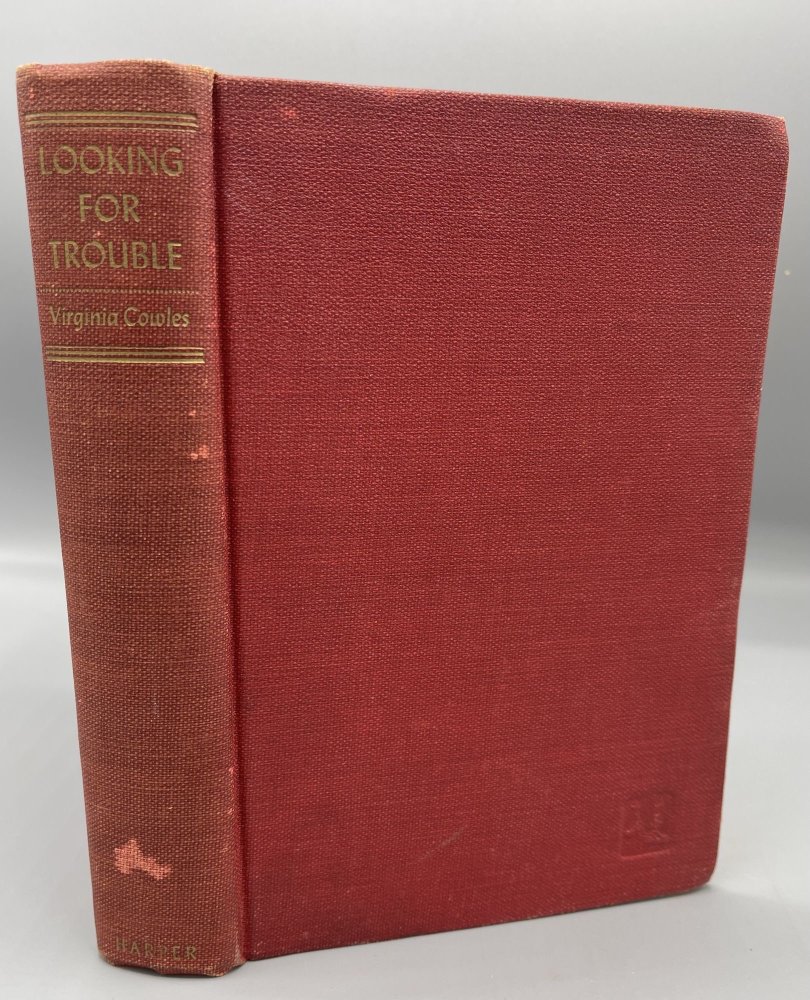
Hardcover. NY, Harper & Brothers, 3rd Ed., 1941, Book: Very Good, Dust Jacket: None, Hardcover, red cloth with gilt lettering on the spine, 447 pages. Memoir of life on wartime Europe's frontline by a trailblazing female reporter. Virginia Cowles was just twenty-seven years old when she decided to transform herself from a society columnist into a foreign press correspondent. Looking for Trouble is the story of this evolution, as Cowles reports from both sides of the Spanish Civil War, London on the first day of the Blitz, Nazi-run Munich, and Finlands bitter, bloody resistance to the Russian invasion. Along the way, Cowles also meets Adolf Hitler (an inconspicuous little man), Benito Mussolini, Winston Churchill, Martha Gellhorn, and Ernest Hemingway. Her reportage blends sharp political analysis with a gossip columnists chatty approachability and a novelists empathy. Cowles understood in 1937 long before even the average politician that Fascism in Europe was a threat to democracy everywhere. Her insights on extremism are as piercing and relevant today as they were eighty years ago. Clean, bright copy, no dust jacket.
Hardcover. NY, Vertigo/DC Comics, 1st, 2009, Book: Very Good, Dust Jacket: Very Good, Hardcover in a bright dust jacket. Graphic novel, 158 pages, art by Danijel Zezelj. Alik is a former Soviet soldier who has relocated to Coney Island only to become a gangland enforcer. He's haunted by memories of his past, and the only thing that soothes his angst is booze, heroin and his lover, the prostitute Marina. But as much as Alik encourages her to break away from the ganglord who owns her, Marina can't because of her daughter, who never leads the ganglord's side. So Alik comes up with a desperate plan to save all three of them, and in doing so, he'll find he's destined to repeat the past over and over again, including a past or two he might not even be aware he has, in a story that flashes from present- day run down Coney Island to the Russia of 10 years ago during the Second Chechen War to turn of the 20th century Coney Island, when the area was at its peak amusement park glory and wonder.
Hardcover. London, Chris Boot, 1st, 2009, Book: Very Good, Dust Jacket: None, Hardcover, 252 pages. In this volume, ten Magnum photographers turn their lenses on contemporary Georgia. Situated on the cusp of Russia and Asia, but with a European culture dating back to the 7th century BC, Georgia was forcibly incorporated into the Soviet Union in 1922. Its independence was restored in 1991, but it then suffered from civil war and a breakdown of its economic infrastructure. In the last decade, however, despite ongoing tensions in its relations with Russia, Georgia has mounted a spirited comeback. Magnum photographers Antoine d'Agata, Jonas Bendiksen, Thomas Dworzak, Martine Franck, Alex Majoli, Gueorgui Pinkhassov, Martin Parr, Paolo Pellegrin, Mark Power and Alec Soth visited the country during spring 2009, each pursuing their own theme (Alec Soth goes in search of the 'most beautiful woman in Georgia', for example). All found themselves enchanted by the Georgian people, something strongly conveyed in their photographs as well as in personal text journals which accompany the images. This well-designed volume also includes a fold-out map, marked with each photographer's journey; a chapter showing the best of Magnum photographers' work over 60 years (including by Magnum's founders Robert Capa from his visit to Georgia with John Steinbeck in 1948 and Henri Cartier-Bresson); and an illuminating introduction by the Paris-based New Yorker writer, and Georgia expert, Wendell Steavenson.
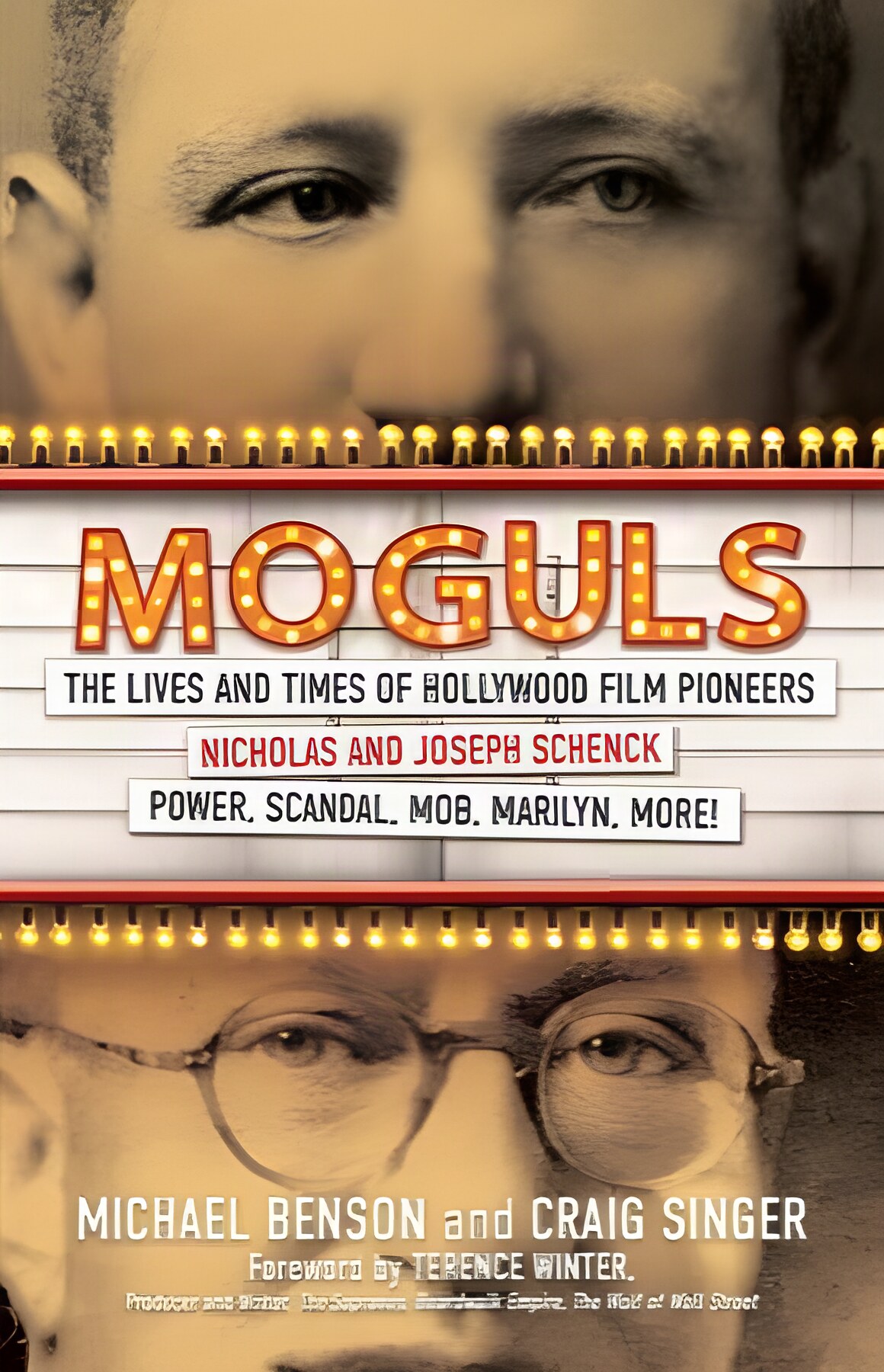
Hardcover. NY, Citadel Press, 1st, 2024, Book: Very Good, Dust Jacket: Very Good, Hardcover in a bright dust jacket, 294 pages, b&w illustrations. They were the Godfathers of the Movies. Groundbreaking pioneers of the Hollywood Dream Factory, Joseph and Nicholas Schenck may not have been household names like the Warner brothers or Louis B. Mayer, but they were infinitely more powerful, influential--and ruthless. A pair of Russian immigrants with giant ambitions, the Schencks turned their small nickelodeon business in New York's Bowery into a partnership with Loew's movie theaters and a controlling interest in three major studios: MGM, Twentieth Century-Fox, and United Artists. They painted the silver screen silver, laid the foundations for the all-powerful studio system, and ruled a global movie empire from their Gatsby-sized mansions on the East and West Coasts. Clean copy.
Hardcover. NY, Viking, 1st, 2004, Book: Very Good, Dust Jacket: Very Good, Hardcover, 320 pages, b&w photos, in a bright dust jacket. The true, little-known story of a family torn apart by revolution and war. Olga Chekhova, a stunning Russian beauty, was the niece of playwright Anton Chekhov and a famous Nazi-era film actress who was closely associated with Hitler.
Softcover. Washington DC, National Geographic Society, 1st, 1917, Book: Very Good, Dust Jacket: None, Original magazines January - June 1917, in a maroon pebbled hardcover binding. Magazines are dated and paged, with photographs and maps, but do not have covers, advertisements, etc. Several pages of color plates. Light chipping to spine labels otherwise a bright, clean volume. The half year dominated by America's entrance into World War I. Articles by Newton D. Baker, Secretary of War, America's Duty; Stand by the Soldier, by General John J. Pershing; President Wilson's Proclamation; Bind the Wounds of France, by Herbert Hoover; articles by the ambassadors of Britain and France; Russian Situation and its Significance to America and Russia's Democrats; War, Patriotism, and the Food Supply.
Hardcover. London, Fuel, 1st, 2007, Book: Very Good, Dust Jacket: Very Good, Hardcover. 192 pages. Plutser-Sarno has been collecting Russian street messages, usually hand-written and posted on walls, for two decades; this book is a sampling from his Museuam of Ads and Announcements. The notes are of a great variety: seeking recruits for cults or prostitution, offering items, some of them bizzare ones, for barter, warning miscreants of dire harm should they, for example, continue to steal light bulbs from a common corridor, prohibiting--predictably--a wide range of activities, and occasionally pleading in tones of insanity. Many of the messages are shown in illustrations, and Pluter-Sarno offers brief comments, sometimes necessary ones: Without them I shouldn't have known, for example, that 'artificial rock' was a euphemism for a concrete slab. (I'm sorry though that he didn't explain what curious Slavic behaviors created the need for notices in public lavoratories asking users to abstain from standing on toilet bowls.) Given the range of notes here, it's possible for the reader to get a hint of Soviet and post-Soviet customs and beliefs, the daily struggling with poverty and paucity, and the impact of the political upon the individual. Because Fuel, the publisher, is a design company it's small wonder that as an object this is a wonderful book. It's a small hardback with a cover done in relief, and sewn in signatures. The outer 2/3 of the pages are a kraft-paper brown and the inner 1/3, with colour illustrations, a cream color.


 "A Vanished World by: Roman Vishniac (Author, Photographer), Elie Wiesel (Foreword)")
 "Alger Hiss's Looking-Glass Wars: The Covert Life of a Soviet Spy by: White, G. Edward")

 "Aperture 170: (Aperture Magazine)by: Aperture Foundation Inc. Staff")
 "Behind the Bamboo Curtain: China, Vietnam, and the World beyond Asia (Cold War International History Project)by: Priscilla Roberts (Ed.)")
 "British Documents on Foreign Affairs: Reports and Papers from the Foreign Office Confidential Print - Part 1 - From the Mid-Nineteenth Century to the First World War - Series A - Russia, 1859-1914 - Volume 4 - Russia, 1906-1907")
 "Chechnya: Tombstone of Russian Powerby: Anatol Lieven")
 "Crimea - The War With Russia from Contemporary Photographs 1854-56by: James, Lawrence")
 "Early Soviet Photographersby: Mrazkova, Daniela and Vladimir Remes, John Hoole ed.")

 "House of Meetings (SIGNED COPY)by: Amis, Martin")

 "Luna Park by: Kevin Baker/ Danijel Zezelj Illustrator")
 "Magnum Photos: Georgian Spring-A Magnum Journalby: Wendell Steavenson")
 "Mystery of Olga Chekhova, Theby: Beevor, Antony")
 "National Geographic Magazine - Vol. XXXI January - June 1917 (Six Issues)by: National Geographic Society")
 "Notes From Russiaby: Alexei Plutser-Sarno")