Hardcover. NY, Holiday House, rep., 1935, Book: Good, Dust Jacket: None, Hardcover. End paper map, color illustrations by Cyrus Leroy Baldridge, pictorial boards with light edgewear & chip (about 1/2") to top of spine.
Softcover. Camarillo CA, About Comics, 1st, 2021, Softcover, 154 pages, b&w cartoons. "Negro America's Favorite Cartoonist" That's what Langston Hughes called Ollie Harrington, whose cartoons and comic strips were a staple of America's Black newspapers for decades starting in the 1930s. In his single-panel series "Dark Laughter," Harrington brought out the vibrancy of Harlem life in its day, while serving some cutting looks at the politics of the time. At the heart of "Dark Laughter" is Bootsie, a cunning, conning, girl-chasing ne'er-do-well who is nonetheless beloved in his Harlem community... if often reluctantly. Bootsie is both the victim of the world's troubles and a frequent cause of them for others. Here's a collection of prime cartoons from the mid-1950s, drawn with the detailed joy that only Ol Harrington (who also worked as Oliver W. Harrington) could bring, finally available to a larger audience.
Hardcover. Lincoln NE, University of Nebraska Press, 1st, 2007, Book: Very Good, Dust Jacket: Very Good, Hardcover in a bright, unclipped dust jacket. 683 pages, b&w illustrations. He was not much of a player and not much more of a manager, but by the time Branch Rickey (1881-1965) finished with baseball, he had revolutionized the sport--not just once but three times. In this definitive biography of Rickey--the man sportswriters dubbed "The Brain," "The Mahatma," and, on occasion, "El Cheapo"--Lee Lowenfish tells the full and colorful story of a life that forever changed the face of America's game. As the mastermind behind the Saint Louis Cardinals from 1917 to 1942, Rickey created the farm system, which allowed small-market clubs to compete with the rich and powerful. Under his direction in the 1940s, the Brooklyn Dodgers became truly the first "America's team." By signing Jackie Robinson and other black players, he single-handedly thrust baseball into the forefront of the civil rights movement. Lowenfish evokes the peculiarly American complex of God, family, and baseball that informed Rickey's actions and his accomplishments. His book offers an intriguing, richly detailed portrait of a man whose life is itself a crucial chapter in the history of American business, sport, and society.
Hardcover. NY, Thames & Hudson, 2013, Book: Very Good, Dust Jacket: Very Good, Hardcover, 176 pages. Few photographers have spanned the genres from photojournalism to true artistic endeavor as completely as Bill Brandt. Yet Brandt's journalism was never strictly reportage; all his work reflected a clear artistic purpose. His qualities as an artist were never better expressed than in his series of nudes, photographed in the studio and on location over a period of thirty-five years. He published that work in two justly famous books: Perspective of Nudes (1961) and Bill Brandt Nudes (1980). Now the oeuvre has been brought together in a single volume in Brandt Nudes. This book reflects Brandt's original selection and organization of the images. Each of the sections is introduced with a succinct and revealing essay on the work by Mark Haworth-Booth. 142 duotone illustrations
Hardcover. NY, Farrar Straus Giroux, 1st, 1988, Book: Very Good, Dust Jacket: Very Good, Hardcover in a bright, unclipped dust jacket. Color illustrations by Egielski. Very nice, clean condition. Wittily sending up the "child prodigy'' (if not biography, history, and high seriousness itself), Yorinks and Egielski trace the course of Minski's genius. A child of the 18th Century, Minski prankishly ``discovers'' gravity and electricity, soon followed by his serene introduction of the telephone, airplane, automobile, aspirin, light bulb, etc. Leonardo da Vinci appears in 18th-Century Vienna to applaud Minski's ``noodle.'' But when Minski hears the (historical) Farinelli sing, he labors feverishly on a formula to transform himself from scientist to artist, and achieves a triumphant apotheosis as ``unequaled singer.'' Egielski's exuberantly detailed, warmly colored pictures make the most of the anachronisms, the caricatures, and the Old World setting.
Hardcover. Gottingen, Steidl, 1st, 2015, Book: Very Good, Dust Jacket: Very Good, Hardcover with dust jacket. Like new in publisher's shrink-wrap. This volume presents Bruce Davidson's personal selections from his lesser-known color archive, from a period of nearly 60 years. Assignments from various magazines including Vogue, National Geographic and Life, as well as commercial projects led Davidson to photograph subjects as diverse as fashion (in the early 1960s), the Shah of Iran with his family (1964), keepers of French monuments (1988), the supermodel Kylie Bax (1997) and college cheerleaders (1989). He photographed in India and China, but also at home in New York, in Chicago and along the Pacific Coast Highway. In 1968, Michelangelo Antonioni invited Davidson to document the making of his film Zabriskie Point. Davidson also continued to pursue personal projects, such as photographing the Yiddish writer and Nobel Prize laureate Isaac Bashevis Singer (1972-75), the New York City subway (1980) and Katz's Delicatessen (2004). Often staying on in a country after an official assignment, Davidson documented Welsh coalfields, family holidays in Martha's Vineyard and travelled through Patagonia and Mexico.
Hardcover. NY, Russell Sage Foundation, 1st, 1994, Book: Very Good, Dust Jacket: Very Good, Hardcover, 400 pages, b&w illustrations. Little over a century ago, New York and Budapest were both flourishing cities engaging in spectacular modernization. By 1930, New York had emerged as an innovating cosmopolitan metropolis, while Budapest languished under the conditions that would foster fascism. Budapest and New York explores the increasingly divergent trajectories of these once-similar cities through the perspectives of both Hungarian and American experts in the fields of political, cultural, social and art history. Their original essays illuminate key aspects of urban life that most reveal the turn-of-the-century evolution of New York and Budapest: democratic participation, use of public space, neighborhood ethnicity, and culture high and low. What comes across most strikingly in these essays is New York's cultivation of social and political pluralism, a trend not found in Budapest. Nationalist ideology exerted tremendous pressure on Budapest's ethnic groups to assimilate to a single Hungarian language and culture. In contrast, New York's ethnic diversity was transmitted through a mass culture that celebrated ethnicity while muting distinct ethnic traditions, making them accessible to a national audience. Mild fade to spine of dust jacket, otherwise clean.
Hardcover. Scotland, Kiscadale Pub, 1st, 1995, Book: Very Good, Dust Jacket: Very Good, 104 pages. Hardcover with dust jacket. Clean, unmarked copy with only minor wear to dust jacket. Color and black and white pictures throughout. A well illustrated account of the author's collection of early photographs and post cards depicting Burma.
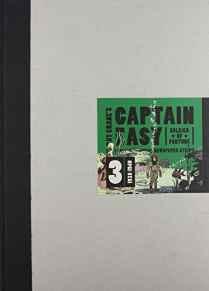
Hardcover. Seattle, Fantagraphics, 1st, 2012, Book: Very Good, Dust Jacket: None, 144 pages. Hardcover with no dust jacket. Clean, unmarked copy with only minor wear to covers. The third volume in Fantagraphics' ongoing reprint of Roy Crane's legendary comedy-action series features what many consider the absolute peak of the series: "Temple of the Swinks," in which Wash and Easy discover an ancient temple with statues of an unknown animal called a swink... a real-life specimen of which shows up! In other stories, Wash and Easy sail for Singapore with a cargo of wild animals, crash land a plane on an island inhabited by (inevitably) pirates and (just as inevitably) beautiful women, and sail the South Seas in a schooner whose villainous captain plans to rob them. When they return to America, Wash Tubbs' pet swink draws huge crowds and a reputation for being worth a million dollars. Then Wash and Easy travel to Peru to rescue an American lost in the jungle and, in the cover-featured story, Easy goes deep sea diving in search of a beautiful girl's lost diamond.
Hardcover. NY, Billboard Books, 1st, 2001, Book: Very Good, Dust Jacket: Very Good, Hardcover in a bright dust jacket, 154 pages, b&w illustrations. Carmen McRae is well known as one of jazz music's most masterful improvisers, and is ranked among the greatest jazz singers of all time. She grew up during the swing era in Harlem, and participated in the transition from swing to bebop--the New Thing--playing with all the important musicians and in all the major clubs. Her struggle to fame was long and hard, finally paying off when she was thirty-four years old and began to perform with Tony Scott's band. It was Scott who convinced her to stand up at the microphone and leave the piano bench behind. By 1955 she had signed with Decca records and achieved national recognition. The rise to fame had begun. By the end of her life Carmen had performed all over the world, recorded over sixty albums, and been recognized with numerous awards and honors. Carmen McRae died on November 10, 1994.
Hardcover. New York, Random House, 1st, 1967, Book: Very Good, Dust Jacket: None, Non-paginated. Hardcover, no dust jacket. Full color illustrations by Dr. Seuss. 19 Seuss-Songs for Beginning Singers - Piano Score and Guitar Chords by Eugene Poddany. Previous owners bookplate opposite title page. Quarter size abrasion at top right corner of front endpaper. Light wear to cover, corners. Clean, tight copy.
Hardcover. Seattle, Fantagraphics, 1st, 2007, Book: Very Good, Dust Jacket: Very Good, Hardcover, 120 pages, illustrated throughout in b&w. Clean, unmarked copy with only minor wear to dust jacket. Gilbert Hernandez's first original graphic novel from Fantagraphics follows on the heels of his acclaimed graphic novel, Sloth, from DC's Vertigo Comics in 2006. Chance in Hell tells the story about a little orphan girl who lives in the slum of slums. Nobody knows who she is or where she's from, but her fellow shantytown inhabitants collectively look over her. The three-act story follows our heroine as she is adopted by a decent man who raises her well, and she eventually marries a kind, well-to-do man, only to discover that she can't relate to the good life and the comforts it provides. This is the first in a series of standalone stories depicting the fictional filmography of Gilbert's Love and Rockets character, the B-movie actress Fritz. Hernandez wowed critics in 2003 with his epic work, Palomar, collecting more than 20 years of groundbreaking comics called "the most substantive single work that the comics medium has yet produced," by Booklist. Chance in Hell further establishes Hernandez as one of the great cartoonists of our age.
Hardcover. Seattle, Fantagraphics, 1st, 2007, Book: Very Good, Dust Jacket: Very Good, Hardcover, 120 pages, illustrated throughout in b&w. Clean, unmarked copy with only minor wear to dust jacket. Gilbert Hernandez's first original graphic novel from Fantagraphics follows on the heels of his acclaimed graphic novel, Sloth, from DC's Vertigo Comics in 2006. Chance in Hell tells the story about a little orphan girl who lives in the slum of slums. Nobody knows who she is or where she's from, but her fellow shantytown inhabitants collectively look over her. The three-act story follows our heroine as she is adopted by a decent man who raises her well, and she eventually marries a kind, well-to-do man, only to discover that she can't relate to the good life and the comforts it provides. This is the first in a series of standalone stories depicting the fictional filmography of Gilbert's Love and Rockets character, the B-movie actress Fritz. Hernandez wowed critics in 2003 with his epic work, Palomar, collecting more than 20 years of groundbreaking comics called "the most substantive single work that the comics medium has yet produced," by Booklist. Chance in Hell further establishes Hernandez as one of the great cartoonists of our age.
Philadelphia , John Winston, reprint, Book: Very Good, Dust Jacket: Very Good, Hardcover. B&W illustrations by Cyrus Leroy Baldridge. Clean copy in a nice dust jacket, pages tanning. Caleb Willows, a 16-year-old slave, makes a break for freedom and later is a student at Fisk University in Tennessee. He becomes one of the Jubilee Singers, eleven young African Americans who tour the United States and England singing spirituals in order to raise money for the school.
Hardcover. NY, Watson Guptill, 1st, 1977, Book: Very Good, Dust Jacket: Very Good, Hardcover, 143 pages. Publisher's full blue cloth, silver lettering on spine and front cover, contains 80 color plates and 28 black & white illustrations. Looks at the working methods of American artist Charles Pfahl (b. 1946), and includes "step-by-step photographic demonstrations of paintings in progress, with detailed technical captions showing how each step is painted."
Softcover. San Francisco, Backbeat Books, 1st, 1998, Book: Very Good, Dust Jacket: None, Softcover, 271 pages, b&w illustrations. Chasin' That Devil Music has the feel of a documentary about the making of a thrilling motion picture. The main focus is on the Delta blues singers of the early 20th century--artists such as Charley Patton, Tommy Johnson, Son House, and Blind Lemon Jefferson who've achieved near-mythic status in blues circles. In addition, many of the articles gathered in this splendidly illustrated volume capture the process and people involved in tracking long-lost recordings nearly as elusive as the performers who made them. Here, for example, is the story of author/blues scholar Gayle Dean Wardlow's three-year hunt for the death certificate of Robert Johnson, the celebrated Mississippi bluesman and a figure whose legend has grown greater with each year since his much-debated death in 1938. The text here is nearly as raw in spots as the music that sparked it, but, as with those sounds (which can be heard on a terrific CD sampler included with the book), enthusiasts will find Chasin' That Devil Music riveting. Clean, bright copy.
Singapore, Asiapac Books, reprint, 1994, Book: Very Good, Dust Jacket: None, Softcover 121 pages. The infamous and powerful eunuchs of the Ming and Qing Dynasties come to life in this graphic novel. Illustrated in b&w line.
Hardcover. NY, Harper, 5th pr., 2022, Book: Very Good, Dust Jacket: Very Good, Hardcover in a bright, unclipped dust jacket, 391 pages with index. In addition to being among the most celebrated of contemporary filmmakers, Quentin Tarantino is possibly the most joyously infectious movie lover alive. For years he has touted in interviews his eventual turn to writing books about films. Now, with Cinema Speculation, the time has come, and the results are everything his passionate fans--and all movie lovers--could have hoped for. Organized around key American films from the 1970s, all of which he first saw as a young moviegoer at the time, this book is as intellectually rigorous and insightful as it is rollicking and entertaining. At once film criticism, film theory, a feat of reporting, and wonderful personal history, it is all written in the singular voice recognizable immediately as QT's and with the rare perspective about cinema possible only from one of the greatest practitioners of the art form ever.
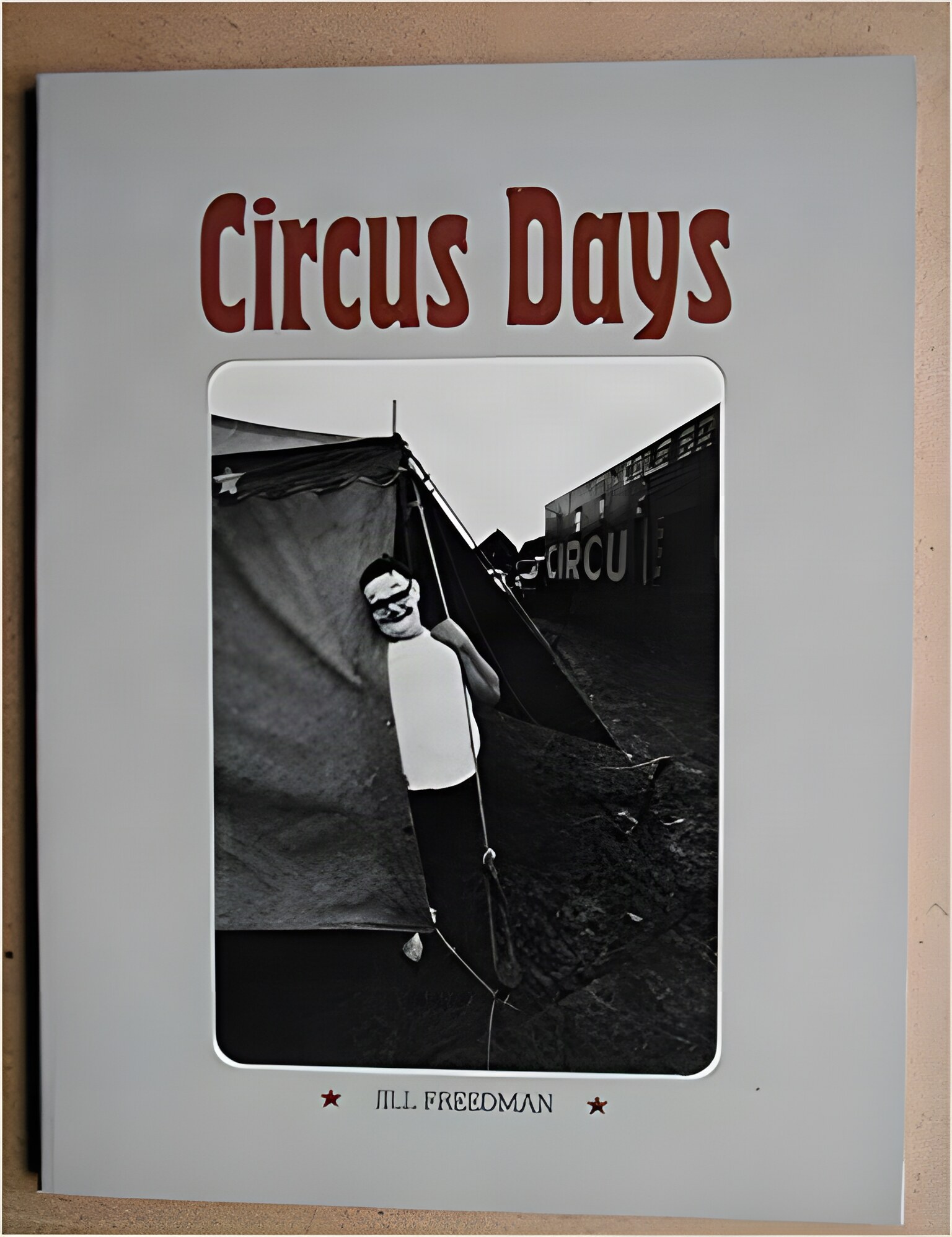
Softcover. NY, Harmony Books, 1st, 1975, Book: Very Good, Dust Jacket: None, Softcover, 128 pages. A photographic documentation of the Beatty-Cole Circus, recording and portraying the customs, activities, animals, and singular personalities of an endangered way of life. "I wanted to document the backstage everyday life of this ancient closed society and the people who live in it." Full-page b/w photos. Wrappers with light wear.
Hardcover. NY, William Morrow, 1st, 2000, Book: Very Good, Dust Jacket: Very Good, Hardcover in a bright, unclipped dust jacket, pages. Citizen Coors is the riveting saga of an American dynasty. From the moment the destitute Prussian Adolph Coors stows away on a Baltimore-bound ship in 1868 to the worldwide expansion of the billion-dollar Coors Brewing Company, Citizen Coors is a headlong American tale of triumph over bare-knuckle competition. The Coors family does it the old-fashioned way, through fearsome devotion to product, rejection of modern marketing, and refusing to borrow so much as a nickel. But the family almost rides its principles into the ground. "Nobody will ever choose a beer on the basis of a thirty-second ad," Bill Coors is fond of saying at a time when his two main competitors, Anheuser-Busch and Miller, are spending upward of a billion dollars a year on ads. He won't even allow a ring-pull can. The brewery's decline and recovery are dizzying. But Citizen Coors is more than a business story. Here is Adolph, the founder,in 1929, distraught over Prohibition, hurling himself to his death from a hotel balcony. Here is Bill,ten years later, yearning for the wider world but forced back to the brewery by a single glance from his father. Here is Joe, Jr., raised to rule yet suddenly banished for marrying without permission. Here is Peter, prevented from rescuing the company precisely because he has been trained to do so. Here is kidnapping and murder. Here are generations of Coors men broken against the iron will of their fathers. Here is a second suicide, eerily similar to the first.
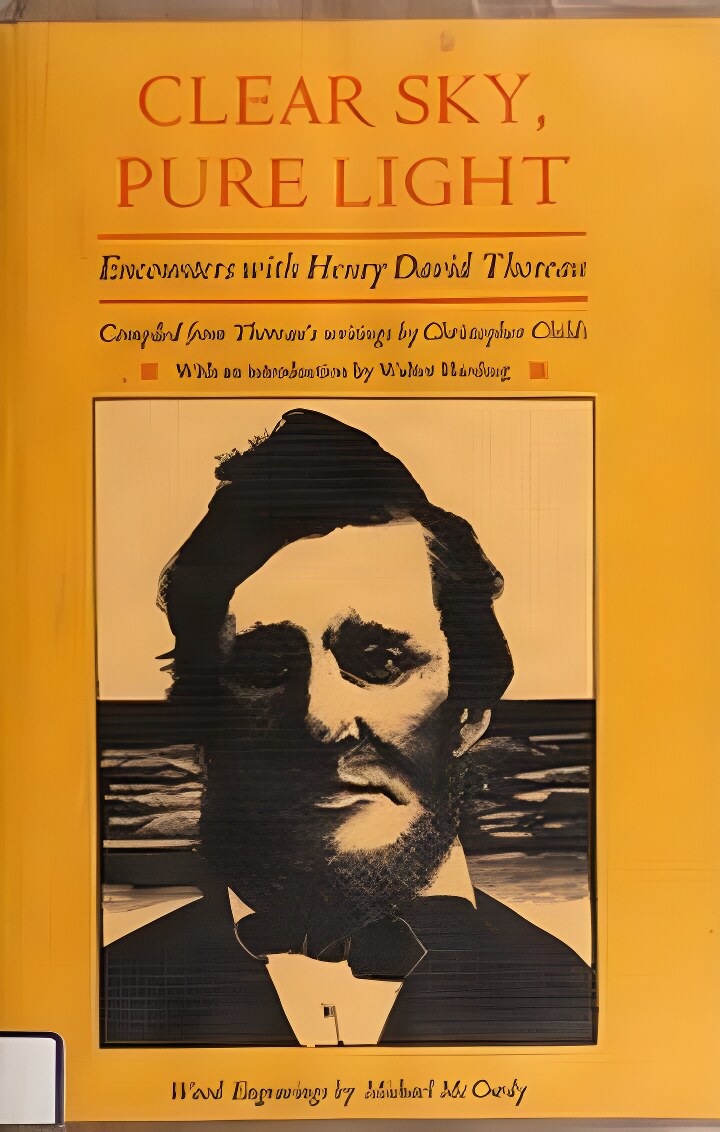
Hardcover. Lincoln MA, Penmaen Press, 1st Ltd Ed., 1978, Book: Very Good, Dust Jacket: Very Good, Hardcover in a bright dust jacket, 103 pages. Introduction by Walter Harding. Actor/author Christopher Childs compiled these excerpts and performed them as a stage monologue in order to convey the essence and personality of Henry David Thoreau. The first performance took place on July 6, 1975, in Concord, Mass. This book appeared three years later. Here the selections are organized into fourteen chapters that address a variety of topics, such as Gods, On Being a Writer, Friendship and Singularity, and John Brown. Source footnotes appear in an appendix. The book begins with an introduction by Thoreau Society secretary Walter Harding. Selected wood engravings by Michael McCurdy supplement the text. A publication note on the final page indicates that only 2,000 copies of this book were printed. Short tear to dj repaired on the reverse side. Clean copy.
Softcover. NY, British Film Institute/Palgrave, 1st, 2008, Book: Very Good, Dust Jacket: None, Softcover, 119 pages, b&w photos, Cleo de 5 a 7, Agnes Varda's classic work of 1962 depicts, in near real time, ninety minutes in the life of Cleo, a young woman in Paris awaiting the results of medical tests that she fears will confirm a fatal condition. The film, whose visual beauty matches its evocation of early Fifth Republic Paris, was a major point of reference for the French New Wave despite the fact that Varda, the only major female French director of the period, never considered herself a member of the core Cahiers du Cinema group of critics turned filmmakers. Ungar provides a close reading of the film and situates it in its social, political and cinematic context, tracing Varda's early career as a student of art history and a photographer, the history of post-war French film, and the lengthy Algerian war to which Cleo's health concerns and ambitions to become a pop singer make her more or less oblivious. His study is the first to set a reading of Cleo's formal and technical complexity alongside an analysis of its status as a document of a specific historical moment.
Softcover. Sarasota FL, John and Mable Ringling Museum of Art, 1st, 1982, Book: Very Good, Dust Jacket: None, Softcover, oblong format, 151 pages. Catalogue of an exhibition held May 14-July 18, 1982 at the John and Mable Ringling Museum of Art. 151 pages: illustrations, some color.
Topsfield, MA, Salem House, 1st U.S. , 1987, Book: Very Good, Dust Jacket: Very Good, Hardcover, B&W, color illustrations throughout by Steadman. Light edgewear to dust jacket, minor rubbing to silver dust jacket. This book brings together in a single volume Steadman's three previous Lewis Carroll titles illustrated with his uniquely stunning drawings. In addition to the original published illustrations, Steadman has added many in color for the first time along with fourteen completely new illustrations.

 "Boomba Lives in Africaby: Singer, Caroline & Cyrus Leroy Baidridge")
 "Bootsie's Big '50s: a Dark Laughter collectionby: Ollie Harrington")
 "Branch Rickey: Baseball's Ferocious Gentlemanby: Lee Lowenfish")
 "Brandt Nudes: A New Perspectiveby: Lawrence Durrell and Mark Haworth-Booth")
 "Bravo Minskiby: Yorinks, Arthur and Richard Egielski")



 "Burmah: A Photographic Journey, 1855-1925by: Singer, Noel F.")

 "Cat in the Hat Song Book, Theby: Seuss, Dr./Eugene Poddany")
 "Chance In Hellby: Hernandez, Gilbert")
 "Chance In Hellby: Hernandez, Gilbert")
 "Chariot in the Sky - A Story of the Jubilee Singersby: Bontemps, Arna")
 "Charles Pfahl: Artist at Workby: Singer, Joe")
 "Chasin' That Devil's Music,: Searching for the Blues (with CD)by: Gayle Dean Wardlow")
![Chinese Eunuchs: Inside Stories of the Chinese Courtby: Wang Yongsheng; Wang Yongsheng [Editor]](javascript:largeIMTop('https://www.browsingisarousing.com/shop/images/397659.jpg','https://www.browsingisarousing.com/shop/images/397659.jpg',0,'397659',0,'') "Chinese Eunuchs: Inside Stories of the Chinese Courtby: Wang Yongsheng; Wang Yongsheng [Editor]")


 "Cleo de 5 a 7 (BFI Film Classics)by: Steven Ungar")

 "Complete Alice & The Hunting of the Snark, Theby: Carroll, Lewis and Ralph Steadman")