Softcover. Cambridge MA, Harvard University Press, 1st pbk, 2009, Book: Very Good, Dust Jacket: None, Softcover, 264 pages. Michael Rosenfeld offers a new theory of family dynamics to account for the interesting and startling changes in marriage and family composition in the United States in recent years. His argument revolves around the independent life stage that emerged around 1960. This stage is experienced by young adults after they leave their parents' homes but before they settle down to start their own families. During this time, young men and women go away to college, travel abroad, begin careers, and enjoy social independence. This independent life stage has reduced parental control over the dating practices and mate selection of their children and has resulted in a sharp rise in interracial and same-sex unions--unions that were more easily averted by previous generations of parents. Clean copy.
Softcover. Atlantic Highlands NJ, Humanities Press, 1st, 1981, Book: Very Good, Dust Jacket: None, Softcover, 329 pages. A Marxian perspective on anthropology. Sections are pre-capitalist societies with hunter-gatherers, pastoralists, lineage-based societies and the Asiatic mode of production; and recent Marxian studies, rethinking traditional aspects of anthropology, including phenomenological anthropology, the history of the social sciences, world-systems theory, the nature of peripheral societies, and feminist perspectives.
Hardcover. NY, MacMillan Company, 1st US, 1971, Book: Very Good, Dust Jacket: Very Good, Hardcover in a bright, unclipped dust jacket, 312 pages. Includes footnotes, bibliography, and index. Foreword by Stephen Spender. A narrative study of the troubling phenomenon why many European intellectuals and artists were drawn to and embraced Fascism during the period between the world wars. This conundrum may find expression today. Clean copy.
Hardcover. Princeton NJ, Princeton University Press, 1st, 1999, Book: Very Good, Dust Jacket: Very Good, Hardcover in a bright dust jacket, 335 pages with b&w illustrations. Re-creates the story of Europe's indigenous people who were nearly stricken from historical memory even as they adopted and transformed aspects of Roman culture. The Celts and Germans inhabiting temperate Europe before the arrival of the Romans left no written record of their lives and were often dismissed as "barbarians" by the Romans who conquered them. Accounts by Julius Caesar and a handful of other Roman and Greek writers would lead us to think that prior to contact with the Romans, European natives had much simpler political systems, smaller settlements, no evolving social identities, and that they practiced human sacrifice. A more accurate, sophisticated picture of the indigenous people emerges, however, from the archaeological remains of the Iron Age. Here Peter Wells brings together information that has belonged to the realm of specialists and enables the general reader to share in the excitement of rediscovering a "lost people." Clean copy.
Hardcover. NY, Walker Books, 1st, 2004, Book: Very Good, Dust Jacket: Very Good, Hardcover in a bright, unclipped dust jacket. n the summer of 1932, at the height of the Depression, some forty-five thousand veterans of World War I descended on Washington, D.C., from all over the country to demand the bonus promised them eight years earlier for their wartime service. They lived in shantytowns, white and black together, and for two months they protested and rallied for their cause-an action that would have a profound effect on American history. Clean copy.
Softcover. London, London School of Economics and Political Science, 2nd pr., 1956, Book: Very Good, Dust Jacket: None, Softcover, red wrappers, 91 pages. One in a series of Monographs of Social Anthropology published by The London School of Economics and Political Science; this one is No. 12 and deals with the Chinese of Sarawak, a province of Malaysia located on the island of Borneo. There are several detailed fold-out maps and many charts and tables. Measures 7.25" x 9.75".
Hardcover. NY, Verso, 1st, 2021, Book: Very Good, Dust Jacket: Very Good, Hardcover in a bright dust jacket, 241 pages. In essays that range from ancient Greece to the end of the Anthropocene, Bull addresses questions central to contemporary political theory in novel readings of texts by Aristotle, Machiavelli, Marx, and Arendt, and shows how classic philosophical problems have a bearing on issues like political protest and climate change. The result is an entirely original account of political agency for the twenty-first century in which uncertainty and idleness are limned with utopian promise. Clean, bright copy.
Softcover. NY, Pantheon Books, 1st US, 1983, Book: Very Good, Dust Jacket: None, Softcover, 301 pages. The classic study of the life of the nobility at the royal court of France, especially under Louis XIV. Paper tanning slightly, clean copy.
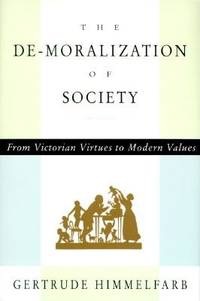
Hardcover. NY, Alfred A. Knopf , 1st, 1995, Book: Very Good, Dust Jacket: Very Good, Hardcover in a bright, unclipped dust jacket, 314 pages. Contrasting the Victorian system of virtues - respectability, self-help, discipline, cleanliness, obedience, orderliness - with the opportunistic, superficial morality of modern society, an intellectual historian calls for a deeper commitment to moral responsibility. According to Himmelfarb, Victorian "manners and morals" created a society that emphasized a strong family life for all classes and gave rise to a prosperous economy and the early feminist and social service movements. Furthermore, the influence of these virtues caused the incidence of illegitimate births and violent crimes to drop significantly and remain low until the 1960s. Clean copy.
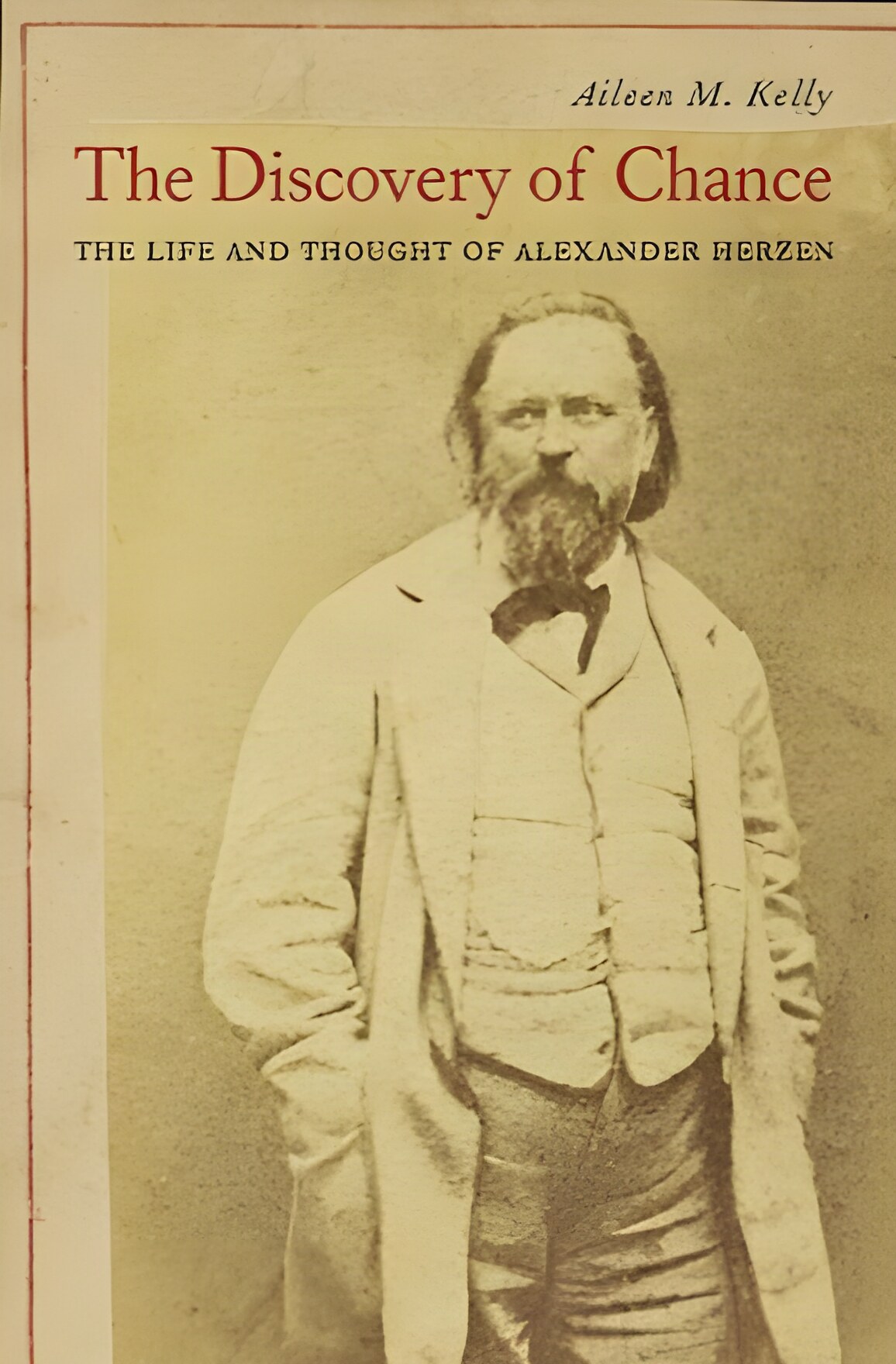
Hardcover. Cambridge MA, Harvard University Press, 1st, 2016, Book: Very Good, Dust Jacket: Very Good, Hardcover in a bright dust jacket, 592 pages. Alexander Herzen-philosopher, novelist, essayist, political agitator, and one of the leading Russian intellectuals of the nineteenth century-was as famous in his day as Tolstoy and Dostoevsky. While he is remembered for his masterpiece My Past and Thoughts and as the father of Russian socialism, his contributions to the history of ideas defy easy categorization because they are so numerous. Aileen Kelly presents the first fully rounded study of the farsighted genius whom Isaiah Berlin called "the forerunner of much twentieth-century thought." In an era dominated by ideologies of human progress, Herzen resisted them because they conflicted with his sense of reality, a sense honed by his unusually comprehensive understanding of history, philosophy, and the natural sciences. Following his unconventional decision to study science at university, he came to recognize the implications of early evolutionary theory, not just for the natural world but for human history. In this respect, he was a Darwinian even before Darwin. Clean, bright copy.
Hardcover. Duke University Press, 1st, 2003, Book: Very Good, Dust Jacket: None, Hardcover, 440 pages. Black cloth, no dust jacket. The Edge of Surrealism is an essential introduction to the writing of French social theorist Roger Caillois. Caillois was part of the Surrealist avant-garde and in the 1930s founded the College of Sociology with Georges Bataille and Michel Leiris. He spent his life exploring issues raised by this famous group and by Surrealism itself. Though his subjects were diverse, Caillois focused on concerns crucial to modern intellectual life, and his essays offer a unique perspective on many of twentieth-century France's most significant intellectual movements and figures. Including a masterful introductory essay by Claudine Frank situating his work in the context of his life and intellectual milieu, this anthology is the first comprehensive introduction to Caillois's work to appear in any language. These thirty-two essays with commentaries strike a balance between Caillois's political and theoretical writings and between his better known works, such as the popular essays on the praying mantis, myth, and mimicry, and his lesser-known pieces. Presenting several new pieces and drawing on interviews and unpublished correspondence, this book reveals Caillois's consistent effort to reconcile intellectual rigor and imaginative adventure. Perhaps most importantly, The Edge of Surrealism provides an overdue look at how Caillois's intellectual project intersected with the work of Georges Bataille and others including Breton, Bachelard, Benjamin, Lacan, and Levi-Strauss.
Softcover. NY, Cambridge University Press, reprint, 1996, Book: Very Good, Dust Jacket: None, Softcover, 434 pages. Of all the terms with which Americans define themselves as members of society, few are as elusive as "middle class." This book traces the emergence of a recognizable and self-aware "middle class" between the era of the American Revolution and the end of the nineteenth century. The author focuses on the development of the middle class in larger American cities, particularly Philadelphia and New York. He examines the middle class in all its complexity, and in its day-to-day existence--at work, in the home, and in the shops, markets, theaters, and other institutions of the big city. The book places the new language of class---in particular the new term "middle class"--in the context of the concrete, interwoven experiences of specific anonymous Americans who were neither manual workers nor members of urban upper classes. Clean copy.
Hardcover. London, Jonathan Cape, 1st UK, 1960, Book: Very Good, Dust Jacket: Very Good, Hardcover in a lightly worn dust jacket, 431 pages. Clean copy.
Softcover. London, Penguin Books , reprint, 2020, Book: Very Good, Dust Jacket: None, Softcover, 553 pages. The Europeans is richly enthralling, panoramic cultural history of nineteenth-century Europe, told through the intertwined lives of three remarkable people: a great singer, Pauline Viardot, a great writer, Ivan Turgenev, and a great connoisseur, Pauline's husband Louis. Their passionate, ambitious lives were bound up with an astonishing array of writers, composers and painters all trying to make their way through the exciting, prosperous and genuinely pan-European culture that came about as a result of huge economic and technological change. This culture - through trains, telegraphs and printing - allowed artists of all kinds to exchange ideas and make a living, shuttling back and forth across the whole continent from the British Isles to Imperial Russia, as they exploited a new cosmopolitan age. Clean copy.
Softcover. Thousand Oaks CA, Sage Publications, 1st, 1998, Book: Very Good, Dust Jacket: None, Softcover, 182 pages, b&w illustrations. In 1960, Kevin Lynch wrote The Image of the City, which transformed the way design professionals and social scientists dealt with the urban form and design. The Evaluative Image of the City follows the work of Lynch and further explores the role of human evaluations of the cityscape. This book describes how to assess, plan, and design the appearance of cities to please inhabitants. It presents a series of studies on evaluative images, discusses methodologies, findings, and applications to design and planning at various stages. Urban designers and planners, architects, business people, and the general public will find this book a valuable guide for improving the image of their surroundings. Clean copy.
Softcover. New Haven CT, Yale University Press, reprint, 1999, Book: Very Good, Dust Jacket: None, Softcover, 436 pages, b&w illustrations. Eighteenth-century women have long been presented as the heroines of traditional biographies, or as the faceless victims of vast historical processes, but rarely have they been deemed worthy of historical inquiry. "The Gentleman's Daughter" provides an account of the lives of genteel women - the daughters of merchants, the wives of lawyers and the sisters of gentlemen. Based on a study of the letters, diaries and account books of over 100 women from commercial, professional and gentry families, mainly in provincial England, "The Gentleman's Daughter" challenges the view that the period witnessed a new division of the everyday worlds of privileged men and women into the separate spheres of home and work. Amanda Vickery invokes the women's own accounts of their lives to argue that in the course of the 18th and early 19th centuries the scope of female experience did not diminish - in fact, quite the reverse. Contrary to orthodoxy, in the 18th century there was neither a loss of female freedoms, nor a novel retreat into the home. In their own writing, genteel women throughout the Georgian era singled out their social and their emotional roles: kinswoman, wife, mother, housekeeper, consumer, hostess and member of polite society. Clean copy.
Hardcover. NY, Pantheon, 1st US, 1971, Book: Very Good, Dust Jacket: Very Good, Hardcover in a bright dust jacket, 339 pages. In this classic, Richard Titmuss compares blood donation in the US and UK, contrasting the British system of reliance on voluntary donors to the American one in which the blood supply is in the hands of for-profit enterprises, concluding that a system based on altruism is safer and more economically efficient.
Hardcover. NY, Hill & Wang, 3rd pr., 2011, Book: Very Good, Dust Jacket: Very Good, Hardcover in a bright dust jacket, 358 pages, b&w illustrations. From modest beginnings as a tea shop, the Great Atlantic & Pacific Tea Company became the largest retailer in the world. It was a juggernaut, with nearly sixteen thousand stores. But its explosive growth made it a mortal threat to mom-and-pop grocery stores across the nation. Main Street fought back tooth and nail, leading the Hoover, Roosevelt, and Truman administrations to investigate the Great A&P. In a remarkable court case, the government pressed criminal charges against the company for selling food too cheaply-and won. The acclaimed historian Marc Levinson tells the story of a struggle between small business and big business that tore America apart. George and John Hartford took over their father's business and reshaped it again and again, turning it into a vertically integrated behemoth that paved the way for every big-box retailer to come. George demanded a rock-solid balance sheet; John was the marketer-entrepreneur who led A&P through seven decades of rapid changes. Together, they set the stage for the modern consumer economy by turning an archaic retail industry into a highly efficient system for distributing food at low cost. Clean copy.
Softcover. NY, Harper Torchbooks, reprint, 1965, Book: Very Good, Dust Jacket: None, Softcover, 357 pages. A scholarly study about life in the Old South. Clean copy.
Softcover. Cambridge MA, Harvard University Press, 3rd pr., 1997, Book: Very Good, Dust Jacket: None, Softcover, 541 pages. It wasn't all black or white. It wasn't a vogue. It wasn't a failure. By restoring interracial dimensions left out of accounts of the Harlem Renaissance--or blamed for corrupting it--George Hutchinson transforms our understanding of black (and white) literary modernism, interracial literary relations, and twentieth-century cultural nationalism in the United States. What has been missing from literary histories of the time is a broader sense of the intellectual context of the Harlem Renaissance, and Hutchinson supplies that here: Boas's anthropology, Park's sociology, various strands of pragmatism and cultural nationalism--ideas that shaped the New Negro movement and the literary field, where the movement flourished. Hutchinson tracks the resulting transformation of literary institutions and organizations in the 1920s, offering a detailed account of the journals and presses, black and white, that published the work of the "New Negroes." This cultural excavation discredits bedrock assumptions about the motives of white interest in the renaissance, and about black relationships to white intellectuals of the period. Clean copy.
Softcover. Urbana, University of Illinois Press, 1st, 2005, Book: Very Good, Dust Jacket: None, Softcover, 277 pages. Starting in the 1980s, anti-immigrant discourse shifted away from the "color" of immigrants to their religion and culture. It focused in particular on newcomers from Muslim countries--people feared both as terrorists and as products of tribal societies with values opposed to those of secular Western Europe. Leo Lucassen tackles the question of whether the integration process of these recent immigrants will fundamentally differ in the long run (over multiple generations) from the experiences of similar immigrant groups in the past. For comparison, Lucassen focuses on "large and problematic groups" from Western Europe's past (the Irish in the United Kingdom, the Poles in Germany, and the Italians in France) and demonstrates a number of structural similarities in the way migrants and their descendants integrated into these nation states. Lucassen emphasizes that the geographic sources of the "threat" have changed and that contemporaries tend to overemphasize the threat of each successive wave of immigrants, in part because the successfully incorporated immigrants of the past have become invisible in national histories. Clean copy.
Softcover. NY, Red Sea Press, 1st, 2018, Book: Very Good, Dust Jacket: None, Softcover, 321 pages. This book tells the story about an African Jewish community known as the Beta Israel that used to live in the northern part of Ethiopia. They were repatriated to Israel in many waves with the aid of the Israeli government and the Jewish Diaspora. The Beta Israel had struggled and faced hardships in order to live out their destiny which was to migrate to the Promised Land. However, their struggle did not stop there. They have had to struggle again to overcome unexpected and new challenges after their long anticipated migration. The book is organized around these two issues. The early chapters of the book describe the quest for Beta Israel identity within Ethiopia and explore their origins. The discussion on this topic is based on mainly textual analyses of previous works on the Beta Israel. It outlines their history and explores their origins. It examines whether the different types of oppressive Ethiopian regimes have contributed to their decision to leave for the Promised Land. It sketches the socio-economic background of the twentieth-century Aliyah, and briefly analyses the impact of the political upheavals in Ethiopia between 1974 and 1991 when the Derg, the post Haile Selassie military regime, was in power.

 "The Anthropology of Landscape: Perspectives on Place and Spaceby: Editor: Hirsch, Eric, Editor: O'Hanlon, Michael")

 "The Chinese of Sarawak: A Study of Social Structureby: T'ien, Ju-K'ang")
 "The Concept of the Social: Scepticism, Idleness and Utopiaby: Malcolm Bull")
 "The Continent of Circe: Being an Essay on the People's of Indiaby: Nirad C Chaudhuri")

 "The Edge of Surrealism: A Roger Caillois Readerby: Roger Caillois; Editor Claudine Frank; Translator Camille Naish")
 "The Emergence of the Middle Class: Social Experience in the American City, 1760")

 "The Europeans: Three Lives and the Making of a Cosmopolitan Cultureby: Orlando Figes")

 "The Gentleman's Daughter: Women's Lives in Georgian England by: Vickery, Amanda")


 "The Immigrant Threat: The Integration of Old and New Migrants in Western Europe since 1850 by: Leo Lucassen")
