Hardcover. Cambridge UK, Cambridge University Press , 1st, 1985, Book: Very Good, Hardcover, blue clith with gilt lettering on spine, 328 pages. Dr Moore's enterprising book focuses on an apparent paradox: the failure of Sri Lanka's highly politicized smallholder electorate to place on the national political agenda issues relating to the public distribution of material resources. Sri Lanka has more than fifty years' history of pluralist democracy and such issues directly affect the interests of the smallholder population. Yet successive Sri Lankan governments have pursued economic policies favouring food consumers and the state itself at the expense of agricultural producers. In exploring the features of Sri Lanka's history, geography, politics and economy which explain this paradox, the author looks in detail at some of the dominant features of contemporary Sri Lanka: the political consequences of the plantation experience; the persistence of elite political leadership; and the causes and consequences of ethnic conflict. Clean copy, paper tanning slightly.
Hardcover. Princeton NJ, Princeton University Press, 1st, 1995, Book: Very Good, Dust Jacket: Very Good, Hardcover in a bright dust jacket, 173 pages. Blandine Kriegel, at one time a collaborator with Michel Foucault, is one of France's foremost political theorists. This translation of her celebrated work L'Etat et les esclaves makes available for English-speaking readers her impassioned defense of the state. Published in France in 1979 and republished in 1989, this work challenged not only the anti-statism of the 1960s but also generations of romanticism in politics that, in Kriegel's view, inadvertently threatened the cause of liberty by refusing to distinguish between the despotic and the lawful state. In a work that addresses the urgent concerns of Europe and the contemporary world as a whole, Kriegel examines the background of modern liberal democracy in the late seventeenth and eighteenth centuries and argues cogently for the future of constitutional social-democracy. Clean copy.
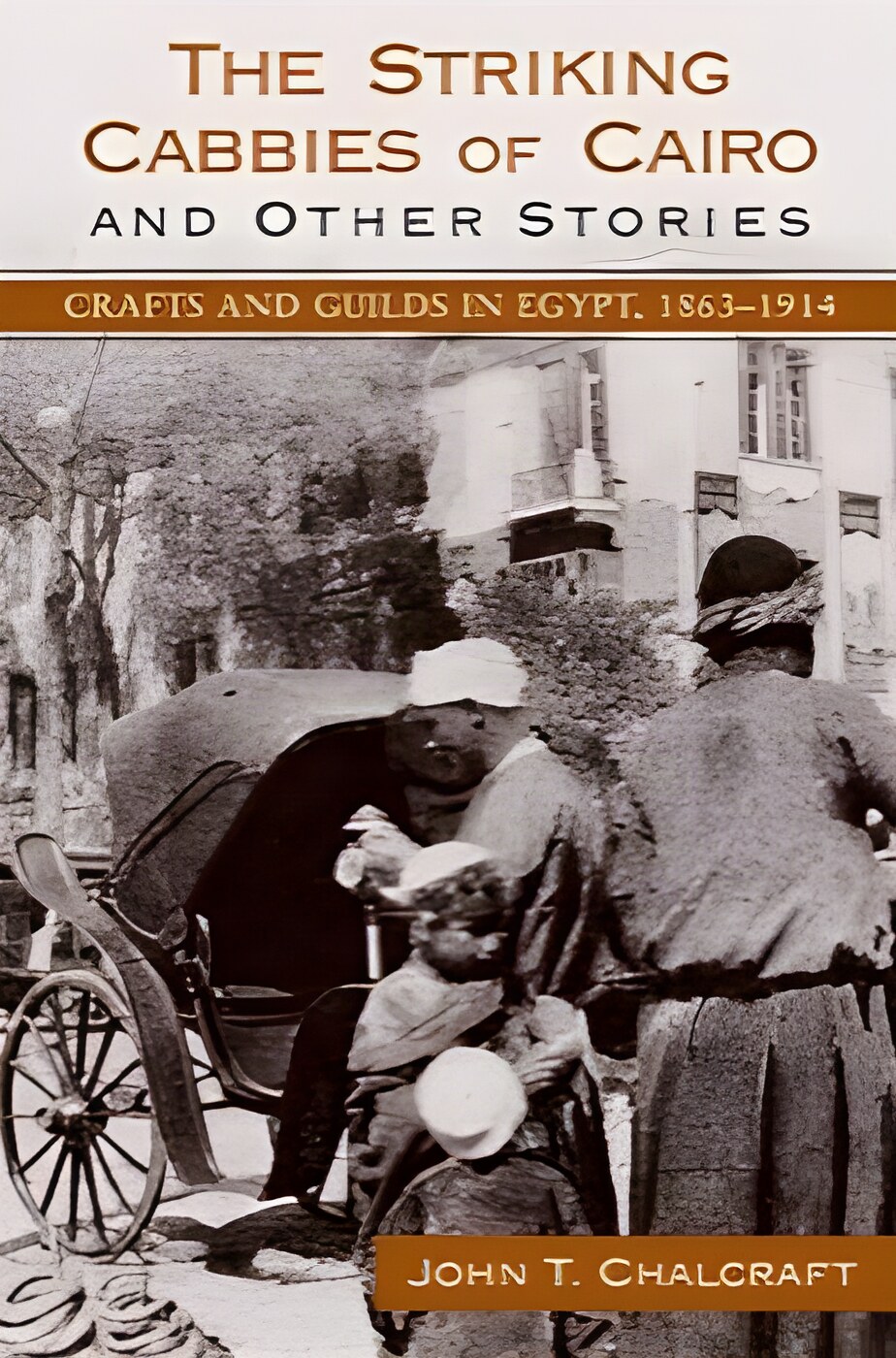
Softcover. State University of New York Press, 1st, 2005, Book: Very Good, Dust Jacket: None, Softcover, 285 pages. This book charts new directions in Egyptian social history, providing the first systematic account of adaptation and protest among crafts and service workers in Egypt in the nineteenth and early twentieth centuries. Using a wealth of new sources, John T. Chalcraft challenges conventional notions of craft stagnation and decline by recovering the largely unknown histories of crafts workers' restructuring in the face of world economic integration, and their petitions, demonstrations, and strike-action at a time of state-building and colonial rule. Chalcraft demonstrates the economic importance of petty producers and service providers, and tells the story of widespread collective assertion couched in new discourses of citizenship and nationalism. He also gives a new interpretation of the end of the guilds in Egypt and addresses larger debates about unevenness under capitalism. Clean copy.
Softcover. NY, Doubleday Anchor Book, 1st US, 1968, Book: Very Good, Dust Jacket: None, Softcover, 298 pages. First published in 1917 and long regarded as a classic of English social history. Preface by Asa Briggs. Clean, bright copy.
Hardcover. NY, Viking, 1st US, 2009, Book: Very Good, Dust Jacket: Very Good, Hardcover in a bright, unclipped dust jacket. 522 pages, b&w illustrations. By the end of World War I, Britain had become a laboratory for modernity. Intellectuals, politicians, scientists, and artists-among them Arnold Toynbee, Aldous Huxley, and H. G. Wells-sought a vision for a rapidly changing world. Coloring their innovative ideas and concepts, from eugenics to Freud's unconscious, was a creeping fear that the West was staring down the end of civilization. In The Twilight Years, award-winning historian Richard Overy examines the paradox of this period and argues that the coming of World War II was almost welcomed by Britain's leading thinkers, who saw it as an extraordinary test for the survival of civilization- and a way of resolving their contradictory fears and hopes about the future. Clean copy.
Hardcover. NY, Farrar, Straus and Giroux, 1st, 2013, Book: Very Good, Dust Jacket: Very Good, Hardcover in a bright, unclipped dust jacket. A riveting examination of a nation in crisis, from one of the finest political journalists of our generation American democracy is beset by a sense of crisis. Seismic shifts during a single generation have created a country of winners and losers, allowing unprecedented freedom while rending the social contract, driving the political system to the verge of breakdown, and setting citizens adrift to find new paths forward. In The Unwinding, George Packer, author of The Assassins' Gate: America in Iraq, tells the story of the United States over the past three decades in an utterly original way, with his characteristically sharp eye for detail and gift for weaving together complex narratives. Clean copy.
Hardcover. NY, W W Norton, 1st, 2003, Book: Very Good, Dust Jacket: Very Good, Hardcover in a bright, unclipped dust jacket, 724 pages. Illustrated in b&w and color. A revisionist panorama of the nineteenth century examines the era's material and spiritual changes in the wake of emerging British capitalism and imperialism, as told through the writings of such figures as Darwin, Marks, George Eliot, and Kipling. Clean copy.
Softcover. NY, Prentice Hall, 1st pbk, 1970, Book: Very Good, Dust Jacket: None, Softcover, 184 pages. Revealing and disturbing study of the racist ideas and fantasies of southern whites after the Civil War and examines their racial fantasies and the social and psychological roots of those fantasies. He reveals how a complex set of anxieties and repressions in Southern life led whites to need "Negro" Inferiority." Name on title page otherwise clean.
Softcover. Princeton NJ, Princeton University Press, reprint, 1978, Book: Very Good, Dust Jacket: None, Softcover, 464 pages. Richard Stites views the struggle for liberation of Russian women in the context of both nineteenth-century European feminism and twentieth-century communism. The central personalities, their vigorous exchange of ideas, the social and political events that marked the emerging ideal of emancipation--all come to life in this absorbing and dramatic account. The author's history begins with the feminist, nihilist, and populist impulses of the 1860s and 1870s, and leads to the social mobilization campaigns of the early Soviet period. Spine with light fading, otherwise a clean, tight copy.
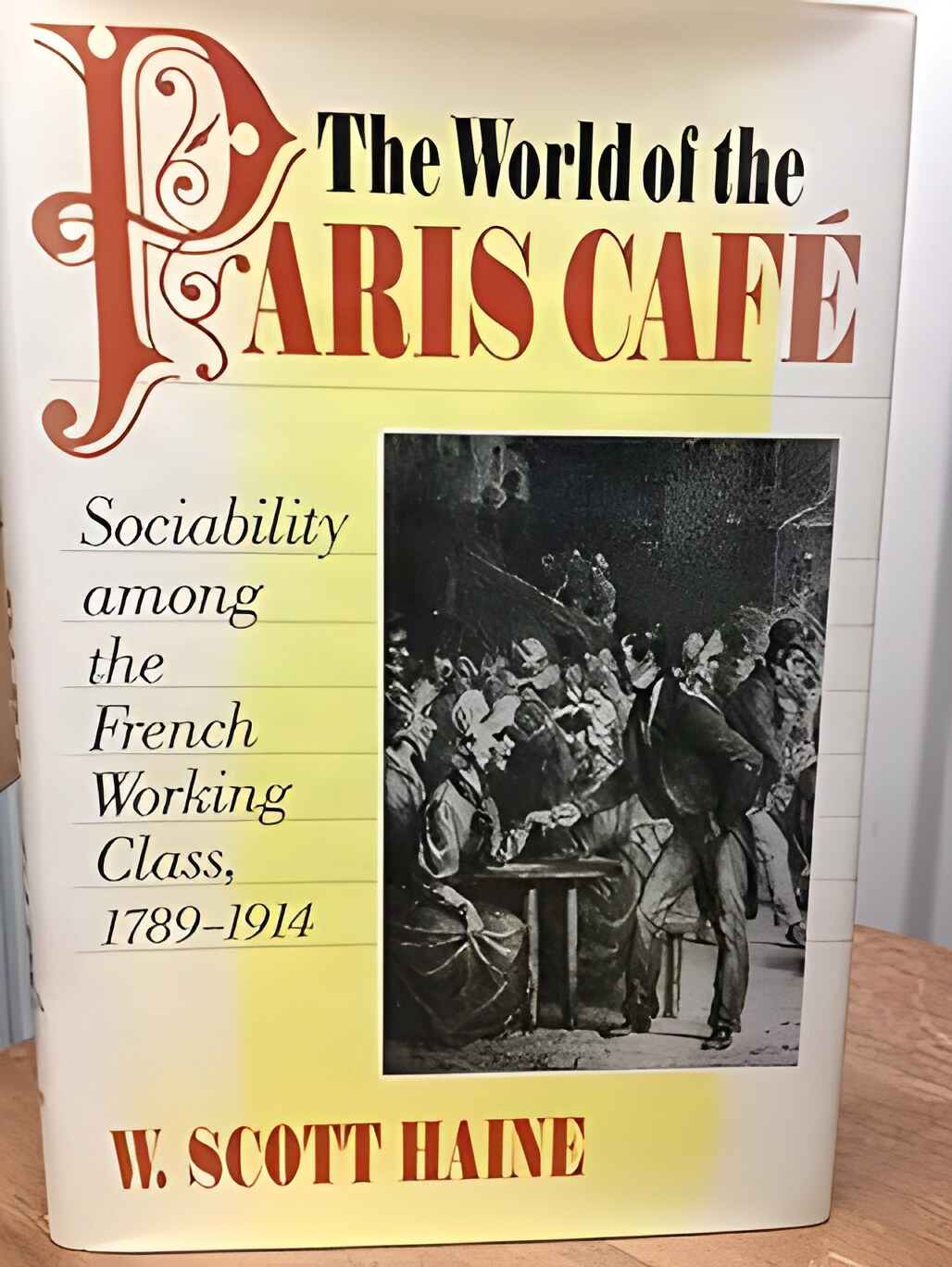
Hardcover. Baltimore, Johns Hopkins University Press, 1st, 1996, Book: Very Good, Dust Jacket: Good, Hardcover in a dust jacket with sunning to spine, 325 pages, b&w illustrations. In The World of the Paris Café, W. Scott Haine investigates what the working-class café reveals about the formation of urban life in nineteenth-century France. Café society was not the product of a small elite of intellectuals and artists, he argues, but was instead the creation of a diverse and changing working population. Making unprecedented use of primary sources -- from marriage contracts to police and bankruptcy records -- Haine investigates the café in relation to work, family life, leisure, gender roles, and political activity. This rich and provocative study offers a bold reinterpretation of the social history of the working men and women of Paris. Clean copy.
Hardcover. Atglen, PA, Schiffer Publishing, 2nd, 2012, Book: Very Good, Dust Jacket: None, 489 pages. Hardcover with no dust jacket. Clean, tight copy. Color photo throughout. While You Were Sleeping was a graffiti and pop culture magazine started by graffiti supply business owner Roger Gastman when he was 19. Here are some of the greatest stories the magazine ever published-and many that are not so good. From stories on admirable serial killers and interviews with child stars to photos of graffiti and people's naked sisters, this book takes you into the dirty minds of Gastman and his team of juvenile delinquents. You've been warned.
Hardcover. London, The Athlone Press, 1st, 1970, Book: Very Good, Dust Jacket: Good, Hardcover in a lightly worn dust jacket, orange cloth covers, 287 pages. Anthropological essays by the author based on his 30 years of field work in Ghana. Clean copy.
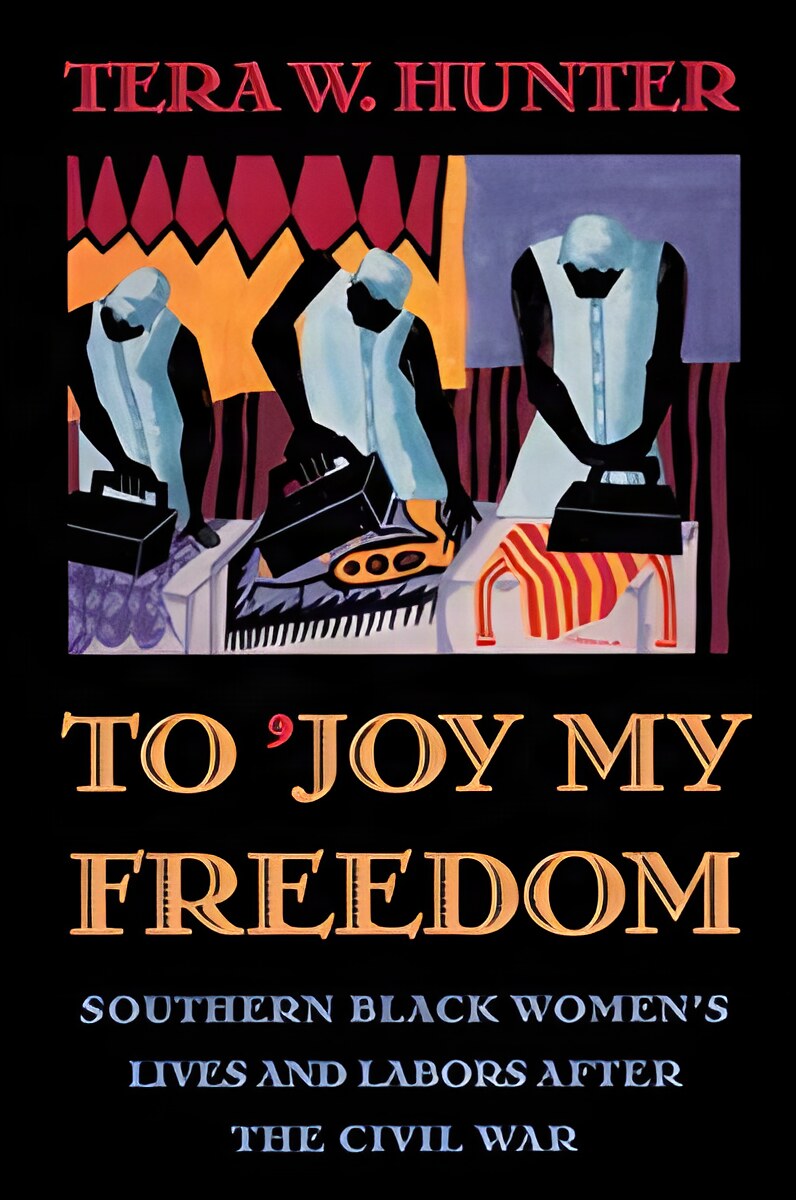
Softcover. Cambridge MA, Harvard University Press, reprint, 1998, Book: Very Good, Dust Jacket: None, Softcover, 311 pages. As the Civil War drew to a close, newly emancipated black women workers made their way to Atlanta-the economic hub of the newly emerging urban and industrial south-in order to build an independent and free life on the rubble of their enslaved past. In an original and dramatic work of scholarship, Tera Hunter traces their lives in the postbellum era and reveals the centrality of their labors to the African-American struggle for freedom and justice. Household laborers and washerwomen were constrained by their employers' domestic worlds but constructed their own world of work, play, negotiation, resistance, and community organization. Hunter follows African-American working women from their newfound optimism and hope at the end of the Civil War to their struggles as free domestic laborers in the homes of their former masters. We witness their drive as they build neighborhoods and networks and their energy as they enjoy leisure hours in dance halls and clubs. We learn of their militance and the way they resisted efforts to keep them economically depressed and medically victimized. Finally, we understand the despair and defeat provoked by Jim Crow laws and segregation and how they spurred large numbers of black laboring women to migrate north. Clean copy.
Softcover. NY, Palgrave Macmillan, 1st, 2001, Book: Very Good, Dust Jacket: None, Softcover, 337 pages. Now a widely cited classic, this innovative book is the first comprehensive synthesis of economic, political, and cultural theories of value. David Graeber reexamines a century of anthropological thought about value and exchange, in large measure to find a way out of ongoing quandaries in current social theory, which have become critical at the present moment of ideological collapse in the face of Neoliberalism. Rooted in an engaged, dynamic realism, Graeber argues that projects of cultural comparison are in a sense necessarily revolutionary projects: He attempts to synthesize the best insights of Karl Marx and Marcel Mauss, arguing that these figures represent two extreme, but ultimately complementary, possibilities in the shape such a project might take. Graeber breathes new life into the classic anthropological texts on exchange, value, and economy. He rethinks the cases of Iroquois wampum, Pacific kula exchanges, and the Kwakiutl potlatch within the flow of world historical processes, and recasts value as a model of human meaning-making, which far exceeds rationalist/reductive economist paradigms. Clean copy.
Softcover. Cambridge MA, MIT Press, 1st pbk, 1970, Book: Very Good, Dust Jacket: None, Softcover, yellow card wraps with b&w designs and black lettering. 287 pages with 55 b/w line drawings and 96 b/w plates. The first publication in English that gives a general survey of the development of the inner structure of the town from a dual point of view: that of the function of the square in the life of the community and that of its conception in purely aesthetic terms. Zucker shows a continuous development from Greece and Rome, through the Middle Ages and Renaissance, to the creative heights of the 17th and 18th centuries, periods which he considers the culmination of this development. The concluding chapter surveys the role of the square in early American life. Clean copy.
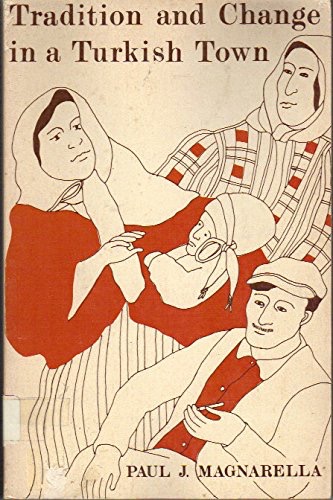
Softcover. NY, John Wiley/Schenkman Publishing, 1st pbk, 1974, Book: Very Good, Dust Jacket: None, Softcover, 199 pages. Dr. Magnarella's study provides new insight into the social-political-economic dynamics of modern Turkey, a society in continuing transition. The author's thorough competence as an anthropologist and his intimate knowledge of both Susurluk - the town of his research - and its national environment provide a certain solid validity to his analysis that is lacking in similar studies made by those only superficially knowledgeable of the country's social order and history. Clean copy.
Softcover. Cambridge MA, Peabody Museum, 1st, 1947, Book: Very Good, Dust Jacket: None, Softcover, 527 pages, 10.25 x 7.75 inches. Scarce ethnological and archeological study of Liberia's culture and myths. Large fold-out colored map, measuring 20.25 x 43 inches, is slipped into the inner rear cover. Copious illustrations and diagrams throughout. Light chipping to paper covers but with a very good interior. Previous owner's signature on front fly leaf otherwise clean.
Softcover. University of Chicago Press, reprint, 1965, Book: Very Good, Dust Jacket: None, Softcover, 555 pages. Traces the political fortunes of the Puritans from 1524, the year in which William Tyndale left London for Germany, to the Stuart Settlement at the beginning of the seventeenth century. The author then examines the social, cultural, and intellectual aspects of Puritanism which, he believes, represented a more genuine idealism than any rival religious movement during the Tudor period. Remainder mark to bottom edge, otherwise a clean copy.
Hardcover. London, The Athlone Press, 1st, 1956, Book: Very Good, Dust Jacket: None, Hardcover, red cloth covers, 94 pages, bibliography. Previous owner's name otherwise a clean copy, no dust jacket.
Softcover. Seattle, University of Washington Press, reprint, 1993, Book: Very Good, Dust Jacket: None, Softcover, 255 pages, b&w photos. A Peace Corps worker sent to the Sakel to establish a fish-farming project, the author lived with a family in a tiny Sengalese village near the Mauretania border. We share her initial feelings of dislocation as she contends not only with a primitive lifestyle, lack of creature comforts, and the overt sexism of the Moslem men she supervises, but also with her burgeoning relationships with the women in the little compound who become as much her family as her relatives in America. In a guileless narrative filled with affection and anger, Lowerre tells of the ill health and bureaucratic failings that beset her; she acknowledges the Pulaar people's love and good humor, and offers an unprettified closeup of daily life in an African village. Clean copy.
Softcover. Hanover NH, University Press of New England, 1st, 1996, Book: Very Good, Dust Jacket: None, Softcover, 120 pages, b&w photographs by Pierce. Like new in publisher's shrink-wrap.
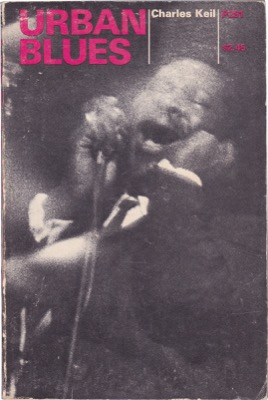
Softcover. Chicago, University of Chicago Press, 6th pr., 1970, Book: Very Good, Dust Jacket: None, Softcover, 231 pages, b&w illustrations. Charles Keil examines the expressive role of blues bands and performers and stresses the intense interaction between performer and audience. Profiling bluesmen Bobby Bland and B. B. King, Keil argues that they are symbols for the black community, embodying important attitudes and roles--success, strong egos, and close ties to the community. While writing Urban Blues in the mid-1960s, Keil optimistically saw this cultural expression as contributing to the rising tide of raised political consciousness in Afro-America. Name on front fly leaf, otherwise clean.
Softcover. Cambridge MA, Harvard University Press, 2nd pr., 1992, Book: Very Good, Dust Jacket: None, 387 pages. Softcover. Black & white illustrations throughout. Faded spine. Light shelf wear to cover. Pen marks to three pages. Otherwise clean copy.
Softcover. Chicago, University of Chicago Press, reprint, 2008, Book: Very Good, Dust Jacket: None, Softcover, 370 pages. Democrat and Republican. Meat Eaters and Vegetarians. Black and White. As human beings we sort ourselves into groups. And once we identify ourselves as a member of a particular group--say, Red Sox fans--we tend to feel more comfortable with others of our own kind, rather than, say, Yankees fans. Yet we all belong to multiple groups at the same time--one might be a woman, a mother, an American, a violinist. How do we decide which identities matter and why they matter so much? And what makes us willing to die for, or to kill for, a religion, a nation, or a race? In this award-winning book, David Berreby describes how twenty-first-century science is addressing these age-old questions. Ably linking neuroscience, social psychology, anthropology, and other fields, Us and Them investigates humanity's "tribal mind" and how this alters our thoughts, affects our health, and is manipulated for good and ill. From the medical effects of stress to the rhetoric of politics, our perceptions of group identity affect every part of our lives. Science, Berreby argues, shows how this part of human nature is both unexpectedly important and surprisingly misunderstood. Clean copy.



 "The Town Labourerby: J.L. and Barbara Hammond")
 "The Twilight Years: The Paradox of Britain Between the Wars by: Richard Overy")
 "The Unwinding: An Inner History of the New America by: Packer, George")
 "The Victoriansby: A.N. Wilson")

 "The Women's Liberation Movement in Russia: Feminism, Nihilism, and Bolshevism, 1860-1930by: Richard Stites")
 "The Worst of While you were Sleepingby: Gastman, Roger")
 "Time and Social Structure and Other Essays by: Fortes, Meyer")




 "Two Studies of Kinship in London (London School of Economics Mongraphs on Social Anthropology, No.15)by: Firth, Raymond (ed.)")