Hardcover. New York, Random House, 1st, 1986, Book: Very Good, Dust Jacket: Very Good, Hardcover in a bright dust jacket, 255 pages. A very clean, tight copy.
Softcover. Lincoln NE, University of Nebraska Press, 1st, 2013, Book: Very Good, Dust Jacket: None, Softcover. At a time when few Americans had visited Australia, journalist John Lardner sailed down under with the U.S. armed forces as one of the first American war correspondents in the Pacific theater. With his excellent sense of humor and gift for narrative, Lardner penned vignettes of MacArthur's arrival and his reception in Melbourne and a flight with the daring Dutch flier Capt. Hans Smits. More frequently, Lardner wrote about the ordinary day and the average person. Traveling throughout the country, in Southwest Passage Lardner offers a glimpse of Australia in the 1940s and generates warmth and admiration for World War II fighters in the Pacific, whether Australian, New Zealander, aboriginal, or American. Clean copy.
Hardcover. London, Allen & Unwin, 1st, 1972, Book: Very Good, Dust Jacket: Very Good, Hardcover in a bright dust jacket, 208 pages, b&w illustrations. An account of the water between the Isle of Wight & the Mainland, its Naval base and its importance to British Naval history. Clean copy.
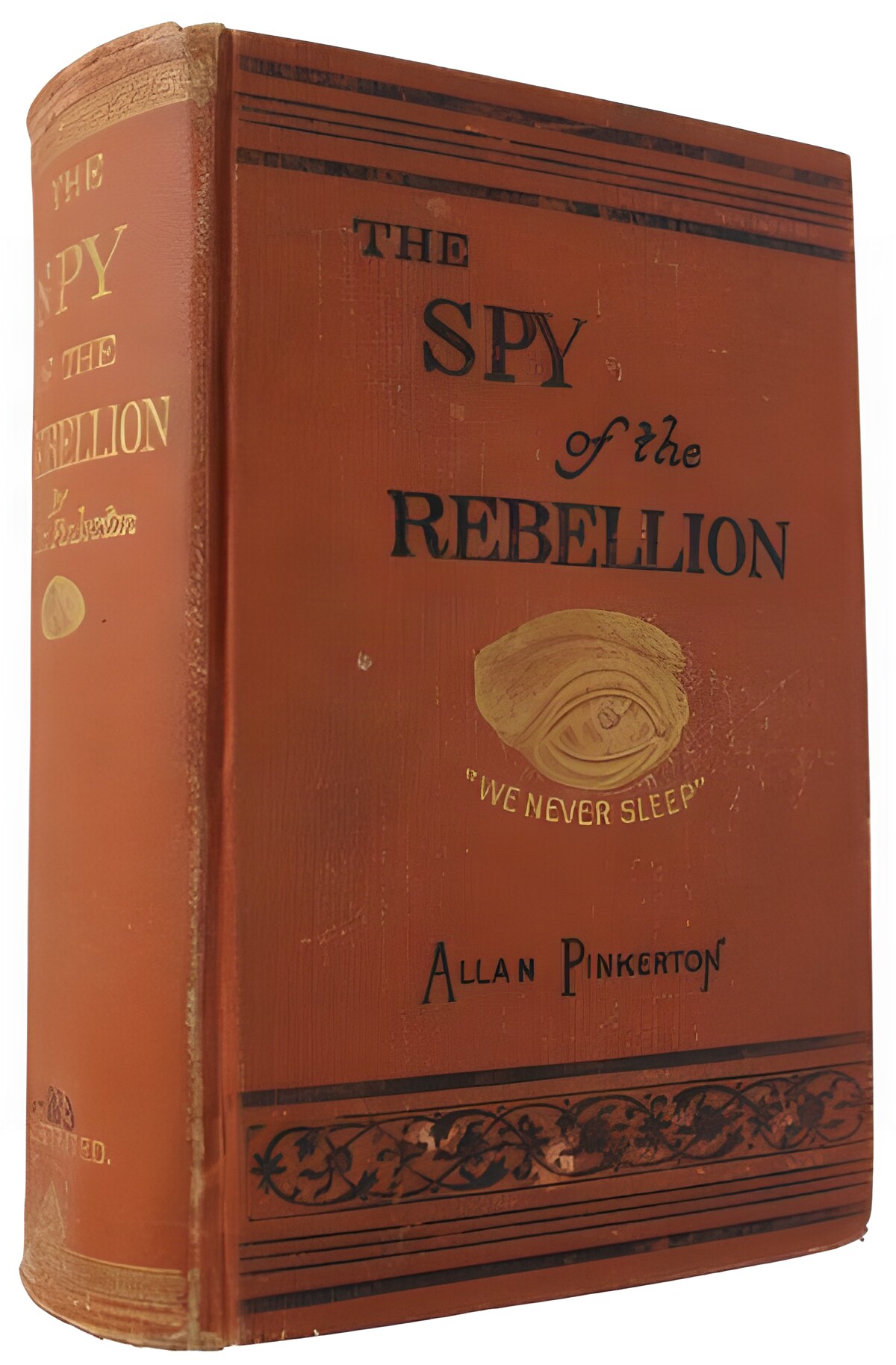
Hardcover. New York , G. W. Carleton & Co., Publishers, reprint, 1886, Book: Fair, Dust Jacket: None, 688 pages, b&w illustrations. Brown cloth, gilt and black titles and gilt design on front and spine. Binding is very delicate. Some internal signature coming loose. Handle with care. Small tear to front gutter, ex-lib numbers at bottom spine. Previous owner's stamp on prelim-page. Light wear and rubbing to pictorial boards.
Hardcover. Yorkshire UK, Pen and Sword Military, 1st, 2019, Book: Very Good, Dust Jacket: Very Good, Hardcover in a bright, unclipped dust jacket, 320 pages. So much has been written about the Battle of Stalingrad - the Soviet victory that turned the tide of the Second World War - that we should know everything about it. But the history of the war, and the battle, is evolving and is being written anew, and Alexey Isaev's engrossing account is a striking example of this fresh approach. B&w photos, color maps. Clean copy.
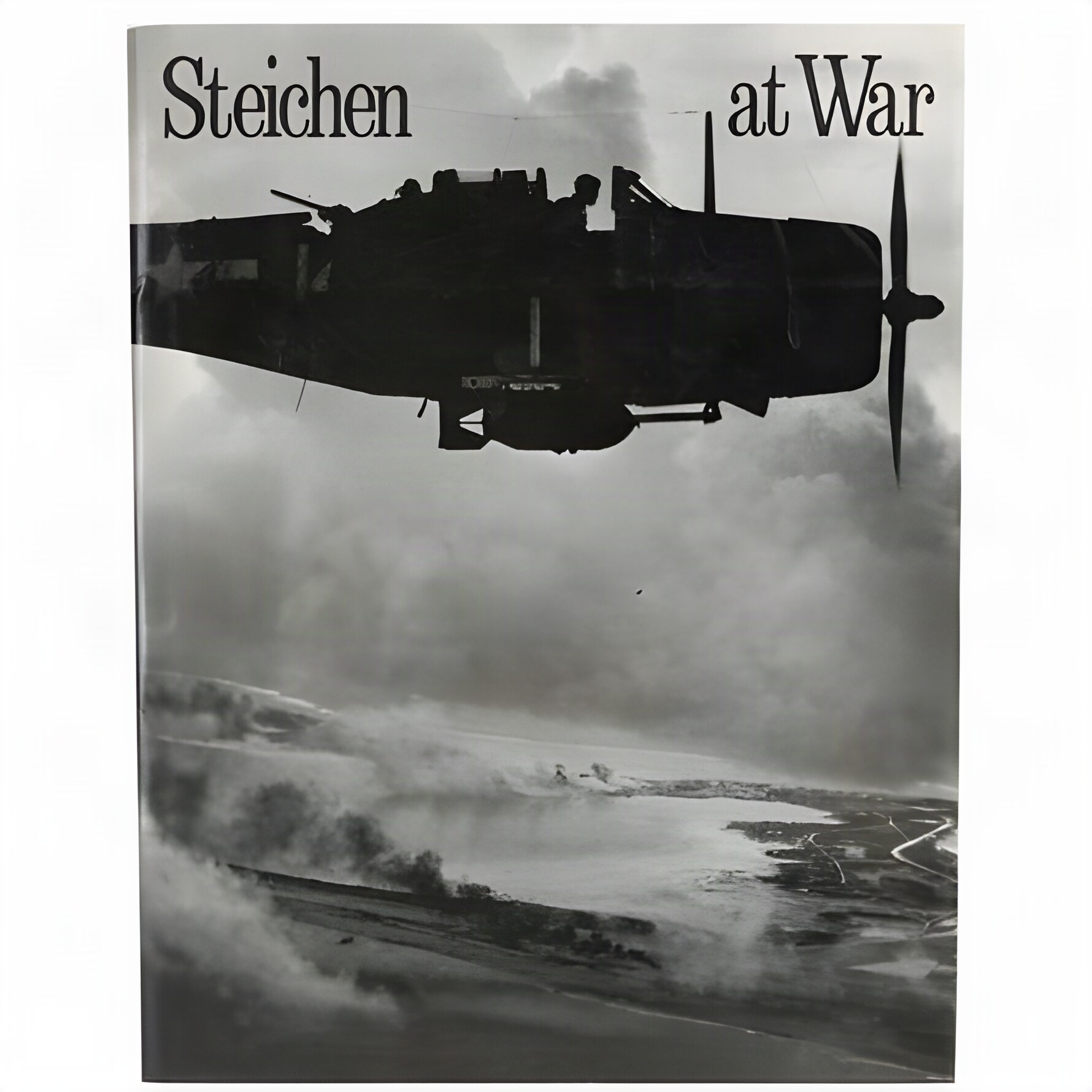
Hardcover. NY, Abrams, 1st, 1981, Book: Very Good, Dust Jacket: Very Good, Hardcover, 256 pages, in a bright, unclipped dust jacket. Edward Steichen virtually created the world of high fashion and advertising photography, but his military coverage of two World Wars was equally remarkable. He received the Croix de Guerre for pioneering photoreconnaissance as part of Pershing's American Expeditionary Force in 1918, and his team's shots of the American Navy's advance across the Pacific from 1942 to 1945 form the visual core of our memory of that crucial period. Tragically, however, Steichen's thousands of incisive images of military action were dissolved into the morass of the National Archives, and attempts to retrieve specific subjects of his are often as effective as trying to taste fine brandy after pouring it into a swimming pool. Hence the value of retrospectives such as Christopher Phillips' hefty book on Steichen's coverage of the U.S. Navy in the Pacific War. Combining skillfully chosen anecdotes from Steichen's life with vivid evocation of the pioneering photographer's joy in capturing memorable images, Phillips gives us not only an unforgettable slice of Steichen's work but also enough historical background to let readers sense the excitement and drama of a nation's best young warriors fighting for freedom's sake. Lieutenant Commander Steichen's parade of images didn't begin until after the pivotal Battle of Midway in June 1942, but the ensuing carrier warfare and savage island fighting appear in unforgettable clarity. As in all great photographs, the humanity of the subjects shines through amid their triumph, or pain, or mere existence. Students of both military history and photography can spend days poring over these astonishingly revealing images.
Hardcover. NY, Abrams, 1st, 1981, Book: Very Good, Dust Jacket: Very Good, Hardcover, 256 pages, in a bright, unclipped dust jacket. Edward Steichen virtually created the world of high fashion and advertising photography, but his military coverage of two World Wars was equally remarkable. He received the Croix de Guerre for pioneering photoreconnaissance as part of Pershing's American Expeditionary Force in 1918, and his team's shots of the American Navy's advance across the Pacific from 1942 to 1945 form the visual core of our memory of that crucial period. Tragically, however, Steichen's thousands of incisive images of military action were dissolved into the morass of the National Archives, and attempts to retrieve specific subjects of his are often as effective as trying to taste fine brandy after pouring it into a swimming pool. Hence the value of retrospectives such as Christopher Phillips' hefty book on Steichen's coverage of the U.S. Navy in the Pacific War. Combining skillfully chosen anecdotes from Steichen's life with vivid evocation of the pioneering photographer's joy in capturing memorable images, Phillips gives us not only an unforgettable slice of Steichen's work but also enough historical background to let readers sense the excitement and drama of a nation's best young warriors fighting for freedom's sake. Lieutenant Commander Steichen's parade of images didn't begin until after the pivotal Battle of Midway in June 1942, but the ensuing carrier warfare and savage island fighting appear in unforgettable clarity. As in all great photographs, the humanity of the subjects shines through amid their triumph, or pain, or mere existence. Students of both military history and photography can spend days poring over these astonishingly revealing images.
Hardcover. NY, Abrams, 1st, 1981, Book: Very Good, Dust Jacket: Very Good, Hardcover, 256 pages, in a bright, unclipped dust jacket. Edward Steichen virtually created the world of high fashion and advertising photography, but his military coverage of two World Wars was equally remarkable. He received the Croix de Guerre for pioneering photoreconnaissance as part of Pershing's American Expeditionary Force in 1918, and his team's shots of the American Navy's advance across the Pacific from 1942 to 1945 form the visual core of our memory of that crucial period. Tragically, however, Steichen's thousands of incisive images of military action were dissolved into the morass of the National Archives, and attempts to retrieve specific subjects of his are often as effective as trying to taste fine brandy after pouring it into a swimming pool. Hence the value of retrospectives such as Christopher Phillips' hefty book on Steichen's coverage of the U.S. Navy in the Pacific War. Combining skillfully chosen anecdotes from Steichen's life with vivid evocation of the pioneering photographer's joy in capturing memorable images, Phillips gives us not only an unforgettable slice of Steichen's work but also enough historical background to let readers sense the excitement and drama of a nation's best young warriors fighting for freedom's sake. Lieutenant Commander Steichen's parade of images didn't begin until after the pivotal Battle of Midway in June 1942, but the ensuing carrier warfare and savage island fighting appear in unforgettable clarity. As in all great photographs, the humanity of the subjects shines through amid their triumph, or pain, or mere existence. Students of both military history and photography can spend days poring over these astonishingly revealing images. DOMESTIC SHIPPING ONLY.
Hardcover. NY, Dorling Kindersley, 1st US, 1993, Book: Very Good, Dust Jacket: None, Hardcover, glossy pictorial boards. Look inside an 18th-century warship as it sails into battle on the high seas. Packed with extraordinary illustrations, this history book for children covers everything from warship design to navigation. Biesty's incredible drawings slice through a man-of-war to explore every corner, from the crow's nest to the stinking hold. Packed with fascinating facts and gory details, the pages teem with sailors going about their duties. Find out how gun crews fired a cannon, examine a surgeon's toolkit, and learn the best way to wriggle the maggots out of the ship's biscuits. Light wear to cover edges, clean copy.
Hardcover. San Rafael, CA, Presidio Press, 1st, 1978, Book: Very Good, Dust Jacket: None, 202 pages. Hardcover. B/w illustrations throughout. Gilt title on spine. Deckled edges. A touch of foxing to top edge, otherwise clean inside and out. In great shape.
Hardcover. NY, Time Life, reprint, 1982, Book: Very Good, Dust Jacket: None, 476 pages. Hardcover with no dust jacket. Dark blue leather bound with gilt titles to front cover and spine. Embossed decoration on front cover. Gilt text block edges, red ribbon marker. Clean, tight copy. Leander Stillwell (1843-1934) was an American lawyer, judge and a pioneer attorney who co-created the first bar of Erie. From 1861 to 1865 he was with the Union army joining as a private of Company D, Sixty-first Regiment, Illinois Infantry Volunteers. He was appointed Corporal, then Sergeant and later First Sergeant in 1863, and re-enlisted in 1864, at Little Rock, Arkansas. He participated in the battle of Shiloh, the siege of Vicksburg, and several minor engagements. His experiences were published as The Story of a Common Soldier of Army Life in the Civil War, 1861-1865 (1917/20). In 1876 he was elected a member of the lower house of the Kansas Legislature. He was a republican and held various township offices, both in Illinois and Kansas, and was quite active in civic affairs. In 1883 he was elected judge of the Seventh Judicial District. He was re-elected judge of the same district in 1887, 1891, 1895 and 1899, and resigned in 1907.
Hardcover. Baltimore, The John Hopkins Press, 3rd pr., 1969, Book: Very Good, Dust Jacket: None, Hardcover, turquoise cloth with gilt lettering on spine. No dust jacket, clean copy.
Hardcover. NY, W W Norton & Co., 1st, 1982, Book: Very Good, Dust Jacket: Very Good, Hardcover in a bright dust jacket, 287 pages. Since its inception in 1970, MX has been fiercely debated in the White House, the Pentagon, and on Capitol Hill. President Jimmy Carter called it, initially, "the craziest thing I ever heard," and yet only two years later, caught up in the implacable logic of the nuclear arms race, he would approve an expanded budget for its development. John Edwards interviewed all the major actors in this drama, and through his incisive portraits of the scientists, politicians and generals who control the weapons community, he shows how policy grows out of their personal and ideological conflicts. INSCRIBED BY AUTHOR on front fly leaf. Clean copy.
Hardcover. New York, Weidenfeld & Nicolson, 1st, 1989, Book: Very Good, Dust Jacket: Very Good, Hardcover, 239 pages, illustrated throughout in color and b&w. Light shelf-wear to dust jacket. Clean, tight copy. A comprehensive guide to nearly 4000 years of sword making from all over the world. Written by a distinguished team of experts and scholars, it provides an expert appraisal of the weapons themselves and is rich in historical and background detail. Fully illustrated throughout with photographs and art reproductions, this is a unique survey of a vast body of superb craftsmanship. It is an essential reference work for weapons enthusiasts, collectors and lovers of military history and fine art.
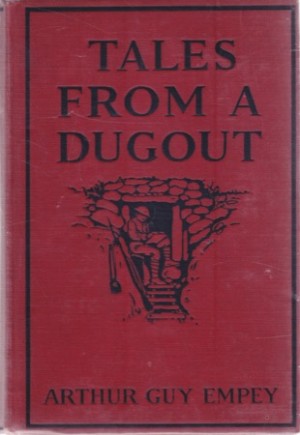
Hardcover. NY, Century Co., 1st, 1918, Book: Very Good, Dust Jacket: None, Hardcover, red cloth with black lettering and decoration on spine and front board. The author's reminiscences of time in the trenches during World War I. An American serving at the time with British 'Tommies', he also wrote 'Over the Top' and other books about his experiences. Front fly leaf missing, book opens to half title page, otherwise a clean, tight copy.
Hardcover. Coral Gables, Fla., University of Miami Press, 1st, June 1983, Book: Good, Dust Jacket: Good, Scarce. 176 pages. Edge wear, rubbing, small tears to dust jacket. Foxing to edges and end papers. Previous owner's signature on front fly leaf. Else a clean, tight copy.
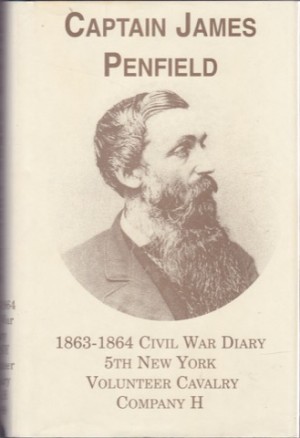
Hardcover. Ticonderoga , Penfield Foundation, reprint, 1999, Book: Very Good, Dust Jacket: Very Good, Hardcover in a bright dust jacket with a small chip to bottom of spine. The 5th NY Volunteer Cavalry, Company H was organized in Crown Point, NY at the very start of the Civil War. Penfield's diary was kept during the years 1863-1864 covering his service primarily in the Shenendoah Valley and later imprisonment. He was captured during the pursuit of rebel troops after Gettysburg. Following capture Penfield was held in various Confederate prisons. Clean copy.
Hardcover. Princeton Providence, Princeton University Press / Brown University Press, 1st, 1972, Book: Very Good, Dust Jacket: Very Good, Hardcovers. Complete in two volumes. Volume I: The Journals of Clermont-Crevecoeur, Verger, and Berthier. Volume II: The Itineraries, Maps, Views. Both volumes are fine in near fine unclipped dust jackets. Housed in a lightly rubbed slipcase that has a chip to one of the pictorial labels. INSCRIBED BY CO-EDITOR ANNE BROWN on the half title page in Vol. 1. Mild residue to prelim page in Vol. 2, otherwise nice, clean and unmarked. Vol. 1: 351 pages, Vol. 2: 362 pages, color and b&w illustrations, indexed, fold out maps. PLEASE NOTE: DUE TO SIZE AND WEIGHT, DOMESTIC SHIPPING ONLY.
Softcover. UK, Cambridge University Press, reprint, 1978, Book: Very Good, Dust Jacket: None, Softcover, 309 pages. The classic study, looking at Habsburg Spain's handling of the Dutch Revolt. Clean copy.
Hardcover. Boston, Little, Brown and Company, reprint, 1957, Book: Very Good, Dust Jacket: None, Hardcover, blue cloth with gilt lettering on spine. Volume X in The History of United States Naval Operations in World War II. 399 pages, illustrated with maps (one fold-out) and b&w photos. Gilt on spine with light fading, lacks dust jacket, dj flap copy pasted inside front cover, otherwise clean, tight copy.
Hardcover. Boston, Little, Brown and Company, reprint, 1950, Book: Very Good, Dust Jacket: None, Hardcover, blue cloth with gilt lettering on spine. Volume I in The History of United States Naval Operations in World War II. 432 pages, illustrated with maps and b&w photos. Gilt on spine with light fading, lacks dust jacket, otherwise clean, tight copy.
Hardcover. NY/London, Verso, 1st, 2003, Book: Very Good, Dust Jacket: Very Good, Hardcover in a bright, unclipped dustjacket. The violence that has ravaged Algeria has often defied explanation. Regularly invoked in debates about political Islam, transitions to democracy, globalization, and the right of humanitarian interference, Algeria's tragedy has been reduced to a clash of stereotypes: Islamists vs.a secular state, terrorists vs. innocent civilians, or generals vs. a defenseless society. The prevalence of such simplistic representations has disabled public opinion inside as well as outside the country and contributed to the intractability of the conflict. This collection of essays offers a radical corrective to Western misconceptions. Rejecting essentialist and determinist approaches, Hugh Roberts explores the outlook and evolution of the various internal forces as they emerged--the Islamists, the Berberists, the factions within the army, and the regime in general--and he looks at external interests and actors. Clean copy.
Softcover. Norman OK, University of Oklahoma Press , reprint, 1996, Book: Very Good, Dust Jacket: None, Softcover, 167 pages. After nearly 200,000 African-American soldiers fought in the Civil War, Congress enacted legislation to authorize regiments of cavalry and infantry for service in the West. The Ninth and Tenth cavalries won fame as "buffalo soldiers" in the Indian wars, nearly overshadowing the critical support role of the Twenty-fourth and Twenty-fifth infantries. Now Arlen L. Fowler brings to light the story of African-American infantry service from 1869 to 1891 in Texas, Indian Territory, the Dakotas, Montana, and Arizona.

 "Something About a Soldierby: Willeford, Charles")

 "Spitfire V Manual, The : Official Air Publication for the Spitfire F.VA, F.VB, F.VC, LF.VB and LF.VC, 1941-45 (R.A.F.Museum)by: Ministry, Air")
 "Spithead: An Informal Historyby: Michael Lewis")

 "Steichen At Warby: Christopher Phillips")
 "Stop the Evil: A Civil War History of Desertion and Murderby: Alotta, Robert I.")
 "Story of a Common Soldier, The (Collector's Library of the Civil War)by: Stillwell, Leander")
 "Stresemann and the Rearmament of Germanyby: Hans W. Gatzke")

 "Swords and Hilt Weaponsby: Connolly, Peter Et. Al.")
 "Terror and Urban Guerillas: A Study of Tactics and Documentsby: Mallin, Jay (Compiler)")
![The American Campaigns of Rochambeau's Army, 1780-1783 (2 Volumes) (SIGNED COPY)by: Rice, Howard C. Jr. [Editor And Translator]; Brown, Anne S. K. [Editor And Transla](https://www.browsingisarousing.com/shop/images/The-American-Campaigns-of-Rochambeaus-Army-1780-1783-2-Volumes-SIGNED-COPY_by_Rice-Howard-C.-Jr.-Edi383191-429346.jpg "The American Campaigns of Rochambeau's Army, 1780-1783 (2 Volumes) (SIGNED COPY)by: Rice, Howard C. Jr. [Editor And Translator]; Brown, Anne S. K. [Editor And Transla")
![The American Campaigns of Rochambeau's Army, 1780-1783 (2 Volumes) (SIGNED COPY)by: Rice, Howard C. Jr. [Editor And Translator]; Brown, Anne S. K. [Editor And Transla](https://www.browsingisarousing.com/shop/images/The-American-Campaigns-of-Rochambeaus-Army-1780-1783-2-Volumes-SIGNED-COPY_by_Rice-Howard-C.-Jr.-Edi383191-429346_50_th.jpg)
![The American Campaigns of Rochambeau's Army, 1780-1783 (2 Volumes) (SIGNED COPY)by: Rice, Howard C. Jr. [Editor And Translator]; Brown, Anne S. K. [Editor And Transla](https://www.browsingisarousing.com/shop/images/The-American-Campaigns-of-Rochambeaus-Army-1780-1783-2-Volumes-SIGNED-COPY_by_Rice-Howard-C.-Jr.-Edi383191-429347_50_th.jpg)

 "The Atlantic Battle Won, May 1943-May 1945: History of United States Naval Operations in World War II, Volume 10 by: Morison, Samuel Eliot")
 "The Battle of the Atlantic: September 1939 - May 1943 (History of United States Naval Operations in World War Ii, Volume 1)by: Morison, Samuel Eliot")

