Hardcover. NY, Garden City Books, BC Ed., 1959, Book: Very Good, Dust Jacket: Very Good, Hardcover in a bright dust jacket. Book Club edition, 215 pages. Bright, clean copy.
Hardcover. Boston, Little, Brown and Company, reprint, 1950, Book: Very Good, Dust Jacket: None, Hardcover, blue cloth with gilt lettering on spine. Volume III in The History of United States Naval Operations in World War II. 411 pages, illustrated with maps and b&w photos. Gilt on spine with light fading, lacks dust jacket, otherwise clean, tight copy.
Hardcover. NY, Free Press, 1st, 1995, Book: Very Good, Dust Jacket: Very Good, Hardcover in a bright, unclipped dust jacket. 368 pages, b&w illustrations. Neufeld, the curator of World War II history at the National Air and Space Museum in Washington, D.C., provides a well-written, comprehensively researched analysis of Nazi Germany's missile program and its antecedents. The German army became interested in rocket technology during the 1930s at the urging of Karl Becker, an engineer who believed a radical new weapon could deliver a psychological blow to an enemy. The construction of Peenemunde in 1936-37 provided a focal point for research and development that made guided missiles a reality despite Germany's limited material and scientific resources. Neufeld shows that while the rocket program was not Nazi in origin, its leaders readily compromised themselves by accepting National Socialism, especially in agreeing to the widespread use of slave labor. A more ambiguous legacy of Peenemunde is its rocket technology, which decisively shaped the second half of the 20th century. Clean copy.
Hardcover. Boston, Little, Brown and Company, reprint, 1950, Book: Very Good, Dust Jacket: None, Hardcover, blue cloth with gilt lettering on spine. Volume V in The History of United States Naval Operations in World War II. 389 pages, illustrated with maps (one fold-out) and b&w photos. Gilt on spine with light fading, lacks dust jacket, otherwise clean, tight copy.
Softcover. NY, Public Affairs, 1998, Book: Very Good, Dust Jacket: None, Softcover in pictorial wraps, 422 pages, b&w illustrations. Combining razor-sharp analysis with dramatic narrative, vivid portraits of soldiers and commanders with illuminating discussions of battle tactics and covert actions, The Sword and the Olive traces the history of the IDF from its beginnings in Palestine to today. The book also goes beyond chronology to wrestle with the political and ethical struggles that have shaped the IDF and the country it serves--struggles that are manifesting themselves in the recent tragic escalation of the Palestinian-Israeli conflict. Often revisionist in attitude, surprising in many of its conclusions, this book casts new light on the struggle for peace in the Middle East. Clean copy.
Hardcover. NY, E. P. Dutton, reprint, 1977, Book: Very Good, Dust Jacket: Very Good, Hardcover in a bright dust jacket. David Irving's The Trail of the Fox is the best work on Rommel ever written. The circumstances around Rommel's involvement with the attempt on Hitler's life, which is the most speculated aspect of Rommel's life, and how the Gestapo came to believe Rommel was involved, have not been made clear in most of the historiography on Rommel. Irving pieces together what really happened most effectively. There are so many strengths of this book, of which the greatest is probably the fact Irving had access to Rommel's dairy and many of his letters, which he got permission from the family to view. Other items he found in collections in the United States, England, and Germany. Since he worked on this in the 1970's he also was able to interview a number of German officers who were still alive that knew and served with Rommel. The whole work is the way historical research should be done; totally reliant on primary source material, and ignores secondary sources that often use conjecture or just repeat incorrect narratives from earlier books. Every source is from people who fought the war; Germans, Italians, British, French and American officers who were in these campaigns and had either first hand observation of Rommel or were major participants like Eisenhower, Churchill, Goebbels, etc. Clean copy.
Softcover. Dayton OH, Morningside Bookshop, reprint, 1983, Book: Very Good, Dust Jacket: None, Softcover, 338 pages, b&w illustrations. Reprint of 1957 Edition. "Mr. Pullen...has gone to the letters, diaries and memoirs of the participants with the thoroughness and care of a good historian...He can also describe battle action with much distinction, his account of the 20th's fight at Gettysburg is as good a piece of battle writing as you are likely to find anywhere." - Bruce Catton. Clean copy.
Softcover. St. Paul MN, Pogo Press, 1st, 1998, Book: Very Good, Dust Jacket: None, Softcover, 158 pages, b&w illustrations. During World War I, soldiers in the American Expeditionary Force rarely fought in the newly developed tank, and those who did manned British and French tanks since American models did not become available until after the war. Harris joined the Tank Corps because it was considered the elite unit of the ground forces and had a certain amount of romance connected with it. Initially assigned as a driving instructor, he later saw action at the St. Mihiel salient and on the Meuse-Argonne front. This book, which offers an extensive preface, summarizing Harris's life before, during, and after the war, along with some penetrating insights into his character, collects 46 letters he wrote home while in service. As they show, Harris saw war as a game not unlike the football games he played in his youth. Although he spent only 18 months in Europe, he looked upon it as a bold adventure, surviving the bad periods and enjoying the better moments. He returned from war apparently unscathed in both body and mind. The letters provide an entertaining if hardly probing portrayal of World War I from a tank officer's point of view. Clean copy.
Hardcover. Indianapolis, Bobbs-Merrill, 1st, 1972, Book: Very Good, Dust Jacket: Very Good, Hardcover in a bright, unclipped dust jacket. All about the motivation and planning for the Wars in Laos (1959-62), Vietnam (from 1954) and Cambodia. Peter Dale Scott examines the many ways in which war policy has been driven by "accidents" and other events in the field, in some cases despite moves toward peace that were directed by presidents. Name on front fly leaf, light rubbing to dj, otherwise clean.
Hardcover. Philadelphia, J.B. Lippincott , 1st, 1963, Book: Very Good, Dust Jacket: None, Hardcover, pale green cloth, 210 pages. Great Battles Series. No dust jacket. Related clipping laid in. Mild fading to gilt lettering on spine. Clean copy.
Hardcover. New York, Hawthorn, 1st, 1968, Book: Very Good, Dust Jacket: Very Good, Hardcover, 159 pages. SIGNED BY AUTHOR on title page. Illustrated with black & white photographs. Clean, tight copy.
Hardcover. Boston, Little Brown & Company, reprint, 1990, Book: Very Good, Dust Jacket: Very Good, Hardcover in a bright dust jacket. Intense eyewitness writing, and photographs on the opening weeks of the Korean War, by the renowned LIFE photographer. First Printing of this edition, originally published in 1951. Clean copy.
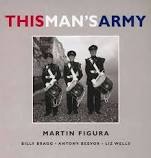
Hardcover. London, Dewi Lewis, 1st, 1998, Book: Very Good, Dust Jacket: None, Hardcover, 80 pages. A photo essay depicting the British Army struggling to come to terms with contemporary life. No dj issued.
Hardcover. London, Dewi Lewis, 1st, 1998, Book: Very Good, Dust Jacket: None, Hardcover, 80 pages. A photo essay depicting the British Army struggling to come to terms with contemporary life. No dj issued.
Hardcover. Charleston SC, Privately Published, 1st, 1954, Book: Very Good, Dust Jacket: None, Hardcover, blue cloth stamped in gilt. 211 pages, b&w frontispiece group portrait. SIGNED BY THE AUTHOR/COMPILER on the title page. The chronicle of a group of families associated for many generations with the Low Country of South Carolina. Clean copy.
Hardcover. NY, Time Life, reprint, 1984, Book: Very Good, Dust Jacket: None, 436 pages. Hardcover with no dust jacket. Dark blue leather bound with gilt titles to front cover and spine. Embossed decoration on front cover. Gilt text block edges, red ribbon marker. Clean, tight copy.
Softcover. NY, Knopf, 1st, 1983, Book: Very Good, Dust Jacket: None, Softcover, 117 pages. Introduction by William Shawcross. Text and photographs by Tim Page, a photo-journalist. Cover is a photograph of soldier with rifle in a rice paddy with yellow lettering. Rear cover is white with black lettering, states price of $14.95, and shows date of 3/83. Last page of book has list of photographs. Almost all photographs are in color. Book is square and tight.
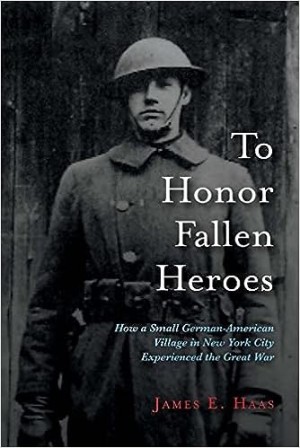
Softcover. self-published, 1st, 2017, Softcover, 238 pages, b&w illustrations. SIGNED BY AUTHOR on the title page. An historical and biographical study of the men from College Point, Queens, New York who rendered valuable service to their country in World War One. More than six hundred fifty served in the Army, the Navy, the Marine Corps and the Merchant Marine. Twenty-eight died. What gives the book its relatively unique character is that the hamlet was basically German in origin, primarily industrial, and in the late 19th and early 20th centuries, a destination place for large numbers of entertainment-seeking New Yorkers. The book includes an overview of these elements, illustrating how each played its role before, during and, to a limited extent, after the war. These subjects are woven into a detailed analysis of how College Point, and its people weathered movements and events; labor strife, anti-German sentiment, espionage, the influenza epidemic, and a host of other forces that impacted American culture in general, and their lives in particular. Also told in chronological order, and brief vignettes are the stories of the twenty-eight men who went willingly to war, and died. Clean copy.
Hardcover. Princeton NJ, Princeton University Press, 1st, 1965, Book: Very Good, Dust Jacket: Very Good, Hardcover in a bright dust jacket, 463 pages with index. This study considers the subtle and frequently confused relationship of armed force and political control in the British Empire before the American Revolution. It also clarifies a number of points of controversy and uncertainty about the causes of the American Revolution. A crisp copy of the 1965 1st edition. Name on front fly leaf, price clipped otherwise clean.
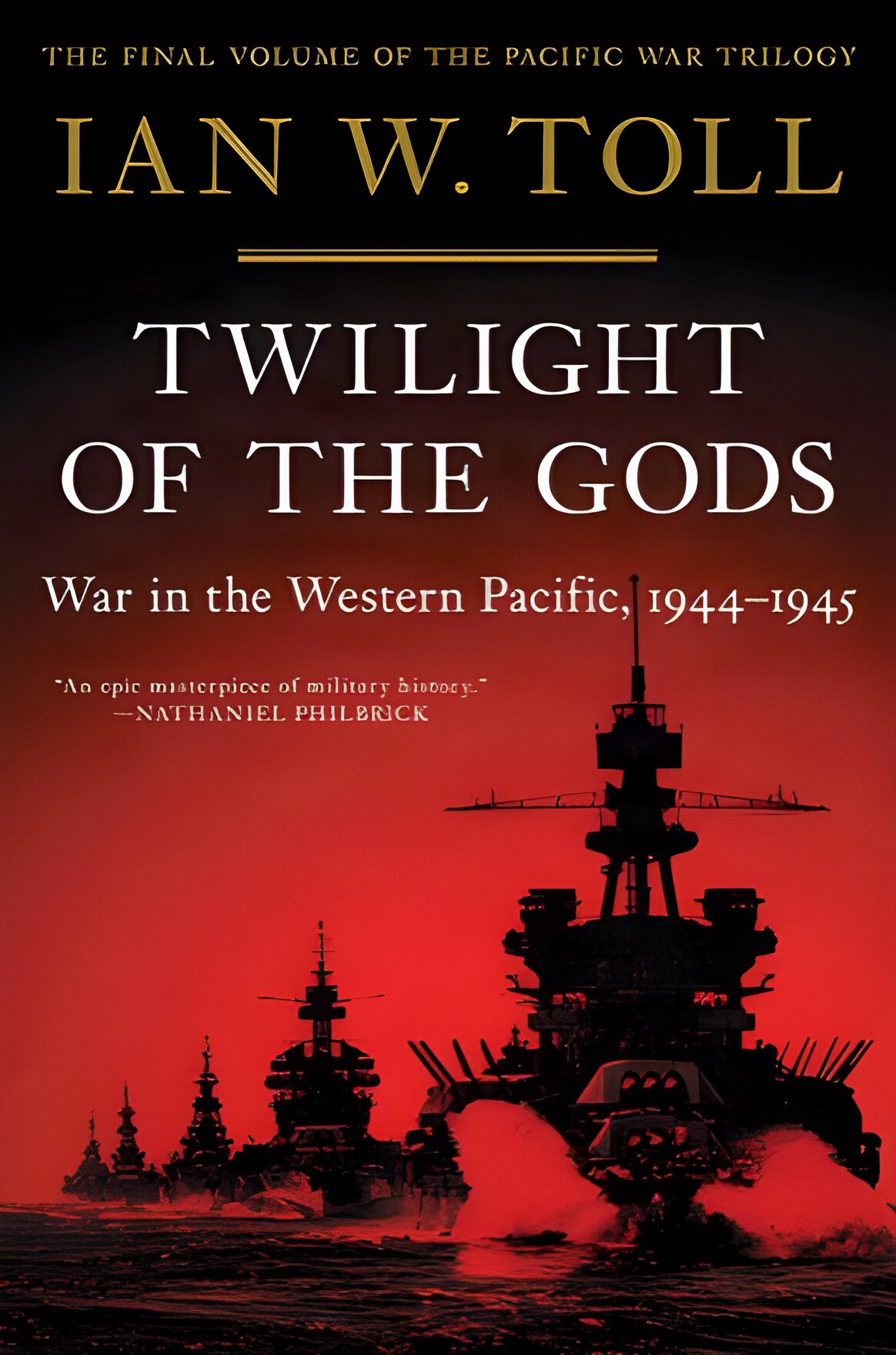
Hardcover. NY, W. W. Norton & Company, 2nd pr., 2020, Book: Very Good, Dust Jacket: Very Good, Hardcover in a bright dust jacket, 926 pages, illustrations. In June 1944, the United States launched a crushing assault on the Japanese navy in the Battle of the Philippine Sea. The capture of the Mariana Islands and the accompanying ruin of Japanese carrier airpower marked a pivotal moment in the Pacific War. No tactical masterstroke or blunder could reverse the increasingly lopsided balance of power between the two combatants. The War in the Pacific had entered its endgame. Beginning with the Honolulu Conference, when President Franklin Delano Roosevelt met with his Pacific theater commanders to plan the last phase of the campaign against Japan, Twilight of the Gods brings to life the harrowing last year of World War II in the Pacific, when the U.S. Navy won the largest naval battle in history; Douglas MacArthur made good his pledge to return to the Philippines; waves of kamikazes attacked the Allied fleets; the Japanese fought to the last man on one island after another; B-29 bombers burned down Japanese cities; and Hiroshima and Nagasaki were vaporized in atomic blasts. Ian W. Tolls narratives of combat in the air, at sea, and on the beaches are as gripping as ever, but he also reconstructs the Japanese and American home fronts and takes the reader into the halls of power in Washington and Tokyo, where the great questions of strategy and diplomacy were decided. Clean copy.
Softcover. Mason City, IA, Arrow Printing , 1st, 1956, Book: Very Good, Dust Jacket: None, 248 pages. 12mo. SIGNED BY BOTH AUTHORS on title page. Yellow wrappers wih red titles in English and Chinese. Age soil. The glue used by the printing company to attach the wrappers to the text was of poor quality; this has toned the wrappers spine to a darker yellow. Wear to top and bottom of spine.
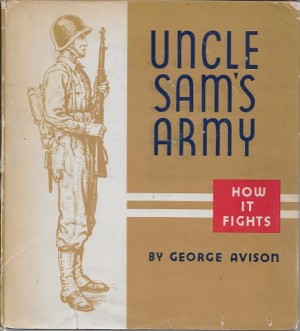
Hardcover. New York, Macmillian Company, 1st, 1943, Book: Very Good, Dust Jacket: Good, 40 pages. Hardcover with dust jacket. Light wear on dust jacket, rubbing and fraying to edges. Illustrated by Avison.
Hardcover. Bloomington, Indiana University Press, 1st, 1978, Book: Very Good, Dust Jacket: Good, Hardcover, 237 pages, b&w illustrations. Small tears to the edges of several pages. Dust jacket w/rubbing, light edgewear. Else clean and tight.
Hardcover. Rockport MA, Protean Pree, 1st, 2008, Book: Very Good, Dust Jacket: Very Good, Hardcover in a bright, unclipped dust jacket, b&w illustrations. In 1943, the author was on track to become a doctor like his parents when he flunked organic chemistry at Harvard and enlisted in the army, finding himself heading off to fight in Europe with the 45th Infantry Division (in which famed editorial cartoonist Bill Mauldin also served). Garland chronicles the division's journey from the landing at Sicily through the liberation of Dachau and then, some 60 years later, also seeks to come to terms with his experiences and those of his comrades. Part personal and collective memoir and part history, Garland's book is loaded with recollections compiled from interviews, diaries, drawings, and photographs that he neatly fits into the historical framework. His writing is highly engaging and shares the story of the 45th and its 511 days in combat and four amphibious landings, providing an excellent narrative history of the division during World War II, as well as a personal reckoning.


 "The Rising Sun in Pacific, 1931-April 1942: History of United States Naval Operations in World War II, Volume 3 by: Morison, Samuel Eliot")
 "The Rocket and the Reich: Peenemunde and the Coming of the Ballistic Missile Eraby: Michael J. Neufeld")
 "The Struggle for Guadalcanal: August 1942-February 1943 (History of United States Naval Operations in World War Ii, Volume 5) by: Morison, Samuel Eliot")






 "These Hallowed Grounds (SIGNED COPY)by: Clagett, John")
![This Is War!: A Photo-Narrative of the Korean War by: David Douglas Duncan; Harrison E. Salisbury [Foreword]](javascript:largeIMTop('https://www.browsingisarousing.com/shop/images/This-Is-War-A-Photo-Narrative-of-the-Korean-War_by_David-Douglas-Duncan-Harrison-E.-Salisbury-Forewo398314-451716.jpg','https://www.browsingisarousing.com/shop/images/This-Is-War-A-Photo-Narrative-of-the-Korean-War_by_David-Douglas-Duncan-Harrison-E.-Salisbury-Forewo398314-451716.jpg',0,'398314',0,'') "This Is War!: A Photo-Narrative of the Korean War by: David Douglas Duncan; Harrison E. Salisbury [Foreword]")
 "Three Years in the Sixth Corps: A Concise Narrative of Events in the Army of the Potomac, from 1861 to the Close of the Rebellion, April, 1865 (Collector's Library of the Civil War)by:")
 "Tim Page's Namby: Tim Page; William Shawcross, introduction")




 "Underwater Warfare in the Age of Sailby: Roland, Alex")