Hardcover. New York, Da Capo Press, 1st, 2017, Book: Very Good, Dust Jacket: Very Good, 327 pages. Hardcover. Gilt title on spine. Dust jacket unclipped. B/w illustrations throughout. In excellent condition, clean inside and out. Remainder mark on bottom edge. Binding tight, looks barely read.
Softcover. NY, Guggenheim Museum, 1st, 2003, Book: Very Good, Dust Jacket: None, 267 pages, illustrated throughout in color and b&w. Clean, unmarked copy with only minor wear to wrappers. In 1915, Kazimir Malevich changed the future of modern art when his experiments in painting led the Russian avant-garde into pure abstraction. He called his innovation Suprematism--an art of pure geometric form meant to be universally comprehensible regardless of cultural or ethnic origin. His Suprematist masterpiece, White Square on White (1920-27), continues to inspire artists throughout the world. Focused exclusively on this defining moment in Malevich's career, Kazimir Malevich: Suprematism features nearly 120 paintings, drawings and objects, among them several recently discovered masterworks. In addition, the book includes previously unpublished letters, essays and diaries, along with essays by international scholars, who shed new light on this popular figure and his devotion to the spiritual in art.
Hardcover. New York, The New Press, 1st, 1999, Book: Very Good, Dust Jacket: Very Good, 515 pages. Hardcover. Gray cover boards, gilt title on spine. In nice shape, Dust jacket unclipped, has just a touch of age yellow. Edges show a little soil (shelfwear). Binding very tight, clean inside. Very good condition.
Hardcover. London, Chris Boot, 1st, 2009, Book: Very Good, Dust Jacket: None, Hardcover, 252 pages. In this volume, ten Magnum photographers turn their lenses on contemporary Georgia. Situated on the cusp of Russia and Asia, but with a European culture dating back to the 7th century BC, Georgia was forcibly incorporated into the Soviet Union in 1922. Its independence was restored in 1991, but it then suffered from civil war and a breakdown of its economic infrastructure. In the last decade, however, despite ongoing tensions in its relations with Russia, Georgia has mounted a spirited comeback. Magnum photographers Antoine d'Agata, Jonas Bendiksen, Thomas Dworzak, Martine Franck, Alex Majoli, Gueorgui Pinkhassov, Martin Parr, Paolo Pellegrin, Mark Power and Alec Soth visited the country during spring 2009, each pursuing their own theme (Alec Soth goes in search of the 'most beautiful woman in Georgia', for example). All found themselves enchanted by the Georgian people, something strongly conveyed in their photographs as well as in personal text journals which accompany the images. This well-designed volume also includes a fold-out map, marked with each photographer's journey; a chapter showing the best of Magnum photographers' work over 60 years (including by Magnum's founders Robert Capa from his visit to Georgia with John Steinbeck in 1948 and Henri Cartier-Bresson); and an illuminating introduction by the Paris-based New Yorker writer, and Georgia expert, Wendell Steavenson.
Hardcover. Cambridge UK, Cambridge University Press, 1st, 1983, Book: Very Good, Dust Jacket: Very Good, Hardcover, 414 pages. Translation by Richard Taylor. Dust jacket spine faded. Previous price sticker on dust jacket front flap. Else a clean, tight copy.
Hardcover. Ann Arbor, MI, Ardis, 1st English, 1981, Book: Very Good, Dust Jacket: Good, Hardcover, 565 pages. B/w illustrations throughout. Gilt title on spine. Decorated endpapers. Dust Jacket shows some wear due to age: yellowing, fraying and chipping to edges of front, spine and back, but still in tact. Cover boards clean, covered in teal fabric and in good shape. Pages clean, edges slightly yellowed. From the front flap: "...a landmark work in Russian theater scholarship, this study reveals Meyerhold in the context of his time, as seen by friends and enemies, actors and critics, and analyzes the development of his remarkable career as Russia's most celebrated and influential experimental director."
Hardcover. Stanford CA, Stanford University Press, 1st, 1982, Book: Very Good, Dust Jacket: Very Good, Hardcover, 308 pages, map endpapers. Light edge wear to dust jacket, small sticker on front cover. Else a very clean, tight copy.
Hardcover. NY, Cambridge University Press, 1st, 1994, Book: Very Good, Dust Jacket: Very Good, Hardcover in a bright dust jacket. This pioneering study documents the extent and diversity of the impact of Nietzschean ideas on Soviet literature and culture. It shows for the first time how these ideas, unacknowledged and reworked, entered and shaped that culture and stimulated the imagination of both supporters and detractors of the regime. 421 pages, a bright, clean copy.
Softcover. Cambridge MA, MIT Press, 1st, 1978, Book: Very Good, Softcover, 128 pages. INSCRIBED BY BOTH EDITORS on the front endpapers. Contributors include Dziga Vertov ('The Factory of Facts and Other Writings'), Alfred H. Barr, Jr. ('Russian Diary 1927-28', along with Jere Abbott, John E. Bowlt, and Elizabeth Jones), A. V. Lunacharsky ('Gogol-Meyerhold's "The Inspector-General"'), Paul Schmidt (on Meyerhold), Margit Rowell (on Vladimir Tatlin), and Michelson. Related ephemera laid in.
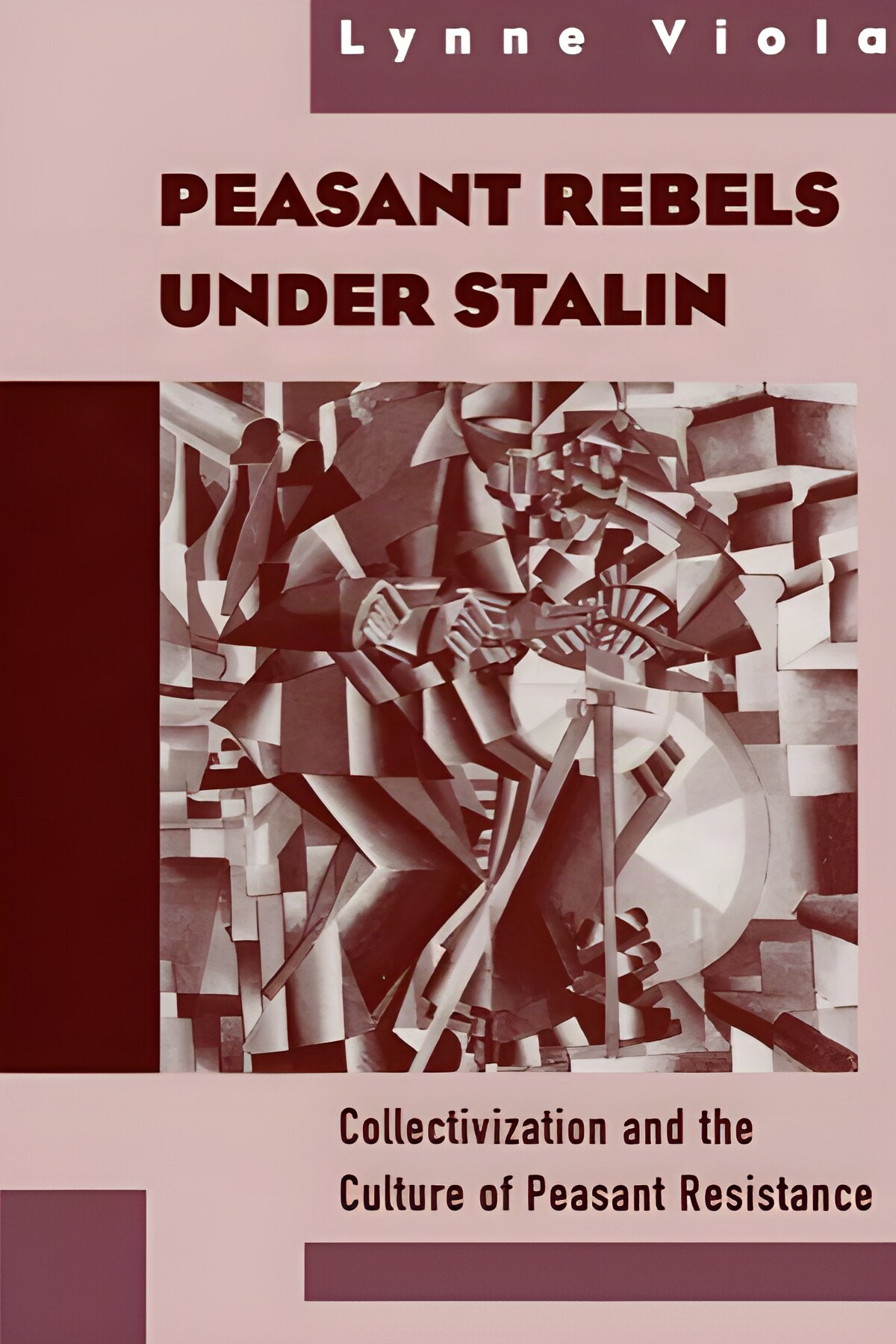
Hardcover. NY, Oxford University Press, 1st, 1996, Book: Very Good, Dust Jacket: Very Good, Hardcover in a bright dust jacket, 312 pages. The first book to document the peasant rebellion against Soviet collectivization, Peasant Rebels Under Stalin retrieves a crucial lost chapter from the history of Stalinist Russia. The peasant revolt against collectivization, as reconstructed by author Lynne Viola, was the most violent and sustained resistance to the Soviet state after the Russian Civil War. Conservative estimates suggest that over the course of the 1920s and early 1930s, more than 1,100 people were assassinated, more than 13,000 villages rioted, and over 2.5 million people participated in this active struggle of resistance. This book is about the men and women who tried to preserve their families, communities, and beliefs from the depredations of Stalinism. Their acts were often heroic, but these heroes were homespun, ordinary people who were driven to acts of desperation by cruel and brutal state policies. Clean copy.
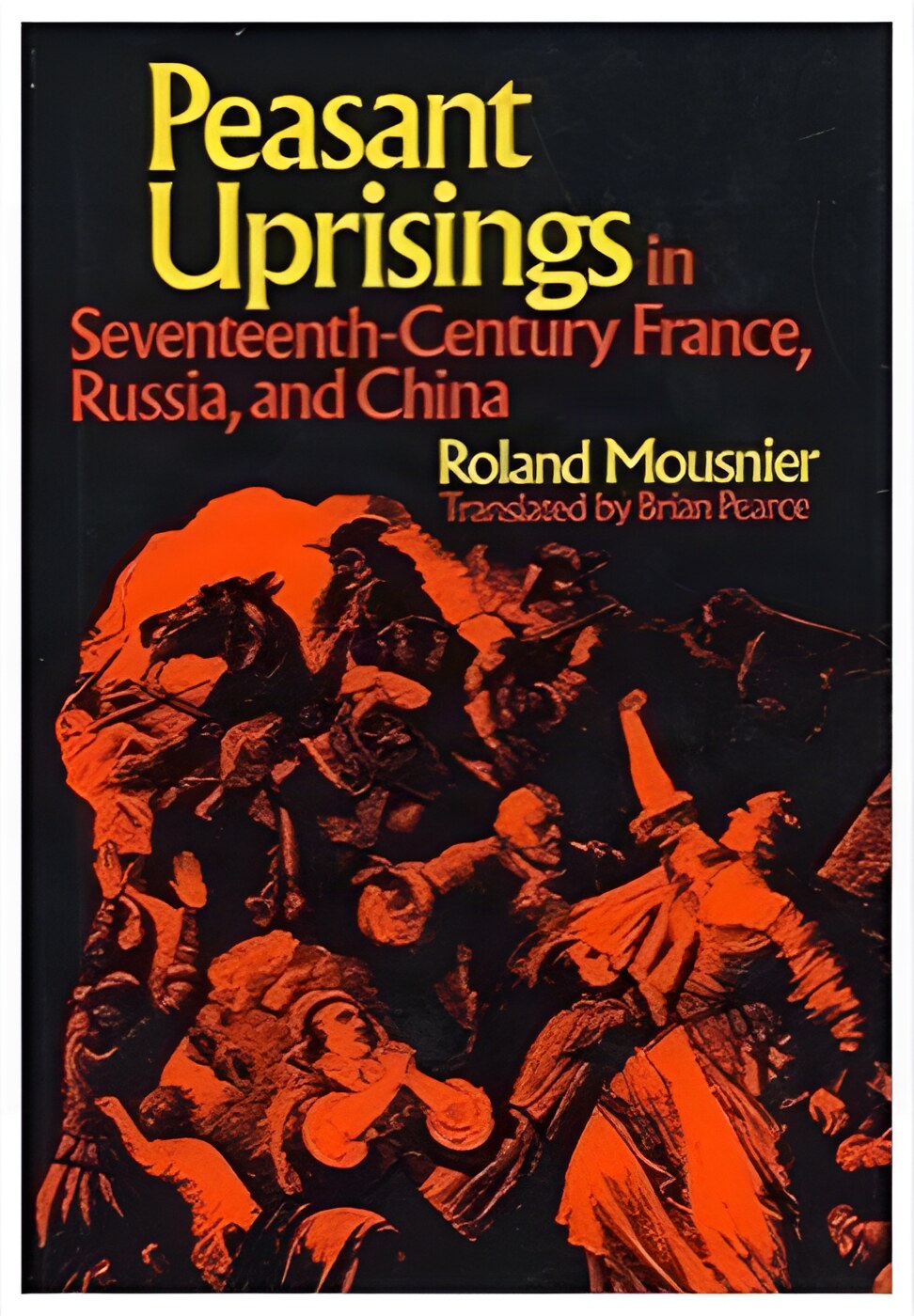
Hardcover. NY, Harper & Row, 1st US, 1970, Book: Very Good, Dust Jacket: Very Good, Hardcover in a lightly worn, price-clipped dust jacket, 358 pages. A close analysis of some of the typical peasant uprisings of the seventeenth century. The goal of the movements in France and China was a return to an older and more traditional society, rather than a profound transformation of the social structure. In Russia, however, the peasants attempted to overturn the rigid order of a two-class structure and replace it with a more democratic society. Clean copy.
Hardcover. NY, Four Winds Press, 1st, 1986, Book: Very Good, Dust Jacket: Very Good, 32 pages. hardcover with dust jacket. Illust. in color by Stanley. Dust jacket with chip, light soil to rear. Tight copy.
Hardcover. Manchester UK, Manchester University Press, 1st, 1985, Book: Very Good, Dust Jacket: Very Good, Hardcover in a bright, unclipped dust jacket. 312 pages. Clean, tight copy.
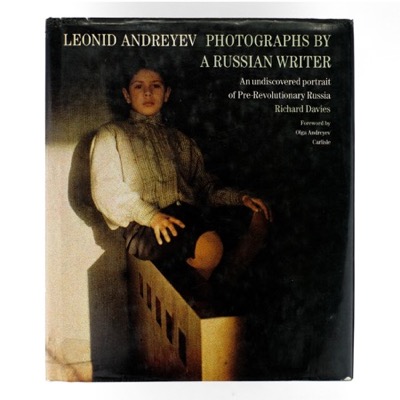
Hardcover. London, Thames and Hudson, 1st, 1989, Book: Very Good, Dust Jacket: Very Good, Hardcover in a bright dust jacket, green cloth, gilt lettering, 144 pages. Discovered in Paris in 1987, these 80 color and 30 b&w photographs, taken about 1910-14, are artistic studies of the expressionist Russian writer, his family and friends, his home, and the countryside around St. Petersburg. Includes a biographical essay and a review of the Lumiere autochrome photographic process. Mild wear to top of dj spine, otherwise a clean, tight copy.
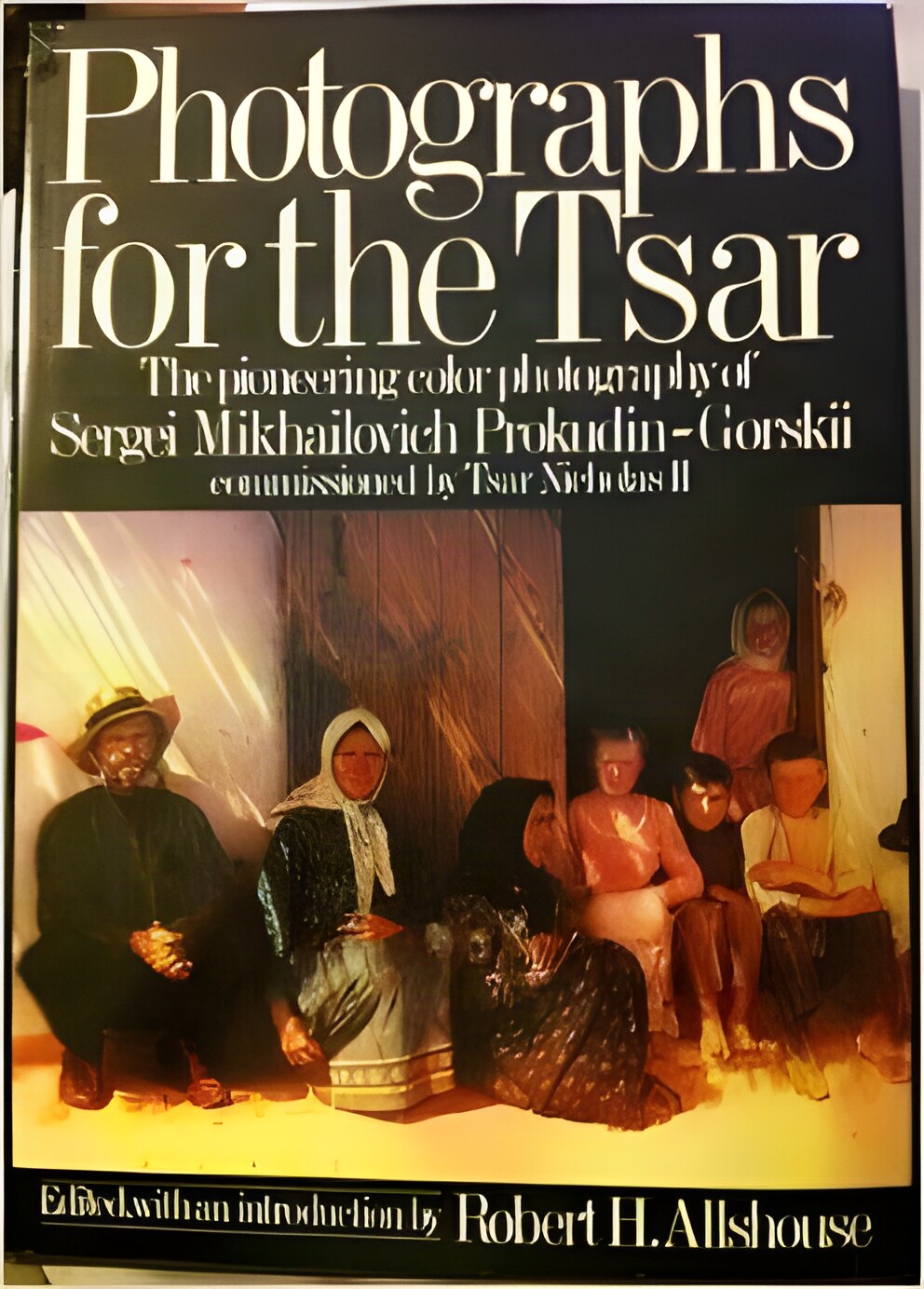
Hardcover. Dial Press, 1st, 1980, Book: Very Good, Dust Jacket: Very Good, 216 pages. Hardcover. Color photographs. Clean, unmarked copy in excellent condition with minor wear to dust jacket. Sergei Prokudin-Gorskii was a chemist and photographer commissioned by Tzar Nicholas II to photograph as much of the Russian Empre as possible in color. Prokudin-Gorskii used three color separations for his photos and as a result some pictures are astoundingly sharp and brilliantly colored, and some the colors are out of register slightly. That's irrelevant, because the photos are spectacular and show the Russian Empire from end to end on the eve of its collapse.
Hardcover. New Haven CT, Yale University Press, 1st, 2015, Book: Very Good, Dust Jacket: None, Hardcover, 238 pages. Like new in publisher's shrink-wrap. Covering the period from the Revolution to the beginning of World War II, this book considers Soviet avant-garde photography and film in the context of political history and culture. Three essays trace this generation of artists, their experiments with new media, and their pursuit of a new political order. A wealth of stunning photographs, film stills, and film posters, as well as magazine and book designs, demonstrate that their output encompassed a spectacular range of style, content, and perspective, and an extraordinary sense of the power of the photograph to change the world.
Hardcover. Cambridge, Cambridge University Press, 1st UK, 1995, Book: Very Good, Dust Jacket: Very Good, Hardcover in a bright, unclipped dust jacket, 269 pages. Clean, bright copy. This is the first scholarly account by a Western historian of the Time of Troubles, the period of civil war and foreign invasion in early-seventeenth-century Russia. The author focuses on the various pretenders or royal imposters who appeared at this time; she traces their careers and offers explanations for their success. Her analysis of the phenomenon of pretense illuminates popular perceptions of the monarchy in early modern Russia, and demonstrates how social protest could take the form of support for imposters claiming to be the "true tsar".
Hardcover. Princeton, N.J., Kingston Press, Incorporated, The, 1st, 1984, Book: Very Good, Dust Jacket: Very Good, SIGNED BY AUTHOR. 227 pages. Light foxing to top and fore-edge. Minor wear to dust jacket; spine slightly faded. Else a very clean, tight copy.
Hardcover. Princeton NJ, Kingston Press, 1st, 1984, Book: Very Good, Dust Jacket: Very Good, Hardcover, 227 pages, bibliography and index. A scarce scholarly history. Slight sunning to dust jacket spine, otherwise like new, clean and tight.
Softcover. University Press of Maryland, 2000, Softcover, 306 pages. Memoir (translated from the German by Henny Wenkart) of a Jewish woman in 19th-century Russia, with scholarly introduction and analysis. Pauline Wengeroff's memoir tells what it was like to be a Jewish girl and a Jewish woman in 19th-century Russia, as foundations of faith and tradition eroded around her. Clean copy.
Hardcover. Stanford CA, Stanford University Press, 1st, 1992, Book: Good, Dust Jacket: Very Good, Hardcover, 443 pages. This book contains UNDERLINING which is mainly confined to chapter 7. Otherwise a bright, tight copy in an unclipped dust jacket.
Hardcover. Toronto, Trafalgar Press, 1st, 1986 , Book: Very Good, Dust Jacket: Very Good, Hardcover in a bright "(Skillfully traces the causes of the Crimean War and sketches a vivid picture of an age which made possible 'the world's most curious and unneccesary struggle'. Troubetzkoy ingeniously weaves together the varied developments in diplomacy, trade, nationalistic expression and personality conflict in the decade which led to the hostilities. The armies of the belligerents are described (and the) reader is introduced to the principal personages of the drama - Napoleon III, Marshal St. Arnaud, Lord Raglan and the great Russian engineer, Todleben, who, apart from Florence Nightingale, was the only one to earn true distinction during the War. Vividly described are Nicholas I and the Russian Empire." Clean copy.
Hardcover. New York, Oxford University Press, 1st, 1990, Book: Very Good, Dust Jacket: Very Good, Hardcover, 239 pages. Minor edge wear to dust jacket. Else a very clean, tight copy. The dramatic events of the twentieth century have often led to the mass migration of intellectuals, professionals, writers, and artists. One of the first of these migrations occurred in the aftermath of the Russian Revolution, when more than a million Russians were forced into exile. With this book, Marc Raeff, one of the world's leading historians of Russia, offers the first comprehensive cultural history of the "Great Russian Emigration." He examines the social and institutional structure of the emigration and describes its rich cultural and intellectual life. He points out that what distinguishes this emigration from other such episodes in European history is the extent to which the emigres succeeded in reconstituting and preserving their cultural creativity in the West. The flourishing Russian communities of Paris, Berlin, Prague and Kharbin not only enriched Russian arts and letters, but also significantly influenced the culture of their Western hosts, and Raeff concludes with an assessment of their impact on the development of modern Western and Soviet culture.

 "Island of the Blue Foxes: Disaster and Triumph on the World's Greatest Scientific Expeditionby: Bown, Stephen R.")
 "Kazimir Malevich: Suprematismby: Gurianova, Nina/ Jean-Claude Marcade , Tatyana Mikhienko")
 "Kissinger Transcripts, The: The Top-Secret Talks with Beijing & Moscowby: Burr, William (Ed.)")
 "Magnum Photos: Georgian Spring-A Magnum Journalby: Wendell Steavenson")
 "Marxism in Russia: Key Documents 1879-1906by: Harding, Neil (Editor)")
 "Meyerhold the Directorby: Rudnitsky, Konstantin")
 "Moscow, 1905: Working-Class Organization and Political Conflictby: Engelstein, Laura")
 "Nietzsche and Soviet Culture: Ally and Adversaryby: Bernice Glatzer Rosenthal (Ed.)")

 "Peasant Russia Civil War: The Volga Countryside in Revolution 1917-1921by: Figes, Orlando")
 "Peter the Greatby: Stanley, Diane")
 "Petrashevtsy, The: - A Study of the Russian Revolutionaries of 1848by: Seddon, J. H.")


 "Power of Pictures, The: Early Soviet Photography, Early Soviet Filmby: Goodman, Susan Tumarkin")
 "Pretenders and Popular Monarchism in Early Modern Russia - The False Tsars of the Time of Troublesby: Perrie, Maureen")

 "Religious Revolt in the XVIIth Century: The Schism of the Russian Churchby: Lupinin, Nickolas")
 "Rememberings: The World of a Russian-Jewish Woman in the Nineteenth Century by: Pauline Wengeroff")
 "Revolution of 1905 - Authority Restored, Theby: Ascher, Abraham")

 "Russia Abroad: A Cultural History of the Russian Emigration, 1919-1939by: Raeff, Marc")