Hardcover. NY, Henry Holt and Company, 1st, 1899, Book: Good, Dust Jacket: None, 411 pages. Hardcover. Previous owners name on inside front cover. Green cloth with gilt title and decoration. Front and rear hinges cracked. Missing front endpaper. Heavy foxing to preliminary pages up to contents page, and last 5 pages at end of book; including map. Front fold-out map at title page and rear most map both badly damaged. Foxing to edges. Moderate wear to covers. Clean, unmarked text.
Hardcover. Moscow, Sovietsky Khudozhnik, 1st, 1990, Book: Very Good, Dust Jacket: Very Good, 359 pages. Hardcover with dust jacket. Russian text only. Profusely illustrated in full color and black & whiite. A survey of Russia's brief Art Nouveau movement in architecture. Bright, clean copy in a similar dust jacket. In a plain cardboard slipcase.
Hardcover. New York, Harper & Brothers, 1st, 1887, Book: Very Good, Dust Jacket: None, Hardcover, 310 pages. Brown cloth, gilt lettering to spine. Light wear and rubbing to covers and edges of spine. Clean, tight copy.
Hardcover. Russia, Aurora Art Publishers, 1st, 1991, Book: Very Good, Dust Jacket: Very Good, 199 pages. Hardcover with dust jacket. Some foxing to textblock edges. Otherwise a very clean, unmarked copy with some minor dust jacket wear. Black & white and color illustrations throughout. A tight copy.
Hardcover. New York, Basic Books , 1st, 1984, Book: Good, Dust Jacket: Good, 239 pages. Red cloth. Light edgewear to dust jacket with one small closed tear to front cover. Spine slightly slanted. Clean, tight copy.
Hardcover. Vancouver, CN, University of British Columbia Press, 1st, 1988, Book: Very Good, Dust Jacket: Very Good, Like New. Black & white illustrations. Harcover in a bright dust jacket, 302 Pages.
Hardcover. Yorkshire UK, Pen and Sword Military, 1st, 2019, Book: Very Good, Dust Jacket: Very Good, Hardcover in a bright, unclipped dust jacket, 320 pages. So much has been written about the Battle of Stalingrad - the Soviet victory that turned the tide of the Second World War - that we should know everything about it. But the history of the war, and the battle, is evolving and is being written anew, and Alexey Isaev's engrossing account is a striking example of this fresh approach. B&w photos, color maps. Clean copy.
Hardcover. Somerville MA, Candlewick, 1st, 2015, Book: Very Good, Dust Jacket: Very Good, Hardcover in a bright dust jacket, 456 pages, SIGNED BY AUTHOR on the title page. In September 1941, Adolf Hitlers Wehrmacht surrounded Leningrad in what was to become one of the longest and most destructive sieges in Western history-almost three years of bombardment and starvation. Trapped between the Nazi invading force and the Soviet government itself was composer Dmitri Shostakovich, writing a symphony to rouse, rally, eulogize, and commemorate his fellow citizens: the Leningrad Symphony. This is the true story of a city under siege, the triumph of bravery and defiance in the face of terrifying odds. It is also a look at the power-and layered meaning-of music in beleaguered lives. Symphony for the City of the Dead is a masterwork thrillingly told and impeccably researched by National Book Award-winning author M. T. Anderson. Signed copy sticker on front cover, otherwise like new.
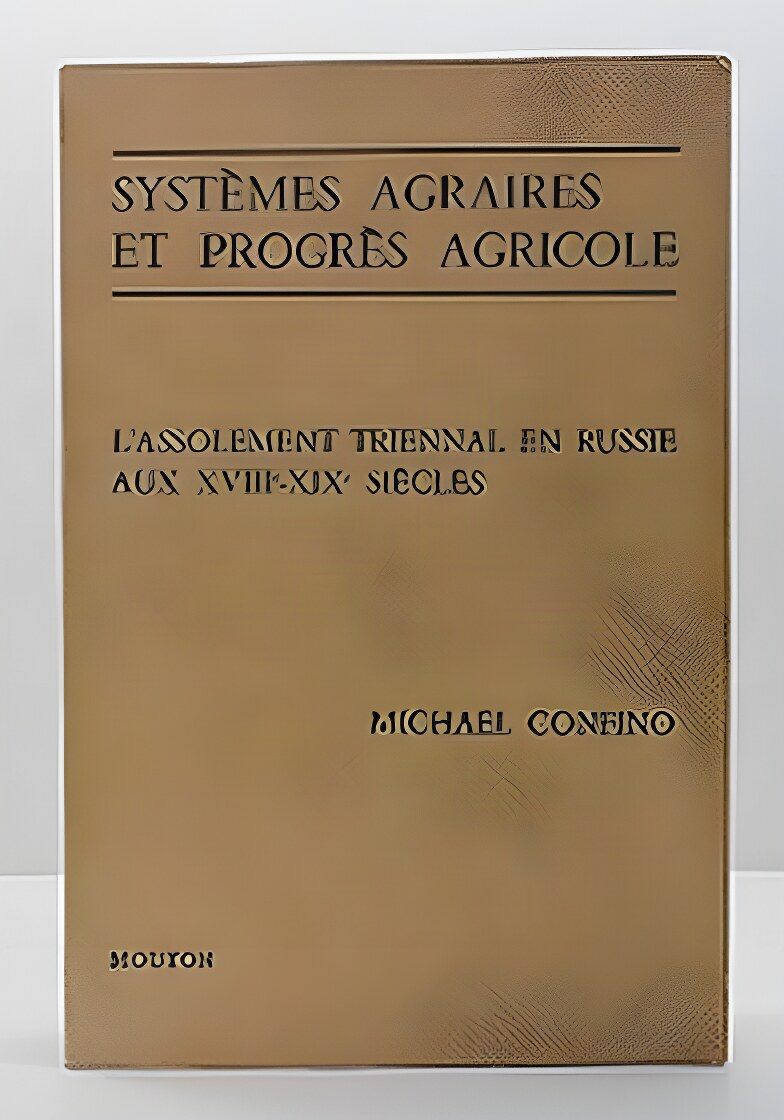
Softcover. Paris, Mouton & Co., 1st, 1969, Book: Good, Dust Jacket: None, Softcover, 495 pages. FRENCH TEXT. 10 black-and-white plates. Some creasing along spine. Minor edge wear. Binding a little cracked where plates begin and end. Good, unmarked copy. (Agrarian Systems and Agricultural Progress: Three-Field Crop Rotation in Russia in the 18th and 19th Centuries).
Hardcover. NY, Thomas Y. Crowell , 1st, 1979, Book: Very Good, Dust Jacket: Very Good, Hardcover in a bright, lightly worn dust jacket, 299 pages. Name on front fly leaf, otherwise clean.
Hardcover. Princeton NJ, Princeton University Press, 1st, 1958, Book: Very Good, Dust Jacket: Very Good, Hardcover in a lightly worn, price-clipped dust jacket, 513 pages, b&w illustrations. In 1918 the U.S. government decided to involve itself with the Russian Revolution by sending troops to Siberia. This book re-creates that unhappily memorable story: the arrival of British marines at Murmansk, the diplomatic maneuvering, the growing Russian hostility, the uprising of Czechoslovak troops in central Siberia which threatened to overturn the Bolsheviks, the acquisitive ambitions of the Japanese in Manchuria, and finally the decision by President Wilson to intervene with American troops. Of this period Kennan writes, "Never, surely, in the history of American diplomacy, has so much been paid for so little." Name on front fly leaf, otherwise clean.
Softcover. Bloomington IN, Indiana University Press, 2nd Ed., 1994, Book: Very Good, Dust Jacket: None, Softcover, 418 pages. Like the other republics floating free after the demise of the Soviet empire, the independent republic of Georgia is reinventing its past, recovering what had been forgotten or distorted during the long years of Russian and Soviet rule. Whether Georgia can successfully be transformed from a society rent by conflict into a pluralistic democratic nation will depend on Georgians rethinking their history. This is the first comprehensive treatment of Georgian history, from the ethnogenesis of the Georgians in the first millennium B.C., through the period of Russian and Soviet rule in the nineteenth and twentieth centuries, to the emergence of an independent republic in 1991, the ethnic and civil warfare that has ensued, and perspectives for Georgia's future.
Hardcover. London, Macgibbon & Kee, 1st, 1966, Book: Very Good, Dust Jacket: Fair, Hardcover in a worn, chipped dust jacket, 204 pages. "A valuable well-researched study of brinkmanship and of people under pressure presented fully for the first time." Name on front fly leaf, otherwise clean.
Hardcover. London, Macgibbon & Kee, 1st, 1966, Book: Very Good, Dust Jacket: Fair, Hardcover in a worn, chipped dust jacket, 204 pages. "A valuable well-researched study of brinkmanship and of people under pressure presented fully for the first time." Name on front fly leaf, otherwise clean.
Hardcover. NY, Norton, 1st US, 1985, Book: Very Good, Dust Jacket: Very Good, Hardcover in a bright dust jacket, 192 pages. The photos are breathtaking not necessarily for their quality - many are washed out and most of the subject matter is routine day to day military stuff - but for their rarity. While the Germans seem to have been at least as far advanced in the use of color photography as the Americans, there is still a paucity of color photography in the public record. That is being addressed by the various nations who took large amounts of color film in an official capacity, including the US, UK, Germany and Canada. The book's captions are adequate to the task, and there are good historical sections, as well as an introduction by Max Hastings as well as commentary by an actual German war correspondent. The strength of the book is in its ability to bring the participants of the subject campaign - the German invasion of Russia up to and including Stalingrad - to life. The use of a large format allows one to note small details of the photos, and relate to the subject matter on a personal level. Despite the lack of "action" shots, there is much to see in facial expressions, uniform details, and especially geography as the Russian steppe is shown in summer and winter, as well as the famous Russian mud (Rasputitsa) about which so much has been written.
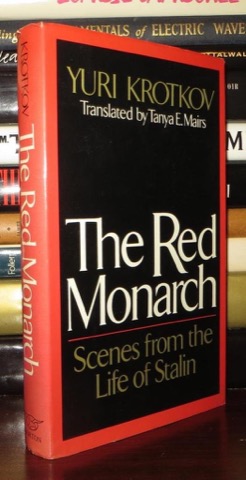
Hardcover. NY , Norton, 1st, 1979, Book: Very Good, Dust Jacket: Very Good, Hardcover in an unclipped dust jacket with fading to spine, 253 pages. This series of sketches captures Stalin with irony, humor and pathos. The author calls his fictionalized version of Stalin "artistic documentation" in the spirit of reality based on research, personal experience and conversations with others. Yuri Krotkov, a Soviet Georgian, as was Stalin, was a prominent dramatist and screenwriter in the Soviet Union before his defection. As a member of the Russian intelligentsia, he was in the confidence of top-ranking Soviet and party officials in Moscow. Review slip laid in. Foxing to top edge otherwise clean copy.
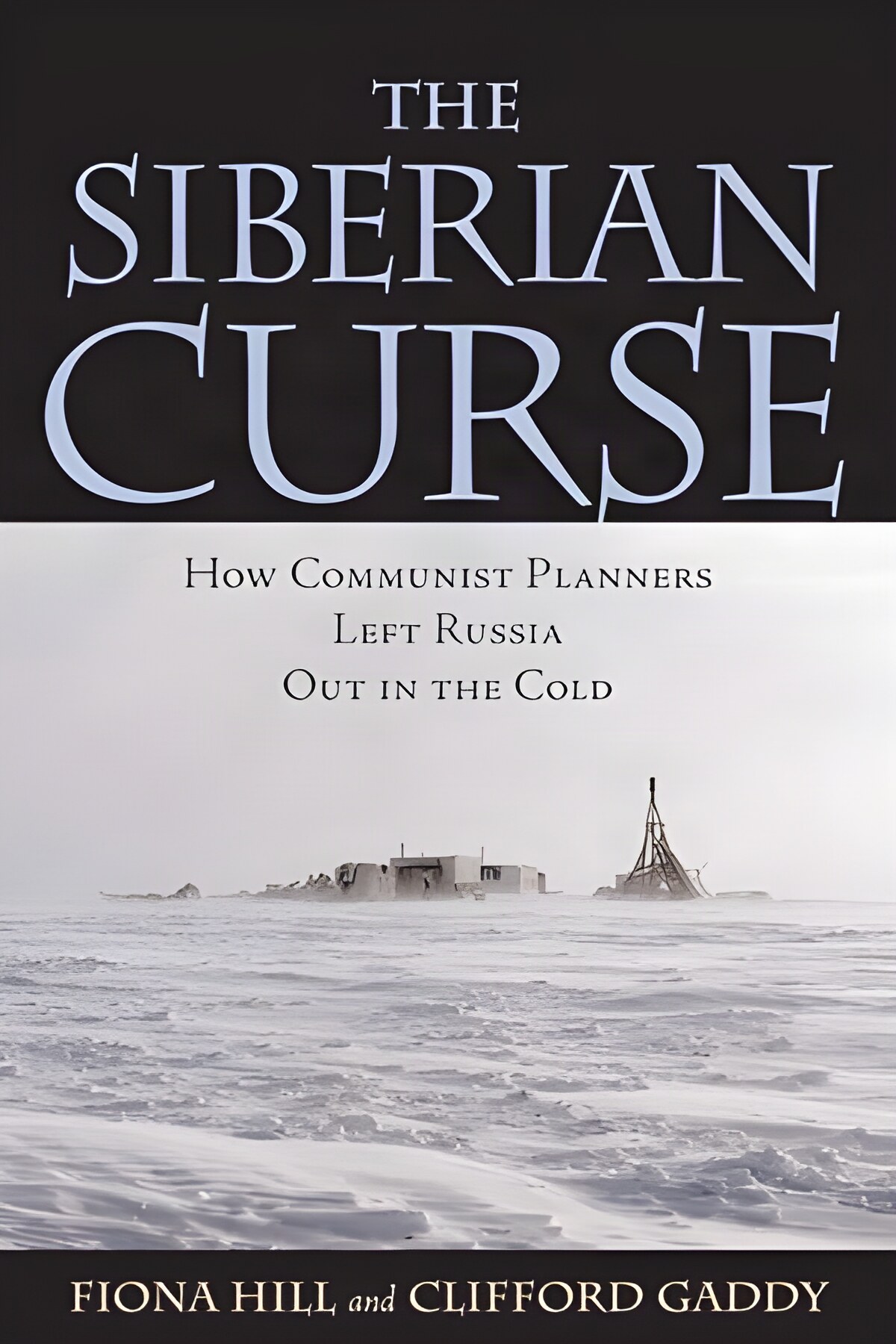
Hardcover. Washington DC, Brookings Institution Press, 1st, 2003, Book: Very Good, Dust Jacket: Very Good, Hardcover in a bright dust jacket, 303 pages. The author analyzes why it is uneconomical to develop Siberia as the Russians have historically envisioned. Clean copy.
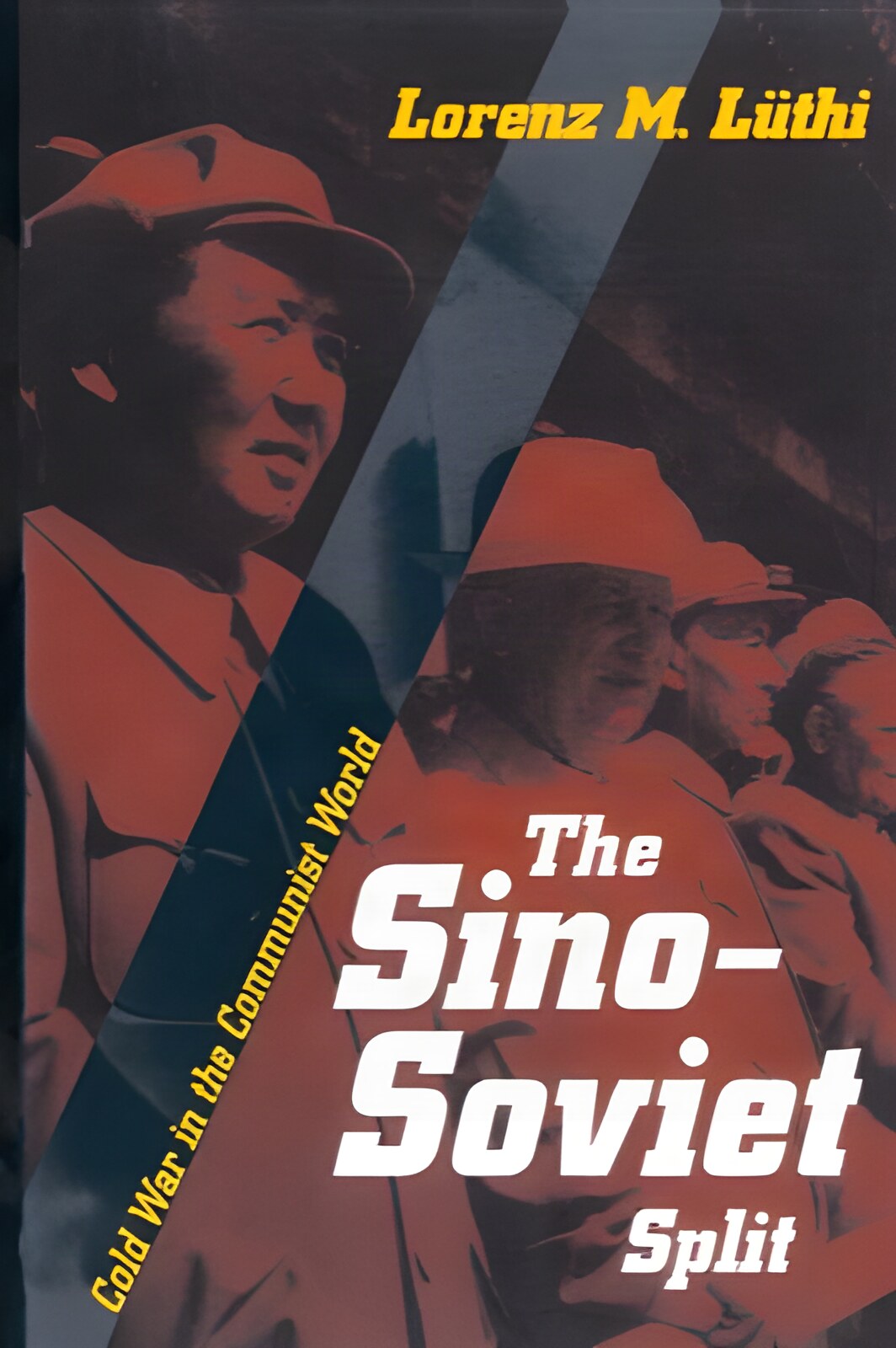
Softcover. Princeton NJ, Princeton University Press, 3rd pr., 2008, Book: Very Good, Dust Jacket: None, Softcover in pictorial wraps, 375 pages, maps. A decade after the Soviet Union and the People's Republic of China established their formidable alliance in 1950, escalating public disagreements between them broke the international communist movement apart. In The Sino-Soviet Split, Lorenz Luthi tells the story of this rupture, which became one of the defining events of the Cold War. Identifying the primary role of disputes over Marxist-Leninist ideology, Luthi traces their devastating impact in sowing conflict between the two nations in the areas of economic development, party relations, and foreign policy. The source of this estrangement was Mao Zedong's ideological radicalization at a time when Soviet leaders, mainly Nikita Khrushchev, became committed to more pragmatic domestic and foreign policies. Using a wide array of archival and documentary sources from three continents, Luthi presents a richly detailed account of Sino-Soviet political relations in the 1950s and 1960s. He explores how Sino-Soviet relations were linked to Chinese domestic politics and to Mao's struggles with internal political rivals. Furthermore, Luthi argues, the Sino-Soviet split had far-reaching consequences for the socialist camp and its connections to the nonaligned movement, the global Cold War, and the Vietnam War. Clean copy.
Hardcover. London, George Allen & Unwin Ltd, 2nd Ed., 1955, Book: Very Good, Dust Jacket: Good, Hardcover in a worn, chipped dust jacket. 664 pages with index. Volume 2 ONLY. Masaryk was the president of Czechoslovakia after World War I. Long a student of Russia this book was first published in 1913. Clean copy.
Hardcover. Princeton NJ, Princeton University Press, 1st, 1974, Book: Very Good, Dust Jacket: None, Hardcover, brick-red cloth covers, 448 pages with index. The attempted modernization of Central Asia by the central Soviet government in the 1920's was a dramatic confrontation between radical, determined, authoritarian communists and a cluster of traditional Moslem societies based on kinship, custom, and religion. The Soviet authorities were determined to undermine the traditional social order through the destruction of existing family structures and worked to achieve this aspect of revolution through the mobilization of women. Gregory J. Massell's study of the interaction between central power and local traditions concentrates on the development of female roles in revolutionary modernization. Women in Moslem societies were segregated, exploited, and degraded; they were, therefore, a structural weak point in the traditional order-a surrogate proletariat. Through this potentially subversive group, it was believed, intense conflicts could be generated within society which would lead to its disintegration and subsequent reconstitution. Marginal notes to about 15 pages, otherwise clean, solid copy.
Hardcover. NY, Random House, 1st, 1985, Book: Very Good, Dust Jacket: Very Good, Hardcover in a bright dust jacket, 487 pages, b&w illustrations. Napoleon's colorful but disastrous Russian campaign has been strangely neglected by American publishers. Bridging the gap between popular and scholarly history, historian Cate has written a thoroughly detailed and researched account that should also appeal to the lay reader. His writing is deliberately paced but dramatic and does far more justice to the extremely complex political and military situation of 1812 than Philippe de Segur's Napoleon's Russian Campaign (1965), the only other work available in the United States. Clean copy.
Hardcover. London, George Allen and Unwin Ltd., 1st ed., 1967, Book: Very Good, Dust Jacket: Good, Hardcover, 331 pages. Blue cloth boards with gilt lettering along spine. Dust jacket has sticker on front flap. Dust jacket is also faded along spine with over all shelf wear. Otherwise, tight clean copy.
Hardcover. NY, Frederick A. Praeger , 1st, 1966, Book: Good, Dust Jacket: Fair, Hardcover in a worn, chipped dust jacket. 303 pages, b&w illustrations, maps. Eight years after the Russian capture of Tashkent in 1865, Schuyler, then American consul in St. Petersburg, set out to tour Russia's newly acquired dominions. Traveling entirely by road under primitive conditions, he managed in the space of 18 months to traverse the Steppe Region and record his observations of the Muslim people. Name, date on front fly leaf, no other markings.

 "Russia's Art Nouveauby: Borisova, Elena and Grigory Sternin")
 "Russian Church and Russian Dissent, The: Comprising Orthodoxy, Dissent, and Erratic Sectsby: Heard, Albert F.")
 "Russian Empire and Soviet Union - A Guide to Manuscripts and Archival Materials in the United States, Theby: Grant, Steven A./John H. Brown")
 "Russian Painted Shop Signs and Avant-Garde Artistsby: Povelikhina, A. V")
 "Russian Revolutions of 1917: The Origins of Modern Communismby: Schapiro, Leonard")
 "Southern And Eastern Polynesia - Russia and the South Pacific 1696-1840by: Barratt, Glynn")
 "Stalingrad: City on Fireby: Isaev, Alexey")






 "The Onslaught: The German Drive to Stalingrad : Documented in 150 Unpublished Colour Photographs by: Heinrich Von Einsiedel")

 "The Surrogate Proletariat: Moslem Women and Revolutionary Strategies in Soviet Central Asia, 1919-1929by: Gregory J. Massell")
 "Thomas Garrigue Masaryk: The Spirit of Russiaby: Gibian, George")
