Hardcover. Princeton NJ, Princeton University Press, 1st, 1999, Book: Very Good, Dust Jacket: Very Good, Hardcover in a bright dust jacket, 335 pages with b&w illustrations. Re-creates the story of Europe's indigenous people who were nearly stricken from historical memory even as they adopted and transformed aspects of Roman culture. The Celts and Germans inhabiting temperate Europe before the arrival of the Romans left no written record of their lives and were often dismissed as "barbarians" by the Romans who conquered them. Accounts by Julius Caesar and a handful of other Roman and Greek writers would lead us to think that prior to contact with the Romans, European natives had much simpler political systems, smaller settlements, no evolving social identities, and that they practiced human sacrifice. A more accurate, sophisticated picture of the indigenous people emerges, however, from the archaeological remains of the Iron Age. Here Peter Wells brings together information that has belonged to the realm of specialists and enables the general reader to share in the excitement of rediscovering a "lost people." Clean copy.
Hardcover. NY, Walker Books, 1st, 2004, Book: Very Good, Dust Jacket: Very Good, Hardcover in a bright, unclipped dust jacket. n the summer of 1932, at the height of the Depression, some forty-five thousand veterans of World War I descended on Washington, D.C., from all over the country to demand the bonus promised them eight years earlier for their wartime service. They lived in shantytowns, white and black together, and for two months they protested and rallied for their cause-an action that would have a profound effect on American history. Clean copy.
Softcover. London, London School of Economics and Political Science, 2nd pr., 1956, Book: Very Good, Dust Jacket: None, Softcover, red wrappers, 91 pages. One in a series of Monographs of Social Anthropology published by The London School of Economics and Political Science; this one is No. 12 and deals with the Chinese of Sarawak, a province of Malaysia located on the island of Borneo. There are several detailed fold-out maps and many charts and tables. Measures 7.25" x 9.75".
Hardcover. NY, Verso, 1st, 2021, Book: Very Good, Dust Jacket: Very Good, Hardcover in a bright dust jacket, 241 pages. In essays that range from ancient Greece to the end of the Anthropocene, Bull addresses questions central to contemporary political theory in novel readings of texts by Aristotle, Machiavelli, Marx, and Arendt, and shows how classic philosophical problems have a bearing on issues like political protest and climate change. The result is an entirely original account of political agency for the twenty-first century in which uncertainty and idleness are limned with utopian promise. Clean, bright copy.
Softcover. NY, Pantheon Books, 1st US, 1983, Book: Very Good, Dust Jacket: None, Softcover, 301 pages. The classic study of the life of the nobility at the royal court of France, especially under Louis XIV. Paper tanning slightly, clean copy.
Hardcover. NY, Alfred A. Knopf , 1st, 1995, Book: Very Good, Dust Jacket: Very Good, Hardcover in a bright, unclipped dust jacket, 314 pages. Contrasting the Victorian system of virtues - respectability, self-help, discipline, cleanliness, obedience, orderliness - with the opportunistic, superficial morality of modern society, an intellectual historian calls for a deeper commitment to moral responsibility. According to Himmelfarb, Victorian "manners and morals" created a society that emphasized a strong family life for all classes and gave rise to a prosperous economy and the early feminist and social service movements. Furthermore, the influence of these virtues caused the incidence of illegitimate births and violent crimes to drop significantly and remain low until the 1960s. Clean copy.
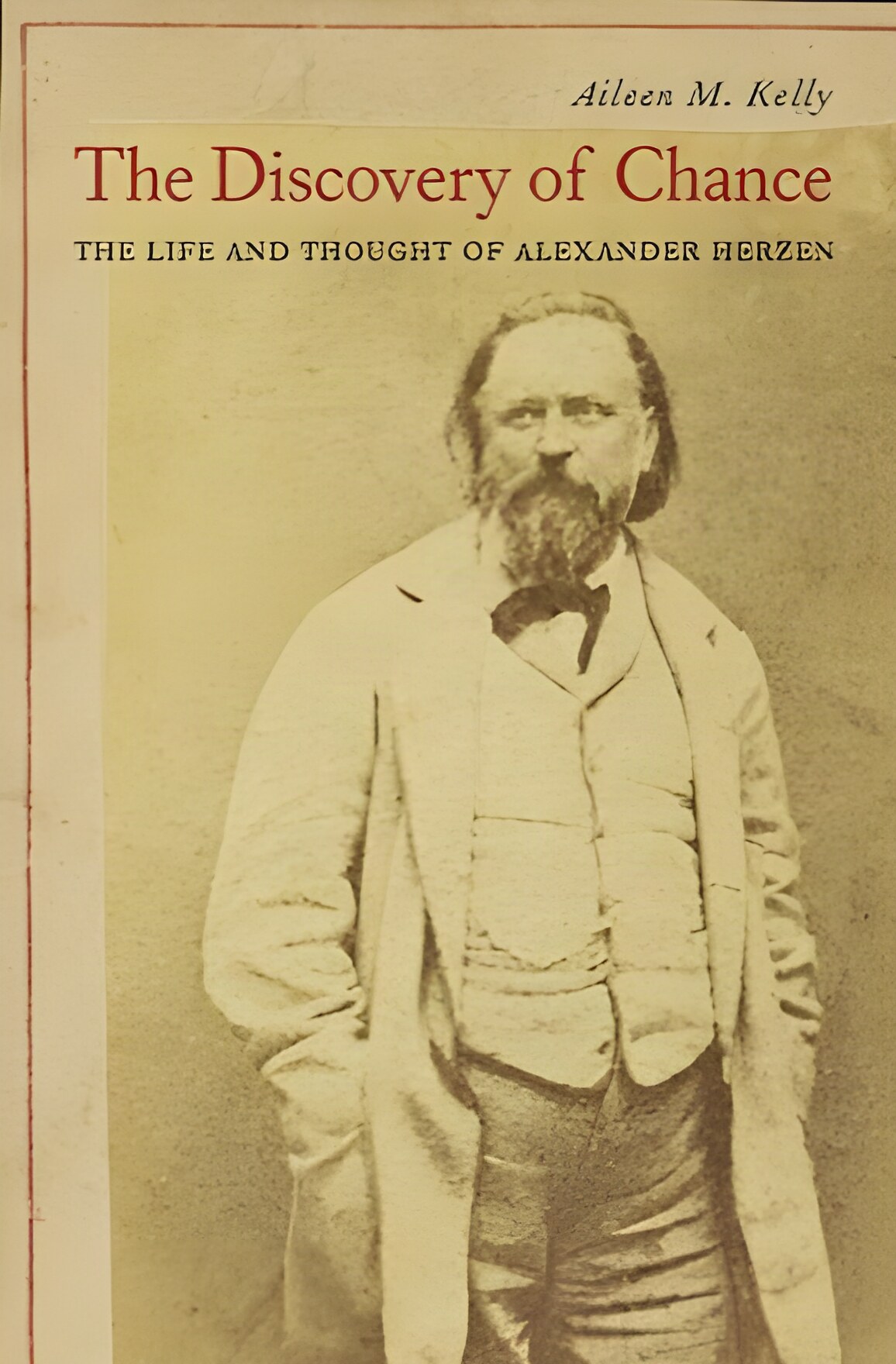
Hardcover. Cambridge MA, Harvard University Press, 1st, 2016, Book: Very Good, Dust Jacket: Very Good, Hardcover in a bright dust jacket, 592 pages. Alexander Herzen-philosopher, novelist, essayist, political agitator, and one of the leading Russian intellectuals of the nineteenth century-was as famous in his day as Tolstoy and Dostoevsky. While he is remembered for his masterpiece My Past and Thoughts and as the father of Russian socialism, his contributions to the history of ideas defy easy categorization because they are so numerous. Aileen Kelly presents the first fully rounded study of the farsighted genius whom Isaiah Berlin called "the forerunner of much twentieth-century thought." In an era dominated by ideologies of human progress, Herzen resisted them because they conflicted with his sense of reality, a sense honed by his unusually comprehensive understanding of history, philosophy, and the natural sciences. Following his unconventional decision to study science at university, he came to recognize the implications of early evolutionary theory, not just for the natural world but for human history. In this respect, he was a Darwinian even before Darwin. Clean, bright copy.
Softcover. NY, Cambridge University Press, reprint, 1996, Book: Very Good, Dust Jacket: None, Softcover, 434 pages. Of all the terms with which Americans define themselves as members of society, few are as elusive as "middle class." This book traces the emergence of a recognizable and self-aware "middle class" between the era of the American Revolution and the end of the nineteenth century. The author focuses on the development of the middle class in larger American cities, particularly Philadelphia and New York. He examines the middle class in all its complexity, and in its day-to-day existence--at work, in the home, and in the shops, markets, theaters, and other institutions of the big city. The book places the new language of class---in particular the new term "middle class"--in the context of the concrete, interwoven experiences of specific anonymous Americans who were neither manual workers nor members of urban upper classes. Clean copy.
Hardcover. London, Jonathan Cape, 1st UK, 1960, Book: Very Good, Dust Jacket: Very Good, Hardcover in a lightly worn dust jacket, 431 pages. Clean copy.
Softcover. London, Penguin Books , reprint, 2020, Book: Very Good, Dust Jacket: None, Softcover, 553 pages. The Europeans is richly enthralling, panoramic cultural history of nineteenth-century Europe, told through the intertwined lives of three remarkable people: a great singer, Pauline Viardot, a great writer, Ivan Turgenev, and a great connoisseur, Pauline's husband Louis. Their passionate, ambitious lives were bound up with an astonishing array of writers, composers and painters all trying to make their way through the exciting, prosperous and genuinely pan-European culture that came about as a result of huge economic and technological change. This culture - through trains, telegraphs and printing - allowed artists of all kinds to exchange ideas and make a living, shuttling back and forth across the whole continent from the British Isles to Imperial Russia, as they exploited a new cosmopolitan age. Clean copy.
Softcover. Thousand Oaks CA, Sage Publications, 1st, 1998, Book: Very Good, Dust Jacket: None, Softcover, 182 pages, b&w illustrations. In 1960, Kevin Lynch wrote The Image of the City, which transformed the way design professionals and social scientists dealt with the urban form and design. The Evaluative Image of the City follows the work of Lynch and further explores the role of human evaluations of the cityscape. This book describes how to assess, plan, and design the appearance of cities to please inhabitants. It presents a series of studies on evaluative images, discusses methodologies, findings, and applications to design and planning at various stages. Urban designers and planners, architects, business people, and the general public will find this book a valuable guide for improving the image of their surroundings. Clean copy.
Softcover. New Haven CT, Yale University Press, reprint, 1999, Book: Very Good, Dust Jacket: None, Softcover, 436 pages, b&w illustrations. Eighteenth-century women have long been presented as the heroines of traditional biographies, or as the faceless victims of vast historical processes, but rarely have they been deemed worthy of historical inquiry. "The Gentleman's Daughter" provides an account of the lives of genteel women - the daughters of merchants, the wives of lawyers and the sisters of gentlemen. Based on a study of the letters, diaries and account books of over 100 women from commercial, professional and gentry families, mainly in provincial England, "The Gentleman's Daughter" challenges the view that the period witnessed a new division of the everyday worlds of privileged men and women into the separate spheres of home and work. Amanda Vickery invokes the women's own accounts of their lives to argue that in the course of the 18th and early 19th centuries the scope of female experience did not diminish - in fact, quite the reverse. Contrary to orthodoxy, in the 18th century there was neither a loss of female freedoms, nor a novel retreat into the home. In their own writing, genteel women throughout the Georgian era singled out their social and their emotional roles: kinswoman, wife, mother, housekeeper, consumer, hostess and member of polite society. Clean copy.
Hardcover. NY, Pantheon, 1st US, 1971, Book: Very Good, Dust Jacket: Very Good, Hardcover in a bright dust jacket, 339 pages. In this classic, Richard Titmuss compares blood donation in the US and UK, contrasting the British system of reliance on voluntary donors to the American one in which the blood supply is in the hands of for-profit enterprises, concluding that a system based on altruism is safer and more economically efficient.
Hardcover. NY, Hill & Wang, 3rd pr., 2011, Book: Very Good, Dust Jacket: Very Good, Hardcover in a bright dust jacket, 358 pages, b&w illustrations. From modest beginnings as a tea shop, the Great Atlantic & Pacific Tea Company became the largest retailer in the world. It was a juggernaut, with nearly sixteen thousand stores. But its explosive growth made it a mortal threat to mom-and-pop grocery stores across the nation. Main Street fought back tooth and nail, leading the Hoover, Roosevelt, and Truman administrations to investigate the Great A&P. In a remarkable court case, the government pressed criminal charges against the company for selling food too cheaply-and won. The acclaimed historian Marc Levinson tells the story of a struggle between small business and big business that tore America apart. George and John Hartford took over their father's business and reshaped it again and again, turning it into a vertically integrated behemoth that paved the way for every big-box retailer to come. George demanded a rock-solid balance sheet; John was the marketer-entrepreneur who led A&P through seven decades of rapid changes. Together, they set the stage for the modern consumer economy by turning an archaic retail industry into a highly efficient system for distributing food at low cost. Clean copy.
Softcover. NY, Harper Torchbooks, reprint, 1965, Book: Very Good, Dust Jacket: None, Softcover, 357 pages. A scholarly study about life in the Old South. Clean copy.
Softcover. Urbana, University of Illinois Press, 1st, 2005, Book: Very Good, Dust Jacket: None, Softcover, 277 pages. Starting in the 1980s, anti-immigrant discourse shifted away from the "color" of immigrants to their religion and culture. It focused in particular on newcomers from Muslim countries--people feared both as terrorists and as products of tribal societies with values opposed to those of secular Western Europe. Leo Lucassen tackles the question of whether the integration process of these recent immigrants will fundamentally differ in the long run (over multiple generations) from the experiences of similar immigrant groups in the past. For comparison, Lucassen focuses on "large and problematic groups" from Western Europe's past (the Irish in the United Kingdom, the Poles in Germany, and the Italians in France) and demonstrates a number of structural similarities in the way migrants and their descendants integrated into these nation states. Lucassen emphasizes that the geographic sources of the "threat" have changed and that contemporaries tend to overemphasize the threat of each successive wave of immigrants, in part because the successfully incorporated immigrants of the past have become invisible in national histories. Clean copy.
Softcover. NY, Red Sea Press, 1st, 2018, Book: Very Good, Dust Jacket: None, Softcover, 321 pages. This book tells the story about an African Jewish community known as the Beta Israel that used to live in the northern part of Ethiopia. They were repatriated to Israel in many waves with the aid of the Israeli government and the Jewish Diaspora. The Beta Israel had struggled and faced hardships in order to live out their destiny which was to migrate to the Promised Land. However, their struggle did not stop there. They have had to struggle again to overcome unexpected and new challenges after their long anticipated migration. The book is organized around these two issues. The early chapters of the book describe the quest for Beta Israel identity within Ethiopia and explore their origins. The discussion on this topic is based on mainly textual analyses of previous works on the Beta Israel. It outlines their history and explores their origins. It examines whether the different types of oppressive Ethiopian regimes have contributed to their decision to leave for the Promised Land. It sketches the socio-economic background of the twentieth-century Aliyah, and briefly analyses the impact of the political upheavals in Ethiopia between 1974 and 1991 when the Derg, the post Haile Selassie military regime, was in power.
Hardcover. NY, powerHouse, 1st, 2009, Book: Very Good, Dust Jacket: Very Good, Hardcover, 112 pages. Established in 1866, the Ku Klux Klan still remains one of America's most secretive organizations. New York photojournalist Anthony Karen first transcended that secrecy several years ago when he got the opportunity to photograph a KKK cross-lighting ceremony. Since then, Karen has been documenting Klan organizations throughout the country. In The Invisible Empire: Ku Klux Klan, those photographs are compiled to form an absorbing document of one of the most notorious groups in history. Taken with unrestricted access, Karen's images bring us deep inside America's most private white nationalist organizations. Beginning with a brief introduction into the history of the Klan, the book provides detailed visual accounts of modern-day Klan life, including candid shots of rallies, individual portraits of Klansmen and women, as well as a look at the naturalization process for new members. Presented in intimate profiles are: a functioning Klan ministry, a group that has merged National Socialism with Klan ideologies, and a 58-year-old seamstress who makes custom Klan robes, among others. Accompanied by quotations from the late Dale Fox, Imperial Wizard of The Brotherhood of the Klans, The Invisible Empire: Ku Klux Klan offers an unprecedented glimpse into the shadowy society and its mysterious inner workings.
Hardcover. Hoboken NJ, Wiley Publishing, 1st, 2003, Book: Very Good, Dust Jacket: Very Good, Hardcover in a bright, unclipped dust jacket. The Last Samurai traces Saigo's life from his early days as a tax clerk in far southwestern Japan, through his rise to national prominence as a fierce imperial loyalist. Saigo was twice exiled for his political activities - sent to Japan's remote southwestern islands where he fully expected to die. But exile only increased his reputation for loyalty, and in 1864 he was brought back to the capital to help his lord fight for the restoration of the emperor.
Hardcover. Boston , Little Brown, 1st, 2019, Book: Very Good, Dust Jacket: Very Good, Hardcover in a bright dust jacket, 368 pages. On a volcanic island in the Savu Sea so remote that other Indonesians call it "The Land Left Behind" live the Lamalerans: a tribe of 1,500 hunter-gatherers who are the world's last subsistence whalers. They have survived for half a millennium by hunting whales with bamboo harpoons and handmade wooden boats powered by sails of woven palm fronds. But now, under assault from the rapacious forces of the modern era and a global economy, their way of life teeters on the brink of collapse. Award-winning journalist Doug Bock Clark, one of a handful of Westerners who speak the Lamaleran language, lived with the tribe across three years, and he brings their world and their people to vivid life in this gripping story of a vanishing culture. Jon, an orphaned apprentice whaler, toils to earn his harpoon and provide for his ailing grandparents, while Ika, his indomitable younger sister, is eager to forge a life unconstrained by tradition, and to realize a star-crossed love. Frans, an aging shaman, tries to unite the tribe in order to undo a deadly curse. And Ignatius, a legendary harpooner entering retirement, labors to hand down the Ways of the Ancestors to his son, Ben, who would secretly rather become a DJ in the distant tourist mecca of Bali.
Hardcover. NY, New York University Press, 1st, 2011, Book: Very Good, Dust Jacket: Very Good, Hardcover in a bright dust jacket, 267 pages. A compelling true story of how a maid's daughter moves from a girlhood of rage and resentment to a level of empowerment, as a grown woman. Clean copy.
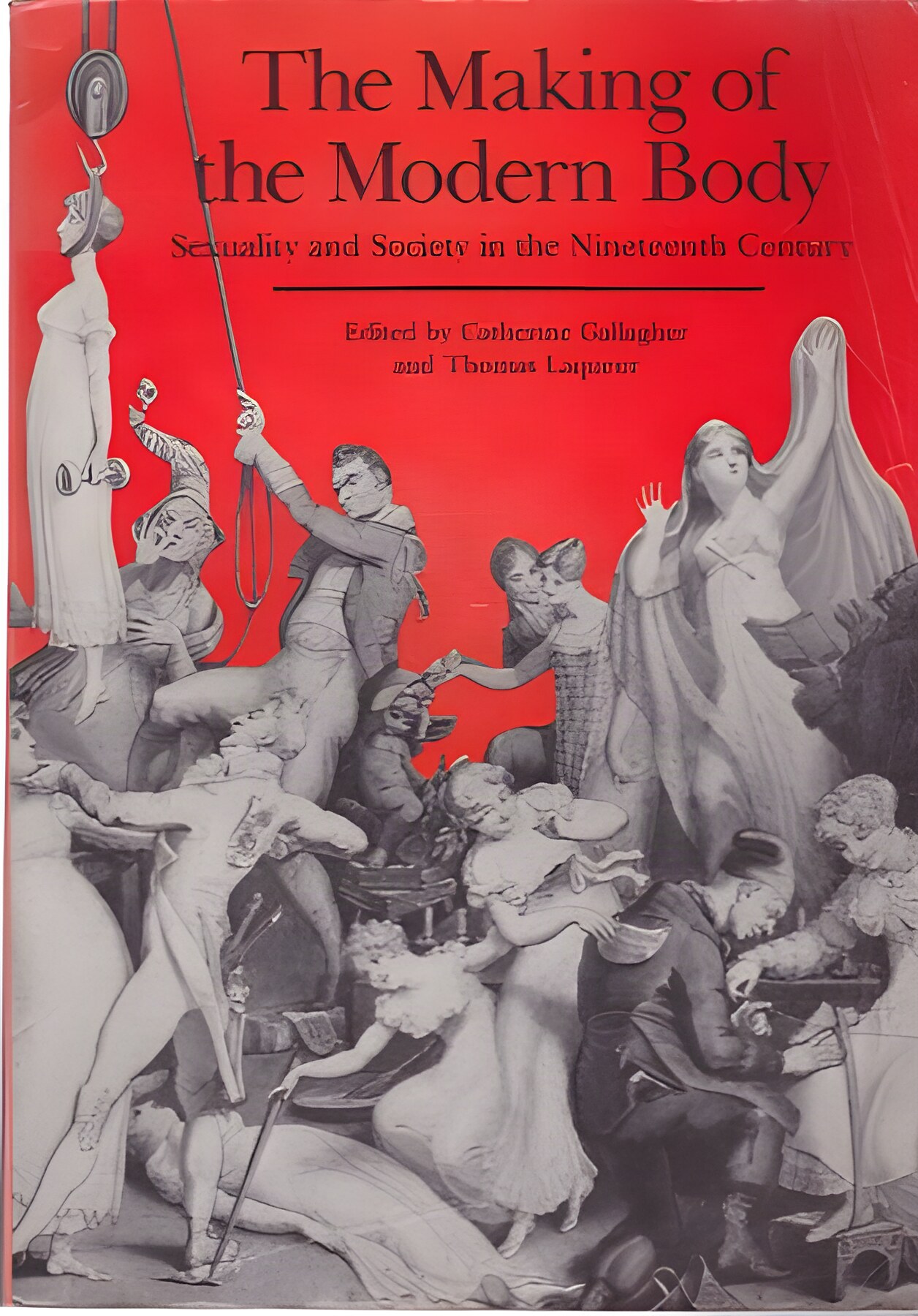
Softcover. Berkeley CA, University of California Press, reprint, 1987, Book: Good, Dust Jacket: None, Softcover, 242 pages. Scholars have only recently discovered that the human body itself has a history. Not only has it been perceived, interpreted, and represented differently in different epochs, but it has also been lived differently, brought into being within widely dissimilar material cultures, subjected to various technologies and means of control, and incorporated into different rhythms of production and consumption, pleasure and pain. The eight articles in this volume support, supplement, and explore the significance of these insights. They belong to a new historical endeavor that derives partly from the crossing of historical with anthropological investigations, partly from social historians' deepening interest in culture, partly from the thematization of the body in modern philosophy (especially phenomenology), and partly from the emphasis on gender, sexuality, and women's history that large numbers of feminist scholars have brought to all disciplines. Lightly worn copy, clean, solid binding.



 "The Chinese of Sarawak: A Study of Social Structureby: T'ien, Ju-K'ang")
 "The Concept of the Social: Scepticism, Idleness and Utopiaby: Malcolm Bull")
 "The Continent of Circe: Being an Essay on the People's of Indiaby: Nirad C Chaudhuri")


 "The Emergence of the Middle Class: Social Experience in the American City, 1760")

 "The Europeans: Three Lives and the Making of a Cosmopolitan Cultureby: Orlando Figes")

 "The Gentleman's Daughter: Women's Lives in Georgian England by: Vickery, Amanda")



 "The Immigrant Threat: The Integration of Old and New Migrants in Western Europe since 1850 by: Leo Lucassen")

 "The Invisible Empire: Ku Klux Klanby: Anthony S. Karen")
 "The Last Samurai: The Life and Battles of Saigo Takamori by: Mark Ravina")
 "The Last Whalers: Three Years in the Far Pacific with a Courageous Tribe and a Vanishing Way of Lifeby: Doug Bock Clark")