Softcover. Canada, Penguin Books, reprint, 1993, Book: Very Good, Dust Jacket: None, Softcover, 640 pages. The Western world is full of paradoxes. We talk endlessly of individual freedom, yet we've never been under more pressure to conform. Our business leaders describe themselves as capitalists, yet most are corporate employees and financial speculators. We call our governments democracies, yet few of us participate in politics. We complain about invasive government, yet our legal, educational, financial, social, cultural and legislative systems are deteriorating. All these problems, John Ralston Saul argues, are largely the result of our blind faith in the value of reason. Over the past 400 years, our "rational elites" have turned the modern West into a vast, incomprehensible, directionless machine, run by process-minded experts--"Voltaire's bastards"--whose cult of scientific management is empty of both sense and morality. Whether in politics, art, business, the military, entertain-ment, science, finance, academia or journalism, these experts share the same outlook and methods. The result, Saul maintains, is a civilization of immense technological power whose ordinary citizens are increasingly excluded from the decision-making process. In this wide-ranging anatomy of modern society and its origins--whose "pages explode with insight, style and intellectual rigor" (Camille Paglia, The Washington Post)--Saul presents a shattering critique of the political, economic and cultural estab-lishments of the West. Clean copy.
Softcover. NY, Palgrave Macmillan, reprint, 2002, Book: Very Good, Dust Jacket: None, Softcover, 270 pages, b&w illustrations. The career of Norton and Margot, a ballroom dance team whose work was thwarted by the racial tenets of the era, serves as the barometer of the times and acts as the tour guide on this excursion through the worlds of African American vaudeville, black and white America during the swing era, the European touring circuit, and pre-Civil Rights era racial etiquette. Clean copy.
Hardcover. Gretna LA, Pelican Publishing, 1st, 2003, Book: Very Good, Dust Jacket: Very Good, Hardcover in a bright dust jacket. In June 1892, a thirty-year-old shoemaker named Homer Plessy bought a first-class railway ticket from his native New Orleans to Covington, north of Lake Pontchartrain. The two-hour trip had hardly begun when Plessy was arrested and removed from the train. Though Homer Plessy was born a free man of color and enjoyed relative equality while growing up in Reconstruction-era New Orleans, by 1890 he could no longer ride in the same carriage with white passengers. Plessy's act of civil disobedience was designed to test the constitutionality of the Separate Car Act, one of the many Jim Crow laws that threatened the freedoms gained by blacks after the Civil War. This largely forgotten case mandated separate-but-equal treatment and established segregation as the law of the land. It would be fifty-eight years before this ruling was reversed by Brown v. Board of Education. Keith Weldon Medley brings to life the players in this landmark trial, from the crusading black columnist Rodolphe Desdunes and the other members of the Comite des Citoyens to Albion W. Tourgee, the outspoken writer who represented Plessy, to John Ferguson, a reformist carpetbagger who nonetheless felt that he had to judge Plessy guilty. Clean copy.
Hardcover. Ithaca NY, Cornell University Press , 1st, 1994, Book: Very Good, Dust Jacket: Very Good, Hardcover in a bright dustjacket, 255 pages. Laura Tabili is the first historian to examine the concrete connections between the legacy of imperialism and the problem of racial antagonism inside Britain. Previous efforts to explain ethnic conflict have often resorted to pessimistic "common-sense" assumptions about the universality of xenophobia and racism; here Tabili recovers the historical conditions under which racial inequality was institutionalized in Britain. Clean copy.
Hardcover. NY, Viking, 1st, 2016, Book: Very Good, Dust Jacket: Very Good, Hardcover in a bright, unclipped dust jacket. 480 pages. In her groundbreaking bestselling history of the class system in America, Nancy Isenberg upends history as we know it by taking on our comforting myths about equality and uncovering the crucial legacy of the ever-present, always embarrassing--if occasionally entertaining--poor white trash. "When you turn an election into a three-ring circus, there's always a chance that the dancing bear will win," says Isenberg of the political climate surrounding Sarah Palin. And we recognize how right she is today. Yet the voters who boosted Trump all the way to the White House have been a permanent part of our American fabric, argues Isenberg. The wretched and landless poor have existed from the time of the earliest British colonial settlement to today's hillbillies. They were alternately known as "waste people," "offals," "rubbish," "lazy lubbers," and "crackers." By the 1850s, the downtrodden included so-called "clay eaters" and "sandhillers," known for prematurely aged children distinguished by their yellowish skin, ragged clothing, and listless minds.
Softcover. NY, Oxford University Press, 1st, 2011, Book: Very Good, Dust Jacket: None, Softcover, 433 pages. Punishment, like all complex human institutions, tends to change as ways of thinking go in and out of fashion. Normative, political, social, psychological, and legal ideas concerning punishment have changed drastically over time, and especially in recent decades. Why Punish? How Much? collects essays from classical philosophers and contemporary theorists to examine these shifts. Michael Tonry has gathered a comprehensive set of readings ranging from Kant, Hegel, and Bentham to recent writings on developments in the behavioral and medical sciences. Together they cover foundations of punishment theory such as consequentialism, retributivism, and functionalism, new approaches like restorative, communitarian, and therapeutic justice, and mixed approaches that attempt to link theory and policy. This volume includes an accessible introduction that chronicles the development of punishment systems and theorizing over the course of the last two centuries. Clean copy.
Hardcover. NY, Atlantic Monthly Press, 1st, 2020, Book: Very Good, Dust Jacket: Very Good, Hardcover in a bright, unclipped dust jacket, 426 pages, illustrations. From Pulitzer Prize-winner David Zucchino comes a searing account of the Wilmington riot and coup of 1898, an extraordinary event unknown to most Americans. By the 1890s, Wilmington was North Carolina's largest city and a shining example of a mixed-race community. It was a bustling port city with a burgeoning African American middle class and a Fusionist government of Republicans and Populists that included black aldermen, police officers and magistrates. There were successful black-owned businesses and an African American newspaper, The Record. But across the state-and the South--white supremacist Democrats were working to reverse the advances made by former slaves and their progeny. In 1898, in response to a speech calling for white men to rise to the defense of Southern womanhood against the supposed threat of black predators, Alexander Manly, the outspoken young Record editor, wrote that some relationships between black men and white women were consensual. His editorial ignited outrage across the South, with calls to lynch Manly. Clean copy.
Hardcover. NY, Peter H. Wyden, 1st, 1973, Book: Good, Dust Jacket: Fair, Hardcover in a dust jacket that has a water stain to rear panel. Mild ripple to rear cloth, but book, text pages not affected. There is some foxing/tanning to top edge of text block. No markings. Walter Kaufmann in defining the conflicts in Germany that put Hitler in power, are very similar to our challenges today. A good read for people who want to understand underlying impulses in our culture.
Softcover. South Royalton VT, Steerforth Press, reprint, 2001, Book: Very Good, Dust Jacket: None, Softcover, 187 pages plus b&w photos. With haunting photographs and piercing descriptions, Women of the Shadows depicts the secluded women of southern Italy and their passionate, painful, heartrending existence. Cornelisen, who lived among these women in the mountainous villages of Lucania after World War II, reveals their struggles during a time when most of their men had to leave for factories in the industrial north. The women remained behind to work the fields. There's Peppina, Ninetta, Teresa, Maria, Pinuccia, and Cettina, all women who "have done things of which they are not proud; they know it in their hearts, as one woman said, that nothing is private, they would also agree with her conclusion: That doesn't mean you get used to it." With an extraordinary understanding of the interior lives of these and other women, Cornelisen brings them out of the shadows to tell their heroic stories in a book which truly merits the label "classic." A new introduction by the author suggests that the more things change, the more, in essence, they remain the same. Wrappers sunned, otherwise tight and clean.
Softcover. University of Pennsylvania Press, reprint, 1991, Book: Very Good, Dust Jacket: None, Softcover, 238 pages. Women's inclinations to identify with television characters varies with their assessment of the realism of these characters and their social world.
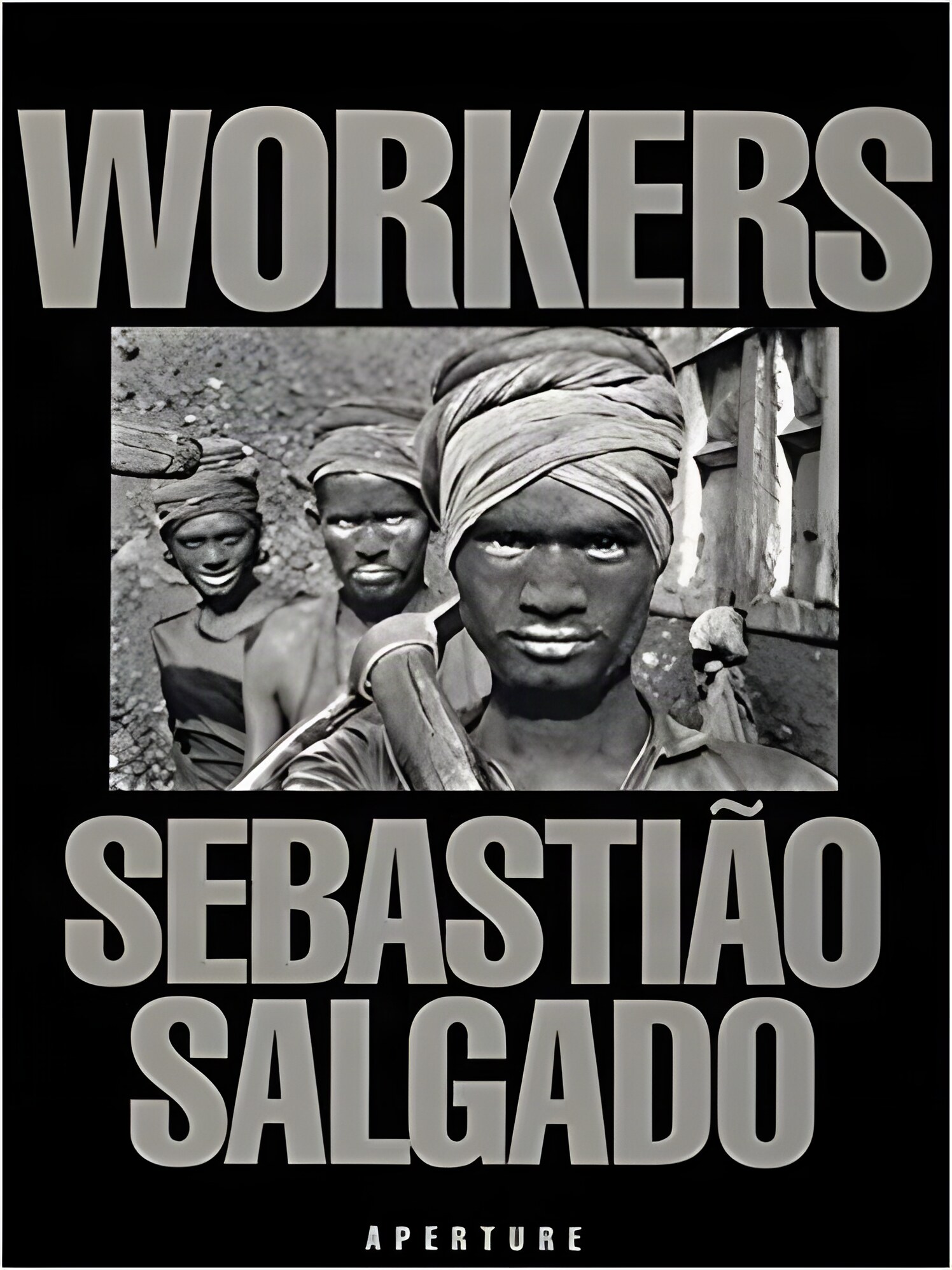
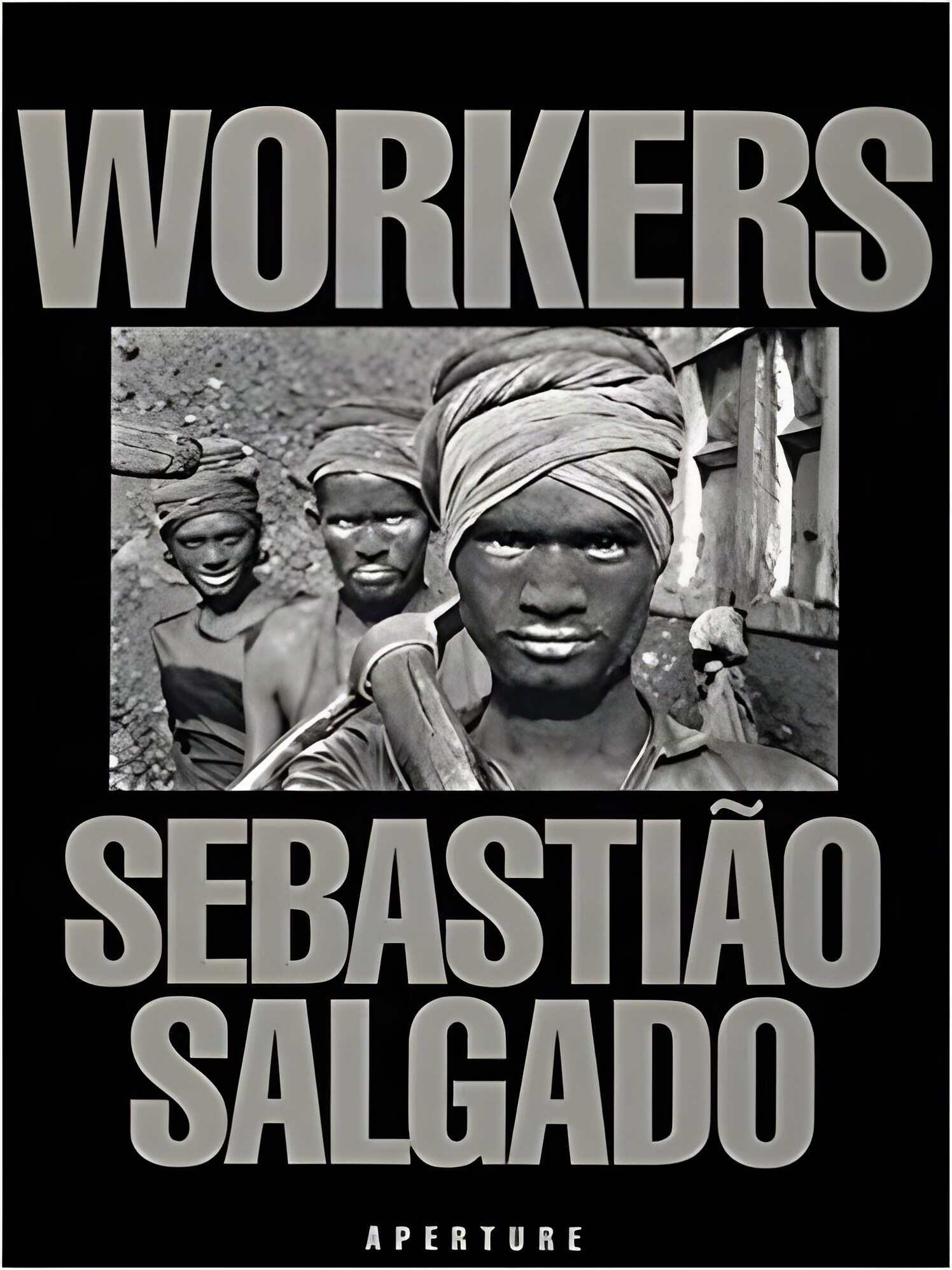
Hardcover. NY, Aperture, 1st, 1993, Book: Very Good, Dust Jacket: Very Good, Hardcover, 400 pages, 350 duotone images. More than those of any other living photographer, Sebastiao Salgado's images of the world's poor stand in tribute to the human condition. His transforming photographs bestow dignity on the most isolated and neglected, from famine-stricken refugees in the Sahel to the indigenous peoples of South America. "Workers" is a global epic that transcends mere imagery to become an affirmation of the enduring spirit of working women and men. The book is an archaeological exploration of the activities that have defined labor from the Stone Age through the Industrial Age, to the present. Divided into six categories -- "Agriculture," "Food," "Mining," "Industry," "Oil" and "Construction"-- the book unearths layers of visual information to reveal the ceaseless human activity at the core of modern civilization. Extended captions provide a historical and factual framework for the images. "Salgado unveils the pain, the beauty, and the brutality of the world of work on which everything rests," wrote Arthur Miller of this photobook classic, upon its original publication in 1993. "This is a collection of deep devotion and impressive skill." An elegy for the passing of traditional methods of labor and production, "Workers" delivers a message of endurance and hope. DOMESTIC SHIPPING ONLY.
Hardcover. NY, Aperture, reprint, 2005, Book: Very Good, Dust Jacket: Very Good, Hardcover, 400 pages, 350 duotone images. More than those of any other living photographer, Sebastiao Salgado's images of the world's poor stand in tribute to the human condition. His transforming photographs bestow dignity on the most isolated and neglected, from famine-stricken refugees in the Sahel to the indigenous peoples of South America. "Workers" is a global epic that transcends mere imagery to become an affirmation of the enduring spirit of working women and men. The book is an archaeological exploration of the activities that have defined labor from the Stone Age through the Industrial Age, to the present. Divided into six categories -- "Agriculture," "Food," "Mining," "Industry," "Oil" and "Construction" -- the book unearths layers of visual information to reveal the ceaseless human activity at the core of modern civilization. Extended captions provide a historical and factual framework for the images. "Salgado unveils the pain, the beauty, and the brutality of the world of work on which everything rests," wrote Arthur Miller of this photobook classic, upon its original publication in 1993. "This is a collection of deep devotion and impressive skill." An elegy for the passing of traditional methods of labor and production, "Workers" delivers a message of endurance and hope. DOMESTIC SHIPPING ONLY.
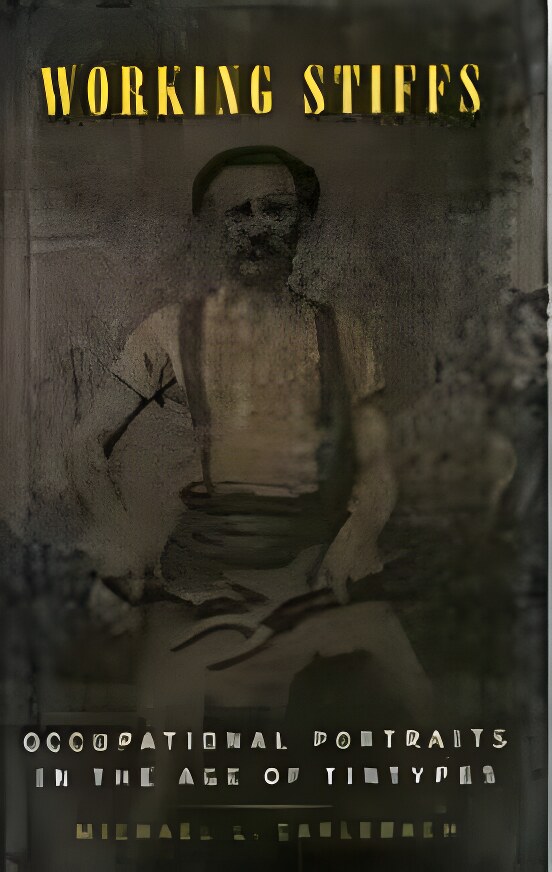
Hardcover. Washington DC, Smithsonian Institution Scholarly Press, 1st, 2002, Book: Very Good, Dust Jacket: Very Good, Hardcover, 144 pages. The tintype, patented in 1856, was a cheap, fast, easy-to-make, practically indestructible type of photograph that became enormously popular among the working class in the late nineteenth century. For common laborers and their families, the opportunity to join the ranks of those who owned pictures of family and friends--the upper classes--was momentous. This collection exhibits more than eighty examples of a specific kind of tintype: occupational portraits, photographs of working people with the tools of their trade. Michael L. Carlebach examines the historical significance of these tintypes and finds that they reveal a great deal about late nineteenth-century values. The subjects of these images are plumbers proudly holding their wrenches and pipe cutters, carpenters with their saws and lathing hatchets, textile workers with their spindles and yarn, icemen with their tongs. These people lived and worked at a time when a depersonalized factory system run by production and efficiency experts was beginning to dominate American industry and culture. Many of the men and women in these tintypes were part of a disappearing class of self-employed artisans and journeymen; their portraits proudly stress their individuality and the essential nobility of their work.
Softcover. St Paul, MN, Pogo Press, 1st thus, 1992, Book: Very Good, Dust Jacket: None, Softcover, pictorial wrappers, 108 pages, b&w illustrations. Presents a series of contemporary articles describing the 1893 Chicago world's fair for the Fargo, N.D., Sunday Argus, and discusses the author's career and the role of women journalists. Shaw's 12 newspaper articles along with contemporary photos are reprinted here.
Hardcover. University of Texas Press, 1st, 1974, Book: Very Good, Dust Jacket: Good, Hardcover, with a foreword by Howard S. Becker, red cloth; gilt titles; 166 pages.; b/w illustrations; some edgewear and spine sunning to price-clipped dust jacket, INSCRIBED BY SELBY on front fly leaf. clean copy.
Hardcover. University AL, University of Alabama Press, 1st, 1980, Book: Very Good, Dust Jacket: Very Good, Hardcover in a bright, unclipped dust jacket. B&w Illustrations by Mark Brewton. Poems, folk games, riddles, proverbs, nonsense verse, parodies, counting-out-chants, taunts and autograph verse. Living lore still in the active possession and use of children, still transmitted orally and in practice.



 "We As Freemen: Plessy v. Fergusonby: Keith Weldon Medley")
 "We Ask for British Justice: Workers and Racial Difference in Late Imperial Britain by: Laura Tabili")
 "White Trash: The 400-Year Untold History of Class in Americaby: Isenberg, Nancy")





 "World's Fair Notes: a Woman Journalist Views Chicago's 1893 Columbian Exposition by: Shaw, Marian")
 "Year of Crisis, Year of Hope: Russian Jewry and the Pogroms of 1881-1882by: Berk, Stephen M.")
 "Zapotec Deviance: the Convergence of Folk and Modern Sociology (SIGNED COPY) by: Selby, Henry A.")
 "Zickary Zan: Childhood Folklore by: Jack and Olivia Solomon")