Hardcover. NY, Thomas Dunne Books/St. Martin's, 1st, 2010, Book: Very Good, Dust Jacket: Very Good, Hardcover in a bright, unclipped dust jacket. In this investigation into the criminal underworld of the cities and villages of the Italian South, David Lane provides an unrivaled expose of the operations of the Mafia today From Naples, home of Mafia-controlled mozzarella and toxic waste, through the no less rotten Calabria, to Sicily, cradle of Cosa Nostra, the hold of the Mafia on Southern Italy is as strong as ever. Following a multi-decade career as a journalist in Italy, David Lane uses his extensive contacts into the world of organized crime to demonstrate how globalization has transformed the Mafia into more than simply a global phenomenon. In painful detail, Into the Heart of the Mafia describes the unceasing mafia pressure endured by priests and politicians, businessmen, trade unionists, and ordinary citizens, and the risks undertaken by the policemen, judges, and politicians who fight to weaken the Mafia's influence. A travelogue with the most deadly of implications, Into the Heart of the Mafia stands as a guide like no other into the darkest side of Italy.
Hardcover. London, Arthur Baker, 1st UK, 1953, Book: Very Good, Dust Jacket: None, Hardcover, red cloth, 232 pages. Spine with fading to gilt lettering, otherwise a clean, tight copy.
Indianapolis, Bobbs-Merrill , 1st, 1964, Book: Very Good, Dust Jacket: Very Good, Hardcover in a bright, unclipped dust jacket, chunk gone from top of rear panel. 252 pages. An expose of the mob's influence in the sport during the 40s and 50s. Clean copy.
Hardcover. Spokane, WA, Arthur H. Clark Company, 1st, 1994, Book: Very Good, Dust Jacket: Very Good, 343 pages. Hardcover. B/w illustrations throughout. Covers bound in red, gilt title on spine. Binding tight. Dust jacket unclipped. Dust jacket has a touch of fading, otherwise no rips, in very good condition. Very clean inside and out.
Hardcover. Boston, Atlantic Little Brown, 1st, 1968, Book: Very Good, Dust Jacket: Very Good, Hardcover in a bright, unclipped dust jacket. Retells the crime, and the making of de Mille's ballet "Fall River Legend," illustrated throughout with b/w photographs. De Mille was a dancer and choreographer, niece of directors William C. DeMille and Cecil B. DeMille. Clean copy.
Softcover. Guilford CT, TwoDot, 1st, 2008, Book: Very Good, Dust Jacket: None, Softcover, 151 pages, b&w illustrations. The massacre at Wickenburg was one of the most notorious crimes committed in the Wild West--a story revealed in this book through a criminal investigation. November 5, 1871. A westbound stagecoach carrying seven men and one woman left Wickenburg in the early morning hours. At 8:00 a.m., six of the passengers were shot dead. One man and the lone woman, severely wounded, escaped into the desert. Debates raged over the identity of the murderous ambushers -- Indians? Mexican bandits? The two survivors? After a massive investigation, the U.S. Army concluded that a band of local Yavapai Indians were responsible, which led to a policy of "removal and concentration" that altered the fate of nearly every Indian in America's Southwest. Clean copy.
Hardcover. Paris, Huillery, reprint, 1868, Book: Good, Dust Jacket: None, Hardcover, bound in half red calf over marbled boards. Frontispiece portrait, b&w engraved illustrations. Eugene Vidocq (1775-1857) was a French police officer and adventurer who rose in rank to become chief of a small, specialized detective force in Paris (the Police de Surete). He later organized a daring robbery which he was ironically put in charge of investigating. Eventually found out, he was dismissed from the police force and died in poverty and obscurity. First published 1n 1828. FRENCH TEXT.
Hardcover. NY, McGraw-Hill , 1st, 1986, Book: Very Good, Dust Jacket: Very Good, Hatdcover, 364 pages, b&w photo illustrations. notes. bibliography. index. This is the definitive life story of Dr. Josef Mengele, the notorious "Angel of Death" Responsible for the death and mutilation of thousands of prisoners at Auschwitz, Mengele vanished into South America after World War II, where he remained free for more than three decades. How did he escape from the Allies? And how did he elude his pursuers? Granted exclusive and unrestricted access to the Mengele family papers and diaries, Posner and Ware have sifted through more than 5,000 pages of Mengele's writings to construct this extraordinary record of his life~from his childhood in Germany to the horrors of Auschwitz to his years in exile. previous owner's name, notation on front endpapers. Otherwise a clean copy.
Hardcover. London, Arco Publishers Limited, 1st, 1953, Book: Good, Hardcover, red cloth, 232 pages. Gilt title on spine faded, Tanning to endpapers, book is tight and clean throughout.
Hardcover. NY, David McKay Company, 1st US, 1959, Book: Very Good, Dust Jacket: None, Hardcover, black cloth covers with gilt lettering on spine. Autobiography of Britain's noted forensic examiner, highlighting his work in Egypt before & after WWI, work as professor of forensic medicine at Edinburgh University, & court battles with the renowned Sir Bernard Spilsbury. Foreword by Erle Stanley Gardner (Perry Mason author). In 318 pgs + Index, with lots of black & white crime scene photos. Orig. published in Britain, this is the FIRST AMERICAN EDITION, same year (1959). Clean copy.
Hardcover. US, Borealis Books, 1st, 2008, Book: Very Good, Dust Jacket: Very Good, 128 pages. Hardcover with dust jacket. Clean, unmarked copy with only minor wear to dust jacket. In his popular Strange Days, Dangerous Nights, Larry Millett delivered Weegee-style images of midwestern noir from the photo files of the St. Paul Pioneer Press. He returns in this new volume with a focus on the "dangerous"murder cases from the forties and fifties, memorialized in intimate and telling photographs. There is Arthur DeZeler, accused of bludgeoning his wife, Grace, and sinking her body in a northern lake. Laura Miller, single and pregnant, ran for help after gunshots killed her married lover. Arnold Axilrod, a mild-mannered dentist with a penchant for over-sedating his female patients, was arrested when the lifeless body of one of those patients was discovered in a Minneapolis alley. And, finally, there is Arnold Larson, the personable salesman with a winning smile and a bad temper. Millett traces these four sensational crimes from the moment the victim was found, through the search for the killer, to the court trial and resulting imprisonment or acquittal--there are two of each. All are copiously illustrated with shots from the bulky Speed Graphic camera, which yielded rich, textured views in an era when photographers enjoyed unrestricted access to police matters ranging from found bodies to jail cells. The images dramatically evoke these crimes of passion now more than a half-century old, offering a thrilling immersion into Minnesota noir.
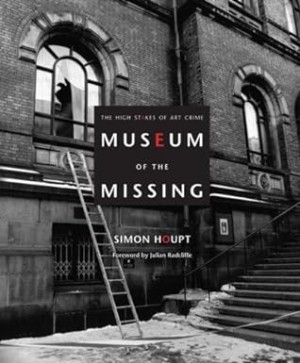
Hardcover. Toronto, Madison Press Books, 1st, 2006, Book: Very Good, Dust Jacket: Very Good, Hardcover in a bright dust jacket, 192 pages illustrated in color. Offering a thrilling introduction to the underworld of stolen art, this investigation reveals the little-known story of modern art theft and shows how the legitimate art market, with its hyped auctions and landmark sales, has ignited criminal interest in these high-end pieces. The photographs, illustrations, and case studies give a fascinating and detailed behind-the-scenes account of the major thefts during the past hundred years?ranging from Edvard Munch's The Scream and looting during World War II and the Iraq wars to a brazen and bizarre theft of a two-ton bronze Henry Moore sculpture. A gallery lists the estimated value of each stolen piece, painting an overview of the cultural, historical, and economic losses. Clean copy, mild fade to spine.
Hardcover. NY, Knopf, 1st, 1996, Book: Very Good, Dust Jacket: Very Good, Hardcover in a bright, unclipped dust jacket. INITIALED BY ELLROY on blank prelim page. In 1958 Jean Ellroy was murdered, her body dumped on a roadway in a seedy L.A. suburb. Her killer was never found, and the police dismissed her as a casualty of a cheap Saturday night. James Ellroy was ten when his mother died, and he spent the next thirty-six years running from her ghost and attempting to exorcize it through crime fiction. In 1994, Ellroy quit running. He went back to L.A., to find out the truth about his mother - and himself. In MY DARK PLACES, our most uncompromising crime writer - author of AMERICAN TABLOID and WHITE JAZZ - tells what happened when he teamed up with a brilliant homicide cop to investigate a murder that everyone else had forgotten - and to reclaim the mother he had despised, desired, but never dared to love. What ensues is an epic of loss, fixation, and redemption, a memoir that is also a history of the American way of violence.
Softcover. Amherst MA, White River Press , 1st, 2022, Book: Very Good, Dust Jacket: None, Softcover, 462 pages, b&w illustrations. A study of the impact and consequences caused by the use of inflammatory racially-related language during a police investigation conducted by the Vermont State Police. Beginning in 1968 with the Irasburg Affair when a White man fired shotgun blasts into a home occupied by a Black family, the story describes in detail the course of the investigation. Adverse publicity about the Vermont State Police's work alleging racism within its ranks ensued resulting in its managers withdrawing from public view and refusing to work with the legislature in the next years causing significant internal problems. They finally came to the forefront in 1979 when a despondent trooper committed suicide at the state house in Montpelier in an event called the Router Bit Affair that led to significant reforms beginning in1980. Includes bibliographical references and an index. Clean copy.
Softcover. Barstow CA, Back Door Publishing, 2nd Ed., 2016, Book: Very Good, Dust Jacket: None, Softcover, 607 pages of text and black & white illustrations. The book is signed and inscribed by the author on the front free end paper. After 22 years of interviewing old timers and researching newspapers, archives and document, Walker finished this book on California bootlegging, rum-running and moonshining. The years covered are from 1917-1935, the war years, Roaring 20s, and early depression years. Bootleggers, moonshiners, border patrolmen, and constables tell their own stories. To cover more of the state, about 30 local authors and historians contributed their articles. Clean, bright copy.
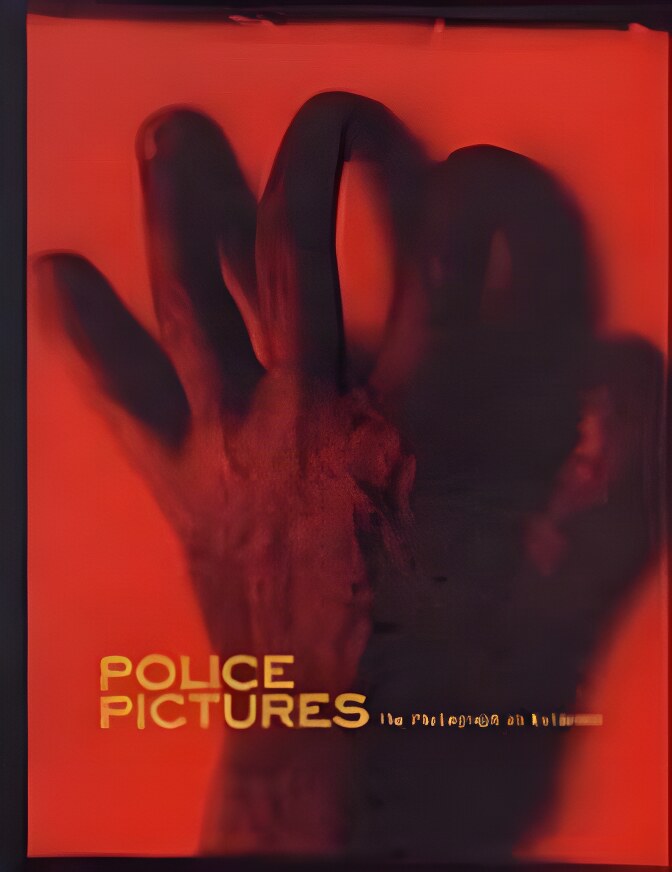
Hardcover. San Francisco, Chronicle Books, 1st, 1997, Book: Very Good, Dust Jacket: None, Hardcover, 132 pages. Illustrated with numerous b/w photos. A fascinating look at the use of photographs as a tool for gathering and preserving evidence in crime investigations. This book accompanied an exhibition at the San Francisco Museum of Modern Art on the subject. No dust jacket issued.
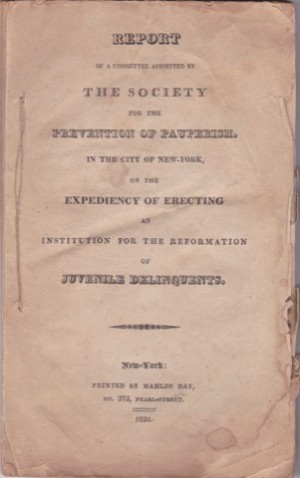
Softcover. NY, Mahlon Day, 1824, Book: Fair, Dust Jacket: None, Softcover, 64 page booklet with string binding. A report proposing building a institution to house and reform juvenile delinquents. Laid in is a tattered cover note signed by C.D. Colden/President and R.F. Mott/ Secretary. Overall fair with chipped edges, paper tanned but complete.
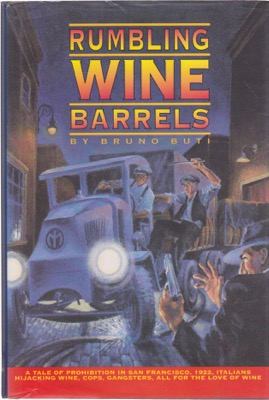
Hardcover. Cloverdale CA, Buti Publications, 1st, 1996, Book: Very Good, Dust Jacket: Very Good, Hardcover in a bright dust jacket, 355 pages illustrated with b&w drawings, not credited. GENERIC INSCRIPTION & SIGNATURE BY AUTHOR on the front fly leaf. Bruno Buti, (pronounced "booty") born to immigrant Italian parents May 23, 1922, in San Bruno, California, the youngest of three children. Nursed to an age he can still remember, then weaned on wine for lack of a cow, he was raised in an era when milk pails runneth over with fresh made alcohol. Growing up underfoot of tough bootleggers, he spent his childhood experiencing unpleasant run-ins between them and crooked lawmen. Haunted by memories of the involvement that his father, relatives and colleagues had in bucking prohibition, their ups and downs in the struggle to make it in a society hostile to immigrant minorities, the author finally dares to unload the burden he carried for so long. His tale attempts to bring out the characteristics and qualities of this particular group of people by depicting them the way they were during those fabulous Twenties. Clean copy.
Hardcover. London, Andre Deutsch, 1st, 1954, Book: Very Good, Dust Jacket: None, Hardcover, blue cloth covers with gilt lettering on spine somewhat faded. 256 pages, b&w illustrations. INSCRIBED BY BILL HUGHES, Special Branch, New Scotland Yard, to John Isham, American serviceman who served there in the 1940s. Otherwise a clean, tight copy.
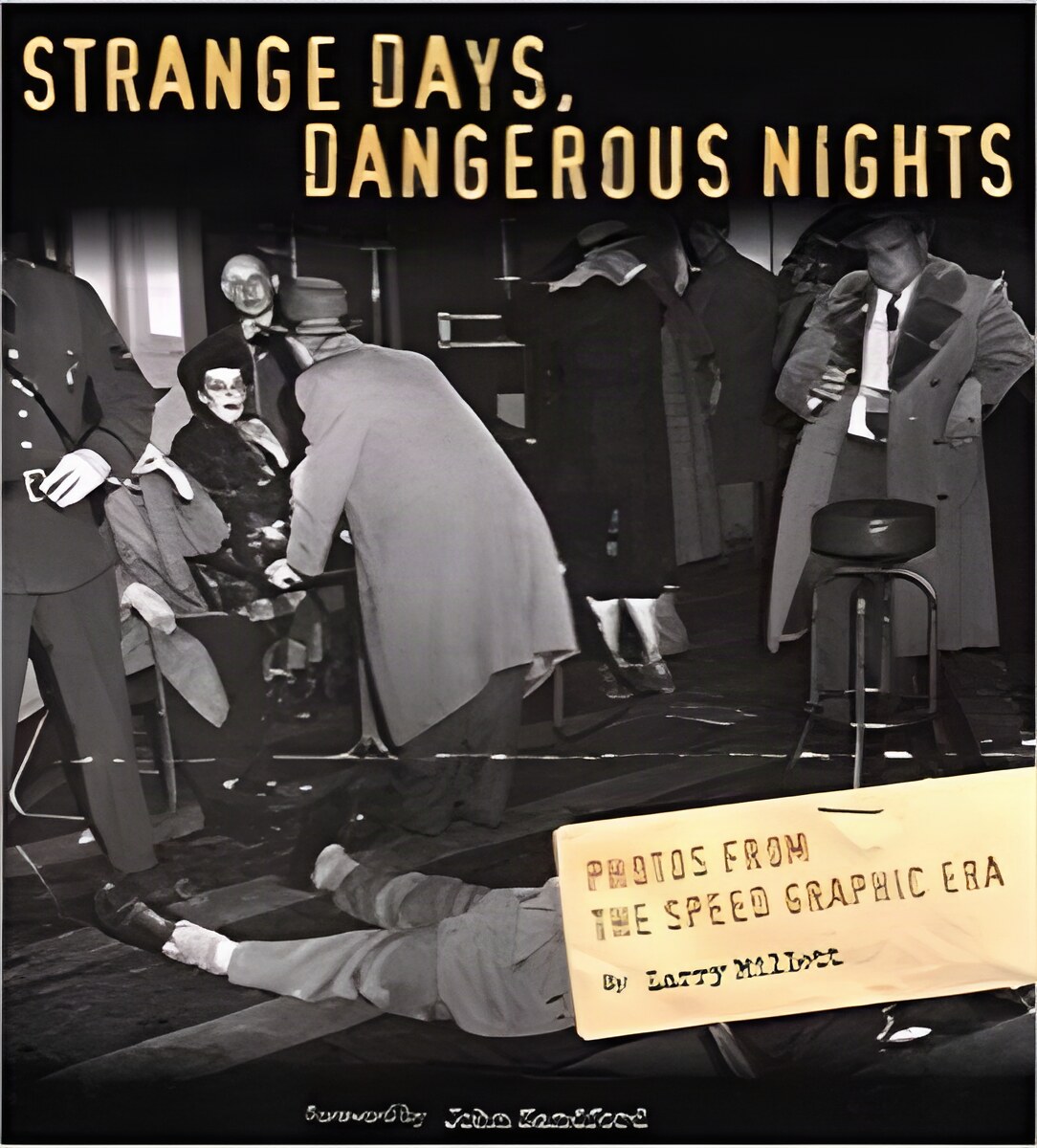
Hardcover. St. Paul MN, Borealis Books, 1st, 2004, Book: Very Good, Dust Jacket: Very Good, Hardcover, 224 pages. The photographs in this collection are taken from the files of the St. Paul Pioneer Press and the St. Paul Dispatch, and span a period from the nineteen-forties to the mid-sixties. Among the many records of long-forgotten civic functions are shocking crime-scene photographs, a reminder of an era when the country's newspaper photographers--an army of Weegees, equipped with oversized Speed Graphic flash cameras and radios tuned to the police scanners--regularly provided readers with lurid coverage of violent crimes and spectacular accidents. There is a harsh intimacy to these photographs, which bring us as close as possible to car-crash victims, suicides, and mass murderers confessing their crimes. But the welter of detail in the pictures--the seamed stockings of a murder victim, the huddle of bystanders after a bar shooting--provides a nuanced portrait of a Midwestern city and of American culture at mid-century.
Hardcover. NY, VIking, 1st, 2010, Book: Very Good, Dust Jacket: Very Good, Hardcover in a bright, unclipped dust jacket, 261 pages, illustrations. Philip Mould takes a wonderfully interesting look at how art restoration works. But, in looking at restoration of existing paintings, he also delves into how he, as a gallery owner, along with his team, find work that has remained under-valued or unvalued for centuries. And then how that piece, now restored by Mould's experts, ventures back into the art world in renewed glory. Mould takes five or so examples of "found" paintings - one from his "Antique Roadshow" - and writes how instinct and education about a painter, his other work, the painting's subject's history, and other "intangables' go into Mould and his staff taking on an often dirty and undistinguished painting on the chance that the painting is "the real thing" - a real Rembrandt, a real Homer Winslow, etc. Probably the most interesting story was that of a Norman Rockwell painting on display at the Rockwell Museum in Massachusetts that...wasn't. Wasn't the "real" Rockwell painting, but rather one done by a disciple of Rockwell, who copied the original for reasons sort of murky, and donated to the museum. The "real" Rockwell was found by the copier's sons after his death and turned over to the museum. Clean copy.
Hardcover. NY, Lyle Stuart, 1st, 1970, Book: Very Good, Dust Jacket: Very Good, Hardcover in dust jacket with a faded spine, 320 pages. b&w illustrations. Biography of the famous white-collar criminal who became a multi-millionaire by manipulating financial markets. Clean copy.
Softcover. NY, Quill/ William Morrow, reprint, 1988, Book: Very Good, Dust Jacket: None, Softcover, 432 pages, b&w illustrations. Dotted with stunning disclosures of crimes and cover-ups, this is a startling narrative of the way Japan conducted World War II: from Nanking to Pearl Harbor to the attempted assassination of Stalin to their final surrender. Clean copy.






 "Massacre at Wickenburg: Arizona's Greatest Mysteryby: Wilson, R. Michael")
 "Memoires De Vidocq Chef De La Police De Surete (Vo. 1)by: Vidocq, Eugene")

 "More Studies in Murderby: Edmund Pearson")
 "Mostly Murderby: Smith, Sydney, Sir")
 "Murder Has a Public Face: Crime and Punishment in the Speed Graphic Eraby: Millett, Larry")


![One Eye Closed, the Other Red: The California Bootlegging Years [INSCRIBED] by: Walker, Clifford James](https://www.browsingisarousing.com/shop/images/399863.jpg "One Eye Closed, the Other Red: The California Bootlegging Years [INSCRIBED] by: Walker, Clifford James")






 "The Art Detective: Fakes, Frauds, and Finds and the Search for Lost Treasuresby: Philip Mould")