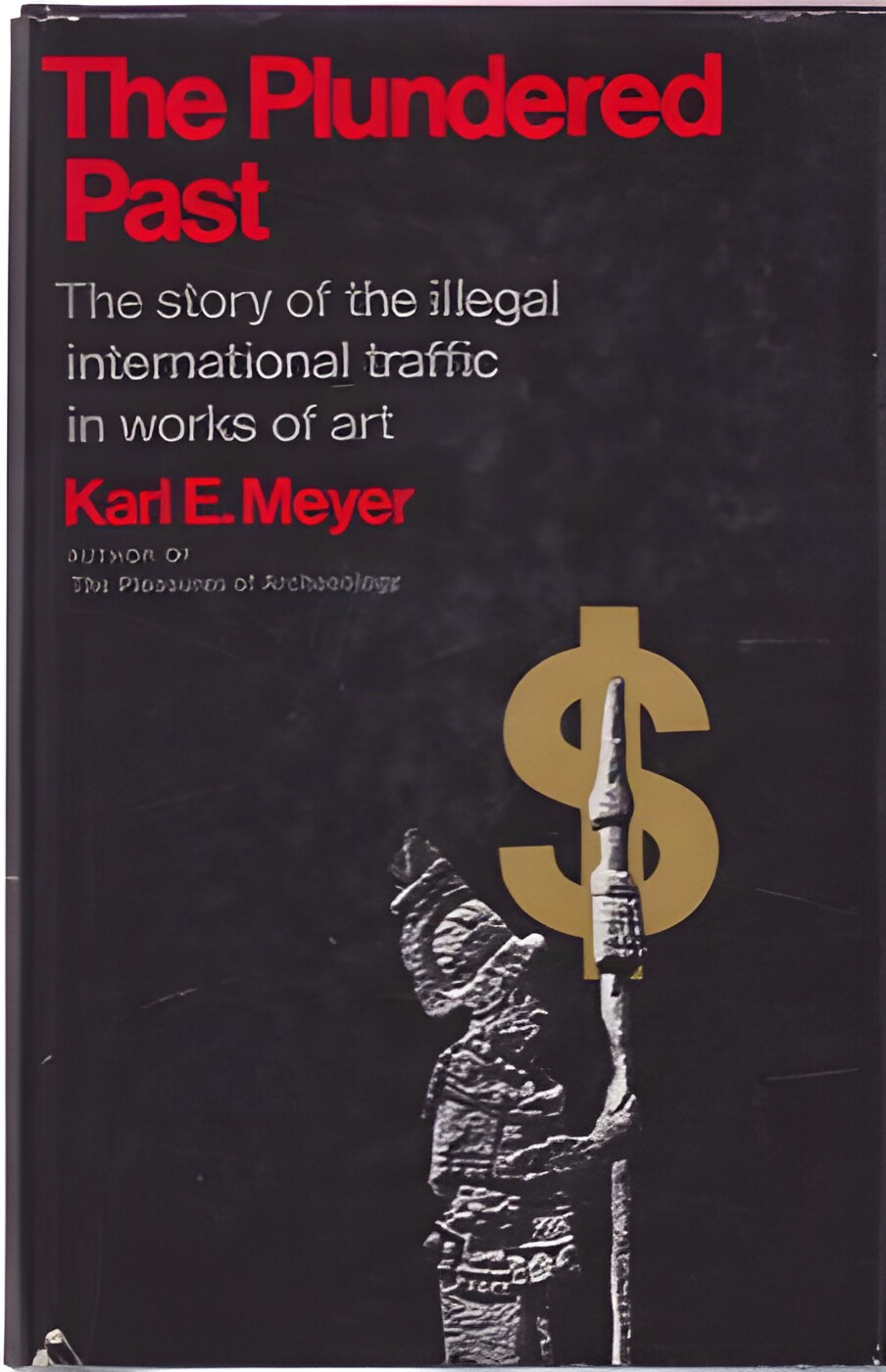
Hardcover. NY, Atheneum, 1st, 1973, Book: Very Good, Dust Jacket: Very Good, Hardcover in a bright dust jacket, 353 pages. This is the first book-length survey of the international illicit trade in antiquities, and of the worldwide destruction of what is left of our civilized past. Museums, dealers, tomb-robbers, police, and scholars form the cast of a story that moves from tropical jungles to Madison Avenue galleries, from a rifled temple to a collector's private museum. A centerpiece of the book is a detailed consideration of the Metropolitan Museum of Art's acquisition of the beautiful calyx krater by Euphronios, which the Italian authorities are claiming was taken illicitly from an Etruscan tomb in 1971. 24-page b/w photo section. Index. Extensive, 23 page Bibliography. Clean copy.
Softcover. Chicago, University of Chicago Press, reprint, 1956, Softcover, 257 pages. This monograph by a professional thief--with the aid of Edwin H. Sutherland's expert comments and analyses--is a revealing sociological document that goes far to explain the genesis, development, and patterns of criminal behavior. "Chic Conwell," as the author was known in the underworld, gives a candid and forthright account of the highly organized society in which the professional thief lives. He tells how he learned to steal, survive, succeed, and ultimately to pay his debt to society and prepare himself for full and useful citizenship. The Professional Thief presents in amazing detail the hard, cold facts about the private lives and professional habits of pickpockets, shoplifters, and conmen, and brings into focus the essential psychological and sociological situations that beget and support professional crime. Coversworn with small tape repair, name blacked out on title page. Otherwise clean.
Hardcover. NY, Farrar Straus Giroux, 1st, 1994, Book: Very Good, Dust Jacket: Very Good, Hardcover in a bright dust jacket, 181 pages. "In the 1960's and 1970's, American professor Norton Dodge forayed on his own in the Soviet Union, bought the work of underground 'unofficial' artists, and brought it out himself or arranged to have it shipped illegally to the United States. John McPhee investigates Dodge's clandestine activities in the service of dissident Soviet art, his motives for his work, and the fates of several of the artists whose lives he touched. The Ransom of Russian Art is a suspenseful, chilling, and fascinating report on a covert operation like no other". Clean copy.
Hardcover. NY, Garden City Books, BC Ed., 1957, Book: Very Good, Dust Jacket: Very Good, Hardcover in a bright dust jacket. Book Club edition, 215 pages. Bright, clean copy.
Hardcover. Cambridge MA, Harvard University Press, 1st, 1996, Book: Very Good, Dust Jacket: Very Good, Hardcover in a bright dust jacket, 335 pages. In a society where trust is in short supply and democracy weak, the Mafia sells protection, a guarantee of safe conduct for parties to commercial transactions. Drawing on the confessions of eight Mafiosi, Diego Gambetta develops an elegant analysis of the economic and political role of the Sicilian Mafia. Clean copy.
Hardcover. NY, Simon & Schuster, 1st, 1978, Book: Very Good, Dust Jacket: Very Good, Hardcover in a bright, unclipped dust jacket, 414 pages, b&w illustrations. Explores the history of the Teamsters up through the 1970's by looking at the subject from the perspective of a number of the key players -- one at a time. A novel yet very effective approach to a large and complicated subject. The book proves to be both informative and entertaining. Remainder stamp to bottom edge, otherwise clean.
Hardcover. NY, John Day Publishers, 1st, 1966, Book: Very Good, Dust Jacket: Good, Hardcover in a lightly worn. chipped dust jacket, 215 pages. Contains the first appearance of numerous letters from Ezra Pound and documents relating to the trial. Written by his lawyer, Julien Cornell. Clean copy.
Hardcover. London, William Hodge & Company, 1st, 1952, Book: Good, Harcover, red cloth with gilt lettering on spine. In 1902 the 'Veronica' set sail on her last voyage. An extraordinary outbreak of mutiny occurred, resulting in the deaths of all but five of the thirteen persons on board. The ship was set on fire and abandoned. The five men arrived on the island of Cajueri Tuoia on the north coast of Brazil. They were destitute and asked to board the S.S. Brunswick. Their stories of the events were doubted and two of the men decided to tell the truth. The other three were brought to trial in Liverpool charged with the murder of Captain Shaw and six other crew members. One of the harder to find editions in the series. 248 pages, b&w illustrations. Light tape marks on cover, rear hinge cracked, otherwise clean.
Hardcover. NY, E. P. Dutton, 2nd pr., 1931, Book: Good, Dust Jacket: None, Hardcover, red cloth covers with gilt lettering (now partially faded). 320 pages, b&w plates. Chapters include: The Scientific detective; Human Monsters; Famous bandits; Crimes of the insane; Political crime; Some famous women criminals; The case of a spy - Mata Hari; The Death Penalty. Spine faded, otherwise, clean copy.
Hardcover. NY, Icon/Marvel, 1st, 2012, Book: Very Good, Dust Jacket: None, Hardcover, pictorial boards. A graphic novel of of Eliot Ness's hunt for America's first serial killer-Cleveland's 1935 torso killer. B&w art by Bendis followed by pages of news clipping with photos of the actual crime scene and investigators at work. Clean copy.
Hardcover. NY, Charles Scribner's Sons, 1st, 1967, Book: Very Good, Dust Jacket: Very Good, Hardcover in a bright dust jacket with light edgewear. In 1945, a previously unknown Vermeer was discovered by the Allied Art Commission in the collection of Hermann Goering. The question arose: where - and how - did Goering acquire it? From the investigation came a story that rocked the art world. The trail finally led to Han van Meegeren, an obscure painter who had sold seven authenticated Vermeers over a number of years. Faced with a possible death sentence for collaborating in a sale of a national treasure to the Nazis, van Meegeren insisted he had not helped the Nazi cause: he had painted all the Vermeers himself. Needless to say, nobody believed him - until he proved he was telling the truth by painting still another Vermeer, before the eyes of an astonished jury. Here, with 24 pages of illustrations, is the story of the audacious forger who fooled the most eminent art critics, yet failed to impress them with his own paintings. Lord Kilbracken offers an exhaustive study of van Meegeren's background - his motives , his two marriages, and all the pieces of the puzzle that go to make up an understandable complex human being. With fascinating detail he also makes it clear exactly how the incredibly bold deception was executed - and why it worked. The result is an eminently readable true account that has all the narrative excitement of a thriller. No markings.
Softcover. Boston, Bulfinch Press, 1st pbk., 2000, Book: Very Good, Dust Jacket: None, Softcover, 262 pages. Essays by Miles Barth, Alain Bergala and Ellen Handy. Includes 265 duotones. A very near fine copy in a French style wrappers. One of the best monographs on Weegee.
Hardcover. New York, Free Press, 1st, 2006, Book: Very Good, Dust Jacket: Very Good, 346 pages, b&w photographs. Remainder mark to top edge. Small tear to dust jacket. Else a very clean, tight copy. Documents the story of the luxury liner that burned off the coast of New Jersey in 1934, drawing on previously classified FBI reports and first-person survivor interviews to reveal how the Morro Castle's captain died under mysterious circumstances seven hours before the ship caught fire and how many of the crew abandoned ship, leaving passengers to fend for themselves.

 "The Professional Thief by: Sutherland, Edwin H.; Conwell, Chic")



 "The Trial of Ezra Pound: A Documented Account of the Treason Case by the Defendant's Lawyer by: Cornell, Julien")
 "The Trial of Gustav Rau Otto Monsson and Willem Smith: The Veronica Trial by: Keeton, G.W. & Cameron, John (Ed.)")




 "When the Dancing Stopped: The Real Story of the Morro Castle Disaster and Its Deadly Wakeby: Hicks, Brian")