Hardcover. London, Reel Art Press, 1st, 2015, Book: Very Good, Dust Jacket: Very Good, Hardcover, 176 pages, b&w and color photos by Glinn. One of the few books to capture the mayhem and idealism of the Cuban Revolution as it happened. All recorded in 10 days, it is photojournalism at it's best.
Hardcover. Vilnius, Baltos Lankos, 1st, 1995, Book: Very Good, Dust Jacket: Very Good, 69 duotone plates, images taken by the Lithuanian photographer Jozef Chechowicz (1819-1888). Mostly landscapes of the city and it's buildings, some with people. Beautifully produced volume, limited to 2000 copies. Light edgewear to dust jacket.
Softcover. NY, Grossman Publishers, 1st, 1974, Book: Very Good, Dust Jacket: None, Softcover, 96 pages. A survey of the world-ranging documentary work of Dan Weiner, a photojournalist who died fairly young in a plane crash. No. 5 in the ICP Library of Photography series. Photographs by Dan Weiner; texts by Weiner, Sandra Weiner, Arthur Miller, and Alan Paton; edited by Cornell Capa and Sandra Weiner. Clean, bright copy.
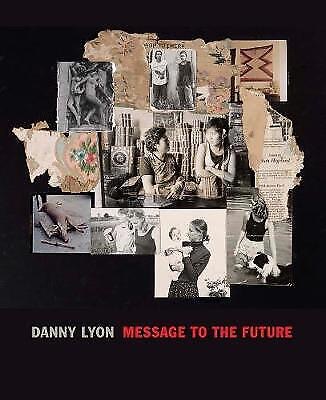
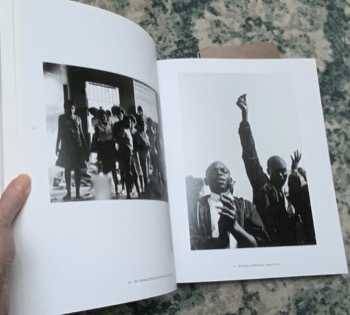
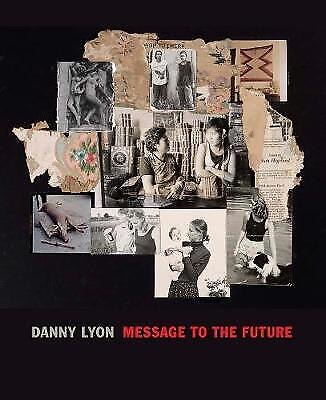
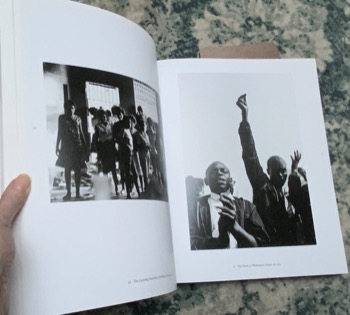
Hardcover. Bew Haven CT, Yale/Fine Arts Museums of San Francisco, 1st, 2016, Book: Very Good, Dust Jacket: Very Good, Hardcover in a bright dust jacket. Coming of age in the 1960s, the photographer Danny Lyon (b. 1942) distinguished himself with work that emphasized intimate social engagement. In 1962 Lyon traveled to the segregated South to photograph the civil rights movement. Subsequent projects on biker culture, the demolition and redevelopment of lower Manhattan, and the Texas prison system, and more recently on the Occupy movement and the vanishing culture in China's booming Shanxi Province, share Lyon's signature immersive approach and his commitment to social and political issues that concern those on the margins of society. Lyon's photography is paralleled by his work as a filmmaker and a writer. Danny Lyon: Message to the Future is the first in-depth examination of this leading figure in American photography and film, and the first publication to present his influential bodies of work in all media in their full context. Lead essayists Julian Cox and Elisabeth Sussman provide an account of Lyon's five-decade career. Alexander Nemerov writes about Lyon's work in Knoxville, Tennessee; Ed Halter assesses the artist's films; Danica Willard Sachs evaluates his photomontages; and Julian Cox interviews Alan Rinzler about his role in publishing Lyon's earliest works. With extensive back matter and illustrations, this publication will be the most comprehensive account of this influential artist's work. Clean copy. Still in publisher's shrinkwrap.
Hardcover. Bew Haven CT, Yale/Fine Arts Museums of San Francisco, 1st, 2016, Book: Very Good, Dust Jacket: Very Good, Hardcover in a bright dust jacket. Coming of age in the 1960s, the photographer Danny Lyon (b. 1942) distinguished himself with work that emphasized intimate social engagement. In 1962 Lyon traveled to the segregated South to photograph the civil rights movement. Subsequent projects on biker culture, the demolition and redevelopment of lower Manhattan, and the Texas prison system, and more recently on the Occupy movement and the vanishing culture in China's booming Shanxi Province, share Lyon's signature immersive approach and his commitment to social and political issues that concern those on the margins of society. Lyon's photography is paralleled by his work as a filmmaker and a writer. Danny Lyon: Message to the Future is the first in-depth examination of this leading figure in American photography and film, and the first publication to present his influential bodies of work in all media in their full context. Lead essayists Julian Cox and Elisabeth Sussman provide an account of Lyon's five-decade career. Alexander Nemerov writes about Lyon's work in Knoxville, Tennessee; Ed Halter assesses the artist's films; Danica Willard Sachs evaluates his photomontages; and Julian Cox interviews Alan Rinzler about his role in publishing Lyon's earliest works. With extensive back matter and illustrations, this publication will be the most comprehensive account of this influential artist's work. Clean copy. Still in publisher's shrinkwrap.
Hardcover. NY, Aperture, 1st, 1996, Book: Very Good, Dust Jacket: Very Good, Hardcover, first edition, first printing. 9.5 x 13 inches. 192 pages with 113 duo-toned b&w photographic images offering a 40-year retrospective of the Magnum photographer's front line work. Compelling war pictures.
Hardcover. NY, Aperture, 1st, 1996, Book: Very Good, Dust Jacket: Very Good, Hardcover, first edition, first printing. 9.5 x 13 inches. 192 pages with 113 duo-toned b&w photographic images offering a 40-year retrospective of the Magnum photographer's front line work. Compelling war pictures.
Hardcover. Hatje Cantz, 1st, 2007, Book: Very Good, Dust Jacket: None, Hardcover, 84 pages. When David Goldblatt received the world-renowned Hasselblad Award in 2006, he had been making photographs of the South African landscape and culture for more than 50 years. Born in 1930 in a gold-mining town near Johannesburg, his parents were Jewish refugees from Lithuania, and they raised him with an emphasis on tolerance and antiracism. In 1975, at the height of apartheid, Goldblatt explored white nationalist culture in Some Afrikaners Photographed, and in the 80s he observed workers on the Kwandebele-Pretoria bus, many of whom traveled eight hours every day to work and back. His late-90s solo show at New York's Museum of Modern Art focused on architectural work, and showed off Goldblatt's uncanny ability to discover a society through its buildings and landscapes. His photographs of architectural structures revealed the ways that ideology had defined his home country's landscape. No dj issued.
Hardcover. NY, Norton, 1st, 2003, Book: Very Good, Dust Jacket: Very Good, Hardcover, 160 pages. A tribute to the barn by the master documentarian of our time. As an elemental part of our landscape and our history, barns evoke childhood memories for many of us, recollections of a simpler way of life. Regardless of their size or shape, their forms follow their functions. They are honest. They are beautiful. And they are rapidly vanishing. Across the land we see abandoned farms with barns falling down, being torn down, and only occasionally being converted to other uses. As urban sprawl eats up the countryside and food-producing Goliaths put small farmers out of business, the need for old barns has diminished. For most of his life as a photographer, David Plowden has admired and photographed barns. In recent years, as their disappearance accelerated, he made it his mission to document these beautiful structures, before they too are lost. The result is this beautiful book, his hymn to the American barn. 130 duotone photographs.
Hardcover. Benteli Verlags , 1st, 2017, Book: Very Good, Dust Jacket: None, Oblong hardcover with a pictorial label, 192 pages. The faded remnants of a glorious past are captured in all their morbid beauty, in images that manifest the ephemeral and go beyond all conventional associations and conceptions of the American South: Days Gone By combines carefully crafted photographs from the past ten years with a cultural history of the region's social and structural changes. With an unflinching gaze, Jorg Rubbert presents the demise of countless small towns between Georgia, Mississippi and Texas, their suffering particularly tangible following the financial crisis. Rural towns, idyllic at first glance, are soon revealed as forgotten relics of times long past.
Softcover. Jackson MS, University Press of Mississippi, 1st, 1995, Book: Very Good, Dust Jacket: None, Softcover, illustrated with b/w photography throughout. 83 pages. Maggie Lee Sayre was born deaf near Paducah, Kentucky, in 1920. She lived 51 years of her life on a river houseboat as her family made a living fishing throughout Kentucky and Tennessee. This collection of her photos, accompanied by descriptive captions from Sayre, reveals a traditional river culture that is rooted in subsistence living. Clean copy.
Hardcover. Scalo, 1st, 1995, Book: Very Good, Dust Jacket: Very Good, Hardcover in a bright dust jacket, 308 pages. In 1987 Dirk Reinartz set out on his sad itinerary: Dachau, Auschwitz, Ravensbruck, Treblinka. The list goes on. Seven years later he compiled this series of 200 black-and-white photographs of the 24 ruins of the death camps. In 279 chilly, gray photographs taken at 25 different Nazi concentration camps, Reinartz successfully portrays the very purpose--death--of these horrific places. In the photographs, no figure intrudes on the stark emptiness and brutal orderliness of the camps' architecture. The photographs are carefully composed, and their tonal range deliberately compressed, so that there is no brightness in them, only shades of gray. Nor is there any shred of sentiment, only emptiness and silence. In his text, Krockow contrasts the truth of the pictures and the superficial, "amusement park" ambiance that greets actual visitors to the camps today. He meditates as well on the failings of the human mind that allowed the power to kill to go unchecked. Disturbing photographs, thoughtful text. Clean copy.
Hardcover. London, Trolley, 1st, 2011, Book: Very Good, Dust Jacket: None, Hardcover, pictorial boards, 303 pages. More than 200 color photos by Osodi document the damage done to the Niger Delta and it's people by economic exploitation. Small tear to rear edge of spine, else like new
Hardcover. San Francisco, Chronicle, reprint, 2007, Book: Very Good, Dust Jacket: Very Good, Softcover, 80 pages illustrated in color. A collection of gorgeous desert landscapes.
Hardcover. New York, Umbrage Editions, 1st, 2007, Book: Very Good, Dust Jacket: None, Hardcover, 240 pages. Illustrated throughout in b&w. Clean, unmarked copy with only minor wear to covers. Having worked as a photojournalist in the 1990s in Zaire, Sierra Leone and Angola, van Lohuizen had seen the effects of the diamond trade first hand, and in 2005, he went back to Africa to assess the situation under new peace agreements. His haunting black and white images follow diamonds from the mines in Africa to retail spaces in New York and parties in London.
Hardcover. New York, Umbrage Editions, 1st, 2007, Book: Very Good, Dust Jacket: None, Hardcover, 240 pages. Illustrated throughout in b&w. Clean, unmarked copy with only minor wear to covers. Having worked as a photojournalist in the 1990s in Zaire, Sierra Leone and Angola, van Lohuizen had seen the effects of the diamond trade first hand, and in 2005, he went back to Africa to assess the situation under new peace agreements. His haunting black and white images follow diamonds from the mines in Africa to retail spaces in New York and parties in London.
Hardcover. New York, Umbrage Editions, 1st, 2007, Book: Very Good, Dust Jacket: None, Hardcover, 240 pages. Illustrated throughout in b&w. Clean, unmarked copy with only minor wear to covers. Having worked as a photojournalist in the 1990s in Zaire, Sierra Leone and Angola, van Lohuizen had seen the effects of the diamond trade first hand, and in 2005, he went back to Africa to assess the situation under new peace agreements. His haunting black and white images follow diamonds from the mines in Africa to retail spaces in New York and parties in London.
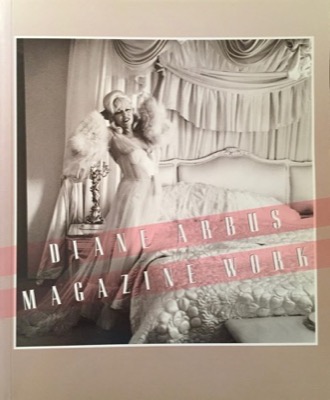
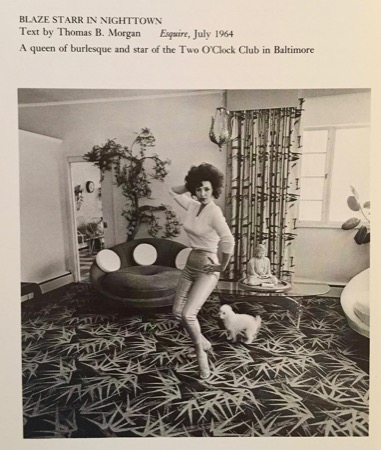
Hardcover. New York, Aperture, 1st, 1984, Book: Very Good, Dust Jacket: Very Good, Hardcover, 176 pages. Illustrated with black & white photographs by Diane Arbus. Arbus's commercial photography and articles are less well known than her other works. Her assignments for 'Esquire', 'Harper's Bazaar' and the 'Sunday Times Magazine' in London covered the leaders of theater, fashion, show business and literature. Here are over 100 portraits and feature profiles which originally accompanied them. Bottom right corners of covers lightly bumped. Clean, tight copy.
Softcover. New York, Aperture, 1st, 1984, Book: Very Good, Dust Jacket: None, Softcover, 176 pages. Illustrated with black & white photographs by Diane Arbus. Arbus's commercial photography and articles are less well known than her other works. Her assignments for 'Esquire', 'Harper's Bazaar' and the 'Sunday Times Magazine' in London covered the leaders of theater, fashion, show business and literature. Here are over 100 portraits and feature profiles which originally accompanied them. Luminaries include Jayne Mansfield, Mae West, William Golding, Susan Sontag, Norman Mailer, and many others. Clean, tight copy.
Softcover. New York, Aperture, 1st, 1984, Book: Very Good, Dust Jacket: None, Softcover, 176 pages. Illustrated with black & white photographs by Diane Arbus. Arbus's commercial photography and articles are less well known than her other works. Her assignments for 'Esquire', 'Harper's Bazaar' and the 'Sunday Times Magazine' in London covered the leaders of theater, fashion, show business and literature. Here are over 100 portraits and feature profiles which originally accompanied them. Remainder stamp to bottom edge, otherwise a clean, tight copy.
Hardcover. NY, Metropolitan Museum of Art, 1st, 2016, Book: Very Good, Dust Jacket: None, Hardcover, 240 pages. A collection of Arbus's photographs from her formative years, 1956-62; 125 images in all, more than half published here for the first time. No dust jacket issued. This book is the definitive study of the artist's first seven years of work, from 1956 to 1962. Drawn primarily from the rich holdings of the Metropolitan Museum's Diane Arbus Archive--a remarkable treasury of photographs, negatives, appointment books, notebooks, and correspondence--it is an essential contribution to our understanding of Arbus and her oeuvre.
Hardcover. New York, Ecco, 2nd pr., 2016, Book: Very Good, Dust Jacket: Very Good, Hardcover, 734 pages, b&w illustrations. The definitive biography of the beguiling Diane Arbus, one of the most influential and important photographers of the twentieth century, a brilliant and absorbing exposition that links the extraordinary arc of her life to her iconic photographs. It is impossible to understand the transfixing power of Arbus's photographs without exploring her life. Lubow draws on exclusive interviews with Arbus's friends, lovers, and colleagues; on previously unknown letters; and on his own profound critical insights into photography to explore Arbus's unique perspective and to reveal important aspects of her life that were previously unknown or unsubstantiated. He deftly traces Arbus's development from a wealthy, sexually precocious free spirit into first, a successful New York fashion photographer and then, a singular artist who coaxed secrets from her subjects. Lubow reveals that Arbus's profound need not only to see her subjects but to be seen by them drove her to forge unusually close bonds with these people, helping her discover the fantasies, pain, and heroism within each of them, and leading her to create a new kind of photographic portraiture charged with an unnerving complicity between the subject and the viewer.
Hardcover. New York, Ecco, 2016, 2016, Book: Very Good, Dust Jacket: Very Good, 734 pages. Hardcover. B&w photographs throughout. Clean, unmarked copy with only minor wear to dust jacket.
Hardcover. David Zwirner, 1st, 2025, Book: Very Good, Dust Jacket: None, Hardcover in pictorial boards. A new collection of photographs by Diane Arbus illuminates her singular ability to enter private worlds. It brings together forty-five photographs made in private places across New York, New Jersey, California, and London between 1961 and 1971. Through her singular combination of intelligence, charisma, intuition, and courage, Diane Arbus (1923-1971) was frequently invited into personal realms seldom seen by strangers. Though made in intimate settings, the photographs collected in this volume convey no sense of intrusion or trespass-instead, they reveal an unspoken exchange between photographer and subject, a moment of recognition in which confidences emerge freely and without judgment. Arbus's desire to know people embraced a vast spectrum of humanity. Still in publisher's shrinkwrap.

 "Cuba 1959by: Glinn, Burt")

 "Dan Weiner, 1919-1959by: Weiner, Dan")
 "Danny Lyon: Message to the Futureby: Lyon, Danny & Julian Cox")
 "Danny Lyon: Message to the Futureby: Lyon, Danny & Julian Cox")
 "Dark Odysseyby: Griffiths, Philip Jones")
 "Dark Odysseyby: Griffiths, Philip Jones")
 "David Goldblatt: Photographs: Hasselblad Award 2006by: Michael Godby, David Goldblatt, et al.")
 "David Plowden: The American Barnby: Plowden, David")
 "Days Gone By: Roadside Photographs of the American South by: Jorg Rubbert")
 "Deaf Maggie Lee Sayre: Photographs of a River Lifeby: Maggie Lee Sayre; Tom Rankin")
 "Deathly Still: Pictures of Concentration Camps by: Dirk Reinartz. Christian Graf von Krockow.")
 "Delta Nigeria: The Rape of Paradiseby: Osodi, George")
 "Desert Realtyby: Freeman, Ed")
 "Diamond Mattersby: Lohuizen, Kadir van")
 "Diamond Mattersby: Lohuizen, Kadir van")
 "Diamond Mattersby: Lohuizen, Kadir van")
 "Diane Arbus - Magazine Workby: Arbus, Diane")
 "Diane Arbus - Magazine Workby: Arbus, Diane")
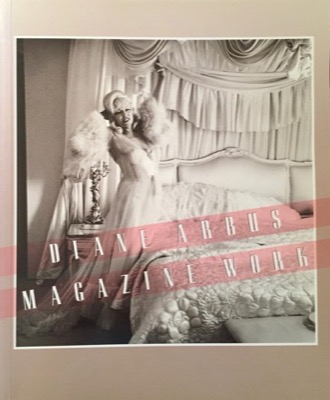
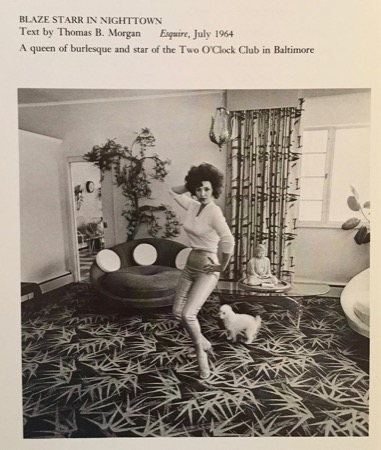
 "Diane Arbus - Magazine Workby: Arbus, Diane")
 "Diane Arbus: In the Beginningby: Rosenheim, Jeff L")
 "Diane Arbus: Portrait of a Photographerby: Lubow, Arthur")
 "Diane Arbus: Portrait of a Photographerby: Lubow, Arthur")
 "Diane Arbus: Sanctum Sanctorum by: Diane Arbus")