Softcover. Los Angeles, J. Paul Getty Museum, 1st, 2010, Book: Good, Dust Jacket: None, 208 pages. Softcover. Black and white photographs. Light edgewear to wrappers, spine shows chips and creases. Reprint of the B&W photo essay first published in 1967-68 examines daily lives of African-Americans during the Civil Rights era. Text adapts Freed's diary entries and interviews. 208 pages.
Hardcover. NY, Norton, 1st, 2019, Book: Very Good, Dust Jacket: Very Good, Hardcover in a bright, unclipped dust jacket, 339 pages, b&w illustrations. The little-known story of an iconic photographer, whose work captured--and influenced--a critical moment in American history. Ernest Withers took some of the most legendary images of the 1950s and '60s: Martin Luther King, Jr., riding a newly integrated bus in Montgomery, Alabama; Emmett Till's uncle pointing an accusatory finger across the courtroom at his nephew's killer; scores of African-American protestors carrying a forest of signs reading "i am a man." But at the same time, Withers was working as an FBI informant. In this gripping narrative history, Preston Lauterbach examines the complicated political and economic forces that informed Withers's seeming betrayal of the people he photographed, and "does a masterful job of telling the story of civil rights in Memphis in the 1960s" (Ed Ward, Financial Times), including the events surrounding Dr. King's tumultuous final march in Memphis. Small remainder dot to top edge.
Softcover. NY, Edition 7L, 1st, 2007, Book: Very Good, Dust Jacket: None, Flexible vinyl covers, 232 pages. Out documents an era at once so close and so far away: the wild, glamorous, disco-and-drugs decade between the end of the Vietnam war and the advent of AIDS, when, in certain parts of Manhattan, every night was party night. As the editor of Andy Warhol's Interview from 1971 to 1983, Bob Colacello was perfectly placed to record this life of art openings, movie premieres, cocktail parties, dinner parties, charity balls and after-hours clubs; he wrote about the best of them in a monthly column called "Out." In 1975, Swiss art dealer Thomas Ammann gave Colacello one of the first miniature 35mm cameras, a black plastic Minox small enough to hide in his jacket pocket, and Colacello began snapping photographs too. Sneaking a shot of Henry Kissinger holding forth at a dinner party, or Bianca Jagger letting loose at Studio 54, Colacello was in the middle of the action, "an accidental photographer" more akin to a secret agent than any typical paparazzo. With their skewed angles, multilayered compositions, and moody lighting, his images have an immediacy and grit not often found in the work of professional party photographers. And what subjects! Diana Vreeland, Calvin Klein, Jack Nicholson, Richard Gere, Cher, Raquel Welch, Mick Jagger, Diane von Furstenberg, Barry Diller, Valentino, Yves Saint Laurent, Nan Kempner, Robert Rauschenberg, Roy Lichtenstein and always Warhol himself. Because space in Interview was limited, only a handful of Colacello's pictures were published each month. Most of those collected in Out have never been seen before.
Softcover. NY, Edition 7L, 1st, 2007, Book: Very Good, Dust Jacket: None, Flexible vinyl covers, 232 pages. Out documents an era at once so close and so far away: the wild, glamorous, disco-and-drugs decade between the end of the Vietnam war and the advent of AIDS, when, in certain parts of Manhattan, every night was party night. As the editor of Andy Warhol's Interview from 1971 to 1983, Bob Colacello was perfectly placed to record this life of art openings, movie premieres, cocktail parties, dinner parties, charity balls and after-hours clubs; he wrote about the best of them in a monthly column called "Out." In 1975, Swiss art dealer Thomas Ammann gave Colacello one of the first miniature 35mm cameras, a black plastic Minox small enough to hide in his jacket pocket, and Colacello began snapping photographs too. Sneaking a shot of Henry Kissinger holding forth at a dinner party, or Bianca Jagger letting loose at Studio 54, Colacello was in the middle of the action, "an accidental photographer" more akin to a secret agent than any typical paparazzo. With their skewed angles, multilayered compositions, and moody lighting, his images have an immediacy and grit not often found in the work of professional party photographers. And what subjects! Diana Vreeland, Calvin Klein, Jack Nicholson, Richard Gere, Cher, Raquel Welch, Mick Jagger, Diane von Furstenberg, Barry Diller, Valentino, Yves Saint Laurent, Nan Kempner, Robert Rauschenberg, Roy Lichtenstein and always Warhol himself. Because space in Interview was limited, only a handful of Colacello's pictures were published each month. Most of those collected in Out have never been seen before.
hardcover. NY, Aperture, 1st, 1989, Book: Very Good, Dust Jacket: Very Good, 105 pages. Hardcover with dust jacket. Black & white photos by Klich. Review-slip laid-in. Essays by Cornell Capa and Bengt Borjeson. By combining his intimate and disturbing photographs with police and hospital records, handwritten notes left behind by Beth, and other texts, author Ken Klich searches for a rationale -what could cause this intelligent child to end up as a prostitute and drug addict?
Hardcover. Sweden, Scalo Publishers, 1st, 2001, Book: Very Good, Dust Jacket: Very Good, Hardcover, 87 pages. Very slight dust jacket edge wear, otherwise, very clean and tight copy. Foreword by Gunilla Knape. Essay by Boris Groys. Illustrated with black-and-white and color photographs by Boris Mikhailov.
Hardcover. New York, Umbrage Editions, 2nd pr., 2004, Book: Very Good, Dust Jacket: None, Hardcover. Non-paginated. Full color and black & white photographs. Clean, bright copy.
Hardcover. NY, United Technologies Corp., 1st , 1988, Book: Very Good, Dust Jacket: None, Hardcover, 120 pages. A catalogue for the exhibition Bourke-White: A Retrospective, organized and circulated by the International Center of Photography, New York, which toured various US museums in 1988-90. Black cloth with photo portrait of the legendary photojournalist with large-format camera perched on side of skyscraper affixed to front cover. Titles stamped in white on front boards and spine. Beautiful reproductions.
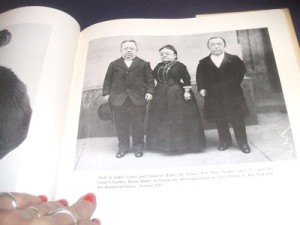
Hardcover. Boston, Houghton Mifflin, 1st, 1973, Book: Very Good, Dust Jacket: Very Good, Hardcover in a bright, lightly worn dust jacket. 143 pages with 111 b&w photos. "This book presents a collection of socially and historically relevant photographs of Boston and vicinity, taken between 1890 and 1920 by G. Frank Radway, a highly perceptive if unknown photographer...." From the Introduction. Clean copy.
Softcover. London, Greenhill Books, 1st, 2022, Book: Very Good, Dust Jacket: None, Softcover, 159 pages. More than 200 images, together with the original German captions and English translations, portray the life and times of a career officer, from the German annexation of the Sudetenland in 1938, to operations in Russia, Greece and the Balkans during 1941-44. In comparison with other units of the Second World War, relatively little has been published about Germany's commando forces. This unique collection of rare images was sourced from the photograph album of Wilhelm Walther.
Hardcover. Paris, Flammarion, 1st, 2011, Book: Very Good, Dust Jacket: Very Good, Hardcover in a lightly worn dust jacket, 167 pages, illustrated in color and b&w. A rare discovery of more than 150 previously unpublished photographs in black and white and in color, from a legendary photographer. Despite strong personal and professional ties in the U.S.--Henry Miller, Harper's Bazaar's Carmel Snow, and Edward Steichen, who featured Brassai's work in many MoMA exhibitions--Brassai remained reticent about travel to the U.S. until 1957 when Holiday magazine offered generous compensation (and artistic freedom) to photograph New York and Louisiana. From the first symbolic image of this voyage--the Statue of Liberty appearing over the ship's prow--Brassai came under the spell of America and his photographs innately captured his new perspective. In New York, he was captivated by the graphic skyscrapers and the rhythmic to-ing and fro-ing of the crowds. Unlike his static photographs of Paris--posing prostitutes, embracing lovers, sleeping street people--here he captured sequences of movement--children playing, fashionable women parading by, or the effects of light filtering through the urban architecture. In Louisiana, he continued to photograph more languorous sequences, but here he reveled in color--the copper skin of sunbathers, the pastel tones of prom dresses, the vibrant neon of amusement park attractions. The New Orleans music halls, nightlife, women, and exotic vegetation recall scenes from 1930s Paris. This exuberant study of 1950s America offers the reader unprecedented access to Brassai's work, including previously unpublished color photography. Front dj flap with mild wear otherwise a clean, bright copy.
NY, Abrams, 1st, 1999, Book: Very Good, Dust Jacket: Very Good, Hardcover, 367 pages. Brassai: The Eye of Paris is both the catalog of an exhibition of Brassai's photographs organized by the Houston Fine Arts Museum and a valuable biography of the artist. In 1932, only three years after he purchased his first camera (a Leica), Brassai published a portfolio of 64 photos titled Paris by Night that caused an immediate sensation. His lively eye (seen in an enigmatic photograph at the beginning of the book) captured fresh, unique images of the city and its citizens. Fascinated by the underworld, he moved easily among gangsters and prostitutes in bars and bordellos; he was equally at home among the fashionable and wealthy, and just as devastating in his depiction of them. He used magnesium flares for low-contrast shadows, catching his subjects in natural poses at significant moments. The wide range of Brassai's work is suggested by his formal nudes, which have an affinity with Edward Weston's, and his informal portraits, which remind viewers of Diane Arbus, who admired his work. Brassai was a central figure in the intellectual and artistic circles of Montparnasse that made Paris the most exciting city in the world during the 1930s. In a long essay that includes lively anecdotes of the photographer's relationships with Picasso, Henry Miller, Kertesz, and many other luminaries, the author re-creates the aesthetic and philosophical ferment of the period. Brassai: The Eye of Paris recognizes the artist's talents in five different media--photography, filmmaking, sculpture, writing, and drawing--but focuses on what he is best known for: lyrical and penetrating photographs of the City of Light.
Hardcover. Boston, Bulfinch Press, 1st, 2000, Book: Very Good, Dust Jacket: Very Good, Hardcover in a bright, unclipped dust jacket, 319 pages, mostly b&w photographs (some color), essays by 7 contributors including Henry Miller. Preface by Jean-Jacques Aillagon. Text essays excerpted from the work of Brassai himself as well as contributions from his wife Mme. Gilberte Brassi and close friends Roger Grenier, Henry Miller, Jacques Prevert and Werner Spies. End-matter includes Biography, Bibliography, Exhibitions and List of Illustrations. Illustrated with 308 photographs, 14 of which are in color. Stated first American edition. A presentation of Brassi's art from his nude drawings and sculpture to his fascination with graffiti but principally featuring on his photographs of nocturnal Paris and the demimonde creatures which inhabited its streets. Remainder mark to top edge, otherwise clean. DOMESTIC SHIPPING ONLY.
Hardcover. NY, Agrinde Publications, 1st, 1978, Book: Very Good, Dust Jacket: Very Good, Hardcover in publisher's unclipped dust jacket, brown paper-covered boards over beige cloth spine, gilt lettering to spine, copiously illustrated with mostly full-page or two-page renderings of Davidson's photography, 167 pages, 11 1/4 X 11 3/4", 116 black and white photos. Introduction by Henry Geldzahler. Small ink notation on rear free endpaper otherwise clean.
Hardcover. Gottingen, Steidl, 1st, 2015, Book: Very Good, Dust Jacket: Very Good, Hardcover with dust jacket. Like new in publisher's shrink-wrap. This volume presents Bruce Davidson's personal selections from his lesser-known color archive, from a period of nearly 60 years. Assignments from various magazines including Vogue, National Geographic and Life, as well as commercial projects led Davidson to photograph subjects as diverse as fashion (in the early 1960s), the Shah of Iran with his family (1964), keepers of French monuments (1988), the supermodel Kylie Bax (1997) and college cheerleaders (1989). He photographed in India and China, but also at home in New York, in Chicago and along the Pacific Coast Highway. In 1968, Michelangelo Antonioni invited Davidson to document the making of his film Zabriskie Point. Davidson also continued to pursue personal projects, such as photographing the Yiddish writer and Nobel Prize laureate Isaac Bashevis Singer (1972-75), the New York City subway (1980) and Katz's Delicatessen (2004). Often staying on in a country after an official assignment, Davidson documented Welsh coalfields, family holidays in Martha's Vineyard and travelled through Patagonia and Mexico.
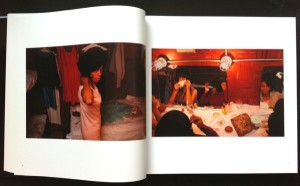
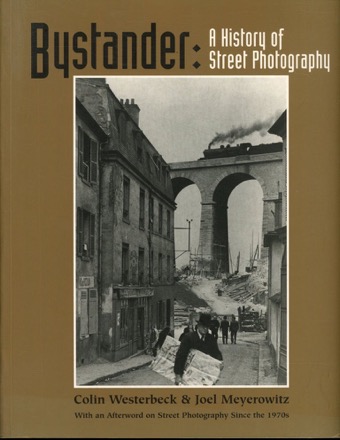
Softcover. Boston, Bulfinch, 1st pbk, 2001, Book: Very Good, Dust Jacket: None, Softcover, 446 pages. This landmark book chronicles the development of a kind of photography that is created out of the energy and chance juxtapositions found in everyday life on the street. Street photography is at the heart of what makes photography unique. An unprecedented study that is the first history of this tradition ever published, Bystander explores street photography through a discussion of the medium's masters - Atget, Stieglitz, Strand, Cartier-Bresson, Brassai, Kertesz, Evans, Levitt, Frank, Arbus, Winogrand, and many others - and reveals along the way much about the craft and creative process of photography. Profusely illustrated with the work of more than eighty photographers, the book is composed of four parts separated by lively folios of pictures. Each part discusses a different era - from the early days of the medium in nineteenth-century Europe, to America in the late twentieth century - and devotes entire chapters to the key figures of that period. Clean copy. DOMESTIC SHIPPING ONLY.
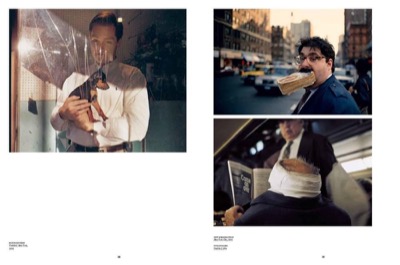
Hardcover. NY, Random House, 1st, 1939, Book: Very Good, Dust Jacket: None, Hardcover, blue cloth covers. Black & white photos. Foreword by Leland Hayward. Browning to page edges. Stain to bottom edge.
Hardcover. Los Angeles, J. Paul Getty Museum, 1st, 2010, Book: Very Good, Dust Jacket: Very Good, Hardcover, 160 pages, like new in dust jacket. This fascinating account of Silvy's life and photography is published to mark the centenary of his death. Combining research into exhibition prints, still lifes, and street scenes, as well as the intimate, beautifully lit and posed cartes-de-visite, the book demonstrates Silvy's extraordinary originality and his life as a man of both art and commerce. Color and b&w illustrations.
Hardcover. Sao Paulo, Brazil, Dorea Books & Art, 1st , 1996, Book: Very Good, Dust Jacket: Very Good, Hardcover. Non-paginated. Illustrated with Black & white photographs by Claudio Edinger. Texts by Arnaldo Jabor, Jorge Amado and Roberto Damatta. Clean, tight copy. A collection of photographs taken during the Carnaval celebration in Brazil.
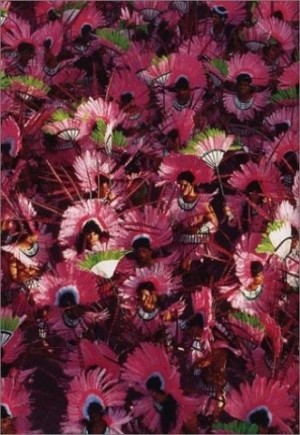
Hardcover. NY, Abbeville, 1st, 2000, Book: Very Good, Dust Jacket: Very Good, Hardcover in a bright, unclipped dust jacket. Teissl's vibrant, color photos capture the unique pageantry and euphoria of the world's largest party. The sounds of Carnival are captured in a companion CD.
Hardcover. Little, Brown, & Co., New York Graphic Society, 1st US, 1986, Book: Very Good, Dust Jacket: Very Good, 256 pages, hardcover with dust jacket. Retrospective on famed artist. Edited by Dr. David Mellor. With color and b&w plates throughout. Light edgewear and rubbing to dust jacket. Light fading and foxing to front flyleaf. Unmarked. A bright and tight copy.
Hardcover. NY, Random House, 1st, 2013, Book: Very Good, Dust Jacket: Very Good, Hardcover, 228 pages. At the beginning of World War II Cecil Beaton was commissioned by the British government to photograph the home front. He set to work recording both the destruction of the city, and the heroism of Londoners under attack. He conducted a survey of Bomber and Fighter Commands for the RAF, which was published with his own astute commentary. Beaton was an effective propagandist, but his voice, like his photographs, was touchingly elegant. Beaton's wartime work amounted to 7,000 photographs. He traveled through the Western Desert and on to Iraq, Palestine, Transjordan, Syria, and India, where he photographed the final days of the Raj in New Delhi and Calcutta before joining the Burma campaign. He ended the war deep in Chinese territory where he witnessed the Nationalist resistance to the Japanese. This collection of Beaton's masterful WWII photography captures the home front, the Middle East, arms and vehicle manufacturing in Britain, India, the Burma Campaign, and the war in China. It also includes a chronology placing events in Beaton's life alongside developments in photography, journalism, and the arts; war photography; and world events. His original photographs are reproduced large on the page, alongside his diary extracts, allowing for deep scrutiny and appreciation of the images and their artist.
Cape Town SA, Koeberg, 1st, 1968, Book: Very Good, Dust Jacket: Good, Hardcover. B&W photo essay on Cedarberg of the Western Cape of South Africa. Stated 369 of an unspecified number, edgeworn dust jacket. Endpaper map.

 "Black in White Americaby: Freed, Leonard")
 "Bluff City: The Secret Life of Photographer Ernest Withersby: Preston Lauterbach")
 "Bob Colacello's Outby: Colacello, Bob")
 "Bob Colacello's Outby: Colacello, Bob")
 "Book of Beth, Theby: Klich, Kent")
 "Boris Mikhailov: The Hasselblad Award 2000 by: Knape, Gunilla")
 "Born Into Brothels - Photographs by the Children of Calcuttaby: Briski, Zana")
 "Bourke-Whiteby: Goldberg, Vicki")
 "Brahmins & Bullyboys: G. Frank Radway's Boston Album by: Stephen and Brenda Halpert")

 "Brandenburger: Wartime Photographs of Wilhelm Walther (Images of War) by: Rogers, Anthony")
 "Brassai in America, 1957by: Saint-Cyr, Agnes De Gouvion")
 "Brassai: The Eye of Parisby: Tucker, Anne W.")
 "Brassai: The Monographby: Alain Sayag and Annick Lionel-Marie")
 "Brassai: The Monographby: Alain Sayag and Annick Lionel-Marie")
 "Bruce Davidson Photographsby: Bruce Davidson")
 "Bruce Davidson: In Colorby: Davidson, Bruce")

 "Bystander: A History of Street Photographyby: Joel Meyerowitz / Colin Westerbeck")
 "Camera Over Hollywoodby: Swope, John")
 "Camille Silvy: Photograher of Modern Life by: Haworth-Booth, Mark")
 "Carnavalby: Edinger, Claudio")
 "Carnival in Rioby: Helmut Teissl")

 "Cecil Beaton: A Retrospectiveby: Beaton, Cecil")
 "Cecil Beaton: Theatre of Warby: Beaton, Cecil")
 "Cedar Peopleby: Burgers, Tom and W.A. De Klerk")