Hardcover. London/NY, Merrell Publishers, 1st, 2005, Book: Very Good, Dust Jacket: Very Good, Hardcover, 192 pages. Photographer Andrew Shaylor has been given unique and long-term access to the secret world of the Hells Angels Motorcycle Club. Over 300 stunning photographs reveal the rich diversity of the HAMC. Includes HAMC events, members? motorcycles (always Harley Davidsons), clubhouses, over 100 incisive portraits and a multitude of details that uniquely define HAMC culture. Specially commissioned foreword by American legend Sonny Barger, internationally well-known and respected member of the HAMC. Limited to 1000 copies SIGNED by Andrew Shaylor on the limitation label to the front endpaper.
Hardcover. New York , powerHouse Books, 1st, 2007, Book: Very Good, Dust Jacket: Very Good, 96 pages, 80 richly printed, b/w duotone photo plates. Vivian Cherry began her career in the 1940s while working as a dancer in Broadway shows and nightclubs. Cherry supported herself partly as a 'darkroom technician' for Underwood & Underwood, a prominent photo service to news organizations. She began shooting the world around her during this time of change, combining informal portraiture with cityscapes of the Lower East Side, the Third Avenue El (and its ensuing demolition), the streets of Harlem, Hell's Kitchen, and the Meatpacking District. She joined the Photo League where she studied with Sid Grossman. - throughout the 1940s and 1950s. Her work from this period provides lively vignettes of New York City, of gritty street-scenes, of social consciousness, and of history. Cherry's work is in major national collections. and has been well published. Very good in a bright dust jacket.
Hardcover. London/NY, Thames & Hudson, 1st, 2019, Book: Very Good, Dust Jacket: Very Good, Hardcover in a bright dust jacket The first visual chronicle of a little-known chapter in the career of Henri Cartier-Bresson--one of the great photographers of the twentieth century. In December 1948, Henri Cartier-Bresson traveled to China at the request of Life magazine. He wound up staying for ten months and captured some of the most spectacular moments in China's history: he photographed Beijing in "the last days of the Kuomintang," and then headed back to Shanghai, where he bore witness to the new regime's takeover. Moreover, in 1958, Henri Cartier-Bresson was one of the first Western photographers to go back to China to explore the changes that had occurred over the preceding decade. The "picture stories" he sent to Magnum and Life on a regular basis played a key role in Westerners' understanding of Chinese political events. Many of these images are among the best-known and most significant photographs in Cartier-Bresson's oeuvre; his empathy with the populace and sense of responsibility as a witness making them an important part of his legacy. This volume allows these photographs to be reexamined along with all of the documents that were preserved: the photographer's captions and comments, contact sheets, and abundant correspondence, as well as the published versions that appeared in both American and European magazines. Clean copy. DOMESTIC SHIPPING ONLY.
Hardcover. NY, The Museum of Modern Art, 1st, 1987, Book: Very Good, Dust Jacket: Good, Hardcover with dust jacket, 152 pages. Oblong small 4to., 125 b&w photos, 4 in color. Dust jacket with 2 small tan stains at bottom of front panel, not affecting book except for very faint mark on cover. Otherwise a clean, tight copy.
Hardcover. New York , Museum of Modern Art, 1st, 2010, Book: Very Good, Dust Jacket: Very Good, Hardcover, 376 pages, b&w photographs throughout. Hardcover, light shelf-wear to dust jacket, else a clean, tight copy. "Henri Cartier-Bresson (1908-2004) is one of the most celebrated and influential figures in the history of photography. Published to accompany a major retrospective, this offers a fresh understanding of the panoramic scope of Cartier-Bresson"s photography, from his Surrealist innovations of the early 1930s to his career as a leading photojournalist after World War II."
Hardcover. New York , powerHouse Books, 1st, 2004, Book: Very Good, Dust Jacket: Very Good, 120 pages, hardcover. Some of the photographer's finest unpublished work, in one volume. Most of the photographs were taken in New York City, Levitt's primary subject in the course of a seven-decade photographic journey (she spent some time in Mexico City, and the pictures she took there are collected in a book named after the city). Here are 110 photographs, 90 of them never before published, including portraits of her close friends James Agee and Walker Evans.
Hardcover. Loa Angeles, Los Angeles Times, 1st, 1999, Book: Very Good, Dust Jacket: Very Good, Hardcover in a bright dust jacket. Hollywood's classic stars were icons for most of the world. But for The Los Angeles Times and The Los Angeles Mirror, these celebrities were the stuff of everyday local news. And the newspapers' photographers were on hand to record all the important events of Los Angeles' emerging film community. Marriages. Divorces. Births. Even, perhaps especially, arrests, court appearances and suicides. You'll find 200 of these extraordinary photos inside, many of them in their first-ever printing. You'll see Marilyn Monroe as she entered Hollywood, and as she left it; Liz Taylor when she signed her first studio contract at age 11 and as she lived with it for the next four decades; Mae West, in wax and in trouble. Also pictured are Jane Russell, Frank Sinatra, Rita Hayworth, Errol Flynn and scores of other stars at the height, and sometimes the depth, of their Hollywood lives.
Hardcover. New York , Macmillan, 1st, 1962, Book: Very Good, Dust Jacket: Very Good, Hardcover. An photo essay of the intimate details of daily life among primitive Indians of the Brazilian jungle. Tall yellow boards, 32 pages text, 127 b&w photos, 16 color plates. Minimal shelf wear,small chip to top of dust jacket spine.
Hardcover. New Haven CT, Yale University Press, 1st, 2014, Book: Very Good, Dust Jacket: Very Good, Hardcover, 160 pages. Photographer Laura McPhee, noted for her stunning large-scale landscapes and portraits of the people who live and work in them, has been traveling to eastern India for over a decade. This book features a selection of McPhee's works in and around India's former capital.
Hardcover. Lily Bay Press, 1st, 2003, Book: Very Good, Dust Jacket: Very Good, Hardcovr, 98 pages. After the horrendous events of September 2001, photographer Peter Elliott loaded his cameras and some clothes into his car and began a cross-country journey, looking for the flag. He found it everywhere: painted on a retaining wall in Tacoma, flying over a trailer in Bozeman, carried billowing by a lone man walking a sandbar in Florida, made of plastic cups stuck in a fence in Mississippi, draped over a fake horse in Salinas, immaculately hanging from a Beverly Hills mansion's window. Home Front is both a tribute to the profound emotions of the country and a testament to Elliott's eye. His genius in these eighty-seven arresting images is to wed these serendipitous meetings with the flag to a language of light and composition that draws as much from classic landscape photography as it does from urban visual idioms. Elliott manages to convey here America's stirring and complex national character, one in which those who have not benefited from the nation's prosperity nonetheless feel the same sense of pride as those who have. With its inspiring introduction by Julia Reed, Home Front is the record--both somber and joyous--of Elliott's encounters with spontaneous patriotism.
Hardcover. NY, Abrams, 1st, 1999, Book: Very Good, Dust Jacket: Very Good, Hardcover in a bright, unclipped dust jacket. A staff photographer for the "Philadelphia Inquirer" presents intimate pictures and lively personal anecdotes for readers nostalgic for their own hometown diner. 145 photos, 125 in color. Clean copy.
Softcover. San Francisco, Chronicle Books, 1st, 1996, Book: Very Good, Dust Jacket: None, Softcover, 144 pages. In the tradition of the great photographic populists Alfred Eisenstaedt and Dorothea Lange, Horace Bristol used his camera to record the human, intimate moments in the grand sweep of history. Bristol's American view included the best and the worst of this century, from poignant images of the urban poor and migrant farm workers during the Depression to the battle scenes of World War II and compelling portraits of post-war Japan and Southeast Asia. This volume presents over one hundred twenty exquisitely reproduced duotone images by Bristol, ranging from his early San Francisco photographs to his last work, taken in Southeast Asia. Combining aesthetic purity with human interest, Horace Bristol's pioneering photography is imbued with an accuracy, strength of composition, and humility that is as striking today as it was groundbreaking in its time.
Softcover. London, Tate Publishing, 1st, 2007, Book: Very Good, Dust Jacket: None, Softcover, 240 pages illustrated in color and b&w. One page(128) creased in production. This is the first book to tell the story of British photography as a coherent whole, from the pioneers of the early 19th century to photographers today who display their images on websites, on computer screens?even iPods. The authors have traveled the length and breadth of the UK, researching both well-known and forgotten bodies of work. Many famous names are here: Henry Fox Talbot, Lewis Carroll, Julia Margaret Cameron, Bill Brandt, Madame Yeronde, Angus McBean, Susan Lipper, and Tom Hunter are just a few. Among the works shown are postcards, family albums, photographic illustrations in books, medical photographs, wartime propaganda, and social documents. Through their exhaustive research the authors demonstrate the extraordinary range and diversity of roles that photography has played in British cultural life over the past 150 years.
Hardcover. US, Ammo Books, 1st, 2009, Book: Very Good, Dust Jacket: None, Hardcover, illustrated boards, 207 pages. Mostly b&w images, some color. Photos taken by Bingham for a photo essay done for Life Magazine with writer Gilbert Moore. They were to document and tell the story of the Black Panthers. The very secretive Panthers and their Minister of Information, Eldridge Cleaver would only allow Life to do the story if Bingham was the photographer. Bingham and Moore followed the Panthers for months from Oakland to New York to Los Angeles only to have the story pulled due to a disagreement between Moore and the magazine. Issed without a dust jacket. Clean, bright copy with a light scratch to cover, barely visible.
Hardcover. London, Phaidon Press, 1st, 1994, Book: Very Good, Dust Jacket: Very Good, Hardcover, 320 pages. George Rodger began his photographic career with the BBC as a stills photographer. His baptism as a photo reporter came with his appointment as a 'stringer' for Life magazine during the Blitz on London in the most threatening days of 1940. Many of his images from that time are still in constant use, because his instinct has always been to concentrate on the humanity of his subjects, even in the face of terrible adversity.It was for Life that George Rodger embarked on a series of adventures that were to take him to almost every theatre of the Second World War in Africa, the Middle East and Asia. The fulcrum of his career came with the liberation of Belsen. As for the first few days he was the only photographer present, the images he captured became crucially important in making known the depravity of the camps. 1948 he embarked on a campaign of photography rediscovering humanity, starting with an expedition from Cape Town to Cairo by road. He found in Africa tribes almost untouched by European influence and was able to create images of enormous power that quickly became world-famous.This book presents the pictures that define George Rodger's long career and a commentary on his extraordinary journey. With a Foreword by Henri Cartier-Bresson and over 260 powerful images, it represents a fitting tribute to George Rodger and a celebration of his life's work.
Hardcover. NY, St. Martin's Press, 1st, 2020, Book: Very Good, Dust Jacket: Very Good, Hardcover in a bright, unclipped dust jacket. Brandon Stanton created Humans of New York in 2010. What began as a photographic census of life in New York City, soon evolved into a storytelling phenomenon. A global audience of millions began following HONY daily. Over the next several years, Stanton broadened his lens to include people from across the world. Traveling to more than forty countries, he conducted interviews across continents, borders, and language barriers. Humans is the definitive catalogue of these travels. The faces and locations will vary from page to page, but the stories will feel deeply familiar. Clean copy.
Softcover. NY, Signet/ New American Library, 1st, 1968, Book: Very Good, Dust Jacket: None, Softcover, unpaginated. Celebrated American photographer David Douglas Duncan's broadside on Khe Sanh, Vietnam, on behalf of "the men who will never get out, for whom help came too late." Incredible photographs by the author. An important document of the war, much sought-after and scarce. As issued, in stiff paper covers, a clean, unmarked copy. First Printing, April 1968 (stated). Red spine faded, interior is bright, clean. Tight copy.
Hardcover. NY, Thames & Hudson, 1st, 2021, Book: Very Good, Dust Jacket: None, Hardcover in pictorial boards. An evocative portrait of mid-century New York City by master documentary photographer. It focuses on the work photographer Todd Webb produced in New York City in the 1940s and 1950s. Webb photographed the city day and night, in all seasons, and in all weather. Buildings, signage, vehicles, the passing throngs, isolated figures, curious eccentrics-from the Brooklyn Bridge to Harlem, this book is a rich portrait of the everyday life and architecture of New York. Webb's work is focused and layered with light and shadow, capturing the soul of this city shaped by the friction and frisson of humanity. Remainder line to bottom edge, otherwise clean.
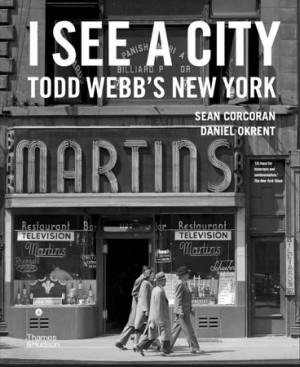
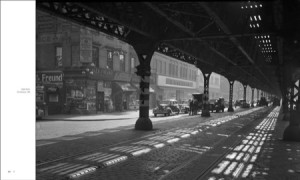
Hardcover. NY, Thames & Hudson, 1st, 2021, Book: Very Good, Dust Jacket: None, Hardcover in pictorial boards. An evocative portrait of mid-century New York City by master documentary photographer. It focuses on the work photographer Todd Webb produced in New York City in the 1940s and 1950s. Webb photographed the city day and night, in all seasons, and in all weather. Buildings, signage, vehicles, the passing throngs, isolated figures, curious eccentrics-from the Brooklyn Bridge to Harlem, this book is a rich portrait of the everyday life and architecture of New York. Webb's work is focused and layered with light and shadow, capturing the soul of this city shaped by the friction and frisson of humanity. Remainder line to bottom edge, otherwise clean.
Softcover. NY, Abrams, 1st pbk, 1999, Book: Very Good, Dust Jacket: None, Softcover, oblong format, 399 pages plus index. This book offers a powerful new perspective on a much photographed subject: New York City, Veteran news photographer Ralph Ginzburg assigned himself the daunting task of photographing a different news event in The Big Apple on 365 consecutive days. The result is a year-long, 510-image extravaganza of the high drama and grandeur that are the everyday life of Gotham. Clean copy.
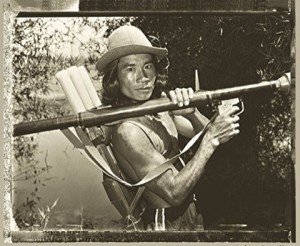
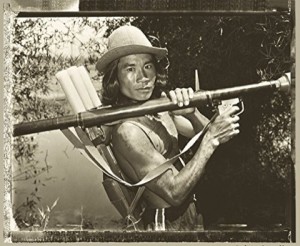
Hardcover. Santa Fe NM, Twin Palms Publishers, 1st, 2007, Book: Very Good, Dust Jacket: None, Folio, 60 pages, VG+ in pictorial boards, as issued, without dust jacket. Lavishly illustrated in b&w. Bill Burke's seminal book originally published by Nexus Press in 1987. In the early 1980's Burke traveled to Thailand and Viet Nam, as well as Cambodia where he documented the aftermath of the Khmer Rouge regime. The book was produced using the original plates, and features the same layout and scale as the first edition.
Hardcover. Santa Fe NM, Twin Palms Publishers, 1st, 2007, Book: Very Good, Dust Jacket: None, Folio, 60 pages, VG+ in pictorial boards, as issued, without dust jacket. Lavishly illustrated in b&w. Bill Burke's seminal book originally published by Nexus Press in 1987. In the early 1980's Burke traveled to Thailand and Viet Nam, as well as Cambodia where he documented the aftermath of the Khmer Rouge regime. The book was produced using the original plates, and features the same layout and scale as the first edition.
Hardcover. New York, powerHouse Books, 1st, 2009-07-20, Book: Very Good, Dust Jacket: Very Good, Hardcover, 223 pages, illustrated throughout in b&w. Clean, unmarked copy with only minor wear to dust jacket. Folio. The writer's first collection of photographs provides a photographic essay of the Imperial Valley, California.
Hardcover. New York, Other Press LLC, 1st Edition, 2006, Book: Very Good, Dust Jacket: Very Good, 372 pages. Hardcover. Nearly 500 full color and black & white photographs throughout. Dust jacket with light fading & small tear to spine edge. Clean, unmarked and bright copy.

 "Hells Angels Motorcycle Club (SIGNED COPY)by: Shaylor, Andrew")
 "Helluva Town: New York City in the 1940s and 50sby: Cherry, Vivian")
 "Henri Cartier-Bresson in China: 1948-1949/1958 by: Michel Frizot/Ying-lung Su")
 "Henri Cartier-Bresson: the Early Workby: Galassi, Peter")
 "Henri Cartier-Bresson: The Modern Centuryby: Cartier-Bresson, Henri")
 "Here and Thereby: Levitt, Helen and Adam Gopnik")
 "High Exposure: Hollywood Lives - Found Photos from the Archives of the L.A. Timesby: Amanda Parsons")
 "Hombu: Indian Life in the Brazilian Jungleby: Schultz, Harald")
 "Home and the World : A View of Calcuttaby: McPhee, Laura")
 "Home Front: American Flags from Across the United Statesby: Elliott, Peter")
 "Hometown Diners by: Williams, Robert O.")
 "Horace Bristol: An American View by: Ken Conner, Debra Heimerdinger")
 "How We Are: Photographing Britain from the 1840s to the Presentby: Williams, Val and Susan Bright")
 "Howard L. Bingham's Black Panthers 1968by: Bingham, Howard L. and Howard Crist (Ed.)")
 "Humanity and Inhumanity: The Photographic Journey of George Rodger by: BERNARD, Bruce and George Rodger")
 "Humansby: Brandon Stanton")
 "I Protest! Khe Sanh Vietnam by: Duncan, David Douglas")
 "I See a City: Todd Webb's New Yorkby: Corcoran, Sean/ Okrent, Daniel/ Webb, Todd (Photographer)")
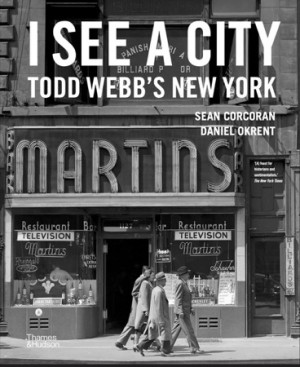
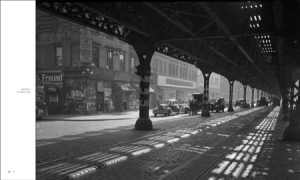
 "I See a City: Todd Webb's New Yorkby: Corcoran, Sean/ Okrent, Daniel/ Webb, Todd (Photographer)")
![I Shot New York: Photographs by Ralph Ginzburgby: Ralph Ginzburg [Introduction: George Plimpton]](javascript:largeIMTop('https://www.browsingisarousing.com/shop/images/I-Shot-New-York-Photographs-by-Ralph-Ginzburg_by_Ralph-Ginzburg-Introduction-George-Plimpton398272-451676.jpg','https://www.browsingisarousing.com/shop/images/I-Shot-New-York-Photographs-by-Ralph-Ginzburg_by_Ralph-Ginzburg-Introduction-George-Plimpton398272-451676.jpg',0,'398272',0,'') "I Shot New York: Photographs by Ralph Ginzburgby: Ralph Ginzburg [Introduction: George Plimpton]")
 "I Want To Take Pictureby: Burke, Bill")

 "I Want To Take Pictureby: Burke, Bill")

 "Imperialby: Vollmann, William T.")
 "Impulse To Preserve, The - Reflections of a Filmmakerby: Gardner, Robert")