Hardcover. US, NBM Publishing, 1st, 2008, Book: Very Good, Dust Jacket: Very Good, 110 pages, illustrated throughout in color and b&w. Clean, tight copy.
Hardcover. Hanover NH, University Press of New England , 1st, 2009, Book: Very Good, Dust Jacket: Very Good, Hardcover in a bright dust jacket, 458 pages. Through furniture, this exhibition catalogue will explore the cultural identity of a little-studied region of 18th and 19th century New England: southeastern Massachusetts, an area that stretches from just south of Boston to Providence, east to the tip of Cap Cod, and includes the islands of Nantucket and Martha's Vineyard. The era between 1710 and 1850 was marked by enormous changes in the landscape, population, and economy of this area, as well as in the activities of furniture craftsmen and the purchasing patterns of local residents. Three themes are paramount here: 1. Regionalism in the character of furniture made in the area and the forces that shaped that identity. 2. Fashion, changing tastes and the growing affluence of local residents over time. 3. Shop practices and the evolving craft practices of furniture makers through the recreation of two shops, the rural handcraft tradition of Samuel Wing of Sandwich in 1800 and the mechanized operation of a New Bedford or Fall River chair factory in 1850. The exhibition will include approximately 75 pieces of furniture from private and institutional collections, tools and equipment from the Samuel Wing cabinet shop (now owned by Sturbridge Village), and selected household furnishings depicting interiors in southeastern Massachusetts during the 18th and 19th centuries. Still in publisher's shrinkwrap. DOMESTIC SHIPPING ONLY.
Hardcover. NY, Time Life, reprint, 1982, Book: Very Good, Dust Jacket: None, 402 pages. Hardcover with no dust jacket. Dark blue leather bound with gilt titles to front cover and spine. Embossed decoration on front cover. Gilt text block edges, red ribbon marker. Clean, tight copy. Most histories of the Civil War focus on battles and top brass. Hardtack and Coffee is one of the few to give a vivid, detailed picture of what ordinary soldiers endured every dayaEUR"in camp, on the march, at the edge of a booming, smoking hell. John D. Billings of Massachusetts enlisted in the Army of the Potomac and curvived the conditions he recorded. The authenticity of his book is heightened by the many drawings that a comrade, Charles W. Reed, made in the field. This is the story of how the Civil War soldier was recruited, provisioned, and disciplined. Described here are the types of men found in any outfit; their not very uniform uniforms; crowded tents and makeshift shelters; difficulties in keeping clean, warm, and dry; their pleasure in a cup of coffee; food rations, dominated by salt pork and the versatile cracker or hardtack; their brave pastimes in the face of death; punishments for various offenses; treatment in sick bay; firearms and signals and modes of transportation. Comprehensive and anecdotal, Hardtack and Coffee is striking for the pulse of life that runs through it.
Hardcover. NY, Random House, BC Ed., 1968, Book: Very Good, Dust Jacket: Very Good, Hardcover in a bright dust jacket. Copyright page states first printing, but no price on flap, probably a book club edition. Colorfully illustrated boards with black cloth spine, with gilt lettering; white DJ with red and orange illustration and lettering; 255 pages, profusely illustrated. Long before Harlem became one of the trendiest neighborhoods in the red-hot real estate market of Manhattan, it was a metaphor for African American culture at its richest. Allon Schoener's celebrated Harlem on My Mind is the classic record of Harlem life during some of the most exciting and turbulent years of its history, a beautiful and poignant reminder of a powerful moment in African America history. Including the work of some of Harlem's most treasured photographers, among them James Van Der Zee and Gordon Parks, there are photographs of Harlem's literary lights Langston Hughes, Countee Cullen, and Richard Wright; its politicians Marcus Garvey, Malcolm X, and Adam Clayton Powell Jr.; and its musicians Ethel Waters, Duke Ellington, and Billie Holiday. The book also includes the photographs of the everyday folk who gave life to this legendary community. Clean copy.
Hardcover. Naperville IL, Sourcebooks MediaFusion, 1st, 2006, Book: Very Good, Dust Jacket: Very Good, Hardcover in a bright dust jacket. 502 pages, b&w illustrations. For three decades after World War I, Harlem was the site of burgeoning racial and cultural awareness and ambitions among African Americans. In the opening section of this book, Wintz provides the historical context for what became known as the Harlem Renaissance. In separate sections devoted to poetry, music, politics, art, and the phenomenon of the New Negro, contributors profile many of the era's major figures, including Langston Hughes, Zora Neale Hurston, Bessie Smith, Ethel Waters, Josephine Baker, W. E. B. DuBois, Paul Robeson, A. Phillip Randolph, and Marcus Garvey. The essays place the Harlem Renaissance in the broader context of an awakening of black culture throughout the U.S. The book contains references to the accompanying CD, which offers 60 minutes of music, poetry, interviews, performances, and speeches, giving voice to the vibrant life of Harlem. Photographs, drawings, book covers, and posters add to the richness of this collection. A fabulous resource on the Harlem Renaissance.
Hardcover. Washington DC, Brassey's , 1st, 2003, Book: Very Good, Dust Jacket: Very Good, Hardcover in a bright, unclipped dust jacket, b&w illustrations, 293 pages. The 369th became one of the few U.S. units that American commanding general John J. Pershing agreed to let serve under French command. Donning French uniforms and taking up French rifles, the men of the 369th fought valiantly alongside French Moroccans and held one of the widest sectors on the Western Front. The entire regiment was awarded the Croix de Guerre, the French government's highest military honor. Clean copy.
Hardcover. Chicago, University Of Chicago Press, 1st, 2013, Book: Very Good, Dust Jacket: Very Good, Hardcover, 364 pages, illustrated throughout in color. Clean, unmarked copy with only minor wear to dust jacket. Wandering the streets of Harlem for the past forty years, Camilo Vergara has noticed and miraculously recorded those moments of great human invention that have been largely overlooked by the official chronicles of architecture and urban history. For this reason, his photographs are unique and indispensable.
Hardcover. NY, George Braziller, 1st, 1956, Book: Very Good, Dust Jacket: Fair, Hardcover in a worn, chipped dust jacket. 257 pages, b&w illustrations. The Turbulent And Colorful History - 400 years long of the clown Harlequin - one of the most magical figures ever created in the theatre. No markings.
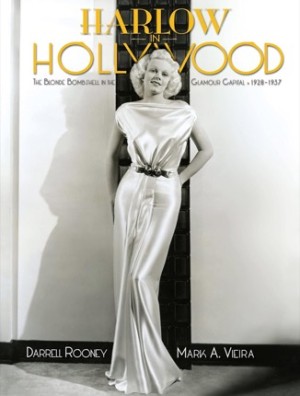
Hardcover. Angel City Press, 1st, 2022, Book: Very Good, Dust Jacket: Very Good, Hardcover, profusely illustrated, 208 pages. When Jean Harlow became the Blonde Bombshell, it was all Hollywood's doing. She was the first big-screen sex symbol, the Platinum Blonde, the mold for every famous fair-haired superstar who would emulate her. Yes; even Marilyn Monroe followed Harlow's lead. In her short decade in Hollywood, Harlow created a new genre of movie star--her fans idolized her for her peerless image, her beautiful body, and her gorgeous facade. Harlow in Hollywood is the story of how a town and an industry created her, a story that's never been told before. In these pages, renowned Harlow expert Darrell Rooney and Hollywood historian Mark Vieira team to present the most beautiful--and accurate--book on Harlow ever produced. With more than 280 rare images, the authors not only make a case for Harlow as an Art Deco artifact, they showcase the fabulous places where she lived, worked and played from her white-on-white Beverly Glen mansion to the Art Deco sets of Dinner at Eight to the foyer of the Cafe Trocadero. Still in publisher's shrink wrap.
Hardcover. NY, Knopf, 1st, 1999, Book: Very Good, Dust Jacket: Very Good, Hardcover in a bright dust jacket, 599 pages. Don't pick up this fascinating, deeply eccentric book expecting to find a conventional biography of Eugene V. Debs (1855-1926). The fiery American labor leader who founded the Socialist Party of America is not so much the subject as the central figure in a group portrait of utopian dreamers--including Karl Marx, Brigham Young, abolitionist Wendell Phillips, poet James Whitcomb Riley, and detective-agency founder Allan Pinkerton--from the time of the French Revolution through the dawn of the 20th century. Author Marguerite Young is a legendary Greenwich Village bohemian who died in 1995. She devoted the last 25 years of her life to this volume, which was intended as a recapitulation of the issues that had engaged Debs - justice for workers, peace for everyone, racial equality - and continued to galvanize America in the 1960s and beyond. Young doesn't provide a lot of straight factual information about Debs's life, but takes instead a snapshot of his soul as it was formed by reading and experience. The narrative closes (sort of) with the national railroad strike of 1877, a bitter defeat for labor that turned railroad worker and union activist Debs toward greater radicalism. Though not a work for the traditionally minded, Young's genre-bending book will thrill students of American social and socialist history. Clean copy.
Hardcover. NY, Harper & Bros, 1868, Book: Good, Dust Jacket: None, 864 pages, b&w engravings throughout. 3/4 black calf leather over pebble grain cloth covered boards. Rubbing to the leather. Subjects: Lookout Mountain & How We Won It, John Bull in Abyssinia, Among the Andes of Peru and Bolivia, Fashions in Guinea, Chinese Embassy to Foreign Powers, Explorations in Lower California, Shooting Stars and Meteors, Fish Culture In America, many other articles. Hinges cracked, library bookplate on inside front cover, otherwise a clean, tight copy.
Hardcover. NY, Harper and Brothers, 1963, Book: Very Good, Dust Jacket: None, Hardcover, bound volume of every issue for 1863. Profusely illustrated, Exceptional condition. Clean. Extra shipping charges may apply. DUE TO WEIGHT, DOMESTIC SHIPPING ONLY.
Hardcover. Boston, Houghton Mifflin, 1st, 1935, Book: Very Good, Dust Jacket: None, Hardcover, blue cloth covers stamped in dark blue. 230 pages, color frontis and 20 b&w drawings by Clifford Ashley. Previous owner's inscription on front fly leaf, darkening to cover edges, otherwise clean, very good.
Softcover. Philadelphia, Jewish Publication Society, 1st, 2013, Book: Very Good, Dust Jacket: None, Softcover, oblong format, 238 pages illustrated in color. Today e-mail, Facebook, and Twitter are sometimes used to spread hateful messages and slurs masking as humor. In the late nineteenth and early twentieth centuries postcards served this purpose. The images collected in this volume make it painfully clear that anti-Semitic propaganda did not simply begin with the Nazis. Nor was it the sole province of politicians, journalists, and rabble-rousers. One of the most virulent forms of anti-Semitism during this time was spread by quite ordinary people through postcards. Of the millions of postcards exchanged during their heyday of 1890 through 1920, a considerable percentage carried the anti-Semitic images that publishers churned out to meet public demand, reflecting deep-seated attitudes of society. Over 250 examples of such postcards, largely from the pre-Holocaust era, are reproduced here for the first time-selected, translated, and historically contextualized by one of the world's foremost postcard collectors. Clean copy.
Hardcover. NY, Prestel, 1st, 1999, Book: Very Good, Dust Jacket: Very Good, Hardcover, 104 pages. Ever since Fidel Castro came to power as the leader of Cuba's communist regime in 1959, Havana has remained all but impenetrable to the outside world. The revolution cut Cuba off from the West, but at the same time preserved a century of built substance and style through the accident of fmancial stagnation. Without capital investment, time stood still, and five epochs of architectural style have survived to the present day. From the majesty of colonial city palaces to the half-hearted hope of heroic modernism, Engels' photographs show a city in silent transition, a microcosm of architecture through the ages. All of the structures picttired here were built in the twentieth century, but for the most part they have suffered from neglect in the form of peeling paint and stucco, &M grime, and abandonment. Yet there is utter beauty and dignity here-a sense of being trapped in time-that is no longer evident in America's everchanging cities. Like the structures he photographs, Engels uses a timeless approach to the artistic and technical aspect of his work. He uses a Sinar catnera with a 4 x 5 inch format, standing under a darkening cloth, just as photographers did a century ago. Using a Polaroid image to feel and see the light, Engels takes a single shot of each building. Most of these images were taken during die month of February, in 1997 and 1999 respectively. These photographs of apartment dwellings, office buildings, private residences, and places of worship tell a story on their own. Their haunting images seem to speak about more than just the men who made them or the materials they are made of. The buildings and streetscapes depicted in Havana speak to us of yesterday, today, and tomorrow.
Hardcover. New York, Harry N. Abrams, 1st, 1986, Book: Very Good, Dust Jacket: Very Good, 288 pages, illustrated throughout in color and b&w. Brown cloth, pictorial dust jacket. Beautiful copy in shrinkwrap. Like new. The first biography of the couple who created the landmark collection that is still the base of most American museums.
Hardcover. NY, David Mckay, 1st, 1964, Book: Very Good, Dust Jacket: Very Good, Hardcover in a lightly worn dust jacket, 329 pages. "This volume puts together as a continuous narrative the diary of Rutherford B. Hayes from March, 1875 to March 1881 - covering his nomination as the Republican candidate, the campaign of 1876, the disputed election and its compromise, and his Presidency. It is based on a typed copy of the original manuscript supplied by The Rutherford B. Hayes Library of Fremont, Ohio, and its director, Watt P. Marchman. Hayes was an inveterate diary keeper from his youth to his old age. In this record of the presidential years the diary is reproduced virtually in facsimile form. All misspellings, errors in punctuation, and other eccentricities have been retained, as have the deletions and gaps in the original copy." Name on front fly leaf, otherwise clean.
Softcover. Universtity Park PA, Pennsylvania State University Press, 1st, 1998, Book: Very Good, Dust Jacket: None, Softcover, pictorial wrappers, 280 pages. This easily accessible volume, which grew out of a series of lectures presented at the Smithsonian Institution in 1991, aims to provide a coherent introduction to Byzantine culture with a focus on the interconnected realms of art and religion. The eight participants have revised their lectures into chapters on Byzantine history, theology, icons and icon theory, church architecture, monumental painting, silver church furnishings, illustrated liturgical books, and pilgrimage. In addition to presenting current research on this range of topics, the chapters each contribute original scholarship from authors who are recognized experts in their respective fields. The Introduction, by Linda Safran, deals with views and definitions of Byzantium over the course of its long history and considers why that civilization deserves our attention today. Illustrated in b&w and color.
Hardcover. Munich/NY, Prestel, 1st, 1996, Book: Very Good, Dust Jacket: Very Good, Hardcover in a bright dust jacket. 143 pages with 100 color and 79 b&w illustrations. In 1750 the Venetian painter Giambattista Tiepolo arrived in Wurzburg, capital of the small German principality of Franconia. Its ruler, Prince-Bishop Carl Philipp von Greiffenclau, had commissioned him to decorate the Kaisersaal, one of the state rooms in his palace, the Residenz. Later extended to include the decoration of the Residenz's staircase, the commission resulted in a series of frescos that are numbered among the greatest glories of Baroque painting. Created by the last major representative of the Venetian tradition in painting, the frescos in the Wurzburg Residenz are a truly epochal work of art. They form the culmination of a venerable tradition of fresco decoration initiated by Giotto over four hundred years earlier and, in their marriage of mythological and historical subject-matter, constitute a monument to the dying age of absolutism. In his highly readable text Peter O. Kruckmann tells the story of how Tiepolo came to receive the commission, explores in detail the thematic and artistic intricacies of the frescos, and documents their genesis as a continuous process, from the preliminary sketches to the finished works. Clean copy.
Softcover. Salem NY, Hebron Preservation Society, 2nd pr., 1988, Book: Very Good, Dust Jacket: None, Softcover, oblong format, 276 pages with b&w illustrations. Covers with light curl to corners, mild crease to first 20 pages. Clean copy.
Hardcover. NY, Delano Greenidge Editions, 1st, 2003, Book: Very Good, Dust Jacket: Very Good, Hardcover, 396 pages, lavishly illustrated throughout in color and b&w. Light shelf-wear to dust jacket, else a clean, tight copy. Guimard is the pre-eminent architect of Art Nouveau in France. He influenced French architecture and design in the first half of the 20th century. He was also the architect of a number of Paris Metro entrances. He was regarded as an architect who wielded the greatest influence on the popular imagination in Paris during the late 19th- and early 20th centuries.
Hardcover. NY, Cambridge University Press, reprint, 2000, Book: Very Good, Dust Jacket: Very Good, Hardcover in a bright, price-clipped dust jacket, 256 pages. Originally published in 1971, this volume was created to commemorate the bicentenary of Hegel's birth in 1770. Thirteen essays are included from experts with diverse approaches, concentrating on the central issues of Hegel's political philosophy, and covering all of the major political works. These essays demonstrate the vitality of Hegel's philosophical perspective, engaging the reader and providing a way into the often difficult explication of his ideas. Whilst this is a commemorative edition, and the views put forward are broadly sympathetic, a critical distance is maintained, allowing for numerous fresh insights. Accessible and highly informative, this book will be of value to anyone with an interest in Hegelian thought and its political implications.
Hardcover. New York, State University of New York Press, 1st, 1991, Book: Very Good, Dust Jacket: Very Good, 233 pages. Hardcover. Dust jacket with light wear. Clean unmarked text.

 "Happy Hooligan (Forever Nuts: Classic Screwball Strips)by: Opper, Frederick Burr")
 "Harbor & Home: Furniture of Southeastern Massachusetts, 1710 - 1850by: Brock Jobe/Gary R. Sullivan / Jack O'Brien")
 "Hard Tack and Coffee, or The Unwritten Story of Army Life (Collector's Library of the Civil War)by: Billings, John D./Charles W. Reed")
 "Harlem on My Mind: Cultural Capital of Black America 1900-1968 by: Schoener, Allon (Ed.); Candice Van Ellison (Intro.)")
 "Harlem Speaks: A Living History of the Harlem Renaissance (with CD)by: Cary D. Wintz")
 "Harlem's Hell Fighters: The African-American 369th Infantry in World War I by: Stephen L. Harris")
 "Harlem: The Unmaking of a Ghetto (Historical Studies of Urban America)by: Vergara, Camilo Jose")
 "Harlequin or The Rise and Fall of a Bergamask Rogue by: Niklaus, Thelma")
 "Harlow in Hollywood: The Blonde Bombshell in the Glamour Capital, 1928-1937by: Rooney, Darrel/ Vieira, Mark A.")
 "Harp Song for a Radical: The Life and Times of Eugene Victor Debs by: Young, Marguerite")
 "Harper's New Monthly Magazine, Volume 37, June to November 1868 by: N/A")

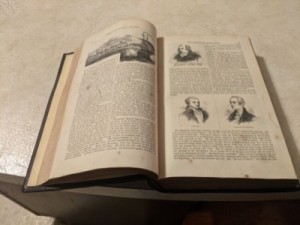
 "Harper's Weekly: Journal of Civilization Vol. VII For the Year 1863by: N/A")
 "Harpoon: The Story of a Whaling Voyageby: Dulles, Foster Rhea/Clifford Ashley")
 "Hartland (Vermont) - The Way It Was 1761-1976by: N?A")
 "Hatemail: Anti-Semitism on Picture Postcardsby: Salo Aizenberg")
 "Havana: The Photography of Hans Engelsby: Engels/ Beth Dunlop, et al., Hans")
 "Havemeyers, The: Impressionism Comes to Americaby: Weitzenhoffer, Frances")
 "Hayes: The Diary of a President 1875-1881-Covering the Disputed Election, the End of Reconstruction, and the Beginning of Civil Service by: Hayes, Rutherford / Willia")
 "Heaven on Earth: Art and the Church in Byzantium by: Safran, Linda (Editor)")
 "Heaven on Earth: Tiepolo Masterpieces of the Wurzburg Years by: Kruckmann, Peter O.")
 "Hebron: A Century in Review by: N/A")
 "Hector Guimard: Architect, Designer (1867-1942)by: Vigne, Georges")
 "Hegel's Political Philosophy: Problems and Perspectivesby: Z. A. Pelczynski (Editor)")
 "Heidegger and the Project of Fundamental Ontologyby: Taminiaux, Jacques")