Hardcover. New Haven, S. Converse, 4th Ed., 1823, Book: Good, Dust Jacket: None, 856 pages, the Fourth Edition, revised and corrected of this classic work. Bound in worn calf with an inch and a half tear to top of spine. Previous owners signatures on front fly leaf. Very good with light, scattered foxing. Issued with an separate atlas of maps which is missing.
Hardcover. NY, Abrams, 1st, 2018, Book: Very Good, Dust Jacket: Very Good, Hardcover, 248 pages. b&w photos throughout. During his 50-year association with the Village Voice, Fred W. McDarrah (1926-2007) covered the city's downtown scenes, producing an unmatched and encyclopedic visual record of people, movements, and events. McDarrah frequented the bars, cafes, and galleries where writers, artists, and musicians gathered, and he was welcome in the apartments and lofts of the city's avant-garde cultural aristocracy. He captured every vital moment, from Jack Kerouac reading poetry, to Bob Dylan hanging out in Sheridan Square, to Andy Warhol filming in the Factory, to the Stonewall Riots. Through his lens, we see the legendary birth of ideas and attitudes that continue to shape the character and allure of New York today.
Hardcover. US, Schiffer Publishing, Ltd., 1st, 2014, Book: Very Good, Dust Jacket: Very Good, 176 pages, illustrated throughout in color and b&w. Light edgewear to dust jacket, else a clean, tight copy. Roy Kemp's previously unpublished burlesque portfolio presents thirty-nine dancers performing in authentic clubs and backstage settings in 1950s New York. This nostalgic collection includes nearly 250 never-before-seen black and white and color photographs of well-known dancers, including Tempest Storm, Liz O'Leyar, Murine, Rita Gable, and Princess Domay, as well as other sultry performers, quite famous in their heyday. Kemp's talents as a photojournalist provide a fresh perspective on the lives of burlesque performers in this golden era. An artist as well as an investigator, Kemp created striptease photo montages and composed biographies for several dancers, giving the reader an intimate feel for the campy burlesque culture. This time capsule depicts live performances and peeps into club dressing rooms, and offers unedited material from pin-up photo sessions. It is a must-have for aspiring dancers, aficionados, or any modern-day guy or gal who appreciates the style and grit of this fabulous art form.
Hardcover. Albany, J.B. Lyon Co., 1904, Book: Good, Dust Jacket: None, Two large hardcover volumes. Vol. 1: 534 pages w/ index. Brown cloth w/ color decorative soldier design on front cover. Front and rear interior hinges cracked, but holding. Spine cloth chipped and missing 1/2" at top and bottom of spine. Cloth along spine with tears and some separations. Beginning of Separation at 2nd signature. Cover corners lightly bumped and rubbed. Gilt top edge. Interior clean,and unmarked. Vol. 2: 336 pages w/ index. Brown cloth w/ gilt lettering. Front interior hinge cracked, but holding. Rear interior hinge loose, but holding. Spine cloth chipped and missing 1/2" at top and bottom of spine. Cloth along spine with tears and some separations and narrow strips of cloth missing. Cover corners rubbed and bumped. Interior clean, and unmarked.
Softcover. Amon Carter Museum, reprint, 1995, Book: Very Good, Dust Jacket: None, Softcover, 256 pages. Struss (1886-1981) was that rara avis who mastered both still photography and cinematography. Best known for his stunning camera work on F.W. Murnau's Sunrise--for which he shared the first Academy Award for cinematography in 1927--Struss was a member of Photo-Secession, an organization co-founded by Alfred Stieglitz devoted to the promotion of photography as a fine art. While Koszarski discusses Struss' contributions to the cinema, the focus of this retrospective is the artist's earlier New York pictorial work; the book is handsomely illustrated with black and white images from Struss' oeuvre, as well as his striking 1910-17 experiments in color.
Hardcover. New York, NY, powerHouse Books, 1st, September 2002, Book: Very Good, Dust Jacket: Very Good, Hardcover, 163 pages, b&w and color photographs throughout. A very clean, tight copy.
Hardcover. New York, W. W. Norton & Company, 1st, 2002, Book: Very Good, Dust Jacket: Very Good, 223 pages, illustrated in color and b&w. What Pennsylvania Station was, is, and might be in the future, through knowledgeable text and excellent pictures and drawings. A good read for those who want a detailed look at one of New York City's most famous architectural treasures, how it was lost, and how it might be reborn once again. The section on its rebirth in the Farley Post Office building was written before work was delayed on the project. Clean copy.
Hardcover. NY, Distributed by E.P. Dutton, 1st, 1982, Book: Good, Dust Jacket: Good, Large format hardcover, 423 pages, illustrated throughout in b&w. Light edgewear, rubbing and sun-fade to price clipped dust jacket. Light staining to end papers from red flaps, else a clean, tight copy.
Hardcover. NY, Doubleday, 1st, 1964, Book: Very Good, Dust Jacket: Very Good, Hardcover in a bright, unclipped dust jacket with minor edgewear. Illustrated throughout by black and white photographs, including frontispiece, title and contents pages. decorated by half title vignette. An early 1960s portrait of New York City and some of its inhabitants going about their daily business in words and evocative photographs. By journalist, Gilbert Millstein and photojournalist and street photographer, Austrian born Sam Falk (1901-91).
Newport RI, Redwood Library and Athenaeum, 1st, 2006, Book: Very Good, Dust Jacket: Very Good, Hardcover in a bright dust jacket. No. 65 of 500 copies SIGNED BY AUTHOR on a tipped in subscriber page. 510 pages, illustrated in color and black & white throughout; original blue cloth stamped in gilt on spine. Ribbon marker. Enclosed in a blue cloth slipcase with a pictorial label. All clean, very good plus.
Hardcover. NY, powerHouse Books, 1st, 2008, Book: Very Good, Dust Jacket: Very Good, Hardcover in a bright dust jacket, 127 pages, illustrated throughout in color and b&w. SIGNED/INSCRIBED BY STANLEY BURNS on title page. Clean, unmarked copy with only minor wear to dust jacket. An unexplored visual history of the melding of art, photography and journalism, takes the reader back to the days before Photoshop and reveals how newspaper editors would doctor images for effect and intent. These images, from 1900-1960 illustrate the range of art enhancement, from outlining and airbrushing to complete overpainting with subjects ranging from crime scenes, world events and social personalities.
Hardcover. New York , powerHouse Books, 1st, 2008, Book: Near Fine, Dust Jacket: Near Fine, Hardcover, 127 pages, illustrated throughout in color and b&w. Clean, unmarked copy with only minor wear to dust jacket. An unexplored visual history of the melding of art, photography and journalism, takes the reader back to the days before Photoshop abd reveals how newspaper editors would doctor images for effect and intent. These images, from 1900-1960 illustrate the range of art enhancement, from outlining and airbrushing to complete overpainting with subjects ranging from crime scenes, world events and social personalities.
Hardcover. New York , powerHouse Books, 1st, 2008, Book: Very Good, Dust Jacket: Very Good, Hardcover, 127 pages, illustrated throughout in color and b&w. Clean, unmarked copy with only minor wear to dust jacket. An unexplored visual history of the melding of art, photography and journalism, takes the reader back to the days before Photoshop abd reveals how newspaper editors would doctor images for effect and intent. These images, from 1900-1960 illustrate the range of art enhancement, from outlining and airbrushing to complete overpainting with subjects ranging from crime scenes, world events and social personalities.
Softcover. Bowie MD, Heritage Books, 1st, 2001, Book: Very Good, Dust Jacket: None, Softcover, 375 pages. This collection of articles from thirty-four different newspapers begins with the "alarming intelligence" of the shots fired at Lexington and Concord, followed by the Battle of Bunker Hill and other skirmishes, military affairs and the siege of St. John's. The source of these articles include letters smuggled out of Boston by terrified colonists, proclamations, speeches, affidavts as well as unconfirmed reports and fabrications. Clean copy.
Globe Pequot Press , 1ST, 1987, Book: Very Good, Dust Jacket: Very Good, Hardcover in a bright, price-clipped dust jacket. INSCRIBED BY AUTHOR on the front fly leaf. In a series of colorful vignettes, a veteran newspaperman recreates a madcap era during which more than a dozen newspapers lived and died in 'the Row' on Boston's Washington Street. This is a story of fierce circulation competition and the often-outrageous journalism it inspired. Clean copy.
Hardcover. Chicago, University Of Chicago Press , 1st, 2017, Book: Very Good, Dust Jacket: Very Good, Hardcover in a bright dust jacket, 330 pages with index. At the close of the nineteenth century, new printing and paper technologies fueled an expansion of the newspaper business and publishers were soon reeling off as many copies as Americans could be convinced to buy. Newspapers quickly saturated the United States, especially its cities, which were often home to more than a dozen daily papers apiece. Using New York, Philadelphia, Milwaukee, and Chicago as case studies, Julia Guarneri shows how city dailies became active agents in creating metropolitan spaces and distinctive urban cultures. Newsprint Metropolis offers a vivid tour of these papers, from the front to the back pages. Paying attention to much-loved features, including comic strips, sports pages, advice columns, and Sunday magazines, she tells the linked histories of newspapers and the cities they served. Themed sections for women, businessmen, sports fans, and suburbanites illustrated entire ways of life built around consumer products. Guarneri also argues that while papers provided a guide to individual upward mobility, they also fostered a climate of civic concern and responsibility. Charity campaigns and metropolitan sections painted portraits of distinctive, cohesive urban communities. Real estate sections and classified ads boosted the profile of the suburbs, expanding metropolitan areas while maintaining cities' roles as economic and information hubs. Clean, like new.
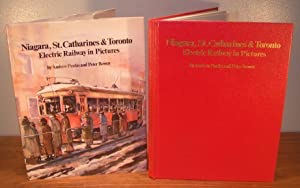
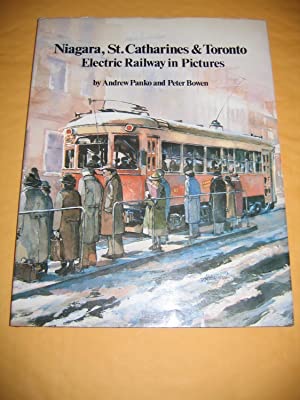
Niagarail Publications, 1st, 1984, Book: Very Good, Dust Jacket: Very Good, Hardcover in a bright dust jacket, 144 pages. INSCRIBED by both authors and stamped "Author's Proof Copy" on the front fly leaf. Clean copy.
Hardcover. London, C. Kegan Paul & Co., 1st, 1878/1883, Book: Very Good, Dust Jacket: None, Four volume set complete, 3/4 calf dyed blue with blue cloth bindings. Spines stamped in gilt with ornate decorations, raised bands, top edge gilt. Translated by Linda Villari. 353, 389, 424, 445 pages, marbled endpapers. Volumes 1 and 2 were published in 1878, volumes 3 and 4 were published in 1883, but it is a matching set. Bright, unmarked set with tight bindings. Due to size and weight, DOMESTIC SHIPPING ONLY.
Hardcover. NY, Cambridge University Press, 1st, 1994, Book: Very Good, Dust Jacket: Very Good, Hardcover in a bright dust jacket. This pioneering study documents the extent and diversity of the impact of Nietzschean ideas on Soviet literature and culture. It shows for the first time how these ideas, unacknowledged and reworked, entered and shaped that culture and stimulated the imagination of both supporters and detractors of the regime. 421 pages, a bright, clean copy.
Softcover. Amherst MA, White River Press , 1st, 2022, Book: Very Good, Dust Jacket: None, Softcover, 462 pages, b&w illustrations. A study of the impact and consequences caused by the use of inflammatory racially-related language during a police investigation conducted by the Vermont State Police. Beginning in 1968 with the Irasburg Affair when a White man fired shotgun blasts into a home occupied by a Black family, the story describes in detail the course of the investigation. Adverse publicity about the Vermont State Police's work alleging racism within its ranks ensued resulting in its managers withdrawing from public view and refusing to work with the legislature in the next years causing significant internal problems. They finally came to the forefront in 1979 when a despondent trooper committed suicide at the state house in Montpelier in an event called the Router Bit Affair that led to significant reforms beginning in1980. Includes bibliographical references and an index. Clean copy.
Softcover. New York, Denniston and Cheetham, 1803, Book: Very Good, Dust Jacket: None, 139 pages, original softcover pamphlet here bound in archival cardboard folder with cloth spine minus outer wrappers. Some small ink numbers on title page, small stickers on spine and front of folder. Gutter cracked between pages 64 and 65, otherwise very good. No foxing.
Hardcover. Seattle, Fantagraphics, 1st, 1997, Book: Very Good, Dust Jacket: Very Good, Hardcover, 144 pages. This is an essential purchase for fans of Felix the Cat. As all true fans know, Felix's real glory days were in the silent era, when Pat Sullivan's animation studio produced over a 100 ingenious short cartoons featurng the protean ebony feline. Though Sullivan hogged all the credit, the artist behind the series was Otto Messmer, who also worked on Felix's spin-off newspaper comic strip. He continued with that strip after the cartoons ended in 1930 (due to Sullivan's incompetent management). Editor David Gerstein has compiled a sampling of strips from the early 1920s to the 1930s. It's fascinating to see how Felix changed over a decade, moving from a blocky, snout-nosed design to a sleek look with rubber hose limbs and circular head and torso. Comic-strip Felix is of naturally talkier than his film self, and Messmer's sight gags flow less smoothly when broken up by panels and dialogue, but these strips remain a delight, especially since a couple stories are adaptations of now-lost cartoons (and even re-use art from them). As for the original stories, they take advantage of the format to tell longer tales, often in the sort of gently humorous adventure genre later used by Floyd Gottfredson's Mickey Mouse and Carl Bark's Donald Duck comics. Sadly, Felix's comic strip adventures remain far more obscure than those Disney productions.

 "New Universal Gazetteer or Geographical Dictionary/ Containing a Description of the Various Countries, Provinces,by: Morse, Jedidiah and Richard")
 "New Victor Records October 1918 by: Victor Talking Machine Company")
 "New World Immigrants: Volume 1: A Consolidation of Ship Passenger Lists and Associated Data from Periodical Literatureby: Michael Tepper (Ed.)")
 "New Yok Scenesby: McDarrah and Sean Wilentz, Fred W.")
 "New York Burlesque: Photographs by Roy Kempby: Kemp, Roy")
 "New York in the Revolution as Colony and State: A Compilation of Documents and Records from the Office of the State Comptroller (Volumes 1 and 2)by: NA")
 "New York to Hollywood: The Photography of Karl Strussby: Barbara McCandless , Bonnie Yochelson, et al.")

 "New York's Pennsylvania Stationsby: Ballon, Hilary")
 "New York: Photographs, 1850-1950by: Blom, Benjamin")
 "New York: True Northby: Gilbert Millstein/Sam Falk")
 "Newport: A lively Experiment 1639-1969 (SIGNED COPY)by: Stensrud, Rockwell")
 "News Art: Manipulated Photographs from the Burns Archive (SIGNED AND INSCRIBED)by: Stanley B. Burns/ Sara Cleary Burns")
 "News Art: Manipulated Photographs from the Burns Archiveby: Burns, Stanley B.")
 "News Art: Manipulated Photographs from the Burns Archiveby: Burns, Stanley B.")
 "Newspaper Datelines of the American Revolution, Vol. 1: April 18, 1775 to November 1, 1775 by: Lucier, Armand Francis")
 "Newspaper Row : Journalism in the Pre-Television Era (SIGNED COPY)by: Kenny, Herbert A.")
 "Newsprint Metropolis City Papers and the Making of Modern Americans by: Guarneri, Julia")
 "Niagara, St. Catharines & Toronto Electric Railway in Pictures by: Panko, Andrew & Peter Bowen")
 "Niccolo' Machiavelli and His Times (4 Volume Set) by: Prof. Pasquale Villari")
 "Nietzsche and Soviet Culture: Ally and Adversaryby: Bernice Glatzer Rosenthal (Ed.)")
 "Night-Rider Legacy: Weaponizing Race in the Irasburg Affair of 1968 by: Gary G Shattuck")
 "Nine Lives to Live: A Classic Felix Celebrationby: Otto Messmer and David Gerstein")