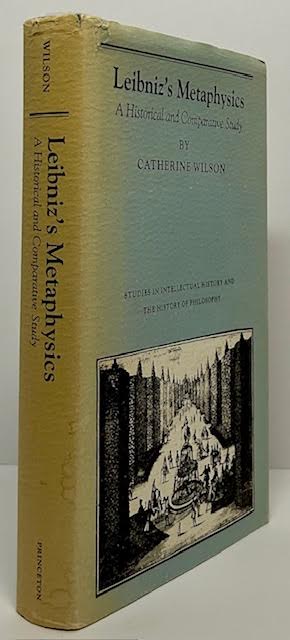
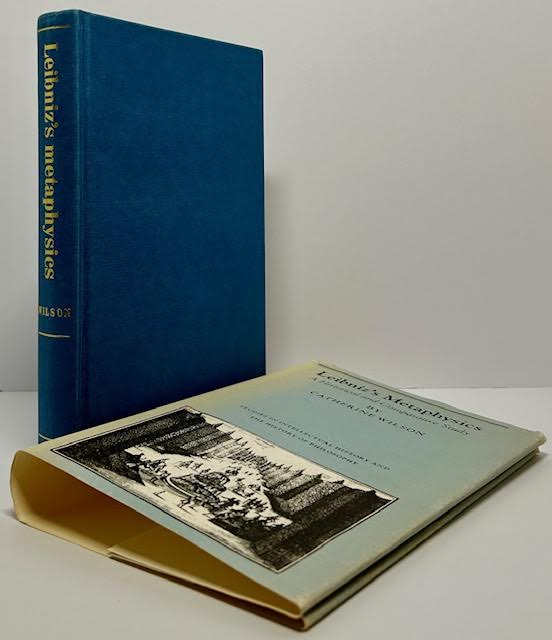
Hardcover. Princeton, NJ, Princeton University Press, 1st Edition, 1989, Book: Very Good, Dust Jacket: Very Good, 350 pages. Hardcover. Previous owner's name on front flyleaf. Blue cover boards, gilt title on spine. Dust jacket unclipped, some fading and agewear to spine of dj. This study of the metaphysics of G.W. Leibniz gives a clear picture of his philosophical development within the general scheme of seventeenth-century natural pholosophy.
Hardcover. NY, Knopf, 1st, 2007, Book: Very Good, Dust Jacket: Very Good, Hardcover, 400 pages. The definitive biography of Leni Riefenstahl, the woman best known as "Hitler's filmmaker," one of the most fascinating and controversial personalities of the twentieth century. It is the story of huge talent and huger ambition, one that probes the sometimes blurred borders dividing art and beauty from truth and humanity. Relying on new sources--including interviews with her colleagues and intimate friends, as well as on previously unknown recordings of Riefenstahl herself--Bach gives us an exceptional work of historical investigation that untangles the past and is also an objective but unsparing appraisal of a woman of spectacular gifts corrupted by ruthless personal ambition.
Softcover. UK, Abacus, reprint, 2008, Book: Very Good, Dust Jacket: None, Softcover, 468 pages, b&w illustrations. Presents a revealing biography, based on primary sources, of the life and works of Riefenstahl and her role as photographer and filmmaker in Germany and during the Nazi regime. Bright, clean copy.
Hardcover. New York, Frederick A. Stokes Company, 1st, 1908, Book: Good, Dust Jacket: None, 278 pages, hardcover. Illustrated from oil paintings by Maynard Dixon. Moderate rubbing, soiling, fading, and edgewear to boards, mostly to spine. Corners lightly bumped. Age toning to text block. Cracking to front hinge. Light spotting throughout. Color frontispiece intact. Unmarked. Scarce.
Hardcover. New York, Simon & Schuster, First Edition, 2017, Book: Very Good, Dust Jacket: Very Good, 599 pages. Hardcover. Wine cloth boards with gilt titles to spine & illustrated, sepia toned endpapers. Profusely illustrated in full color & black & white, images beautifully presented to accompany text. Bright dust jacket with marginal wear. Clean & unmarked copy.
Hardcover. Cambridge, Harvard University Press, First Edition, 1968, Book: Very Good, Dust Jacket: Very Good, 335 pages. Hardcover. Ivory boards with black printed titles to mustard cloth spine. Dust jacket with moderate toning & light wear to edges. Previous owner's signature to front flyleaf. Illustrations in bw throughout. Clean & unmarked copy.
Hardcover. NY, Johnson Reprint Corporation, reprint, 1982, Book: Very Good, Dust Jacket: Very Good, Hardcover in a bright dust jacket, 192 pages, illustrated with 22 color plates and 177 in b&w. Contents: 1). Preface. 2). Major events in Leonardo's life. 3). The river. 4). The fiction. 5). Hercules. 6). Leda. 7). Bacchus. 8). Epilogue. 9). Bibliography. 10). Index. Smaller ownership sticker on inside front cover otherwise bright and clean.
Hardcover. Abington UK, Professional Books Ltd., reprint, 1981, Book: Very Good, Dust Jacket: None, Unpaginated, approximately 400 pages. A hardcover reprint of the 1679 London edition published by Sawbridge, et al. Latin text. Clean and tight.
Hardcover. Baltimore MD, Johns Hopkins University Press, 1st, 1998, Book: Very Good, Dust Jacket: Very Good, Hardcover in a bright dust jacket, 356 pages, b&w illustrations. Starrs offers a detailed and comprehensive look at one of America's most enduring institutions. Richly illustrated with 130 photographs and maps, the book combines the authentic detail of an insider's view (Starrs spent six years working cattle on the high desert Great Basin range) with a scholar's keen eye for objective analysis. Tracing the geography and history of ranching in the United States, Starrs tells how Anglo settlers first encountered the open grasslands of the West - an environment alien to most of the European experience." Clean copy.
Hardcover. Boston, Houghton Mifflin, 3rd pr., 1960, Book: Very Good, Dust Jacket: None, Hardcover, black cloth with gilt lettering on spine. 471 pages, Walker Evans photos up front. In the summer of 1936, Agee and Evans set out on assignment for "Fortune" magazine to explore the daily lives of sharecroppers in the South. Their journey would prove an extraordinary collaboration and a watershed literary event when in 1941. "Let Us Now Praise Famous Men" was first published to enormous critical acclaim. This unsparing record of place, of the people who shaped the land, and of the rhythm of their lives today stands as one of the most influential books of the twentieth century. The time is the mid-1930s, in the depths of the Great Depression. Tenant farmers down South are struggling with deepening debt, chronic illnesses in their families (NO health care), land suffering from drought and the hopeless, grinding poverty much of America suffered through in that era. Clean copy. Lacks the dust jacket.
Softcover. San Francisco , Chronicle Books, 1st, 1992, Book: Very Good, Dust Jacket: None, 120 pages. Softcover. A very clean, unmarked copy with only minor edgewear. A history of American typography and graphic design throughout the industrial age. 200 color illustrations throughout.
Hardcover. New York, Naval History Society, 1st, 1915, Book: Near Fine, Dust Jacket: None, 240 pages, b&w illustration. White vellum spine and corners with blue-gray boards, gilt lettering on spine, top edge gilt. Limited to 600 copies, this is #582. Beautiful bright copy.
Hardcover. New York, Naval History Society, 1st, 1915, Book: Near Fine, Dust Jacket: None, 240 pages, b&w illustration. White vellum spine and corners with blue-gray boards, gilt lettering on spine, top edge gilt. Limited to 600 copies, this is #590. Beautiful bright copy.
Hardcover. Cambridge MA, Harvard University Press, 1st, 1969, Book: Very Good, Dust Jacket: Very Good, Hardcover, light brown cloth w/ black lettering on spine., 237 pages. Lightest of edgewear to dj. A collection of 42 letters written between 1769 and 1777 by Eddis, a young Englishman, loyal to the Crown. The correspondence offers unique insights into a critical point in American history, especially around the Cheapeake area where he was a resident. Name on front fly leaf, otherwise clean.
Hardcover. NY, Abrams, 1st, 2019, Book: Very Good, Dust Jacket: Very Good, Hardcover, 352 pages. Rare notes, memos, and telegrams from Humphrey Bogart, Audrey Hepburn, Frank Sinatra, Jane Fonda, and more. Letters from Hollywood reproduces in full color scores of entertaining and insightful pieces of correspondence from some of the most notable and talented film industry names of all time--from the silent era to the golden age, and up through the pre-email days of the 1970s. Culled from libraries, archives, and personal collections, the 135 letters, memos, and telegrams are organized chronologically and are annotated by the authors to provide backstories and further context. While each piece reveals a specific moment in time, taken together, the letters convey a bigger picture of Hollywood history. Contributors include celebrities like Greta Garbo, Alfred Hitchcock, Humphrey Bogart, Frank Sinatra, Katharine Hepburn, Marlon Brando, Elia Kazan, Cary Grant, Francis Ford Coppola, Tom Hanks, and Jane Fonda.
Hardcover. Cleveland, Ohio, Alexander T. Bunts, 1st, 1938, Book: Very Good, Dust Jacket: None, Hardcover, 219 pages. Limited first edition copy. Minor fading on blue cloth cover. Faded sticker mark on front flyleaf. Otherwise, a very clean and tight copy.
Hardcover. Rhode Island Library, Brown University, 1st, 1927, Book: Very Good, Dust Jacket: None, 72 pages. B/w illustrations throughout. Pages untrimmed. Covered in navy blue fabric with gilt title on spine. Some very light fraying at top and bottom of spine, as well as corners of front and back boards. Pages lightly yellowed with age. Original correspondence of Abraham Lincoln, includes copied samples of actual letters.
Hardcover. Boston, Charles E. Goodspeed, 1st, 1902, Book: Very Good, Dust Jacket: None, 88 pages, hardcover. Edited by Charles Knowles Bolton. Correspondence during the American revolutionary war. Mild fading to spine and top edge. Mild rubbing and edgewear to boards as well. Rough cut top edge. Minor bumping to corners. Frontispiece intact. Unmarked. A bright and tight copy.
Hardcover. Boston, Charles Little and James Brown, 2nd Ed., 1840, Book: Very Good, Dust Jacket: None, Two volumes (199 and 278 pages) bound in brown polished calf with raised bands and gilt design on spine, covers with gilt rules. Minor wear to spine edges. Vol. 1 with engraved portrait frontispiece, Vol. 2 with facsimile of Abigail's handwriting. Library bookplate on first blank page (verso of front fly leaf). Some foxing to preliminary pages, otherwise a clean, bright set.
Hardcover. Cambridge, Cambridge University Press, 1st, 1974-1981, Book: Very Good, Dust Jacket: Very Good, All six volumes. Hardcover with dust jackets. Release dates range from 1974-1981. All first editions. Volume six has clipped dust jacket. Light fraying to dust jackets otherwise, clean, tight copies. Decorative staining on top text block. Black and white dust jacket.
Hardcover. NY, Walker & Company, 1st, 2001, Book: Very Good, Dust Jacket: Very Good, Hardcover in a bright dust jacket, 377 pages. A pleasing copy of these letters from Galileo's daughter that capture life in a convent in the early seventeenth century and of course the love of her father as well. Side-by-side Italian and English text. Clean copy.
Princeton NJ, Princeton University Press, 1st, 2020, Book: Very Good, Dust Jacket: None, Hardcover, 264 pages, still in publisher's shrinkwrap. Lewis Carroll began photographing children in the mid-nineteenth century, at a time when the young medium of photography was opening up new possibilities for visual representation and the notion of childhood itself was in transition. In this lavishly illustrated book, Diane Waggoner offers the first comprehensive account of Carroll as a photographer of modern childhood, exploring how his photographs of children gave visual form to emerging conceptions of childhood in the Victorian age. Situating Carroll's photography within the broader context of Victorian visual and social culture, Waggoner shows how he drew on images of childhood in painting and other media, and engaged with the visual language of the Victorian theater, fancy dress, and Pre-Raphaelitism. She provides the first in-depth analysis of Carroll's photographing of boys, which she examines in the context of boys' education and reveals to be a significant part of his photographic career. Waggoner draws on a wealth of rare archival material, demonstrating how Carroll established new aesthetic norms for images of girls, engaged with evolving definitions of masculinity, and pushed the idea of childhood to the limit with his use of dress and nude images

 "Leibniz's Metaphysics: A Historical and Comparative Studyby: Wilson, Catherine")
 "Leicester Vermont's Silver Lake: Beyond the Myths by: William J. Powers")
 "Leni: The Life and Work of Leni Riefenstahlby: Bach, Steven")
 "Leni: The Life and Work of Leni Riefenstahlby: Steven Bach")
 "Lentala of the South Seas: The Romantic Tale of a Lost Colonyby: Morrow/Maynard Dixon, W.C.")
 "Leonardo Da Vinciby: Isaacson, Walter")
 "Leonardo da Vinciby: Zubov, V. P.")
 "Leonardo; A Study in Chronology and Style by: Pedretti, Carlo")
 "Les Reports del Cases en les Ans des Roys Edward V. Richard III. Henrie VII. & Henrie VIII - Year Book Edward V Richard III Henry VII Henry VIIIby: Brook, Sir Robert")
 "Let the Cowboy Ride: Cattle Ranching in the American Westby: Paul F. Starrs")
 "Let Us Now Praise Famous Men by: James Agee / Walker Evans (Photographer)")
 "Letterheads: 100 Years of Great Design 1850 - 1950by: Cabarga, Leslie")
 "Letters and Papers Relating to the Cruises of Gustavus Conyngham, a Captain of the Continental Navy, 1777-1779by: Nesser (Ed.), Robert Wilden")
 "Letters and Papers Relating to the Cruises of Gustavus Conyngham, a Captain of the Continental Navy, 1777-1779by: Nesser (Ed.), Robert Wilden")
 "Letters from Americaby: Eddis, William")
 "Letters from Hollywood: Inside the Private World of Classic American Movemakingby: Rocky Lang and Barbara Hall")


 "Letters from Lord Nelsonby: Rawson, Geoffrey (compiler)")
 "Letters From the Asiatic Station 1881-1883by: Bunts, Frank Emory")
 "Letters of Abraham Lincoln (Heretofore Unpublished)by: Koopman (Preface), Harry Lyman")
 "Letters of Hugh Earl Percy from Boston and New York: 1774-1776by: Percy, Hugh Earl")

 "Letters of Thomas Babington Macaulay, The (ALL SIX VOLUMES)by: Pinney (Editor), Thomas")
 "Letters to Father: Sister Maria Celeste to Galileo, 1623-1633by: Sobel, Dava (translator)")
 "Lewis Carroll's Photography and Modern Childhoodby: Diane Waggoner")