Hardcover. New York, Abbeville Press, 1st, 1997, Book: Very Good, Dust Jacket: Very Good, Hardcover, 256 pages. b&w and color illustrations throughout. Takes us away from Sargent's famous society portraits and enters a world of open air studies and landscape paintings. Includes exerpts from Sargent's travel diaries. Light gray cloth, gilt lettering to spine. Beautiful, clean, crisp and tight copy in MINT condition. Looks brand new.
Hardcover. New York, Abbeville Press, 1st, 1997, Book: Very Good, Dust Jacket: Very Good, Hardcover, 256 pages. b&w and color illustrations throughout. Takes us away from Sargent's famous society portraits and enters a world of open air studies and landscape paintings. Includes exerpts from Sargent's travel diaries. Light gray cloth, gilt lettering to spine. Beautiful, clean, crisp and tight copy in MINT condition. Looks brand new.
Hardcover. New York, Broadway Books, 1st, 2011, Book: Very Good, Dust Jacket: Very Good, 304 pages. Hardcover with dust jacket. Minor foxing to top edge of text block. A very clean, unmarked copy with only minor wear to dust jacket edges. A tight copy.
Hardcover. NY, Alferd A. Knopf, 1st, 2022, Book: Very Good, Dust Jacket: Very Good, Hardcover in a bright, unclipped dust jacket. SIGNED BY AUTHOR on a special blank tipped-in page, one of an unknown number of such copies specially issued by publisher. The award-winning, best-selling author of Station Eleven and The Glass Hotel returns with a novel of art, time travel, love, and plague that takes the reader from Vancouver Island in 1912 to a dark colony on the moon five hundred years later, unfurling a story of humanity across centuries and space. Clean copy.
Hardcover. Los Angeles, CA, Taschen, 1st, 2007, Book: Very Good, Dust Jacket: Very Good, 336 pages. Hardcover with dust jacket. Very clean, unmarked copy still in publishers shrink-wrap. This book brings together Salgado's photos of Africa in three parts. The first concentrates on the southern part of the continent (Mozambique, Malawi, Angola, Zimbabwe, South Africa, Namibia), the second on the Great Lakes region (Congo, Rwanda, Burundi, Uganda, Tanzania, Kenya), and the third on the Sub-Saharan region (Burkina Faso, Mali, Sudan, Somalia, Chad, Mauritania, Senegal, Ethiopia). Texts are provided by renowned Mozambique novelist Mia Couto, who describes how today's Africa reflects the effects of colonization as well as the consequences of economic, social, and environmental crises. NOTE: DUE TO SIZE & WEIGHT, DOMESTIC SHIPPING ONLY.
Hardcover. Los Angeles, CA, Taschen, 1st, 2007, Book: Very Good, Dust Jacket: Very Good, 336 pages. Hardcover with dust jacket. Very clean, unmarked copy still in publishers shrink-wrap. This book brings together Salgado's photos of Africa in three parts. The first concentrates on the southern part of the continent (Mozambique, Malawi, Angola, Zimbabwe, South Africa, Namibia), the second on the Great Lakes region (Congo, Rwanda, Burundi, Uganda, Tanzania, Kenya), and the third on the Sub-Saharan region (Burkina Faso, Mali, Sudan, Somalia, Chad, Mauritania, Senegal, Ethiopia). Texts are provided by renowned Mozambique novelist Mia Couto, who describes how today's Africa reflects the effects of colonization as well as the consequences of economic, social, and environmental crises.
Softcover. NY, Burns Archive Press, 1st, 2017, Book: Very Good, Dust Jacket: None, Softcover, 106 pages, color plates throughout. SIGNED/INSCRIBED BY STANLEY BURNS on the title page. Japan, an island nation isolated until the mid-nineteenth century, opened its doors to foreign photographers in the 1860s. These photographers presented a visual cultural kaleidoscope of Japanese life to an eager outside world. The 160 photographs in this volume are curated from tourist albums and presented in the typical sequence. The modern reader will experience Meiji Japan in the way of a nineteenth century armchair traveler. While photographers in other countries were marketing sepia-toned prints, photographers in Japan took advantage of local artists and had their prints exquisitely painted. As with all hand-rendered artworks, quality varied; many photographs were executed so well as to challenge modern color photography. Photographers were limited by government restrictions and many scenes were set in studios rather than in real life. Despite the limitations, tourists visiting the country could purchase albums filled with colorful renditions of Japan's peoples and places. The carefully staged and approved photographs promoted an idealized and romanticized vision of Meiji Japan. Modernization and industrialization changed the country dramatically and the last vestiges of the disappearing feudal culture are captured by the camera. These intriguing photographs are beautiful multi-media artworks representing a vanished world. Clean copy.
Hardcover. NY, Aperture, 1st, 1998, Book: Very Good, Dust Jacket: Very Good, Hardcover, 168 pages. A native of Kazakhstan, Ljalja Kuznetsova traversed the expanses of the Central Asian steppe to photograph the gypsies, or Roma people, whose mysterious comings and goings have fascinated her since she was a child. Shaking the Dust of Ages: Gypsies and Wanderers of the Central Asian Steppe is the first book devoted to these pictures, for which Kuznetsova won the Mother Jones Leica Medal of Excellence and the Paris Grand Prix for Photography. Kuznetsova's photographs present rare, intimate portraits of gypsies-- whose freedom from the ties of civilization is reflected in the wild winds and unlimited vistas of the steppe landscape. As Kuznetsova traveled through Kazakhstan, Turkmenistan, Uzbekistan, and the Ukraine, the gypsies continually inspired her. She found in them a people without frontiers, living independent of politics, religious dispute, or social class. Though their presence on the steppe is becoming a thing of the past, Kuznetsova's cast of characters and their world seem timeless in these images.
Hardcover. San Francisco, Chronicle Books, 1st, 2008, Book: Very Good, Dust Jacket: Very Good, Like new in publishers shrink-wrap. Hardcover, 177 pages. From the controlled beauty of classical ballet to the vivacity of salsa, dance can be found in nearly every culture on Earth. Shall We Dance is the result of Pulitzer Prize-winning photographer Brian Lanker's year of travel across the United States, documenting the huge variety of styles (from tap to tango, salsa to swing) and dancers he encountered. What began as a photo-essay for National Geographic soon expanded into a vast documentary project, which includes interviews with dancers from all corners of the globe. Shall We Dance celebrates dance's diversity of culture and capacity to express every emotion imaginable. Featuring a foreword by legendary writer, and former dancer, Maya Angelou, this volume is a treasure trove of dance from around the world.
Hardcover. Minneapolis, Milkweed Editions, 1st, 2008, Book: Very Good, Dust Jacket: Very Good, Hardcover in a bright dustjacket. Illustrated throughout with color photographs. Maps, glossary. 240 pages. "His story begins with the arrival of his father, Howard Kantner, to the remote Arctic of the 1950s and ends with him as a grown man settled in the same landscape. Through a series of moving essays and vivid photographs, ranging in subject from family histories to hunting stories, celebrations of people and places to a lament over a majestic wilderness rapidly disappearing." Clean, like new.
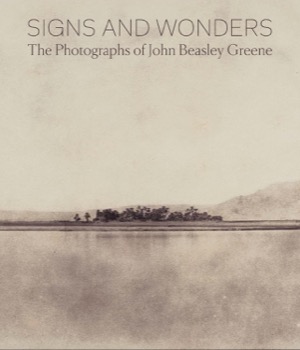
Hardcover. NY, Prestel, 1st, 2019, Book: Very Good, Dust Jacket: Very Good, Hardcover in a bright dust jacket, 176 pages. This book features the vintage archaeological photography of John Beasley Greene, one of the first photographers in Egypt and Algeria. Few figures in 19th-century photography remain as elusive and intriguing as John Beasley Greene (1832-1856). Over the course of an exceptionally brief career he created a body of photographs that were publicly admired by his peers and continue to capture the imagination of contemporary audiences. Born in France to an American banker, he made his first expedition to Egypt in 1853, where he photographed ancient Egyptian monuments and is thought to be the first archaeologist to use photography. In these photographs, he positioned his horizon lines with precision, at times placing them so low in the frame that the photograph is nearly all blank sky, or so high that the monuments are almost swallowed up by vast seas of sand. Some of his Egyptian landscapes are so visually spare they appear to be of nothing at all. Greene also traveled to Algeria where he photographed the ancient cliff-top city of Constantine and the seaport town, Cherchell. By contrast, Greene's photographs from Algeria frequently present a densely layered abundance of visual detail. Breathtakingly beautiful, Greene's photographs construct a visual record of archaeological monuments and landscapes. Featuring some 100 vintage prints, this comprehensive book aims to introduce Greene's work to a new audience and to reconsider his place in the history of photography. Clean copy in shrinkwrap.
Hardcover. NY, Overlook Press, 1st, 2003, Book: Very Good, Dust Jacket: Very Good, Hardcover, 180 pages. Jeff Gusky, a doctor of emergency medicine, decided at the age of 42 that he wanted to better confront the reality of modern Jewish history. A self-taught photographer who subsequently learned to make museum quality prints, he bought what he calls "a good, journalist-type camera and some lenses" and traveled to Poland-once the home of the largest concentration of Diaspora Jews. He read the instruction manuals on the plane en route. Over four trips, accompanied each time by a top Polish guide, Gusky traveled through the country, beyond the city ghettos and the sites of concentration camps, into remote villages where Jews had lived and worked for almost 1,000 years before the Holocaust-capturing on film the austere landscapes and the remains of a once thriving Jewish culture. The silence is deafening: here are Jewish cemeteries full of broken gravestones, ruined synagogues filled with trash and disfigured with graffiti, a Jewish home now used as a public toilet-"where people lived, walked, worshipped, and were, ultimately, exterminated," says Gusky. The doleful, understated clarity of what he saw and photographed captures a poignant sense of loss-making at the same time an indelible connection to the past.
Hardcover. New York, D. Appleton and Co, 1st, 1893, Dust Jacket: Very Good, Hardcover, 311 pages, frontispiece, dozens of b&w illustrations, bound in green cloth, gilt lettering and design embossed on front cover and spine. Name plate on front endpaper, spine slightly cocked, light wear to cover, previous owner's signature to blank preview page; overall, a very neat, tight copy.
Hardcover. NY, Hurd and Houghton, 2nd Ed., 1869, Book: Very Good, Dust Jacket: None, Hardcover, dark green pebbled cloth with a gilt-stamped title on the spine and bright gilt illustration of the author riding a donkey on the front cover. Second Edition (first: 1868) of the American illustrator's trip to England and the Continent undertaken in 1867-68. 192 pages, 88 plates & text illus. (incl. frontis.) engraved on wood by J. Augustus Bogert & James L.Langridge after drawings by the author. Darley's volume is composed of excerpts from letters written home concerning his travels around the states and Europe. His sketches illuminate the scenes described in his letters. The final page is a charming self-portrait in miniature, of Darley tipping his cap to the reader for their time. A whimsical collection of brief travel vignettes. Inscribed on the first blank page. Bright copy in exceptional condition.
Softcover. Tokyo, Bijutsu Shuppan-Sha, 1st, 1989, Book: Very Good, Dust Jacket: None, Softcover, 111 pages. Japanese photographer on the road from Xi'an to Kashi and back again. Color throughout.
Hardcover. John L Caulon, 1st, 1880, Book: Very Good, Dust Jacket: None, 87 pages, brown cloth covers with gilt lettering on front. Previous owner's signature on front fly leaf otherwise clean, bright copy.
Hardcover. NY, Abrams, 1st, 2003, Book: Very Good, Dust Jacket: Very Good, Hardcover, 240 pages. Aarons, erstwhile photographer to the rich and famous, has combed his archives to compile a collection of slick, upscale snapshots that vividly capture the lives of the "polo set." After the violence he witnessed as a combat photographer in WWII, Aarons decided that the only beaches he wanted to invade in the future were "decorated with beautiful girls tanning in a tranquil sun"-which are amply presented here. Aarons imparts a nearly tactile quality to these razor-sharp images, and every photograph, from the 1950s through the 1980s, is richly evocative of its era. One 1955 photo captures longtime fashion icon C.Z. Guest poolside in typically modest mid-century swimming attire with her son and dogs. A 1964 spread for Town & Country pictures the deeply tanned "young matrons of Palm Beach" in day-glow floral Lilly Pulitzer dresses. In a 1968 picture, fellow photographer Lord Lichfield is shown on the Italian Riviera wearing groovy yellow pants and flanked by Pucci-clad Italian princesses. Aaron's caption notes that "a photographer's life without a wife" seems to agree with the young cousin to Queen Elizabeth. While much of Aarons' work is focused on "horsey" types, he also turns his lens on creative folks. A dashing Gore Vidal is pictured at his Italian villa, the late Gianni Versace is shown at work in his home on Lake Como and Wanda Horowitz, daughter of Arturo Toscanini, is photographed at her father's podium at La Scala opera house in Milan. Aarons' gossipy captions, which accompany each photograph, help make this striking volume a voyeur's dream. 250 color photographs
Hardcover. NY, Abrams , 1st, 2023, Book: Very Good, Dust Jacket: None, Hardcover, large format, blue cloth with color paste-downs on covers. 430 pages. The ultimate and most comprehensive collection of Slim Aarons photography ever released, featuring more than 100 previously unpublished images. This deluxe edition provides a deep and comprehensive look at the groundbreaking career of Slim Aarons, spanning five decades. The book begins with Slim's field work as an Army photographer and continues through his fledgling days in Hollywood, opening the LIFE bureau in Rome, fashion and travel shoots for Holiday, and finally traveling the world for Harper's Bazaar. With a new and definitive biographical essay, spotlights on key moments in his career, and exclusive insight from former associates, Slim Aarons: The Essential Collection gives readers an unprecedented look into Slim's private world. Author Shawn Waldron's text digs into Slim's biography in unprecedented detail and reveals new information, while award-winning journalist, historian, and New York Times bestselling author Lesley Blume provides historical context to Slim's career. Additionally, Slim's former assistant and author Laura Hawk reveals the intricacies of her and Slim's friendship, and historian, author, and Vanity Fair contributing editor Nick Foulkes explores Slim's influence on our current cultural moment. DOMESTIC SHIPPING ONLY.
Hardcover. US, Princeton Architectural Press and Reed College, 1st, 2006, Book: Very Good, Dust Jacket: None, 200 pages. Like new in publisher's shrink-wrap. "Snapshot Chronicles" is a visual exploration of the creative outpouring made possible by the camera. Friends, family, travel, domestic life, special occasions, the workplace, farm and city life these were all intermingled in early albums in surprising and dynamic forms. Four essayists weave together the history of the photo album, making them not just a part of our past but a significant aspect of Americana.
Hardcover. NY, Aperture, 1st, 2000, Book: Very Good, Dust Jacket: Good, Hardcover in a bright dust jacket, 143 pages. The Danish photojournalist travels to Nicaragua to flush out the legacy of that country's revolution and subsequent return to capitalism, focusing on teenage girls who prostitute themselves to escape the streets. Long rip to rear panel of dust jacket, including two-inch chunk missing from top edge, though dust jacket still makes very neat presentation in mylar covering, slight rubbing to dust jacket, clean boards, pages crisp and unmarked.
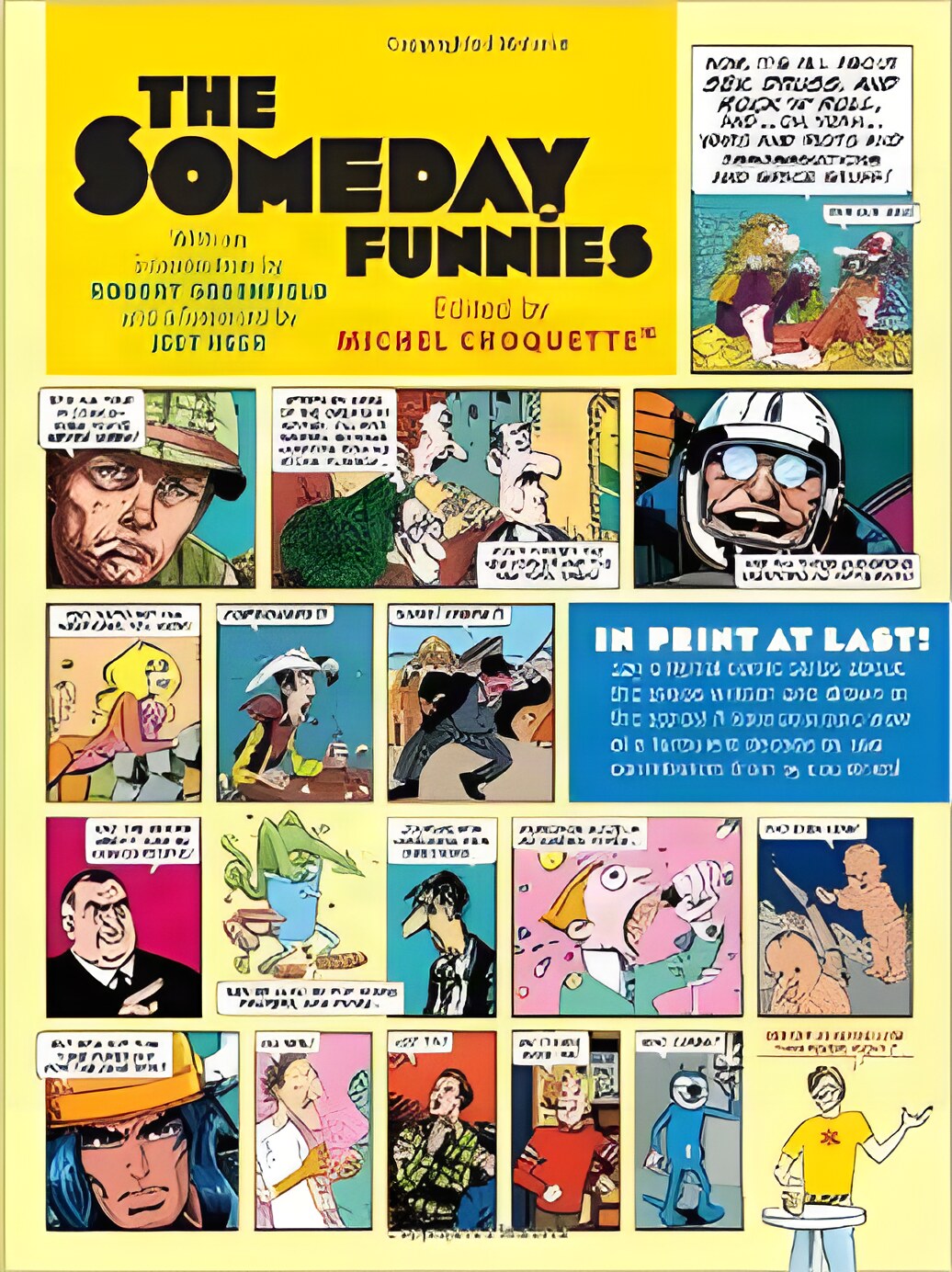
Hardcover. New York , Harry N. Abrams, 1st, 2011, Book: Very Good, Dust Jacket: Very Good, Hardcover, 216 pages. Like new in publisher's shrink-wrap. The long-awaited collection of comic strips created in the early 1970s by some 169 contributors from 15 countries from C.C. Beck to Art Spiegelman. What started out as a special insert for Rolling Stone took on a life of its own as writer/editor Michel Choquette traveled the world, commissioning this visual chronicle of the 1960s, only to find himself without a publishing partner or the financial support to continue. Forty years later, readers finally get to experience this legendary anthology as Choquette celebrate the birth, death, and resurrection of The Someday Funnies. DUE TO SIZE, DOMESTIC SHIPPING ONLY.
Hardcover. London, Picador, 1st, 2001, Book: Very Good, Dust Jacket: Very Good, Hardcover in a bright dust jacket. This signed first edition of author and journalist Sid Smith's novel 'Something Like A House' was awarded the James Tait Black Memorial Prize and the Whitbread First Novel Award, following a British soldier who deserts to China during the Korean War and stays there some 35 years, bringing up a little girl who later becomes a victim of experimental biological warfare. Despite being set in China, Smith had never traveled there before writing the novel, the background gleaned from extensive research at the British Library amongst other places. An exciting novel set in a China almost unknown to the outside world, a chilling account of an army deserter living through a Cultural Revolution. Clean, bright copy.
Hardcover. Princeton NJ, Princeton University Press, 1st, 2016, Book: Very Good, Dust Jacket: Very Good, Hardcover in a bright dust jacket. Between 1908 and 1917, the American photographer and sociologist Lewis Hine (1874-1940) took some of the most memorable pictures of child workers ever made. Traveling around the United States while working for the National Child Labor Committee, he photographed children in textile mills, coal mines, and factories from Vermont and Massachusetts to Georgia, Tennessee, and Missouri. Using his camera as a tool of social activism, Hine had a major influence on the development of documentary photography. But many of his pictures transcend their original purpose. Concentrating on these photographs, Alexander Nemerov reveals the special eeriness of Hine's beautiful and disturbing work as never before. Richly illustrated, the book also includes arresting contemporary photographs by Jason Francisco of the places Hine documented. Clean copy.

 "Sargent Abroad: Figures and Landscapesby: AdelsonWarren")

 "Saved by Beauty: Adventures of an American Romantic in Iranby: Housden, Roger")

 "Sebastiao Salgado: Africaby: Salgado, Sebastiao")
 "Sebastiao Salgado: Africaby: Salgado, Sebastiao")

 "Shaking the Dust of Ages: Gypsies and Wanderers of the Central Asian Steppeby: Ljalja Kuznetsova , Inge Morath, et al.")
 "Shall We Dance?by: Lanker, Brian")
 "Shopping for Porcupine: A Life in Arctic Alaska by: Seth Kantner")


 "Silent Places: Landscapes of Jewish Life and Loss in Eastern Europeby: Gusky/Judith Miller, Jeffrey")
 "Simple Adventures of a Memsahib, Theby: Duncan, Sara Jeanette")




 "Sketches of the Silk Road: Rugged Roads of Tjanshan-Nanlu, China's Western Frontier by: Naoki Mukoda")

 "Slim Aarons: Once Upon A Timeby: Aarons, Slim")

 "Snapshot Chronicles: Inventing the American Photo Albumby: Snyder, Stephanie/Barbara Levine")


 "Soulmaker: The Times of Lewis Hineby: Nemerov, Alexander")