Softcover. Middletown CT, Wesleyan University Press, 2nd pr., 2006, Book: Very Good, Dust Jacket: None, Softcover, 252 pages. How does a Middle Eastern community create a modern image through its expression of heritage and authenticity? In Among the Jasmine Trees: Music and Modernity in Contemporary Syria, Jonathan H. Shannon investigates expressions of authenticity in Syria's musical culture, which is particularly known for embracing and preserving the Arab musical tradition, and which has seldom been researched in depth by Western scholars. Music plays a key role in the process of self-imaging by virtue of its ability to convey feeling and emotion, and Shannon explores a variety of performance genres, Sufi rituals, song lyrics, melodic modes, and aesthetic criteria. Clean copy.
Hardcover. Boston, Little, Brown & Co., 1st, 2004, Book: Very Good, Dust Jacket: Very Good, Hardcover in a bright dust jacket with minor wear. 104 pages with 55 beautiful, luminous black & white plates, accompanied by selected texts from Adams, Emerson, and other poets and naturalists, chosen by the Editor, Janet Swan Bush. Clean copy.
Hardcover. NY, Fraenkel Gallery/Hasselblad Foundation, 2005, Book: Very Good, Dust Jacket: Very Good, Hardcover, 64 1stpages. The master photographer best known for his extensive, insightful documentation of "the American social landscape"--from jazz musicians to factory hands to New York pedestrians and office workers zoning out at their keyboards--has recently been spending more time looking at the literal, natural landscape. His monumental 2005 MoMA retrospective showed, for the first time, a new series of landscapes made in the American West, while for Olives and Apples, he has looked back over the last decade's work and culled a forest, tree by tree. His docile subjects, apple trees photographed in New York State and olive trees photographed in France, Italy and Spain from 1997-2004, are presented in circumstances ranging from sunny, leafy summer health to glittering winter ice-storm glory. Some of the most striking compositions are shot from just inside the reach of a tree's furthest twigs, so that expanding branching limbs fill the frame, stretching out around the viewer.
Softcover. London, Academy Editions Ltd, 1st, 1995, Book: Very Good, Dust Jacket: None, Softcover, 128 pages. Illustrated in color and b&w. Baillie Scott's long career spanned the years from 1892 to 1939 - several ages in architecture. He may be considered a third-generation Arts and Crafts architect, who joined the movement after it had become well established and took its ideas to everyman. He invented a new type of small house by opening up a plan around a spacious house-place or hall and extending the interior into the garden. These airy little houses, with their intimate alcoves and sunny verandas, captured William Morris's vision: 'Simplicity of life, even the barest, is not a misery, but the very foundation of refinement: a sanded floor and whitewashed walls, and the green trees, and flowery meads... will turn all "operatives" into workmen, into artists, into men.' This book includes many newly commissioned photographs of Baillie Scott's houses, as well as original drawing and new research. By looking at his writing and revisiting his buildings - some previously unknown - it makes available the work of an important architect of the Arts and Crafts movement. It reveals for the first time the beauty of Baillie Scott's architectural works and the fascinating breadth of his theory and practice. Clean copy.
Hardcover. US, Yale University Press, 1st, 1992, Book: Very Good, Dust Jacket: Very Good, Hardcover, 549 pages, illustrated throughout in color and b&w. Clean, unmarked copy with only minor wear to dust jacket. This book presents a survey of Chinese painting from the eighth to the 14th century, a period during which the nature of China's pictorial art changed dramatically. Illustrated by works in the collection of The Metropolitan Museum of Art, New York, the author begins by describing the advent toward the end of the Bronze Age of figural representation in Chinese art, and next traces the development of Chinese landscape painting from the third to the tenth century. He then moves on to discuss the art of the Sung dynasty, when the imperial government was increasingly absolute and repressive. In this period artists shifted from a realistic rendition of nature to more symbolic representation of single flowers, rocks and trees. By the time of the Yuan dynasty, following the Mongol conquest of 1279, objective representation in art had been replaced by imagery that drew on the artist's inner response to his world. Because it was believed that the meaning of a painted subject, made complex by personal and symbolic associations, could no longer be expressed without language, the painter began to inscribe poems and incorporate calligraphy in his works, the multiple relationships among word, image and calligraphy forming the basis of a new art. At this stage Chinese art entered its richest and most diverse stage f development.
Hardcover. New York, Aperture, 1st, 1998, Book: Very Good, Dust Jacket: Very Good, Hardcover in a bright, unclipped dust jacket. 96 pages, color photographs, Like new in publisher's shrinkwrap. Doors of the Kingdom is a unique collection of photographs depicting the ancient and disappearing craft of doormaking in Arabia. The Islamic concept of hurma, or sanctity of a place of dwelling or worship, is recurrent throughout Arabic poetry and literature. The door (bab), preserver of sanctity, becomes symbolic of the boundary between public and private space, and between the profane and the sacred. In 1995, Haajar Gouverneur traveled throughout the Arabian Peninsula photographing each region's distinctive doorways and the remaining artisans who make them. The doors of Arabia, painstakingly hand-carved from the wood of the Al-Athel trees, last in their exquisite variety for hundreds of years. This ancient craft, passed down from generation to generation in the central and northern regions of Saudi Arabia, is now nearly extinct. Modern materials, technology, and changing priorities threaten the continuity of the sacred and artisanal tradition of doormaking.
Hardcover. ITHACA NY, Comstock Publishing Associates/Cornell University Press, 3rd pr., 1983, Book: Very Good, Dust Jacket: Good, Hardcover in a shelfworn dust jacket with light tape repairs, chipped. In this authoritative guide, illustrated with more than 150 b&w drawings and photographs, there is a wealth of information invaluable to terrace and suburban gardeners, commercial fruit growers and advenced amateur growers. No markings.
Softcover. MountAinsWest Publishing, 1st, 2017, Book: Very Good, Dust Jacket: None, Softcover, green pictorial wraps, 193 pages with b&w photos. The early years in the development of the fire lookout system were fraught with difficult decisions, hard work, and danger. Roads and trails had to be built, materials had to be transported. Building materials and supplies were carried up steep, treacherous mountainsides on the backs of horses, mules, and men. Primitive conditions were met with courage, grit, and determination. The people who built, and the people who staffed these lookouts were often exposed to extremes in weather: heat, blizzards, wind, and lightning. Occasional accidents and illnesses were to be expected and sometimes had tragic consequences. The earliest lookouts consisted of the top of a tree; an alidade mounted on a crude support or on a tripod; or simply a mountain top where an observer scanned the surrounding countryside with a powerful field glass, always on the alert for the slighted wisp of smoke. The historical information in this volume is the culmination of many years of research of original documents by Ron Kemnow. Also included are many historical photographs. Some of the older photographs and picture postcards are of poor quality, but were included for their historical value. This book is not in narrative form, but is a collection of official reports, letters, and news articles, presented as they were originally written.
Hardcover. London, Chatto & Windus, reprint, 1961, Book: Very Good, Dust Jacket: Very Good, Hardcover in a lightly worn dust jacket. A classic account of settler life and experiences in the early days of Kenya, by one of Kenya's most prolific and readable authors. Inscription on front fly leaf, otherwise clean.
Hardcover. NY, Harry N. Abrams, 1st, 1987, Book: Very Good, Dust Jacket: Very Good, Hardcover 148 pages. Esther Heins' watercolors of leaves and flowers organized by month of bloom, crisp interior. A full color botanical drawing left-hand page is dedicated to each species. On the right page is explanatory text. Free of any markings, not ex-library. INSCRIBED BY THE ARTIST HEINS on the front fly leaf. Otherwise clean.
Hardcover. Los Angeles, Bunker Hill Publishing Inc, 1st, 2006, Book: Very Good, Dust Jacket: Very Good, Hardcover, 96 pages. Illustrated throughout in color and b&w. Clean, unmarked copy in excellent condition. In the 80 images throughout this book, Haas has forced Nature to do his bidding. Still, Haas's trees are portraits of Los Angeles in all its complexity and quirkiness, and his views of individual trees reveal much about their surroundings and the humans with whom they share their habitat.
Hardcover. Los Angeles, Bunker Hill Publishing Inc, 1st, 2006-11-13, Book: Very Good, Dust Jacket: Very Good, Hardcover, 96 pages. Illustrated throughout in color and b&w. Clean, unmarked copy in excellent condition. In the 80 images throughout this book, Haas has forced Nature to do his bidding. Still, Haas's trees are portraits of Los Angeles in all its complexity and quirkiness, and his views of individual trees reveal much about their surroundings and the humans with whom they share their habitat.
Hardcover. Boston, Houghton Mifflin , 1st, 2000, Book: Very Good, Dust Jacket: Very Good, Non-paginated. Illustrated with full color woodcuts by Mary Azarian. SIGNED BY AZARIAN. Clean, tight copy. Revealing the variety of life underground, the bright comfort of a greenhouse on a winter's day, or the anticipation of starting seeds indoors in early spring, this striking alphabet book celebrates the simple joys of gardening. Without neglecting the frustrations--the nibbling critters and the toil--or wry, humorous moments spent in the garden. Mary Azarian's spare words and lovely woodcuts capture the essence of turning a bare plot of ground into fragrant flowers and lush vegetables and trees. Her depictions of insects, manure, and compost piles are as delightful as her fountains, pumpkins, and Queen Anne's lace. Whether we are young or old, our gardens both exhaust and renew us. They are our source of magic and wonder and perhaps our best way to live closer to the land and to the rhythm of the seasons.
Softcover. Minneapolis, University Of Minnesota Press, 1st, 2001, Book: Very Good, Dust Jacket: None, Softcover, 285 pages illustrated in color. Why have home gardeners, professional horticulturists, and landscape preservationists increasingly been attracted to prairie plants? The beauty and hardiness of these flowers, grasses, trees, and shrubs, along with their easy maintenance and environmental friendliness, have spurred a surge of interest in prairie gardens. Whether you are considering adding these plants to a more conventional landscape or intending to "go native" all the way, Gardening with Prairie Plants is the most comprehensive resource and guide available. Clean copy.
Hardcover. New York, German Library of Information, 1st, 1940, Book: Good, Dust Jacket: None, 127 pages. Hardcover. B/w illustrations throughout. Former library book with labels/stamps/attachments expected. Photographs by the author. Decorated cover boards. Pages and covers have some tanning from age. This volume, intended for American students, interprets the social, economic, hygenic, aesthetic and ethical significance of the German forest, presenting not merely facts but also the philosophy of German Forestry.
Hardcover. Roaring Brook Press, 1st, 2011, Book: Very Good, Dust Jacket: Very Good, Hardcover, 32 pages illustrated in color by Lane and SIGNED BY LANE. From the creator of the national bestseller It's a Book comes a timeless story of family history, legacy, and love. Grandpa Green wasn't always a gardener. He was a farmboy and a kid with chickenpox and a soldier and, most of all, an artist. In this captivating new picture book, readers follow Grandpa Green's great-grandson into a garden he created, a fantastic world where memories are handed down in the fanciful shapes of topiary trees and imagination recreates things forgotten. In his most enigmatic and beautiful work to date, Lane Smith explores aging, memory, and the bonds of family history and love; by turns touching and whimsical, it's a stunning picture book that parents and grandparents will be sharing with children for years to come.
Hardcover. Roaring Brook Press, 1st, 2011, Book: Very Good, Dust Jacket: Very Good, Hardcover, 32 pages illustrated in color by Lane and SIGNED BY LANE. From the creator of the national bestseller It's a Book comes a timeless story of family history, legacy, and love. Grandpa Green wasn't always a gardener. He was a farmboy and a kid with chickenpox and a soldier and, most of all, an artist. In this captivating new picture book, readers follow Grandpa Green's great-grandson into a garden he created, a fantastic world where memories are handed down in the fanciful shapes of topiary trees and imagination recreates things forgotten. In his most enigmatic and beautiful work to date, Lane Smith explores aging, memory, and the bonds of family history and love; by turns touching and whimsical, it's a stunning picture book that parents and grandparents will be sharing with children for years to come.
Hardcover. Chicago, Haymarket Books, 1st US, 2021, Book: Very Good, Dust Jacket: None, Hardcover, pictorial boards. Two-color illustrations by Laura Barrett. Greta lives with her brother Hansel on the edge of a great forest - a forest in danger of destruction. GreedyGuts, their aunt, doesn't appreciate Hansel and Greta's plans to replant trees and save the forest. In fact, she thinks they're horrible little vegetarians. GreedyGuts doesn't give two hoots about nature. She favors luxury and living it up: eating, shopping and partying hard and so she hatches a plan to get rid of the meddling, do-gooder kids deep in the woods. With her trademark subversive and comic eye, Jeanette Winterson retells the classic tale of Hansel and Gretel.
Hardcover. MA, Candlewick, 1st, 2012, Book: Very Good, Dust Jacket: Very Good, Hardcover, 32 pages. Color illustrations by Klassen. From Pulitzer Prize-winning poet Ted Kooser and rising talent Jon Klassen comes a poignant tale of loss, change, and nature's quiet triumph. When the house was new, not a single tree remained on its perfect lawn to give shade from the sun. The children in the house trailed the scent of wild trees to neighboring lots, where thick bushes offered up secret places to play. When the children grew up and moved away, their father, alone in the house, continued his battle against blowing seeds, plucking out sprouting trees. Until one day the father, too, moved away, and as the empty house began its decline, the trees began their approach. At once wistful and exhilarating, this lovely, lyrical story evokes the inexorable passage of time -- and the awe-inspiring power of nature to lift us up.
Hardcover. New Haven CT, Yale University Press, 1st, 2016, Book: Very Good, Dust Jacket: Good, Hardcover in a bright dust jacket with chipping and wear to edges. 271 pages, color illustrations. For more than 50 years, the Hubbard Brook Experimental Forest in the White Mountains of New Hampshire has been one of the most intensely studied landscapes on earth. This book highlights many of the important ecological findings amassed during the long-term research conducted there, and considers their regional, national, and global implications. Clean copy.
Hardcover. St Paul MN, Minnesota Historical Society , 1st, 2015, Book: Very Good, Dust Jacket: Very Good, Hardcover in a bright dust jacket. In this book lush, life-like illustrations by natural history artist Laurie Caple accompany Cheryl Blackford's poetic imagining of a year in the life of an urban coyote. Across the pages, Coyote sneaks, skulks, and scurries in his constant quest to feed himself and his growing family. While Coyote hunts nearby, people enjoy a city park. At the lake, in the marsh, among the trees, children jump, twirl, and play, oblivious to his secret life. Clean copy.
Hardcover. NY, Walker Books, 1st, 2007, Book: Very Good, Dust Jacket: Very Good, Hardcover in a bright, unclipped dust jacket. Thomas Pakenham, no stranger to Africa with his award-winning books The Boer War and The Scramble for Africa, nor to remarkable trees with his bestselling Remarkable Trees of the World, combines his two interests on safari in Southern Africa. His particular quarry is the rare, the giant, the very old, the extraordinary, or the simply beautiful-from a giant baobab and a prickly quiver tree in Namibia to a glorious jacaranda in South Africa and sesame bushes attacked by elephants in Botswana. He uncovers trees written about by the great explorers of the past, or associated with magic, folklore, or ritual. The narrative accompanying each image interweaves the stories of Pakenham's own journey-at some moments scaling trees to escape from enraged wildlife, while at others standing in awe before a particular tree, connected by some primitive, atavistic bond-with those of the trees themselves, imbuing each with personality and presence. The result is a beautifully crafted blend of botany and social history, the product of a brilliant photographer, an original mind, and a superlative writer. 208 pages in color. Clean copy. DOMESTIC SHIPPING ONLY.
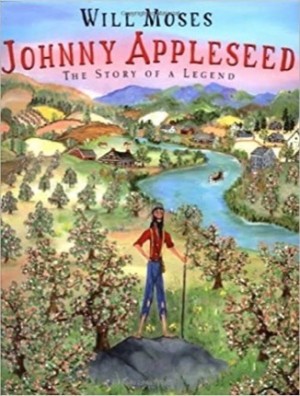
Hardcover. NY, Philomel Books, 4th pr., 2001, Book: Very Good, Dust Jacket: Very Good, Hardcover in a bright, unclipped dust jacket with mild fad to spine. The long-enduring American legend of Johnny Appleseed comes to life in the glorious folk illustrations and spirited storytelling of Will Moses. Everyone knows the story of Johnny Appleseed: how he traveled westward across our young country, spreading apple trees wherever he went and wearing outlandish hats, like a soup pot, on his head. But did you know that Johnny Appleseed was a real person? Born John Chapman in 1774, he grew up in a family of twelve children, and as a young man, struck out to find the frontier. It was along this journey that he discovered the wonders of apple trees, and where he had his life adventures. In the tradition of his great-grandmother, Grandma Moses, Will Moses's much-loved folk art perfectly illustrates this American tale.
Softcover. San Francisco, Prism Editions, reprint, 1978, Book: Very Good, Dust Jacket: None, Large softcover, reprinted from former 1975 Scrimshaw Press two volume limited edition, photo of loggers sitting on log, shiny cover, unmarked, no tears. Logging photos from the late 1800s, clean, bright copy.


 "Ansel Adams: Trees by: Adams, Ansel / Janet Swan Bush (Ed)")
 "Apples & Olivesby: Lee Friedlander")

 "Beyond Representation: Chinese Painting and Calligraphy, 8Th-14th Century (Princeton Monographs in Art and Archaeology, No 48)by: Fong, Wen C.")
 "Doors of the Kingdomby: Gouverneur/Khaled Azzam (Author), Mohamed Zakariya , Haajar")
 "Dwarfed Fruit Trees for Orchard, Garden, and Home, with Special Reference to the Control of Tree Sizing and Fruiting in Commercial Fruit Productionby: Harold Bradford")
 "Fire Lookouts: The Early Years by: Kemnow, La Vaughn Vanderburg")
 "Flame Trees of Thika: Memories of an African Childhoodby: Huxley, Elspeth")

 "Forcing Nature: Tree in Los Angelesby: Haas, George")
 "Forcing Nature: Tree in Los Angelesby: Haas, George")
 "Gardener's Alphabet, A (SIGNED COPY)by: Azarian, Mary")









 "House Held Up by Treesby: Kooser and Jon Klassen, Ted")



 "Kinsey Photographer: A Half Century of Negatives by Darius and Tabitha May Kinsey: Volume One The Family Album and Other Early Worksby: Dave Bohn, Rodolfo Petschek")