Hardcover. Milwaukee WI, Backbeat Books, 1st, 2009, Book: Very Good, Dust Jacket: None, Hardcover, pictorial boards with spiral binding, 304 pages. The Fiddle Handbook is a treasure trove of information spanning the whole range of fiddle playing. It looks in detail at the most commonly played styles among today's fiddlers. From America, there's old time, bluegrass, Cajun, Western swing, country, blues, rock, klezmer, and jazz, while from the British Isles there's Irish, Scottish, and English. There is also a quick romp through Eastern Europe and beyond, from the spike fiddles of Africa and Asia to the Chinese Erhu, the fabulous Indian Sarangi, and the mysterious Norwegian Hardingfele. A wealth of musical examples - ornaments, bowing patterns, scales, modes, exercises and complete tunes - are faithfully reproduced on the accompanying CDs, to give you a taste of each style. Clean copy.
Hardcover. NY, Prestel, 1st, 2016, Book: Very Good, Dust Jacket: None, Hardcover, gray cloth with yellow band, 248 pages. This beautiful book focuses on the distinctive and expressive power of Jackson Pollock's figurative paintings, drawings, and prints; a rarely studied aspect of his artistic career. Jackson Pollock's name has become synonymous with the abstract drip paintings that he famously created on the floor of his studio. Before these paintings, from the 1930s to the late 1940s, Pollock created figurative works, studying at one time under the painter Thomas Hart Benton and with the Mexican muralists Diego Rivera, José Clemente Orozco, and David Alfaro Siqueiros. Pollock took up figuration again after his famous drip paintings. This book starts with the early decades and also treats Pollock's re-adoption of the figuration after his renowned abstract paintings. The Figurative Pollock features 100 paintings and works on paper. From rolling landscapes to experiments in non-Western totemic painting to sketches and drawings fueled by Jungian analysis, the enormous range of Pollock's early and late work is presented here. Brimming with confidence and a sense of freedom, distinct yet so easily related to Pollock's most famous oeuvre, these works contribute to an understanding of how the artist found his voice.
Hardcover. Chicago, University of Chicago Press , 1st, 2015, Book: Very Good, Dust Jacket: Very Good, Hardcover in a bright dust jacket. 280 pages. Preface by Geoff Dyer. Essay by David Van Reybrouck. Includes 20 color plates and 80 halftones. Still in publisher's shrinkwrap. The First World War presents a startlingly different perspective, one based on rare glass plate photographs, that reveals the war with previously unseen, even uncanny, clarity. Scanned from the original plates, with scratches and other flaws expertly removed, these oversized reproductions offer a wealth of unusual moments, including scenes of men in training, pictures of African colonial troops on the Western front, landscapes of astonishing destruction, and postmortem portraits of Belgian soldiers killed in action. Readers previously familiar with only black-and-white or sepia-toned prints of the hostilities will be riveted by the book's many authentic color photographs, products of the early autochrome method. From children playing war games to a wrenching deathbed visit, these images are extraordinary not only for their subject matter, but also for the wide range of emotions they evoke.
Softcover. New Haven / Washington DC, Yale University Art Gallery/National Gallery of Art, 1984, Book: Very Good, Dust Jacket: None, Softcver, pictorial wraps, 312 pages. This is the catalog for an exhibition at Yale University Art Gallery, 1984, consisting of 43 folding screens designed by European and American artists from about 1870 to the present were on view. The exhibition was organized by Michael Komanecky of Yale University and by Virginia Butera. Mild sunning to edges of wrappers otherwise clean, tight copy.
Hardcover. NY, Grosset and Dunlap, reprint, Book: Very Good, Dust Jacket: Good, Hardcover, red cloth covers in a worn, chipped dust jacket. Previous owner's name on front fly leaf. 4 b&w illustrations by C.M. Relyea. James Oliver Curwood (1878 - 1927) was an American action-adventure writer and conservationist. His books were often based on adventures set in the Yukon or Alaska and ranked among the top-ten best sellers in the United States in the early 1920s.
Hardcover. NY, Harcourt, Inc., 1st, 2005, Book: Very Good, Dust Jacket: Very Good, Hardcover in a bright, unclipped dust jacket. 312 pages, b&w illustrations. This is the extraordinary story of Eli Wallach's many years dedicated to his acting craft which began in Brooklyn and grew in his college years in Texas. He has worked with many of the stars in movies and has been in many well-known movies, but he will always be remembered as a Western badman in the Spaghetti Westerns of the 60s and 70s. Clean copy.
Hardcover. NY, Grosset & Dunlap, reprint, Book: Very Good, Dust Jacket: Good, Hardcover, light blue cloth with dark blue lettering, in a bright dust jacket with light edgewear, chipping, 323 pages. Rear dj lists to Wild Horse Mesa. Small name on front fly leaf, otherwise clean.
Softcover. Urbana, University of Illinois Press, 1st, 2005, Book: Very Good, Dust Jacket: None, Softcover, 277 pages. Starting in the 1980s, anti-immigrant discourse shifted away from the "color" of immigrants to their religion and culture. It focused in particular on newcomers from Muslim countries--people feared both as terrorists and as products of tribal societies with values opposed to those of secular Western Europe. Leo Lucassen tackles the question of whether the integration process of these recent immigrants will fundamentally differ in the long run (over multiple generations) from the experiences of similar immigrant groups in the past. For comparison, Lucassen focuses on "large and problematic groups" from Western Europe's past (the Irish in the United Kingdom, the Poles in Germany, and the Italians in France) and demonstrates a number of structural similarities in the way migrants and their descendants integrated into these nation states. Lucassen emphasizes that the geographic sources of the "threat" have changed and that contemporaries tend to overemphasize the threat of each successive wave of immigrants, in part because the successfully incorporated immigrants of the past have become invisible in national histories. Clean copy.
Hardcover. NY, Oxford University Press, 1st, 1985, Book: Very Good, Dust Jacket: Very Good, Hardcover in a bright, unclipped dust jacket, 364 pages. The Second World War's Pacific conflict was one of the most complex in history. It embrioled peoples from opposite sides of the globe; it was fought in China, across the expanses of the Pacific, and in the jungles of Southeast Asia; and it was devastating in its consequences for civilians and servicemen alike. It saw the first use of atomic weapons, hastened the end of the Western empires in Asia, and marked America's rise to the position of the most powerful nation in the world. Christopher Thorne, whose previous studies of the war in the Pacific have become landmarks in the field, here weaves together both the entire network of international relations surrounding the war and the impact the war had on all the societies involved--Indian as well as American; Australian and New Zealand as well as Japanese; Korean, Chinese, and Southeast Asian as well as British, French, and Dutch. The Issue of War draws on material gathered over many years in the Far East, Western Europe, and the U.S.--material including wartime films, broadcasts, and newspapers,as well as countless private and offical papers. Representing a synthesis of military, diplomatic, economic, intellectual, and social history, it not only places the war in the context of developments before 1941, but illuminates various patterns that cut across the familiar distinctions between Asia and the West or between Japan and the Allies. Name on front fly leaf, otherwise clean.
Hardcover. Pinceton NJ, Princeton University Press, 1st, 1979, Book: Very Good, Dust Jacket: Very Good, Hardcover in a bright dust jacket, 315 pages. The Western ideal of individualism had a pervasive influence on the culture of the Meiji period in Japan (1868-1912). Janet Walker argues that this ideal also had an important influence on the development of the modern Japanese novel. Focusing on the work of four late Meiji writers, she analyzes their contribution to the development of a type of novel whose aim was the depiction of the modern Japanese individual. Professor Walker suggests that Meiji novels of the individual provided their readers with mirrors in which to confront their new-found sense of individuality. Her treatment of these novels as confessions allows her to discuss the development of modern Japanese literature and "the modern literary self" both in themselves and as they compare their prototypes and analogues in European literature. The author begins by examining the evolution of a literary concept of the inner self in Futabatei Shimei's novel Ukigumo (The Floating Clouds), Kitamura Tokoku's essays on the inner life, and Tayama Katai's I-novel Futon (The Quilt). She devotes the second half of her book to Shimazaki Toson, the Meiji novelist who was most influenced by the ideal of individualism. Here she traces Toson's development of a personal ideal of selfhood and analyzes in detail two examples of the lengthy confessional novel form that he created as a vehicle for its expression.
Hardcover. Seattle, Fantagraphics, 1st, 2023, Book: Very Good, Dust Jacket: None, Hardcover, pictorial boards, 484 pages illustrated in color. In the 1950s, between his legendary EC work and his celebrated Marvel comics, John Severin joined with Mad artist Will Elder and Two-Fisted Tales writer Colin Dawkins to introduce a new level of historical accuracy to the comic-book Western. While Native Americans had generally been vilified or left in the shadows of gun-slinging cowboy heroes, the American Eagle stories featured in Prize Comics Western were built around action-packed tribal intrigues and a heroic Crow warrior. Collected here for the first time are all of the American Eagle stories drawn by Severin from Prize Comics Western #85-#113. Plus Severin-drawn stories featuring The Fargo Kid, Black Bull and The Lazo Kid. More than 55 exciting, gorgeous, Western tales of bullets vs. arrows, stampedes, tribal warfare, prospectors, buffalo hunters, broken treaties, gun battles, cavalry charges, wagon trains, and warriors on horseback. Thanks to Severin's famously exacting art, you'll be able to smell the leather and gunpowder. With commentary by comics historian Howard Leroy Davis. Clean, bright copy.
Hardcover. Princeton NJ, Princeton University Press, 1st, 2021, Book: Very Good, Dust Jacket: Very Good, Hardcover in a bright dust jacket, 408 pages. A book that casts new light on the history of China and the West at the turn of the nineteenth century. George Macartney's disastrous 1793 mission to China plays a central role in the prevailing narrative of modern Sino-European relations. Summarily dismissed by the Qing court, Macartney failed in nearly all of his objectives, perhaps setting the stage for the Opium Wars of the nineteenth century and the mistrust that still marks the relationship today. But not all European encounters with China were disastrous. The Last Embassy tells the story of the Dutch mission of 1795, bringing to light a dramatic but little-known episode that transforms our understanding of the history of China and the West. Drawing on a wealth of archival material, Tonio Andrade paints a panoramic and multifaceted portrait of an age marked by intrigues and war. China was on the brink of rebellion. In Europe, French armies were invading Holland. Enduring a harrowing voyage, the Dutch mission was to be the last European diplomatic delegation ever received in the traditional Chinese court. Andrade shows how, in contrast to the British emissaries, the Dutch were men with deep knowledge of Asia who respected regional diplomatic norms and were committed to understanding China on its own terms.
Hardcover. NY, Abradale Press, reprint, 1995, Book: Very Good, Dust Jacket: Very Good, Hardcover in a bright, price-clipped dust jacket. A collection of photograph reproductions and accompanying text of O. Watson Link's work on the Norfolk and Western Railway.
Hardcover. Boston , Little Brown, 1st, 2019, Book: Very Good, Dust Jacket: Very Good, Hardcover in a bright dust jacket, 368 pages. On a volcanic island in the Savu Sea so remote that other Indonesians call it "The Land Left Behind" live the Lamalerans: a tribe of 1,500 hunter-gatherers who are the world's last subsistence whalers. They have survived for half a millennium by hunting whales with bamboo harpoons and handmade wooden boats powered by sails of woven palm fronds. But now, under assault from the rapacious forces of the modern era and a global economy, their way of life teeters on the brink of collapse. Award-winning journalist Doug Bock Clark, one of a handful of Westerners who speak the Lamaleran language, lived with the tribe across three years, and he brings their world and their people to vivid life in this gripping story of a vanishing culture. Jon, an orphaned apprentice whaler, toils to earn his harpoon and provide for his ailing grandparents, while Ika, his indomitable younger sister, is eager to forge a life unconstrained by tradition, and to realize a star-crossed love. Frans, an aging shaman, tries to unite the tribe in order to undo a deadly curse. And Ignatius, a legendary harpooner entering retirement, labors to hand down the Ways of the Ancestors to his son, Ben, who would secretly rather become a DJ in the distant tourist mecca of Bali.
Hardcover. NY, Grosset and Dunlap, reprint, Book: Very Good, Dust Jacket: None, Hardcover, brick red cloth stamped in black. 313 pages, an attractive reprint of this western title with 4 color plates by Frank Tenny Johnson. Originally published in 1914. Clean copy.
Hardcover. NY, Grosset & Dunlap, reprint, Book: Very Good, Dust Jacket: Good, Hardcover, blue tweed cloth with dark blue lettering on the spine, in a bright dust jacket with edgewear and chipping, 246 pages. Rear dj lists to Wild Horse Mesa. No markings.
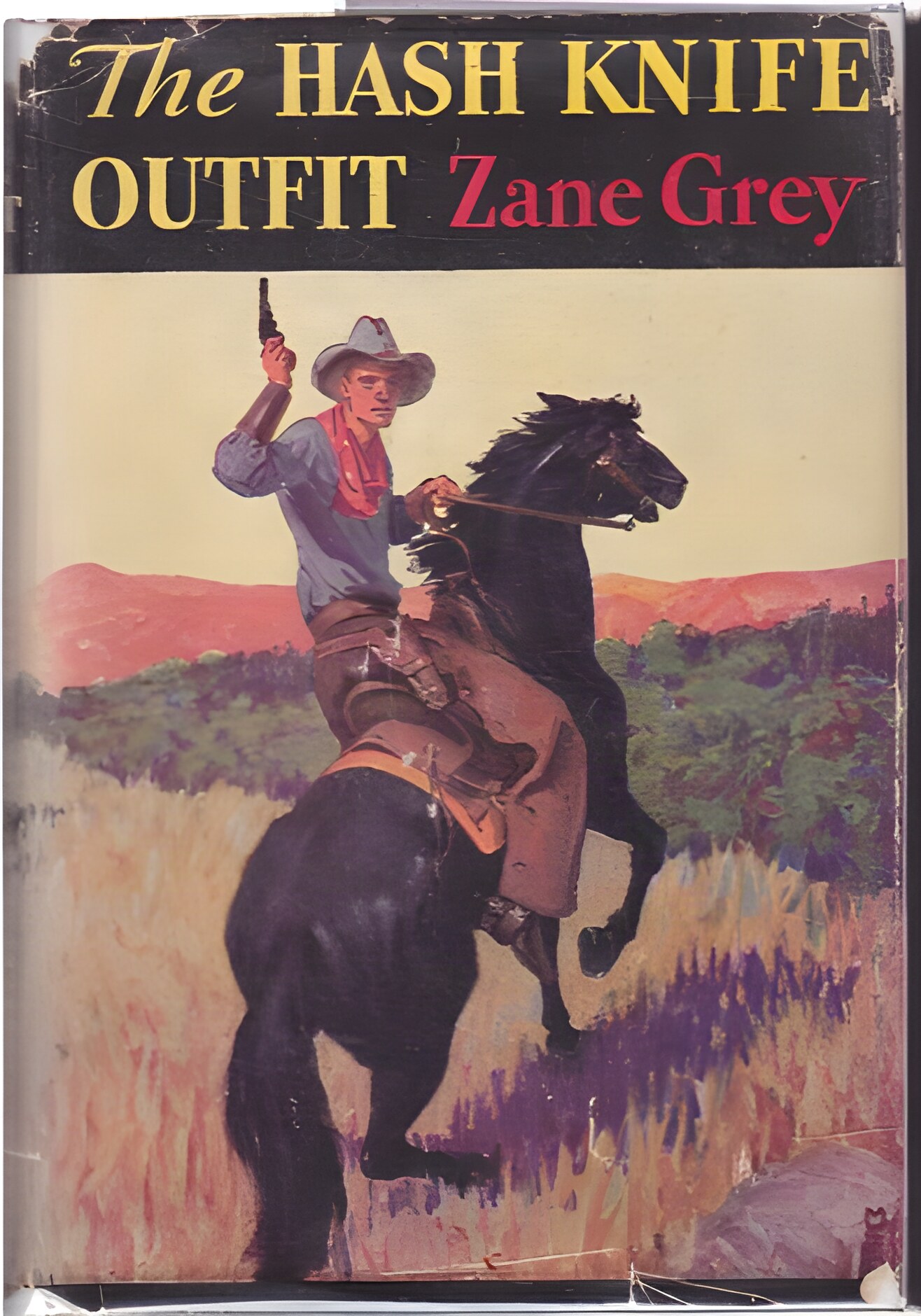
Hardcover. NY, Grosset & Dunlap, reprint, Book: Very Good, Dust Jacket: Good, Hardcover, tan cloth with dark blue lettering, in a bright dust jacket with edgewear and chipping, 401 pages. Rear dj lists to Wild Horse Mesa. No markings.
Hardcover. Berkeley CA, University of California Press, 1st, 1984, Book: Very Good, Dust Jacket: Good, Hardcover in dust jacket with some fading to edges, spine. 421 pages, b&w illustrations. ."This story of an outstandingly strange and interesting man is a triumph of modern biography. Nikolai Miklouho-Maclay (1846-1888) was one of the most extraordinary of all the nineteenth-century savant-adventurers. a brilliant student of Ernst Haeckel, he embraced the natural sciences at a time when the genius of Darwin was revolutionizing Western cosmology. In his short lifetime he made the whole world his laboratory: sponges in the Red Sea, and the ancestry of sharks, head measurements in New Guinea; Negrito races in Malay jungles; marine life in Sydney Harbor -- all these and a hundred other topics and places engaged his curiosity. Name on front fly leaf, otherwise clean.
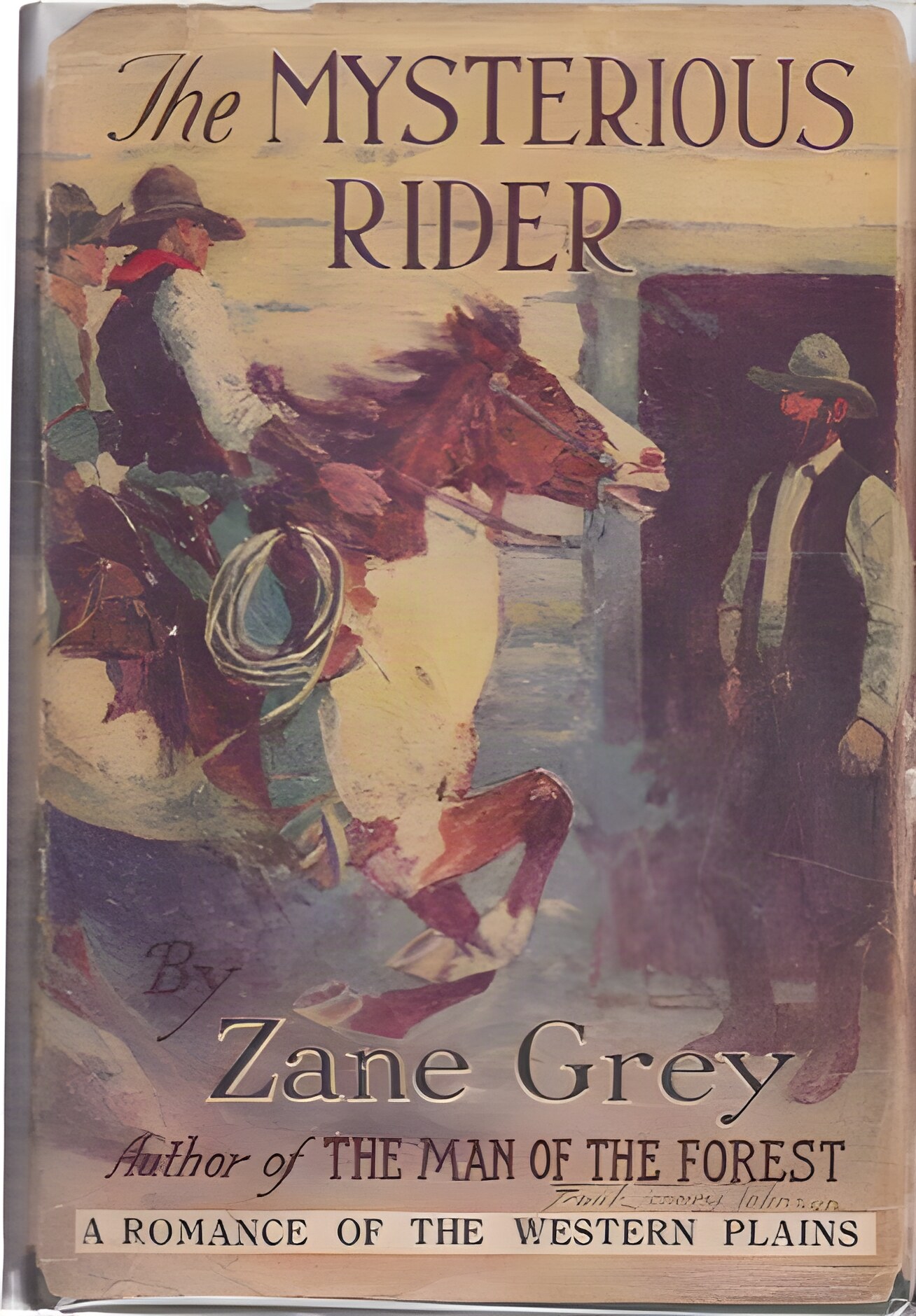
Hardcover. NY, Grosset & Dunlap, reprint, Book: Very Good, Dust Jacket: Good, Hardcover, green cloth with an orange and black design of a woman astride a horse, in a bright wraparound dust jacket with light edgewear and chipping (featuring a Frank Tenney Johnson illustration). 336 pages plus publisher's ads, 4 b&w plates. Name in pencil on inside front cover. Otherwise clean.
Softcover. NY, Onassis Foundation, 1st, 2009, Book: Very Good, Dust Jacket: None, Softcover, 131 pages illustrated in color. The Origins of El Greco focuses on the evolution of the multifaceted relationship of Cretan painters with Western art during this rich period. The icon painters in the workshops on Crete in the 15th and 16th centuries-the setting in which El Greco was trained-were renowned for their skill in painting impeccable panels not only in the traditional Byzantine manner but also in a style inspired by Western models. The Origins of El Greco presents an extraordinary group of 15th and 16th century paintings, including works by El Greco. The color-illustrated catalogue features detailed descriptions of all 46 masterpieces included in the exhibition, some of them published for the first time, as well as 3 informative essays: Anastasia Drandaki, Curator, Byzantine Collection, Benaki Museum, Athens writes on "Between Byzantium and Venice: Icon Painting in Venetian Crete in the Fifteenth and Sixteenth Centuries", Olga Gratziou, Professor of Byzantine Art and Archaeology, University of Crete writes on "Cretan Architecture and Sculpture in the Venetian Period" and Nicos Hadjinicolaou, Professor Emeritus in Art History, University of Crete, and Honorary Fellow of the Institute for Mediterranean Studies, writes on "Early and Late El Greco". Clean, bright copy.
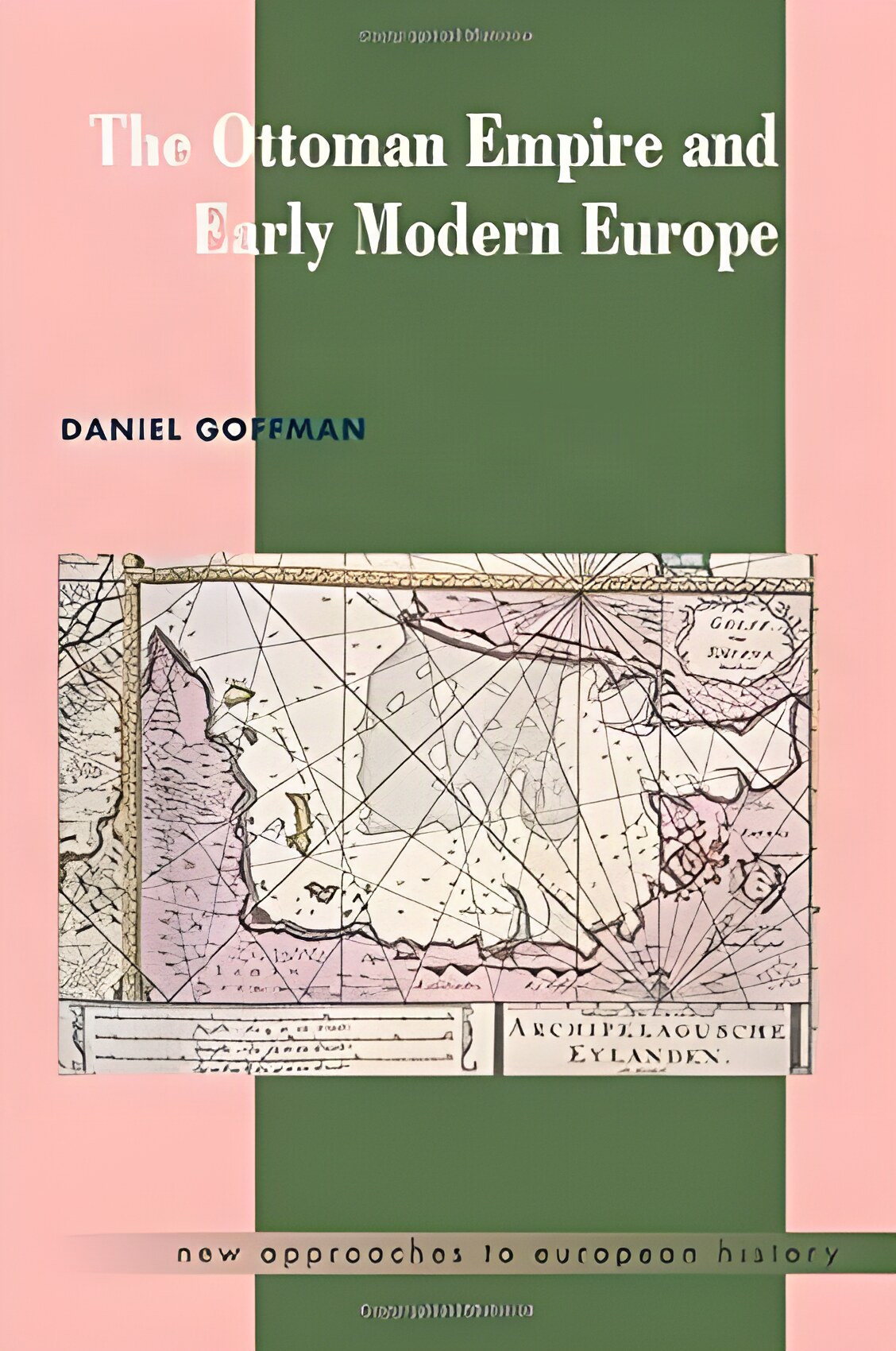
Softcover. UK, Cambridge University Press, reprint, 2012, Book: Very Good, Dust Jacket: None, Softcover, 273 pages, b&w illustrations. Despite the fact that its capital city and over one third of its territory was within the continent of Europe, the Ottoman Empire has consistently been regarded as a place apart, inextricably divided from the West by differences of culture and religion. A perception of its militarism, its barbarism, its tyranny, the sexual appetites of its rulers and its pervasive exoticism has led historians to measure the Ottoman world against a western standard and find it lacking. In recent decades, a dynamic and convincing scholarship has emerged that seeks to comprehend and, in the process, to de-exoticize this enduring realm. Dan Goffman provides a thorough introduction to the history and institutions of the Ottoman Empire from this new standpoint, and presents a claim for its inclusion in Europe. Clean copy.
Softcover. NY, Oxford University Press, reprint, 1998, Book: Very Good, Dust Jacket: None, Softcover, 425 pages, b&w illustrations. The word "prison" immediately evokes stark images: forbidding walls spiked with watchtowers; inmates confined to cramped cells for hours on end; the suspicious eyes of armed guards. They seem to be the inevitable and permanent marks of confinement, as though prisons were a timeless institution stretching from medieval stone dungeons to the current era of steel boxes. But centuries of development and debate lie behind the prison as we now know it--a rich history that reveals how our ideas of crime and practices of punishment have changed over time. Clean copy.
Hardcover. NY, Ariel Books, 1st, 1953, Book: Very Good, Dust Jacket: None, Hardcover, green cloth covers stamped in black. A teenage boy's adventure on a cattle drive from Texas to Dodge City in the 1870s. B&w illustrations by Tom Leamon (Tom Lea? Looks like his work). Light shelf wear, no dust jacket, clean copy.
Hardcover. NY, J. Disturnell, Revised Ed., 1858, Book: Very Good, Dust Jacket: None, Hardcover, embossed green cloth with with gilt design and lettering. 298 pages plus 26 pages of ads. Fifteen plates, maps and full-page illustrations, including the fold-out map. Tissue guard at frontis. Covers travel in upstate and western New York, as well as Canada, by steamboat and rail. The maps depict the Hudson River from New York to Troy, and the areas around Lakes Champlain and Ontario. The illustrations at the end are advertisements for hotels, rail and steam lines. A revised edition of this New York and Canada guide, orginally published in 1844. Small embossed stamp on front fly, otherwise clean.


 "The Figurative Pollockby: Josef Helfenstein , Nina Zimmer, et al.")
 "The First World War: Unseen Glass Plate Photographs of the Western Front by Carl De Keyzerby: Carl De Keyzer/David Van Reybrouck")
 "The Folding Image: Screens by western artists of the nineteenth and twentieth centuriesby: Komanecky Michael and Butera Virginia Fabbri/Adams Janet W. Introduction/Br")
 "The Gold Hunters: A Story of Life and Adventure in the Hudson Bay Wilds by: James Oliver Curwood")

 "The Immigrant Threat: The Integration of Old and New Migrants in Western Europe since 1850 by: Leo Lucassen")

 "The Japanese Novel of the Meiji Period and the Ideal of Individualismby: Janet A. Walker")



 "The Last Whalers: Three Years in the Far Pacific with a Courageous Tribe and a Vanishing Way of Lifeby: Doug Bock Clark")



 "The Moon Man: A Biography of Miklouho-Maclayby: E. M. Webster")