Hardcover. UK, Pi Global Publishing Limited, 1st, 2005, Book: Very Good, Dust Jacket: None, Hardcover, large format pictorial boards, Drawn from Opie''s unrivalled collection, this scrapbook illustrates song sheets, magazine covers, comic postcards, fashion and food, games, propaganda posters and a wealth of British wartime ephemera whose very survival is remarkable. Due to size (10 1/2 X 15"), DOMESTIC SHIPPING ONLY.
Hardcover. Boston, Houghton Mifflin, 1st, 1947, Book: Very Good, Dust Jacket: Fair, Hardcover in a worn, chipped dust jacket. Drawings by Saul Steinberg. Mississippi author, and war correspondent, who toured the World during WWII for the US Army Service Forces (Supply). Foreword says "This book is a personal record. It has to do with a journey that I made in 1944-45 to Great Britain, France, Belgium, Corsica, Italy, Egypt, Palestine, Iraq, Iran, India, Burma, China."
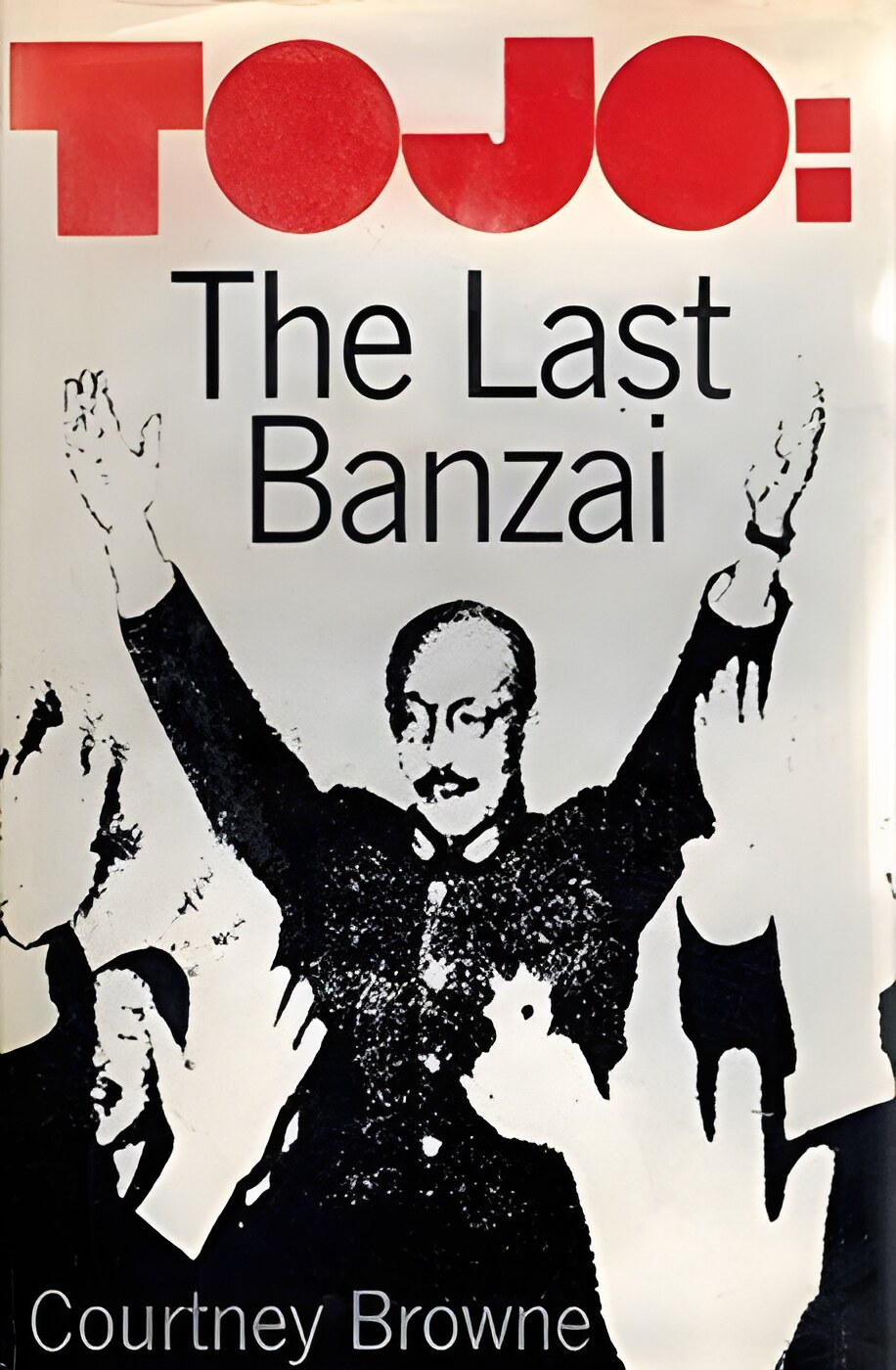
Hardcover. London, Angus and Robertson, 1st UK, 1967, Book: Very Good, Dust Jacket: Very Good, Hardcover in a lightly worn dust jacket. General, minister of war, prime minister, and unrepentant ultranationalist, Hideki Tojo was the most powerful leader in the Japanese government during World War II. This clear and compelling portrait of Tojo illuminates the spartan, single-minded, incorruptible personality of the man who chose war rather than succumb to U.S.-induced economic strangulation. 20 photos. 288 pages. Clean copy.
Hardcover. NY, Simon & Schuster, 1st, 2002, Book: Very Good, Dust Jacket: Very Good, Hardcover in a bright dust jacket, 352 pages. Alfred Lee Loomis (1887-1975) made his fortune in the 1920s by investing in public utilities, but science was his first love. In 1928, he established a premier research facility in Tuxedo Park, N.Y., that attracted such brilliant minds as Einstein, Bohr and Fermi and became instrumental in the Allies' WWII victory. Conant, a magazine writer, draws on studies, family papers and interviews with Loomis's friends, family and colleagues (she's a relative of two scientists who worked with Loomis) to trace the story of the tycoon's professional and social life (the latter fairly racy). At the Tuxedo Park lab, Loomis attracted top-flight scientists who experimented with sound, time measurement and brain waves. During WWII, he established a laboratory at MIT (the "rad lab") where radar was developed. He also served as a conduit between civilian scientists and Roosevelt's military establishment. Although he lost some of his top people to the Manhattan Project, the "rad lab" was a major contributor to the allies' defense. In his well-publicized personal life, Loomis angered family members by trying to have his emotionally unstable wife institutionalized while he pursued an affair with another woman. Through Conant's spare, unobtrusive prose and well-paced storytelling, Loomis emerges as a contradictory man who craved scientific accomplishment and influence, but rarely took credit for himself.
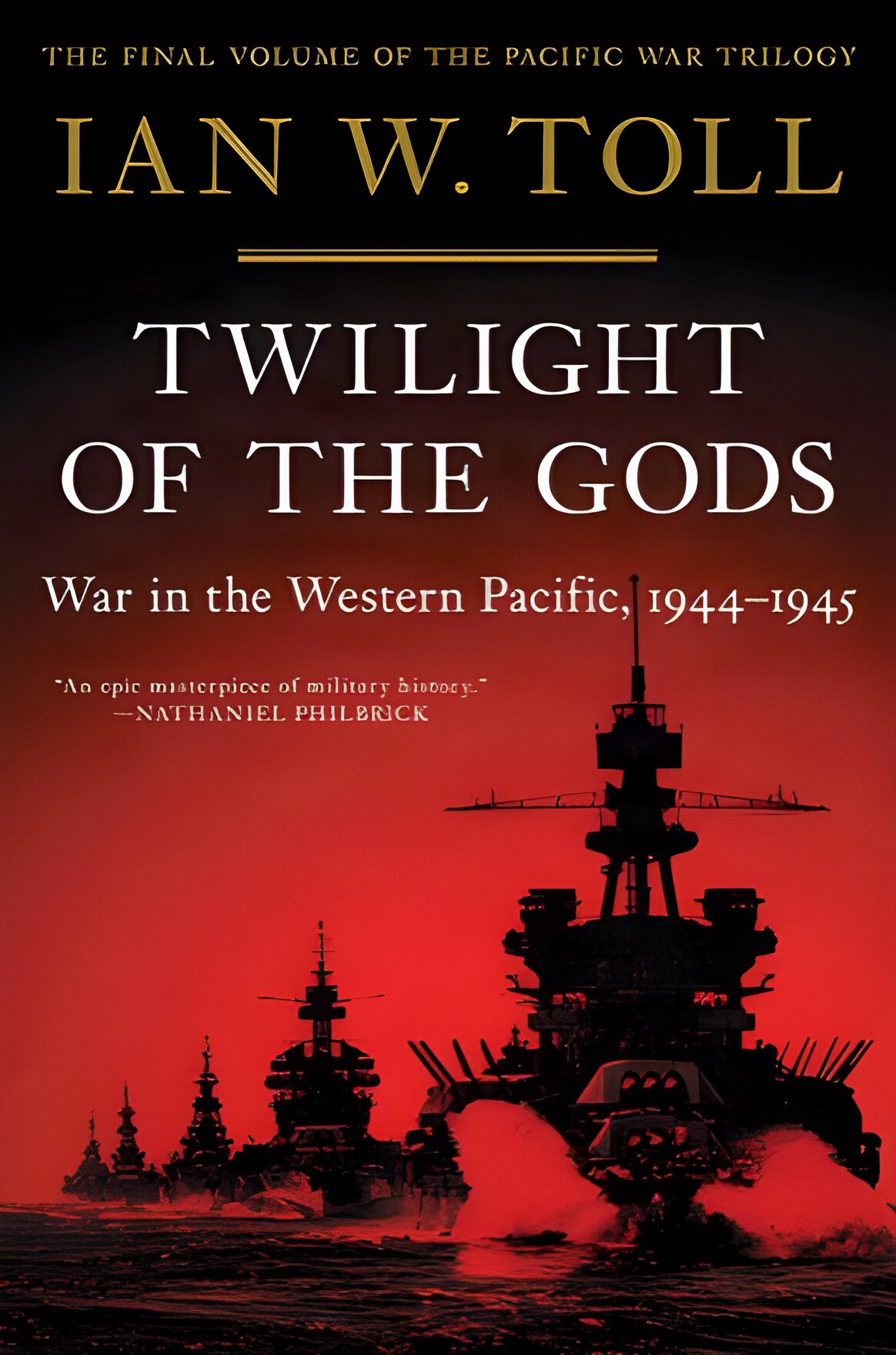
Hardcover. NY, W. W. Norton & Company, 2nd pr., 2020, Book: Very Good, Dust Jacket: Very Good, Hardcover in a bright dust jacket, 926 pages, illustrations. In June 1944, the United States launched a crushing assault on the Japanese navy in the Battle of the Philippine Sea. The capture of the Mariana Islands and the accompanying ruin of Japanese carrier airpower marked a pivotal moment in the Pacific War. No tactical masterstroke or blunder could reverse the increasingly lopsided balance of power between the two combatants. The War in the Pacific had entered its endgame. Beginning with the Honolulu Conference, when President Franklin Delano Roosevelt met with his Pacific theater commanders to plan the last phase of the campaign against Japan, Twilight of the Gods brings to life the harrowing last year of World War II in the Pacific, when the U.S. Navy won the largest naval battle in history; Douglas MacArthur made good his pledge to return to the Philippines; waves of kamikazes attacked the Allied fleets; the Japanese fought to the last man on one island after another; B-29 bombers burned down Japanese cities; and Hiroshima and Nagasaki were vaporized in atomic blasts. Ian W. Tolls narratives of combat in the air, at sea, and on the beaches are as gripping as ever, but he also reconstructs the Japanese and American home fronts and takes the reader into the halls of power in Washington and Tokyo, where the great questions of strategy and diplomacy were decided. Clean copy.
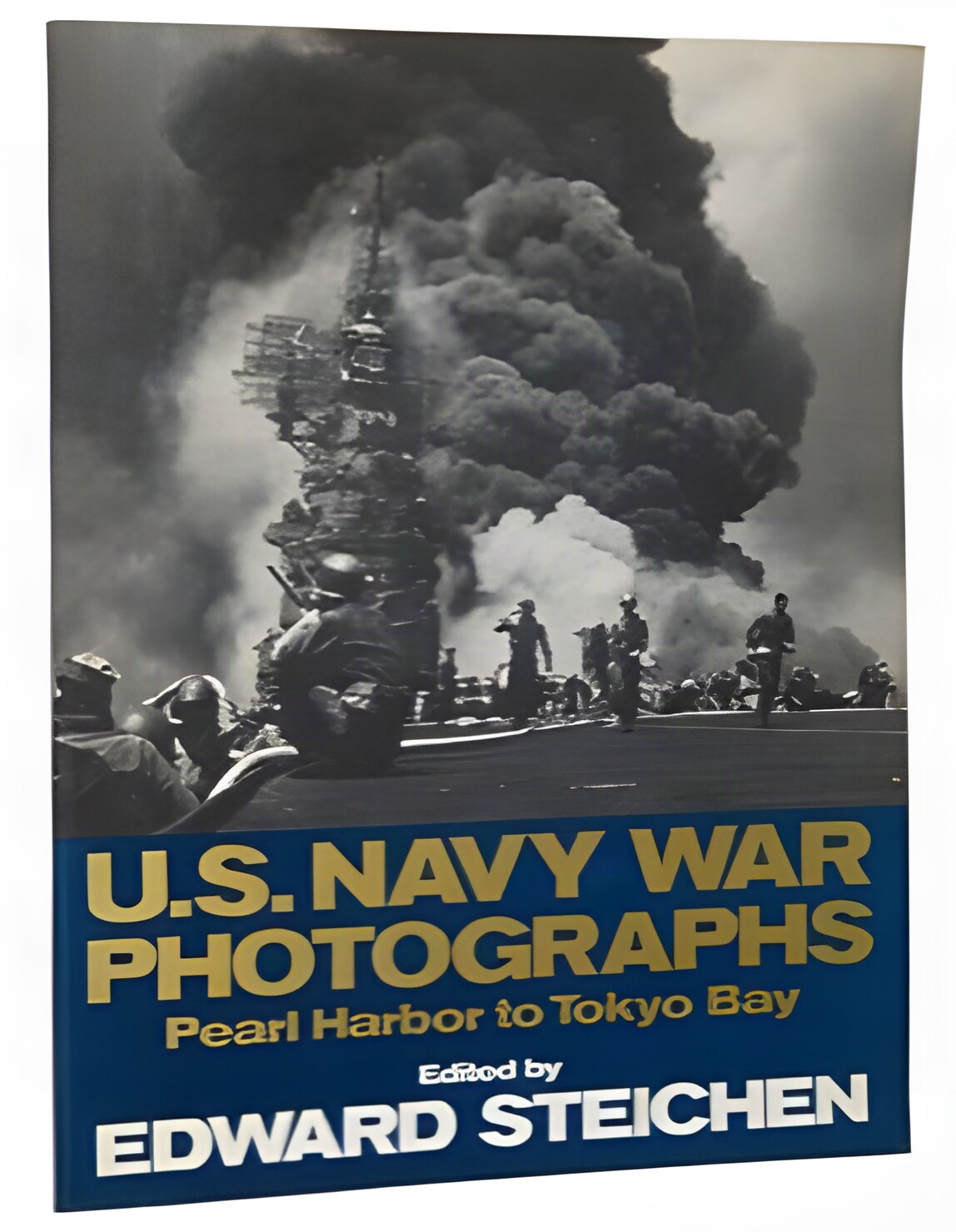
Softcover. NY, Crown Publishers, reprint, 1980, Book: Very Good, Dust Jacket: None, Softcover, BW-photographic and navy blue dust jacket with gold lettering. 128 pages, 115 b&w photographs. Official U.S. Navy and Marine Corps photographs of combat in the Pacific and the Atlantic. Edited by Edward Steichen; text by Tom Maloney. Clean copy.
Hardcover. GR, DZA Verlag fur Kultur und Wissenschaft, 1st, 1994, Book: Very Good, Dust Jacket: None, Hardcover, 161 pages, no dust jacket, pictorial boards. A collection of essays and photographs on the city of Dresden, ending in it's destruction at the end of WWII. Foreward by Herbert Wagner.
Hardcover. Boston, Little, Brown and Company, 2nd pr., 1960, Book: Very Good, Dust Jacket: None, Hardcover, blue cloth with gilt lettering on spine. Volume XIV in The History of United States Naval Operations in World War II. 407 pages, illustrated with maps (one fold-out) and b&w photos. Gilt on spine with light fading, lacks dust jacket, dj flap pasted to inside front cover, otherwise clean, tight copy.
Hardcover. Boston, Little, Brown, And Company, 1st, 1946, Book: Very Good, Dust Jacket: None, Hardcover, bound in publisher's red cloth, lettered in gold with black letterbox, 307 pages. The sixth of Churchill's seven war speech volumes. Victory contains speeches from January to August 1945. Having done so much to win the war, Churchill faced frustration of his postwar plans when his wartime government fell to Labor in the General Election of July 1945. His final speech in this volume - a review of the war delivered on 16 August 1945 to the House of Commons - is delivered as Leader of the Opposition rather than as Prime Minister. Clean, bright copy.
Hardcover. NY, Houghton Mifflin Harcourt, 1st, 2019, Book: Very Good, Dust Jacket: Very Good, Hardcover in a bright, unclipped dust jacket. Nigel Hamilton's celebrated trilogy culminates with a story of triumph and tragedy. Just as FDR was proven right by the D-day landings he had championed, so was he found to be mortally ill in the spring of 1944. He was the architect of a victorious peace that he would not live to witness. Using hitherto unpublished documents and interviews, Hamilton rewrites the famous account of World War II strategy given by Winston Churchill in his memoirs. Seventy-five years after the D-day landings we finally get to see, close-up and in dramatic detail, who was responsible for rescuing, and insisting upon, the great American-led invasion of France in June 1944, and why the invasion was led by Eisenhower. As FDR's D-day triumph turns to personal tragedy, we watch with heartbreaking compassion the course of the disease, and how, in the months left him as US commander in chief, the dying president attempted at Hawaii, Quebec, and Yalta to prepare the United Nations for an American-backed postwar world order. Now we know: even on his deathbed, FDR was the war's great visionary.
Hardcover. New Haven CT, Yale University Press, 1st thus, 1950, Book: Very Good, Dust Jacket: None, Hardcover. The Chronicles of America Vol. 54. 364 pages, b&w illustrations. Red gilt-decorated cloth, top edge gilt, no dust jacket as issued. Details the campaigns of the U.S. Armed Forces in all theaters of World War II, including Tunisia, France, Italy, the Philippines, and Guadalcanal. A very nice, tight, clean copy in excellent condition.
Hardcover. London, Imperial War Museum, 1st, 1981, Book: Very Good, Dust Jacket: Very Good, 192 pages, hardcover with dust jacket. War time photos from noted photographer. Light fading and edgewear to dust jacket top edge. Foxing to top edge of text block. Unmarked.
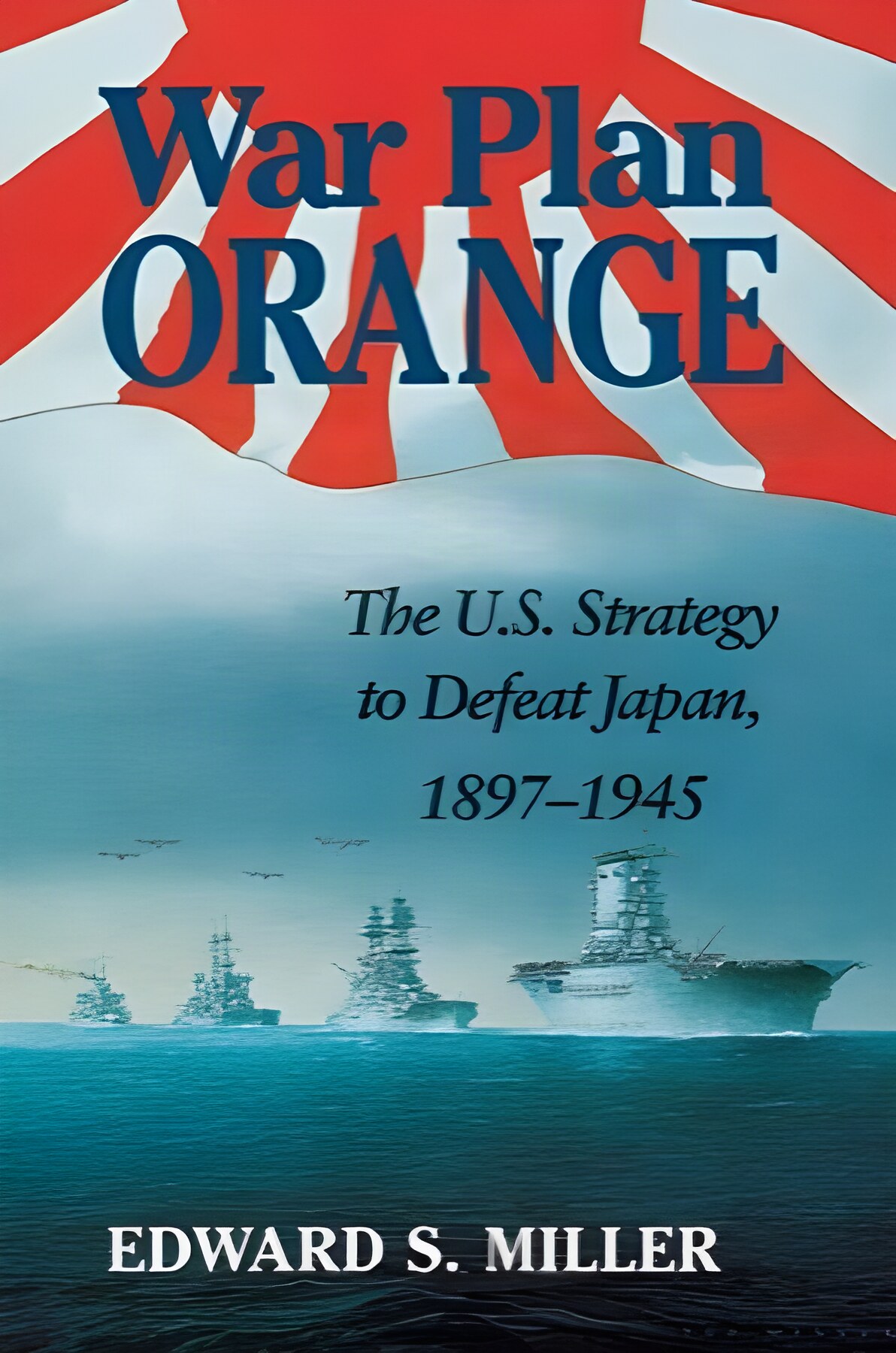
Softcover. Annapolis MD, Naval Institute Press, reprint, 2007, Book: Very Good, Dust Jacket: None, Softcover, 509 pages, b&w illustrations. Based on twenty years of research in formerly secret archives, this book reveals for the first time the full significance of War Plan Orange -- the U.S. Navy's strategy to defeat Japan, formulated over the forty years prior to World War II. The author does a good job of describing how the plan changed over time regarding possible objectives (rescuing Philippines, capturing Truk, making Guam into the "Gibraltar of the Pacific) as well as the different groups who pushed for their vision on how to best execute the plan from the gung-ho thrusters to the cautionaries to name the major approaches. The book also details the interplay between the navy and the army as they worked together to create a global plan of war as the world became more dangerous in the 1930's (the Rainbow Plans). The work concludes with an analysis of just how successful all the effort that went into creating Plan Orange was to the waging of the Pacific War in 1941-45. Clean copy.
Hardcover. Mechanicsburg PA, Stackpole Books, 1st, 2010, Book: Very Good, Dust Jacket: Very Good, Hardcover, 227 pages, b&w photos. Light scratching to dust jacket front cover. Clean, tight copy. They shot some of the most iconic footage of World War II while risking their lives, yet the stories--and sheer guts--of the U.S. Marine Corps combat cameramen have been overshadowed by the heroism of the men with the rifles. War Shots brings these photographers into sharp focus through the career of Norm Hatch, a true American character whose skill with a camera and knack for being in the right place at the right time thrust him to the fore of the effort to record the Marines at war in the Pacific.
Hardcover. Mechanicsburg PA, Stackpole Books, 1st, 2010, Book: Very Good, Dust Jacket: Very Good, Hardcover, 227 pages, b&w photos. Light scratching to dust jacket front cover. Clean, tight copy. They shot some of the most iconic footage of World War II while risking their lives, yet the stories--and sheer guts--of the U.S. Marine Corps combat cameramen have been overshadowed by the heroism of the men with the rifles. War Shots brings these photographers into sharp focus through the career of Norm Hatch, a true American character whose skill with a camera and knack for being in the right place at the right time thrust him to the fore of the effort to record the Marines at war in the Pacific.
Hardcover. Barnsley UK, Pen & Sword Books, 1st, 2012, Book: Very Good, Dust Jacket: Very Good, Hardcover, 155 pages., b/w plates., maps, index, This remarkable account describes the open warfare Polish Underground fighters waged against the Nazi occupiers of their city-with a shortage of arms, ammunition, and medical support-in the expectation of Soviet assistance that came too late to help the precipitous uprising.
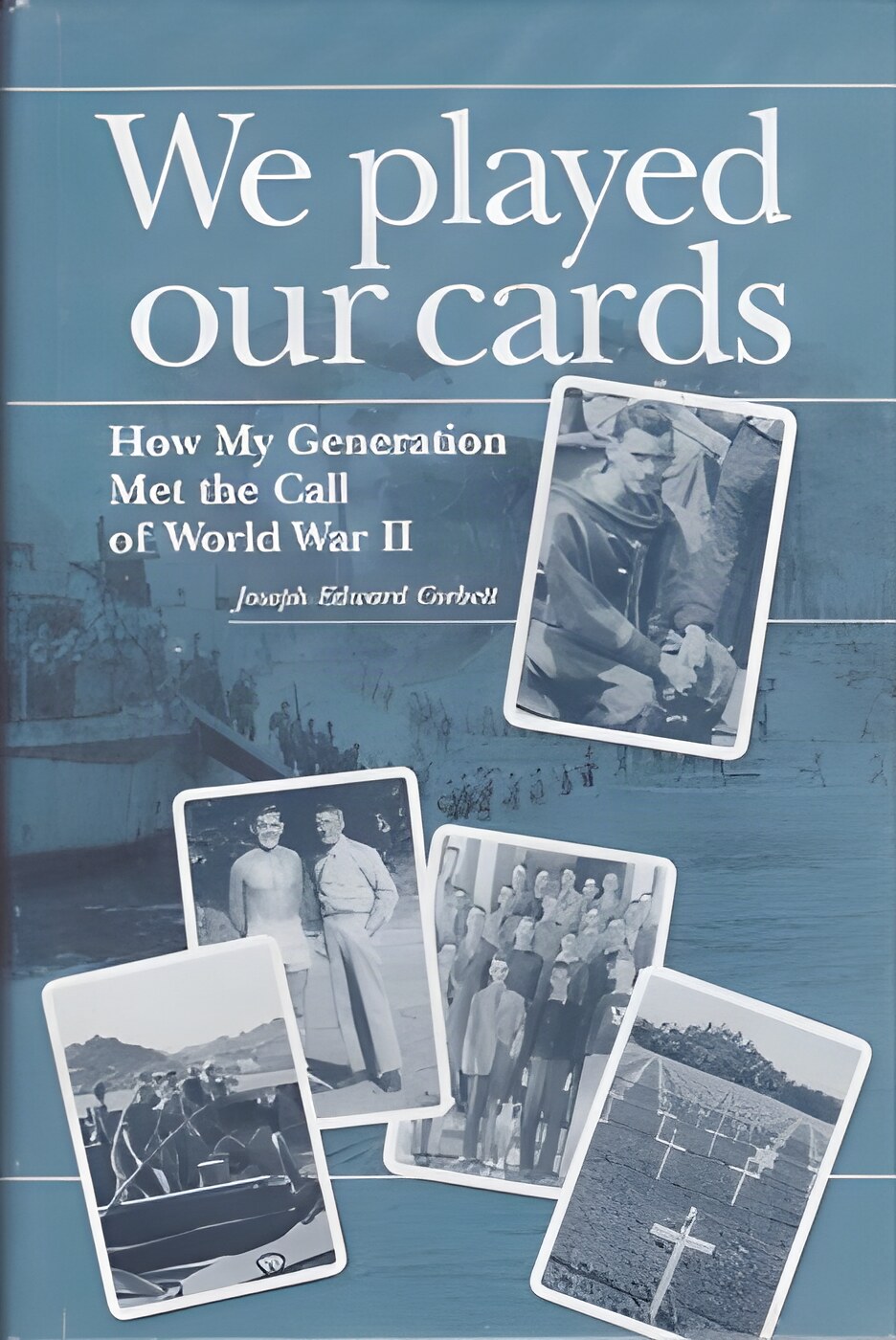
Hardcover. Burlington VT, Overlake Publishing, 1st, 2003, Book: Very Good, Dust Jacket: Very Good, Hardcover, 215 pages. INSCRIBED BY AUTHOR on title page. "Joe Corbett's remarkable experiences as a salvage officer in the US Navy during World War II are recollected here in tranquility and with great admiration for those with whom he served." Light edgewear to dust jacket, else a clean, tight copy.
Hardcover. Overlake Publishing, 1ST, 2003, Book: Very Good, Dust Jacket: Very Good, Hardcover, 215 pages. SIGNED BY AUTHOR on title page. Light edgewear to dust jacket, else a clean, tight copy.
Hardcover. Baltimore, Gateway Press, 1st, 1990, Book: Very Good, Dust Jacket: Good, Hardcover in a lightly worn dust jacket, 335 pages, b&w illustrations. INSCRIBED BY THE AUTHOR on the title page to the previous owner, a Major in the US Air Force Reserve. His ownership signature on the front fly leaf. Otherwise clean.
Softcover. New York, Abbeville Press, 1st US, 1984, Book: Very Good, Dust Jacket: None, 160 pages, illustrated throughout in b&w. Previous owner's sticker on front end paper, light edgewear and soil to wrappers. Clean, tight copy. The pictures assembled here show how this artistic culture originated in the aftermath of the First World War and the unsettled early years of the Weimar Republic, uneasily balanced between revolutionary pretensions and the desire for order. The montage of images--photographs, paintings, drawings, collages, books, and film stills--evokes the period with shocking vividness.
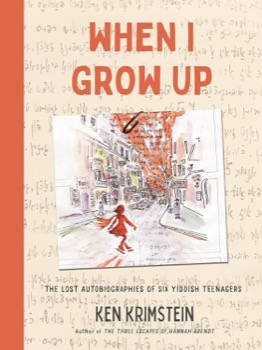
Hardcover. NY, Bloomsbury Publishing, 2nd pr., 2021, Book: Very Good, Dust Jacket: None, Hardcover, pictorial boards with orange cloth spine. 232 pages. From the prize-winning author of The Three Escapes of Hannah Arendt, a stunning graphic narrative of newly discovered stories from Jewish teens on the cusp of WWII.When I Grow Up is New Yorker cartoonist Ken Krimstein's new graphic nonfiction book, based on six of hundreds of newly discovered, never-before-published autobiographies of Eastern European Jewish teens on the brink of WWII-found in 2017 hidden in a Lithuanian church cellar. These autobiographies, long thought destroyed by the Nazis, were written as entries for three competitions held in Eastern Europe in the 1930s, just before the horror of the Holocaust forever altered the lives of the young people who wrote them.
Hardcover. New York, Clarion Books, 1st, 2002, Book: Very Good, Dust Jacket: Very Good, Hardcover in a bright, unclipped dust jacket, 199 pages. A brother & sister face the increasingly oppressive occupation of Korea by Japan during WW II, which threatens to suppress their culture. WON JANE ADDAMS HONOR AWARD. Clean copy.
Hardcover. Lawrence KS, University Press of Kansas , 1st, 2011, Book: Very Good, Dust Jacket: Very Good, Hardcover in a bright dust jacket, 386 pages, b&w illustrations. Inept leadership, inefficient campaigning, and enormous losses would seem to spell military disaster. Yet despite these factors, the Soviet Union won its war against Nazi Germany thanks to what Roger Reese calls its military effectiveness: its ability to put troops in the field even after previous forces had been decimated. Reese probes the human dimension of the Red Army in World War II through a close analysis of soldiers' experiences and attitudes concerning mobilization, motivation, and morale. In doing so, he illuminates the Soviets' remarkable ability to recruit and retain soldiers, revealing why so many were willing to fight in the service of a repressive regime--and how that service was crucial to the army's military effectiveness. He examines the various forms of voluntarism and motivations to serve-including the influences of patriotism and Soviet ideology-and shows that many fought simply out of loyalty to the idea of historic Russia and hatred for the invading Germans. He also considers the role of political officers within the ranks, the importance of commanders who could inspire their troops, the bonds of allegiance forged within small units, and persistent fears of Stalin's secret police. Clean copy.

 "The Wartime Scrapbook: The Home Front 1939-1945by: Opie, Robert")
 "The Winter of the Bombs The Story of the Blitz of Londonby: Fitzgibbon, Constantine")
 "This Is the Story by: David L. Cohn")

 "Verbrannt bis zur Unkenntlichkeit - die Zerstorung Dresdens 1945 (German Edition)by: N/A")
 "Victory in the Pacific 1945; History of United States Naval Operations in World War II, Volume 14 by: Morison, Samuel Eliot")
 "War And Peace: FDR's Final Odyssey: D-Day to Yalta, 1943")
 "War Photographs 1939-45by: Beaton, Cecil")
 "War Shots: Norm Hatch and the U.S. Marine Corps Combat Cameramen of World War IIby: Jones, Charles")
 "War Shots: Norm Hatch and the U.S. Marine Corps Combat Cameramen of World War IIby: Jones, Charles")
![Warsaw 1944: An Insurgent's Journal of the Uprisingby: Czajkowski, Zbigniew; Marek Czajkowski [trans.]](javascript:largeIMTop('https://www.browsingisarousing.com/shop/images/Warsaw-1944-An-Insurgents-Journal-of-the-Uprising_by_Czajkowski-Zbigniew-Marek-Czajkowski-trans.370433-385520.jpg','https://www.browsingisarousing.com/shop/images/Warsaw-1944-An-Insurgents-Journal-of-the-Uprising_by_Czajkowski-Zbigniew-Marek-Czajkowski-trans.370433-385520.jpg',0,'370433',0,'') "Warsaw 1944: An Insurgent's Journal of the Uprisingby: Czajkowski, Zbigniew; Marek Czajkowski [trans.]")
 "We Played Our Cards: How My Generation Met the Call of World War II (SIGNED COPY)by: Corbett, Joseph Edward")
 "Weimar Years, The : A Culture Cut Shortby: Willett, John")
 "When My Name Was Keoko (Jane Addams Honor Bookby: Park, Linda Sue")
 "Why Stalin's Soldiers Fought: the Red Army's Military Effectiveness in World War IIby: Roger R. Reese")