Hardcover. New York, G.P. Putnams, 1st, 2000, Book: Very Good, Dust Jacket: Very Good, Hardcover. Color illustrations by the author. SIGNED BY TALBOTT on title page.
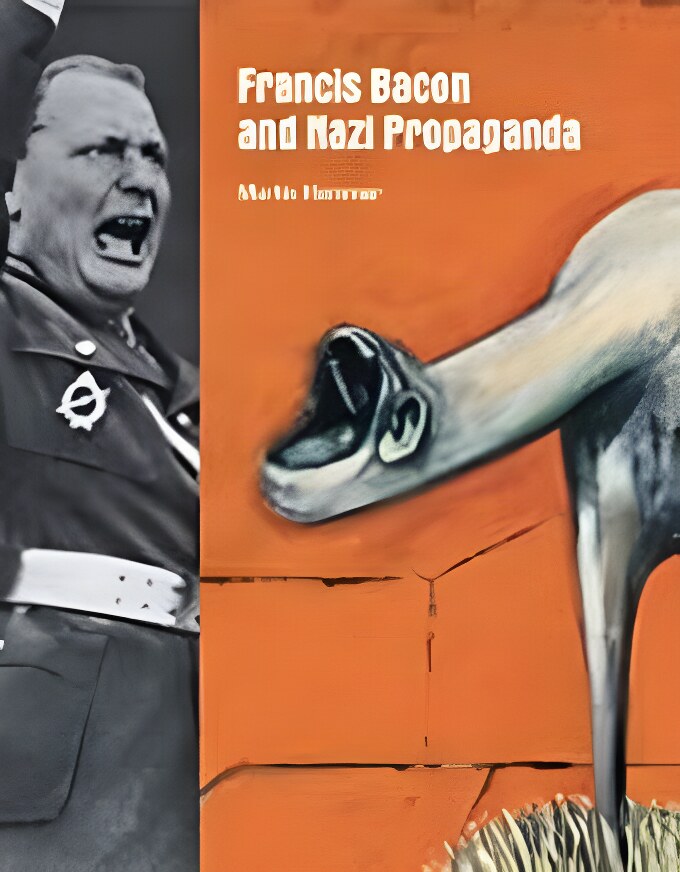
Hardcover. London, Tate, 1st, 2013, Book: Very Good, Dust Jacket: Very Good, Hardcover, 224 pages. British artist Francis Bacon (1909-1992) was one of the most important artists of the 20th century. Here, Martin Hammer presents him as a "painter of modern life," whose concern was to distill the feelings associated with living through the rise of Fascism in the 1930s, World War II, the revelations of the Holocaust, and then the early Cold War period. Against a backdrop of changing attitudes toward wartime memories and a gradual resurgence of interest in the war, Hammer offers extensive evidence of Bacon's use of prewar Nazi propaganda photography as a springboard for painting. By exploring some of Bacon's best-known and most compelling works, Hammer illuminates the artist's aim to transmute challenging photographic sources into a reflection on the contemporary world.
Hardcover. NY, Oxford University Press, 2nd pr., 1980, Book: Very Good, Dust Jacket: Very Good, Hardcover in a bright, unclipped dust jacket, 657 pages. Robert Dallek vigorously and convincingly defends Roosevelt's foreign policy. He emphasizes how Roosevelt operated as a master politician in maintaining a national consensus for his foreign policy throughout his presidency and how he brilliantly achieved his policy and military goals. Name on half-title page otherwise a clean copy.
Hardcover. Boston, Houghton Mifflin, 1st, 1994, Book: Very Good, Dust Jacket: Very Good, Hardcover on a lightly worn dust jacket, 641 pages, b&w illustrations. This is the first full-length biography of the man historian Michael Beschloss calls the keystone figure in the history of American intelligence. Allen Dulles (1893-1969) served in the Office of Strategic Services in Europe during WWII and was named director of the Central Intelligence Agency in 1953, serving under Eisenhower and Kennedy. In an overlong, sometimes tedious narrative, Grose (Israel in the Mind of America) describes how Dulles oversaw the firm establishment of the CIA in the Washington power structure during the Eisenhower years (his older brother, John Foster Dulles, was then the Secretary of State), only to be forced out after the CIA's failure in the 1961 Bay of Pigs invasion. Later appointed to the Warren Commission to investigate the assassination of President Kennedy, Dulles became its most diligent member, according to Grose, and a supporter of the view that Lee Harvey Oswald acted alone. Other controversial issues explored include Dulles's exploitation of ex-Nazi Reinhard Gehler's spy network in the early years of the Cold War, and whether JFK authorized, or even knew about, CIA attempts to liquidate Castro. Grose delves unenlighteningly into Dulles's shortcomings as husband and father; he kept a mistress or two and spent little time at home.
Hardcover. Beach Lloyd Publishers, 2nd Ed., 2008, Book: Very Good, Dust Jacket: None, Hardcover. pictorial boards, 142 pages. SIGNED BY AUTHOR on the title page. I had all kinds of courage and guts; I don t know where that came from, says Fernande Keufgens Davis ( Freddie ) of the risks that she took as a teenager in the Belgian Resistance of World War II. After the shock of finding her formerly occupied village annexed as part of Germany, Davis was drafted to work in a German munitions factory. Determined not to aid the enemy, she jumped from the train and went underground. Clean copy.
Hardcover. Washington DC, Shoemaker & Hoard, 1st, 2004, Book: Very Good, Dust Jacket: None, Hardcover, gray boards with blue cloth spine, 150 pages, b&w illustrations. A singular life often circles around a singular moment, an occasion when one's life in the world is defined forever and the emotional vocabulary set. For the extraordinary writer James Salter, this moment was contained in the fighter planes over Korea where, during his young manhood, he flew more than one hundred missions. James Salter is considered one of America's greatest prose stylists. The Arm of Flesh (later revised and retitled Cassada ) and his first novel, The Hunters, are legendary in military circles for their descriptions of flying and aerial combat. A former Air Force pilot who flew F-86 fighters in Korea, Salter writes with matchless insight about the terror and exhilaration of the pilot's life. This book collects passages from two other books he wrote about his military flight career and entries from his personal journal kept during his tours of military flying duty through flight training in late WWII, into combat duty in Korea in 1952, and through his post war flying up into the early 1960s. Masterfully edited by Jessica and William Benton, it has been organized chronologically and simply is wonderful. You can read from the journal entry, and then it is followed by fiction he created using that experience. No dust jacket, clean, bright copy.
Hardcover. London, V&A Publications, 1st, 2007, Book: Very Good, Dust Jacket: Good, 224 pages. Hardcover with dust jacket. Soiling and wear to dust jacket edges. Light yellowing to inside pages. Small tears to dust jacket rear. An otherwise tight copy. 97 color plates, 80 black and white illustrations. In 1947, Christian Dior?s ?New Look? was greeted with both shock and delight, making headlines around the world. Accompanying the exhibition opening at the Victoria and Albert Museum in September 2007, this lavish book focuses on Parisian and British couture between 1947 and 1957, the decade Dior hailed as fashion?s ?golden age.? The ?New Look? symbolized a new femininity. The full skirts and hourglass silhouettes were considered highly decadent, synonymous with luxury and prosperity, in marked contrast to the austerity of the WWII years. Nevertheless, the ?New Look? caught the public imagination and ushered in a period of remarkable creativity. The Golden Age of Couture features stunning gowns and exquisite tailoring from Dior as well as from such designers as Balenciaga, Balmain, and Givenchy, along with evocative photographs by the likes of Richard Avedon and Cecil Beaton.
Softcover. NY, Penguin Books/The Infantry Journal, 3rd pr., 1942, Book: Very Good, Dust Jacket: None, Softcover, 120 pages, b&w illustrations. Mild soil to covers, edgewear, edges darkened. Still a very nice, tight copy of this classic work on guerrilla warfare.
Hardcover. NY, Delacorte Press, 1st, 1998, Book: Very Good, Dust Jacket: Very Good, Hardcover in a bright dust jacket, 135 pages. The irony of the title will haunt readers of this novel as they delve into the mind of a WWII veteran whose face has been blown off by a grenade. After winning a Silver Star for bravery, 18-year-old Francis Cassavant could return home a hero, but he keeps his identity secret in anticipation of murdering a personal enemy and wanders the streets of his hometown as a lone, grotesque figure ("People glance at me in surprise and look away quickly or cross the street when they see me coming"). The man Francis seeks is Larry LaSalle, who was once his mentor and who has also earned a Silver Star. Cormier (Tenderness; In the Middle of the Night) offers two levels of suspense in this thriller. His audience will tensely await the inevitable confrontation between the two men while trying to extract Francis's motive for murder from flashbacks revolving around his high school sweetheart and the Wreck (Recreation) Center, where they spent many happy hours under the direction of LaSalle. Cormier is once again on top of his game, as he constructs intrigue, develops complex characters and creates an unexpected climax. Clean copy.
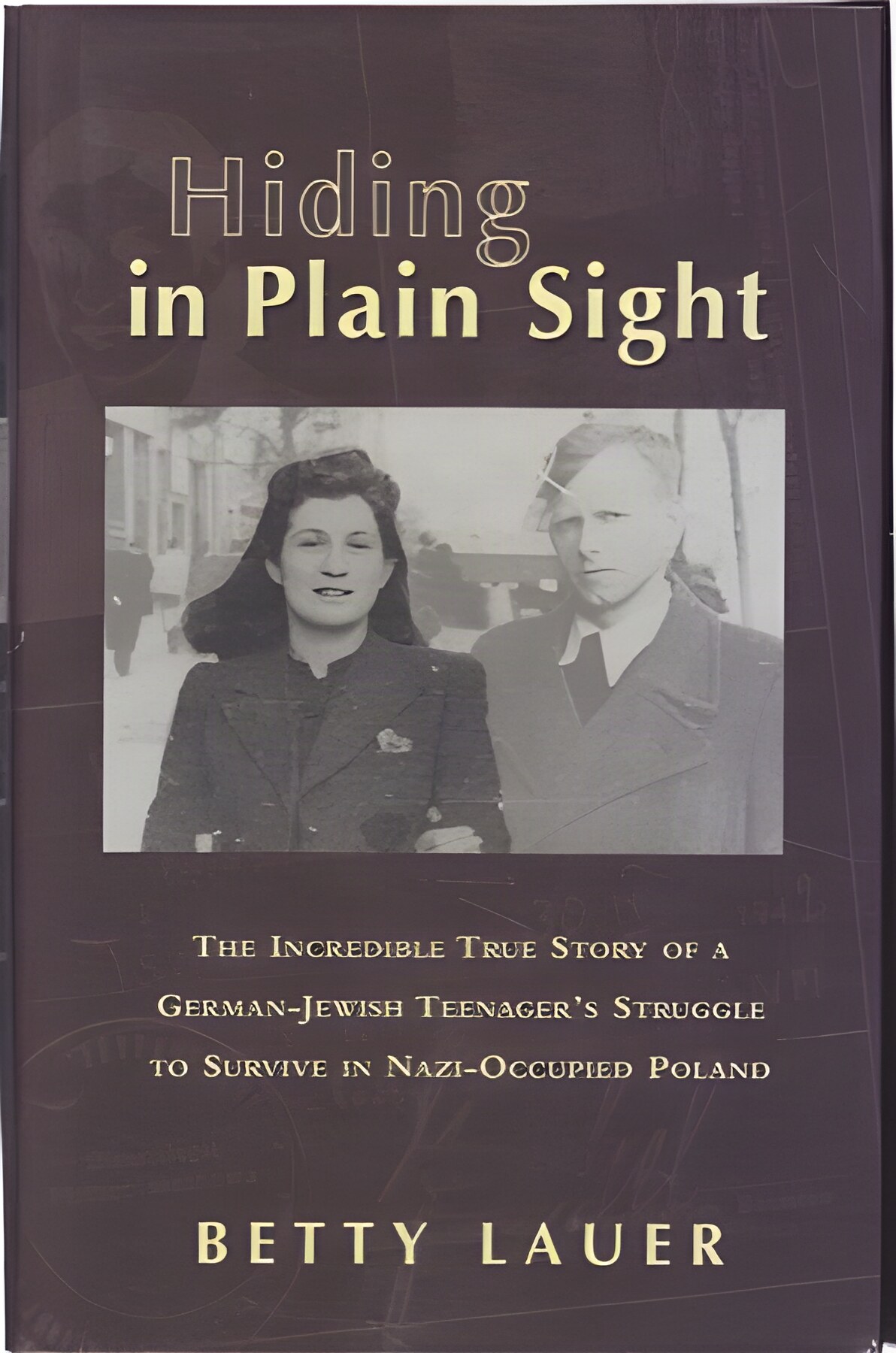
Hardcover. Hanover NH, Smith and Kraus, 1st, 2004, Book: Very Good, Dust Jacket: Very Good, Hardcover in a bright dust jacket, 561 pages, b&w illustrations. 12 year old Bertel, living in Hindenburg, Germany in 1938, was forced by the Nazis to leave Germany for Poland. Disguising herself as a young Polish woman, this is the story of Bertel's survival. INSCRIBED TWICE BY LAUER on the front fly leaf. Clean copy.
Hardcover. Chapel Hill NC, University of North Carolina Press, 1st, 1955, Book: Very Good, Dust Jacket: Good, Hardcover in a worn, chipped dust jacket, 237 pages. Endpaper maps. Day-by-day eye witness account of the atomic bombing of Hiroshima and the seven weeks that followed. Dr. Hachiya, himself wounded in the blast, was director of a major Hiroshima hospital. Translated and edited by Warner Wells, M.D. One of the best first hand accounts; much on the the gradual "discovery" of radiation sickness. The dust jacket's rear panel has photo of the author's surviving family. Bookplate opposite half-title page, otherwise clean.
Hardcover. University Press of Kentucky, 1st, 2014, Book: Very Good, Dust Jacket: Very Good, Hardcover in a bright dust jacket. 279 pages, b&w photos. With a career that spanned from the silent era to the 1990s, British screenwriter Charles Bennett (1899-1995) lived an extraordinary life. His experiences as an actor, director, playwright, film and television writer, and novelist in both England and Hollywood left him with many amusing anecdotes, opinions about his craft, and impressions of the many famous people he knew. Among other things, Bennett was a decorated WWI hero, an eminent Shakespearean actor, and an Allied spy and propagandist during WWII, but he is best remembered for his commercially and critically acclaimed collaborations with directors Sir Alfred Hitchcock and Cecil B. DeMille. The fruitful partnership began after Hitchcock adapted Bennett's play Blackmail (1929) as the first British sound film. Their partnership produced six thrillers: The Man Who Knew Too Much (1934), The 39 Steps (1935), Sabotage (1936), Secret Agent (1936), Young and Innocent (1937), and Foreign Correspondent (1940). In this witty and intriguing book, Bennett discusses how their collaboration created such famous motifs as the "wrong man accused" device and the MacGuffin. He also takes readers behind the scenes with the Master of Suspense, offering his thoughts on the director's work, sense of humor, and personal life.
Hardcover. NY, Viking, 1st, 1999, Book: Very Good, Dust Jacket: Very Good, Hardcover in a bright, unclipped dust jacket, 430 pages. In this book, backed by a wealth of new research, the author tells for the first time the story of the career of Eugenio Pacelli, the man who as Pius XII was Pope during the Second World War and arguably the most powerful churchman in modern history. Adding to the continuing debate about collective guilt and the Holocaust this is an extraordinary and explosive history. In the first decade of the century, as a brilliant young lawyer, Pacelli helped shape an ideology of unprecedented papal power; during the 1920s he employed cunning and moral blackmail to impose that power in Germany. In 1933 Hitler became his perfect negotiating partner and a concordat was established that granted religious and educational advantages to the Catholic Church in exchange for Catholic withdrawal from social and political action. This 'voluntary' abdication of political Catholicism imposed from Rome facilitated the rise of Nazism. Clean copy.
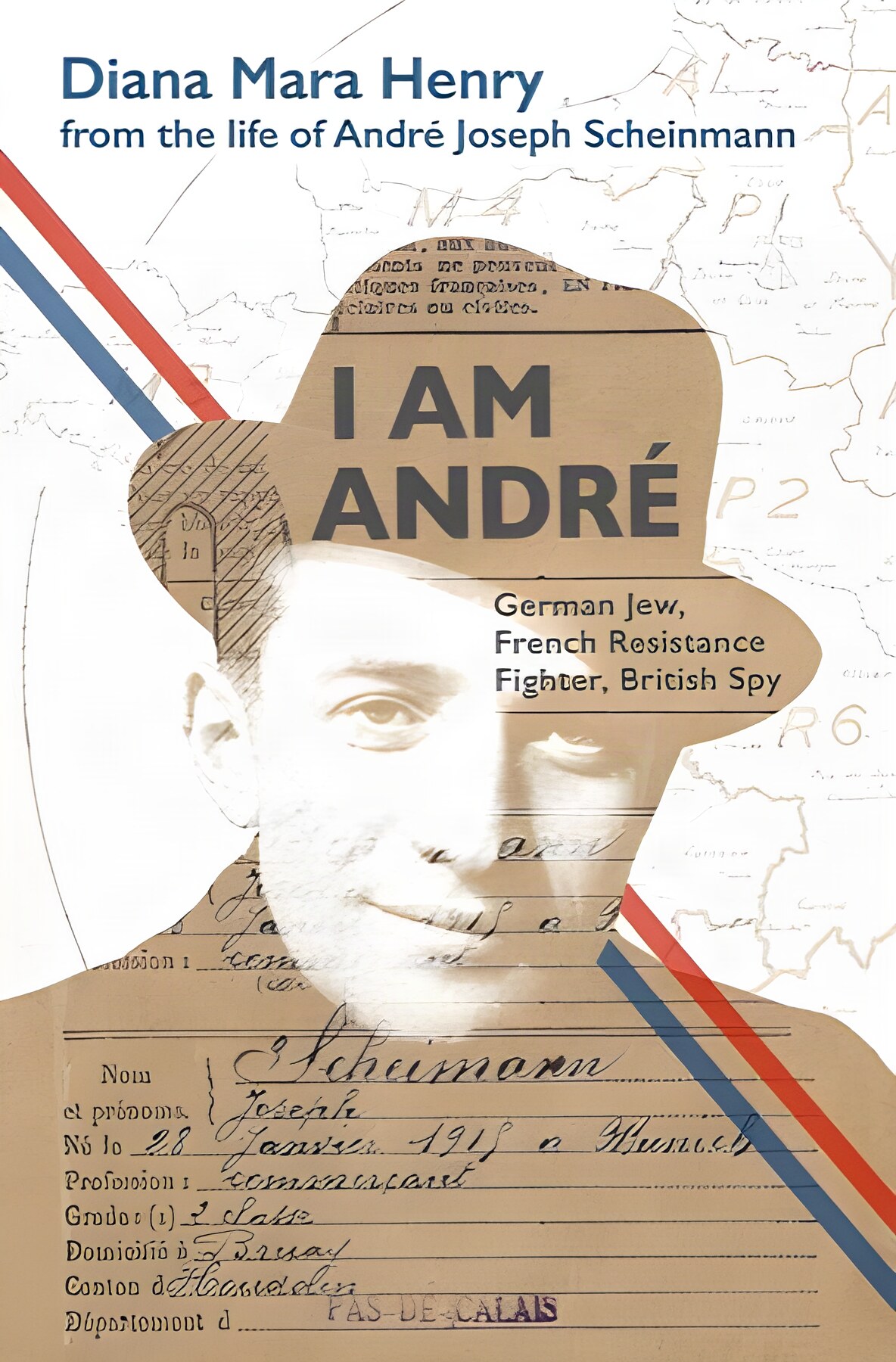
Hardcover. Chiselbury, 1st, 2024, Book: Very Good, Dust Jacket: None, Hardcover in glossy pictorial boards, 356 pages. An amazing real-life story of espionage, of courage and resistance, and of friendship and love. It pulls back the veil on the hidden history of the struggle for the identity of the Resistance in France. The life of 'André' Joseph Scheinmann is more intriguing and compelling than any work of fiction. His true-life story of derring-do starts as a Jewish youth in Munich, whose family moves to France in 1933 to escape the Nazi tide. He joins the French army at the outbreak of WW2 and escapes from a prisoner-of war camp after the bitterly brief fight for France in the summer of 1940. André becomes a spy and saboteur for the British and Free French whilst working undercover as translator and liaison with the German high command at the Brittany headquarters of the French National Railroads. Summoned by the British, he clandestinely crosses the Channel for initiation and training as an MI6 agent in England. His network betrayed during his absence, he is arrested on his return to France. André then begins an even more perilous journey with interrogation in Gestapo prisons and the little-known Natzweiler concentration camp in Alsace, before being transferred to Dachau and Allach, ahead of the advancing Allies. Illustrated with over 120 vintage and color photographs and letters. Clean copy.
Hardcover. London, The Cresset Press, 1st, 1960, Book: Very Good, Dust Jacket: Good, 256 pages. Blue cloth cover, gilt lettering, some minor wear to edges of spine. Dust jacket has some wear, and a small tear on bottom of spine. Library sticker on front endpaper. Eight page section of b&w photographs. Inside is bright and clean. A nice copy.
Hardcover. NY, Aperture, 1stt, 1993, Book: Very Good, Dust Jacket: Very Good, Hardcover in a bright dust jacket. 112 pages, b&w plates, comments and observations of ghetto residents accompany photographs, taken by a German soldier, of Jewish ghetto life in 1941 Warsaw. Clean copy.
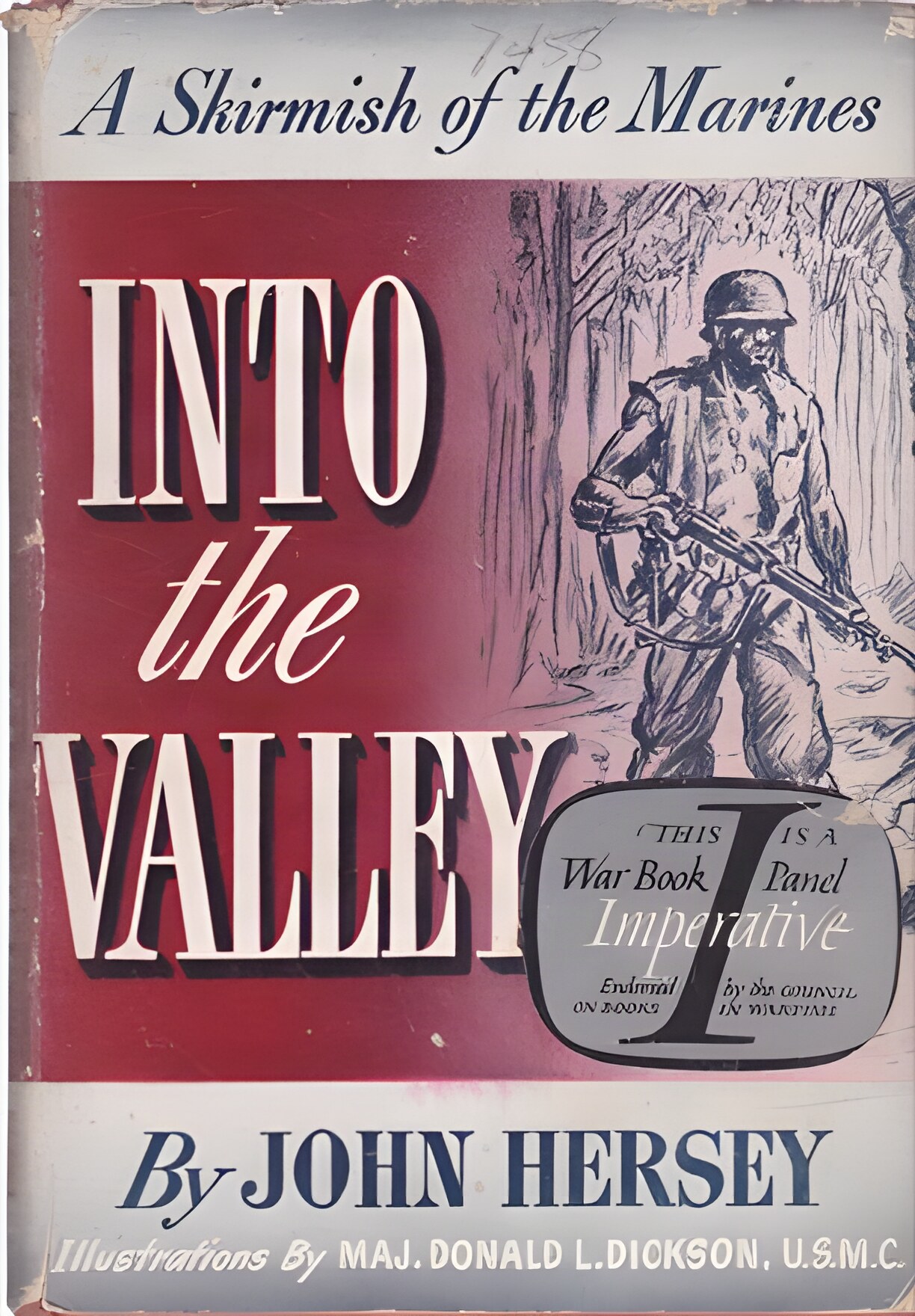
Hardcover. NY, Alfred A. Knopf, 1943, Book: Very Good, Dust Jacket: Good, Hardcover in a worn dust jacket, 138 pages. B&w drawings by Major Donald L. Dickson, USMC. Edition not stated but 1943 on title page. "On the eighth day of October in the first year of our war, I went down into a valley with Captain Charles Rigaud of the United States Marines. A small skirmish took place down there. The Valley was on Guadalcanal Island, but it might have been anywhere. The skirmish was just an episode in an insignificant battle." Hersey's second book.
Hardcover. Chicago, Henry Regnery Company, 1st, 1950, Book: Very Good, Dust Jacket: Fair, Hardcover in a worn, chipped dust jacket. Map endpapers, 176 pages, b&w photos. The first book by a German general published in America after the war, a German account of the D-Day & Normandy 'invasion' by Allied forces; the author was Rommel's Chief-of-Staff and therefore had an inside view of Rommel's efforts to get Hitler to negotiate a peace in the face of overwhelming Allied superiority. Speidel was a career military officer and trained historian; a German nationalist, he disagreed with racist Nazi policies, was involved in the 20 July plot to kill Hitler, and was important in rebuilding Germany's army after the war. Clean copy.
Hardcover. NY, Columbia University Press, 1st, 1983, Book: Very Good, Dust Jacket: Very Good, Hardcover in a bright dust jacket, 120 pages. This book probes the origins of Japanese-American postwar relations by looking closely at the people and the thinking that surrounded the final contract for peace.
Hardcover. Stanford CA, Stanford University Press, reprint, 1980, Book: Very Good, Dust Jacket: None, Hardcover, black cloth with gilt lettering on spine, 306 pages. Records of 62 conferences held in Tokyo between March and December of 1941 provide direct access to the thinking and planning of Japan's highest leaders as they prepared for war. Indexed, with 12-page appendix. First published in 1967, no dust jacket. Name on front fly leaf otherwise clean.
Hardcover. Lexington KY, University Press of Kentucky, 1st, 2023, Book: Very Good, Dust Jacket: Very Good, Hardcover in a bright dust jacket, 289 pages, b&w illustrations. The son of music hall performers, the Paris-born actor grew up in the entertainment business. His onscreen debut in the 1930's marked the beginning of many memorable roles in films such as La Grande Illusion (1937) and Emile Zola's La Bete Humaine (1938). His performances would earn him international recognition and establish his reputation as one of the greatest stars of film noir. Pausing his performances on screen, Gabin joined the Allied struggle of WWII. Serving under General Charles De Gaulle in the Free French Forces as a tank commander, Gabin was awarded several medals for his service. Upon his return to acting after the war, he became the embodiment of the uniquely French spirit a persona that would define his future roles. In Jean Gabin: The Actor Who Was France, Joseph Harriss tells the story of this French icon. This well-researched biography documents Gabin's life from his start as a reluctant singer and dancer in Parisian music halls to his rise to film superstardom. Clean copy.
Hardcover. NY, Random House, 1st, 1939, Book: Good, Dust Jacket: None, Hardcover, textured beige cloth, moderately soiled. No edition or printing stated on copyright page. Illustrated with 32 pages of b/w photographs, as well as endpaper maps, red and black frontispiece illustration. The story of the trip Auden and Isherwood made to China during its war with Japan, prior to the outbreak of the Second World War. Includes 32 pages of photographs, as well as several sonnets and one long poem by Auden. Narrative written by Isherwood. There is a tan stain that goes across pages 68-69, that looks like a rorschach test. Otherwise clean.

 "Foraging Freedom - A True Story of Heroism During the Holocaust (SIGNED COPY)by: Talbott, Hudson")
 "Gentleman Spy: The Life of Allen Dullesby: Peter Grose")
 "Girl in the Belgian Resistance: A Wakeful Eye in the Underground (SIGNED COPY)by: Fernande K. Davis")

 "Golden Age of Couture, The: Paris and London, 1947-57by: Wilcox, Claire")
 "Guerrilla Warfareby: Levy, 'Yank'")


 "Hitchcock's Partner in Suspense; The Life of Screenwriter Charles Bennett by: John Charles Bennett")

 "In Peril on the Sea: War Exploits of Allied Seamen.by: Masters, David")




 "Journey To A Warby: Auden, W.H. & Christopher Isherwood")