Softcover. San Francisco , Chronicle Books, 1st, 1988, Book: Very Good, Dust Jacket: None, Softcover, 143 pages, color illustrations. Stephen De Staebler's evocative rendering of the human body is epitomized by the life-size figures and torsos represented in more than seventy full-color illustrations in Stephen De Staebler: The Figure, the first full-length monograph on this major American artist. Noted critic Donald Kuspit, a contribut-ing editor of Art in America, discusses how De Staebler's use of clay and bronze reflects the metaphysical foundations of his art. De Staebler's "archaic" figures evoke a sense of the past, while at the same time raising questions essential to modern human existence. Clean copy.
Hardcover. New York, The Museum of Modern Art, New York, 1st, 2006, Book: Very Good, Dust Jacket: None, Hardcover, 375 pages, illustrated throughout in color and b&w. Clean, unmarked copy in excellent condition. 507 illustrations (108 in color, 399 in duotone).
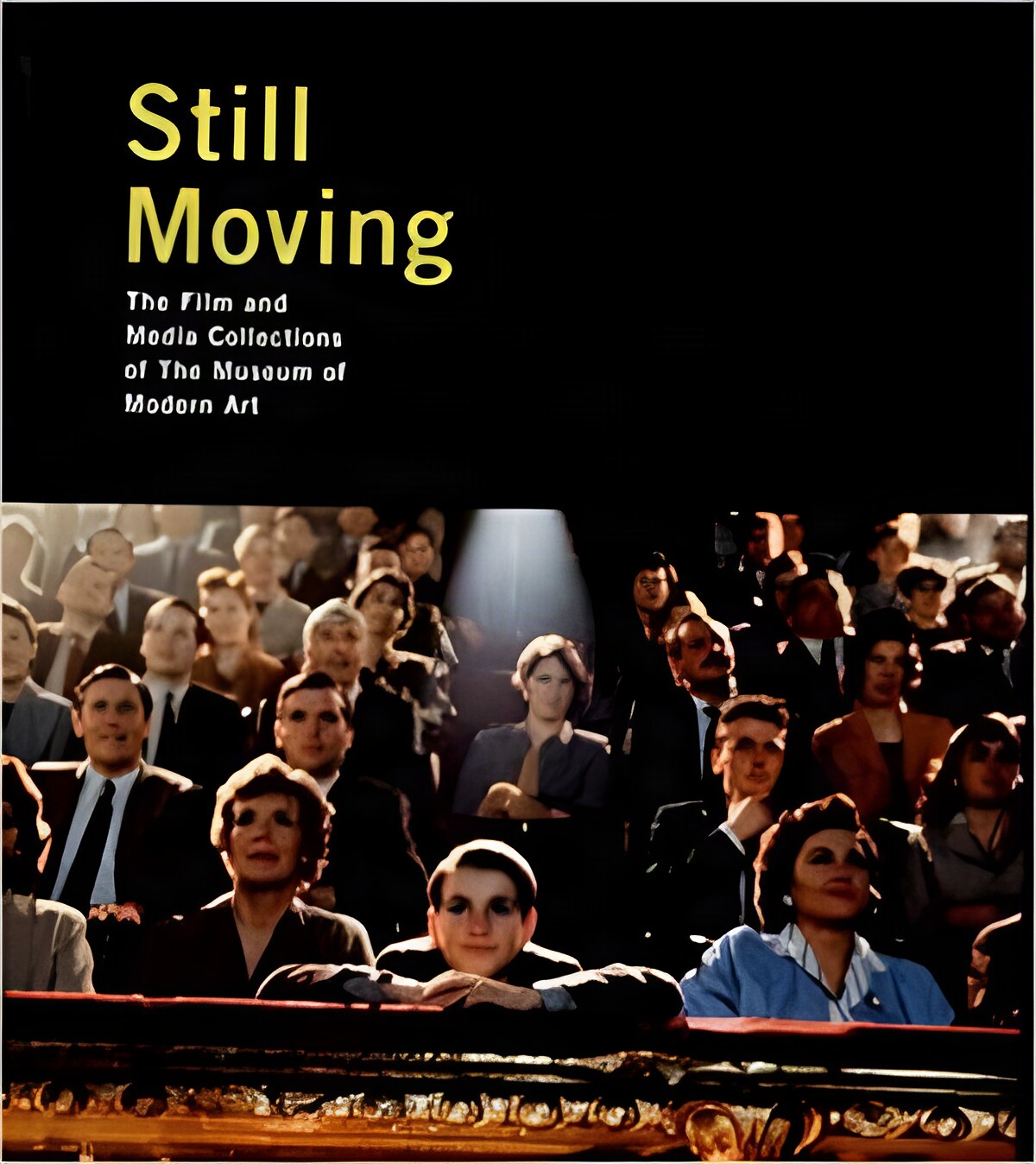
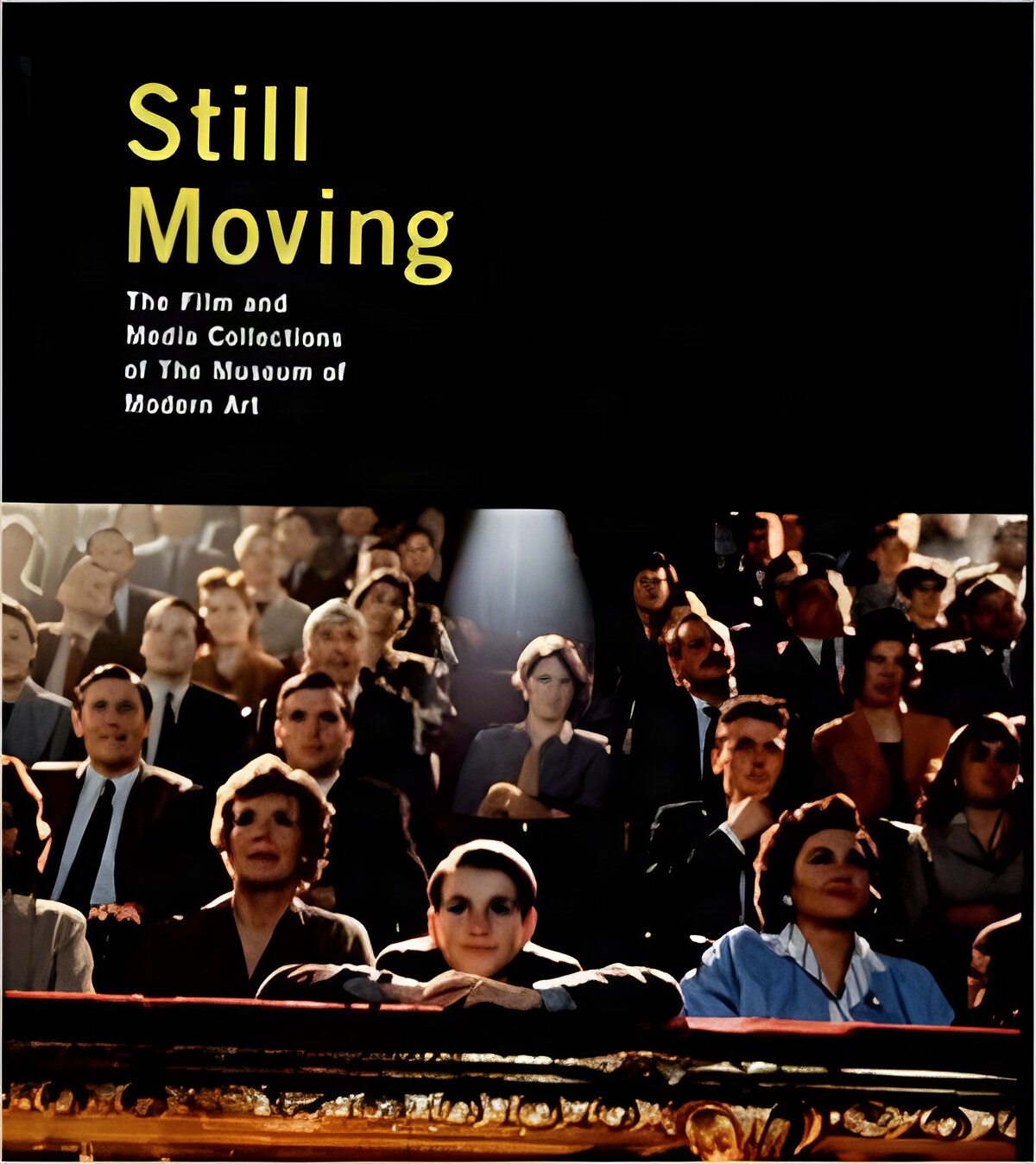
Hardcover. New York, The Museum of Modern Art, 1st, 2006, Book: Very Good, Dust Jacket: None, Hardcover, 375 pages, illustrated throughout in color and b&w. Clean, unmarked copy in excellent condition. 507 illustrations (108 in color, 399 in duotone). Founded in 1935, The Museum of Modern Art's Department of Film and Media is home to one of the most important moving-image archives in the world. Still Moving: The Film and Media Collections of The Museum of Modern Art marks the first time that MoMA has published a volume dedicated exclusively to these holdings. Drawn primarily from the Museum's vast library of film stills, the nearly 500 images in this book represent just a fraction of the department's renowned archive, including one of the world's most important collections of international silent cinema; classic early sound films from the United States, Great Britain, France, Germany, Italy, Russia, and Japan; extensive holdings of documentary and animation shorts and feature films; significant examples of Hollywood filmmaking from studios such as Warner Brothers, RKO, MGM, Twentieth Century-Fox, and Paramount; and more recent works by leading independent and avant-garde film and media artists.
Hardcover. New York, The Museum of Modern Art, New York, 1st, 2006, Book: Very Good, Dust Jacket: None, Hardcover, 375 pages, illustrated throughout in color and b&w. Clean, unmarked copy in excellent condition. 507 illustrations (108 in color, 399 in duotone). Founded in 1935, The Museum of Modern Art's Department of Film and Media is home to one of the most important moving-image archives in the world. Still Moving: The Film and Media Collections of The Museum of Modern Art marks the first time that MoMA has published a volume dedicated exclusively to these holdings. Drawn primarily from the Museum's vast library of film stills, the nearly 500 images in this book represent just a fraction of the department's renowned archive, including one of the world's most important collections of international silent cinema; classic early sound films from the United States, Great Britain, France, Germany, Italy, Russia, and Japan; extensive holdings of documentary and animation shorts and feature films; significant examples of Hollywood filmmaking from studios such as Warner Brothers, RKO, MGM, Twentieth Century-Fox, and Paramount; and more recent works by leading independent and avant-garde film and media artists.
Hardcover. NY, HarperCollins, 1st, 2003, Book: Very Good, Dust Jacket: Very Good, Hardcover, 651 pages. Clean, tight copy. Few writers of the past quarter-century have so consistently surprised, startled, and delighted their readers as has the masterful Richard Bausch, whom the Washington Post Book World calls "a virtuoso of language and literary grace." His nine critically acclaimed novels have established him as one of the most important fiction writers of his generation, a visionary stylist with an acute eye for the minute detail that illuminates the deepest wells of human experience. Yet it is for his award-winning short fiction that Bausch is perhaps most admired. The Stories of Richard Bausch celebrates the work of a great American artist, a writer the New York Times calls "a master of the short story." By turns tender, raw, heartbreaking, and riotously funny, the many voices of this definitive forty-two-story collection (seven of which appear here for the first time) defy expectation, attest to Bausch's remarkable range and versatility, and affirm his place alongside such acclaimed story writers as John Cheever, Flannery O'Connor, Raymond Carver, and Grace Paley.
Hardcover. New York, Artabras, 2nd Printing, 1990, Book: Very Good, Dust Jacket: Very Good, 252 pages. Hardcover. Red cloth boards with black printed rocking horse decoration to cover, black printed titles to spine. Profusely illustrated in full color & black & white, images beautifully interspersed throughout text. Bright dust jacket with sunfading to spine. Clean, unmarked copy.
Hardcover. Huntington, NY, Black Oak Publishers, 1st, 1982, Book: Very Good, Dust Jacket: Very Good, Hardcover, 117 pages. b&w illustrations throughout. Completes the cataloguing of Wengenroth's prints which began with "The Lithographs of Stow Wengenroth, 1931-1972", also by the Stuckeys. Cream cloth, light staining to upper edge. Pictorial endpapers. Dust jacket with light edge wear to back cover, otherwise a very nice, tight and well preserved copy.
Hardcover. New York, Harry N. Abrams, 1st, 2003, Book: Very Good, Dust Jacket: Very Good, 175 pages. Hardcover with dust jacket. illustrated throughout. Very clean and tight copy. Striptease is the history of unapologetic fun aimed not at the head, not at the heart or even the stomach, but south of all three. Beginning with the birth of the striptease in the mid-19th century and culminating with its garish heyday in the 1950s, this book charts the evolution of the infamous bump and grind, which is, at its simplest, a pretty girl in a pretty dress ... and then not. The only fully illustrated book available on the subject, Striptease tells the history of this provocative form of stagecraft from its birth in vaudeville and burlesque through the "take it all off" attitude for which the term "striptease" was coined. Along the way, the book highlights such performers as Isadora Duncan, Loie Fuller, Maud Allen, Gypsy Rose Lee, Tempest Storm, and Blaze Starr. The witty and well-informed text is illustrated with an array of titillating images, including never-before-published ephemera and illicitly photographed performances in progress. Whether revealing ankles or breasts, playing peek-a-boo or going the full monty, Striptease pays tribute to the women who made a vocation of their sex appeal and shimmied their way into American culture.
Hardcover. NY, Museum of Modern Art, 1st, 1945, Book: Very Good, Dust Jacket: Very Good, Hardcover in a lightly worn dust jacket with tanning to edges, 40 pages. 3 color, 28 b&w plates. Considers the life and work of American modernist Stuart Davis. (1892-1964) "Offers an informal account of Davis' career from its precocious beginning in the school of Robert Henri as a follower of The Eight through the impact of the Armory Show and the subsequent evolution of his work. The text is unique in that the artist, as far as possible, speaks for himself. James Johnson Sweeney has skillfully interwoven Davis' own terse and lively talk of pictures, places, people and esthetic theory with a running narrative and critical commentary."
Hardcover. Washington, Prestel, 1st, 2016, Book: Very Good, Dust Jacket: None, 288 pages. Softcover. Very clean, like new in publishers shrink-wrap. This book pays tribute to the mature work of Stuart Davis, a distinctly American artist who adapted European modernism to reflect the sights, sounds, and rhythms of popular culture. Beginning in 1921, a series of creative breakthroughs led Davis away from figurative painting and toward a more abstract expression of the world he inhabited. Drawing upon his admiration for Cezanne, Leger, Picasso, and Seurat, Davis developed a style that would evolve over the next four decades to become a dominant force in postwar art. His visionary responses to modern life and culture both high and low remain relevant more than 50 years after his death. Focusing on the images and motifs that became hallmarks of his career, this book features approximately 100 works-from his paintings of tobacco packages of the early 1920s, the abstract Egg Beater series, and the WPA murals of the 1930s, to the majestic works of his last two decades. The authors take a critical approach to the development of Davis's art and theory, paying special attention to the impact his earlier work had upon his later masterpieces. They also discuss Davis's unique ability to assimilate the lessons of Cubism as well as the imagery of popular culture, the aesthetics of advertising, and the sounds and rhythms of jazz-his great musical passion. Informed by previously unpublished primary documents, the detailed chronology is, in effect, the first Davis biography. Together, these elements create a vital portrait of an artist whose works hum with intelligence and energy.
Hardcover. New York, Praeger Publishers, 1st, 1971, Book: Very Good, Dust Jacket: Very Good, Hardcover, 212 pages, illustrated throughout with 52 plates, 10 in full color. Gray cloth, silver lettering to front and spine, Pictorial dust jacket. Light wear to edges and spine, else a very nice, tight, clean copy.
Softcover. Zach Feuer Gallery, 1st, 2006, Book: Very Good, Dust Jacket: None, Softcover, 70 pages. Priya Bhatnagar in Flash Art has written "Threatening to unravel pop culture's abstractions, Hawkins's images call into question the socially coded nature of its identities, icons, meanings and values while contesting its homogenization of beauty and fashion. Joel Sternfeld's foreword calls this survey of recent work "an achievement of the first magnitude." Inviting friends and strangers in Nepal to pose for the camera, Blue Eyes includes three photographic series and three video projects that reveal the ubiquity of American media culture while underscoring certain behaviors as they pertain to global capitalism and race. Each image investigates the experience of cultural imperialism as seen through the eyes of those living in the developing world. Hawkins highlights the visual dialogue that comprises consumer and popular culture and asks the viewer to consider a world of differences increasingly veiled by surface similarities.
Softcover. Zach Feuer Gallery, 1st, 2006, Book: Very Good, Dust Jacket: None, Softcover, 70 pages. Priya Bhatnagar in Flash Art has written "Threatening to unravel pop culture's abstractions, Hawkins's images call into question the socially coded nature of its identities, icons, meanings and values while contesting its homogenization of beauty and fashion. Joel Sternfeld's foreword calls this survey of recent work "an achievement of the first magnitude." Inviting friends and strangers in Nepal to pose for the camera, Blue Eyes includes three photographic series and three video projects that reveal the ubiquity of American media culture while underscoring certain behaviors as they pertain to global capitalism and race. Each image investigates the experience of cultural imperialism as seen through the eyes of those living in the developing world. Hawkins highlights the visual dialogue that comprises consumer and popular culture and asks the viewer to consider a world of differences increasingly veiled by surface similarities.
Hardcover. NY, The Modern Library, reprint, 1963, Book: Very Good, Dust Jacket: Very Good, Hardcover in a lightly worn dust jacket. Three novels in one volume: Young Lonigan (201 pages); The Young Manhood Of Studs Lonigan (412 pages); Judgment Day (465 pages). Farrell wrote these three novels at a time of national despair. During the Great Depression, many of America's most gifted writers and artists aspired to create a single, powerful work of art that would fully expose the evils of capitalism and lead to a political and economic overhaul of the American system. Farrell chose to use his own personal knowledge of Irish-American life on the South Side of Chicago to create a portrait of an average American slowly destroyed by the "spiritual poverty" of his environment. Both Chicago and the Irish-American Roman Catholic Church of that era are described at length, and faulted. Clean copy.
Hardcover. Palo Alto, Sunday Press , 1st, 2007, Hardcover, oversize format 21" x 16". Collected for the first time here are the best of King's early Gasoline Alley Sunday comics, starting from the very first Sunday in 1921, reprinted in the original size and colors. King's innovations in art, layout and storytelling brought a new warmth and style to the medium at the dawn of the Golden Age of newspaper comic strips. If you are interested in the development of this unique American art form, or simply love beautiful comics, this sumptuous volume is a masterpiece in comic art, and a must for your collection. Like McCay, Feininger, Herriman, and others of that era, King was a graphic innovator. His panoramic layouts, themed styling, and whimsical cartoon conceits explored new artistic methods. But he also had a great knowledge of story and character, presented with a warmth and humanity never seen before in comics, and rarely done as well since. He went beyond the gags and slapstick of his contemporaries to create vignettes of genuinely human characters; showing them relating to each other and, particularly in his Sunday comics, to the world around them.
Hardcover. New York, Abbeville Press, 1st, 1987, Book: Very Good, Dust Jacket: Very Good, Hardcover, 280 pages. Red cloth cover with embossed title and gilt lettering to spine, acetate-protected color-illustrated dust jacket, 301 illustrations with 100 in full color. Book in excellent condition.
Hardcover. San Diego, CA, IDW Publishing, 1st, 2013, Book: Very Good, Dust Jacket: Very Good, 184 pages. Hardcover with dust jacket. A very clean, unmarked copy with only minor edgewear. A tight copy. Edited and designed by Dean Mullaney with an Introduction by Mark Waid, the first book in IDW's The Library of American Comics' Superman Sundays series collects 170 sequential Sunday pages that have never been reprinted. These classic comics, beginning May 9, 1943 and continuing through August 4, 1946, fill another major gap in the Superman mythos.
Softcover. Seattle, Fantagraphics Books, 1st, 2009, Book: Very Good, Dust Jacket: None, Softcover, 192 pages. The enduring cultural phenomenon of comic book heroes was invented in the late 1930s by a talented and hungry group of artists and writers barely out of their teens, flying by the seat of their pants to create something new, exciting, and above all profitable. The iconography and mythology they created flourishes to this day in comic books, video, movies, fine art, advertising, and practically all other media. Supermen! collects the best and the brightest of this first generation, including Jack Cole, Will Eisner, Bill Everett, Lou Fine, Fletcher Hanks, Jack Kirby, Jerry Siegel, Joe Shuster, and Basil Wolverton. If the reader is expecting to find an All-American group of altruistic do-gooders, he in for quite a jolt. As Jonathan Lethem writes in his Foreword, "A collection like Supermen! works like a reverse-neutron bomb to assumptions about the birth of the superhero image: it tears down the orderly structures of theory and history and leaves the figures standing in full view, staring back at us in all their defiant disorienting particularity, their blazing strangeness." Beautifully designed and produced in full color, Supermen! contains twenty full-length stories, ten full- sized covers, and a generous selection of vintage promotional ads, and is indispensable to anyone interested in the origins of superheroes and the history of the comic book form.
Hardcover. New York, William Morrow & Company, Inc., 1st, 1980, Book: Very Good, Dust Jacket: Very Good, Hardcover in a bright dust jacket, pages. History and analysis of the American artistic phenomenon of Superrealism. Contains 72 color plates and 68 black/white plates as well as notes on particular artists. Very good condition; no internal marks, slight wear on the edges of the dust jacket.
Softcover. London, Tate Publishing, 1st, 2013, Book: Very Good, Dust Jacket: None, Softcover. Like new in publisher's shrink-wrap. 224 pages, b&w illustrations. Provides new Latin American-centric scholarship, not only about surrealism's impact on the region but also about the region's impact on surrealism. It reconsiders the relation between art and anthropology, casts new light on the aesthetics of 'primitivism,' and makes a strong case for Latin American artists and writers as the inheritors of a movement that effectively went underground after World War II.
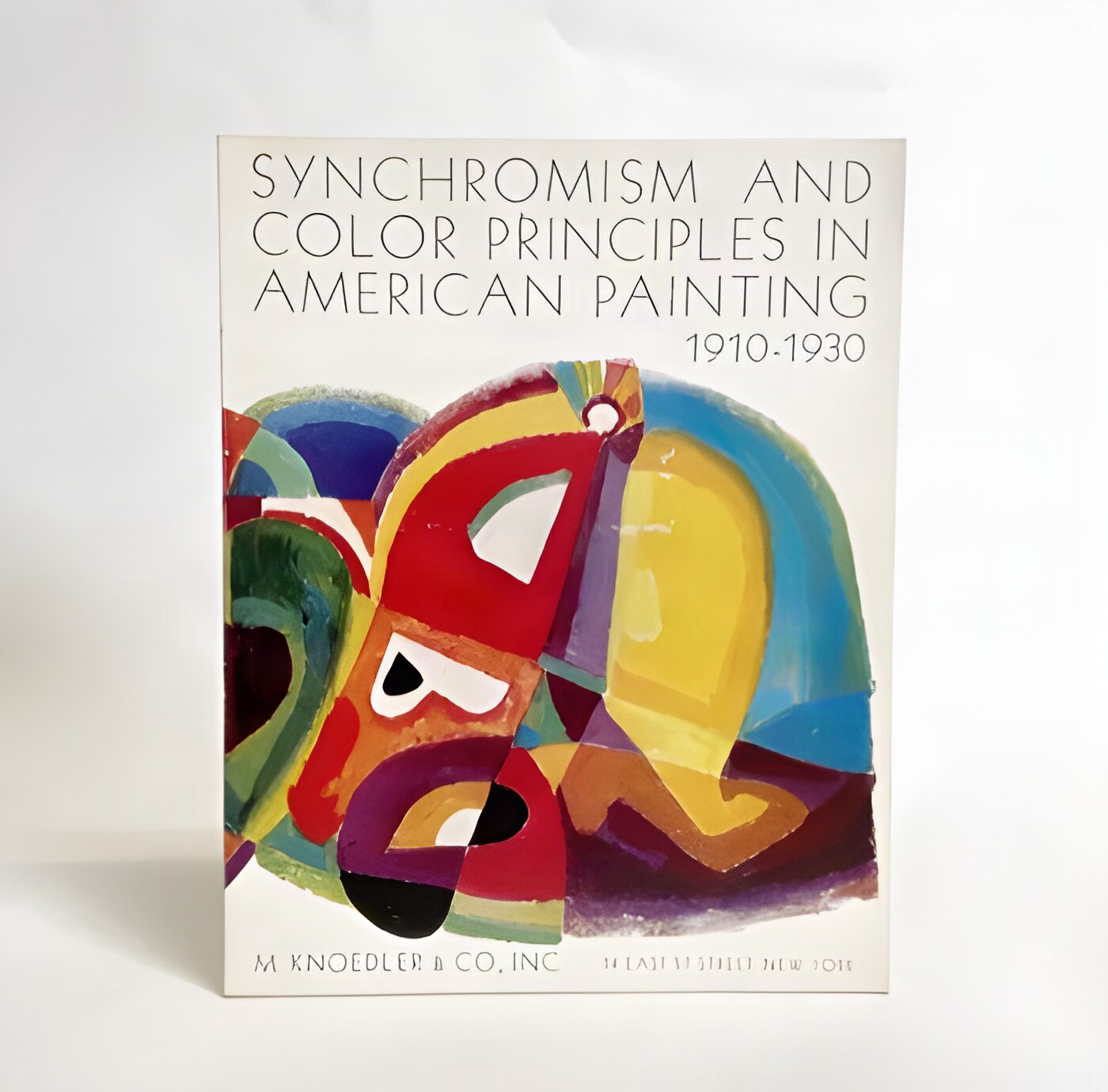
Softcover. NY, M. Knoedler & Co., 1st, 1965, Book: Very Good, Dust Jacket: None, Softcover, stapled wrappers, 53 pages illustrated in color and b&w. Published on the occasion of the exhibition held from October 12-November 6, 1965 featuring works by Patrick Henry Bruce, Joseph Stella, Morgan Russell, Andrew Dasburg, and others. Clean copy.
Hardcover. Chicago, University of Chicago Press;, 1st, 2002, Book: Very Good, Dust Jacket: None, Hardcover, 272 pages. One of Chicago's great cultural achievements, the Institute of Design was among the most important schools of photography in twentieth-century America. It began as an outpost of experimental Bauhaus education and was home to an astonishing group of influential teachers and students, including Lazlo Moholy-Nagy, Harry Callahan, and Aaron Siskind. To date, however, the ID's enormous contributions to the art and practice of photography have gone largely unexplored. Taken by Design is the first publication to examine thoroughly this remarkable institution and its lasting impact. With nearly 300 illustrations, including many never-before published photographs, Taken by Design examines the changing nature of photography over this critical period in America's midcentury. It starts by documenting the experimental nature of Moholy's Bauhaus approach and photography's new and enhanced role in training the "complete designer." Next it traces the formal and abstract camera experiments under Harry Callahan and Aaron Siskind, which aimed at achieving a new kind of photographic subjectivity. Finally, it highlights the ID's focus on conscious references to the processes of the photographic medium itself. In addition to photographs by Moholy, Callahan, and Siskind, the book showcases works by Barbara Crane, Yasuhiro Ishimoto, Joseph Jachna, Kenneth Josephson, Gyorgy Kepes, Nathan Lerner, Ray K. Metzker, Richard Nickel, Arthur Siegel, Art Sinsabaugh, and many others. Major essays from experts in the field, biographies, a chronology, and reprints of critical essays are also included, making Taken by Design an essential work for anyone interested in the history of American photography.
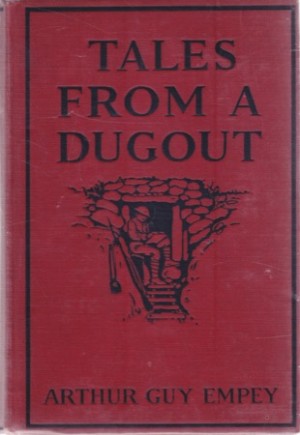
Hardcover. NY, Century Co., 1st, 1918, Book: Very Good, Dust Jacket: None, Hardcover, red cloth with black lettering and decoration on spine and front board. The author's reminiscences of time in the trenches during World War I. An American serving at the time with British 'Tommies', he also wrote 'Over the Top' and other books about his experiences. Front fly leaf missing, book opens to half title page, otherwise a clean, tight copy.
Hardcover. New York, Bloomsbury USA, 1st US, 2004, Book: Very Good, Dust Jacket: Very Good, Hardcover, 296 pages. Clean, unmarked copy with only minor wear to dust jacket.


 "Still Movingby: Higgins, Steven")
 "Stories of Richard Bausch, Theby: Bausch, Richard")
 "Story of American Toys, Theby: O'Brien, Richard")


 "Stow Wengenroth's Lithographs: A Supplementby: Stuckey, Ronald, Joan")
 "Striptease: From Gaslight To Spotlightby: Glasscock, Jessica")
 "Stuart Davis by: Sweeney, James Johnson")
 "Stuart Davis: In Full Swingby: Cooper, Harry")
 "Stuart Davisby: Kelder, Diane")
 "Stuart Hawkins: Blue Eyesby: Hawkins Stuart and Joel Sternfeld")
 "Stuart Hawkins: Blue Eyesby: Hawkins Stuart and Joel Sternfeld")
![Studs Lonigan: A Trilogy Containing Young Lonigan, The Young Manhood Of Studs Lonigan,[and] Judgment Day by: Farrell, James T.](https://www.browsingisarousing.com/shop/images/Studs-Lonigan-A-Trilogy-Containing-Young-Lonigan-The-Young-Manhood-Of-Studs-Loniganand-Judgment-Day_398197-451356.jpg "Studs Lonigan: A Trilogy Containing Young Lonigan, The Young Manhood Of Studs Lonigan,[and] Judgment Day by: Farrell, James T.")
 "Sundays with Walt and Skeezix by: King, Frank, Editor: Maresca, Peter, Introduction: Ware, Chris, Introduction: Heer, Jeet")


 "Sunlight & Shadow: The Life and Art of Willard L. Metcalfby: de Veer, Elizabeth and Richard J. Boyle")
 "Superman: The Golden Age Sundays 1943-1946 (Superman Golden Age Sundays, Band 1)by: Boring, Wayne")
 "Supermen!: The First Wave Of Comic Book Heroes 1936-1941by: Sadowski, Greg")
 "Superrealist Painting & Sculptureby: Lindey, Christine")
 "Surrealism in Latin Americaby: Eder, Graciela Speranza Dawn Ades Rita")
 "Tales to Astonish: Jack Kirby, Stan Lee, and the American Comic Book Revolutionby: Ro, Ronin")