Hardcover. NY, Super Genius, 1st, 2018, Book: Very Good, Dust Jacket: None, Hardcover, pictorial boards, 180 pages. Everyone knows Superman, but not everyone knows the story of two youngsters from Cleveland who created Superman. Based on archival material and original sources, "Truth, Justice, and the American Way: The Joe Shuster Story" tells the story of the friendship between writer Jerry Siegel and illustrator Joe Shuster, and puts it into the wider context of the American comicbook industry. Told in graphic novel format in color.
Hardcover. Seattle, Fantagraphics, 1st, 2023, Book: Very Good, Dust Jacket: None, Hardcover, pictorial boards, 484 pages illustrated in color. In the 1950s, between his legendary EC work and his celebrated Marvel comics, John Severin joined with Mad artist Will Elder and Two-Fisted Tales writer Colin Dawkins to introduce a new level of historical accuracy to the comic-book Western. While Native Americans had generally been vilified or left in the shadows of gun-slinging cowboy heroes, the American Eagle stories featured in Prize Comics Western were built around action-packed tribal intrigues and a heroic Crow warrior. Collected here for the first time are all of the American Eagle stories drawn by Severin from Prize Comics Western #85-#113. Plus Severin-drawn stories featuring The Fargo Kid, Black Bull and The Lazo Kid. More than 55 exciting, gorgeous, Western tales of bullets vs. arrows, stampedes, tribal warfare, prospectors, buffalo hunters, broken treaties, gun battles, cavalry charges, wagon trains, and warriors on horseback. Thanks to Severin's famously exacting art, you'll be able to smell the leather and gunpowder. With commentary by comics historian Howard Leroy Davis. Clean, bright copy.
Softcover. Santa Fe, Museum of New Mexico Press, 1st revised, 2003, Book: Very Good, Dust Jacket: None, Softcover, pages. Maria, the potter of San Ildefonso (1887-1981), is not only the most famous of Pueblo Indian potters but ranks among the best of international potters. Her work Is collected and exhibited around the world, and more than any other artist, Maria Martinez brought "signatures" to Indian art. She and other members of her family revived a dying art form and kindled a renaissance in pottery for all the Pueblos. She raised this regional art to one of international acclaim. This lavishly illustrated book draws from Spivey's 1979 classic work. Featuring entirely new photography and 120 added pots as well as a significantly expanded text, this volume considers the entirety of this artist's immense oeuvre and important works and developments in her collaboration with Julian, and after his death, with her daughter-in-law Santana, son Popovi Da, and grandson Tony Da, bringing the legacy of Maria into the bright future of Pueblo ceramics.
NY, Random House, 1st, 2013, Book: Very Good, Dust Jacket: Very Good, Hardcover in a bright, unclipped dust jacket. An advisor to presidents, two-time Pulitzer Prize winner, and tireless champion of progressive government, Arthur Schlesinger, Jr., was also an inveterate letter writer. Indeed, the term "man of letters" could easily have been coined for Schlesinger, a faithful and prolific correspondent whose wide range of associates included powerful public officials, notable literary figures, prominent journalists, Hollywood celebrities, and distinguished fellow scholars. The Letters of Arthur Schlesinger, Jr. reveals the late historian's unvarnished views on the great issues and personalities of his time, from the dawn of the Cold War to the aftermath of September 11. Here is Schlesinger's correspondence with such icons of American statecraft as Harry Truman, Adlai Stevenson, Hubert Humphrey, Henry Kissinger, Bill Clinton, and, of course, John and Robert Kennedy (including a detailed critique of JFK's manuscript for Profiles in Courage). There are letters to friends and confidants such as Eleanor Roosevelt, John Kenneth Galbraith, Gore Vidal, William Styron, and Jacqueline Kennedy (to whom Schlesinger sends his handwritten condolences in the hours after her husband's assassination), and exchanges with such unlikely pen pals as Groucho Marx, Sammy Davis, Jr., and Bianca Jagger. Finally, there are Schlesinger's many thoughtful replies to the inquiries of ordinary citizens, in which he offers his observations on influences, issues of the day, and the craft of writing history.
Hardcover. Cambridge MA, privately printed, 1st, 1936, Book: Very Good, Dust Jacket: None, Hardcover, brown boards with gilt lettering, black cloth spine. INSCRIBED BY AUTHOR WHITE on the front fly leaf, dated 1966. Joseph Frank Currier (1843-1909) was an American artist who spent most of his career working in Germany. Illustrated with 62 black and white plates. Clean copy.
Hardcover. University of Nebraska Press, 1st, 2017, Book: Very Good, Dust Jacket: Very Good, Hardcover, 592 pages. Ring Lardner's influence on American letters is arguably greater than that of any other American writer in the early part of the twentieth century. Lauded by critics and the public for his groundbreaking short stories, Lardner was also the country's best-known journalist in the 1920s and early 1930s, when his voice was all but inescapable in American newspapers and magazines. Lardner's trenchant, observant, sly, and cynical writing style, along with a deep understanding of human foibles, made his articles wonderfully readable and his words resonate to this day. Ron Rapoport has gathered the best of Lardner's journalism from his earliest days at the South Bend Times through his years at the Chicago Tribune and his weekly column for the Bell Syndicate, which appeared in 150 newspapers and reached eight million readers. In these columns Lardner not only covered the great sporting events of the era--from Jack Dempsey's fights to the World Series and even an America's Cup--he also wrote about politics, war, and Prohibition, as well as parodies, poems, and penetrating observations on American life.
Lebanon NH, University of New Hampshire Press, 1st, 2005, Book: Very Good, Dust Jacket: Very Good, Hardcover in a bright dust jacket. 294 pages, b&w illustrations. Presents a succinct, articulate examination of the work of the pioneering but controversial archaeologist Roland Wells Robbins (1908-1987) and the development of historical archaelogy in America. In 1945, the self-taught Robbins discovered the remains of Thoreau's cabin at Walden Pond. He excavated the site, documented his findings, and in 1947 published a short book, Discovery at Walden, about the experience. This project launched Robbins's career in archaeology, restoration, and reconstruction, and he went on to excavate at a number of New England iron works and other sites, including the Philipsburg Manor Upper Mills in New York, Stawbery Banke in New Hampshire, and Shadwell, Thomas Jefferson's Virginia birthplace. Although lacking academic training, Robbins quickly developed remarkably sophisticated techniques for the period. However, his "pick and shovel" methods were considered suspect and increasingly frowned upon by the emerging American historical archaeological establishment. Clean copy.
Hardcover. Brooklyn NY, Handprint, 1st, 2001, Book: Very Good, Dust Jacket: None, Hardcover with illustrated boards, 40 pages. n his magnificent interpretation of Henry Wadsworth Longfellow s poem, Christopher Bing seamlessly weaves history and imagination into a rich portrait of an American hero. A meticulous researcher, Bing includes material that provides texture to history, maps that follow the British campaign to quell the rebellious citizenry, as well as the patriot s ride into the Massachusetts night of April, 1775. Documents firmly affixed into the book, including the British general s orders to his troops and Revere s own deposition relating the events, give the reader not only a visual experience but a tactile one as well. Far more than a brilliantly presented history lesson, this book represents a tour de force of coherent artistic vision. In an extraordinary series of rich and moody engravings, from the mysteriously shimmering rigging of the British sloop, The Somerset, looming in a moonlit Boston harbor to the taut urgency of a man and his horse galloping at a combustible moment in the American experience, this book illuminates our country s past unlike any other. Small inscription on inside front cover, otherwise clean.
Hardcover. Center for American Places, 1st, 2005, Book: Very Good, Dust Jacket: Very Good, Hardcover, 232 pages. The Mississippi River flows through American history and culture as a mythic waterway brimming with tragedy and hope, and awash in passionate ambitions and harsh realities. In 1953, a young Charles Dee Sharp traveled twice down the Mississippi (first by towboat and then by car along the renowned river road Highway 61) to make a documentary film of it, taking black-and-white photographs of the river, its communities, and its people. While Sharp's documentary never came to fruition, the striking images he captured survived as moving and evocative historical testaments to a lost era, now collected in his new book The Mississippi in 1953. These images create a vivid portrait of America's heartland a half century ago, and they are enriched with excerpts from Sharp's original trip journal, intriguing anecdotes from the people he encountered along his journey, and an engaging environmental history of the river by historian John O. Anfinson. The Mississippi in 1953 offers an original and poignant look at the living artery of the American landscape and how it molded the United States into the nation it is today.
Hardcover. University of Nebraska Press, 1st, 2016, Book: Very Good, Dust Jacket: Very Good, Hardcover, 512 pages. Historians, biographers, and scholars of John James Audubon and natural history have long been mystified by Audubon's 1843 Missouri River expedition, for his journals of the trip were thought to have been destroyed by his granddaughter Maria Rebecca Audubon. Daniel Patterson is the first scholar to locate and assemble three important fragments of the 1843 Missouri River journals, and here he offers a stunning transcription and critical edition of Audubon's last journey through the American West. Patterson's new edition of the journals--unknown to Audubon scholars and fans--offers a significantly different understanding of the very core of Audubon's life and work. Readers will be introduced to a more authentic Audubon, one who was concerned about the disappearance of America's wild animal species and yet also loved to hunt and display his prowess in the wilderness. This edition reveals that Audubon's famous late conversion to conservationism on this expedition was, in fact, a literary fiction. Maria Rebecca Audubon created this myth when she rewrote her grandfather's journals for publication to make him into a visionary conservationist. In reality the journals detail almost gratuitous hunting predations throughout the course of Audubon's last expedition.
Hardcover. Algonquin Books, 1st, 2015, Book: Very Good, Dust Jacket: Very Good, Hardcover in a bright, unclipped dust jacket. SIGNED BY AUTHOR on title page. When Alizee Benoit, a young American painter working for the Works Progress Administration (WPA), vanishes in New York City in 1940, no one knows what happened to her. Not her Jewish family living in German-occupied France. Not her arts patron and political compatriot, Eleanor Roosevelt. Not her close-knit group of friends and fellow WPA painters, including Mark Rothko, Jackson Pollock, and Lee Krasner. And, some seventy years later, not her great-niece, Danielle Abrams, who, while working at Christie's auction house, uncovers enigmatic paintings hidden behind works by those now famous Abstract Expressionist artists. Do they hold answers to the questions surrounding her missing aunt? Entwining the lives of both historical and fictional characters, and moving between the past and the present, The Muralist plunges readers into the divisiveness of prewar politics and the largely forgotten plight of European refugees refused entrance to the United States. It captures both the inner workings of New York's art scene and the beginnings of the vibrant and quintessentially American school of Abstract Expressionism.
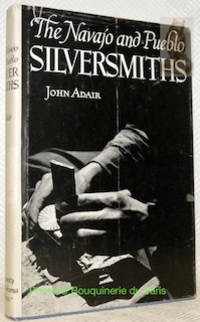
Hardcover. Norman OK, University of Oklahoma Press, 8th pr., 1970, Book: Very Good, Dust Jacket: Very Good, Hardcover in a lightly worn dust jacket, 220 pages with black & white illustrations. A thorough study of the art of the Indian silversmiths of the Southwest. Includes the history of the craft as well as names and localities of pioneer artisans. Bookplate on inside front cover, otherwise clean.
Hardcover. US, Smithsonian Books, 1st, 2004, Book: Very Good, Dust Jacket: Very Good, 397 pages, illustrated throughout in color and b&w. Clean, unmarked copy with only minor wear to dust jacket. A panorama of some of the most creative and subversive art of our times, this one-of-a-kind anthology celebrates the artistry and insight of comic book art, graphic novels, and graphic journalism from the 1960s to the present. Classics such as R. Crumb's I Remember the Sixties, Stan Lee and Steve Ditko's Spider-Man saga "The Final Chapter," and Dan Clowes's Caricature are featured, plus new sequences of work by Chris Ware and Ben Katchor created exclusively for this volume. The book is divided into four main galleries: Underground Comics, Silver Age Super Heroes, A Raw Generation, and Dark Fiction and Deep Fantasy, and includes a special supplement of four-color work by Lynda Barry and others as well. In his lively introduction, Bob Callahan celebrates the achievements of American comic book art from the late 1930s to the present.
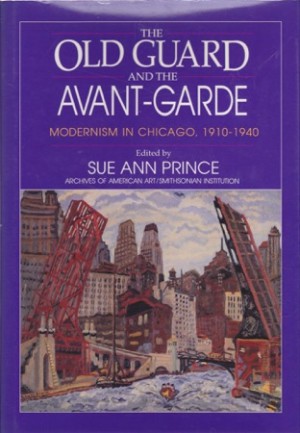
Hardcover. Chicago, University Of Chicago Press, 1st, 1990, Book: Very Good, Dust Jacket: Very Good, Hardcover in a bright dust jacket, 280 pages. This American art history book explores the early cultural development of the movement in Chicago, pulling from previously unpublished primary sources. 20 color reproductions along with black and white photographs and sketches and a timeline in the back. First study of Modernism in Chicago, examining the struggle between the "old guard's" ideals of traditional 19th century art versus an "avant garde" of painters, illustrators, photographers, and sculptors. Focuses on the cultural context in which art evolved. Clean copy.
Hardcover. Chicago, University of Chicago Press, 1st, 2017, Book: Very Good, Dust Jacket: Very Good, Hardcover in a bright dust jacket, 541 pages. b&w illustrations. As Joel Dinerstein reveals in this book, cool began as a stylish defiance of racism, a challenge to suppressed sexuality, a philosophy of individual rebellion, and a youthful search for social change. Through portraits of iconic figures, Dinerstein illuminates the cultural connections and artistic innovations among Lester Young, Humphrey Bogart, Robert Mitchum, Billie Holiday, Frank Sinatra, Jack Kerouac, Albert Camus, Marlon Brando, and James Dean, among others. We eavesdrop on conversations among John-Paul Sartre, Simone De Beauvoir, and Miles Davis, and on a forgotten debate between Lorraine Hansberry and Norman Mailer over the 'white negro' and Black cool. We come to understand how the cool worlds of Beat writers and Method actors emerged from the intersections of film noir, jazz, and existentialism. Clean copy.
Hardcover. Rutland VT, Charles E. Tuttle Co., 1st, 1971, Book: Very Good, Dust Jacket: Very Good, Hardcover, color frontis, many black & white photos. 252 pages + index. Previous owner's signature front fly leaf, dj with spine fading otherwise VG/VG. A publication of The Historical Society of Early American Decoration, Inc. Based on Esther Stevens Brazer's Photographic Collection.
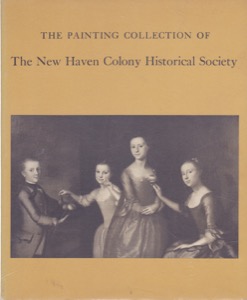
Softcover. New Haven, New Haven Colony Historical Society, 1st, 1971, Book: Very Good, Dust Jacket: None, Softcover, 100 pages in color illustrated wrappers. 45 b&w illustrations from a catalogue of 227 works in the collection. Preface by Robert R. MacDonald. Clean, tight copy
Hardcover. Middletown CT, Wesleyan University Press, 1st, 1976, Book: Very Good, Dust Jacket: Very Good, Hardcover in a bright dust jacket, 180 pages illustrated in b&w, some color. The life & work of a 19th century American folk artist Brings together for the first time all of Stock's extant papers-his will, one lengthy letter to his brother, various newspaper notices concerning him, and his remarkable journal written sometime after 1846. In addition, it includes reproductions of all known surviving Stock paintings. Clean copy.
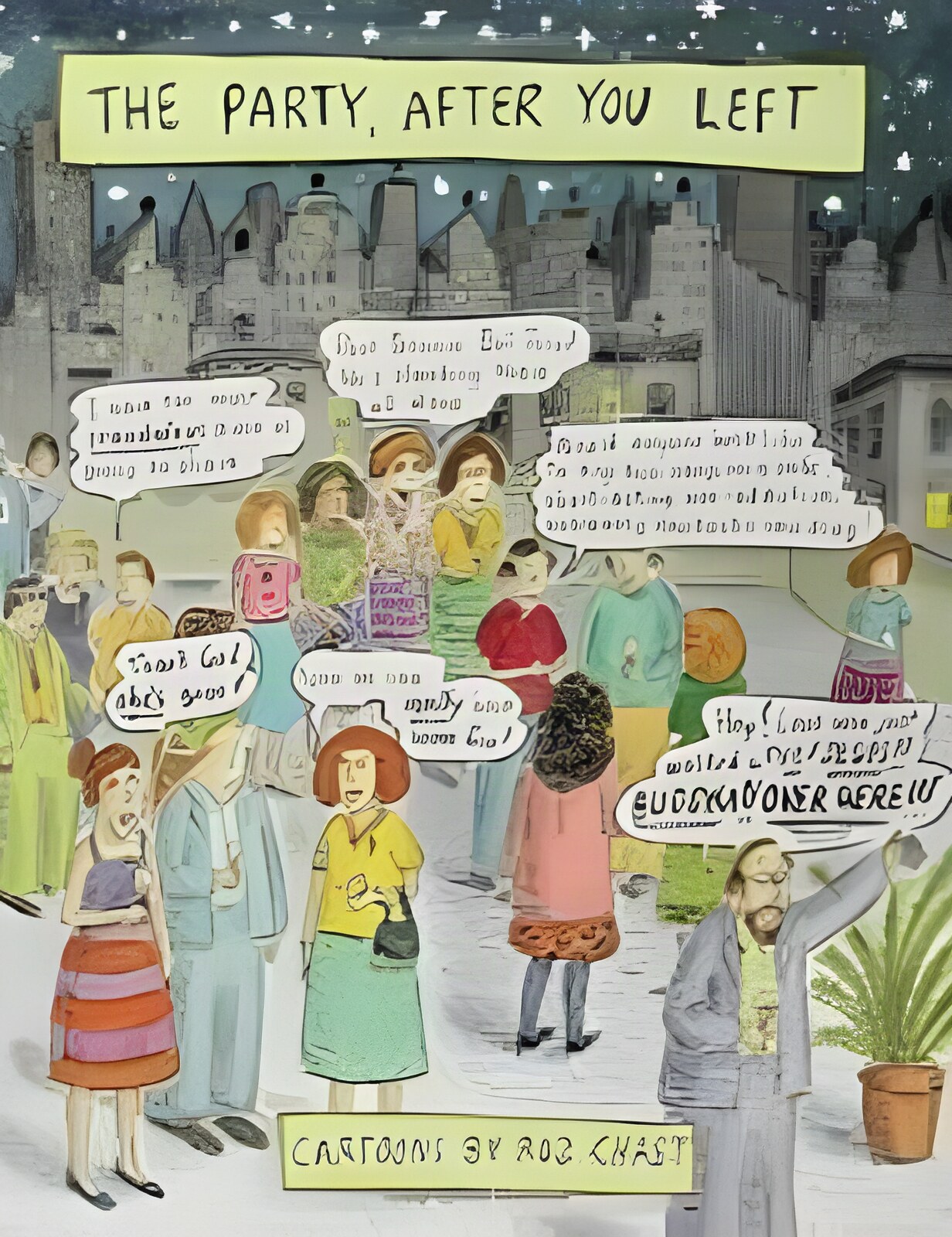
Hardcover. NY, Bloomsbury USA, 1st, 2004, Book: Very Good, Dust Jacket: Very Good, 96 pages. Clean, unmarked copy with only minor wear to dust jacket. Readers can't get enough of Roz Chast. Together, these cartoons, which originally appeared in The New Yorker, Scientific American, Redbook, and other publications, constitute a spot-on record of our increasingly absurd existence. The book is a powerful reminder of how lucky we are to have Roz Chast among us to tackle some of the toughest themes of the times with uproarious humor: genetically altered mice, birthday parties from hell, and comfort drinks in the age of insecurity.
Hardcover. NY, John Wiley & Sons , 1st, 2003, Book: Very Good, Dust Jacket: Very Good, Hardcover in a bright dust jacket, 170 pages, color illustrations. n The Passionate Collector: Eighty Years in the World of Art, you'll follow this fascinating financial figure and great patron of the arts from the streets of 1920s Paris to the museums of New York as he develops the eye of a connoisseur and begins to collect great contemporary art. Vivid detail puts you in the center of the action as Neuberger collects the brilliant artists of his time-Milton Avery, Jackson Pollock, Ben Shahn, Edward Hopper; works with legendary art dealers Paul Rosenberg, Betty Parsons, Sidney Janis, and Leo Castelli; and befriends avid collectors, including the incomparable Duncan Phillips. You'll follow Neuberger as he strives to further the cause of contemporary American artists by exhibiting, lending, and donating from his growing collection, and becoming an activist for the Metropolitan Museum of Art, the Museum of Modern Art, and the Whitney. You'll also see how the Neuberger Museum of Art was created at the urging of Governor Nelson Rockefeller, and how it continues to fascinate art enthusiasts today. Clean copy.
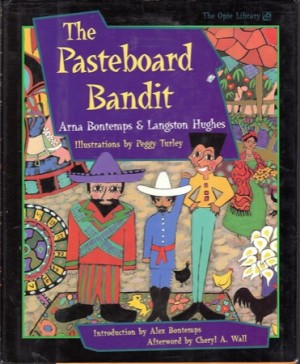
Hardcover. NY, Oxford University Press, 1st, 1997, Book: Very Good, Dust Jacket: Very Good, Hardcover in a bright, unclipped dust jacket. 94 pages, color illustrations by Peggy Turley. In this delightful children's tale, an American boy, Kenny Strange, moves to the quiet Mexican town of Taxco with his parents and strikes up a friendship with young Juanito Perez, a Taxco native. The two boys are brought together by an enchanting toy, the pasteboard bandit Tito. Chosen by Juanito at a town fair from among the other pasteboard toys, Tito, with his colorful clothes and bright eyes, becomes Juanito's and Kenny's constant companion, and the threesome share many adventures in and around the town's rolling green hills. The boys' growing friendship, Kenny's introduction to a culture unlike his own, and Tito's witty reflections on being a toy will be recognized instantly by anyone young or old who has ever made a friend or imagined that a toy might be real. Originally written in 1935, but never before published, The Pasteboard Bandit grew out of several trips Langston Hughes made to Mexico during his lifetime. Hughes first went to the town of Toluca at age 5 to visit his father, and again when he was older. During these visits, Hughes met many writers and artists, and it is their influence that informs the story of The Pasteboard Bandit--a story of two cultures meeting. When Hughes left Mexico for the last time, at age 32, he was carrying the first draft for The Pasteboard Bandit. Clean copy.
Hardcover. NY, The Monacelli Press, 1st, 2008, Book: Very Good, Dust Jacket: None, Hardcover, 208 pages. Debate and banter between the irascible Philip Johnson and the equally articulate and opinionated Robert A. M. Stern generates a provocative combination of astute commentary and personal observation on the state of architecture in the twentieth century. Philip Johnson's multifaceted career as an architect, curator, and collector extended from the early 1920s to his death in 2005. Captivated by the work of the European modernists Gropius, Le Corbusier, and Mies van der Rohe, Johnson assembled the seminal exhibition "Modern Architecture--International Exhibition" at the Museum of Modern Art in 1932. Among his most notable achievements are the famous Glass House in Connecticut, designed for his own use, and the Seagram Building in New York, in association with Mies van der Rohe. Recognized as the dean of American architecture, Johnson had a profound influence on the next generation of architects, including Robert A. M. Stern. Stern has conducted a series of ten interviews with Johnson, each covering a decade of his life, that provide an illuminating assessment of a significant period of American architecture. No dj issued.
Hardcover. Boston, Bulfinch Press, 1st, 2002, Book: Very Good, Dust Jacket: Very Good, Hardcover in a bright dust jacket, 224 pages. Essays by leading authorities on the artist's work accompany a stunning collection of nearly two hundred photographs by modernist American photographer Charles Sheeler, offering a landmark retrospective of of the work of the influential master of twentieth-century photography. Sheeler visited Europe in 1929 and an important part of this trip was to photograph Chartres Cathedral, he called it "...one of the outstanding experiences of a lifetime". The book includes thirteen beautiful shots of the Cathedral and they look remarkably like his photos of the Ford Motor Rouge River blast furnaces and other exterior bits of the industrial plant which he took in 1927. After 1929 Sheeler concentrated on his paintings. The photos in the book for this period: 1929 to 1939, include house interiors and several for his Power series. One of these, the wheels of a Hudson steam loco was the basis of his famous super realist 1939 painting 'Rolling Power'. The images in the book are taken from Lane Collection, of the Museum of Fine Art, Boston, who own the Sheeler photographic estate and the book was originally published in conjunction with exhibitions in 2003/4. The 190 photos are printed as tritones with a 250 screen. Clean, bright copy. DOMESTIC SHIPPING ONLY.
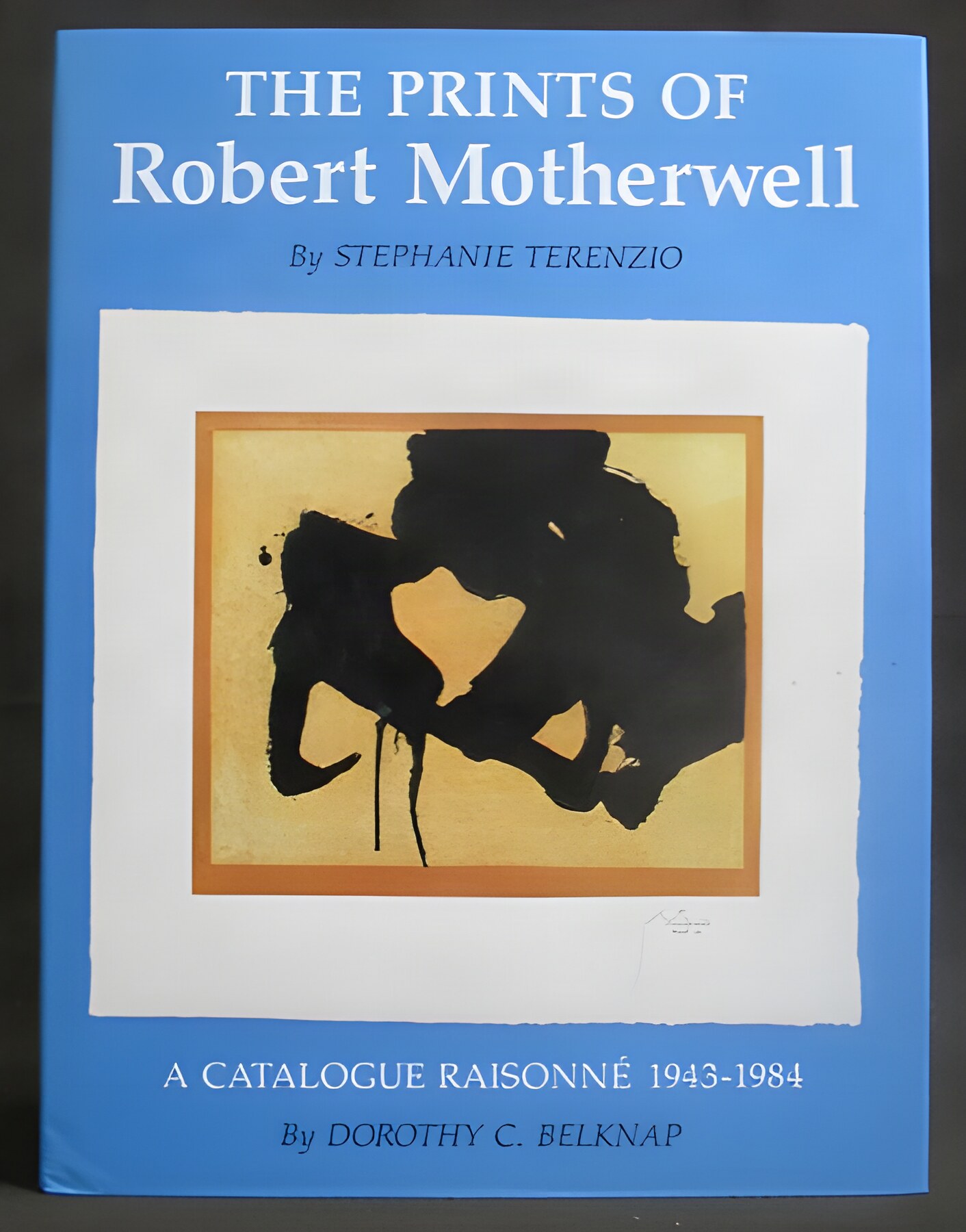
Hardcover. NY, Hudson Hills Press, 1st, 1984, Book: Very Good, Dust Jacket: Very Good, Hardcover in a bright dust jacket, 304 pages. 243 color and 181 duo-tone illustrations. Extensive bibliography included at the back. Showcases these works by American artist Robert Motherwell (1915-1991). "Provides a definitive study of the artist's work as a printmaker. It includes a catalogue raisonne of all his graphic work from 1943 through 1984, covering nearly 350 prints in virtually every medium: engraving, lithography, silkscreen, etching, aquatint, mezzotint, monotype, collage, and others. Each work is documented and reproduced, more than 200 of them in full color." Clean copy.

 "The Legacy of Maria Poveka Martinezby: Richard L. Spivey , Maria Montoya Martinez, et al.")
 "The Letters of Arthur Schlesinger, Jr. by: Arthur Schlesinger Jr. Andrew Schlesinger (Editor)")
 "The Lost Journalism of Ring Lardnerby: Ring Lardner, Ron Rapoport , et al.")
 "The Man Who Found Thoreau: Roland W. Robbins and the Rise of Historical Archaeology in America by: Donald W. Linebaugh")
 "The Midnight Ride of Paul Revereby: Henry Wadsworth Longfellow / Christopher Bing (Illust.)")


 "The Mississippi River in 1953: A Photographic Journey from the Headwaters to the Deltaby: Sharp, Charles Dee")
 "The Missouri River Journals of John James Audubonby: John James Audubon and Daniel Patterson")
 "The Muralist: A Novel (SIGNED COPY)by: B.A. Shapiro")
 "The New Smithsonian Book of Comic Book Stories: From Crumb to Clowesby: Callahan, Bob")

 "The Ornamented Tray: Two Centuries of Ornamented Trays (1720-1920)by: Lea, Zilla Rider (editor)")

 "The Passionate Collector: Eighty Years in the World of Artby: Neuberger, Roy/with Alfred and Roma Connable")
 "The Philip Johnson Tapes: Interviews by Robert A. M. Sternby: Robert A.M. Stern")