Hardcover. Auburn, WA, Brigham Young University, 1st, 1974, Book: Very Good, Dust Jacket: Good, 237 pages. Hardcover. Illustrated with full color and black & white examples of paintings by Maynard Dixon. Faint damp smell. Small areas of abrasion to front cover of dust jacket, minor staining along bottom edge of jacket - jacket now protected with clear plastic cover. Clean, unmarked pages.
Hardcover. NY, McSweeney's, 1st, 2004, Book: Very Good, Dust Jacket: Very Good, Hardcover, 263 pages. Guest-editing Dave Eggers's literary journal, Jimmy Corrigan cartoonist Ware has assembled a beautifully designed anthology of contemporary art comics, with a few vintage treats thrown in, including an excerpt from "Obadiah Oldbuck"--an 1842 publication that's arguably the first American comic book--and a series of very rough sketches by Charles Schulz. A few pieces have recently been published elsewhere (including excerpts from Mark Beyer's loopy, design-heavy Amy and Jordan and Joe Sacco's comics essay on Sarajevo, The Fixer), but the book is a superb introduction to the best American cartoonists working today. Some of them, including Richard McGuire and Mark Newgarden, haven't published much since the heyday of RAW in the late 1980s and early '90s; others, like Lynda Barry and Jaime and Gilbert Hernandez, are prolific creators at the top of their form. As Ira Glass points out in his introduction, Ware seems to believe cartooning gets no respect at all, and his McSweeney's is a passionate defense of the medium. Ware has included work by artists with an impressively varied range of visual styles and narrative techniques. And Ware's own contribution is brilliant: the book's cover unfolds into a gigantic "comics supplement" of his bitter little cartoons, with extra, tiny comic books by Ron Rege Jr. and John Porcellino tucked into its folds.
Hardcover. US, McSweeney's, 1st, 2004, Book: Very Good, Dust Jacket: Very Good, Hardcover, 263 pages, illustrated throughout in color and b&w. Clean, unmarked copy in excellent condition. Focus of Vol. 13 is on comic art. Preface by Ira Glass. Introduction by Chris Ware. Work by scores of artists from R. Crumb to Rodolphe Topffer (considered the creator of the comic strip and graphic novel). DJ is a broadside decorated with comics with minor shelf wear. Reverse side of broadside has descriptions of contributing artists along with strips of comic art.
Softcover. Tuscaloosa, University of Alabama Press, 1st, 1999, Book: Very Good, Dust Jacket: None, Softcover. This collection of Ford's works focuses on the development of ceramic chronology-a key tool in Americanist archaeology. When James Ford began archaeological fieldwork in 1927, scholars divided time simply into prehistory and history. Though certainly influenced by his colleagues, Ford devoted his life to establishing a chronology for prehistory based on ceramic types, and today he deserves credit for bringing chronological order to the vast archaeological record of the Mississippi Valley. This book collects Ford's seminal writings showing the importance of pottery styles in dating sites, population movements, and cultures. These works defined the development of ceramic chronology that culminated in the major volume Archaeological Survey in the Lower Mississippi Alluvial Valley, 1940-1947, which Ford wrote with Philip Phillips and James B. Griffin. In addition to Ford's early writings, the collection includes articles written with Griffin and Gordon Willey, as well as other key papers by Henry Collins and Fred Kniffen. Clean copy in publisher's shrinkwrap.
Hardcover. NY, Random House, 1st, 1965, Book: Very Good, Dust Jacket: Very Good, Hardcover in a bright, lightly worn dust jacket. A brief survey of life in five North American Indian tribes--Makah, Hopi, Creek, Penobscot, and Mandan--at the time Columbus arrived in the New World. Nice 2-color drawings by Mad artist Jack Davis. Clean copy.
Softcover. NY, Paula Cooper Gallery, 1st, 2016, Book: Very Good, Dust Jacket: None, Softcover, wire binding, 50 pages. Color illustrations. Scarce. Meg Webster is an American artist from San Francisco working primarily in sculpture and installation art. While her works span multiple media, she is most well known for her artworks that feature natural elements.
Softcover. New York, National Museum of American Art, 1st wraps, 1994, Book: Very Good, Dust Jacket: None, 100 pages. Softcover with light wear to paper wrappers. B&W photos by Arndt. Clean, tight copy.
Hardcover. Taschen, 1st, 2008, Book: Very Good, Dust Jacket: Very Good, Hardcover in a bright dust jacket. 352 pages. Paying homage to the American periodicals of the 1950s, 1960s, and 1970s that documented outrageous exploits, this hefty, comprehensive guide is packed full of colorful cover art, sumptuous sample spreads, and enlightening essays.
Hardcover. NY, Simon & Schuster , 2nd pr., 1953, Book: Very Good, Dust Jacket: Very Good, Hardcover in a bright dustjacket, Illustrated wth 12 b/w cartoons by George Price. A wry and witty history of the American motion picture by a giant of the industry. Postcard of Brown Derby Restaurant laid-in.
Hardcover. New York, National Museum of American Art/W. W. Norton, 1st, 1995, Book: Near Fine, Dust Jacket: Near Fine, Hardcover, 256 pages, illustrated throughout in color and b&w. Cloth, pictorial dust jacket. Lower edges lightly sunned, else a beautiful copy. Still in shrinkwrap,
Hardcover. NY, William Lewer, 1st, 1838, Book: Very Good, Dust Jacket: None, Hardcover, bound in 3/4 leather with marbled boards, black calf spine labels with gilt lettering, 396 pages, American Edition noted on title page; its London parent, "The Metropolitan: A monthly journal of literature, science, and the fine arts" was a London monthly journal established by Thomas Campbell in 1831 and continued, under various editors, until 1850. Clean bright copy.
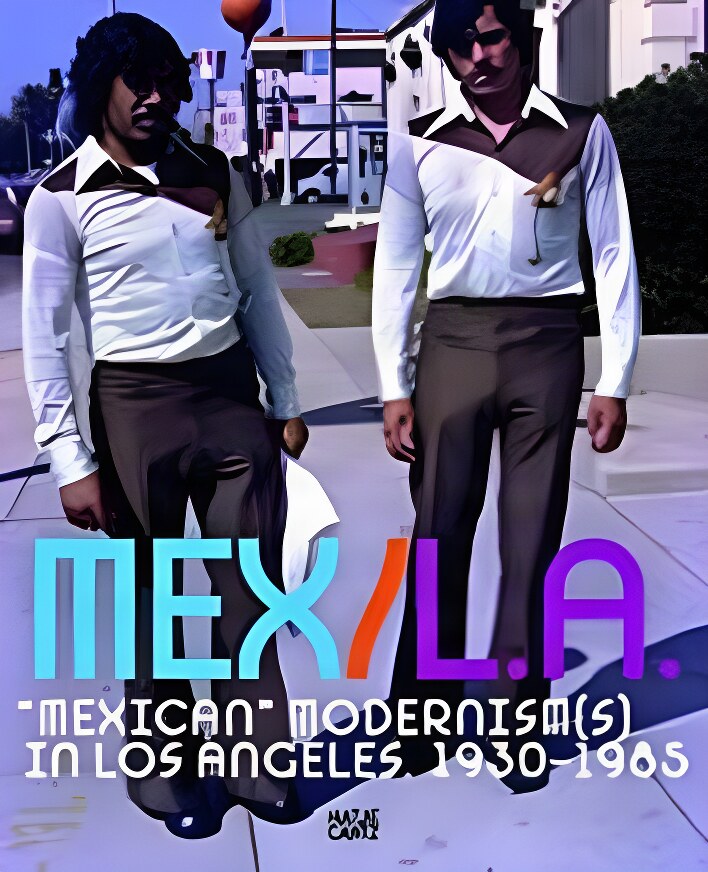
Hardcover. Hatje Cantz, 1st, 2011, Book: Very Good, Dust Jacket: Very Good, Hardcover, 224 pages. The years from 1945 to 1985 are often identified as the moment in which Los Angeles established itself as a leading cultural center in America. However, this conception of its history entirely excludes the very controversial presence of the Mexican muralists, as well as the work of other artists who were influenced by them and responded to their ideas. It is likewise often thought that Los Angeles' Mexican culture arrived full formed from outside it, when in fact that culture originated within the city--it was in Los Angeles and Southern California that Jose Vasconcelos, Ricardo Flores Magon, Octavio Paz and other intellectuals developed the iconography of modern Mexico, while Anglos and Chicanos were developing their own. David Alfaro Siqueiros, Clemente Orozco, Alfredo Ramos Martinez and Jean Charlot made some of their earliest murals in Los Angeles, influencing the Mexican, Mexican-American and Chicano artists of the 1970s and 80s. MEX/LA: Mexican Modernism(s) in Los Angeles 1930-1985 focuses on the construction of different notions of "Mexicanidad" within modernist and contemporary art created in Los Angeles. From the Olvera Street mural by Siqueiros, to the Golden Age of Mexican cinema and the Disney silver-screen productions, to the revitalization of the street mural, up to the performance art of Guillermo Gomez-Pena, MEX/LA explores the bi-national and hybrid forms of artistic practices, popular culture and mass-media arts that have so uniquely shaped Los Angeles' cultural panorama.
Hardcover. New York, Aperture, 1st, 2003, Book: Near Fine, Dust Jacket: Near Fine, 220 pages, 155 b&w photographs by Casasola. Edited by Pablo Ortiz Monasterio, essay by Pete Hamill. Agustin Victor Casasola photographed everyone of consequence in Mexico at the time of the revolution, from Francisco (Pancho) Villa, Emiliano Zapata and the exiled Russian leader Leon Trotsky to artists Diego Rivera and Frida Kahlo. For this splendid collection of Casasola's work, the noted American author Pete Hamill has written a rich essay on the photographer and the Mexico he pictured so well.
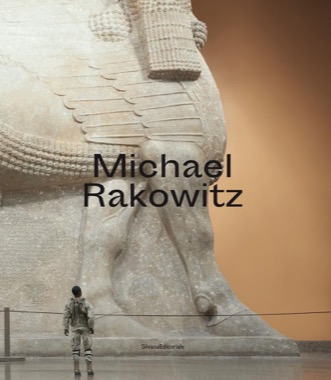
Hardcover. Milan, Silvana Editoriale, 1st, 2020, Book: Very Good, Dust Jacket: Very Good, Hardcover in a bright dust jacket. Iraqi-American artist Michael Rakowitz's (b. 1973, USA) first major European survey presents a sequence of installations drawing on architecture, cultural artifacts and cuisine to tell stories of social ritual, conflict and loss. It encompasses work considering the citizen visionaries of post Soviet Hungary, Middle Eastern Beatles fans and the stonecarvers of Afghanistan, with Rakowitz's casts of players and objects revealing the legacy of colonization, modernism and globalism. The artist's life-size replica of the gigantic lamassu, one of two monumental winged bulls that once guarded the gates of Nineveh in Iraq, currently features on Trafalgar Square's Fourth Plinth. This recreation of an ancient mythological creature is made from everyday date syrup cans and is part of an epic endeavour to recreate all 7,000 objects looted from the Iraq Museum in 2003, as well as those destroyed more recently at archaeological sites like Nimrud, also presented here. Text in English and Italian. Short closed tear to dj corner. otherwise like new. DOMESTIC SHIPPING ONLY.
Hardcover. New York, Whitney Museum of American Art/Steidl, 1st, 2002, Book: Very Good, Dust Jacket: None, Flexible boards, 264 pages. B/w and color illustrations throughout. Published to accompany exhibition at Whitney Museum of American Art in New York. Super clean. By repeatedly re-photographing her images, transferring them from video to film and back again, and manipulating them digitally, Michal Rovner creates photographic and video imagery that abstract familiar subjects like houses, animals, and people into ambiguous and iconic forms. Working with representation but against the traditions of narrative and documentary purpose, her artworks imply a tentative universe, one that is paradoxically peaceful and unsettled, vivid and shrouded, and completely counter-factual. If the changing nature of art has resulted in a general blurring of boundaries--between painting and photography, reality and memory, presence and absence--Rovner mines this haziness, refuses to respect borders, and exists completely in The Space Between.
Hardcover. New York, McGraw-Hill , 1st, 1957, Book: Very Good, Dust Jacket: None, 547 pages. Hardcover. SIGNED BY AUTHOR 0N PRELIMINARY PAGE. Previous owners bookplate on inside front cover. Illustrated with 8 pages of black & white photographs. Related article laid-in. No dust jacket. Clean, tight copy.
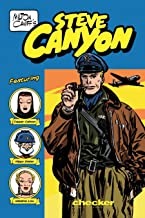
Softcover. Checker, 1st, 2004, Book: Very Good, Dust Jacket: None, Softcover, 148 pages. The entire first year of the great Milton Caniff's landmark action and adventure strip featuring All-American flyboy Steve Canyon and a menagerie of faithful comrades and diabolical rogues. Recurring sidekicks and villains like Copper Calhoon and Happy Easter appear are introduced in four great stories: "Copperhead", "Delta," "Easter's Oil," and "Jewels of Africa."
Softcover. Jackson MS, University Press of Mississippi, 1st, 2002, Book: Very Good, Dust Jacket: None, Softcover, 312 pages. In this collection of more than a dozen interviews one of the giants of American comic strips talks about his life and his craft. The years spanning 1937 to 1986, when the interviews were conducted, embrace almost all of Caniff's career as he was producing the legendary Terry and the Pirates and his post-World War II masterpiece Steve Canyon. In long talks with such comics luminaries as Jules Feiffer and Will Eisner, Caniff (1907-1988) discusses his signature chiaroscuro style, his passion for realism in every detail, and his relationships with such other cartooning greats as Al Capp (Li'l Abner), Noel Sickles (Scorchy Smith), and Alex Raymond (Flash Gordon) As Caniff speaks earnestly about his art, his techniques, and his intentions, he discloses his inspirations. He based his characters on real persons and his material on contemporary politics and military issues. He gives candid opinions about the effects of the marketplace, business, and sales upon his art. "I would have created Blondie if I'd known that I could have sold it, you can be damn sure." He notes that the cause for terminating his association with Terry and the Pirates and his creation of Steve Canyon was neither lack of interest nor censorship but the opportunity to exert full creative control over his work.
Softcover. NY, The Museum of Modern Art, 1st pbk., 1978, Book: Very Good, Dust Jacket: None, Softcover, oblong format, 152 pages. 127 plates, 17 in color. Photographs by eighty-four artists, including such established figures as Paul Caponigro, Judy Dater, Lee Friedlander, Joel Meyerowitz, Helen Levitt, and Garry Winogrand, as well as various artists who were less known at the time such as Gary Beydler, Frank Gohlke, Robert Mapplethorpe, Richard Misrach, and Eve Sonneman. Clean copy.
Softcover. NY/Boston, MOMA/New York Graphic Society, 1st, 1978, Book: Very Good, Dust Jacket: None, Softcover, 152 pages. Text by the brilliant curator John Szarkowski accompanies a wide ranging collection of B&W and Colour photographs by the articts such as Lee Friedlander, Helen Levitt, Garry Winogrand, Paul Caponegro, Danny Lyon, Bruce Davidson and numerous others. A tight, clean copy.
Hardcover. Essex, Pequot Press, First Edition, 1971, Book: Very Good, Dust Jacket: Very Good, 69 pages. Hardcover. Gray cloth boards with gilt titles to spine. Black & white illustrations throughout. Frontis illustration, The Harpist, A Portrait of Miss Florence by Alphonse Jonghers, tipped-in & in full color. Dust jacket with same full color image on bright blue background. Dj has age related wear to edges. Clean, unmarked. A nice copy.
Hardcover. NY/Cambridge MA, The Architectural History Foundation/The MIT Press, 1st, 1984, Book: Very Good, Dust Jacket: Very Good, Hardcover in a bright dust jacket. This is the first complete biography of the inimitable society architect Addison Mizner, whose Spanish Revival buildings created a new style of resort architecture for Palm Beach and south Florida during the boom years of the 1920s. Clean copy.
Hardcover. New York , Rizzoli, 1st, 2008-10-14, Book: Very Good, Dust Jacket: Very Good, Hardcover, 272 pages, profusely illustrated in color. Like new in publisher's shrink-wrap. In the current world of twentieth-century design collecting, the trend has shifted away from accessible, mass-manufactured modernist furniture and toward designs that were custom-made or produced in very limited editions, with emphasis on American studio design of the 1940s to the 1990s. In contrast to the mass-produced mid-century furniture by Knoll and Herman Miller, American studio designs of the same period focused on novel forms and exquisite craftsmanship. Ranging from the organic shapes of George Nakashima and Vladimir Kagan to metalworks by Paul Evans, these limited production designs were highly sought after in their days by original tastemakers and movie stars. In the last decade, a revival for these rare designs began with connoisseurs such as Tom Ford. Modern Americana is the first full survey of the designs of this prolific but forgotten period, bringing to life again the works of Samuel Marx, Billy Haines, Wendell Castle, T.H. Robsjohn-Gibbings, Karl Springer, James Mont, and many others -- including J.B. Blunk, Michael Coffey, Wharton Esherick, Arthur Espenet Carpenter, Sam Maloof, Jack Rogers Hopkins, Paul Evans & Philip Lloyd Powell, Vladimir Kagan, George Nakashima, Silas Seandel, Charles Hollis Jones, Philip & Kevin LaVerne, Tommi Parzinger, Harvey Probber, Edward Wormley, John Dickinson, Arthur Elrod, and Paul Laszlo.
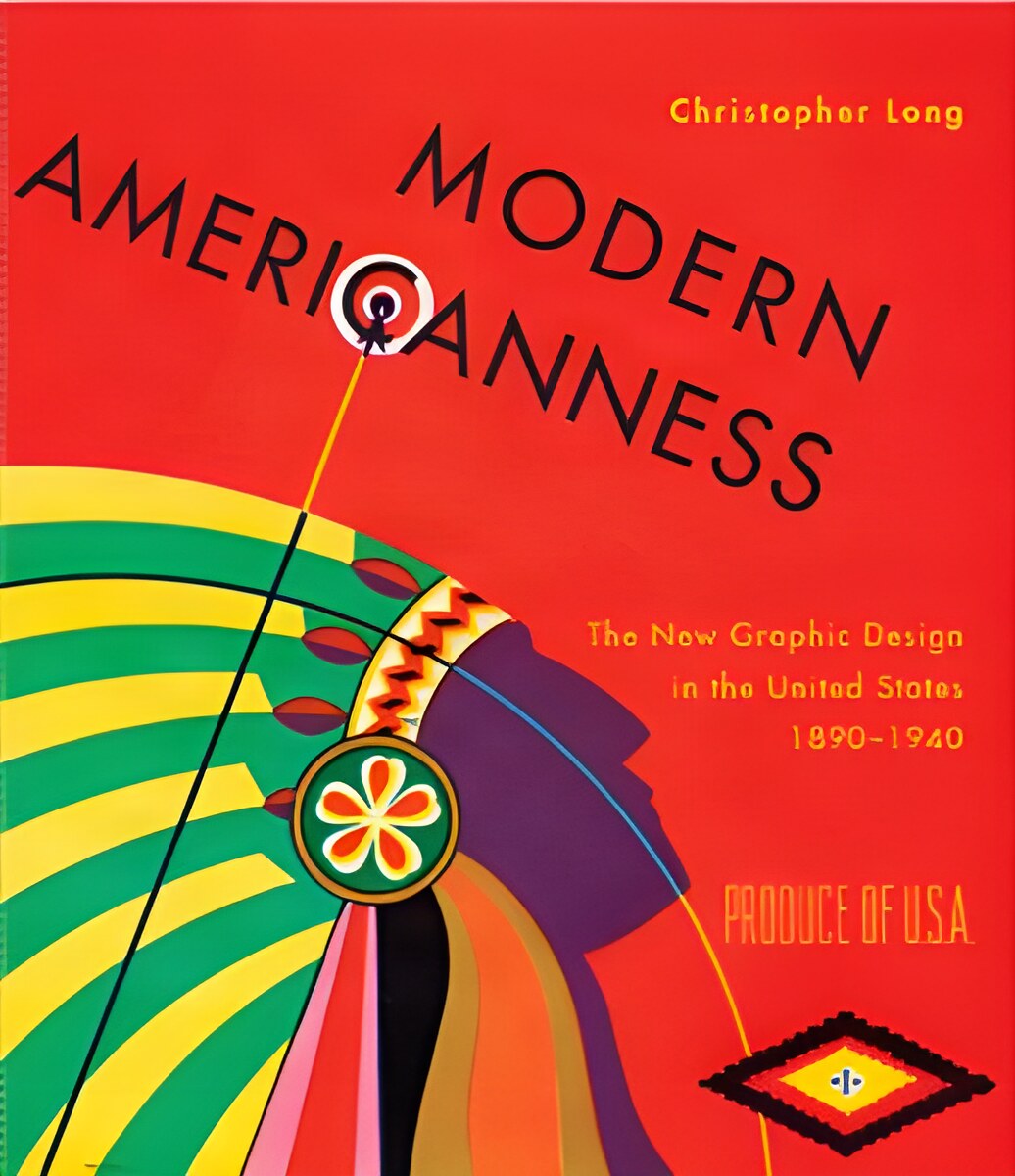
Hardcover. Czech Republic, Kant, 1st, 2025, Book: Very Good, Dust Jacket: None, Hardcover, pictorial boards, 264 pages. Venturing across five decades of American culture, this landmark book explores how modern graphic design emerged in the United States and how it became an intrinsic feature of the country's identity. Author and design professor Christopher Long tells this story in a wholly new way, exposing many long-forgotten figures and movements and resurrecting the debates and conceptions that were integral to the new art. In a series of deeply involving portraits of American artists and innovators who helped shape the very look of the modern age, Modern Americanness offers a sweeping story of the country's visual culture and its distinctiveness across a variety of designed objects: magazine covers, food labels, event posters, chapbooks, advertisements, propaganda and much more. Still in publisher's shrinkwrap.

 "Maynard Dixon; Artist of the Westby: Burnside, Wesley M.")
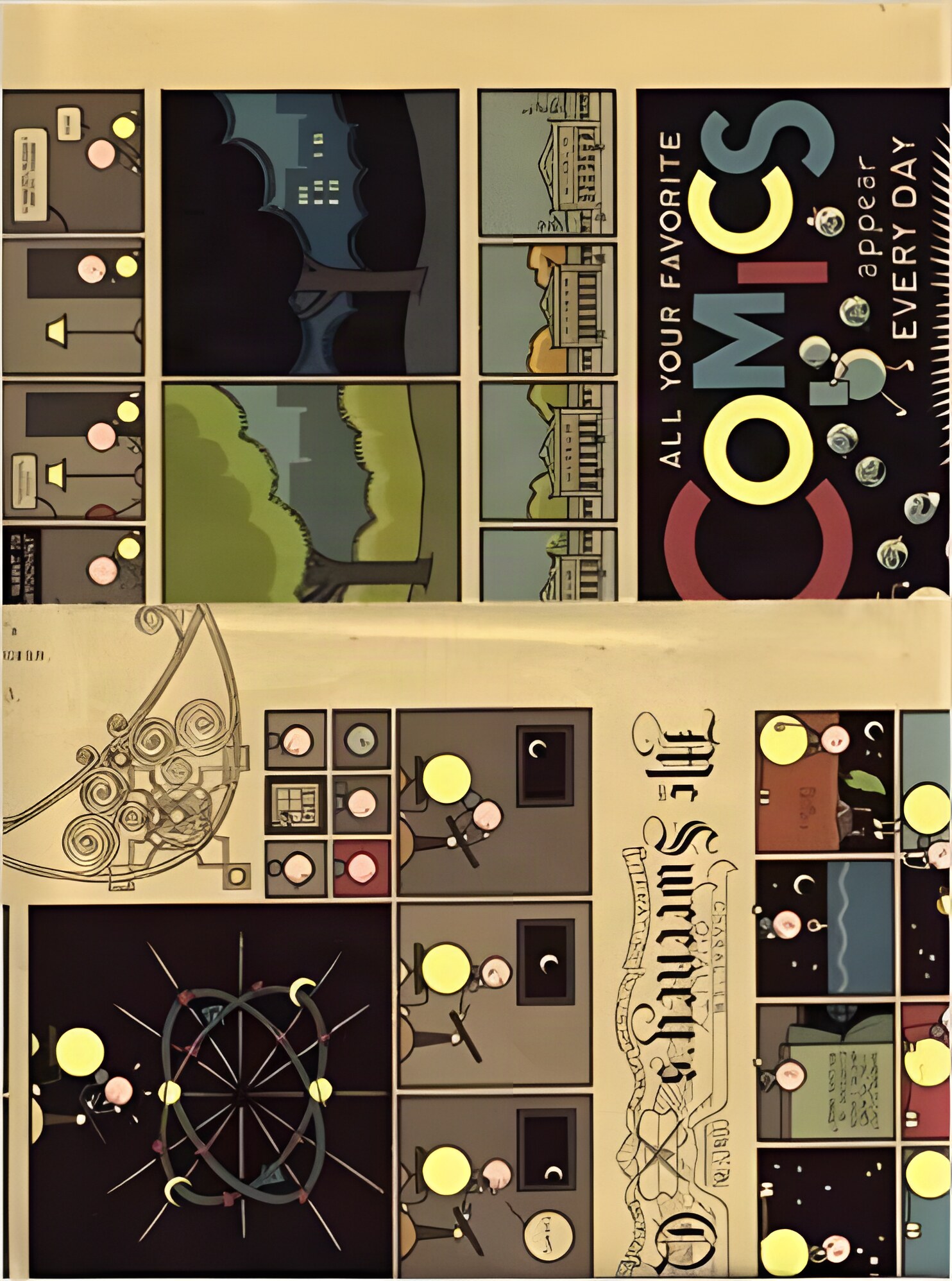
 "McSweeney's Quarterly Concern, No. 13: An Assorted Sampler of North American Comic Drawings, Strips, and Illustrated Storiesby: Ware, Chris (Ed.)")
 "Measuring the Flow of Time: The Works of James A. Ford, 1935-1941by: Ford, James A., Foreword: Willey, Gordon R./ Editor: Lyman, R. Lee/ Editor: O'Brien, Professor Mi")




 "Men in Americaby: Arndt, Thomas Frederick")
 "Men's Adventure Magazines: In Postwar America by: Max Allan Collins , Rich Oberg, et al.")


 "Merely Colossal: The Story of the Movies from the Long Chase to the Chaise Longue by: Mayer, Arthur")
 "Metropolitan Lives: The Ashcan Artists and Their New Yorkby: Zurier, Rebecca & Robert W. Snyder & Virginia Mecklenburg")
 "Metropolitan Magazine: January to June 1838 Vol. Vby: N/A")
 "Mexico: The Revolution and Beyond - Photographs by Agustin Victor Casasola 1900-1940by: Casasola, Agustin Victor")


 "Michael Rovner: The Space Betweenby: Wolf, Sylvia")
 "Mighty Stonewall (SIGNED COPY)by: Vandiver, Frank E.")




 "Mirrors and Windows: American Photography Since 1960by: John Szarkowski")
 "Miss Florence and the Artists of Old Lymeby: Heming, Arthur/James Stevenson (Illustrator)")
 "Mizner's Florida: American Resort Architectureby: Curl, Donald Walter")
 "Modern Americana: Studio Furniture From High Craft to High Glamby: Iovine, Julie and Todd Merrill")