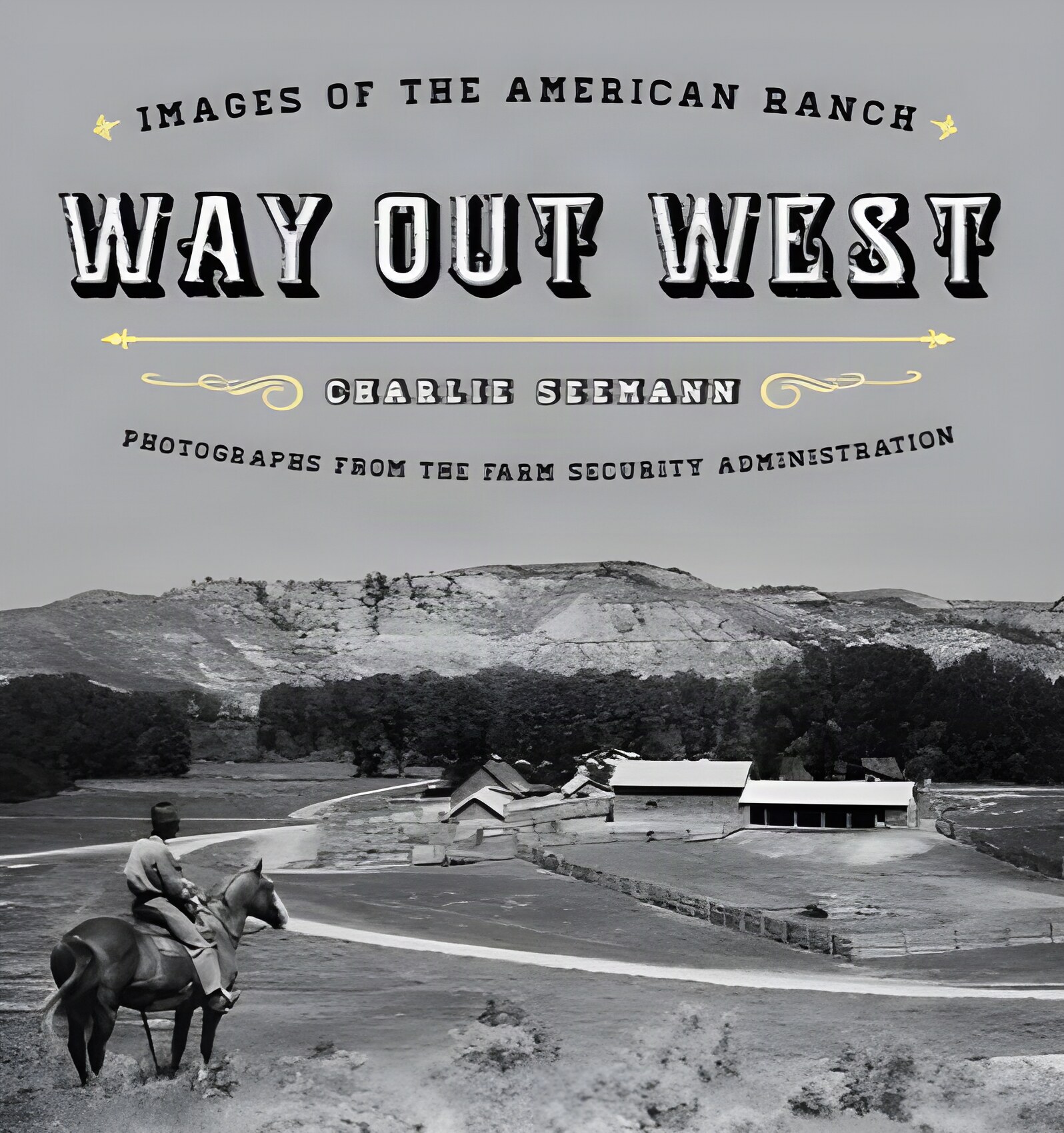
Hardcover. Guilford CT, TwoDot, 1st, Book: Very Good, Dust Jacket: None, Hardcover, pictorial boards, 159 pages, b&w photos throughout. Classic Photographs from the Farm Security Administration 1936-1943. Featuring images by such renowned photographers as Dorothea Lange, Arthur Rothstein, Russell Lee, and several others, this book documents ranching culture in western states during the Great Depression and leading up to World War II. This was a period of great change in the ranching West that included the introduction of the automobile, electricity, radio, the telephone, and other technologies that drastically transformed the lives and work of ranching people, and some of the best documentation exists in the powerful documentary photographs by this remarkable group of photographers. Clean copy.
Hardcover. NY, Rizzoli/Aquavella Gallery, 1st, 2012, Book: Very Good, Dust Jacket: Very Good, Hardcover, 192 pages. Famous for his lush early '60s paintings of cakes and other sweets, this retrospective of Wayne Thiebaud is the definitive book on the seminal American artist. Published on the occasion of an exhibition of the same title, Wayne Thiebaud: A Retrospective is the first major survey in twelve years of the work of one of the most original and accomplished American artists. This large-format book is a retrospective of his work from the 1960s to today, with numerous works coming from the artist's collection. Like many artists, Thiebaud has held on to some of the best examples of his work from every period. The book also includes his most recent work up to 2012--at 91, Thiebaud is still working from his studio in Sacramento. With more than ninety color illustrations, this book and the exhibition it documents--put together by noted art historian John Wilmerding--reveal the painter to be preoccupied with a larger slice of American life.
Hardcover. New York, Thames & Hudson, 1st, 2018, Book: Very Good, Dust Jacket: Very Good, 160 pages. Hardcover with dust jacket. Very clean, like new in publishers shrink-wrap. Best known for his luscious paintings of pies and ice-cream cones, American artist Wayne Thiebaud (born 1920) has been an avid and prolific draftsman since he began his career in the 1940s as an illustrator and cartoonist. This book of 116 drawings-compiled with the full cooperation of the artist to accompany a major new exhibition at the Morgan Library Museum-explores the wide range of Thiebaud's production on paper, including early sketches, luminous pastels, and watercolors, and charcoal drawings made in connection with his teaching. In subjects ranging from deli counters and isolated figures to dramatic views of San Francisco's plunging streets, Thiebaud's drawings endow the most banal, everyday scenes with a sense of poetry and nostalgia.
Hardcover. NY, Rizzoli Electa, 1st thus, 2022, Book: Very Good, Dust Jacket: Very Good, Hardcover in a bright dust jacket, still in publisher's shrinkwrap. In remembrance of revered American artist Wayne Thiebaud who passed away in 2021 at the age of 101, the definitive monograph of Wayne Thiebaud's work is now available in a reformatted, accessibly priced edition, including his last paintings.This is the most comprehensive monograph to date on Wayne Thiebaud, with new works added, in a reformatted size. Spanning the length of his career from the 1950s to the present, the book has been made in close collaboration with the artist. Thiebaud selected the works himself, making the book an act of autobiography in a sense. At age 100, he looks back over his life and his work, rich with breakthroughs in painting and masterful individuality.
Hardcover. New York, Rizzoli, 1st, 2015, Book: Very Good, Dust Jacket: Very Good, Hardcover with illustrated dust jacket. 358 pages. Like new in publisher's shrink-wrap. The most comprehensive and deluxe monograph on Wayne Thiebaud, a celebrated and active American artist, spanning the length of his career, from the mid-1950s to the present. Wayne Thiebaud is one of the world's most popular and respected painters. Born in 1920, he has lived for most of his life in Sacramento, with much of his youth spent in Long Beach; Southern California, in particular Laguna Beach, remains an area of great sentimentality. For this book he has selected the works himself, an act of autobiography in a sense. At age 94, he looked back over his life and his work, rich with breakthroughs in painting and masterful individuality. This deluxe volume, with more than 200 illustrations, covers Thiebaud's career as a painter and draftsman from 1959 to 2014. It features many of the still lifes of pies, cakes, desserts, candies, and other objects--lusciously painted, brightly colored, perfectly composed, and gently comic--for which he is best known. Such works brought national recognition in 1962 with a seminal exhibition at the Allan Stone Gallery in New York, attracting rave reviews and, to the discomfort of the artist himself, leading critics to see him as part of the Pop Art movement. The other artistic genres that he cultivated most avidly since then are landscape and cityscape, with special interests in the Sacramento River valley and San Francisco. New essays by a wide range of writers give a fresh perspective on his life and work.
Softcover. Worcester MA, American Antiquarian Society, 1st, 1977, Book: Very Good, Dust Jacket: None, Softcover. Exhibition catalog. 141 pages, illustrated throughout in b&w. Tan stiff wrappers. Covers and spine slightly sunned, small stain to for-edge, dog-ears to upper page-corners. A nice, tight copy.
Hardcover. Indianapolis IN, Eiteljorg Museum of American Indian and Western Art, 1st, 1993, Book: Very Good, Dust Jacket: Very Good, Hardcover in a bright dust jacket, 212 pages with 129 color plates. Foreword by James K. Ballinger. Wonderful work by the Arizona artist who started his career as an illustrator in New York for magazines like the Saturday Evening Post. The subject is primarily the American Indian. Clean copy.
Hardcover. Beverly Hills CA, Petersen Galleries, 1st, 1981, Book: Very Good, Dust Jacket: Very Good, Hardcover, the original softcover catalog, bound in faux-leather boards with gilt lettering. 124 pages. 40 color plates, plus numerous black and white photographs. Published in conjunction with the exhibition, October 30 through November 28, 1981. Great reference on the topic and much information on some lesser-known artists. Small ink price on front fly leaf, otherwise clean and bright.
Hardcover. NY, Harper, 1st, 2020, Book: Very Good, Dust Jacket: Very Good, Hardcover in a bright dust jacket, 672 pages. 16 pages of photos. What Becomes a Legend Most is the first definitive biography of this luminary--an intensely driven man who endured personal and professional prejudice, struggled with deep insecurities, and mounted an existential lifelong battle to be recognized as an artist. Philip Gefter builds on archival research and exclusive interviews with those closest to Avedon to chronicle his story, beginning with Avedon's coming-of-age in New York between the world wars, when cultural prejudices forced him to make decisions that shaped the course of his life. Compounding his private battles, Avedon fought to be taken seriously in a medium that itself struggled to be respected within the art world. Gefter reveals how the 1950s and 1960s informed Avedon's life and work as much as he informed the period. He counted as close friends a profoundly influential group of artists--Leonard Bernstein, Truman Capote, James Baldwin, Harold Brodkey, Renata Adler, Sidney Lumet, and Mike Nichols--who shaped the cultural life of the American twentieth century. It wasn't until Avedon's fashion work was exhibited at the Metropolitan Museum of Art in the late 1970s that he became a household name. Balancing glamour with the gravitas of an artist's genuine reach for worldy achievement--and not a little gossip--plus sixteen pages of photographs, What Becomes a Legend Most is an intimate window into Avedon's fascinating world. Dramatic, visionary, and remarkable, it pays tribute to Avedon's role in the history of photography and fashion--and his legacy as one of the most consequential artists of his time.
Hardcover. NY, Harper, 1st, 2020, Book: Very Good, Dust Jacket: Very Good, Hardcover in a bright dust jacket, 672 pages. 16 pages of photos. What Becomes a Legend Most is the first definitive biography of this luminary--an intensely driven man who endured personal and professional prejudice, struggled with deep insecurities, and mounted an existential lifelong battle to be recognized as an artist. Philip Gefter builds on archival research and exclusive interviews with those closest to Avedon to chronicle his story, beginning with Avedon's coming-of-age in New York between the world wars, when cultural prejudices forced him to make decisions that shaped the course of his life. Compounding his private battles, Avedon fought to be taken seriously in a medium that itself struggled to be respected within the art world. Gefter reveals how the 1950s and 1960s informed Avedon's life and work as much as he informed the period. He counted as close friends a profoundly influential group of artists--Leonard Bernstein, Truman Capote, James Baldwin, Harold Brodkey, Renata Adler, Sidney Lumet, and Mike Nichols--who shaped the cultural life of the American twentieth century. It wasn't until Avedon's fashion work was exhibited at the Metropolitan Museum of Art in the late 1970s that he became a household name. Balancing glamour with the gravitas of an artist's genuine reach for worldy achievement--and not a little gossip--plus sixteen pages of photographs, What Becomes a Legend Most is an intimate window into Avedon's fascinating world. Dramatic, visionary, and remarkable, it pays tribute to Avedon's role in the history of photography and fashion--and his legacy as one of the most consequential artists of his time.
Art Intitute of Chicago/Yale University Press, 1st, 2021, Book: Very Good, Dust Jacket: None, Hardcover, pictorial cloth, 251 pages illustrated in color. The extraordinary life of a captivating American artist, beautifully illustrated with his dreamlike drawings Much of Joseph Elmer Yoakum's story comes from the artist himself--and is almost too fantastic to believe. At a young age, Yoakum (1891-1972) traveled the globe with numerous circuses; he later served in a segregated noncombat regiment during World War I before settling in Chicago. There, inspired by a dream, he began his artistic career at age seventy-one, producing some two thousand drawings over a decade. How did Yoakum gain representation in major museum collections in Chicago and New York? What fueled his process, which he described as a "spiritual unfoldment"? This volume delves into the friendships Yoakum forged with the Chicago Imagists that secured his place in art history, explores the religious outlook that may have helped him cope with a racially fractured city, and examines his complicated relationship to African American and Native American identities. With hundreds of beautiful color reproductions of his dreamlike drawings, it offers the most comprehensive study of the artist's work, illuminating his vivid and imaginative creativity and giving definition and dimension to his remarkable biography. Clean copy. NOTE: DUE TO WEIGHT, DOMESTIC SHIPPING ONLY.
Hardcover. Washington DC, Smithsonian Institution Press, 1st, 1998, Book: Very Good, Dust Jacket: Very Good, Hardcover in a bright dust jacket, 292 pages, b&w illustrations. SIGNED BY BOTH AUTHORS on the title page. Additionally INSCRIBED BY COHN on the dedication page. Kevin J. Crisman and Arthur B. Cohn show how a confluence of geographic, technological, economic, and social conditions in the United States and Canada turned an ancient idea into a practical alternative to more expensive and dangerous steamboats. Reviewing evidence from travelers' memoirs, regional histories, pictorial records, and the only horseboat ever studied by archaeologists - a wreck on the floor of Lake Champlain's Burlington Bay, in Vermont - the authors trace the evolution of horseboats from early mechanisms that forced the animals to walk in tight circles to "endless floor" treadmills that resembled modern exercise machines. In a lively narrative interspersed with quotes from passenger accounts, the book charts the rise and demise of horseboat businesses on the Hudson River, as well as in New York City, St. Louis, and Halifax, Nova Scotia. The authors also describe and record the underwater excavation of the Lake Champlain wreck, revealing a wealth of detail about the construction and operation of a typical treadwheel horseboat of the 1830s and 1840s. Clean copy.
Hardcover. Ames IA, University Museums at Iowa State, 1st, 2006, Book: Very Good, Dust Jacket: Very Good, Hardcover in a bright dust jacket, 398 pages. Mainly b&w illustrations with a small color section in center. In 1927, President Raymond Hughes began planning aesthetic improvements to the Iowa State campus. In 1933, at the depth of the Great Depression, and in an act that dramatically illustrates his artistic commitment, he began discussion with Grant Wood and Christian Petersen for each to create a significant mural cycle for the Iowa State College campus in Ames. The federal New Deal s Public Works of Art Project began in 1934 and offered a grand opportunity to employ artists in executing Grant Wood s painted mural for the library, When Tillage Begins, Other Arts Follow, and Christian Petersen s sculpted mural for the Dairy Industry Building, The History of Dairying. This book presents the first history of the Public Works of Art Project in Iowa and the first in-depth examination of the Grant Wood and Christian Petersen murals at Iowa State College. It also discusses the co-operative painting group that Grant Wood developed and illuminates the collaborative nature of the Iowa Project among its artists, as well as between the State University of Iowa in Iowa City and Iowa State College in Ames. Clean, like new. DOMESTIC SHIPPING ONLY.
Hardcover. NY, Penguin Press, 1st, 2012, Book: Very Good, Dust Jacket: Very Good, Hardcover in a bright dust jacket. 474 pages, b&w illustrations. "A "heroic" and "fascinating" biography of John Cage showing how his work, and that of countless American artists, was transformed by Zen Buddhism". (The New York Times). Where the Heart Beats is the story of the tremendous changes sweeping through American culture following the Second World War, a time when the arts in America broke away from centuries of tradition and reinvented themselves. Painters converted their canvases into arenas for action and gesture, dancers embraced pure movement over narrative, performance artists staged "happenings" in which anything could happen, poets wrote words determined by chance.
Hardcover. Newtown CT, The Taunton Press, 1st, 2006, Book: Very Good, Dust Jacket: Very Good, Hardcover in a bright dust jacket, 266 pages. The past has left behind only scattered clues that, on their own, provide little insight into how the people of early America lived and the details of their daily lives. The photographs in this book, the deeply informed narrative that accompanies them, and the eyewitness accounts of daily life that the author weaves throughout, provide a fresh perspective on our early American ancestors and the places they called home. This book is about how their houses and their life in them, from the wealthy to the impoverished, from New York City to the small farms and plantations of the South, from coastal fishing towns to the Western frontier of Indiana and Kentucky. The stories focus on the remarkably vivid differences from one part of the country to the next, class and culture, and the realities of everyday life for American families. These stories twine around a wide selection of HABS photographs of early houses, covering the variety and evolutions of house styles -- not by labeling the style but by explaining the style in the context of everyday life. Richly illustrated with handsome black-and-white photography of old houses from the Library of Congress Historic American Building Survey (HABS) collection and supplemented with period woodcuts, engravings, drawings, paintings, artifacts, and maps, the book is printed on a 4-color press for a depth of tone. Sidebar excerpts from diaries, journals, and letters inject graphic eyewitness descriptions, adding an additional layer of insight. The book also includes sidebars called Still Standing that traces the history of specific houses, from their origins to the present and includes information on the original family, how the house has evolved over the centuries, and how it's used today.
Hardcover. New Haven CT, Yale University Press, 1st, 2019, Book: Very Good, Dust Jacket: None, Hardcover in pictorial boards, 286 pages. A focused investigation of Whistlers watercolors that introduces readers to a rarely seen aspect of the artists creative output In the 1880s, James McNeill Whistler (1834-1903) reinvented himself through the medium of watercolor. At the time, excellence in watercolor was most often associated with British artists, and most notably with the work of J. M. W. Turner (1775-1851). Whistlers embrace of watercolor allowed the expatriate artist to present himself as an heir to the great Turner, while at the same time creating easily portable works that could supply an American market and, the artist hoped, help secure his art-historical legacy in his home country. Indeed, it was the American Gilded Age industrialist Charles Lang Freer who would amass the largest collection of Whistlers watercolors, eventually bequeathing them to the Smithsonian in 1906. This publication is the first systematic study of Freer's amazing treasure trove of more than 50 watercolors by Whistler and includes figures, landscapes, nocturnes, and interiors. Still in publisher's shrinkwrap. DUE TO WEIGHT DOMESTIC SHIPPING ONLY.
Hardcover. New York, Watson-Guptill Publications, 1st, 1969, Book: Very Good, Dust Jacket: Good, Hardcover, 87 pages. 32 color illustrations. Dark blue cloth, gilt lettering to spine. Very nice, clean and tight copy. Dust jacket edgewear on upper corner of spine. In good shape.
Hardcover. New Haven CT, Yale University Press, 1st, 2014, Book: Very Good, Dust Jacket: Very Good, Hardcover in a bright dust jacket, 440 pages, colo and b&w illustrations. The first biography in more than twenty years of James McNeill Whistler (1834-1903) is also the first to make extensive use of the artist's private correspondence to tell the story of his life and work. This engaging personal history dispels the popular notion of Whistler as merely a combative, eccentric, and unrelenting publicity seeker, a man as renowned for his public feuds with Oscar Wilde and John Ruskin as for the iconic portrait of his mother. The Whistler revealed in these pages is an intense, introspective, and complex man, plagued by self-doubt and haunted by an endless pursuit of perfection in his painting and drawing. In his beautifully illustrated and deeply human portrayal of the artist, Daniel E. Sutherland shows why Whistler was perhaps the most influential artist of his generation, and certainly a pivotal figure in the cultural history of the nineteenth century. Whistler comes alive through his own magnificent work and words, including the provocative manifestos that explained his bold artistic vision, sparked controversy in his own time, and resonate to this day.
Hardcover. New York, Crown Publishers, 1st, 1942, Book: Very Good, Dust Jacket: Good, Hardcover, 112 pages. 75 b&w illustrations and 8 plates in full color. Red cloth, gilt lettering to spine and front cover, edges lightly worn. Pictorial dust jacket, spine and back cover slightly stained and worn, otherwise a very nice, tight and well preserved copy.
Hardcover. NY, Grosset & Dunlap, 1st, 1934, Book: Very Good, Dust Jacket: Fair, Hardcover in a bright, unclipped dust jacket with soil, major chipping, tape repair. 128 pages. Frontispiece illustrated by Lee Haynes. Many illustrations in b/w, a few indicate B. Stevenson as artist, the rest are not specifically identified. Illustrated end papers. Seventeen chapters telling of the growth and experiences of a young American Indian boy.- his adventures are closely interwoven with the habits, customs and beliefs of his people.
Hardcover. New York, Glitterati, 1st, 2014, Book: Very Good, Dust Jacket: None, Hardcover. Like new in publisher's shrink-wrap. The book is the first to document the American punk scene to the public at large and now represents the epitome of the scene at the time Features photographs of artistic and performance luminaries such as Man Ray, Tennessee Williams, Mick Jagger, Patti Smith, Richard Hell, Alice Cooper, Iggy Pop, David Bowie, Zandra Rhodes, Divine, Lance Loud, and Marilyn Chambers, among others.
Hardcover. New York, Glitterati, 1st, 2014, Book: Very Good, Dust Jacket: None, Hardcover. Like new in publisher's shrink-wrap. The book is the first to document the American punk scene to the public at large and now represents the epitome of the scene at the time Features photographs of artistic and performance luminaries such as Man Ray, Tennessee Williams, Mick Jagger, Patti Smith, Richard Hell, Alice Cooper, Iggy Pop, David Bowie, Zandra Rhodes, Divine, Lance Loud, and Marilyn Chambers, among others.
Hardcover. NY, GP Putnam And Sons, 1st, 2002, Book: Very Good, Dust Jacket: Very Good, Hardcover in a bright, unclipped dust jacket. his counting book has so much going for it that the inexplicable and jarring turn it takes at number seven is disappointing. Its most outstanding feature is Laroche's artwork-a mixture of drawing, painting, and paper-cutting on a variety of surfaces-that offers exquisite detail, from white-capped waves to feathery moth antennae to architectural features on the carefully rendered buildings. And there are more delights to this book: an afterword on the history of lighthouses; a key to the 11 found in the book; and handsome endpapers that list American lighthouses in continuous rows, state by state.

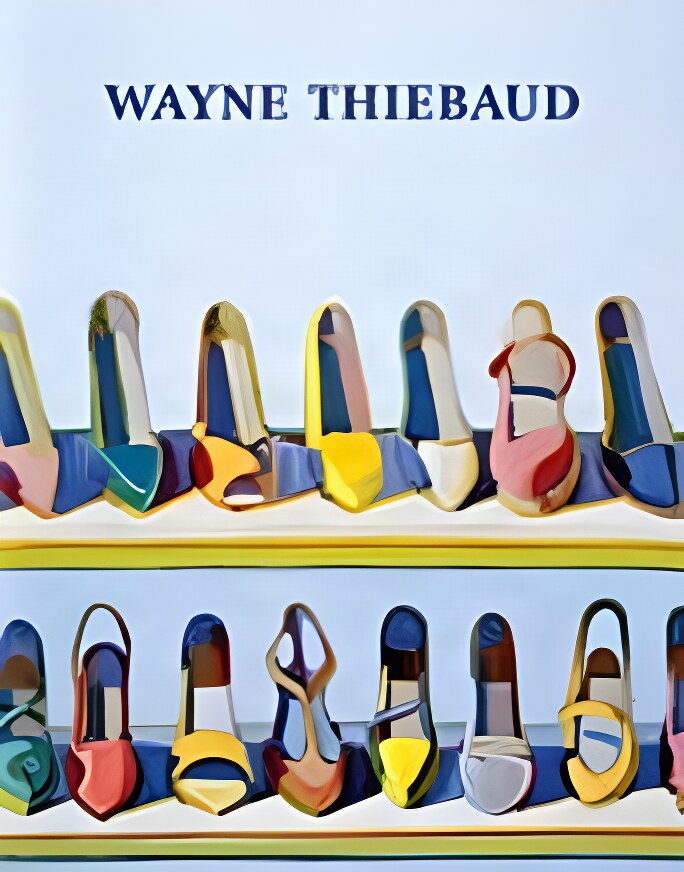
 "Wayne Thiebaud: Draftsmanby: Dervaux, Isabelle")
 "Wayne Thiebaud: Updated Edition by: Baker, Kenneth, Contributor: Weber, Nicholas Fox, Wilkin, Karen, Yau, John")
 "Wayne Thiebaudby: Baker, Kenneth")


 "Western Masters: A Comprehensive Exhibition October 30 through November 28 1981 by: Stearn, Jean")
 "What Becomes a Legend Most: A Biography of Richard Avedonby: Philip Gefter")


 "What Becomes a Legend Most: A Biography of Richard Avedonby: Philip Gefter")


 "When Horses Walked on Water: Horse-Powered Ferries in Nineteenth-Century America (SIGNED COPY)by: Kevin J. Crisman, Arthur B. Cohn")
 "When Tillage Begins, Other Arts Follow: Grant Wood and Christian Petersen Muralsby: Lea Rosson DeLong")


 "Whistler Landscapes and Seascapesby: Holden, Donald")
 "Whistler: A Life for Art's Sakeby: Daniel E. Sutherland")
 "Whistler: The Friendby: Pennell, Elizabeth Robins")
 "Whistlerby: Lane, James W.")
 "White Otter (Little Indian Series) by: Cory, David")
 "White Trash Uncutby: Makos, Christopher")
 "White Trash Uncutby: Makos, Christopher")
 "Who Sees The Lighthouse?by: Ann Fearrington and Giles Laroche")