Hardcover. Chapel Hill, NC, Univ of North Carolina Press, 1st, 2007, Book: Very Good, Dust Jacket: Very Good, 86 pages. Hardcover with dust jacket. Clean, unmarked copy with only minor wear to dust jacket edges. Minor shelf wear on front cover. Black and white images throughout. Tight copy.
Softcover. New York, Whitney Museum of American Art, 1st, 1986, Book: Very Good, Dust Jacket: None, Softcover, 143 pages, 145 plates in b&w. Exhibition catalog, light sunning to bottom edge of front cover and spine. Otherwise a clean, tight copy.
Softcover. Washington DC, National Gallery of Art, 1st, 1995, Book: Near Fine, Dust Jacket: None, 118 pages, illustrated in color and b&w. INSCRIBED BY CHOTNER TO JOHN (WILMERDING) on title page. Softcover exhibition catalog in like new condition.
Hardcover. New York, Watson-Guptill Publications, 1st, 1979, Book: Very Good, Dust Jacket: Very Good, Hardcover, 88 pages. Tan cloth covers, black stamped titles, laminate dust jacket with color illustration, 32 full-page color plates, chronology. Light rubbing and edgewear to dust jacket, clean covers, pages crisp and unmarked; overall, a very clean, tight copy.
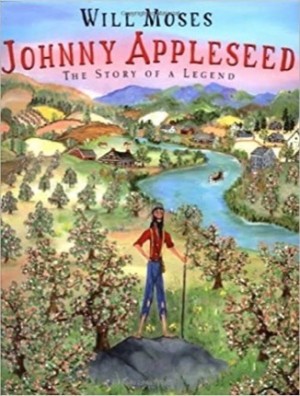
Hardcover. NY, Philomel Books, 4th pr., 2001, Book: Very Good, Dust Jacket: Very Good, Hardcover in a bright, unclipped dust jacket with mild fad to spine. The long-enduring American legend of Johnny Appleseed comes to life in the glorious folk illustrations and spirited storytelling of Will Moses. Everyone knows the story of Johnny Appleseed: how he traveled westward across our young country, spreading apple trees wherever he went and wearing outlandish hats, like a soup pot, on his head. But did you know that Johnny Appleseed was a real person? Born John Chapman in 1774, he grew up in a family of twelve children, and as a young man, struck out to find the frontier. It was along this journey that he discovered the wonders of apple trees, and where he had his life adventures. In the tradition of his great-grandmother, Grandma Moses, Will Moses's much-loved folk art perfectly illustrates this American tale.
Hardcover. New York, American Federation of Arts, 1st, 1961, Book: Near Fine, Dust Jacket: Very Good, Catalogue of the sculpture of Jose de Rivera, with a chronology and introductory essay. Approximately 50 pages, illustrated with 15 black/white plates in addition to several other illustrations. Small cloth bound book is in near fine condition, dust jacket is slightly faded on the spine but in very good condition.
Hardcover. Ostfildern GR, Hatje Cantz, 1st, 2008, Book: Very Good, Dust Jacket: Very Good, Hardcover, 288 pages 231 illustrations 60 in color with 274 plans and drawings. Biography. Like new in publisher's shrink-wrap. Josef Paul Kleihues (1933-2004) was one of the most prolific architects of postwar Germany, famous both as the Director of the International Building Exhibition Berlin in 1987 and for his design for the Museum of Contemporary Art in Chicago. He was also known for his sensitive interventions into older buildings, an instance of which is the former Hamburger Bahnhof--now the Museum fur Gegenwart--in Berlin, where Kleihues intermixed glass walls and light installations by the American Minimalist Dan Flavin with the building's original nineteenth-century Neoclassical design. (His reconstruction was widely deemed to rival or even surpass Gae Aulenti's overhaul of the interior of the Musee d'Orsay in Paris.) This first volume of a three-part monograph presents projects up to 1980, including the highly acclaimed Berlin Sanitation Department and the Neukolln Hospital. Even in these early works, Kleihues' practical, problem-solving approach is already evident, indicating his readiness to reflect on the traditional approaches of Modern architecture and his capacity to expand them in interesting ways. This very generously illustrated volume was designed by Kleihues himself, just before his death in 2004.
Hardcover. NY, Thames & Hudson, 1st, 2012, Book: Very Good, Dust Jacket: None, Hardcover, 152 pages. A fabulous facsimile of an almost unknown masterpiece by Joseph Cornell, presented in a box, along with a volume of essays and an interactive DVD One of Joseph Cornell's favorite pastimes was to meander through the used bookstalls of lower Manhattan, sorting through old books, magazines, postcards, photos, and other ephemera in search of items to spark his creative impulses. Sometime in the early 1930s he came upon the Journal d'Agriculture Practique (Volume 21, 1911), a voluminous handbook of advice for farmers. Though he was very much an urban creature, he adored French culture of that period, and the book was filled with charming black and white engraving and photographs of pigs, horses, vegetables, and farm machinery. Over time Cornell altered and reinvented many of the pages in the Journal. He inserted collages, photomontages, and occasional drawings; he crossed out words in the text and made French puns with others. Hand-colored engravings, cutouts, and lift-ups intricately transport the reader from page to page. The dazzling elegance of Cornell's work on the Journal has rarely been viewed. It was discovered in his basement studio soon after his death in 1972 and is now in the collection of the Philadelphia Museum of Art. Due to its fragility, the work is not well known, even among Cornell scholars. Now, in a unique venture, sixty of the most extraordinary pages have been re-created in virtual facsimile, with cutouts, glue-ons, and other unique handmade details. Included in a specially designed box are a DVD of the entire work, including pop-up commentaries, and a volume of illustrated essays on the Journal and Cornell's artistic practice. 103 illustrations
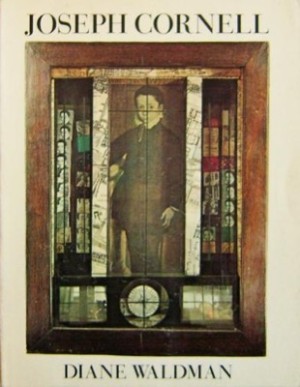
Hardcover. NY, George Braziller, 1st, 1977, Book: Very Good, Dust Jacket: Very Good, Hardcover, 128 pages, 40 color and 90 b&w illustrations. Out of the fantasies that enriched an often reclusive life, the enigmatic American artist Joseph Cornell (1903-1972) created a world of enchantment with his famed shadow boxes and collages. Using common objects like glasses, marbles, and mirrors, Cornell"s work evokes the strangeness of the familiar and the odd familiarity of the strange. Respected art historian and friend of the artist Diane Waldman probes the elusive imagery that marks Cornell"s work. Interviews with Cornell and his family and access to the artist"s papers inform her text. Bright, unclipped dust jacket with light edgewear, repaired chip. Clean copy.
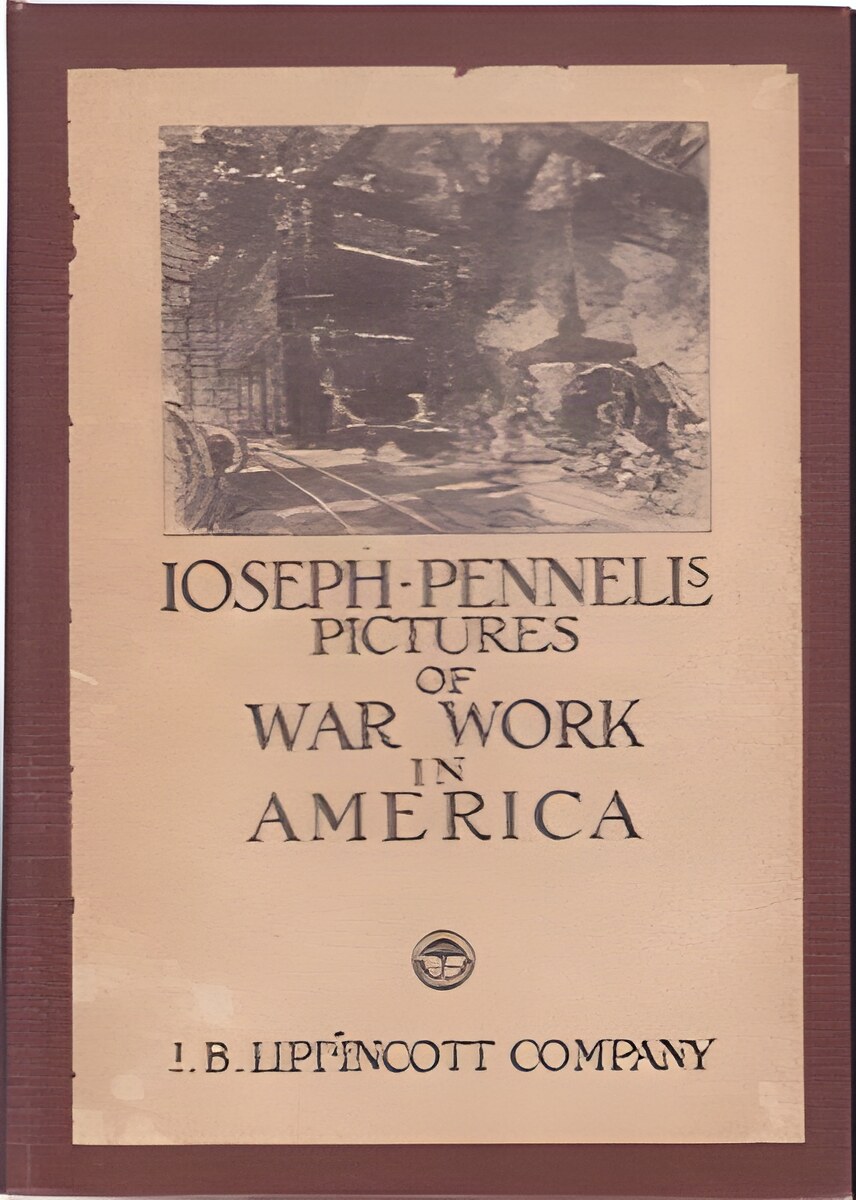
Hardcover. Philadelphia, J.B. Lippincott, 1st, 1918, Book: Very Good, Dust Jacket: None, Hardcover, brown cloth with a pastedown on front cover with title and illustration. Offers a powerful visual record of the United States' contribution to World War I. This collection of lithographs by renowned artist Joseph Pennell provides a unique glimpse into the nation's war effort, focusing on the crucial role of American industry. Previous owner's note on the front fly leaf, otherwise clean.
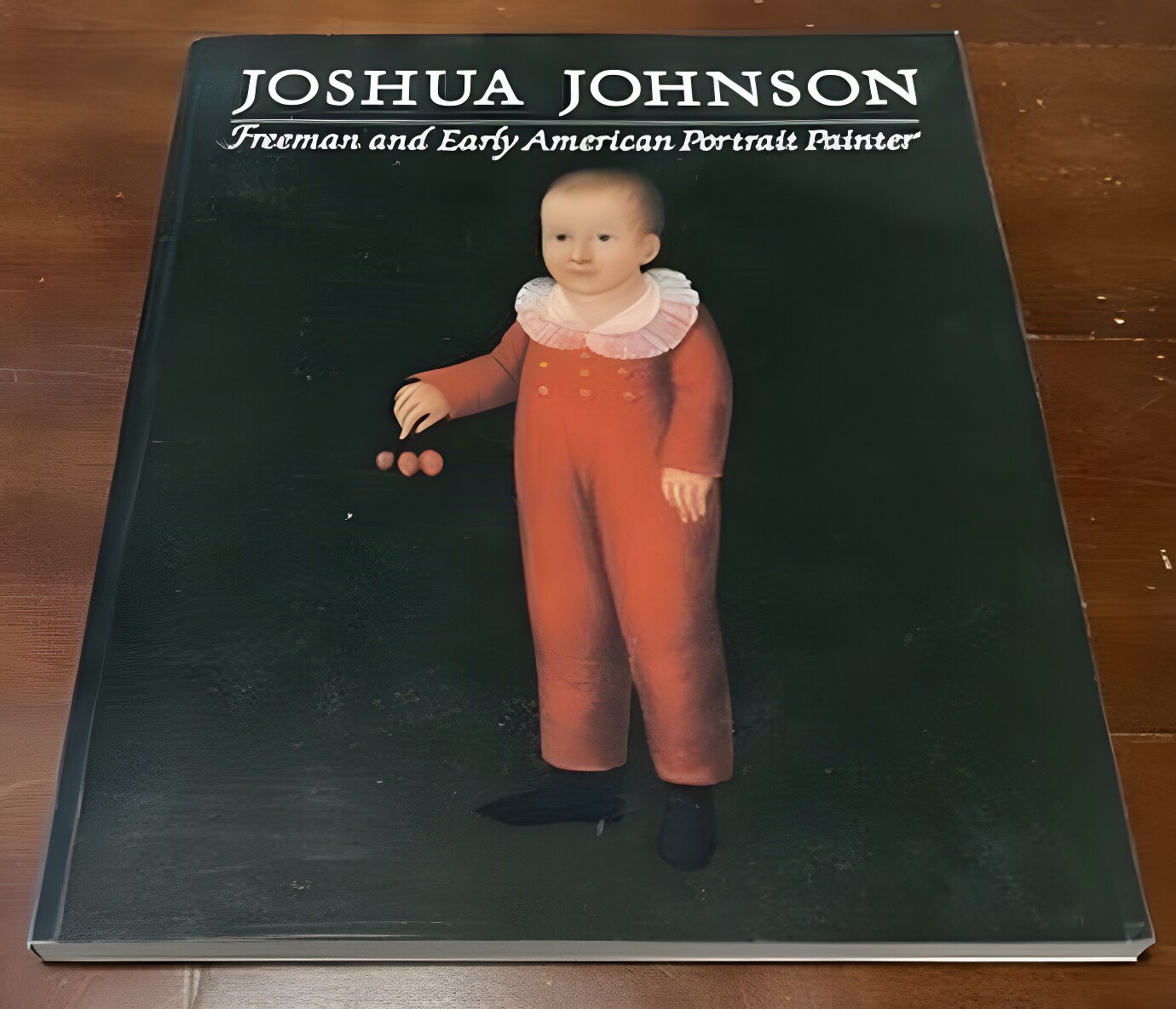
Softcover. Baltimore MD, Maryland Historical Society, 1st, 1987, Book: Very Good, Dust Jacket: None, Pictorial wraps with color illustration and white lettering; 173 pages. 45 color, 88 b&w plates. Exhibition catalogue lists 83 extensively annotated works, and a Supplemental Catalogue lists an additional 13 works. Selected bibliography and short-list of titles. Each essay includes extensive notes. The definitive work on the early Afro-American portrait painter. Published to accompany the exhibition held in Baltimore, MD: Maryland Historical Society, Sept. 26, 1987 to Jan. 3, 1988, three other locations. Scarce. Previous owner's stamp and bookplate, short inscription on inside front cover. Related clipping, brochure laid in.
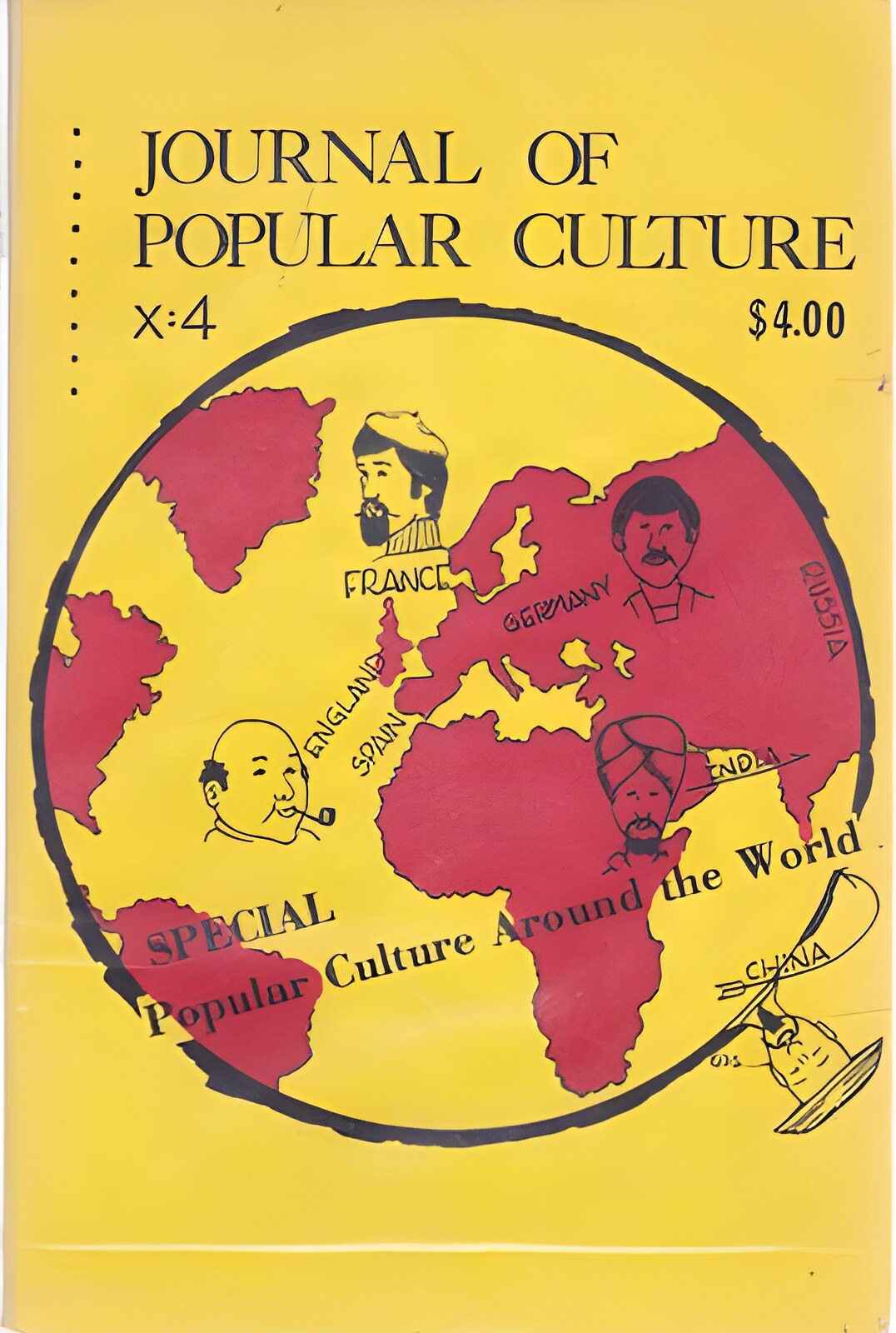
Softcover. Bowling Green OH, Journal of Popular Culture, 1st, 1977, Book: Very Good, Dust Jacket: None, Softcover, pages 701-909. Articles include: Philip Gordon on Ayn Rand. Louis F. Helbig on Struwwelpeter: an inquiry into the effects of violence in children's literature. French folk songs. D. L. Ashliman on the American Indian in German Travel Narratives and Literature. Clean.
Hardcover. New York , Metropolitan Books, 1st US, 2012, Book: Very Good, Dust Jacket: None, Hardcover, 191 pages, illustrated throughout in color and b&w. Clean, unmarked copy in excellent condition. Over the past decade, Joe Sacco has increasingly turned to short-form comics journalism to report from conflict zones around the world. Collected here for the first time, Sacco's darkly funny, revealing reportage confirms his standing as one of the foremost war correspondents working today. Journalism takes readers from the smuggling tunnels of Gaza to war crimes trials in The Hague, from the lives of India's "untouchables" to the ordeal of Saharan refugees washed up on the shores of Malta. And in pieces never published before in the United States, Sacco confronts the misery and absurdity of the war in Iraq, including the darkest chapter in recent American history-the torture of detainees.
Hardcover. NY, Hudson Hills Press, 1st, 1997, Book: Very Good, Dust Jacket: Very Good, Hardcover, 180 pages. Includes 87 color plates, 13 duotones and 17 black and white illustrations. Still in publisher's shrinkwrap. "Joyce Treiman, one of the finest American painters of the late twenteith century , was also one of the most individualistic, combining virtuosic draftsmanship and expressive brushwork wth a lifelong devotion to painting the human figure in images that are direct, visceral, and sensuous."
Hardcover. NY, Watson-Guptill, 1st, 2000, Book: Very Good, Dust Jacket: Good, Hardcover, 192 pages. Terrific monograph on this important American artist. Includes 275 illustrations, most in color and with 4 double gatefolds. Dust jacket with light soiling on back cover.
Hardcover. New York, E.P. Dutton & Company, 1st, 1922, Book: Good, Dust Jacket: None, Hardcover, 141 pages. 33 B&W illustrations. No dust jacket. Pages uncut. Blue cloth. In good condition. Articles included in this tribute include: Julian Alden Weir, by Duncan Phillips; Weir The Painter, by Emil Carlsen; Weir, by Royal Cortissoz; Reminiscences of Weir, by Childe Hassam; The Tile Club, by J.B. Millet; Weir The Fisherman, by H. de Raasloff; A Letter, from Augustus Vincent Tack; A Letter from C.E.S. Wood; Lists of Paintings, which is 17 pages long, and lists paintings chronologically, and lists dimensions and owner. One of 712 copies with eight extra illustrations which were published by Phillips Publications as Publication No. 1.
Hardcover. Munich ; London ; New York, Prestel, 2010, Book: Very Good, Dust Jacket: None, Hardcover without dust jacket. Like new in publisher's shrink-wrap. This book collects the large-format Polaroids by the American artist and film director Julian Schnabel. Schnabel is a major force in the international art scene. Shot with an extraordinary 20 x 24 inch vintage camera, his intimate and revealing large-format images are printed in colour and black and white; some have been hand coloured or painted on; and many are previously unpublished. The photographs include intriguing portraits of the artist's family and friends, including Lou Reed, Placido Domingo, the Beastie Boys, and Mickey Rourke. There are also private spaces dear to Schnabel, such as his own Palazzo Chupi in New York City - which he designed and decorated - as well as interiors of studios in Brooklyn, Montauk, and Long Island. Together these Polaroids create a unique tableau, both intensely personal and poetic.
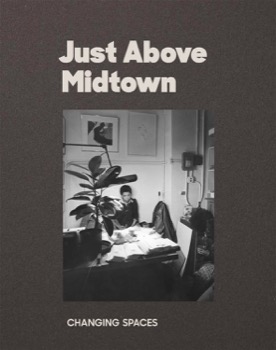
Softcover. NY, Museum of Modern Art, 1st, 2022, Book: Very Good, Dust Jacket: None, Softcover, 184 pages, illustrated in color and b&w. Just Above Midtown, or JAM, was an art gallery and self-described laboratory for experimentation led by Linda Goode Bryant that foregrounded African American artists and artists of color. Open from 1974 to 1986, it was a place where an expansive idea of contemporary art flourished and debate was cultivated. The gallery offered early opportunities for artists recognized as pivotal figures in late-20th-century art-including David Hammons, Butch Morris, Senga Nengudi, Lorraine O'Grady and Howardena Pindell-as well as a nonhierarchical approach to art that welcomed artists without stylistic proscription. Published in conjunction with the first museum exhibition to focus on this visionary gallery and its ongoing impact, Just Above Midtown: Changing Spaces showcases rarely seen material from JAM's history-artworks, ephemera and photographs-that collectively document the gallery's communal and programmatic activities. This richly illustrated, jacketed paperback catalog includes essays that contextualize JAM and consider its legacy, a conversation between Goode Bryant and Thelma Golden, Director and Chief Curator of the Studio Museum in Harlem, a complete exhibition chronology written by MoMA and Studio Museum staff with nearly 50 annotated entries, and excerpts from oral histories with JAM staff and artists conducted especially for this project. Clean copy.
Hardcover. NY, Harper, 2nd pr., 2013, Book: Very Good, Dust Jacket: Very Good, Hardcover in a lightly worn dust jacket, 265 pages, b&w illustrations. The first installment in the long-awaited portrait of one of the most talented and influential musicians of the twentieth century, from Stanley Crouch, one of the foremost authorities on jazz and culture in America. Throughout his life, Charlie Parker personified the tortured American artist: a revolutionary performer who used his alto saxophone to create a new music known as bebop even as he wrestled with a drug addiction that would lead to his death at the age of thirty-four. Drawing on interviews with peers, collaborators, and family members, Kansas City Lightning recreates Parker's Depression-era childhood; his early days navigating the Kansas City nightlife, inspired by lions like Lester Young and Count Basie; and on to New York, where he began to transcend the music he had mastered. Clean copy.
Hardcover. Minneapolis MN, Walker Art Center, 1st, 2007, Book: Very Good, Dust Jacket: None, Hardcover, publisher's light-brown cloth over boards, stamped lettering, and illustration to the spine, and boards. Richly illustrated in black-and-white and color throughout. "Deploying an acidic sense of humor, Walker examines the dialectics of pleasure and danger, guilt and fulfillment, desire and fear, race and class. This landmark publication, which is sure to win international design awards, accompanies Walker's first major American museum survey. It features critical essays by Philippe Vergne, Sander L. Gilman, Thomas McEvilley, Robert Storr and Kevin Young, as well as an illustrated lexicon of recurring themes and motifs in the artist's most influential installations by Yasmil Raymond, more than 200 full-color images, an extensive exhibition history and bibliography." Clean copy.
Softcover. University of Illinois Press, 1st, 2007, Book: Very Good, Dust Jacket: None, Softcover, 165 pages. This remarkable volume collects Bodmer's studio art: a series of compositions he created in his Paris studio. These images, thirteen of them previously unpublished, are augmentations of the artist's expeditionary sketches and watercolors. 12 color plates, 32 b/w plates, 16 B/W in-text figures.
Hardcover. Princeton NJ, Princeton University Press, 1st, 1992, Book: Very Good, Dust Jacket: Very Good, Hardcover in a bright dust jacket, 281 pages, b&w illustrations. "For, Lo! We live in an Iron Age--In the age of Steam and Fire!" wrote a poet mesmerized by the engines that were transforming American transportation, agriculture, and industry during his lifetime. Indeed, by the nineteenth century fire had become America's leitmotif--for good and for ill. "Keeping the flame" was deadly serious: even the slightest lapse of attention could convert a fire from friendly ally to ravaging destroyer. To examine the cultural context of fire in "combustible America," Margaret Hazen and Robert Hazen gather more than a hundred illustrations, most never before published, together with anecdotes and information from hundreds of original sources, including newspapers, diaries, company records, popular fiction, art, and music. What results is an immensely entertaining and encyclopedic history that ranges from stories of the tragic "great fires" of the century to fire imagery in folktales and popular literature. Dealing more with technology than with fire in nature, the book provides a vast amount of information on fire manipulation and prevention in urban life. Hazen and Hazen discuss the people who worked with fire--or against it. Founders, gaffers, blacksmiths, boilers at saltworks, and housewives knew how to "read" a fire and employ it for their purposes. A few dedicated investigators inquired about the scientific nature of heat and flame. And firefighters gradually progressed from "bucket brigades" to "using fire to fight fire" with the newly invented steam engine. The colorful stories of these Americans--the risks they took and the rewards they received--will fascinate not only social historians but also a broad audience of general readers. Clean copy.
Softcover. New York, Andre Emmerich Gallery , 1st, 1983, Book: Good, Dust Jacket: None, Exhibition catalog, softcover. Unpaginated, 40 pages, illustrated throughout in color. White stiff wrappers. Slight foxing to covers, light wear to spine, else a very nice, tight copy.
Softcover. US, University of Kentucky Art Museum, na, 1981, Book: Good, Dust Jacket: None, 151 page catalog of the January 25-March 15, 1981, exhibition at the University of Kentucky Art Museum. Numerous black and white illustrations. Five color plates. Mild crease on front and back cover. No marking. Kentucky's Resident-painters: From the Ante-Bellum Era to World War I by Arthur F. Jones; In Pursuit of Success: Kentucky and the Visiting Artist, 1805-1865 by Bruce Weber; Selected Bibliography; Catalog Entries; Illustrations.

 "John Steuart Curry's Hoover and the Flood: Painting Modern Historyby: Eldredge, Charles C.")
 "John Storrsby: Frackman, Noel")
 "John Twachtman: Connecticut Landscapesby: Chotner, Deborah, Lisa Peters and Kathleen Pyne")
 "John Twachtmanby: Boyle, Richard J.")
 "Jose de Riveraby: Gordon, John")
 "Josef Paul Kleihuesby: Kleihues, Josef Paul, Andrea Mesecke and Thorsten Scheer")
 "Joseph Cornell's Manual of Marvels: How Joseph Cornell reinvented a French agricultural manual to create an American masterpieceby: Dickran Tashjian and Analisa Leppa")
 "Journalismby: Sacco, Joe")
 "Joyce Treimanby: Duncan, Michael and Theodore Wolfe")
 "Judy Chicago, An American Visionby: Lucie-Smith, Edward")
 "Julian Alden Weir- an Appreciation of His Life and Worksby: Phillips, Duncan, and others")







 "Karl Bodmer's Studio Art: The Newberry Library Bodmer Collection by: Wood W Raymond; Joseph C Porter; David C Hunt; Karl Bodmer")
 "Keepers of the Flame: The Role of Fire in American Culture, 1775-1925by: Margaret Hindle and Robert M Hazen")
 "Kenneth Noland: Winds, Painted Monotypesby: Andre Emmerich Gallery")
 "Kentucky Painter from the Frontier Era to the Great War, Theby: Jones, Arthur F., and Bruce Weber")