Hardcover. New Haven, CT, Yale University Press, 1st, 2015, Book: Very Good, Dust Jacket: None, 440 pages. Hardcover in purple slipcase. Very clean, unmarked copy still in shrink wrap. Gilt lettering on spine. Profusely illustrated with over 200 color plates. Tight copy. Prior to the invention of photography, European and American magazines used colorful prints to depict the latest fashion trends. These illustrations, known as "fashion plates," conveyed the cutting-edge styles embraced by the fashion-conscious elite and proved inspirational to the upwardly mobile. This lavishly illustrated book provides a comprehensive survey of 200 color plates from publications dating from 1778 to the early 20th century, accompanied by authoritative and fascinating texts. Organized chronologically and featuring both men's and women's garments, these lively and colorful vignettes not only are beautiful, but also deftly illustrate the evolution of fashion over time.
Softcover. Kitchen Sink Press, 1st, 1992, Book: Very Good, Dust Jacket: None, Softcover, 128 pages. "Fearless Fosdick", a ruthless parody of Chester Gould's "Dick Tracy", was one of Al Capp's many brilliant creations within his comic strip masterpiece "Li'l Abner". It was also one of the funniest things ever to appear in the funny pages. Fosdick, a skinny, hatchet-jawed detective who is frequently riddled with enormous bullet holes (hence the title of this book), is the ideal of Abner Yokum and every red-blooded American boy, and stars in their favorite comic strip, within the "Abner" strip itself. Fosdick endures a world of corruption and his seventeen-year engagement to the beastly Prudence Pimpleton in order to slaughter members of the criminal underword for twenty-two-fifty a week. This handsome paperback from Capp's faithful re-publisher Denis Kitchen picks up where an earlier volume left off, collecting a handful of Fosdick stories (and one about Fosdick's fictional creator, Lester Gooch) from the late fifties and early sixties, as well as a few of Fosdick's "Wildroot Cream Oil" ads from the period. Dave Shreiner's commentary is, as always, insightful and intelligent.
Softcover. Washington DC, Smithsonian's National Museum of the American Indian, 1st, 2004, Book: Very Good, Dust Jacket: None, Softcover, 263 pages. Color plates throughout. Five essays by contributors. Clean copy.
Hardcover. Salem, Essex Institute, 1st, 1964, Book: Very Good, Dust Jacket: Very Good, Hardcover, 100 pages. Illustrated with black & white plates. Dust jacket shows light wear and Some light foxing to edges. Clean, tight copy.
Hardcover. Gloucester MA, Peter Smith, reprint, 1967, Book: Very Good, Dust Jacket: Very Good, Hardcover in a lightly worn dust jacket, 100 pages, b&w illustrations. A checklist of 387 paintings, lithographs, watercolors and drawings, with appendix including excerpts from Lane's will and bibliography. One of Wilmerding's first of many works, this is a pioneering monograph on the artist, best known for his luminous marine paintings. Clean copy.
Hardcover. New York, Praeger Publishers, 1st, 1971, Book: Very Good, Dust Jacket: Very Good, Hardcover, 203 pages. 10 color plates and B&W illustrations. Dust jacket price-clipped, with edge wear. Blue covers with gilt titles. Slight soiling to top edge. Otherwise, a nice, tight copy.
Softcover. New York, Whitney Museum of American Art, 1st, 1984, Book: Very Good, Dust Jacket: None, Exhibition catalog. 110 pages, illustrated throughout color and b&w. Gray pictorial stiff wrappers. Light wear and rubbing to covers and spine, else a very nice. tight,. clean copy.
Hardcover. Los Angeles, CA, Los Angeles County Museum of Art, 1st, 1988, Book: Near Fine, Dust Jacket: Near Fine, Hardcover. Exhibition catalog. 128 pages, illustrated throughout in color and b&w. Red cloth with gilt title to spine. Pictorial dust jacket. Minor stain to back flap, else like new.
Hardcover. US, Harry N Abrams, 1st, 1990, Book: Very Good, Dust Jacket: Very Good, 336 pages, illustrated throughout in color and b&w. INSCRIBED BY ARTIST on half title page. Light shelf-wear and sun-fade to dust jacket, else a clean, tight copy. Essay by Paul J. Karlstrom. With 365 illustrations including 260 plates in full color.
Softcover. Miami Beach, FL, Florida Architecture, Inc., 1st, 1951, Book: Good, Dust Jacket: None, Large softcover, 168 pages, illustrated throughout, a publication of Architecture and Allied Design in Florida, floor plan sketches by David B. Spalding. Minor corner and edge wear and fade, light foxing on top edge, otherwise, clean and tight.
Hardcover. Baton Rouge, Louisiana State University Press, 1st Edition, 1990, Book: Very Good, Dust Jacket: Very Good, 211 pages. Hardcover with light foxing to edges, preliminary pages and dust jacket interior. Published on occasion of the exhibition, Louisiana State University Union Art Gallery, Baton Rouge, August 20, 1990 - September 22, 1990 among other locations. Black & white photographs throughout. Dust jacket with minor edgewear. Otherwise clean, unmarked copy.
Hardcover. Chapel Hill, University of Carolina Press , 1st, 1936, Book: Very Good, Dust Jacket: None, 321 pages. Green cloth without a dust jacket. Minor sun-fade to spine. Clean, tight copy.
Hardcover. UK, PS Publishing, 1st, 2013, Book: Very Good, Dust Jacket: None, 272 pages, illustrated throughout in color. Clean, tight copy. Tales exploring the supernatural featuring featuring Issues 6-11 from May/June 1952 to November 1952 of the ACG classic Forbidden Worlds. This second volume has been meticulously compiled from the original source material and painstakingly digitally restored.
Hardcover. UK, PS Publishing, 1st, 2013, Book: Very Good, Dust Jacket: None, Hardcover, 288 pages, illustrated throughout in color. Clean, tight copy. Tales exploring the supernatural featuring featuring Issues 12-18 from December 1952 to June 1953 of the ACG classic Forbidden Worlds. This third volume has been meticulously compiled from the original source material and painstakingly digitally restored.
Hardcover. UK, PS Publishing, 1st, 2013, Book: Very Good, Dust Jacket: None, Hardcover, 288 pages, illustrated throughout in color. Clean, tight copy. Tales exploring the supernatural featuring featuring Issues 12-18 from December 1952 to June 1953 of the ACG classic Forbidden Worlds. This third volume has been meticulously compiled from the original source material and painstakingly digitally restored.
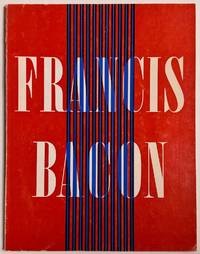
Softcover. NY, Guggenheim Museum, 1st, 1963, Book: Very Good, Dust Jacket: None, Softcover, 79 pages. Illustrated in b/w and color. One of 3000 copies, published in collaboration with the Art Institute of Chicago, of the exhibition catalogue for Bacon's first American retrospective. Mild rubbing to wrappers, clean copy.
Softcover. Hallie Ford Museum of Art, Willamette University, 1st, 2006, Book: Very Good, Dust Jacket: None, Softcover, 152 pages. Frank Boyden is a highly regarded Oregon ceramic artist and printmaker who has created a stunning body of work based on the flora and fauna of Oregon. Boyden has explored a wide variety of themes in his prints, including animals, the landscape, and most recently, the human figure. An essay by Prudence Roberts places Boyden's work within the context of regional and American art. Ian Boyden discusses his father as a printmaker and book collaborator. Clean copy.
Hardcover. D Giles Ltd, 1st, 2020, Book: Very Good, Dust Jacket: Very Good, Hardcover in a bright dust jacket, still in publisher's shrinkwrap. This is the first major publication in more than 30 years devoted to Duveneck, one of the most influential and widely respected late-nineteenth century American artists.Beloved to his students, Duveneck was lauded by many Gilded Age luminaries such as James Abbott McNeill Whistler and Henry James. Yet a century after his death, he is largely known only for asingle, brilliant painting, The Whistling Boy. By contextualizing his work in the artistic, cultural and social milieus of the time, this publication offers diverse perspectives on Duveneck's life, work, subjects and reputation. The essays span his beginnings as a painter of dark realism to his later impressionistic work and examine his significance as a printmaker and draftsman. The lavishly illustrated volume includes a chronology and selected bibliography. irst half of the book consists of essays which detail the artists uneven life. Numerous photos, drawings and a few great close ups. The second half of the book consists of the catalog. 128 catalog images, mostly paintings with some drawings and pastels. All in color.
Hardcover. New York, Rizzoli/Frank Lloyd Wright Foundation, 1st, 1995, Book: Near Fine, Dust Jacket: Near Fine, Hardcover, 352 pages, edited by Bruce Brooks Pfeiffer. Illustrated mostly in b&w, some color. In publisher's shrinkwrap. This volume contains the last ten years of the writings of Frank Lloyd Wright (1869-1959)-including the famous works "The Natural House" (1954), "A Testament" (1957), and "The Living City" (1958)-which are a mixture of rehashed ideas, the reworkings of earlier published pieces, and fanciful explorations into the concepts of truth and beauty. Little new is revealed to the Wrightian scholar by these later works. Yet this last volume cannot be dismissed. As one reads these essays, earlier thoughts and beliefs of Wright, first discovered in the earlier volumes, regularly reemerge and remind the reader of Wright, great influence in art and architecture. Ultimately, this book's value lies in its comprehensiveness (even the banal is included).
Hardcover. New York, Rizzoli/Frank Lloyd Wright Foundation, 1st, 1995, Book: Near Fine, Dust Jacket: Near Fine, Hardcover, 352 pages, edited by Bruce Brooks Pfeiffer. Illustrated mostly in b&w, some color. In publisher's shrinkwrap. This volume contains the last ten years of the writings of Frank Lloyd Wright (1869-1959)-including the famous works "The Natural House" (1954), "A Testament" (1957), and "The Living City" (1958)-which are a mixture of rehashed ideas, the reworkings of earlier published pieces, and fanciful explorations into the concepts of truth and beauty. Little new is revealed to the Wrightian scholar by these later works. Yet this last volume cannot be dismissed. As one reads these essays, earlier thoughts and beliefs of Wright, first discovered in the earlier volumes, regularly reemerge and remind the reader of Wright, great influence in art and architecture. Ultimately, this book's value lies in its comprehensiveness (even the banal is included).

 "Fashion Plates: 150 Years of Styleby: Calahan, April")
 "Fearless Fosdick: The Hole Storyby: Capp, Al")
![First American Art: The Charles and Valerie Diker Collection of American Indian Art by: Bernstein, Bruce [Editor]; McMaster, Gerald [Editor]; Ash-Milby, Kathleen E. [](javascript:largeIMTop('https://www.browsingisarousing.com/shop/images/First-American-Art-The-Charles-and-Valerie-Diker-Collection-of-American-Indian-Art_by_Bernstein-Bruc378700-411946.jpg','https://www.browsingisarousing.com/shop/images/First-American-Art-The-Charles-and-Valerie-Diker-Collection-of-American-Indian-Art_by_Bernstein-Bruc378700-411946.jpg',0,'378700',0,'') "First American Art: The Charles and Valerie Diker Collection of American Indian Art by: Bernstein, Bruce [Editor]; McMaster, Gerald [Editor]; Ash-Milby, Kathleen E. [")
 "Fitz Hugh Lane - 1804-1865 - American Marine Painter by: Wilmerding, John")

 "Fitz Hugh Laneby: Wilmerding, John")
 "Five Painters in New York: Brad Davis, Bill Jensen, Elizabeth Murray, Gary Stephan, John Torreanoby: Armstrong, Richard & Richard Marshall")
 "Flag Paintings of Childe Hassam, Theby: Fort, Ilene Susan")
 "Fletcher Benton (SIGNED COPY)by: Lucie-Smith, Edward")

 "Folklife in Louisiana Photography - Images of Traditionby: De Caro, Frank")
 "Folksongs of Mississippi and Their Backgroundby: Hudson, Arthur Palmer")
 "Forbidden Worlds: #2: American Comic Group Collected Worksby: Mark Chadbourn (Ed.)")
 "Forbidden Worlds: #3: American Comic Groupsby: Peter Normanton (Foreword)")
 "Forbidden Worlds: #3: American Comic Groupsby: Peter Normanton (Foreword)")
 "Forbidden Worlds: American Comics Group Collected Worksby: Unknown")
 "Forbidden Worlds: Volume 1: American Comics Group Collected Worksby: Nicholls, Stan (Foreword)")
 "Forbidden Worlds: Volume 5: American Comics Group Collected Worksby: n?A")
 "Forbidden Worlds: Volume 7: American Comics Group Collected Worksby: N/A")

 "Frank Duveneck: American Masterby: Aronson, Julie (Editor), and Burns, Sarah (Contributions by), and Dombrowski, Andre (Contributions by)")


 "Frank Lloyd Wright Collected Writings: Volume 5 1949-1959by: Wright, Frank Lloyd")
 "Frank Lloyd Wright Collected Writings: Volume 5 1949-1959by: Wright, Frank Lloyd")