Hardcover. NY, Twayne Publishers, 1st, 1992, Book: Very Good, Dust Jacket: Very Good, Hardcover in a bright dust jacket, 145 pages. INSCRIBED BY AUTHOR on the front fly leaf. The renown Frank Norris attained in his brief lifetime sprang from his compelling--and to many Americans startling--novels about people whose lives have escaped their control and have become grotesquely warped by the confluent forces of hereditary and environment.In "revisiting" Frank Norris, Joseph R. McElrath, Jr. takes as a starting point Warren French's 1962 volume in this series and provides a complementary portrait of the artist. McElrath assesses the spate of relatively recent "historical reconstructions" of Norris's canon and finds a writer who, though at times transcendent in the Naturalistic vein, was pragmatic in his choice of subject matter and "not always grandly serious." It is in part the delight Norris took in parody, McElrath argues, that makes him still so readable. Clean copy.
Hardcover. College Station, TX, Texas A&M University Press, 1st, 1985, Book: Very Good, Dust Jacket: Very Good, Hardcover, 148 pages. Collection of 61 full-page color plates of Frank Reaugh's work devoted to Texas. Introduction by Donald L. Weismann. Very good condition, very slight rubbing on the back of the dust jacket, ends of the spine have some wrinkling. The Texas landscape and the legendary longhorn are equally elegant in the beautiful impressionistic artwork of Frank Reaugh. This volume contains a large selection of impressionistic work by Reaugh, who began painting out on the prairies near Dallas in the late 1800s.
Hardcover. NY, Watson-Guptill, 1st, 1976, Book: Very Good, Dust Jacket: Very Good, Hardcover. Frank Schoonover, one of the giants of the Golden Age of American Illustration, was renowned for his scenes of life on the western frontier of America and Canada. Schoonover captured the flavor of the west and northwest in his dramatic outdoor compositions which depicted cowboys, Indians, trappers, Eskimos - the people and way of life that he knew, loved, and painted first hand. His keen sense of observations, coupled with his vivid documentary style, made his illustrations powerful paintings in themselves. They are now exhibited and collected for their own sake, independent of the books they illustrated, as unforgettable documents of a legendary way of life. Like the other great painter/illustrators of the Brandywine School -he was a student of Howard Pyle and a contemporary of such notables as N. C. Wyeth and Harvey Dunn - Schoonover was passionate about the portrayal of the American past. Although he lived most of his life in the Brandywine River area of Pennsylvania and Delaware, his commitment to the frontier dominated his work. A natural love for adventure and a yearning to find his own style sent him initially to the Canadian northwest, where he took naturally to the challenge of frontier life. Living among the Indians, canoeing, traveling by dogsled, and fending for himself brought authentic flavor to his paintings which illustrated many popular books and stories of adventure - most of which are now forgotten, although the paintings endure. This handsome collection is the first full-scale illustrated study of Schoonover's work, not only rediscovering the paintings of a major artist, but providing an important visual document of frontier life. 208 pages. 10 1/2 X 11 1/4. 48 color plates. 150 black-and-white illustrations. Chronology. Index.
Hardcover. NY, Watson-Guptill, 1st, 1976, Book: Very Good, Dust Jacket: Very Good, Hardcover. Frank Schoonover, one of the giants of the Golden Age of American Illustration, was renowned for his scenes of life on the western frontier of America and Canada. Schoonover captured the flavor of the west and northwest in his dramatic outdoor compositions which depicted cowboys, Indians, trappers, Eskimos - the people and way of life that he knew, loved, and painted first hand. His keen sense of observations, coupled with his vivid documentary style, made his illustrations powerful paintings in themselves. They are now exhibited and collected for their own sake, independent of the books they illustrated, as unforgettable documents of a legendary way of life. Like the other great painter/illustrators of the Brandywine School -he was a student of Howard Pyle and a contemporary of such notables as N. C. Wyeth and Harvey Dunn - Schoonover was passionate about the portrayal of the American past. Although he lived most of his life in the Brandywine River area of Pennsylvania and Delaware, his commitment to the frontier dominated his work. A natural love for adventure and a yearning to find his own style sent him initially to the Canadian northwest, where he took naturally to the challenge of frontier life. Living among the Indians, canoeing, traveling by dogsled, and fending for himself brought authentic flavor to his paintings which illustrated many popular books and stories of adventure - most of which are now forgotten, although the paintings endure. This handsome collection is the first full-scale illustrated study of Schoonover's work, not only rediscovering the paintings of a major artist, but providing an important visual document of frontier life. 208 pages. 10 1/2 X 11 1/4. 48 color plates. 150 black-and-white illustrations. Chronology. Index. Due to size and weight, DOMESTIC SHIPPING ONLY.
Hardcover. Garden City, NY, Doubleday & Company, Inc., 1st, 1974, Book: Very Good, Dust Jacket: Very Good, Hardcover, 207 pages with full colored plate illustrations, as well as black and white illustrations and photos. Remainder spray on bottom edge. Bound in blue cloth. Tightly bound, clean copy. Dust jacket shows a little bit of wear on corners, protected by a mylar cover.The first complete biography of a major American artist who devoted both his life & his immense talents to the realistic portrayal of the frontier West." Frank Tenney Johnson (1874 - 1939) was a painter of the Old American West, and he popularized a style of painting cowboys which became known as "The Johnson Moonlight Technique".
Hardcover. NY, Abrams, 1st, Book: Very Good, Dust Jacket: Very Good, Hardcover. VG/VG printed mylar jacket, some foxing to top and edge of text block, else a clean solid copy of the first edition, with no later printings indicated. Book design by Robert Motherwell. Illustrated cloth boards with clear plastic DJ with minor soil, 272 pages, 53 color and 152 BW plates, one fold-out. Mostly plates by American artist Helen Frankenthaler (1928-2011), with some interspersed text by Barbara Rose; also includes a biographical outline and selected bibliography. A fairly comprehensive collection of her work from 1951-1969. DUE TO SIZE AND WEIGHT, This is a heavy and oversized book and will require extra shipping. International customers please ask for a shipping quote before purchasing.
Softcover. NY, André Emmerich Gallery, 1st, 1990, Softcover with deckle fore-edge. Oblong format. 12 full page images in color printed on rectos only, captions on versos. Exhibition April 26 - May 19, 1990 of 14 works (two of which were not illustrated). Laid in is a price list with works sold. Clean copy.
Softcover. Hanover NH, Hood Museum of Art, 1st, 2006, Book: Very Good, Dust Jacket: None, Softcover, pictorial wraps, French flaps, 75 pages with 36 figures and 12 color plates. Issued in conjunction with a 2005 exhibition / installation by American artist Fred Wilson (b. 1954). With essays by Barbara Thompson, Mary K. Coffey, and Jessica Hagedorn, and many fine views of the artist's creativity. Clean copy.
Softcover. US, Detroit Institute of Arts, 1st, 2017, Book: Very Good, Dust Jacket: None, 224 pages. Softcover with publisher's shrinkwrap. Like new. Frederic Church (1826-1900), one of the leading painters of 19th-century America and the Hudson River School, also journeyed around the globe to find fresh inspiration for his highly detailed compositions. Among Church's lesser-known masterpieces are his paintings of the Middle East, Italy, and Greece, produced in the late 1860s through late 1870s, which explore themes of human history and achievement. Taking a closer look at this geographical and thematic shift in Church's practice, this handsome book brings together the artist's major paintings of Athens, Rome, Jerusalem, and the surrounding region. The essays concentrate on a set of six major paintings of architectural and archaeological marvels; one essay also spotlights Olana, Church's home in New York State, which reflects the influence of Middle Eastern design. This impressive volume stands apart in its new approach to the artist's work and its quest to determine why and how this quintessentially American figure was drawn to scenery and themes from the other side of the globe.
London, National Gallery, 1st, 2013, Book: Very Good, Dust Jacket: None, Softcover, 71 pages illustrated in color. A key member of the Hudson River School, Frederic Church (1826-1900) rose to fame as the creator of some of America's most iconic landscape paintings. He also traveled abroad extensively, making trips to Jamaica, South America, Europe, and the Middle East. At home and away, Church made numerous plein air oil sketches of the landscapes he saw, some magnificent, some humble, many of them later subjects for his full-scale paintings. Frederic Church and the Landscape Oil Sketch features some thirty sketches Church executed during his career. Many of these wonderful works come from Olana, the artist's magnificent home overlooking the Hudson River. As Andrew Wilton's essay explains, these informal and often spontaneous sketches played a vital role in the practice and pedagogy of landscape painting in American art just as they did in European art of the 19th century. Clean copy.
Hardcover. New York, Harry N. Abrams, Inc. , 1st Edition, 1989, Book: Very Good, Dust Jacket: Very Good, 160 pages. Hardcover. Color and b/w illustrations throughout. Dust jacket unclipped, excellent. Cover boards bound in red cloth, gilt title on spine, all excellent. Binding tight. Spine straight. Pages and edges clean and unmarked. In beautiful condition. More than one hundred reproductions--58 in full-color--bring to life this quintessentially American artist and the dramatic and colorful imagery that has become part of America's epic story.
Hardcover. Garden City, Duobleday & Company Inc., First Edition, 1982, Book: Very Good, Dust Jacket: Very Good, 537 pages. Hardcover. Black cloth covered boards with white titles to spine. Black & white illustrations. Dust jacket with light, marginal wear, now protected with a plastic cover. Tight binding, clean & unmarked pages throughout.
Hardcover. Flagstaff, AZ, Northland Press, 1st, 1972, Book: Good, Dust Jacket: Good, Hardcover, 115 pages. 30 color reproductions throughout. Beautifully illustrating the skills of this remarkable man, accompanying each of his paintings with notes describing techniques employed, many with revealing comments by the artist himself. Dark blue cloth, gilt lettering to spine and front cover, color slightly faded at edges. Pictorial dust jacket with light edge wear and faint smudges to front cover. Tight binding.
hardcover. NY, Knopf , 1st, 1999, Book: Very Good, Dust Jacket: Very Good, Hardcover, 448 pages. Black & white photos and illustrations. Like new. Purely out of artistic ambition, Armenian-American abstract painter Gorky (1895-1948; born in Turkey as Vostanig Adoian) fabricated a new identity, complete with an Ivy League education and personal histories with master artists, on arriving in the United States. Spender (Within Tuscany), who is married to Gorky's oldst daughter, unhesitatingly exposes the painter's many "tall tales." He also assesses Gorky's difficulty in arriving at his own aesthetic until late in life in terms of both the artist's ties to the artistic patriarchs of the previous generation, the Surrealists (including Breton, Duchamp and Brancusi) and his complex status as a forerunner who eventually became alienated from the New York Abstract Expressionists (particularly de Kooning and Rothko). Spender derives much information from anecdotal sources, including an interview with de Kooning, and assumes a chatty tone in dealing with other artists. But he becomes increasingly less sympathetic to Gorky, whose last years are presented from the perspectives of Spender's wife and her mother. Nonetheless, painting constantly despite failing health, family problems and critical indifference, Gorky's frustrations are heartbreaking. Equally compelling is the window opened on New York's art scene when it was still a small clique. Gorky was so in love with the "artist" archetype that he not only lied about himself but also plagiarized anecdotes, artistic statements, love letters and possibly even his own suicide note. Spender preserves the personal dimensions of his subject while demonstrating that the painter should have adopted a youthful declaration. "I shall be a great artist or if not a great crook"as his motto. 90 b&w illustrations.
Softcover. NY, Princeton Architectural Press , 1st, 2010, Softcover, 224 pages. color illustrations throughout. It's a situation we are all acquainted with: planning to visit friends in an unfamiliar part of the city, you draw yourself arudimentary map with detailed directions. In March 2008, graphic designer Kris Harzinski founded the Hand Drawn Map Association in order to collect just such drawings of the everyday. Fascinated by these accidental records of a moment in time, he soon amassed a wide variety of maps, ranging from simple directions to fictional maps, to maps of unusual places, including examples drawn by well-known historical figures such as Abraham Lincoln, Ernest Shackleton, and Alexander Calder. From Here to There celebrates these ephemeral documents usually forgotten or tossed aside after having served their purpose giving them their due as artifacts representing stories from people's lives around the world. There is the young woman suffering from juvenile rheumatoid arthritis who created maps of the Humira injections on her stomach and thighs to help her remember the sites, and give them time to heal. Or the young boy who imagined a whole country for ants and put it to paper. Lucas from Australia drew an obsessively detailed map of his local traffic island, and a teenage girl contributed a map of her high school locker. Two American tourists got lost in the Bulgarian mountains following the hand drawn map of a local, and Britanny from Denmark drew directions to an animal rights protest in Copenhagen. The maps featured in From Here to There are as varied and touching as the stories they tell.
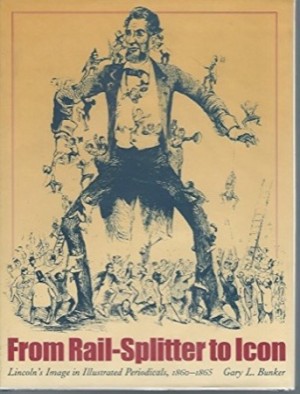
Hardcover. Kent OH, Kent State University Press, 1st, 2001, Book: Very Good, Dust Jacket: Very Good, 387 pages, b&w illustrations. Clean, unmarked in a bright dust jacket. The Lincoln images, originally appearing in such publications as Budget of Fun, Comic Monthly, New York Illustrated News, Phunny Phellow, Southern Punch, and Yankee Notions, significantly expand our understanding of the evolution of public opinion toward Lincoln, the complex dynamics of Civil War, popular art and culture, the media, political caricature, and presidential politics. Lincoln, appealed to illustrators because of his distinctive physical features. (One could scarcely conceive of a similar book on James Buchanan, his immediate predecessor.) Despite ever-improving techniques, Lincoln pictorial prominence competed favorably with any succeeding president in the nineteenth century.
Hardcover. Kent OH, Kent State University Press, 1st, 2001, Book: Very Good, Dust Jacket: Very Good, Hardcover in a bright dust jacket, The Lincoln images, originally appearing in such publications as Budget of Fun, Comic Monthly, New York Illustrated News, Phunny Phellow, Southern Punch, and Yankee Notions, significantly expand our understanding of the evolution of public opinion toward Lincoln, the complex dynamics of Civil War, popular art and culture, the media, political caricature, and presidential politics. Lincoln, appealed to illustrators because of his distinctive physical features. (One could scarcely conceive of a similar book on James Buchanan, his immediate predecessor.) Despite ever-improving techniques, Lincoln pictorial prominence competed favorably with any succeeding president in the nineteenth century. Historical illustrations throughout. 387 pages Including index.
Hardcover. New York , Scholastic, 1st, 1993, Book: Very Good, Dust Jacket: Very Good, Hardcover in a bright dust jacket. 400 pages. SIGNED BY 12 ILLUSTRATORS plus editor, in book and on bookplate. More than 140 folktales, folk songs, poems, and essays, placed in historical context are brought together with over 300 original illustrations from 11 Caldecott Medal and 4 Caldecott Honor book artists.
Hardcover. NY, Independent Curators Incorporated, 1st, Book: Very Good, Dust Jacket: None, Board covers with a red label on front. Non-paginated, ca 50 pages. B&w illustrations. Previous owner's signature on front end paper, else a clean, tight copy.
Hardcover. NY, Abrams, 1st, 2006, Book: Very Good, Dust Jacket: Very Good, Hardcover in a bright dust jacket. The photographs produced by the United States Farm Security Administration (FSA) during the Great Depression constitute one of America's greatest artistic legacies. A team of young photographers, including Dorothea Lange, Walter Evans, and Gordon Parks, not only created an extraordinary and powerful portrait of American life between the wars but in doing so also set a new standard for contemporary photography. 357 pages. Over 470 photographs, many of which have never been published before.
Hardcover. New York, Simon & Schuster, 1st, 1985, Book: Very Good, Dust Jacket: Very Good, 143 pages. Hardcover with dust jacket. A very clean, unmarked copy with only minor wear to dust jacket. Yellowing and wear to dust jacket edges. A collection of ghoulish cartoons conducts an irreverent tour of such American institutions as teenage dating, Las Vegas, automobiles, New England Calvinism, and witchcraft by Gahan Wilson.
Hardcover. Philadelphia, PA, j.M. Stoddart & Co., 1st Edition, 1873, Book: Good, Dust Jacket: None, 488 pages. Hardcover. "Richly Illustrated with one hundred and fifty steel engravings, executed in the finest style of the art, mostly from original designs by distinguished artists." Light blue, fancy textured endpapers. Previous owner's signature on front endpaper. Cover boards elaborately bound in leather with raised bands and gilt title and decoration on spine. Front cover has engraved decoration in black, with gilt title and design, back cover board has same design without gilt (see image). Boards have some chipping around the corners and edges (see images). Elaborately decorative first title page (see image). All edges gilt (quite bright). Hinge cracked at gutter in one place (second page,--second page), binding remains tight, otherwise. Tanning to pages from age, doesn't affect text or illustrations. Some shadowing on a few pages due to previous owner's pressed flowers (now removed). This beautiful old volume was obviously meant to decorate someone's library, as well as provide some comfort at the beginning of the Twentieth Century.
Hardcover. New York, Beaufort Books, 1st, 2016, Book: Very Good, Dust Jacket: Very Good, 375 pages. Hardcover with dust jacket. Clean, unmarked copy with only minor wear to dust jacket. Black and white pictures throughout.

 "Frank Reaugh: Painter to the Longhornsby: Reaugh, Frank")
 "Frank Tenney Johnson Book, The: A Master Painter of the Old Westby: McCracken, Harold")


 "Fred Wilson: So Much Trouble in the World: Believe It or Not! by: Barbara Thompson /Mary K. Coffey /Jessica Hagedorn")
 "Frederic Church A Painter's Pilgrimageby: Myers, Kenneth")

 "Frederic Edwin Church: The Icebergsby: Carr, Gerald R.")
 "Frederic Remington (The Library of American Art)by: James K. Ballinger")


 "Frederic Remington - A Biographyby: Samuels, Peggy/Harold Samuels")


 "Frederic Whitaker; An Illustrated Biography of one of America's Foremost Watercolorists by: Lovoos, Janice")
 "From A High Place - A Life Of Arshile Gorkyby: Spender, Matthew")
 "From Here to There: A Curious Collection from the Hand Drawn Map Associationby: Kris Harzinski")
 "From Rail-Splitter to Icon: Lincoln's Image in Illustrated Periodicals, 1860-1865by: Bunker, Gary L.")
 "From Sea to Shining Sea: A Treasury of American Folklore and Folk Songs (SIGNED COPY)by: Cohn, Amy (Editor)")
 "From the Collection of Sol LeWittby: Miller-Keller Et. al., Andrea")
 "FSA: The American Visionby: Brannan, Beverly and Gilles Mora")
 "Gahan Wilson's Americaby: Wilson, Gahan")
 "Gallery of Famous Poets (A Gallery of Famous English and American Poets with an Introductory Essay by Henry Copp")


 "Garth Williams, American Illustrator: A Lifeby: Wallace, Elizabeth K.")