Hardcover. US, The MIT Press, Book: Very Good, Dust Jacket: Very Good, Like new in publisher's shrink-wrap. Remainder mark on top page block. Boston played a crucial role in the development of American photography, including criticism, collecting, and curating, in the second half of the twentieth century. This book accompanies a landmark exhibition at the DeCordova Museum that includes such important American artists as Berenice Abbott, Harry Callahan, Paul Caponigro, Marie Cosindas, Harold Edgerton, Nan Goldin, Jerome Liebling, Nicholas Nixon, Barbara Norfleet, Olivia Parker, Rosamond Purcell, Aaron Siskind, and Minor White.The period from 1955 to 1985 reflects photography's acceptance as an art form, the influence of modernism, and the coalescence of a unique constellation of educational institutions, museums, and technological development in the Boston area that directly influenced artistic options for photography. Minor White's arrival at the Massachusetts Institute of Technology in 1965 to run the Center for Creative Photography and the Polaroid Corporation's innovative support of photographic art suggest how developments built upon one another to create a regional critical mass in photography.The book contains twenty-five color plates, sixty duotones, and essays by A. D. Coleman, Rachel Rosenfield Lafo, Arno Rafael Minkkinen, and Kim Sichel.
Hardcover. Cambridge, MA, MIT Press, 1st, Book: Very Good, Dust Jacket: Very Good, Hardcover, 208 pages. Pictures that are made, not taken, are the focus of this exciting collection of works by 90 American artists who are using appropriation, computer technology, performance, and numerous other sources of inspiration to stretch the limits and expand the possibilities of photographic art. "Perhaps in the future," Man Ray suggested to Duchamp, "photography would replace all art." The Photography of Invention hints at that future by documenting a decade of startling new work in American photography: work that challenges the accepted hierarchy of the arts and, arguably, establishes photography as the equal of the other arts. Pictures that are made, not taken, are the focus of this exciting collection of works by 90 American artists who are using appropriation, computer technology, performance, and numerous other sources of inspiration to stretch the limits and expand the possibilities of photographic art. The selection of nontraditional pictures includes works by some of the decade's most interesting experimenters-Cindy Sherman, Sherrie Levine, Richard Prince, Barbara Kruger, William Christenberry, Louise Lawler, Stefan Roloff, and others who create or manipulate the subject photographed.
Hardcover. NY, Charles Scribner's Sons, 1st, 1947, Book: Very Good, Dust Jacket: Very Good, Hardcover in a lightly worn, unclipped dust jacket. 308 pages with 393 b&w photographs, endpapers map. As proclaimed on the dust jacket: "This volume, carefully prepared under the direction of the Picture Maker's son, Mr. C. S. Jackson, contains an unrivaled pictorial record which can never be duplicated. It was created by a great artist and photographer who himself played a part in the opening of the frontier country." A truly wonderful work-attractive and informative. "A" On Copyright Page. Light bump to top corner of text block causing a mild crimp to pages at corner. Otherwise very good.
Softcover. Hanover, Brandeis University Press, 1st pbk, 2000, Book: Very Good, Dust Jacket: None, Softcover, 338 pages, a study of Alice Neel and her paintings. Illustrated with b/w photographs and color plates, with notes, bibliography, and index. Clean, bright copy.
Softcover. Hanover, Brandeis University Press, 1st pbk, 2000, Book: Very Good, Dust Jacket: None, Softcover, 338 pages, a study of Alice Neel and her paintings. Illustrated with b/w photographs and color plates, with notes, bibliography, and index. Clean, bright copy.
Hardcover. NY, William Edwin Rudge, 1st, 1930, Book: Good, Dust Jacket: None, Hardcover, red cloth, 46 pages + 51 b&w plates (color frontispiece). Russian artist and diplomatic secretary Paul or Pavel Svinin (1787-1839) toured the northeastern United States in the early 1800s. Here are excerpts of his notes, details about the time and his trip, and 51 BW reproductions of landscapes he rendered along the way. Most of the paintings show scenes from Pennsylvania, New York, New Jersey, Virginia and Maryland. Of interest to both cultural and art historians. With an introduction by R.T.H. Halsey. One of 1000 copies. Ex-lib with stamping, residue to endpapers, gilt lettering on spine faded, otherwise clean.
Hardcover. US, Univ of New Mexico Press, 1st, 1995-10-01, Book: Very Good, Dust Jacket: Very Good, 227 pages. Minor edgewear to dust jacket, else a clean, tight copy. A in depth study of the exhibition held at the Museum of Modern Art in 1955, and its influence, with a final chapter on "Edward Steichen, Robert Frank and American Modernism".
Hardcover. New York, W. W. Norton, 1st, 1976, Book: Very Good, Dust Jacket: Good, Hardcover in a very good plus dust jacket. 192 pages. Color frontispiece, color photographs, illustrations, diagrams, bibliography, index. The dust jacket has very minor edgewear. A photographic look at some of the earlier churches built in North America.
Hardcover. New York, Aperture , 1st, 2001, Book: Very Good , Dust Jacket: Very Good, Hardcover, 144 pages, B&W photos. In original shrink wrap. For almost sixty years Pirkle Jones has chronicled the people, politics, and landscape of Northern California-a "promised land" which has long held sway in the American cultural imagination. Within the confines of that locale, he has unearthed a universe of beauty and meaning, photographing everything from flea-market finds to some of the most important American social movements of the second half of the twentieth century. Operating primarily within a social-documentary framework, Jones has made images characterized by sensitivity and acute observation. With uncanny prescience, a sense of urgency, and a sympathetic eye, Jones often plays the dual roles of artist and witness, combining portraiture, landscapes, and architectural photographs to create thorough documents of social structure and upheaval. Among the photo-essays included in Pirkle Jones: California Photographs are a compassionate and controversial piece on the Black Panther Party in the San Francisco Bay Area, Jones's portraits of the Sausalito houseboat community known as Gate 5, and a notable 1956 photo-essay done in collaboration with Dorothea Lange photographing the destruction and dislocation of the Berryessa Valley before it was flooded on completion of the Monticello Dam. Produced as a single issue of Aperture magazine in 1960 under the name "Death of a Valley", this essay remains a powerful testament to the price of progress. The book also includes Jones's work from the last few decades, in which he shifted his focus to an extended series of elegant, contemplative landscapes. A biographical essay by curator Tim B. Wride frames Jones and his work within the context of photographic history, the people he collaborated with-including Ansel Adams as well as Lange-and the great scope of Californian life.
Hardcover. NP, University of Alaska Press, 1st, 2009, Book: Very Good, Dust Jacket: Very Good, Hardcover, 204 pages, 192 b&w plates, map. This book is a window to the daily life and the environment of the Tikigaq, the Inupiaq people of Point Hope, Alaska, as seen in photographs taken by young Norwegian artist Berit Arnestad Foote from 1959 to 1962. In Berit Foote's days in Point Hope fifty years ago, the ice covered the sea in October and did not clear until July. In recent years, however, the Arctic ice has been changing rapidly, and so are the lives of people in Point Hope and across the North. This book--a call to action as well as a work of art--provides powerful documentation of how profoundly the entire fabric of a community's life and culture is affected by the ice that surrounds it.
Hardcover. New Texture, 1st, 2022, Book: Very Good, Dust Jacket: None, Hardcover, pictorial boards, 135 pages. A prolific men's action magazine illustrator from the magazines' start in the 1950s until their passing from American newsstands in the 1970s, POLLEN IN PRINT's complete, chronological presentation of Pollen's contributions serves as its own visual history, illuminating both Pollen's growth as an artist, as well as the magazines' (and their readers') shifting focus and changing interests across three decades. Clean copy.
Hardcover. New Haven CT, Yale University Press, 1st, 2008, Book: Very Good, Dust Jacket: Very Good, Hardcover, 192 pages. Reaching its pinnacle during the era of Marilyn Monroe and James Bond, Haight-Ashbury and Swinging London, Pop art reflected the ideals and aspirations of a generation. By the 1960s the movement's bold imagery and style had become inseparable from the new consumer culture. This important book looks at British and American Pop art through the lens of portraiture, providing a fresh perspective on the movement and its innovative artists. Blurring the boundaries between "high" and "low" culture, Pop artists including Andy Warhol, Roy Lichtenstein, Richard Hamilton, and Peter Blake elevated portraiture to a new position. Author Paul Moorhouse explores the artists' engagement with portraits; their shared fascination with fame; their use of images from advertisements, rock music, films, and print sources; and the ways in which the British and American schools of Pop evolved and influenced one another. Bringing together key works from the peak years of Pop, this extensively illustrated book demonstrates how the conventions of portraiture were redefined as Pop artists transformed familiar images into transcendent works of art.
Softcover. NY, Museum of Modern Art, 1st, 1999, Book: Very Good, Dust Jacket: None, Softcover, 136 pages. From the early 1960s through the early 70s, Pop Art swept the industrialized world. Iconoclastic, rebellious, and immediately popular, the new movement found its roots in an unprecedentedly prosperous consumer society. Encouraged by galleries and publishers who catered to a new collectors' market, many Pop artists were drawn to the creation of editions on paper and in multiples. 60 vibrant examples by such American icons as Andy Warhol and Roy Lichtenstein, and by such European artists as Richard Hamilton, Niki de Saint Phalle, Gerhard Richter, Eduardo Paolozzi, and Sigmar Polke, are organized according to the themes of mass media consumer culture, politics, erotica and more. All of the works included herein are from The Prints and Illustrated Books Collection at The Museum of Modern Art, New York, an exceptionally rich repository of such work.
Hardcover. New Haven CT, Yale University Press , 1st, 2002, Book: Very Good, Dust Jacket: Very Good, Hardcover, 184 pages. ARTnews, the oldest art magazine in America and the most widely circulated art magazine in the world, is celebrating its one-hundredth anniversary in 2002. This attractive book celebrates and commemorates this milestone event, presenting one hundred of the best photographic portraits commissioned by and reproduced in the magazine since its origin. These fascinating photographs chronicle the history of the magazine and present a "who's who" of people who have shaped the art world over the last century. Portrait of the Art World includes photographs of many of the great European and American artists of the twentieth century, including George Bellows, Francis Bacon, Pablo Picasso, Piet Mondrian, Jackson Pollock, Alexander Calder, and Alice Neel. The photographers-often as fascinating as their subjects-range from Zaida Ben-Yusuf, Alice Boughton (early members of Alfred Stieglitz's circle), and Jessie Tarbox Beals (perhaps the first woman photojournalist) to Stieglitz himself, Man Ray, and Cecil Beaton. Contemporary photographers featured in the book include Timothy Greenfield-Sanders, Arnold Newman, Richard Avedon, and Robert Mapplethorpe. The book also presents an essay by William F. Stapp exploring the historical context of portrait photography in ARTnews; an essay on the history of ARTnews by Pete Hamill; and an essay by Milton Esterow, the current editor and publisher of ARTnews, discussing his personal view of the magazine. This handsomely illustrated book is the catalogue for an exhibition at the New-York Historical Society from September 27, 2002, to January 5, 2003, which will then travel to Washington, Chicago, and San Francisco
Hardcover. New York, W. W. Norton, 1st, 2006, Book: Very Good, Dust Jacket: Very Good, Hardcover, 237 pages, b&w illustrations, 16 color plates. A very clean, tight copy. Thomas Eakins, a native of Philadelphia, painted two worlds: one sure of its valuesthe surgeons, inventors, musicians, and athletes of his timeand another that reflected his own struggles with depression and sexual identity. In this evenhanded account of those struggles, William S. McFeely sheds new light on Eakins's genius and on the evocative melancholy of his portraits, particularly of women, which include many of his remarkable wife, Susan McDowell Eakins. Those deeply perceptive paintings may be the greatest expressions of his art.
Softcover. Rutland, VT, Charles E. Tuttle Company, Reprint, 1969, Book: Near Fine, Dust Jacket: Near Fine, hardcover, 197 pages, illustrated throughout in b&w. Red cloth with gilt lettering to spine. Gray dust jacket, price clipped, with light wear to covers, else like new. In original publishers cardboard slip case.
Hardcover. Germany, Steidl Publishers, 1st, 2008, Book: Very Good, Dust Jacket: None, 295 pages. Hardcover with no dust jacket. A clean, unmarked copy with only minor edgewear. Minor yellowing to textblock edges. Black and white photographs throughout. Richard Avedon, America's preeminent portraitist and fashion photographer, photographed the many faces of politics throughout his career. Portraits of Power brings together Avedon's political portraits for the first time. Juxtaposing images of elite government, media and labor officials with counter-cultural activists, writers and artists, as well as ordinary citizens caught up in national debates, it offers a five-decade taxonomy of politics and power by one of America's best-known artists. The book features several of Avedon's extended projects addressing these themes, including coverage of the civil rights debate in the early 1960s (published in 1964 in Nothing Personal); the American anti-war movement and the war in Vietnam from 1969-1971; portraits of the American power elite in 1976, produced for his groundbreaking Rolling Stone portfolio "The Family;" "Exiles: The Kennedy Court at the End of the American Century," a retrospective homage to the Camelot generation published in the New Yorker in 1993; and his final photo-essay, "Democracy," surveying the national mood during the politically fractious period prior to the 2004 presidential elections (published posthumously in the New Yorker in 2004).
Hardcover. New York, Rizzoli International Publications, Inc., 1st, 2000, Book: Very Good, Dust Jacket: Very Good, Hardcover. Published to commemorate the Hall of Presidents in the National Portrait Gallery. Features reproductions of portraits of every American president from George Washington to Bill Clinton. Historical notes accompany each illustration. Near fine condition; comes in original shrinkwrap.
Hardcover. Museum of New Mexico Press, 1st, 2003, Book: Very Good, Dust Jacket: Very Good, Hardcover, 124 pages. Featuring eighty-two vintage postcards published beginning at the turn of the century, Postcards of the Night traces American cultural life as it was transformed by industrial strength and shifting demographics. The nation increasingly was growing more educated, upwardly mobile, and urban, and the nighttime postcard popularized this modernism for ordinary consumption. Coalitions of city planners and urban developers, politicians and the media utilized the picture postcard to strategize the role of the individual in the rise of the city. It was the birth of leisure and of travel, the new tourist city to which the postcard needed forcefully to speak, in ways that were equal part artifice and art.
Hardcover. NY, Posters Please, 1st, 2003, Book: Very Good, Hardcover, this catalog profiles: American show posters; (Buffalo Bill, circus, sideshow banners & minstrel posters); New Yoprk Central Railway, Mistinguett; international posters; books & periodicals. Color illustrated.
Hardcover. NY, Posters Please, 1st, 2003, Book: Very Good, Dust Jacket: None, Hardcover, 168 pages, Catalogue for auction held Sunday, May 4, 2003 featuring American silent films, French travel posters, International posters, books and periodicals. Clean, very good.
Hardcover. NY, Posters Please, 1st, 2004, Book: Very Good, Dust Jacket: None, Hardcover, catalog for poster auction held Sunday, May 2, 2004 featuring American show posters, PKZ posters, Olympic posters, International posters, books and periodicals. Bright, clean covers.
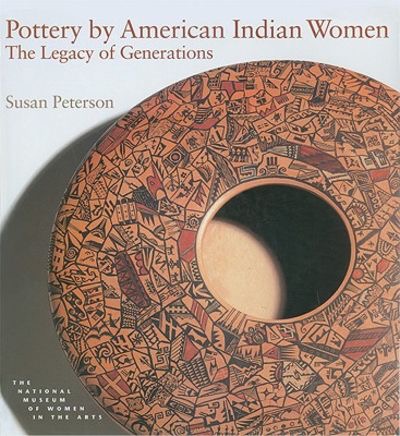
Hardcover. NY, Abbeville Press, 1st, 1997, Book: Very Good, Dust Jacket: Very Good, Hardcover in a bright dust jacket, 224 pages. This book provides a personal look at the three generations of American Indian women who made (and are still making) traditional pottery. Color illustrations throughout. Primarily a women's art, American Indian pottery reflects a heritage of powerful social, religious, and aesthetic values. Even now, modern American Indian women use the clay, paint, and fire of pottery making to express themselves, creating designs that range from dutifully traditional to strikingly original. This book--written in conjunction with one of the most important exhibitions of American Indian pottery ever mounted--provides an in-depth look at a unique North American art form. Clean copy. DOMESTIC SHIPPING ONLY.
Hardcover. NY, Zone Books, 1st, 2022, Book: Very Good, Dust Jacket: Very Good, Hardcover in a bright dust jacket, 214 pages. The philosopher and literary and cultural critic Samuel Weber returns to past narratives of plagues and pandemics to reproduce the myriad ways individual and collective, historical and actual, intentional and unintentional forces converge to reveal how cultures and societies deal with their vulnerability and mortality. The "preexisting conditions"-a phrase taken from the American healthcare industry-of these very cultures converge and collide with the urgent situations of individuals confronting the plague. Texts drawn from the Bible, Sophocles, Thucydides, Boccaccio, Luther, Defoe, Kleist, Holderlin, Artaud, and Camus demonstrate how in the process of narration individuals come to reconsider their relationship to others, to themselves, and to the collectives to which they belong and on which they depend. Clean copy.

 "Photography in Boston: 1955-1985by: Nagler, Gillian (Editor)")
 "Photography of Invention: American Pictures of the 1980sby: Joshua P. Smith, Merry A. Foresta, et al.")
 "Picture Maker of the Old West: William H. Jacksonby: Jackson, Clarence S.")


 "Pictures of People: Alice Neel's American Portrait Galleryby: Allara, Pamela")
 "Picturesque United States of America 1811 1812 1813 being a Memoir on Paul Svinin Russian Diplimatic Officer Artist and Author Containing Copious Excerpts from His Account of His Travels in America with Fifty two Reproductions of Wat")
 "Picturing an Exhibition: The Family of Man and 1950s Americaby: Sandeen, Eric J.")
 "Pioneer Churchesby: Kalman, John De Visser (photographe), Harold")
 "Pirkle Jones - California Photographs 1935-1982by: Jones, Pirkle")
 "Point Hope, Alaska: Life on Frozen Waterby: Foote, Berit Arnestad")
 "Pollen In Print: 1955-1959by: Deis, Robert, Doyle, Wyatt")

 "Pop Impressions Europe/USA: Prints and Multiples from the Museum of Modern Artby: Wendy Weitman")
 "Portrait of the Art World: A Century of ARTnews Photographsby: William F. Stapp")
 "Portrait: A Life of Thomas Eakinsby: McFeely, William S.")
 "Portraits of Jews, by Gilbert Stuart and other Early American Artistsby: London, Hannah R.")
 "Portraits of Powerby: Richard Avedon")
 "Portraits of the Presidents: The National Portrait Galleryby: Voss, Frederick S.")
 "Postcards of the Night: Views of American Citiesby: Jakle, John A.")
 "Poster Intoxication: Poster Auction International Inc XXXIX by: Rennert, Jack (Editor)")
 "Poster Persuasion: Poster Auctions International Xxxviby: N/A")
 "Poster Style XXXVIIIby: Rennert, Jack (Editor)")