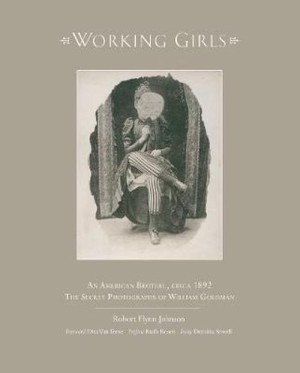
Hardcover. NY, Glitterati, 1st, Book: Very Good, Dust Jacket: Very Good, Hardcover in a bright dust jacket. After becoming captivated by the beauty and originality of a group of nineteenth-century photographs, Robert Flynn Johnson has uncovered more than two hundred vintage images of women who lived and worked at a brothel in Reading, Pennsylvania, circa 1892, and showcases them here for the first time for a wider public. Working Girls details the private, creative archive of commercial photographer William Goldman, whose imagery paints a complete picture of the environments that these women inhabited - from inside the brothel, posing artistically for the camera, to their off-duty routines, such as reading, smoking, and bathing. Taken two decades before the famous E. J. Bellocq photographs of prostitutes in Storyville, New Orleans, circa 1913, Johnson chronicles the aesthetic, historical, and sociological importance of Goldman's artwork in the history of photography, referencing them alongside paintings and photographs by such artists as Degas, Eakins, and Monsieur X. With essays that provide an insightful historical overview of Goldman's work in context of the period in which they were taken, by feminist and cultural luminaries including Dita Von Teese, Ruth Rosen and Dennita Sewell, this extraordinary collection provides a personal visual record of lives of these women while also offering a deeper understanding of the 'working girls' that existed in that era. Clean copy.
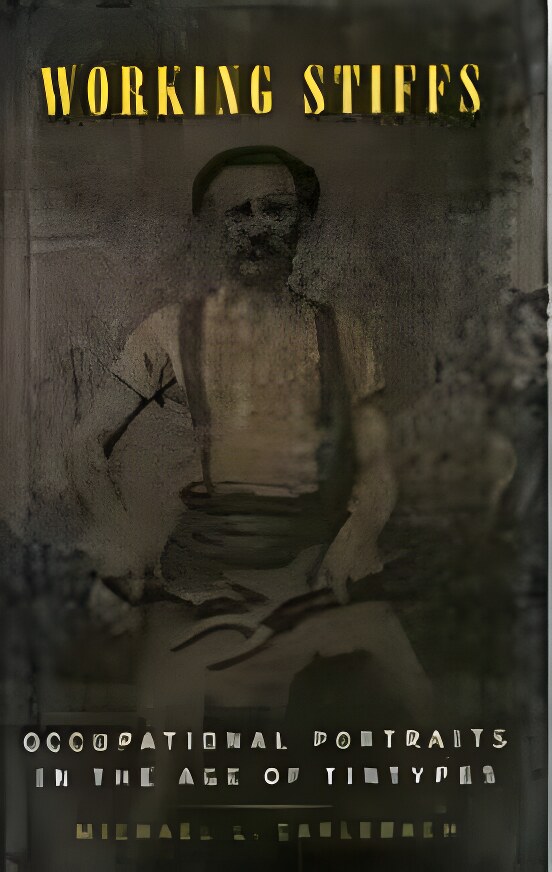
Hardcover. Washington DC, Smithsonian Institution Scholarly Press, 1st, 2002, Book: Very Good, Dust Jacket: Very Good, Hardcover, 144 pages. The tintype, patented in 1856, was a cheap, fast, easy-to-make, practically indestructible type of photograph that became enormously popular among the working class in the late nineteenth century. For common laborers and their families, the opportunity to join the ranks of those who owned pictures of family and friends--the upper classes--was momentous. This collection exhibits more than eighty examples of a specific kind of tintype: occupational portraits, photographs of working people with the tools of their trade. Michael L. Carlebach examines the historical significance of these tintypes and finds that they reveal a great deal about late nineteenth-century values. The subjects of these images are plumbers proudly holding their wrenches and pipe cutters, carpenters with their saws and lathing hatchets, textile workers with their spindles and yarn, icemen with their tongs. These people lived and worked at a time when a depersonalized factory system run by production and efficiency experts was beginning to dominate American industry and culture. Many of the men and women in these tintypes were part of a disappearing class of self-employed artisans and journeymen; their portraits proudly stress their individuality and the essential nobility of their work.
Hardcover. New York, Hudson Hills Press, 1st, 1982, Book: Very Good, Dust Jacket: Very Good, Hardcover, 182 pages, 62 color plates (including 9 gatefolds) and 150 illustrations in b&w and duotone. Monograph of Edward Ruscha, icon of the funky, laid-back world of Californian modern art. Yellow cloth, gilt lettering and unfortunate, but small ink-stains to spine. Pictorial dust jacket with light wear and some sun-fading to spine. Overall a very neat, clean, tight copy.
Hardcover. Chesterfield MA, Chameleon Books, 1st, 2011, Book: Very Good, Dust Jacket: Very Good, Bright salmon cloth, bright salmon flyleaves, color illustrations. dust jacket, 260 pages. 140 color illustrations, 60 in b&w. Considers the life and work of American artist John George Brown (1831-1913). Treats Brown"s overall career and themes; his rural scenes and those of his contemporaries; his masterpiece, a view of New York City"s dockworkers and the subject matter for which he is best known, the New York City bootblack. This is the first lengthy treatment of his life and career. Like new in publishers shrink-wrap.
Hardcover. NY, Farrar Straus and Young, 1st, 1958, Book: Very Good, Dust Jacket: None, Hardcover. Introduction by John Steinbeck. 175 pages of some of Capp's classic comic strips. Some edge wear to front cover, otherwise clean, tight copy.
Hardcover. US, Sansom Foundation, Inc., 1st, 2011, Book: Very Good, Dust Jacket: Very Good, 240 pages. Like new in publisher's shrink-wrap. The painter William Glackens (1870-1938) and his friends were among the liveliest and most influential American artists of the opening decades of the twentieth century. Their continued importance in the history of American art is explored in this informative collection of essays. Colin Bailey chronicles the beginnings of Albert C. Barnes' unparalleled collection of modern art, as well as Glackens' role in forming it, and Avis Berman investigates the friendship of John Sloan, Robert Henri and John Butler Yeats. Carol Troyen examines George Bellows' war paintings and Richard J. Wattenmaker probes the relationship between Glackens' paintings and sketchbooks. H. Barbara Weinberg documents how the leading American Impressionists and members of The Eight dealt with the pressures of economic survival. This profusely illustrated publication is an essential reference for curators, collectors and historians.
Softcover. St Paul, MN, Pogo Press, 1st thus, 1992, Book: Very Good, Dust Jacket: None, Softcover, pictorial wrappers, 108 pages, b&w illustrations. Presents a series of contemporary articles describing the 1893 Chicago world's fair for the Fargo, N.D., Sunday Argus, and discusses the author's career and the role of women journalists. Shaw's 12 newspaper articles along with contemporary photos are reprinted here.
Hardcover. Philadelphia, Universityof Pennsylvania Press , 1st, 1989, Book: Very Good, Dust Jacket: Very Good, Hardcover, 411 pages, b&w illustrations. A guide to over 1,000 documents relating to the artist and his family. Like new in a dust jacket protected by a mylar cover.
Hardcover. Boston, MA, Houghton Mifflin Company, 1st, 1976, Book: Very Good, Dust Jacket: Very Good, 324 pages. Hardcover. Color and b/w illustrations throughout. Cover boards bound in green cloth, gilt title stamped on spine and decoration on front cover. Black endpapers. Binding tight, spine straight. Dust jacket unclipped, has a touch of tanning from age, but still in excellent condition. Pages' outer edges are very slightly tanned, but otherwise clean. This is a beautiful volume that examines an artist's technique, while also telling a story through word and paint brush, about the German immigrants with whom he was living.
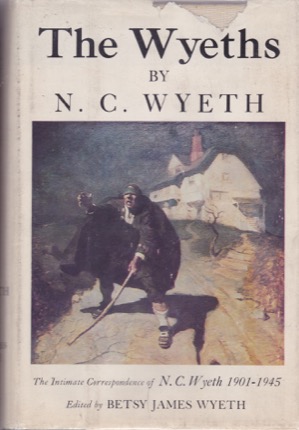
Hardcover. Boston, Gambit, 1st, 1971, Book: Very Good, Dust Jacket: Fair, Hardcover, heavy cloth covered boards with a blue and gilt title block on the spine and a gilt facsimile of N.C. Wyeth's signature on the front board. Worn dust jacket with 1" triangular chip gone from top front panel tear, mild shelfwear. 6 1/2 x 9 1/2", 858 pages, stated 1st edition. A fascinating insight into Wyeth's life, interspersed with photos and color reproductions. N. C. Wyeth was one of America's greatest illustrators and the founder of a dynasty of artists that continues to enrich the American scene. This collection of letters, written from his eighteenth year to his tragic death at sixty-one, constitutes in effect his intimate autobiography, and traces the development and flowering of the Wyeth tradition over the course of several generations. No markings.
Hardcover. New Haven, Connecticut, Yale University Press, 1st, 1974, Book: Near Fine, Dust Jacket: Good, Hardcover. Illustrated history of the Yale's 1969 architectural competition. 117 pages, illustrated fully with black/white photographs and drawings, mostly full-page. Book is cloth bound and in near fine condition, dust jacket is in good condition: bottom of the spine and few edges show wear, small rip on the back at the top edge and small stain on the back as well.
Hardcover. New Haven, Yale University Press, 1st, 1951, Book: Very Good, Dust Jacket: Good, Hardcover in near fine condition with dust jacket in good condition--tears to upper and bottom spine of book, as well as nicks to upper, front edges. ix+ 185 pp. + color frontpiece; 148 b/w illustrations. Catalogue of 1108 works by 412 known artists (127 works by unidentified artists) in all media except prints. Preface by John Marshall Phillips; portraits arranged alphabetically by subject, with biographies of each; index of artists, with list of portraits by each.
Softcover. NY, Hirschl & Adler Galleries, 1996, Book: Very Good, Dust Jacket: None, Softcover, stapled wraps. 39 pages, 15 b&w, 25 color plates. Issued in conjunction with a 1996 exhibition. With a preface by Stuart P. Feld and a 7-page illustrated introduction by Gregory Hedberg. The 30 catalogue entries are annotated. Artists include Henry Inman, James McNeil Whistler, Winslow Homer, John Singer Sargent, John Wellington, et al. Also includes Andy Warhol's portrait of John Lennon and Nelson Shanks portrait of Princess Diana.
Hardcover. Seattle, Fantagraphics, 1st, 2014, Book: Very Good, Dust Jacket: None, Hardcover, 200 pages. This volume covers 1947 through 1949, and includes stories about women from all walks of life from French widows to American teenagers. Simon and Kirby invented the romance comics genre and explored all the flirtations, dalliances, and passions of the young men and women who populated their stories. Get swept away by the sheer delirium that these pages induced so long ago. These comics have been meticulously restored in order to produce one of the most striking and faithful reproductions of 1940s.
Softcover. London, Hard Case Crime, 1st thus, 2013, Book: Very Good, Dust Jacket: None, Softcover, colorful wraps with a retro-style illustration by Gregory Manchess. American radiologist Peter Ross just wanted a vacation. But when he meets the beautiful Angela Locke on a Spanish beach, he soon finds himself caught in a murderous crossfire between rival gangs seeking a precious artifact. From Barcelona to the rain-swept streets of Paris, from the towers of the Alhambra to its darkest catacombs, Peter Ross is an ordinary man in desperate circumstances: racing to uncover a secret lost for centuries, before he becomes its next victim. Remainder dot bottom edge, otherwise like new.
Hardcover. New York, Tudor Publishing Co., reprint, 1960, Book: Very Good, Dust Jacket: Good, Hardcover, 308 pages, b&w illustrations throughout. Yellow cloth with red title on spine. Pictorial tan dust jacket with light wear to edges and spine and some sunfading to back cover. Overall a tight, clean copy.
Hardcover. Los Angeles, Reel Art Press, 1sr, 2013, Book: Very Good, Dust Jacket: Very Good, Hardcover. Like new in publishers shrink-wrap. The first anthology dedicated to one of the greatest American photographers of the 20th century, Dennis Stock, during his most celebrated period of the 1950s-1970s. Undisputedly one of America's greatest photographers, in early 1955 Dennis Stock captured one of the iconic images of the 20th century: the black-and-white image of the unknown James Dean walking across a deserted Times Square, trademark cigarette in hand, a brooding and introspective figure hunched into his oversized coat, braced against the rain and set against the backdrop of the Manhattan skyline. Stock took a series of photographs in New York, Hollywood and in Dean's hometown of Fairmount, Indiana. Stock went on to photograph Marlon Brando, Marilyn Monroe, Audrey Hepburn resting her head on a car window on the cusp of fame, JFK on the campaign trail. His catalogue of work throughout this period reflects his ability to empathize with his subjects but not become subservient to them. In the late 1950s, Stock's focus shifted to the leading jazz musicians and performers of the day; this book contains some of the best photographs ever taken of artists such as Duke Ellington, Billie Holiday, Charlie Parker, Miles Davies and Louis Armstrong. This book is a beautiful tribute to Stock's timeless legacy and complete access to the Stock Archive was granted for this stunning 288-page edition.
Softcover. Santa Fe, NM, Museum of New Mexico Press, 1st, 1998, Book: Very Good, Dust Jacket: None, Softcover, 166 pages. Toba Tucker's expressive portraits honoring Pueblo artists were made over a two-and-a-half year sojourn in the Southwest. These photographs form a record for history and art at the end of the twentieth century and portray Tucker's interest in the individuals and families who pass their artistic traditions from one generation to the next. Remainder stamp on bottom edge otherwise clean.

 "Works of Edward Ruscha, Theby: Hickey, Dave & Peter Plagens")
 "World of J.G. Brown, Theby: Hoppin, Martha")
 "World of Li'l Abner, Theby: Capp, Al")
 "World of William Glackens. The: The C. Richard Hilker Art Lecturesby: Bailey, Colin")
 "World's Fair Notes: a Woman Journalist Views Chicago's 1893 Columbian Exposition by: Shaw, Marian")
 "Writing About Eakins: The Manuscripts in Charles Bregler's Thomas Eakins Collectionby: Foster, Kathleen A. and Cheryl Leibold")

 "Wyeth at Kuernersby: Wyeth, Betsy James")


 "Yale Mathematics Building Competition, The: Architecture for a Time of Questioningby: Moore & Pyle, Ed., Charles W. & Nicholas")
 "Yale University Portrait Index 1701-1951by: Phillips, John Marshall, intro.")

 "Young Romance 2by: Joe Simon and Jack Kirby")
 "ZERO COOLby: Michael Crichton writing as John Lange")
 "Zorach Explains Sculpture: What It Means and How It Is Madeby: Zorach, William")
 "Dennis Stock: American Coolby: Nourmand, Tony")
 "Pueblo Artists: Portraitsby: Tucker Toba; Swenzell Rina; Bush Alfred L")