Hardcover. Boston, Walker, Fuller, and Company, 1st, 1866, Book: Good, Dust Jacket: None, Hardcover, brown cloth binding with gilt lettering and gilt illustrations on front board and spine, 688 pages + ads in front of title-page. Black & white plates with tissue guards. Tissue guard on frontispiece removed. Foxing to pages. Hinge once separated from binding, now reglued at front endpaper. Spotting, fade to spine. Small hole to spine binding. Edgewear to bottom edges. No markings.
Softcover. Guilford CT, TwoDot, 1st, 2008, Book: Very Good, Dust Jacket: None, Softcover, 151 pages, b&w illustrations. The massacre at Wickenburg was one of the most notorious crimes committed in the Wild West--a story revealed in this book through a criminal investigation. November 5, 1871. A westbound stagecoach carrying seven men and one woman left Wickenburg in the early morning hours. At 8:00 a.m., six of the passengers were shot dead. One man and the lone woman, severely wounded, escaped into the desert. Debates raged over the identity of the murderous ambushers -- Indians? Mexican bandits? The two survivors? After a massive investigation, the U.S. Army concluded that a band of local Yavapai Indians were responsible, which led to a policy of "removal and concentration" that altered the fate of nearly every Indian in America's Southwest. Clean copy.
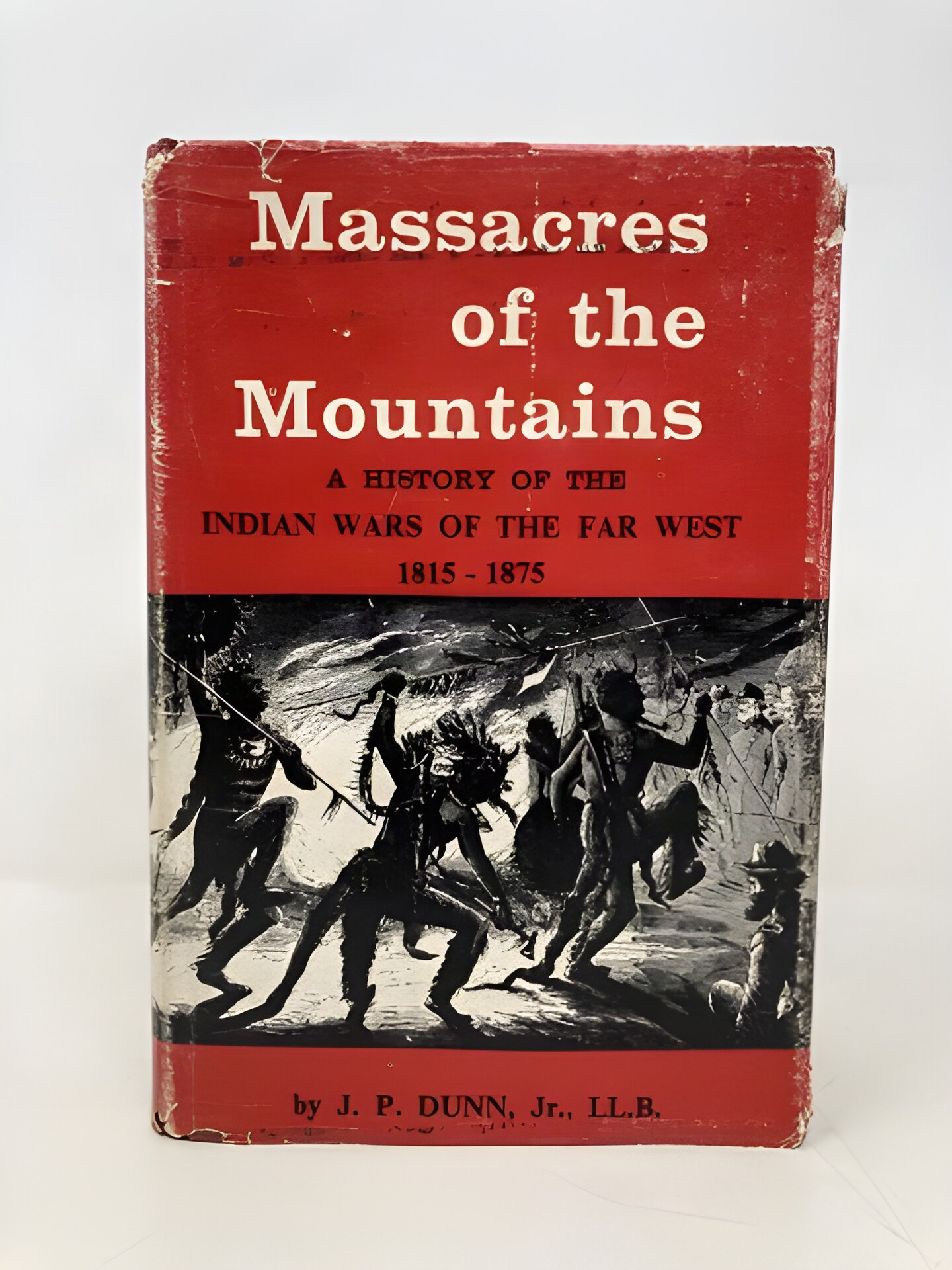
Hardcover. NY, Archer House, reprint, 1958, Book: Very Good, Dust Jacket: Good, Hardcover in a lightly worn dust jacket, 110 b/w illustrations. 669 pages. This is a facsimile reprint of edition first published in 1886. Covering 60 years of merciless bloody conflict, it documents in detail every major Indian battle between 1815 and 1876. Dust jacket spine faded, otherwise a clean, very good copy.
Hardcover. New York, Simon & Schuster, 1st, 2009, Book: Very Good, Dust Jacket: Very Good, 416 pages. Hardcover. Dust jacket unclipped. B/w illustrations throughout. Gilt title on spine. Binding tight, in excellent shape. Clean inside and out.
Softcover. New York, iUniverse, Inc., 1st, 2008, Book: Very Good, Dust Jacket: None, 97 pages. Softcover. B/w illustrations throughout. In excellent condition. Very clean inside and out.
Hardcover. New York, Kluwer Academic/Plenum , 1st, 2000, Book: Very Good, Dust Jacket: None, 237 pages. Hardcover with laminated boards. Previous owner's stamp in front fly leaf, otherwise, clean, tight copy with minor wear to covers. Black and white pictures throughout.
Hardcover. Munich, Williams College Museum of Art/Prestel, 1st, 1990, Book: Very Good, Dust Jacket: Very Good, Hardcover, 812 pages. Blue cloth slip case, 2193 illustrations including 100 color plates. Book still in shrink wrap, in excellent condition. If you think that Maurice Prendergast (1858-1924) only produced decorative park and beach scenes rendered in an abstract style, these two new volumes will set the record straight. Thanks in large part to the generosity of the Eugenie Prendergast Foundation, Mathews has produced a splendid exhibition catalog that surveys the career of the American Impressionist. She also labored for over six years as part of a team of art historians to create a monumental, ten-pound, slip-cased tome that documents the total artistic output of the two Prendergast brothers, Maurice and Charles, A Catalogue Raisonne. A good balance has been struck between the books. The exhibition catalog, of interest to both lay people and scholars, offers a chronological discussion of Maurice's ever-evolving style along with selected works represented by 130 glorious color plates. In contrast, the comprehensive catalogue raisonne , with its highly detailed essays by eight art historians, features 2200 illustrations, 100 of which are in color. All works discussed are represented by an image and catalog entry and range from the sketchbooks, monotypes, and applied graphics of Maurice to the carved and painted panels and sculpture of Charles (1863-1948). A Herculean achievement, the catalogue raisonne will long serve as a cornerstone in the arena of American art history reference.
Hardcover. New Haven CT, Yale University Press, 1st, 2004, Book: Very Good, Dust Jacket: Very Good, Hardcover in a bright, unclipped dust jacket, 398 pages. From colonial times to the present, American composers have lived on the fringes of society and defined themselves in large part as outsiders. In this stimulating book Michael Broyles considers the tradition of maverick composers and explores what these mavericks reveal about American attitudes toward the arts and about American society itself. Broyles starts by examining the careers of three notably unconventional composers: William Billings in the eighteenth century, Anthony Philip Heinrich in the nineteenth, and Charles Ives in the twentieth. All three had unusual lives, wrote music that many considered incomprehensible, and are now recognized as key figures in the development of American music. Broyles goes on to investigate the proliferation of eccentric individualism in all types of American music-classical, popular, and jazz-and how it has come to dominate the image of diverse creative artists from John Cage to Frank Zappa. The history of the maverick tradition, Broyles shows, has much to tell us about the role of music in American culture and the tension between individualism and community in the American consciousness. Leer menos
Softcover. Tuscaloosa, University of Alabama Press, 1st, 1999, Book: Very Good, Dust Jacket: None, Softcover. This collection of Ford's works focuses on the development of ceramic chronology-a key tool in Americanist archaeology. When James Ford began archaeological fieldwork in 1927, scholars divided time simply into prehistory and history. Though certainly influenced by his colleagues, Ford devoted his life to establishing a chronology for prehistory based on ceramic types, and today he deserves credit for bringing chronological order to the vast archaeological record of the Mississippi Valley. This book collects Ford's seminal writings showing the importance of pottery styles in dating sites, population movements, and cultures. These works defined the development of ceramic chronology that culminated in the major volume Archaeological Survey in the Lower Mississippi Alluvial Valley, 1940-1947, which Ford wrote with Philip Phillips and James B. Griffin. In addition to Ford's early writings, the collection includes articles written with Griffin and Gordon Willey, as well as other key papers by Henry Collins and Fred Kniffen. Clean copy in publisher's shrinkwrap.
Hardcover. Dover NH, John Mann, 1st, 1820, Book: Very Good, Dust Jacket: None, Two volumes in one, 194 and 181 pages. Leather bound with maroon spine label with gilt lettering. Page 9/10 with a partial tear, no paper loss. Bookplates on endpapers otherwise a clean, well preserved copy with light foxing to pages.
Hardcover. Boston, City of Boston, 1st, 1889, Book: Fair, Dust Jacket: None, Hardcover, 274 pages, b&w plates and illustrations. Brown end papers. Brown cloth coverings w/ gilt seal and lettering on spine. Wear and rubbing to covers, corners. Binding weak, several pages loose. Else pages clean and crisp.
Hardcover. Newport, VT, Civil War Enterprises, Reprint, Book: Very Good, Dust Jacket: None, 77 pages. Hardcover. Reprint, original publishing date 1868. In excellent shape, clean inside and out. Binding tight. From title page: "The Memorial Record of the Soldiers Who Enlisted from Greensboro, Vermont, to Aid in Subduing the Great Rebellion of 1861-5, Accompanied by a brief History of Each Regiment that Left the state."
Hardcover. NY, Time Life, reprint, 1985, Book: Very Good, Dust Jacket: None, 336 pages. Hardcover with no dust jacket. Dark blue leather bound with gilt titles to front cover and spine. Embossed decoration on front cover. Gilt text block edges, red ribbon marker. Clean, tight copy.
Softcover. Lincoln NE, iUniverse, 1st, 2001, Book: Very Good, Dust Jacket: None, Softcover, 236 pages. "Forward! Double-Quick!" and away we all rushed toward the fort... capturing two brass field pieces, one of which the rebels left loaded." A true account of Vermont men of color in battle during the Civil War. A barely known fact is that the tiny state of Vermont provided over one hundred and fifty African American soldiers to fight for the Union and by doing so, free millions of their own race. This is their story. Derived from historical archives and through their own words. Clean copy. Hastily signed by the author on the half-title page.
Softcover. Bowie MD, Heritage Books, reprint, 2001, Book: Very Good, Dust Jacket: None, Two softcover volumes 391 & 392 pages. Volumes 1 and 2 complete, a facsimile reprint of the 1897 edition by Lippincott. This two-volume series takes the reader on a journey through the colonies of Virginia, Massachusetts, Connecticut, Rhode Island, New Hampshire, Pennsylvania, New Jersey, New York, Maryland, Carolina, and Georgia. The charm of the journey is in its variety, as the reader passes through communities of such striking individuality that they assume the character of different nations. Each colony has a set of opinions and laws peculiar to itself, and it is not uncommon to find the laws of one in contradiction with the laws of another. This text explores the settlement and history of each colony prior to the American Revolution. Topics include development of the colonies' government, laws, religion, schools, boundaries, industries, layout of the cities, fashions, homes, social activities, slavery, architecture, interaction with the Indians, and customs. At least one prominent person from each colony is discussed, amongst them, William Penn of Pennsylvania, John Smith of Virginia, George Calvert of Maryland, and General Oglethorpe of Georgia. Light sunning ti spines.Clean copies.
Hardcover. NY, Simon & Schuster , 2nd pr., 1953, Book: Very Good, Dust Jacket: Very Good, Hardcover in a bright dustjacket, Illustrated wth 12 b/w cartoons by George Price. A wry and witty history of the American motion picture by a giant of the industry. Postcard of Brown Derby Restaurant laid-in.
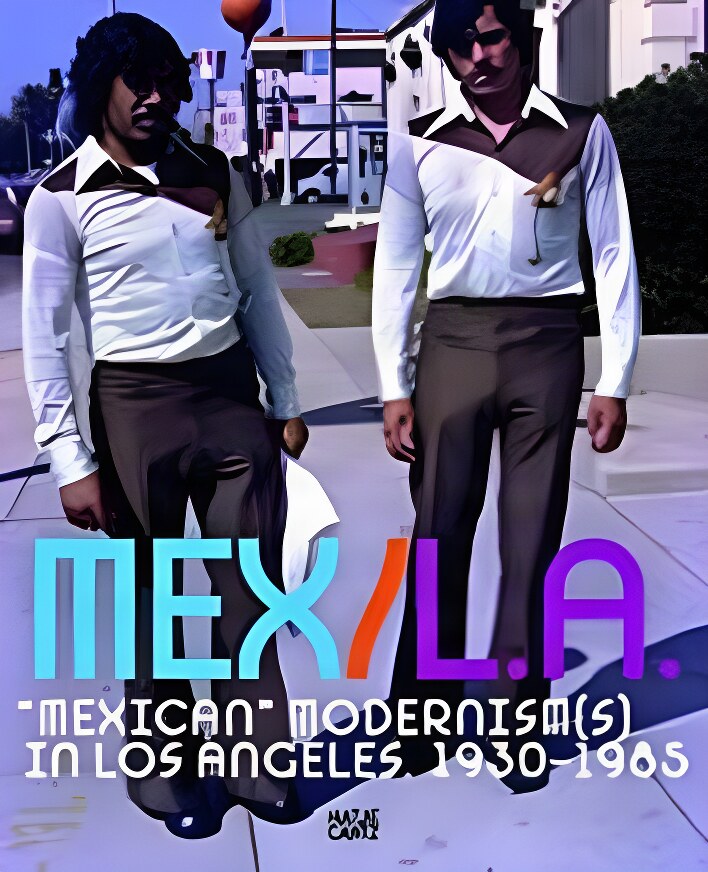
Hardcover. Hatje Cantz, 1st, 2011, Book: Very Good, Dust Jacket: Very Good, Hardcover, 224 pages. The years from 1945 to 1985 are often identified as the moment in which Los Angeles established itself as a leading cultural center in America. However, this conception of its history entirely excludes the very controversial presence of the Mexican muralists, as well as the work of other artists who were influenced by them and responded to their ideas. It is likewise often thought that Los Angeles' Mexican culture arrived full formed from outside it, when in fact that culture originated within the city--it was in Los Angeles and Southern California that Jose Vasconcelos, Ricardo Flores Magon, Octavio Paz and other intellectuals developed the iconography of modern Mexico, while Anglos and Chicanos were developing their own. David Alfaro Siqueiros, Clemente Orozco, Alfredo Ramos Martinez and Jean Charlot made some of their earliest murals in Los Angeles, influencing the Mexican, Mexican-American and Chicano artists of the 1970s and 80s. MEX/LA: Mexican Modernism(s) in Los Angeles 1930-1985 focuses on the construction of different notions of "Mexicanidad" within modernist and contemporary art created in Los Angeles. From the Olvera Street mural by Siqueiros, to the Golden Age of Mexican cinema and the Disney silver-screen productions, to the revitalization of the street mural, up to the performance art of Guillermo Gomez-Pena, MEX/LA explores the bi-national and hybrid forms of artistic practices, popular culture and mass-media arts that have so uniquely shaped Los Angeles' cultural panorama.
Hardcover. Norman OK, University of Oklahoma Press, 1st, 2001, Book: Very Good, Dust Jacket: Very Good, Hardcover in a bright dust jacket, 348 pages, b&w illustrations. This handsomely illustrated book offers a panoramic view of ancient Mexico, beginning more than thirty thousand years ago and ending with European occupation in the sixteenth century. Drawing on archaeological and ethnohistorical sources, the book is one of the first to offer a unified vision of Mexico's precolonial past. Typical histories of Mexico focus on the prosperity and accomplishments of Mesoamerica, located in the southern half of Mexico, due to the wealth of records about the glorious past of this region. Mesoamerica was only one of three cultural superareas of ancient Mexico, however, all interlinked by complex economic and social relationships. Tracing the large social transformations that took place from the earliest hunter-gatherer times to the Postclassic states, the authors describe the ties between the three superareas of ancient Mexico, which stretched from present-day Costa Rica to what is now the southwestern United States. According to the authors, these superareas-Mesoamerica, Aridamerica, and Oasisamerica - cannot be viewed as independent entities. Instead, they must be considered as a whole to understand the complex reality of Mexico's past.
Hardcover. New York, Aperture, 1st, 2003, Book: Near Fine, Dust Jacket: Near Fine, 220 pages, 155 b&w photographs by Casasola. Edited by Pablo Ortiz Monasterio, essay by Pete Hamill. Agustin Victor Casasola photographed everyone of consequence in Mexico at the time of the revolution, from Francisco (Pancho) Villa, Emiliano Zapata and the exiled Russian leader Leon Trotsky to artists Diego Rivera and Frida Kahlo. For this splendid collection of Casasola's work, the noted American author Pete Hamill has written a rich essay on the photographer and the Mexico he pictured so well.
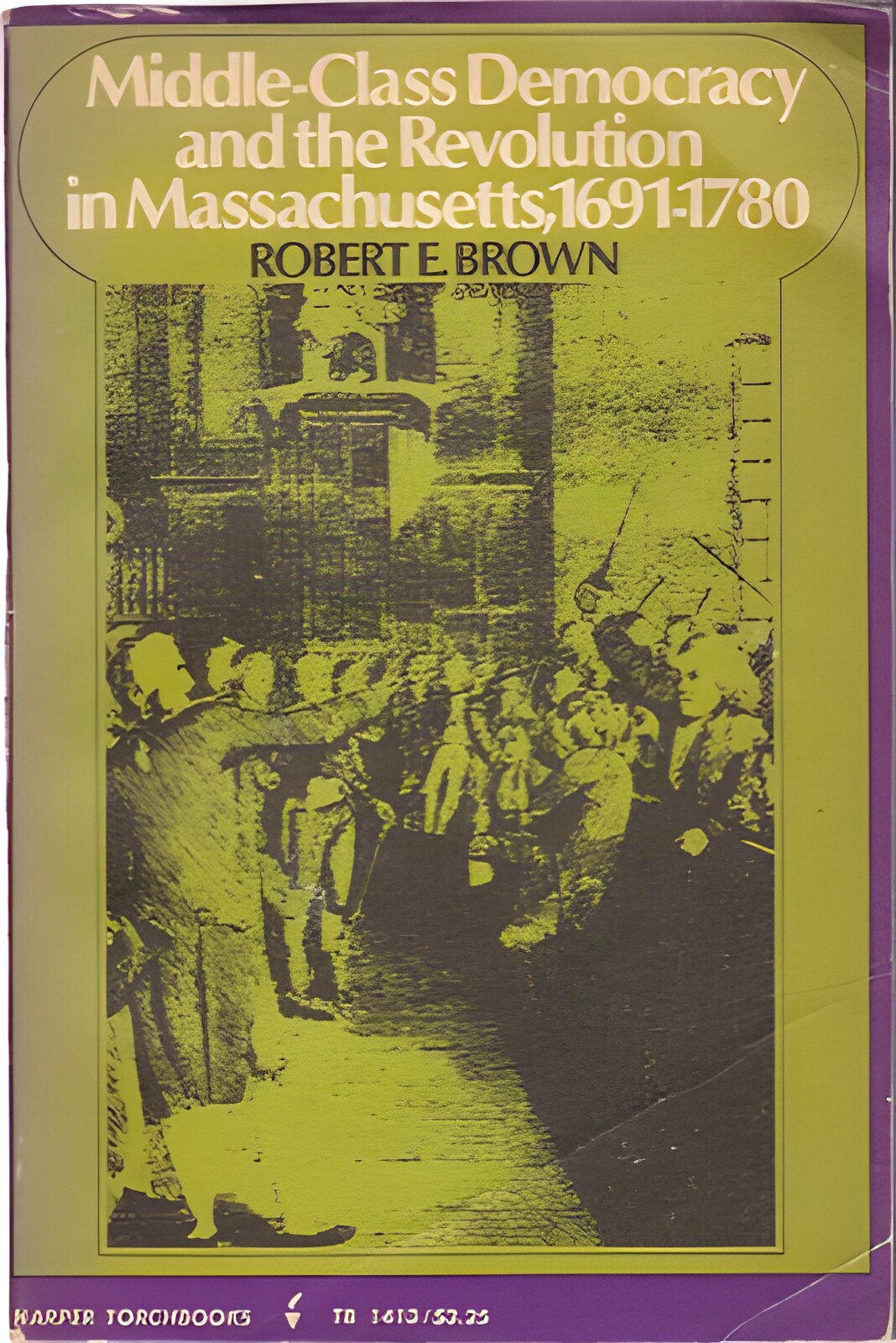
Softcover. NY, Harper Torchbooks, reprint, 1969, Book: Good, Dust Jacket: None, Softcover, 458 pages. This book argues that there was a middle-class democracy in Massachusetts even before the Revolution, which only removed British power from the area. Bump to top corner of volume causing a crease, remainder lines to bottom edge. No markings.
Hardcover. New York, McGraw-Hill Book Company, Inc., 1st, 1957, Book: Very Good, Dust Jacket: Very Good, 547 pages. Hardcover. A Special Hall of Fame Edition of 1,000 copies of which this is SIGNED and hand numbered #738/1000 BY THE AUTHOR. Illustrated with 8 pages of black & white photographs. Faint darkening to top right corner, edge of front endpaper. Price clipped dust jacket with light wear - jacket now protected with clear plastic cover. Unmarked text. Clean, tight copy.


 "Massacre at Wickenburg: Arizona's Greatest Mysteryby: Wilson, R. Michael")
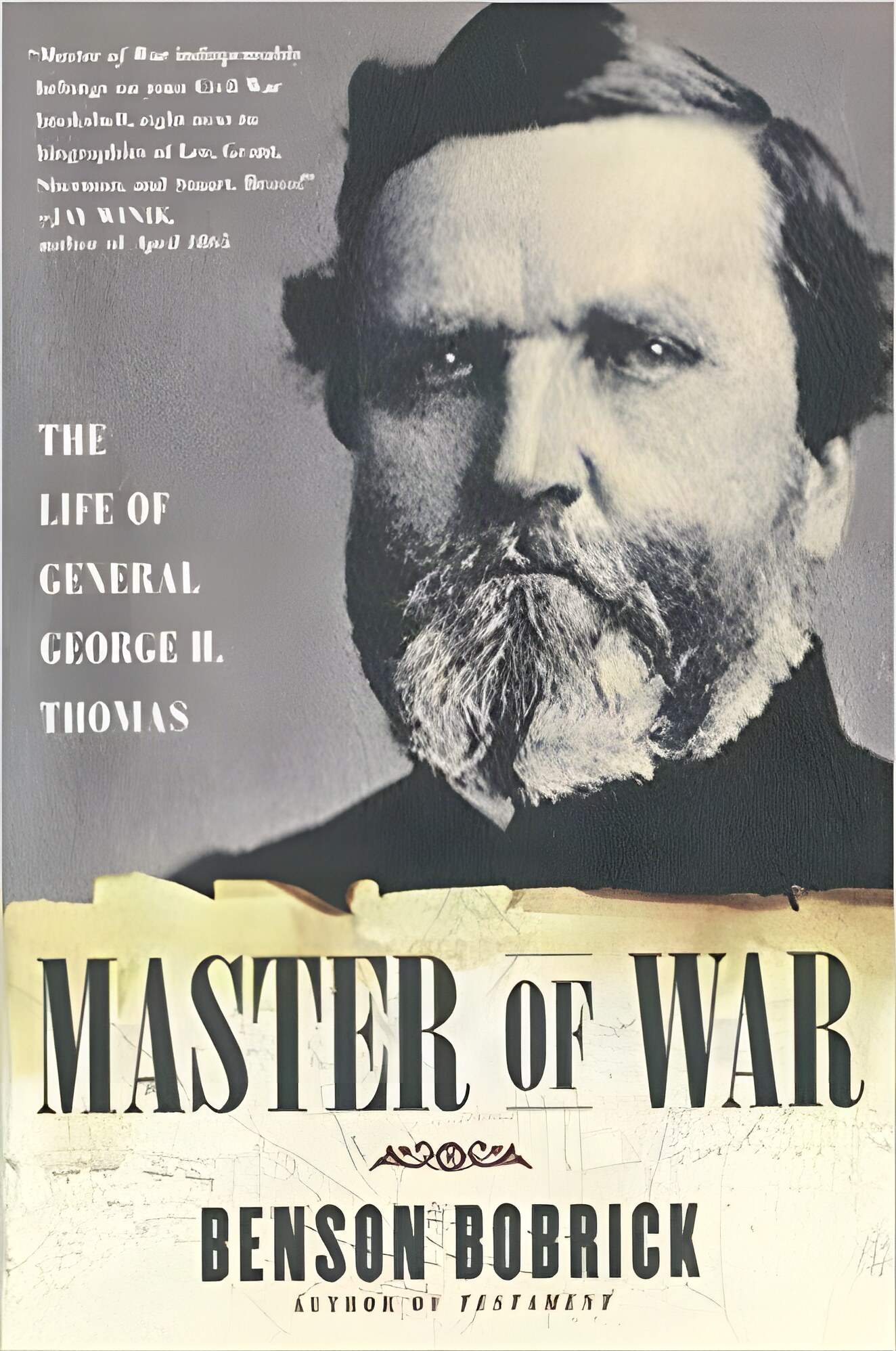




 "Measuring the Flow of Time: The Works of James A. Ford, 1935-1941by: Ford, James A., Foreword: Willey, Gordon R./ Editor: Lyman, R. Lee/ Editor: O'Brien, Professor Mi")


 "Memoirs of the Private and Public Life of William Pennby: Clarkson, Thomas")
 "Memorial of the American Patriots Who Fell at the Battle of Bunker Hill, June 17, 1775, A by: City of Boston")
 "Memorial Record of the Soldiers of Greensboro, Vermont, By E.E. Rollins 1868, Theby: Rollins, E. E.")
 "Memories: A Record of Personal Experience and Adventure During Four Years of War (Collector's Library of the Civil War)by: Beers, Fannie A.")


 "Merely Colossal: The Story of the Movies from the Long Chase to the Chaise Longue by: Mayer, Arthur")

 "Mexico: The Revolution and Beyond - Photographs by Agustin Victor Casasola 1900-1940by: Casasola, Agustin Victor")