Hardcover. NY, Time Life, reprint, 1983, Book: Very Good, Dust Jacket: None, 476 pages. Hardcover with no dust jacket. Dark blue leather bound with gilt titles to front cover and spine. Embossed decoration on front cover. Gilt text block edges, red ribbon marker. Clean, tight copy.
Hardcover. NY, G. P. Putnam's Sons, 1st, 1916, Book: Very Good, Dust Jacket: None, Hardcover, blue cloth with gilt lettering on spine. Illustrated with portraits. Top edge gilt. 412 pages + ads. INSCRIBED BY RANKIN to Livingston C. Lord, President of Eastern Illinois University in 1917. Rankin, who died at 90 in 1927, was an early colleague and friend of Lincoln's from his Springfield days. Small ink number on front fly leaf, otherwise clean.
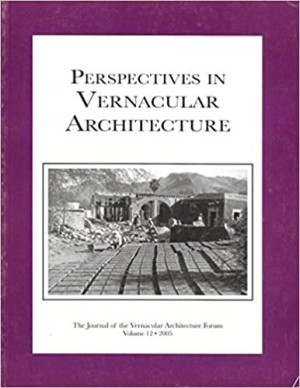
Softcover. Washington and Lee University, 1st, 2005, Book: Very Good, Dust Jacket: None, Softcover, 100 pages. The 2005 issue, Volume 12, of Perspectives in Vernacular Architecture: The Journal of the Vernacular Architecture Forum contains the articles: "Selling Domestic Space: The Boarding House in the Southern Mountains" by Michael Ann Williams; "La Casa Alamense: The Mexican Hacienda as Urban Dwelling" by John Messina; "Unraveling the Benjamin Deyerle Legend: An Analysis of Mid-Nineteenth-Century Brickwork in the Roanoke Valley of Virginia" by Michael J. Pulice; "Orson S. Fowler and a Home for All: The Octagon House in the Midwest" by Rebecca Lawin McCarley; and "Roadside Shrines and Granite Sketches: Diversifying the Vernacular Landscape of Memory" by David Charles Sloane.
Hardcover. New York, Princeton Architectural Press, 1st, 2002, Book: Very Good, Dust Jacket: Very Good, Non paginated. Hardcover. Extensive b&w photographs throughout. Silver gilt titles on spine and cover. Clean, unmarked copy with only minor wear to dust jacket.
Hardcover. London, Merrill Holberton, 1st, 1998, Book: Very Good, Dust Jacket: Very Good, Hardcover, 160 pages. Black & white photography. Clean, tight copy. These largely unpublished photographs, some only recently discovered, were taken by Aby Warburg on his trip to the American frontier in 1895. Neither a photographer nor a native tourist, Warburg was a scholar with a camera. As seen though his own cultural and psychological perspective on art, these insightful photographs are significant not only to the study of Native American and frontier life, but also to an understanding of Warburg's unique vision of cultural history. 80 duotone photos.
Softcover. Washington, D.C., Library of Congress, 1st, 2011, Book: Very Good, Dust Jacket: None, 51 pages. Softcover. Extensive b&w photographs by Arthur Rothstein throughout. Clean, unmarked copy with only minor wear to wrappers.
Softcover. Washington, D.C., Library of Congress, 1st, 2011, Book: Very Good, Dust Jacket: None, 51 pages. Hardcover. Extensive b&w photographs throughout by Carl Mydans throughout. Clean, unmarked copy with only minor wear to wrappers.
Softcover. Bristol UK, Intellect, 1st, 2012, Book: Very Good, Dust Jacket: None, Softcover, 255 pages. With a focus on the settler societies of the United States and Australia, Photography and Landscape is a new critical account of landscape photography created through a unique collaboration between a photography writer and a landscape photographer. Beginning with the frontier days of the American West, the subsequent century-long popularity of landscape photography is exemplified by images from Carleton Watkins to Ansel Adams, the New Topographics to Richard Misrach, all of whose works are considered here. Along with discussions of other contemporary photographers, this extensively illustrated volume demonstrates the influence of settler societies on landscape photography, in which skilled photographers captured the fascination with and the appeal of the land and its expanse. Clean copy.
Hardcover. New York, Harry N. Abrams, 1st thus, 1986, Book: Very Good, Dust Jacket: Very Good, 272 pages. Hardcover with dust jacket. Clean, tight copy. Photographs throughout. Spine lightly faded. Photographs portray the actual way of life of the pioneers who settled the American West in the years after the Civil War.
Hardcover. US, The MIT Press, 1st, 2000, Book: Very Good, Dust Jacket: Very Good, Like new in publisher's shrink-wrap. Remainder mark on top page block. Boston played a crucial role in the development of American photography, including criticism, collecting, and curating, in the second half of the twentieth century. This book accompanies a landmark exhibition at the DeCordova Museum that includes such important American artists as Berenice Abbott, Harry Callahan, Paul Caponigro, Marie Cosindas, Harold Edgerton, Nan Goldin, Jerome Liebling, Nicholas Nixon, Barbara Norfleet, Olivia Parker, Rosamond Purcell, Aaron Siskind, and Minor White.The period from 1955 to 1985 reflects photography's acceptance as an art form, the influence of modernism, and the coalescence of a unique constellation of educational institutions, museums, and technological development in the Boston area that directly influenced artistic options for photography. Minor White's arrival at the Massachusetts Institute of Technology in 1965 to run the Center for Creative Photography and the Polaroid Corporation's innovative support of photographic art suggest how developments built upon one another to create a regional critical mass in photography.The book contains twenty-five color plates, sixty duotones, and essays by A. D. Coleman, Rachel Rosenfield Lafo, Arno Rafael Minkkinen, and Kim Sichel.
Hardcover. US, The MIT Press, Book: Very Good, Dust Jacket: Very Good, Like new in publisher's shrink-wrap. Remainder mark on top page block. Boston played a crucial role in the development of American photography, including criticism, collecting, and curating, in the second half of the twentieth century. This book accompanies a landmark exhibition at the DeCordova Museum that includes such important American artists as Berenice Abbott, Harry Callahan, Paul Caponigro, Marie Cosindas, Harold Edgerton, Nan Goldin, Jerome Liebling, Nicholas Nixon, Barbara Norfleet, Olivia Parker, Rosamond Purcell, Aaron Siskind, and Minor White.The period from 1955 to 1985 reflects photography's acceptance as an art form, the influence of modernism, and the coalescence of a unique constellation of educational institutions, museums, and technological development in the Boston area that directly influenced artistic options for photography. Minor White's arrival at the Massachusetts Institute of Technology in 1965 to run the Center for Creative Photography and the Polaroid Corporation's innovative support of photographic art suggest how developments built upon one another to create a regional critical mass in photography.The book contains twenty-five color plates, sixty duotones, and essays by A. D. Coleman, Rachel Rosenfield Lafo, Arno Rafael Minkkinen, and Kim Sichel.
Hardcover. Fort Worth, TX, Amon Carter Museum, 1st, 1991, Book: Very Good, Dust Jacket: Very Good, Hardcover in a bright dust jacket. Essays by Various authors on the history of photography in America. 244 black & white illustrations, 16 in color. 335 pages.
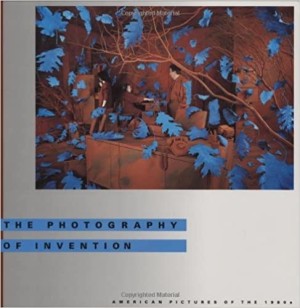
Hardcover. Cambridge, MA, MIT Press, 1st, Book: Very Good, Dust Jacket: Very Good, Hardcover, 208 pages. Pictures that are made, not taken, are the focus of this exciting collection of works by 90 American artists who are using appropriation, computer technology, performance, and numerous other sources of inspiration to stretch the limits and expand the possibilities of photographic art. "Perhaps in the future," Man Ray suggested to Duchamp, "photography would replace all art." The Photography of Invention hints at that future by documenting a decade of startling new work in American photography: work that challenges the accepted hierarchy of the arts and, arguably, establishes photography as the equal of the other arts. Pictures that are made, not taken, are the focus of this exciting collection of works by 90 American artists who are using appropriation, computer technology, performance, and numerous other sources of inspiration to stretch the limits and expand the possibilities of photographic art. The selection of nontraditional pictures includes works by some of the decade's most interesting experimenters-Cindy Sherman, Sherrie Levine, Richard Prince, Barbara Kruger, William Christenberry, Louise Lawler, Stefan Roloff, and others who create or manipulate the subject photographed.
Hardcover. Philadelphia, W.A. Leary & Co., 1853, Book: Good, Dust Jacket: None, 588 pages w/ appendix. Brown leather w/ raised bands on spine, outlined in gilding. Spine cracking and worn. Edge wear. Colorful marbled end pages. Engraving of G. Washington pictured on frontispiece. Inscription in pencil on prelim page dated 1954. Blue design on top/bottom/sides of pages. Corners of boards have gilt design. B/W sketches throughout. Some tissue guards.
Hardcover. NY, Charles Scribner's Sons, 1st, 1947, Book: Very Good, Dust Jacket: Very Good, Hardcover in a lightly worn, unclipped dust jacket. 308 pages with 393 b&w photographs, endpapers map. As proclaimed on the dust jacket: "This volume, carefully prepared under the direction of the Picture Maker's son, Mr. C. S. Jackson, contains an unrivaled pictorial record which can never be duplicated. It was created by a great artist and photographer who himself played a part in the opening of the frontier country." A truly wonderful work-attractive and informative. "A" On Copyright Page. Light bump to top corner of text block causing a mild crimp to pages at corner. Otherwise very good.
Softcover. Durham NC, Duke University Press, 2012, Book: Very Good, Dust Jacket: None, Softcover, 387 pages. Pictures and Progress explores how, during the nineteenth century and the early twentieth, prominent African American intellectuals and activists understood photography's power to shape perceptions about race and employed the new medium in their quest for social and political justice. They sought both to counter widely circulating racist imagery and to use self-representation as a means of empowerment. In this collection of essays, scholars from various disciplines consider figures including Frederick Douglass, Sojourner Truth, Ida B. Wells, Paul Laurence Dunbar, and W. E. B. Du Bois as important and innovative theorists and practitioners of photography. In addition, brief interpretive essays, or "snapshots," highlight and analyze the work of four early African American photographers. Featuring more than seventy images, Pictures and Progress brings to light the wide-ranging practices of early African American photography, as well as the effects of photography on racialized thinking. Still in publisher's shrinkwrap.
Hardcover. Chicago, The Lakeside Press, 1st, 1918, Book: Very Good, Dust Jacket: None, Hardcover, dark green cloth stamped in gilt, top edge gilt, 186 pages. Tight, attractive copy of this early "Lakeside Classic," the annual keepsake presented by this printer/publisher to friends and clients starting in 1903. This volume contains Morris Birkbeck's "Observations of an English Immigrant in 1817," William Newnham Blake's "A Tour in Southern Illinois in 1822" and Henry R. Schoolcraft's "A Journey Up the Illinois River in 1821." includes an index and a 23 page historical introduction by the renowned historian Dr. Milo Milton Quaife. There is a tissue guarded captioned frontispiece entitled "Moris Birkbeck" by courtesy of H. W. Fay of DeKalb. Clean copy.
Hardcover. NY, William Edwin Rudge, 1st, 1930, Book: Good, Dust Jacket: None, Hardcover, red cloth, 46 pages + 51 b&w plates (color frontispiece). Russian artist and diplomatic secretary Paul or Pavel Svinin (1787-1839) toured the northeastern United States in the early 1800s. Here are excerpts of his notes, details about the time and his trip, and 51 BW reproductions of landscapes he rendered along the way. Most of the paintings show scenes from Pennsylvania, New York, New Jersey, Virginia and Maryland. Of interest to both cultural and art historians. With an introduction by R.T.H. Halsey. One of 1000 copies. Ex-lib with stamping, residue to endpapers, gilt lettering on spine faded, otherwise clean.
Hardcover. US, Univ of New Mexico Press, 1st, 1995-10-01, Book: Very Good, Dust Jacket: Very Good, 227 pages. Minor edgewear to dust jacket, else a clean, tight copy. A in depth study of the exhibition held at the Museum of Modern Art in 1955, and its influence, with a final chapter on "Edward Steichen, Robert Frank and American Modernism".
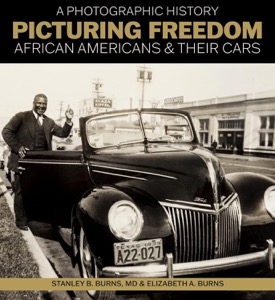
Softcover. NY, Burns Archive Press, 1st, 2022, Book: Very Good, Dust Jacket: None, Softcover, 272 pages. SIGNED BY STANLEY BURNS on title page. Picturing Freedom chronicles and celebrates the photographic history of African Americans and their cars by focusing on personal images of the pride and joy of car ownership (1900-1980+). Owning a car was a significant life-changing achievement. It offered special freedoms--the freedom to travel, the freedom to work further from home, the freedom to visit family and friends, the freedom to avoid Jim Crow laws, and the freedom to migrate. The car was unequivocal evidence of Black success and an important symbol of status in a country that had long fought their advancement in every area. Car ownership was purposely and proudly photographed. All of the photographs were taken in Black communities by a family member or a friend and reveal how African Americans represented themselves. This 2022 IPPY award-winning compilation of over 450 unique photographs is an inspiring visual narrative of American life. Clean, bright copy.
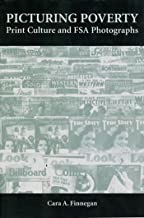
Hardcover. Washington DC, Smithsonian, 1st, 2003, Book: Very Good, Dust Jacket: Very Good, Hardcover, 260 pages. Working for the government's Farm Security Administration in the 1930s, photographers set out across the country to capture the human face of the Depression. Walker Evans' portraits of sharecroppers and Dorothea Lange's images of migrant families today stand as the most popular images from the FSA's project. Yet, in their own time, the pictures functioned as urgent, powerful reminders that one-third of the nation was in a real crisis. Focusing on these and other well-known FSA photographs, Finnegan examines how popular magazines constructed complex and often contradictory messages about poverty. Picturing Poverty also explores a moment in American history when visual images took center stage as the nation struggled with economic, political, and social strife. By striving to understand the original context of the photographs, Finnegan shines new light on the meanings of poverty, the Depression, and the various roles of the media. At once a persuasive analysis of FSA images and a balanced commentary on the role of the media, Picturing Poverty is above all a look into the difficult issue of how the mass media presents social issues to Americans.
Hardcover. New York, Macmillan Company, 1st Edition, 1918, Book: Very Good, Dust Jacket: None, 310 pages including publisher advertisements. B/w illustrations throughout, including frontispiece. Decorated ribbon bookmark, no longer attached, but laid in. Black cloth cover boards, gilight title on spine. Tanning to pages and edges, otherwise unmarked.
Hardcover. New York, Neale Publishing Co., 1st, 1914, Book: Very Good, Dust Jacket: None, Hardcover, 324 pages, dark blue cloth with gilt lettering on spine. An account of a Civil War battle fought in Missouri. Tight, clean copy.
Hardcover. New York, McGraw-Hill, 2nd, 1986, Book: Very Good, Dust Jacket: Very Good, 298 pages. Hardcover with dust jacket. Clean, unmarked copy with only minor wear to dust jacket. Black and white pictures throughout. ames Oberg (Red Star in Orbit, Mission to Mars, etc.) is a spaceflight engineer at Houston Mission Control; Alcestis Oberg is the author of Spacefarers of the 80s and 90s. Here they offer an engrossing and vivid account of what life is like in an earth-orbiting spacecraft. Because relatively few American space-travelers have published tales of their experiences, the Obergs lean heavily on the diaries and memoirspublished in Russia and little known hereof pioneering Soviet astronauts, notably veterans of long-term Salyut missions like Ryumin and Berezovoy. Here is the human side of life in orbit. Few readers can fail to be grippedand occasionally amusedby revelations of the immediate problems (how astronauts contend with toilets, hygiene, sleeping), their technical perils (e.g., air contamination) and the psychological hazards they face, from crewmate incompatibility to depression and homesickness for Earth. Photos.

 "Personal Recollections of a Cavalry Man (Collector's Library of the Civil War)by: Kidd, J. H.")



 "Photoboothby: Hines, Babbette")

 "Photographs of Arthur Rothstein, Theby: Rothstein, Arthur")
 "Photographs of Carl Mydans, Theby: Mydans, Carl")


 "Photography in Boston: 1955-1985by: Nagler, Gillian (Editor)/Rachel Rosenfield Lafo")
 "Photography in Boston: 1955-1985by: Nagler, Gillian (Editor)")
 "Photography in Nineteenth-Century Americaby: Sandweiss, Martha A. (Ed.)")
 "Pictorial Life of General Washington: Embracing a Complete History of the Seven Years' War, the Revolutionary War, the Formation of the Federal Constitution, and the Administration of Washingtonby:")


 "Pictures and Progress: Early Photography and the Making of African American Identity by: Wallace, Maurice O. & Smith, Shawn Michelle (Editors)")
 "Pictures of Illinois One Hundred Years Ago by: Milo Milton Quaife (Ed.)")
 "Picturesque United States of America 1811 1812 1813 being a Memoir on Paul Svinin Russian Diplimatic Officer Artist and Author Containing Copious Excerpts from His Account of His Travels in America with Fifty two Reproductions of Wat")



 "Pilgrims and their History, Theby: Usher, Roland G.")

 "Pilot Knob: The Thermopylae of the Westby: Peterson, Cyrus A. and Joseph Mills Hanson")
 "Pioneering Space: Living on the Next Frontierby: Oberg, James E. and Alcestis R.")