Hardcover. Hartford CT, Hurlbut, Scranton & Co., 1st, 1864, Book: Very Good, Dust Jacket: None, Hardcover, 763 pages, illustrated with many full-page plates, most hand-colored (including second title page). Leather bound with some splitting along spine edges. Black spine label with gilt lettering. Internally very good, minor foxing.
Hardcover. Chicago, M.A. Donohue and Co., 1st, 1940, Book: Very Good, Dust Jacket: None, Hardcover, pictorial boards with blue cloth spine.64 pages. Six full page color illustrations by Lone Wolf. Map on end papers. Edgewear rubbing to covers.
Hardcover. NY, Harcourt Brace , 1st, 1994, Book: Very Good, Dust Jacket: Very Good, Hardcover in a bright, unclipped dust jacket. Illustrated with 16 pages of black and white photographs, 338 pages. With wry humor and sharp observation, playwright Pifer elegantly mixes memory and research to reconstruct the world of his South African boyhood from 1933 to 1945. Pifer's father, an idealistic mining engineer in search of challenge and stability during the Depression, found it in Africa, but his earnest American egalitarianism soon put him in conflict with Afrikaner mine overseers, and his career under magnate Sir Ernest Oppenheimer stalled. The author deftly evokes his family--"my mother had the freedom of a disobedient daughter"--and the isolation of the desert town of Oranjemund. The book is even more resonant in its snapshots of mid-century Southern Africa: the still-simmering enmity between Afrikaners and the English; the ripples from Hitler's war in what prior to WW I had been the German territory of South West Africa (currently Namibia). Pifer's knowing account of the travails of servants--"the chasm that exists between white mistress and African maid"--still rings true today. Clean copy.
Softcover. Memphis, TN, The Dixon Gallery and Gardens, 1st, 1982, Book: Very Good, Dust Jacket: None, Softcover, 206 pages. With newspaper clipping slipped in. Illustrated in B&W and color. overall tight and clean copy. The narrative essays chart the routes taken by the American painters as they progressed from their experience at French communities to the re-establishment of their careers on native soil. Also included with the essays are the vivid artwork of these painters.
Hardcover. New York, Publishers Company, 2nd edition, 1968, Book: Very Good, Dust Jacket: None, 5 volumes: 291, 291, 317, 304, and 306 pages. Light brown cloth covers, with silver and black titles, profusely illustrated with b&w plates. Slight rubbing to covers, small brown stain to spines of Theater and Civil War volumes, previous owner's embossed stamp to all title pages, ex-lib bookplates to all copyright pages, pages very crisp and unmarked, tight binding; overall, volumes are in clean, tight condition. NOTE: DUE TO WEIGHT AND SIZE, DOMESTIC SHIPPING ONLY.
Hardcover. New York, Museum of Modern Art, 1st, 1984, Book: Very Good, Dust Jacket: Very Good, Hardcover, 216 pages, illustrated throughout in color and b&w. Clean, unmarked copy with only minor wear to dust jacket. The first major retrospective of the work of Irving Penn in more than twenty years will open at The Museum of Modern Art on September 13, 1984. The exhibition surveys Penn"s long career, spanning the past four decades, and features his work in portraiture, fashion, advertising, the nude, ethnographic subjects and still life, as well as a selection of Penn"s early, unpublished photographs.
Hardcover. Tucson, University of Arozona, 1st, 1974, Book: Near Fine, Dust Jacket: Very Good, 221 pages illustrated throughout in color and b&w. Limited edition, 1/2500 copies. Green cloth with dark green title to spine. White pictorial dust jacket with minor wear to edges, else like new. 4 color, 147 bw plates. Catalogue at rear lists 184 works. Foreword by John I.H. Baur. Introduction by Martin H. Bush. Main essay by Sheldon Reich, with notes. Includes reproductions of many etchings. A terrific copy of this uncommon title.
Hardcover. NY, Knopf, 1st, 1976, Book: Very Good, Dust Jacket: Very Good, Hardcover in a bright dust jacket, 360 pages. Published in association with the American Heritage Publishing Co. Text by Bernard Lewis, Richard Ettinghausen, Oleg Grabar, Fritz Meier, Charles Pellat, A. Shiloah, A.I. Sabra, Edmund Bosworth, Emilio Garcia Gomex, Roger M. Savory, Norman Itzkowitz, S.A.A. Rizvi, Elie Kedourie. Illustrated with 495 reproductions, photographs, drawings, and maps, 160 of them in full color.
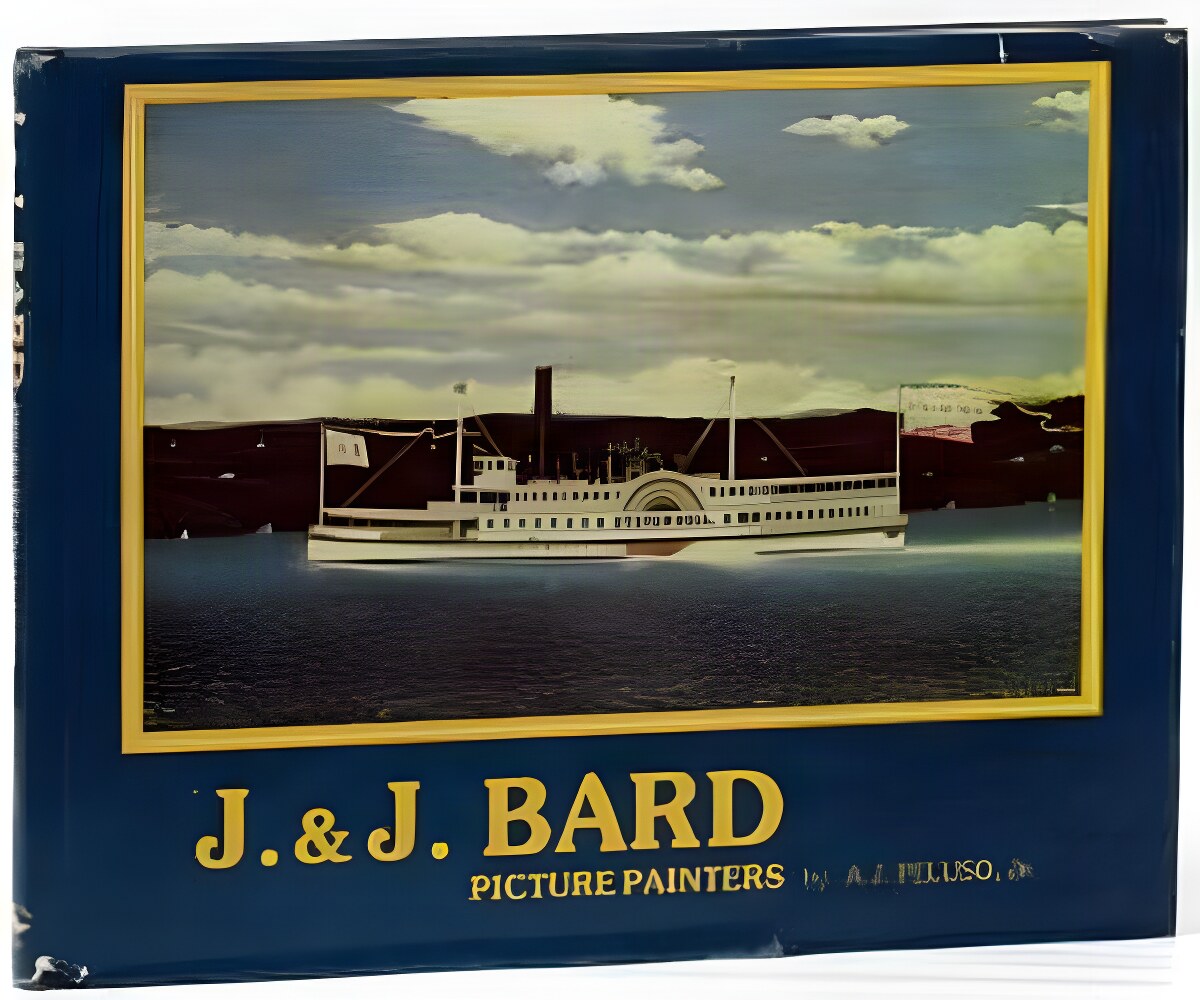
Hardcover. New York, Hudson River Press, 1st, 1977, Book: Very Good, Dust Jacket: Very Good, 136 pages. Hardcover with lightly rubbed dust jacket. B&w and color illustrations throughout. The first comprehensive and fully illustrated study of two of the most important 19th-century American marine painters; twins John and James Bard. Blue cloth, gilt lettering to spine and front cover. Blue pictorial dust jacket, edge wear. Clean, tight copy.
Hardcover. NY, Watson Guptill, 1st, 1974, Book: Very Good, Dust Jacket: Very Good, Hardcover. Beautiful copy of this detailed study of the American illustrator. Color, black & white plates. 206 pages. In a bight, unclipped dust jacket.
Hardcover. NY, Abrams, 1st, 2008, Book: Very Good, Dust Jacket: Very Good, Hardcover, 256 pages. One of the most prolific and successful artists of the Golden Age of American Illustration, J. C. Leyendecker captivated audiences throughout the first half of the 20th century. Leyendecker is best known for his creation of the archetype of the fashionable American male with his advertisements for Arrow Collar. These images sold to an eager public the idea of a glamorous lifestyle, the bedrock upon which modern advertising was built. He also was the creator instantly recognizable icons, such as the New Year's baby and Santa Claus, that are to this day an integral part of the lexicon of Americana and was commissioned to paint more Saturday Evening Post covers than any other artist. Leyendecker lived for most of his adult life with Charles Beach, the Arrow Collar Man, on whom the stylish men in his artwork were modeled. The first book about the artist in more than 30 years, J. C. Leyendecker features his masterworks, rare paintings, studies, and other artwork, including the 322 covers he did for the Post. With a revealing text that delves into both his artistic evolution and personal life, J. C. Leyendecker restores this iconic image maker's rightful position in the pantheon of great American artists.
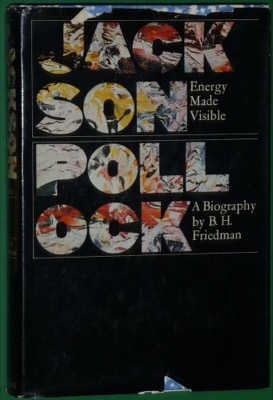
Hardcover. NY, McGraw-Hill , 1st, 1972, Book: Very Good, Hardcover, 293 pages, b&w photographs. Edge wear, small tears to dust jacket. Dark blue top edge decorative stain w/ light spots, else a very clean, tight copy. Nowhere is the complex and destructive painter Jackson Pollock (1912-1956) revealed with more compassion and insight than in this exemplary biography. Friedman, a friend of Pollock's and active in the art world, shows him to be a brilliant man tormented by his relationship to his family; an artist who worked hard through years of poverty to achieve his controversial painting technique; the first American painter to gain an international reputation for himself and for what has been variously called Action Painting or Abstract Expressionism; and a man who struggled with alcohol and the tension between gentleness and violence.Newly illustrated with seminal Pollock paintings, this book takes the reader inside the art world of New York during the '40s and '50s, when Action Painting first emerged. Friedman reveals what it meant to Pollock to experience the invasion of his studio and of the very act of painting by the external pressures of shows, reviews, films, dealers, critics, hostile publicity; and how, despite it all, Pollock created many of the most graceful and powerful paintings ever made in America.
Softcover. New York, Abbeville, 1st, 1983, Book: Very Good, Dust Jacket: None, Softcover, 128 pages, b&w and color illustrations. Illustrated end papers. A very clean, tight copy.
Softcover. Washington, DC, National Gallery of Art, 2nd, 1995, Book: Very Good, Dust Jacket: None, Exhibition catalog. 331 pages, illustrated throughout in color and b&w. Pictorial stiff wrappers. Minimal wear to covers, else like new.
Hardcover. Washington, DC, National Gallery of Art, 1st, 1995, Book: Very Good, Dust Jacket: Very Good, Exhibition catalog. Hardcover, 331 pages, illustrated throughout in color and b&w. Remainder mark on bottom edge, otherwise like new.
Hardcover. New York , Watson Guptill, 1st, 1974, Book: Very Good, Dust Jacket: Very Good, Hardcover, 208 pages illustrated throughout with 175 b&w illustrations and 70 plates in full color. Clean, unmarked copy with only minor edgewear to dust jacket.
Hardcover. New York , Watson Guptill, 1st, 1974, Book: Very Good, Dust Jacket: Good, Hardcover, 208 pages illustrated throughout with 175 b&w illustrations and 70 plates in full color. Clean, unmarked copy with minor closed tears to dust jacket.
Hardcover. New York , Watson Guptill, 1st, 1974, Book: Very Good, Dust Jacket: Very Good, Hardcover, 208 pages illustrated throughout with 175 b&w illustrations and 70 plates in full color. Clean, unmarked copy with only minor edgewear to dust jacket.
Softcover. New York, Abbeville Press, 1st, 1984, Book: Very Good, Dust Jacket: None, Softcover, 128 pages, illustrated throughout in color and b&w. Pictorial stiff wrappers. Light wear to edges and covers, else a very nice, tight, clean copy.
Hardcover. NY, Rizzoli, 1st, 2022, Book: Very Good, Dust Jacket: Very Good, Hardcover in a bright dust jacket, still in publisher's shrinkwrap. A rare and poignant compilation of photography and written anecdotes by American photographer and artist Lee Jaffe that captures his close friendship, collaboration, and travels with the artist Jean-Michel Basquiat as they traversed Japan, Thailand, and Switzerland in 1983. Lee Jaffe, a cross-disciplinary visual artist, musician, and poet, took photos of his friend, Jean-Michel Basquiat, when they traveled abroad in 1983. As a photographer, Jaffe had a connection to Basquiat, and their time spent together resulted in an archive of imagery that captured one of the art world's true legends through an unfiltered and authentic lens. Basquiat and Jaffe connected over reggae music at a mutual friend's art show. It was the early 1980s in New York, when the art scene was raw, complicated, and thriving, and Jaffe cultivated strong connections with cultural figures such as Basquiat, Bob Marley, and Peter Tosh. "For me, watching him [ Jean] paint reminded me of the times I would sit and play harmonica while Bob Marley, with his acoustic guitar, would be writing songs that were eventually to become classics," Jaffe says. "With Jean and Bob, it seemed like they were channeling inspiration coming from an otherworldly place." This beautiful volume presents snapshots of Basquiat: from the artist smiling on a bullet train to Kyoto and behind-the-scenes documentation of Basquiat creating artwork in St. Moritz, to poignant portraits that mirror his undeniable magnetism. These rare depictions of Basquiat come to life with Jaffe's unforgettable experiences of their friendship, collaborations, and travels detailed in private written memories and anecdotes. This insightful and moving illustrated volume captures the soul of the unedited, ambitious, young artist during the height of his short yet unprecedented artistic career.
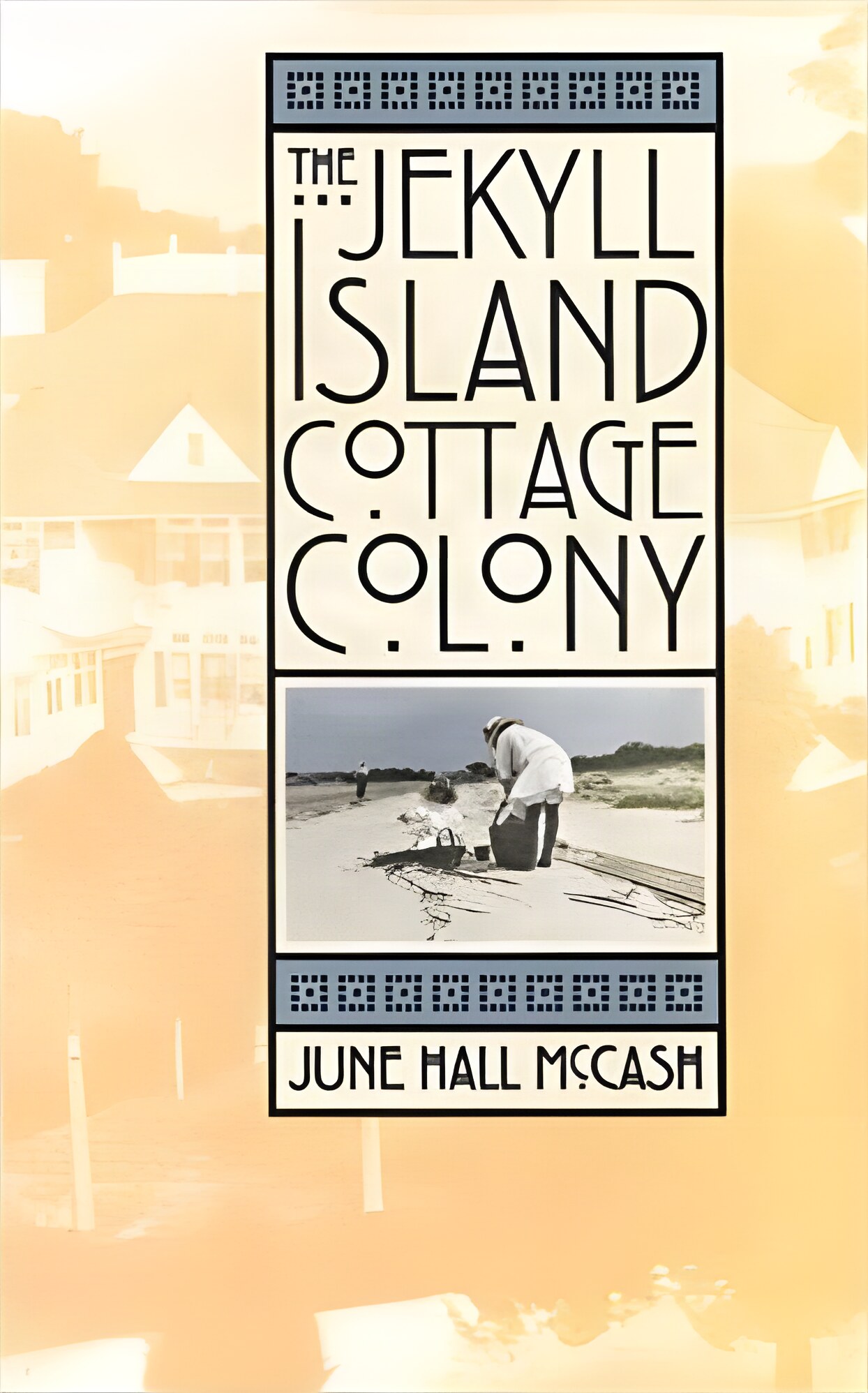
Hardcover. Athens, University of Georgia, 1st, 1998, Book: Very Good, Dust Jacket: Very Good, Hardcover, 316 pages, b&w photographs. Light rubbing to dust jacket, sticker residue on rear. Else a clean, tight copy. During the Gilded Age, Jekyll Island, Georgia, was one of the most exclusive resort destinations in the United States. Owned by the most elite and inaccessible social club in America, a group whose members included Rockefellers, Pulitzers, Vanderbilts, Goulds, and Morgans, this quiet refuge in the Golden Isles was the perfect winter getaway for the wealthy new industrial class of the snowbound North. In this delightful book, a companion volume to The Jekyll Island Club: Southern Haven for America's Millionaires, June Hall McCash focuses on the social club's members and the "cottages" they built near the clubhouse between 1888 and 1928. Illustrated with hundreds of never-before-published photographs from private family collections, The Jekyll Island Cottage Colony tells the stories of each home, the owners' connections with the island, and their interactions with one another.
Softcover. Baltimore, John Hopkins University Press, 1st, 1995, Book: Very Good, Dust Jacket: None, Softcover in illustrated wrappers, 304 pages. Illustrated with B&W engravings. Jens Jensen was one of America's greatest landscape designers and conservationists. Using native plants and "fitting" designs, he advocated that our gardens, parks, roads, playgrounds, and cities should be harmonious with nature and its ecological processes-a belief that was to become a major theme of modern American landscape design. In Jens Jensen: Maker of Natural Parks and Gardens, Robert E. Grese draws on Jensen's writings and plans, interviews with people who knew him, and analyses of his projects to present a clear picture of Jensen's efforts to enhance and preserve "native" landscapes.
Hardcover. NY, Thomas Crowell, 1st, Book: Very Good, Dust Jacket: Very Good, Hardcover, 224 pages, illustrated in color and b&w. Jessie Willcox Smith (1863-1935), was one of the most prominent female illustrators in the United States during the Golden Age of American illustration. She illustrated stories and articles for clients such as Century, Collier's Weekly, Leslie's Weekly, Harper's, McClure's, Scribners, and the Ladies' Home Journal. Four appendices give detailed listings of the appearance of Smith's illustrations in books, magazine covers, posters, etc. Bibliography. Notes. Index. With a lightly worn dust jacket that's been price-clipped. Previous owner's inscription on front fly lead, otherwise clean.
Hardcover. New York, New Press, 1st, 2008, Book: Very Good, Dust Jacket: Very Good, Hardcover, 198 pages, b&w illustrations. Readers have long cherished the work of comic masters such as Will Eisner, Jules Feiffer, and Art Spiegelman, all of whom happen to be Jewish. Few, however, are probably aware that the Jewish role in creating the American comic art form is no less significant than the Jewish influence on Hollywood filmmaking. Filled with the most stunning examples of this vital artistic tradition, Jews and American Comics tells us how the "people of the book" became the people of the comic book. With three brief essays by Paul Buhle, the well-known historian of American Jewish life, Jews and American Comics offers readers a pictorial backstory tracing Jewish involvement in comic art from several little-known strips in Yiddish newspapers of the early twentieth century through the mid-century origins of the modern comic book and finally to contemporary comic art, which has at last found its place in museums, in private collections, and on the bookshelves of both critics and millions of avid readers.

 "Indian Races of North and South America, The: Including the Late Sioux War and Indian Massacre in Minnesotaby: Brownell, Charles de Wolf")
 "Indians Of Yesterdayby: Gridley/Lone Wolf, Marion E.")

 "International Episode, An: Millet, Monet and their North America Counterpartsby: Meixner, Laura L.")
 "International Library of Negro Life and History, (5 volumes): Historical Negro Biographies, Negro Americans in the Civil War, The History of the Negro in Medicine, The Negro in Music and Art, Anthology of the American Negro in the T")
 "Irving Pennby: Szarkowski, John")
 "Isabel Bishopby: Bishop, Isabel")
 "Islam and the Arab World: Faith, People, Culture by: Bernard Lewis (Ed.)")

 "J.C. Leyendecker: American Imagistby: Laurence Cutler and Judy Goffman Cutler")
 "Jackson, Pollockby: Frank, Elizabeth")
 "James McNeill Whistlerby: Dorment, Richard & Magaret F. MacDonald")
 "James McNeill Whistlerby: Dorment, Richard & Magaret F. MacDonald")
 "James Montgomery Flaggby: Meyer, Susan E.")

 "James Montgomery Flaggby: Meyer, Susan E.")
 "Jean-Michel Basquiat: Crossroadsby: Lee Jaffe, Franklin Sirmans, et al.")
 "Jens Jensen: Maker of Natural Parks and Gardensby: Grese, Robert E.")
 "Jessie Wilcox Smithby: Schnessel, S. Michael")
 "Jews and American Comics: An Illustrated History of an American Art Formby: Buhle, Paul")