Hardcover. New York, New Press, 1st, 2008, Book: Very Good, Dust Jacket: Very Good, Hardcover, 198 pages, b&w illustrations. Readers have long cherished the work of comic masters such as Will Eisner, Jules Feiffer, and Art Spiegelman, all of whom happen to be Jewish. Few, however, are probably aware that the Jewish role in creating the American comic art form is no less significant than the Jewish influence on Hollywood filmmaking. Filled with the most stunning examples of this vital artistic tradition, Jews and American Comics tells us how the "people of the book" became the people of the comic book. With three brief essays by Paul Buhle, the well-known historian of American Jewish life, Jews and American Comics offers readers a pictorial backstory tracing Jewish involvement in comic art from several little-known strips in Yiddish newspapers of the early twentieth century through the mid-century origins of the modern comic book and finally to contemporary comic art, which has at last found its place in museums, in private collections, and on the bookshelves of both critics and millions of avid readers.
Hardcover. New Haven CT, Yale University Art Gallery, 1st, 2013, Book: Very Good, Dust Jacket: None, Like new in publisher's shrink-wrap. "Fifty years after Kennedy's death, this book observes the public's reaction to the president's election and assassination, featuring many photographs published here for the first time. In his travels throughout America during this period, Lee Friedlander (b. 1934) encountered these responses and photographed what he witnessed. From Washington, D.C., to Buffalo to Minneapolis to Los Angeles, Friedlander has captured a moment in American history that galvanized the nation and continues to resonate today." 48 b&w images by Friedlander.
Hardcover. New Haven CT, Yale University Art Gallery, 1st, 2013, Book: Very Good, Dust Jacket: None, Like new in publisher's shrink-wrap. "Fifty years after Kennedy's death, this book observes the public's reaction to the president's election and assassination, featuring many photographs published here for the first time. In his travels throughout America during this period, Lee Friedlander (b. 1934) encountered these responses and photographed what he witnessed. From Washington, D.C., to Buffalo to Minneapolis to Los Angeles, Friedlander has captured a moment in American history that galvanized the nation and continues to resonate today." 48 b&w images by Friedlander.
Softcover. Berkeley CA, Celtic Book Company, 1st, 1986, Book: Very Good, Dust Jacket: None, Softcover, 64 pages. Color reproductions from the golden age of one of America's most popular comic strips.
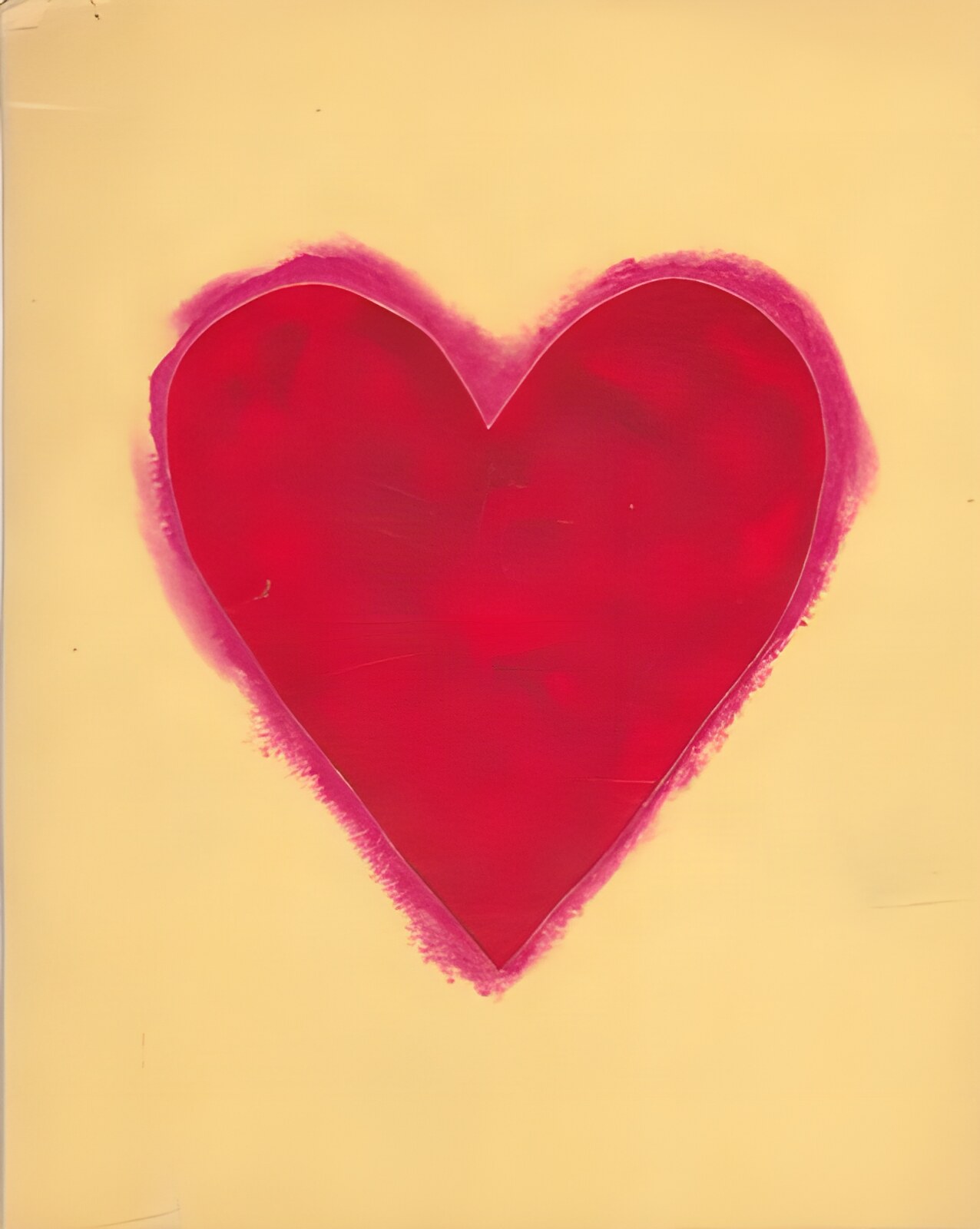
Softcover. NY, Whitney Museum of American Art, 1st, 1970, Book: Very Good, Dust Jacket: None, Softcover, yellow wraps with die-cut heart in front cover. 98 pages. 99 color & bw plates. Issued in conjunction with a 1970 exhibition of work by American pop artist Jim Dine (b. 1935). With opening essays and an artist statement. The catalogue addresses 126 works, and quite a few are pictured here. Includes a lengthy bibliography and exhibition history. Clean.
Hardcover. Seattle, Fantagraphics, 1st, 2025, Book: Very Good, Dust Jacket: None, Hardcover, large format, pictorial boards, 160 pages. The definitive collection of comics and illustration from 1892 to 1942 by James Swinnerton, one of the founding fathers of the American comic strip. This sumptuous volume covers Swinnerton's six-decade career in comics, from his beginnings as a sports/editorial cartoonist for William Randolph Hearst in San Francisco to his years in the America's Southwest desert, where his love for the land and its people came through in his comics and illustration. Jimmy! includes an illustrated biography and essays by co-editor Michael Tisserand and Eddie Campbell. The comic strips in this volume are carefully restored to their original colors and printed at near-full size. Swinnerton lovers will be delighted by the richness and variety of the works seen here. Those new to this uniquely American artist will likely join the growing numbers who appreciate his important role in the history of the comics. Clean, bright copy. DOMESTIC SHIPPING ONLY.
Hardcover. London, Titan Books , 1st, 2011, Book: Very Good, Dust Jacket: Very Good, 256 pages. Hardcover with dust jacket. A very clean, unmarked copy with only minor wear to dust jacket edges. In his own words, this is the life of Joe Simon, one of the most important figures in comics history, and half of the famous creative team Simon and Kirby. Joe Simon co-created Captain America, and was the first editor in chief of Marvel Comics (where he hired Stan Lee for his first job in comics).
Hardcover. Washington DC, Dumbarton Oaks Research Library, 1st, 1998, Book: Very Good, Dust Jacket: Very Good, Hardcover in a bright dust jacket, 310 pages. John Evelyn (1620-1706), an English virtuoso and writer, was a pivotal figure in seventeenth-century intellectual life in England. He left an immensely rich literary heritage, which is of great significance for scholars interested in garden history and the histories of intellectual life and architecture. Evelyn is perhaps best known for Sylva, a compilation of thoughts on practical estate management, gardening, and philosophy, and the first book published by the Royal Society in London. As one of the group of learned men who founded the Royal Society in 1660 to promote scientific research, discussion, and publications, John Evelyn was at the center of many of the vital intellectual currents of the time. "Elysium Britannicum," Evelyn's unpublished manuscript of almost a thousand pages of densely packed drafts, rewrites, and projects, was perhaps something of an enigma to his contemporaries, who nevertheless urged its publication. It remains for scholars today a treasure-trove of fascinating insights on Evelyn and his milieu. Clean copy.
Hardcover. NY, W.W. Norton, 1st, 1955, Book: Very Good, Dust Jacket: Good, Hardcover in a bright, price-clipped dust jacket that has a few tape repairs. B&w drawings by Arthur Conrad. Sequel to "John Goffe's Mill". This volume speaks of the "human history" changes to the mill site over the 200 years and 8 generations of his family who owned the property. Since the mid-18th century, author George Woodbury's family had owned a Bedford NH mill. His childhood home, he returned there to restore his great, great, great, great grandfather's saw and grist mill. He had set aside his Harvard Peabody Museum archaeologist career to restore, rebuild and work the mill. "What he couldn't swap or buy he invented and built himself".
Hardcover. New Haven CT, Yale University Press;, 1st, 2009, Book: Very Good, Dust Jacket: Very Good, Hardcover, 180 pages. John Gutmann (1905-1998) was one of America's most distinctive photographers. Born in Germany where he trained as an artist and art teacher, he fled the Nazis in 1933 and settled in San Francisco, reinventing himself as a photo-reporter. Gutmann captured images of American culture, celebrating signs of a vibrant democracy, however imperfect. His own status as an outsider--a Jew in Germany, a naturalized citizen in the United States--informed his focus on individuals from the Asian-American, African-American, and gay communities, as well as his photography in India, Burma, and China during World War II. This handsome book acknowledges Gutmann's place in the history of photography. Drawing on his archive of photographs and papers at the Center for Creative Photography, it presents both unfamiliar works and little-known contexts for his imagery, linking his photography to his passionate interest in painting and filmmaking, his collections of non-Western art and artifacts, and his pedagogy. In addition to a major essay by Sally Stein, the volume includes an introduction by Douglas R. Nickel, and an overview of the Gutmann archive by Amy Rule.
Hardcover. New Haven CT, Yale University Press;, 1st, 2009, Book: Very Good, Dust Jacket: Very Good, Hardcover, 180 pages. John Gutmann (1905-1998) was one of America's most distinctive photographers. Born in Germany where he trained as an artist and art teacher, he fled the Nazis in 1933 and settled in San Francisco, reinventing himself as a photo-reporter. Gutmann captured images of American culture, celebrating signs of a vibrant democracy, however imperfect. His own status as an outsider--a Jew in Germany, a naturalized citizen in the United States--informed his focus on individuals from the Asian-American, African-American, and gay communities, as well as his photography in India, Burma, and China during World War II. This handsome book acknowledges Gutmann's place in the history of photography. Drawing on his archive of photographs and papers at the Center for Creative Photography, it presents both unfamiliar works and little-known contexts for his imagery, linking his photography to his passionate interest in painting and filmmaking, his collections of non-Western art and artifacts, and his pedagogy. In addition to a major essay by Sally Stein, the volume includes an introduction by Douglas R. Nickel, and an overview of the Gutmann archive by Amy Rule.
Hardcover. New Haven CT, Yale University Press, 1st, 2010, Book: Very Good, Dust Jacket: Very Good, Hardcover, 224 pages, profuse color and b&w illustrations and plates. The essays in John La Farge's Second Paradise explore the artist's reemergence as a plain air landscape painter, his use of the sketchbook, and his late decorative work, which was reinvigorated by the experience of light and color he discovered in the South Seas. Further discussions examine the prevailing notions of tropical paradise perpetuated since Captain Cook's "discovery" of Polynesia in the late 18th century, and offer the first extended comparison of the careers and art of La Farge and Paul Gauguin, who arrived in Tahiti only days after La Farge left in 1891. Featuring many previously unpublished works, this beautiful book is a major contribution to the study of La Farge's life and art. Like new in publishers shrink-wrap.
Hardcover. Tucson, University of Arizona Press, 1st, 1970, Book: Very Good, Dust Jacket: None, 2 Volume hardcover set in slipcase. Volume 1 - A Stylistic Analysis. 312 pages. Illustrations primarily in black & white. Features biographical information. Dust jacket with light wrinkling, spotting along rear bottom edge. Clean, tight copy. Volume 2 - Catalogue Raisonne. 576 pages. Features black & white illustrations. Dust jacket with light wear, wrinkling to rear. Clean, tight copy. Slipcase with very minor wear.
Softcover. Wilmington, DE, Delaware Art Museum, 1st, 1988, Book: Very Good, Dust Jacket: None, Softcover, 150 pages. Exhibition catalog. Mostly black-and-white, with some color, illustrations. Light sun-fade to spine. A little wear to bottom corner of front cover. Very good, unmarked copy.
Hardcover. Chapel Hill, NC, Univ of North Carolina Press, 1st, 2007, Book: Very Good, Dust Jacket: Very Good, 86 pages. Hardcover with dust jacket. Clean, unmarked copy with only minor wear to dust jacket edges. Minor shelf wear on front cover. Black and white images throughout. Tight copy.
Softcover. Philadelphia, PA, Philadelphia Museum of Art, 1st, 1984, Book: Very Good, Dust Jacket: None, Exhibition catalog. 201 pages, illustrated throughout in color and b&w. Pictorial stiff wrappers. Minor wear to edges, slight wrinkle to lower front cover, else like new. This exhibition catalog explores the artist, his history, his views and his works in as comprehensive a fashion as any living artist could desire. Black and white and full-color plates on heavy coated paper. Essays by Mark Rosenthal and Richard Marshall. Exhibition travelled to Philadelphia, the Whitney in NY, Berkeley U. Art Museum, Walker Art Center and the Corcoran in Washington.
Hardcover. Princeton NJ, Princeton University Press, 1st, 2009, Book: Very Good, Dust Jacket: Very Good, Hardcover, 307 pages, 60 color illustrations. 81 halftones. Provides an in-depth look at one artist's intense fascination with the science of astronomy. Joseph Cornell (1903-72) has often been viewed as a recluse, isolated in his home on Utopia Parkway, lost in the fairy tales and charming objects of his collages and assemblage boxes. Less commonly known has been Cornell's vested and serious interest in the history of astronomy and the cutting-edge discoveries made during his own lifetime. In a bright, unclipped dust jacket.
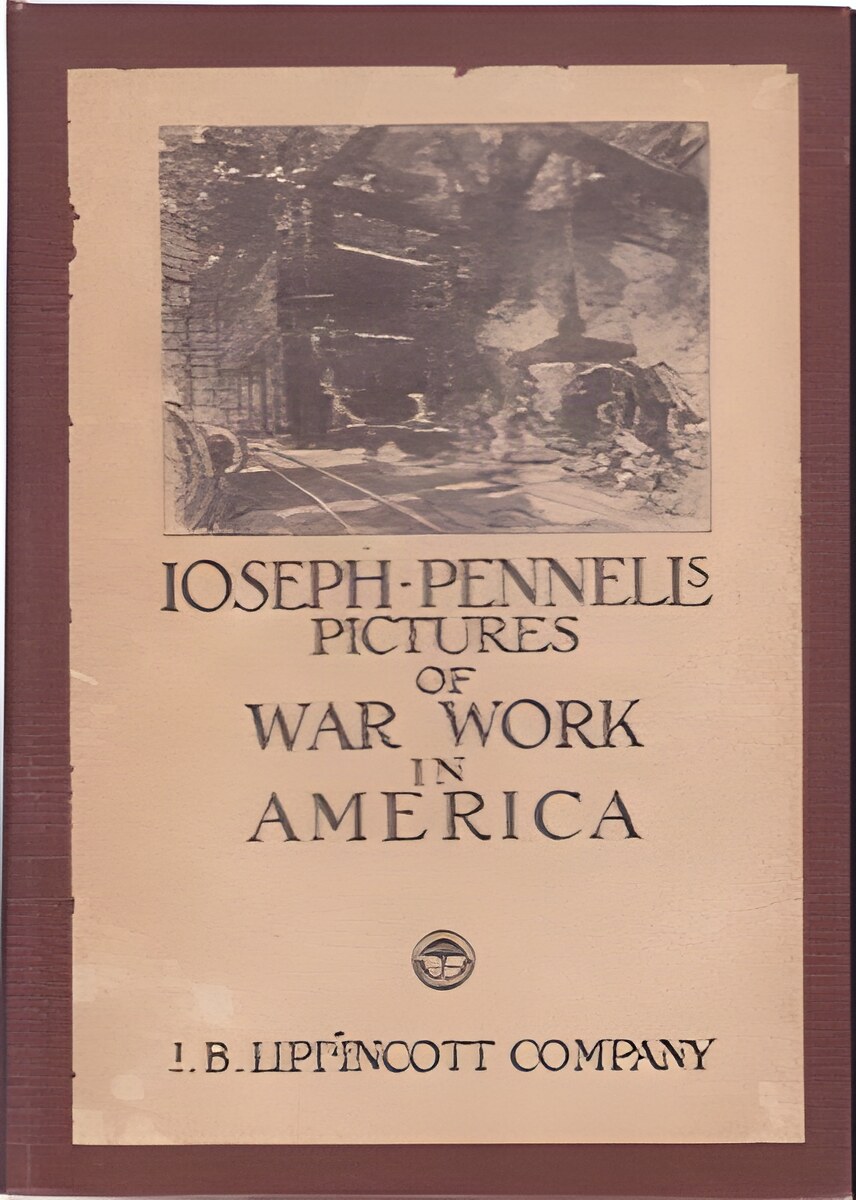
Hardcover. Philadelphia, J.B. Lippincott, 1st, 1918, Book: Very Good, Dust Jacket: None, Hardcover, brown cloth with a pastedown on front cover with title and illustration. Offers a powerful visual record of the United States' contribution to World War I. This collection of lithographs by renowned artist Joseph Pennell provides a unique glimpse into the nation's war effort, focusing on the crucial role of American industry. Previous owner's note on the front fly leaf, otherwise clean.
Hardcover. New York , Metropolitan Books, 1st US, 2012, Book: Very Good, Dust Jacket: None, Hardcover, 191 pages, illustrated throughout in color and b&w. Clean, unmarked copy in excellent condition. Over the past decade, Joe Sacco has increasingly turned to short-form comics journalism to report from conflict zones around the world. Collected here for the first time, Sacco's darkly funny, revealing reportage confirms his standing as one of the foremost war correspondents working today. Journalism takes readers from the smuggling tunnels of Gaza to war crimes trials in The Hague, from the lives of India's "untouchables" to the ordeal of Saharan refugees washed up on the shores of Malta. And in pieces never published before in the United States, Sacco confronts the misery and absurdity of the war in Iraq, including the darkest chapter in recent American history-the torture of detainees.
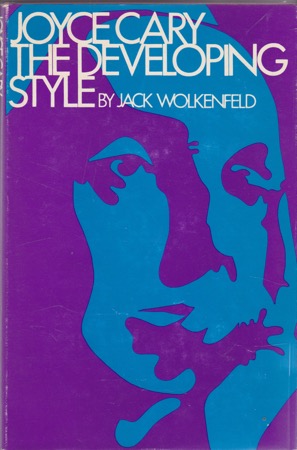
Hardcover. NY, New York University Press, 1st, 1968, Book: Very Good, Dust Jacket: Very Good, Hardcover in a bright dust jacket. 200 pages. Joyce Cary long a popular author among discriminating readers, is gaining a wider audience for his novels every year. This critical study of his work considers the developing relationship between his matter and his manner. It especially emphasizes his growth as artist and thinker. Looking closely at the language and structure of Cary's books, the author examines all the novels- the African ones, the historical ones, and the two trilogies most of them in detail. To gain an overall view he also considers Cary's nonfiction and some as yet unpublished material. While this study is essentially non-biographical, it does analyze Cary's interpretations of history, sociology and politics as they are gathered from the actions and words of his colorful characters. One of the most intriguing features of Dr. Wolkenfeld's book is the dialogue between characters of the various novels, where likenesses as well as dissimilarities, which reveal so much about Cary as a writer, become evident. Clean copy.
Softcover. Lincoln NE, University Of Nebraska Press , 1st pbk, 1995, Book: Very Good, Dust Jacket: None, Softcover, 432 pages. Collects letters and essays that are published during the 1850s and 1860s. This title highlights the notorious 1850 article "Judaism in Music". It includes prose pieces such as "On the Performing of Tannhauser"; "On Musical Criticism"; and, "Music of the Future". It offers suggestions for the reform of opera houses in Vienna, Paris, and Zurich. Clean copy.
Hardcover. NY, St. Martin's Minotaur, 1st, 2005, Book: Very Good, Dust Jacket: Very Good, Hardcover in a bright, unclipped dust jacket. Clean, like new. While most travel to Concord, Massachusetts to relive America's Revolutionary past, Harvard professor Sweeney St. George has come looking for a different sort of history. An expert on funerary art, she roams the local cemeteries, fascinated by the macabre carvings of a celebrated stonecutter and hero of the Revolution--a project that takes a strange turn when a man dressed in a uniform of 1775 is found.
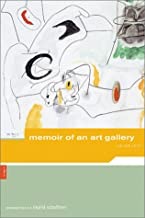
Softcover. NY, MFA Publications, reprint, 2003, Book: Very Good, Dust Jacket: None, Softcover, 368 pages. Julien Levy opened his New York gallery in 1931, and the following year assembled the first Surrealist show ever held in that city. Over the next two decades he exhibited works by Dali, Ernst, Joseph Cornell, Calder, Eugene Berman, Tchelitchew, Giacometti, Arshile Gorky and many other luminaries of twentieth-century art, giving a number of them their first shows. But Levy was more than a gifted dealer: he also had a gift for friendship, and in this charming, anecdotal memoir he recounts his intimate dealings with some of the most innovative figures of his generation. He crossed the Atlantic with Duchamp and introduced Tanguy to New York. He conceived the idea for Dali's Birth of Venus pavilion at the World's Fair, shared a summer house with Ernst and fished with Andre Breton (yielding a memorable description of the Surrealist leader's run-in with a blowfish). And he was with Gorky in the final, tragic days before the painter's suicide. Memoir of an Art Gallery is the story of prescient vision and lifelong devotion. By turns humorous and moving, and back in print after many years, it is also one of the most enjoyable works ever written about the pivotal time when Manhattan became the art capital of the world. This edition features a new introduction by Ingrid Schaffner, senior curator at the Institute of Contemporary Art in Philadelphia.
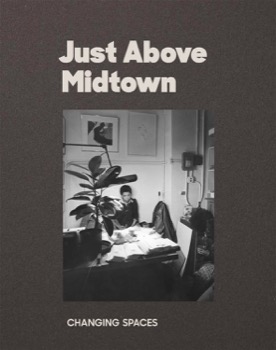
Softcover. NY, Museum of Modern Art, 1st, 2022, Book: Very Good, Dust Jacket: None, Softcover, 184 pages, illustrated in color and b&w. Just Above Midtown, or JAM, was an art gallery and self-described laboratory for experimentation led by Linda Goode Bryant that foregrounded African American artists and artists of color. Open from 1974 to 1986, it was a place where an expansive idea of contemporary art flourished and debate was cultivated. The gallery offered early opportunities for artists recognized as pivotal figures in late-20th-century art-including David Hammons, Butch Morris, Senga Nengudi, Lorraine O'Grady and Howardena Pindell-as well as a nonhierarchical approach to art that welcomed artists without stylistic proscription. Published in conjunction with the first museum exhibition to focus on this visionary gallery and its ongoing impact, Just Above Midtown: Changing Spaces showcases rarely seen material from JAM's history-artworks, ephemera and photographs-that collectively document the gallery's communal and programmatic activities. This richly illustrated, jacketed paperback catalog includes essays that contextualize JAM and consider its legacy, a conversation between Goode Bryant and Thelma Golden, Director and Chief Curator of the Studio Museum in Harlem, a complete exhibition chronology written by MoMA and Studio Museum staff with nearly 50 annotated entries, and excerpts from oral histories with JAM staff and artists conducted especially for this project. Clean copy.

 "Jews and American Comics: An Illustrated History of an American Art Formby: Buhle, Paul")
 "JFK: A Photographic Memoirby: Friedlander, Lee")
 "JFK: A Photographic Memoirby: Friedlander, Lee")
 "Jiggs Is Backby: George McManus; introduction by William Kennedy; comment and analysis by Bill Blackbeard")



 "Joe Simon: My Life in Comicsby: Simon, Joe")

 "John Goffe's Legacyby: Woodbury, George")
 "John Gutmann: The Photographer at Workby: Sally Stein , Douglas R. Nickel, et al.")
 "John Gutmann: The Photographer at Workby: Sally Stein , Douglas R. Nickel, et al.")
 "John La Farge's Second Paradise: Voyages in the South Seas, 1890-1891 (Yale Art Gallery)by: Hodermarsky, Elisabeth")
 "John Marin - A Stylistic Analysis and Catalogue Raisonneby: Reich, Sheldon")
 "John Sloan: Spectator of Lifeby: Elzea (curators), Rowland, Elizabeth Hawkes")
 "John Steuart Curry's Hoover and the Flood: Painting Modern Historyby: Eldredge, Charles C.")
 "Jonathan Borofskyby: Rosenthal, Mark & Richard Marshall")


 "Joseph Cornell and Astronomy: A Case for the Starsby: Hoving, Kirsten")
 "Journalismby: Sacco, Joe")