Hardcover. Nieuwkoop , B. de Graaf, 1st, 1964, Book: Very Good, Dust Jacket: None, Hardcover, dark green cloth covers with gilt lettering, 159 pages with b&w diagrams and illustrations. Subjects include: The base of perspective illussions, third dimension, euclid, anamorphoses, the concave surface of the retina, Schickhardt's problem, eccentric positions of the observer's eye, rotations of the eyeball, visual size, pleudo-perspective, axial construction, rebirth of central perspective, Leon Battista Alberti, Paolo Uccello, the oblique position, Piero della Francesca etc.
Softcover. Washington and Lee University, 1st, 2005, Book: Very Good, Dust Jacket: None, Softcover, 100 pages. The 2005 issue, Volume 12, of Perspectives in Vernacular Architecture: The Journal of the Vernacular Architecture Forum contains the articles: "Selling Domestic Space: The Boarding House in the Southern Mountains" by Michael Ann Williams; "La Casa Alamense: The Mexican Hacienda as Urban Dwelling" by John Messina; "Unraveling the Benjamin Deyerle Legend: An Analysis of Mid-Nineteenth-Century Brickwork in the Roanoke Valley of Virginia" by Michael J. Pulice; "Orson S. Fowler and a Home for All: The Octagon House in the Midwest" by Rebecca Lawin McCarley; and "Roadside Shrines and Granite Sketches: Diversifying the Vernacular Landscape of Memory" by David Charles Sloane.
Hardcover. New York , Skira, 1st, 2006-09-05, Book: Very Good, Dust Jacket: Very Good, Hardcover, like new in publishers shrink-wrap. 224 pages profusely illustrated in color. This book describes the grandeur and richness of the numerous civilizations predating the Incas, including the Paracas, Nazca, Recuay, Sican-Lambayeque, Moche-Sipan, and Chimu cultures, as well as the great Inca civilization. Included in the book are the important sites and landscapes representative of the three major ecological levels of Peru, as well as a general view and a historical perspective of the pre-Columbian cultures of Peru.
Softcover. London, Tate Gallery, 1st, 2007, Book: Very Good, Dust Jacket: None, Softcover, 216 pages. A key figure in the history of British Pop Art, Blake is one of the most influential and original artists working in Britain today. Central to Blake's work since the 1950s has been his fascination with popular culture, ranging from music to Hollywood icons and wrestling stars. Perhaps his most famous engagement with Pop came with his design for the cover of The Beatles' album Sgt Pepper's Lonely Hearts Club Band. With this and other works he helped create a specifically British pop aesthetic that defined an era. A prolific artist, he has utilised a variety of media including painting, drawing, collage, sculpture and printmaking; this study focuses principally on his two-dimensional works and provides the first thorough survey of his paintings from the 1950s through to the present. It will include major icons of twentieth-century art, such as Self-Portrait with badges (1961), and Have a Nice Day, Mr Hockney (1981-3), but will also feature many lesser-known works including his recent, major work The Marcel Duchamp World Series.
Hardcover. London, B. T. Batsford Ltd., 1st, 1949, Book: Very Good, Dust Jacket: Good, 169 pages. Hardcover. Red cloth edition. Top edge stained red. Illustrated with 126 black & white photographs and a few in color. Previous owners name embossed at top of rear interior dust jacket flap. Dust jacket with darkening to spine, minor smudges at upper left corner - jacket now protected with clear plastic cover. Clean, tight copy.
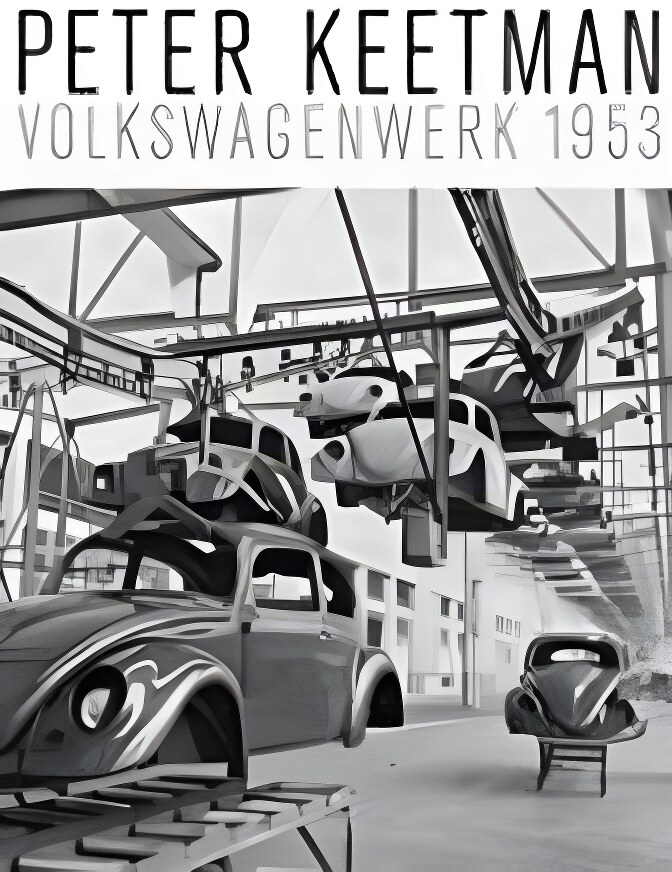
Hardcover. Kerber, 1st, 2004, Book: Very Good, Dust Jacket: Very Good, Hardcover, 176 pages. In 1953, Peter Keetman spent a week at the Volkswagen plant in Wolfsburg. The result was a series of exceptionally clear, almost abstractly detailed photographs that document the entire production process of the VW Beetle. Storage stacks of shiny metal bumpers look like so many Modernist sculptures; car bodies hovering above the assembly line retrospectively form a surreal Pop art montage. This oversize publication reproduces the Volkswagenwerk series in full, in their original size, together with texts that refer both to this series and to Keetman's greater oeuvre. Keetman was known throughout his career as photographer of systemically conceived picture series on themes that included close-ups of water and oil drops, a style of working he developed as a member of Fotoform. Fotoform, a German movement of the 1950s of which Keetman was a primary proponent, was critical in the development of German photography as it is today: the group's "subjective photography" combined scientific objectivity with abstraction. PLEASE NOTE: DUE TO SIZE & WEIGHT, DOMESTIC SHIPPING ONLY.
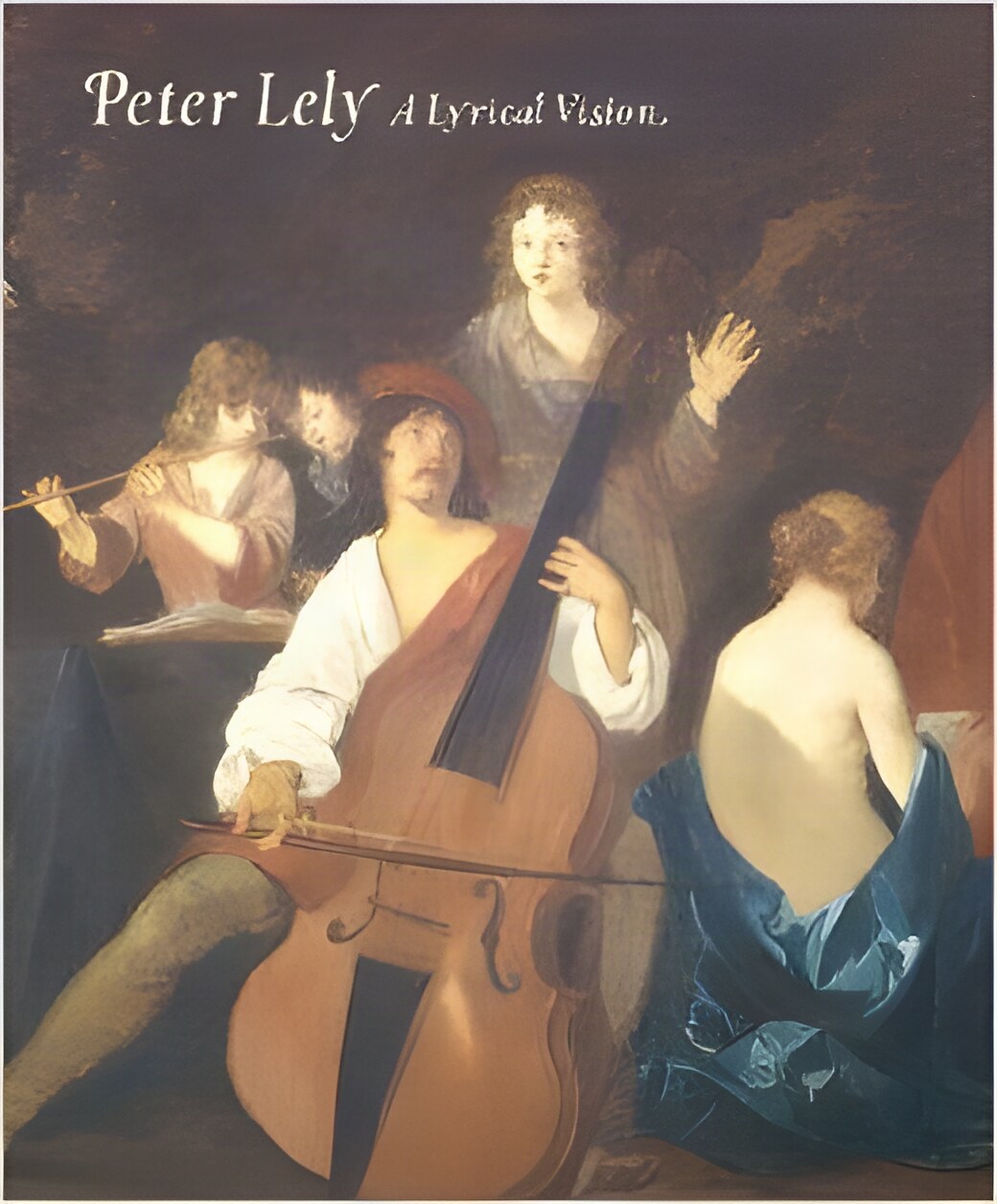
Softcover. US, Paul Holberton Publishing, 1st, 2012, Book: Very Good, Dust Jacket: None, 152 pages, illustrated throughout in color and b&w. Clean, unmarked copy with only minor wear to wrappers. Sir Peter Lely (1618-1680) was Charles II's Principal Painter and the outstanding artistic figure of Restoration England. When Lely arrived in England in the early 1640s his ambition was to be a painter of narrative scenes and not to work as a portraitist. However, the 'subject pictures' did not find favor with many English patrons and he produced less than thirty. As Lely's friend Richard Lovelace explained, all they wanted was "their own dull counterfeits" or portraits of their mistresses. Thus, Lely was obliged to turn to portraiture to make a living. Yet, his poetic pictures of figures in idyllic landscapes are among the most beautiful paintings made in 17th-century England and this catalog will be the first in-depth look at this important chapter of this major painter's career.
Hardcover. NY, Metropolitan Museum of Art, 1st, 2005, Book: Very Good, Dust Jacket: Very Good, Hardcover in a bright dust jacket. 332 pages with 145 color plates, 151 b&w illustrations. In publisher's shrinkwrap.
Hardcover. Neshannock PA , Hermes Press, Reprint , 2015, Book: Very Good, Dust Jacket: None, Hardcover. Like new in publisher's shrink-wrap. Imagine waking up in 1939 and reading the first Phantom Sunday strip in the newspaper. Now, for the first time, these rare Phantom Sundays are being collected in their full size in an archival reprint of the first six Phantom stories! The stories for these Sundays was created by Lee Falk with artwork by Ray Moore in a half page format, so this reprint is faithful to the originals and reproduces every detail of these Sundays as seen in Sunday sections of newspapers. These Sunday pages have the same look and feel of the originals only now they're collected in a high quality art book format that will last forever.
Hardcover. Neshannock PA, Hermes Press, 1st, 2018, Book: Very Good, Dust Jacket: Very Good, 191 pages. Hardcover with dust jacket. Clean, unmarked copy with only minor wear to dust jacket. Color throughout.
Hardcover. Damiani, 1st, 2008, Book: Very Good, Dust Jacket: None, Hardcover, 162 pages. Part of a whole gang of street artists--from Barry McGee to Swoon--who have broken into the art world in the last decade or so, Phil Frost's signature style is a funky tribalism--Hawaii by way of New York City--infused with a quirky sense of art history and design. In the 1990s, Frost honed his skills by painting walls, found objects and street detritus with his intricate, compulsive and highly evolved form of tagging. Frost's gallery exhibitions are crowded affairs, filled with wildly patterned totemic objects and baseball bats while the walls are stacked with colorful mixed media paintings. He crafts his painstaking paintings by collaging layers of found imagery on grounds of symmetrical black-and-white patterning, which he paints with correction fluid, and that often morph into language-like glyphs or symbols. Frost states, "I believe [my work] is indigenous to myself. I believe that within every person there is an indigenous expression of themselves." Including an essay by New York journalist Carlo McCormick and notorious lowbrow artist Pusshead, this is Frost's first monograph, and an invaluable introduction to the evolution of his style.
Softcover. Rochester NY, University of Rochester Press, reprint, 1994, Book: Very Good, Dust Jacket: None, Softcover, 539 pages. The essays in this collection illustrate the interdisciplinary approach to the history of ideas fostered by the Journal of the History of Ideas. Science, philosophy and religion were closely connected in the 17th and 18th centuries, and common threads run through all the articles. A number of essays revolve around Locke: the implications of his doctrines for religion, and their relation to and support of the new science; several of these articles refer to Descartes, Leibniz andHume. There are essays on optics and vision in the work of Berkeley, Reid and Newton, and on the relation between biology and physiology, especially as these disciplines contribute to the science of man. The authors include HENRY GUERLAC, MARGARET C. JACOB, SHIRLEY ROE, L. LAUDAN, NICHOLAS JOLLEY, JAMES FORCE, G. A. J. ROGERS and CATHERINE WILSON. Name on front fly leaf, otherwise clean.
Hardcover. New York, Princeton Architectural Press, 1st, 2002, Book: Very Good, Dust Jacket: Very Good, Non paginated. Hardcover. Extensive b&w photographs throughout. Silver gilt titles on spine and cover. Clean, unmarked copy with only minor wear to dust jacket.
Softcover. Paris, Musee de la Vie Romantique, 1st, 2001, Book: Very Good, Dust Jacket: None, 143 pages. Softcover. A very clean, unmarked copy with only minor edgewear. Black and white photographs throughout. French text.
Hardcover. London, Merrill Holberton, 1st, 1998, Book: Very Good, Dust Jacket: Very Good, Hardcover, 160 pages. Black & white photography. Clean, tight copy. These largely unpublished photographs, some only recently discovered, were taken by Aby Warburg on his trip to the American frontier in 1895. Neither a photographer nor a native tourist, Warburg was a scholar with a camera. As seen though his own cultural and psychological perspective on art, these insightful photographs are significant not only to the study of Native American and frontier life, but also to an understanding of Warburg's unique vision of cultural history. 80 duotone photos.
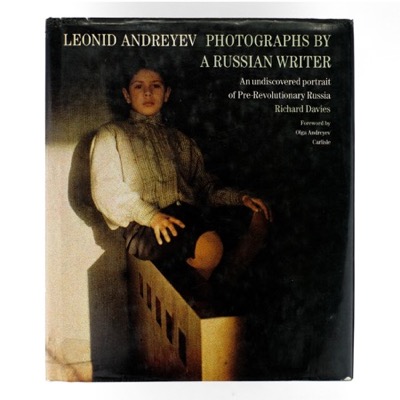
Hardcover. London, Thames and Hudson, 1st, 1989, Book: Very Good, Dust Jacket: Very Good, Hardcover in a bright dust jacket, green cloth, gilt lettering, 144 pages. Discovered in Paris in 1987, these 80 color and 30 b&w photographs, taken about 1910-14, are artistic studies of the expressionist Russian writer, his family and friends, his home, and the countryside around St. Petersburg. Includes a biographical essay and a review of the Lumiere autochrome photographic process. Mild wear to top of dj spine, otherwise a clean, tight copy.
Hardcover. Dial Press, 1st, 1980, Book: Very Good, Dust Jacket: Very Good, 216 pages. Hardcover. Color photographs. Clean, unmarked copy in excellent condition with minor wear to dust jacket. Sergei Prokudin-Gorskii was a chemist and photographer commissioned by Tzar Nicholas II to photograph as much of the Russian Empre as possible in color. Prokudin-Gorskii used three color separations for his photos and as a result some pictures are astoundingly sharp and brilliantly colored, and some the colors are out of register slightly. That's irrelevant, because the photos are spectacular and show the Russian Empire from end to end on the eve of its collapse.
Softcover. Washington, D.C., Library of Congress, 1st, 2011, Book: Very Good, Dust Jacket: None, 51 pages. Softcover. Extensive b&w photographs by Arthur Rothstein throughout. Clean, unmarked copy with only minor wear to wrappers.
Softcover. Washington, D.C., Library of Congress, 1st, 2011, Book: Very Good, Dust Jacket: None, 51 pages. Hardcover. Extensive b&w photographs throughout by Carl Mydans throughout. Clean, unmarked copy with only minor wear to wrappers.
Softcover. Duke University Press, 1st, 2017, Book: Very Good, Dust Jacket: None, Softcover, 381 pages, color and b&w illustrations. Photography is one of the principal filters through which we engage the world. The contributors to this volume focus on Walter Benjamin's concept of the optical unconscious to investigate how photography has shaped history, modernity, perception, lived experience, politics, race, and human agency. In essays that range from examinations of Benjamin's and Sigmund Freud's writings to the work of Kara Walker and Roland Barthes's famous Winter Garden photograph, the contributors explore what photography can teach us about the nature of the unconscious. They attend to side perceptions, develop latent images, discover things hidden in plain sight, focus on the disavowed, and perceive the slow. Of particular note are the ways race and colonialism have informed photography from its beginning. The volume also contains photographic portfolios by Zoe Leonard, Kelly Wood, and Kristan Horton, whose work speaks to the optical unconscious while demonstrating how photographs communicate on their own terms. The essays and portfolios in Photography and the Optical Unconscious create a collective and sustained assessment of Benjamin's influential concept, opening up new avenues for thinking about photography and the human psyche. Clean, bright copy.
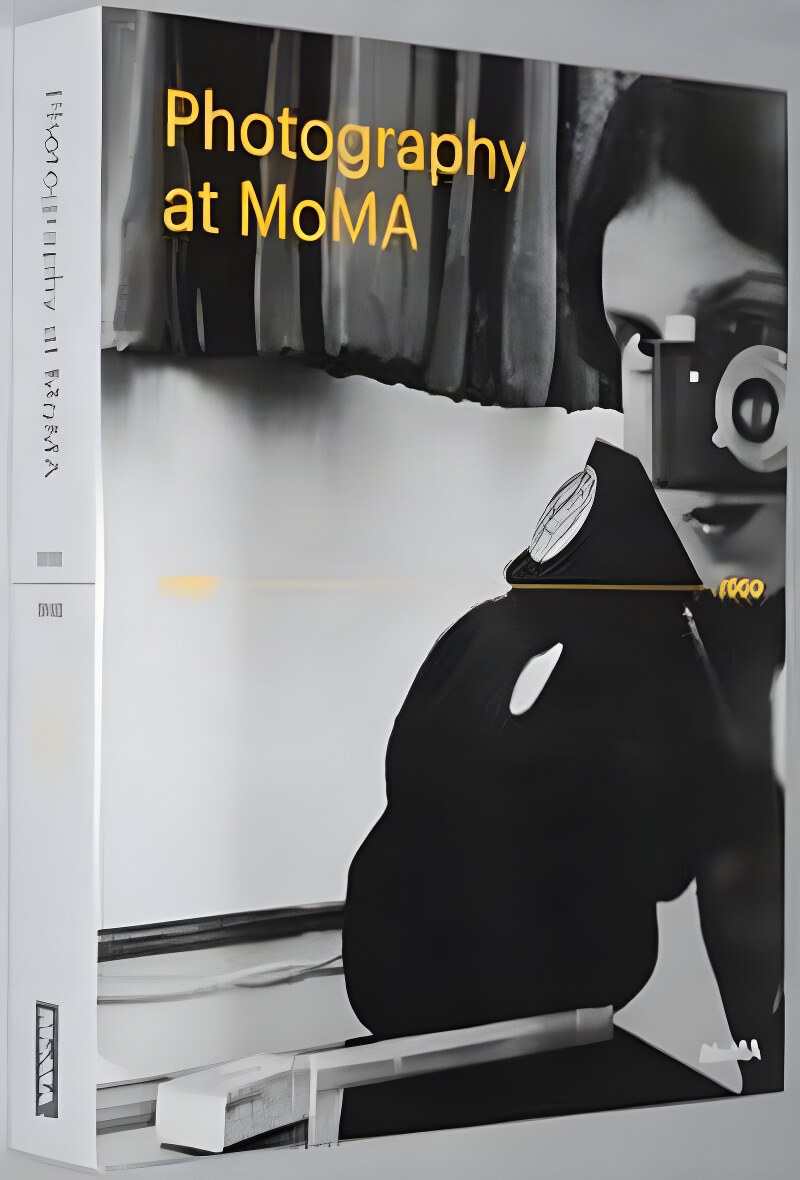
Hardcover. NY, Museum of Modern Art, 1st, 2016, Book: Very Good, Dust Jacket: Very Good, Hardcover in a bright dust jacket, 416 pages. The history of photography has been told many times, but never before through the incomparable collection of photographs at The Museum of Modern Art. This publication charts the medium during the height of the modernist period, from 1920 to 1960. with 550 b/w and color illustrations. The book begins with an in-depth introduction followed by eight chapters of full-color plates, each introduced by a short essay. Masterworks by photographers such as Alfred Stieglitz, Dorothea Lange, Man Ray and Aleksander Rodchenko appear alongside lesser-known gems, and diverse notions of modernism enrich classic interpretations, so that the beautiful fictions and messy realities of photography are complicated, refreshed and, above all, enjoyed. Clean copy. DOMESTIC SHIPPING ONLY.
Hardcover. US, The MIT Press, 1st, 2000, Book: Very Good, Dust Jacket: Very Good, Like new in publisher's shrink-wrap. Remainder mark on top page block. Boston played a crucial role in the development of American photography, including criticism, collecting, and curating, in the second half of the twentieth century. This book accompanies a landmark exhibition at the DeCordova Museum that includes such important American artists as Berenice Abbott, Harry Callahan, Paul Caponigro, Marie Cosindas, Harold Edgerton, Nan Goldin, Jerome Liebling, Nicholas Nixon, Barbara Norfleet, Olivia Parker, Rosamond Purcell, Aaron Siskind, and Minor White.The period from 1955 to 1985 reflects photography's acceptance as an art form, the influence of modernism, and the coalescence of a unique constellation of educational institutions, museums, and technological development in the Boston area that directly influenced artistic options for photography. Minor White's arrival at the Massachusetts Institute of Technology in 1965 to run the Center for Creative Photography and the Polaroid Corporation's innovative support of photographic art suggest how developments built upon one another to create a regional critical mass in photography.The book contains twenty-five color plates, sixty duotones, and essays by A. D. Coleman, Rachel Rosenfield Lafo, Arno Rafael Minkkinen, and Kim Sichel.
Hardcover. US, The MIT Press, Book: Very Good, Dust Jacket: Very Good, Like new in publisher's shrink-wrap. Remainder mark on top page block. Boston played a crucial role in the development of American photography, including criticism, collecting, and curating, in the second half of the twentieth century. This book accompanies a landmark exhibition at the DeCordova Museum that includes such important American artists as Berenice Abbott, Harry Callahan, Paul Caponigro, Marie Cosindas, Harold Edgerton, Nan Goldin, Jerome Liebling, Nicholas Nixon, Barbara Norfleet, Olivia Parker, Rosamond Purcell, Aaron Siskind, and Minor White.The period from 1955 to 1985 reflects photography's acceptance as an art form, the influence of modernism, and the coalescence of a unique constellation of educational institutions, museums, and technological development in the Boston area that directly influenced artistic options for photography. Minor White's arrival at the Massachusetts Institute of Technology in 1965 to run the Center for Creative Photography and the Polaroid Corporation's innovative support of photographic art suggest how developments built upon one another to create a regional critical mass in photography.The book contains twenty-five color plates, sixty duotones, and essays by A. D. Coleman, Rachel Rosenfield Lafo, Arno Rafael Minkkinen, and Kim Sichel.
Hardcover. Cambridge, MA, MIT Press, 1st, Book: Very Good, Dust Jacket: Very Good, Hardcover, 208 pages. Pictures that are made, not taken, are the focus of this exciting collection of works by 90 American artists who are using appropriation, computer technology, performance, and numerous other sources of inspiration to stretch the limits and expand the possibilities of photographic art. "Perhaps in the future," Man Ray suggested to Duchamp, "photography would replace all art." The Photography of Invention hints at that future by documenting a decade of startling new work in American photography: work that challenges the accepted hierarchy of the arts and, arguably, establishes photography as the equal of the other arts. Pictures that are made, not taken, are the focus of this exciting collection of works by 90 American artists who are using appropriation, computer technology, performance, and numerous other sources of inspiration to stretch the limits and expand the possibilities of photographic art. The selection of nontraditional pictures includes works by some of the decade's most interesting experimenters-Cindy Sherman, Sherrie Levine, Richard Prince, Barbara Kruger, William Christenberry, Louise Lawler, Stefan Roloff, and others who create or manipulate the subject photographed.

 "Perspectives in Vernacular Architecture: The Journal of the Vernacular Architecture Forum - Volume 12by: Pamela Simpson (editors) Jennings, Jan (Author)")
 "Peru: Art from the Chavin to the Incas (Collections Du Petit Palais, Musee Des Beaux-Arts de la VILL)by: Lemasson, Patrick")
 "Peter Blake: Retrospectiveby: Grunenberg , Christoph")
 "Peter Carl Faberge - Goldsmith and Jeweller to the Russian Imperial Court and the Principal Crowned Heads of Europe - An Illustrated Record and Review of his Life and Work, A.D. 1846-1920by:")

 "Phantom Sundays Archive, The: Full Size Half Pages 1939-1942 by: Falk, Lee")
 "Phantom, The: The Complete Sundays: Volume Four 1950-1953by: Falk, Lee and Wilson McCoy")
 "Phil Frostby: Pushead, Carlo McCormick, et al.")

 "Photoboothby: Hines, Babbette")
 "Photographies Hongroises: Des Romantismes Aux Avant-Gardesby: Marchessau, Daniel")
 "Photographs at the Frontier - Aby Warburg in America 1895-1896by: Cestelli Guidi (ed), Benedetta and Nicholas Mann")


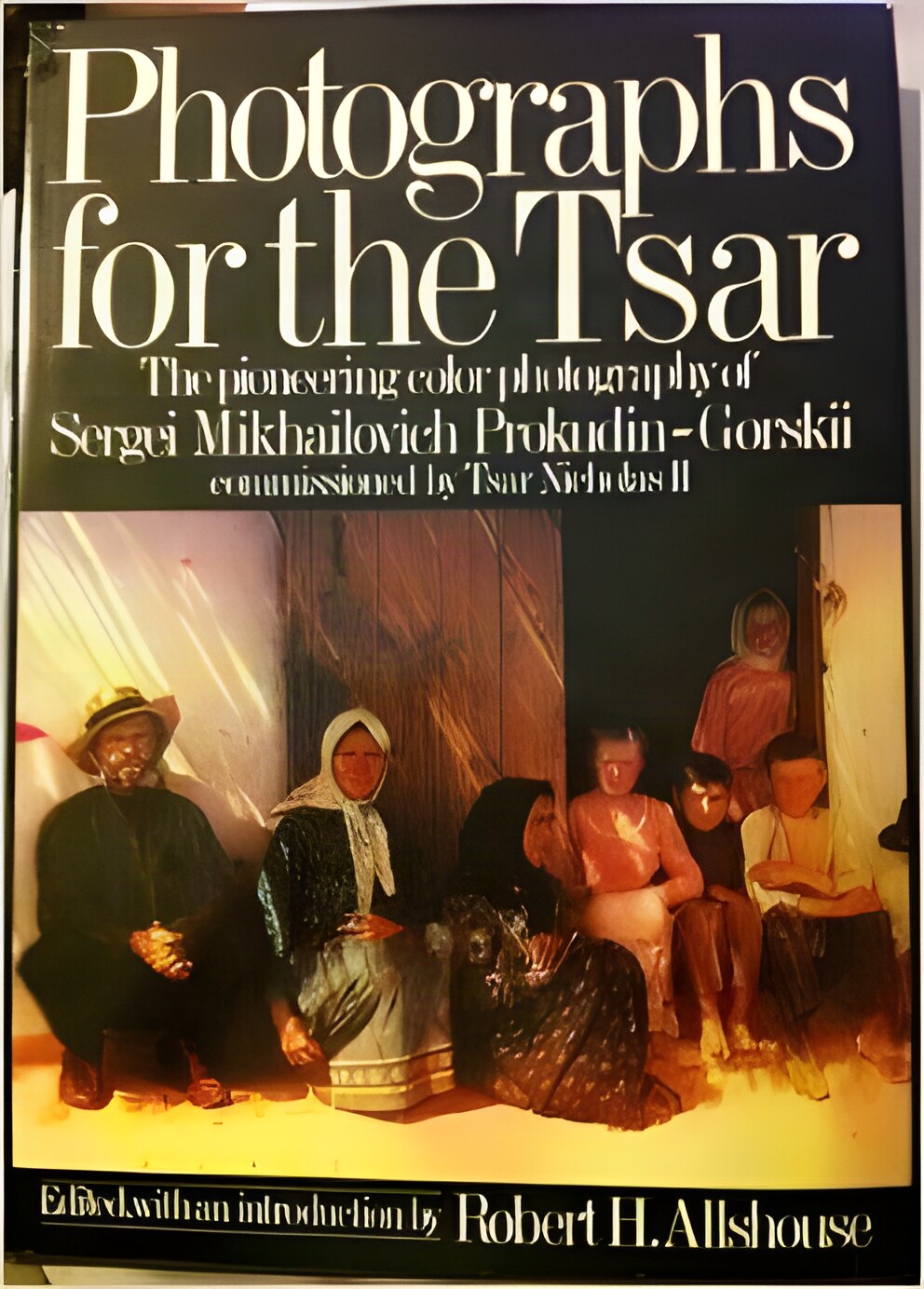
 "Photographs of Arthur Rothstein, Theby: Rothstein, Arthur")
 "Photographs of Carl Mydans, Theby: Mydans, Carl")

 "Photography in Boston: 1955-1985by: Nagler, Gillian (Editor)/Rachel Rosenfield Lafo")
 "Photography in Boston: 1955-1985by: Nagler, Gillian (Editor)")
 "Photography of Invention: American Pictures of the 1980sby: Joshua P. Smith, Merry A. Foresta, et al.")