Hardcover. New York, Flammarion, 1st, 2015, Book: Very Good, Dust Jacket: Very Good, 280 pages. Hardcover with dust jacket. A very clean copy still in publishers shrink-wrap, however shrink wrap has been torn at bottom edge for a remainder mark to bottom edge of textblock and a small tear near top edge. The first fashion monograph on Marcel Rochas, a key twentieth-century women's wear designer, written by his daughter. Fashion designer Marcel Rochas (1902-1955) made considerable and enduring contributions to the world of fashion; his legacy has inspired a range of contemporary designers. In this lavish monograph, his daughter, Sophie Rochas, provides an intimate first-hand account that includes her childhood memories and rare access to the family's private archives. She provides insight into her father's talents as an innovative designer, communications genius, revered socialite, attentive father, and demanding husband, as well as the style influences that inspired him.
Hardcover. New Haven CT, Yale University Press, 1st, 2022, Book: Very Good, Hardcover, pictorial boards, Photographer Marcia Resnick (b. 1950) earned recognition as part of the legendary Downtown New York art scene of the 1970s and 1980s. Her portraits of the era's major cultural figures, such as Jean-Michel Basquiat, John Belushi, and Susan Sontag, have contributed to the scene's mythic status. Against this backdrop, Resnick also produced a significant body of work that engaged with the history of art, took a humorous approach to conceptual art and feminism, and proposed new ideas for what photography could be. Spanning the artist's career, this richly illustrated volume explores Resnick's early influences and education at Cooper Union and CalArts; discusses her series and photobooks such as See and Re-visions; and situates the artist's work within the history of contemporary art. An afterword by Laurie Anderson speaks to the very personal vision of Resnick's photography. Still in publisher's shrinkwrap.
Hardcover. Watkins, reprint, 2011, Book: Very Good, Dust Jacket: Very Good, Hardcover in a bright dust jacket, 272 pages. Marco Polo (c.1254-1324) was a Christian merchant from the Venetian Republic who learned about trading while his father and uncle were absent on an extended journey through Asia, which culminated in a visit with the great khan Kublai. In 1269 the brothers returned to Venice and met Marco for the first time. The three of them then embarked on a new journey to Asia and the court of the khan, returning after more than two decades to find Venice at war. Marco was imprisoned in Genoa, whereupon he dictated his romantic-sounding stories to a cellmate. The popularity of his account is a rare example of a success in publishing before the age of printing. Introduction by John Masefield.
Hardcover. New York, D.A.P.//La Fabrica , 1st, 2013, Book: Very Good, Dust Jacket: Very Good, Hardcover, 192 pages. Like new in publisher's shrink-wrap. America's first female war correspondent, Margaret Bourke-White was also something of a media star, with the portrait of her decked out in flying gear, camera in hand, about to set off on a bombing raid, being a favorite pin-up among U.S. forces. Focusing on the work Bourke-White made in the 1930s and 40s in Czechoslovakia, Germany, Italy, the Soviet Union and the U.K., Moments in History presents 150 classic photographs alongside revelatory extracts from letters and publications in periodicals. Bourke-White traveled to the USSR when the first Five-Year Plan was being implemented; she documented the German invasion of the Soviet Union in 1941, and the Allied bombing of Germany. In the summer of 1945 she was commissioned by Life to make a photographic record of the destroyed German cities. She was present at the liberation of the Buchenwald concentration camp and the Leipzig-Thekla forced labor camp. She recorded the partition of India and the Korean War, and one of her most famous pictures of this period is "Gandhi," which shows the subject at his spinning wheel. Also included in the catalogue are some of the word-picture sequences Bourke-White did for Fortune and Life, as well as extracts from her correspondence with personalities from the worlds of politics and culture, such as Winston Churchill and Georgia O'Keeffe. Bourke-White wanted to be the "eyes of the age," and her pictures testify to (as she put it) her "unquenchable desire to be present when history is being made."
Hardcover. Bloomington, IN, Indiana University Press, 1st, 2016, Book: Very Good, Dust Jacket: Very Good, 152 pages. Hardcover with dust jacket. A very clean, unmarked copy with only minor wear to dust jacket edges. A tight copy. As a photographer for Life and Fortune magazines, Margaret Bourke-White traveled to Russia in the 1930s, photographed the Nazi takeover of Czechoslovakia in 1938, and recorded the liberation of Buchenwald at the end of WWII. In 1949, Life sent her to South Africa to take photographs in a country that was becoming racially polarized by white minority rule. Life published two photo-essays highlighting Bourke-White's photographs, but much of her South African work remained unpublished until now. Here, these stunning photographs collected by Alex Lichtenstein and Rick Halpern offer an unparalleled visual record of white domination in South Africa during the early days of apartheid. In addition to these powerful and historically significant photographs, Lichtenstein and Halpern include two essays that explore Bourke-White's artistic and political formation and provide background material about the cultural, political, and economic circumstances that produced the rise and triumph of Afrikaner nationalism in South Africa. This richly illustrated book brings to light a large body of photography from a major American photographer and offers a compelling history of a reprehensible system of racial conflict and social control that Bourke-White took such pains to document.
Hardcover. West Chester PA, Schiffer Publishing, 1st, 1986, Book: Very Good, Dust Jacket: Very Good, Hardcover in a bright dust jacket, 199 pages. SIGNED BY THE ARTIST/POTTER MARGARET TAFOYA on the title page. Foreword by Rick Dillingham. Illustrated throughout with black & white and color photography. Bibliography. Index. This beautiful book presented in large format tells the story of Margaret Tafoya and her contributions to Tewa Pueblo pottery. The book explores her life, pottery making techniques, the Tafoya family and descendants, and the history of the Pueblo people. clean copy.
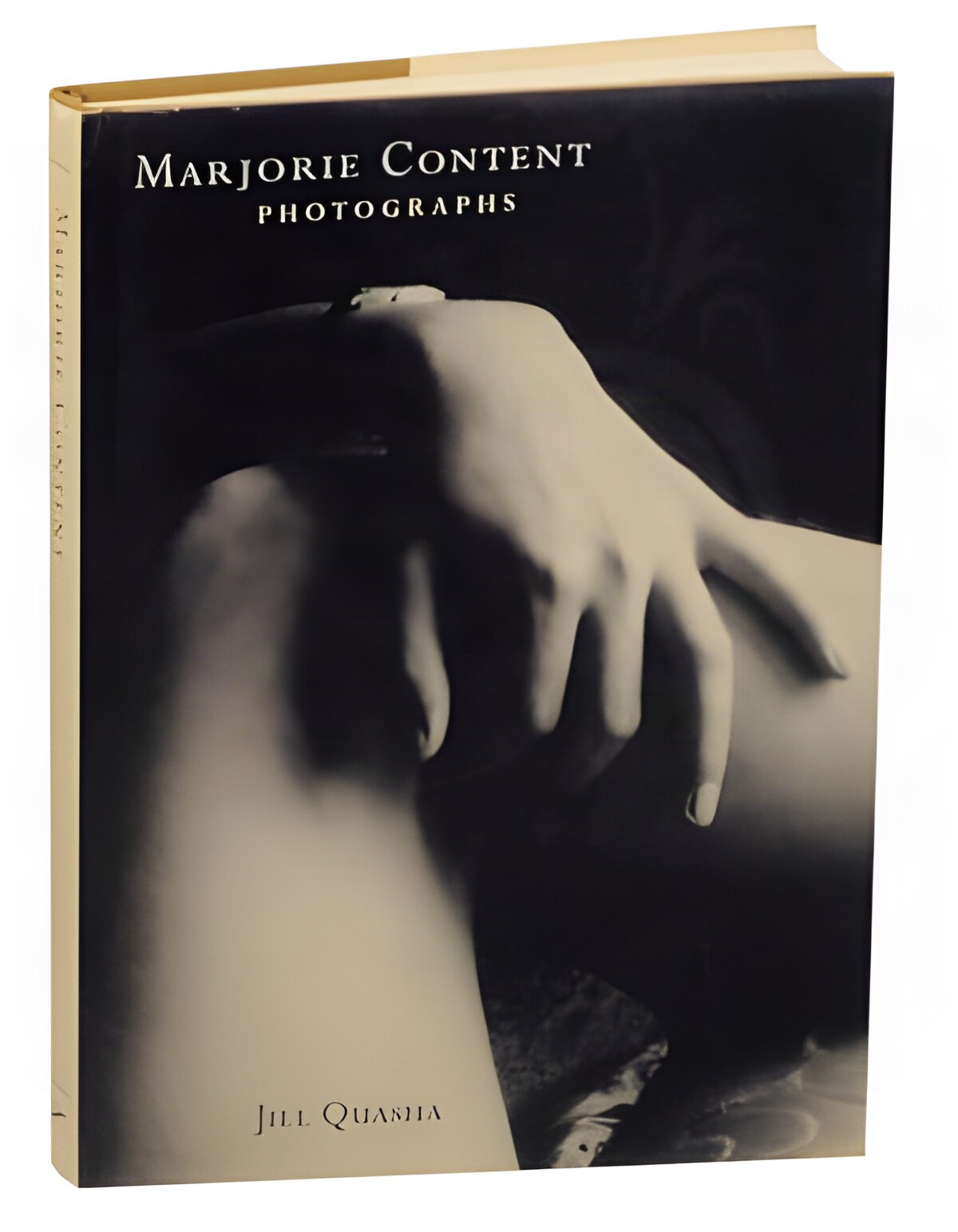
Hardcover. New York, Norton, 1st, 1994, Book: Very Good, Dust Jacket: Very Good, Hardcover, 159 pages. Black & white photography by Marjorie Content. Marjorie Content, a well-bred, intelligent woman who moved in artistic circles that included Georgia O'Keeffe and Jean Toomer (her last and worst husband), produced a body of sensitive black-and-white photographs in the 1920s and 1930s that were little known then but may reach a wider audience now. Quasha gathers them and a biographical essay in a lovely, pocketable volume that is a pleasure for those weary from hefting usually much heavier photography tomes. The pictures themselves are of familiar, early modernist types: close-ups of calla lilies and other plants, head-only portraits, and city vignettes. Quasha writes, "The photographs will not change our sense of photographic history . . . [but] will add to our understanding of what photography is capable of, especially in the lyric mode." More interesting, perhaps, is that Content exemplifies the kind of woman (more common in the past) who gives of herself to others and doesn't take her own work seriously enough, in spite of which she left behind a few lovely things that photography collections will cherish.
Hardcover. Munchen, Schirmer/Mosel., 1st US, 1984, Book: Very Good, Dust Jacket: Very Good, Hardcover in a bright dust jacket, 269 pages. "Here is a breathtaking visual celebration of this all-time movie goddess, with the world's greatest photographers contributing their most famous landmark portraits collected from the thirty-five years during which Marlene Dietrich reigned supreme in the history of motion pictures."
Hardcover. NY, Phaidon Press, 1st, 2013, Book: Very Good, Dust Jacket: Very Good, Hardcover in a bright dust jacket, 192 pages, illustrated in color and b&w. Marlon Brando (1924-2004) is an icon in the history of American cinema. When he passed away in 2004, The New York Times remember 'the rebellious prodigy who electrified a generation and forever transformed the art of screen acting... a truly revoluntionary presence.' From his beginnings in A Streetcar Named Desire (1951) to his mythic performances The Godfather (1972) and Apocalypse Now (1979), Brando, who worked with such famous film stars as Elizabeth Taylor and Al Pacino, and such leading directors as Elia Kazan, John Huston and Francis Ford Coppola, has become a benchmark for other actors. Clean copy.
Hardcover. Los Angeles, J. Paul Getty Museum, 1st Thus, 2002, Book: Very Good, Dust Jacket: Very Good, 237 pages. Hardcover. Illustrated with full color and black & white photographs. Clean, tight copy. PLEASE NOTE: DUE TO WEIGHT, DOMESTIC SHIPPING ONLY.
Hardcover. New York, NY, Rizzoli International Publications, 1st, 2016, Book: Very Good, Dust Jacket: Very Good, 304 pages. Hardcover with no dust jacket. Very clean, like new in publishers shrink-wrap. Martine Sitbon has become an icon among designers and fashionistas, earning her praise from Karl Lagerfeld as being "the only living French designer." With never-before-seen sketches and photographs, this book allows readers to gain a better understanding of the designer's personal universe and inspirations that have until now been largely hidden from view.
Hardcover. NY, Marvel Enterprises , 1st, 2015, Book: Very Good, Dust Jacket: Very Good, Hardcover in a bright dust jacket, 250 pages. color illustrated. In 1961, Stan Lee and Jack Kirby lit the fuse to the greatest revolution in comic book history - the Marvel Age of Comics - and now you can experience it from page one! With the space race on, Reed Richards, Ben Grimm, Sue Storm and Johnny Storm aimed for the stars - but after their craft was bombarded by cosmic rays, they gained the startling powers of the Fantastic Four! Collects Fantastic Four 1-10. In publisher's shrinkwrap.
Hardcover. NY, Marvel, 1st, 2006, Book: Very Good, Dust Jacket: Very Good, Hardcover in a bright dust jacket, 248 pages. Collects Marvel Westerns from the 1960s: Marvel Comics has a long history of producing comics in the western genre, going back as far as the 1940s, before the company was even called Marvel. Some of their most popular gunfighters, like the Rawhide Kid, Two-Gun Kid, and Kid Colt, even hung on well after the superhero explosion of the 1960s, but it's been a long time since Marvel put any effort into its western universe. In this volume they attempt to harken back to their cowboy glory days by publishing a four-issue series called Marvel Westerns, which combines classic 1960s stories by Stan Lee and Jack Kirby with 21st-century interpretations of Marvel's classic western heroes. This hardcover contains the four issues of that series, along with some supplemental material. The Two-Gun Kid, Marvel Westerns: Western Legends, Marvel Westerns: Kid Colt and the Arizona Girl, Marvel Westerns: Strange Westerns Starring the Black Rider. Clean copy.
Hardcover. University Park, Pennsylvania State Univ Press, 1st, 1984, Book: Very Good, Dust Jacket: Very Good, Two hardcover volumes in bright dust jackets. Professor Armi posits that the great third abbey at Cluny is the building where regional masons of different traditions first combined their talents to develop a new design, and that the artisans responsible for the masonry also created its sculpture. Volume I Text, 204 pages; Volume II contains 238 b/w Illustrations.
Softcover. Philadelphia PA, Philadelphia Museum of Art , 1st, 1984, Book: Very Good, Dust Jacket: None, Softcover, 397 pages, 127 color plates, many bw plates. Issued in conjunction with a series of 1984 exhibitions. "The Dutch in the seventeenth century placed a premium on naturalistic accounts of their surroundings, be they in the form of portraits, landscapes, still lifes, or scenes of everyday life -- what we have come to call 'genre' painting. With this art, the painter recorded the look, the manners, the character of those quotidian events, which comprise day-to-day existence." This book features essays on both the artists and on life and culture during this time. The catalogue addresses 127 paintings: first, in color plates, and secondly, with lengthy annotations and small BW illus. The concluding bibliography is substantial. Clean copy.
Hardcover. Dynamite Entertainment, 1st, 2017, Hardcover, glossy pictorial boards, 272 pages. A celebration of the great artists who revolutionized horror comics in the 1970s with their work on Warren's Vampirella, Creepy, and Eerie horror comics. This first-ever comprehensive history of Spanish comic books and Spanish comic artists reveals their extraordinary success -- not just in Spain and America, but around the world. Containing artwork from over 80 artists, this in-depth retrospective includes profiles of such legends as Esteban Maroto, Sanjulian, Jose Gonzalez, Jordi Bernet, Enrich, Victor De La Fuente, Jose Ortiz and Luis Garcia Mozos. With 500 illustrations, over half scanned directly from the original artwork, Masters Of Spanish Comic Book Art honors the "Golden Generation" whose artwork inspired the imagination of comic book lovers everywhere. Clean copy.
Softcover. New York, E. P. Dutton, Reprint, 1978, Book: Very Good, Dust Jacket: None, 199 pages. Softcover. Black & white illustrations throughout. Covers in very good condition with light toning to rear cover. Clean, unmarked copy.
Hardcover. New Haven, CT, Yale University Press, 1st, 2001, Book: Very Good, Dust Jacket: Very Good, 289 pages. Hardcover with dust jacket. A very clean, unmarked copy with minor wear to dust jacket edges. Klein surveys the history of Matisse's portraits and their sitters, with attention to the details of the financial transaction or other agreement that caused the painting to be made. An analysis of Matisse's self-portraits is also provided. Klein works chronologically, detailing the artist's developing style, but remains attached to his biography as well, with many quotes about Matisse or his works from contemporary sources. This volume is well illustrated with b&w and color plates.
Hardcover. Munich, Williams College Museum of Art/Prestel, 1st, 1990, Book: Very Good, Dust Jacket: Very Good, Hardcover, 812 pages. Blue cloth slip case, 2193 illustrations including 100 color plates. Book still in shrink wrap, in excellent condition. If you think that Maurice Prendergast (1858-1924) only produced decorative park and beach scenes rendered in an abstract style, these two new volumes will set the record straight. Thanks in large part to the generosity of the Eugenie Prendergast Foundation, Mathews has produced a splendid exhibition catalog that surveys the career of the American Impressionist. She also labored for over six years as part of a team of art historians to create a monumental, ten-pound, slip-cased tome that documents the total artistic output of the two Prendergast brothers, Maurice and Charles, A Catalogue Raisonne. A good balance has been struck between the books. The exhibition catalog, of interest to both lay people and scholars, offers a chronological discussion of Maurice's ever-evolving style along with selected works represented by 130 glorious color plates. In contrast, the comprehensive catalogue raisonne , with its highly detailed essays by eight art historians, features 2200 illustrations, 100 of which are in color. All works discussed are represented by an image and catalog entry and range from the sketchbooks, monotypes, and applied graphics of Maurice to the carved and painted panels and sculpture of Charles (1863-1948). A Herculean achievement, the catalogue raisonne will long serve as a cornerstone in the arena of American art history reference.
Hardcover. Germany , Steidl, 1st, 2010, Book: Very Good, Dust Jacket: None, 156 pages. Hardcover with no dust jacket. Very clean, unmarked copy with only minor edgewear. Color photographs throughout. In the early 1970s, the workers at a steel smelting factory east of Havana wrote to Fidel Castro describing their housing needs. Out of this exchange a new city called Alamar was born, conceived by the same workers who would build it and live there. Today it is abandoned; Mauro D'Agati's photographs examine its eccentric spaces.
Hardcover. New York , Pantheon, 1st, 1991, Book: Very Good, Dust Jacket: Very Good, Hardcover, 136 pages, b&w illustrations by Spiegelman. The second installment of the Pulitzer Prize-winning graphic novel acclaimed as "the most affecting and successful narrative ever done about the Holocaust" (Wall Street Journal) and "the first masterpiece in comic book history" (The New Yorker). A brutally moving work of art--widely hailed as the greatest graphic novel ever written--Maus recounts the chilling experiences of the author's father during the Holocaust, with Jews drawn as wide-eyed mice and Nazis as menacing cats.
Softcover. NY, Pantheon, reprint, 1986, Book: Very Good, Dust Jacket: None, Two softcover volumes in a cardboard slipcase. Vol. 1: My Father Bleeds History, Vol. 2: And Here My Trouble Began. Slipcase has some light rubbing, books are clean and bright. A brutally moving work of art--widely hailed as the greatest graphic novel ever written--Maus recounts the chilling experiences of the author's father during the Holocaust, with Jews drawn as wide-eyed mice and Nazis as menacing cats.
Hardcover. New Haven CT, Yale University Press, 1st, 2004, Book: Very Good, Dust Jacket: Very Good, Hardcover in a bright, unclipped dust jacket, 398 pages. From colonial times to the present, American composers have lived on the fringes of society and defined themselves in large part as outsiders. In this stimulating book Michael Broyles considers the tradition of maverick composers and explores what these mavericks reveal about American attitudes toward the arts and about American society itself. Broyles starts by examining the careers of three notably unconventional composers: William Billings in the eighteenth century, Anthony Philip Heinrich in the nineteenth, and Charles Ives in the twentieth. All three had unusual lives, wrote music that many considered incomprehensible, and are now recognized as key figures in the development of American music. Broyles goes on to investigate the proliferation of eccentric individualism in all types of American music-classical, popular, and jazz-and how it has come to dominate the image of diverse creative artists from John Cage to Frank Zappa. The history of the maverick tradition, Broyles shows, has much to tell us about the role of music in American culture and the tension between individualism and community in the American consciousness. Leer menos
Softcover. Tuscaloosa, University of Alabama Press, 1st, 1999, Book: Very Good, Dust Jacket: None, Softcover. This collection of Ford's works focuses on the development of ceramic chronology-a key tool in Americanist archaeology. When James Ford began archaeological fieldwork in 1927, scholars divided time simply into prehistory and history. Though certainly influenced by his colleagues, Ford devoted his life to establishing a chronology for prehistory based on ceramic types, and today he deserves credit for bringing chronological order to the vast archaeological record of the Mississippi Valley. This book collects Ford's seminal writings showing the importance of pottery styles in dating sites, population movements, and cultures. These works defined the development of ceramic chronology that culminated in the major volume Archaeological Survey in the Lower Mississippi Alluvial Valley, 1940-1947, which Ford wrote with Philip Phillips and James B. Griffin. In addition to Ford's early writings, the collection includes articles written with Griffin and Gordon Willey, as well as other key papers by Henry Collins and Fred Kniffen. Clean copy in publisher's shrinkwrap.

 "Marcel Rochas: Designing French Glamourby: Rochas, Sophie")

 "Marco Polo's Silk Road: The Art of the Journey - An Italian at the Court of Kublai Khanby: N/A")
 "Margaret Bourke- White: moments in historyby: Quimby, Sean")
 "Margaret Bourke-White and the Dawn of Apartheidby: Lichtenstein, Alex")

 "Marlene Dietrich: Portraits, 1926-1960 by: Wensinger, Arthur S.")
 "Marlon Brando: Anatomy of an Actorby: Florence Colombani")
 "Martine Sitbon: Alternative Visionby: Sitbon, Martine")


 "Masons and Sculptors in Romanesque Burgundy: The New Aesthetic of Cluny III (2 Volumes)by: Armi, C. Edson")
 "Masters of Seventeenth-Century Dutch Genre Painting.by: Peter C. Sutton")

 "Matisse on Artby: Flam, Jack D.")
 "Matisse Portraitsby: Klein, John")
 "Maurice Brazil Prendergastby: Prendergast, Charles")
 "Mauro D'Agati: Alamarby: D'Agati, Mauro (Photographer)")
 "Maus II A Survivor's Tale: And Here My Troubles Beganby: Spiegelman, Art")

 "Mavericks and Other Traditions in American Musicby: Michael Broyles")
 "Measuring the Flow of Time: The Works of James A. Ford, 1935-1941by: Ford, James A., Foreword: Willey, Gordon R./ Editor: Lyman, R. Lee/ Editor: O'Brien, Professor Mi")