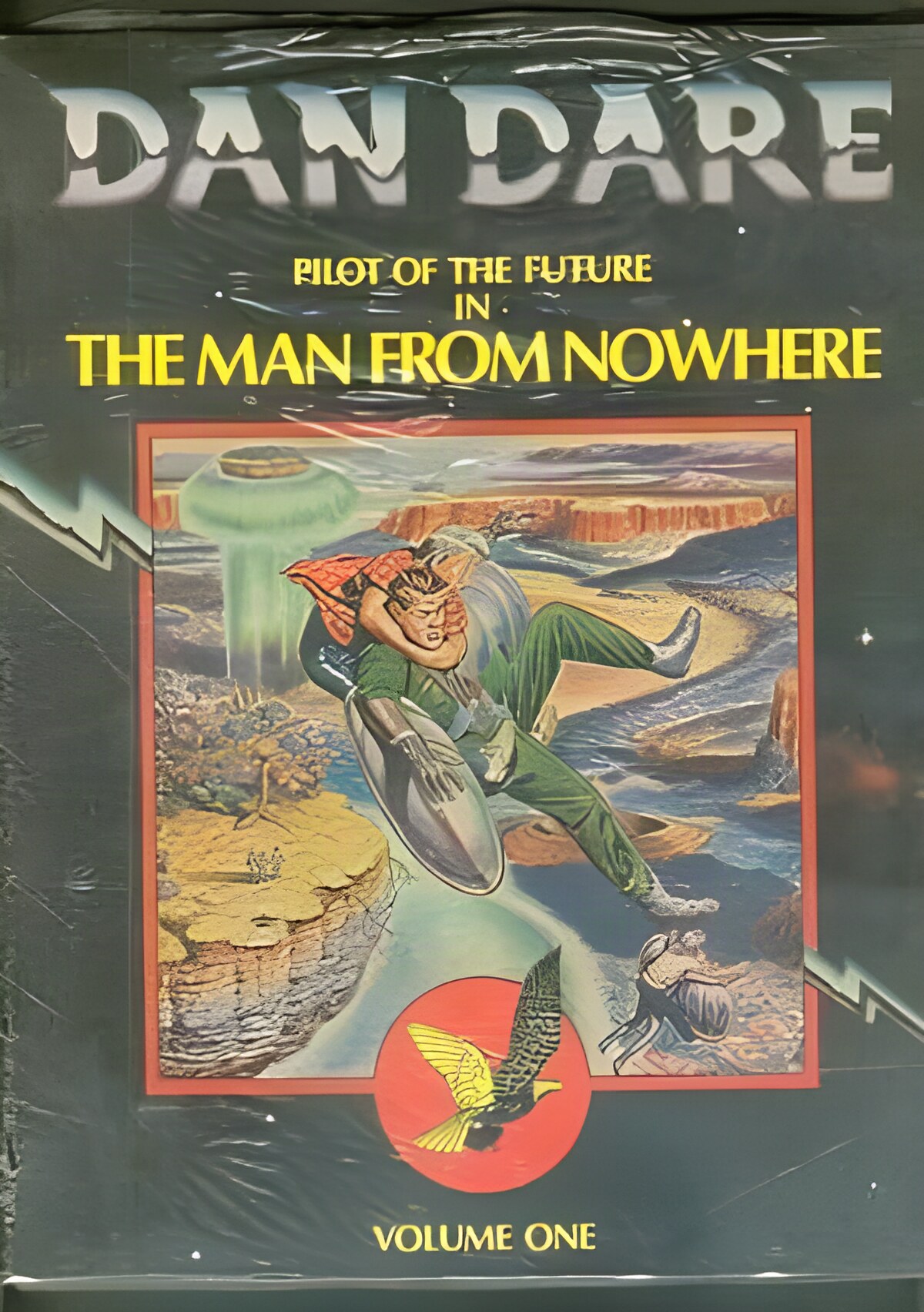
Softcover. Dragon's Dream, 1st thus, 1979, Book: Very Good, Dust Jacket: None, Softcover, pictorial wraps, unpaginated. Dan Dare is the classic science fiction strip from the British 'Eagle' magazine that became a household name when it was published in 1950. This series differs from the Hawk series in that here the art work in the first frame of each front page is not obscured by the title and re-cap text box. Clean copy.
Softcover. San Francisco, Chronicle Books, 1st, 1993, Book: Very Good, Dust Jacket: None, Softcover, 144 pages. An illustrated history of the fabulous pulp magazines from 1896 to 1953. After tracing the birth of the pulps back to the 1882 launching of Golden Argosy magazine, printed on pulpwood pages, Server organizes his unwieldy subject into categories of pulps: adventure, romance and sex, horror and fantasy, private eye, weird menace, science fiction. Each receives a lively capsule history that covers trends, reader (and sometimes, as in the case of the ``Spicys,'' government) response, and writers' bios--which, though sketchy (Hammett's Hollywood experience gets one sentence), resurrect a number of relatively obscure but seminal and fascinating figures, like Conan- creator Robert E. Howard, who shot himself dead at age 30 on the day his mother died, and Frederick Faust (a.k.a. Max Brand), who sometimes wrote around the clock, piling up two or three million words a year. Server attributes the pulps' demise to, among other factors, the advent of TV, paperbacks, and comic books, and he winds up with a note on pulp-collecting. For all of the author's savvy, though, it's above all the eye- popping illustrations (100 color, 57 b&w) that will have readers beaming. Magazine covers (some lurid, some of eerie beauty), sample pages of text and ads (``Raise Giant Frogs'')--the pulps come alive once again here, in all their eccentric glory.
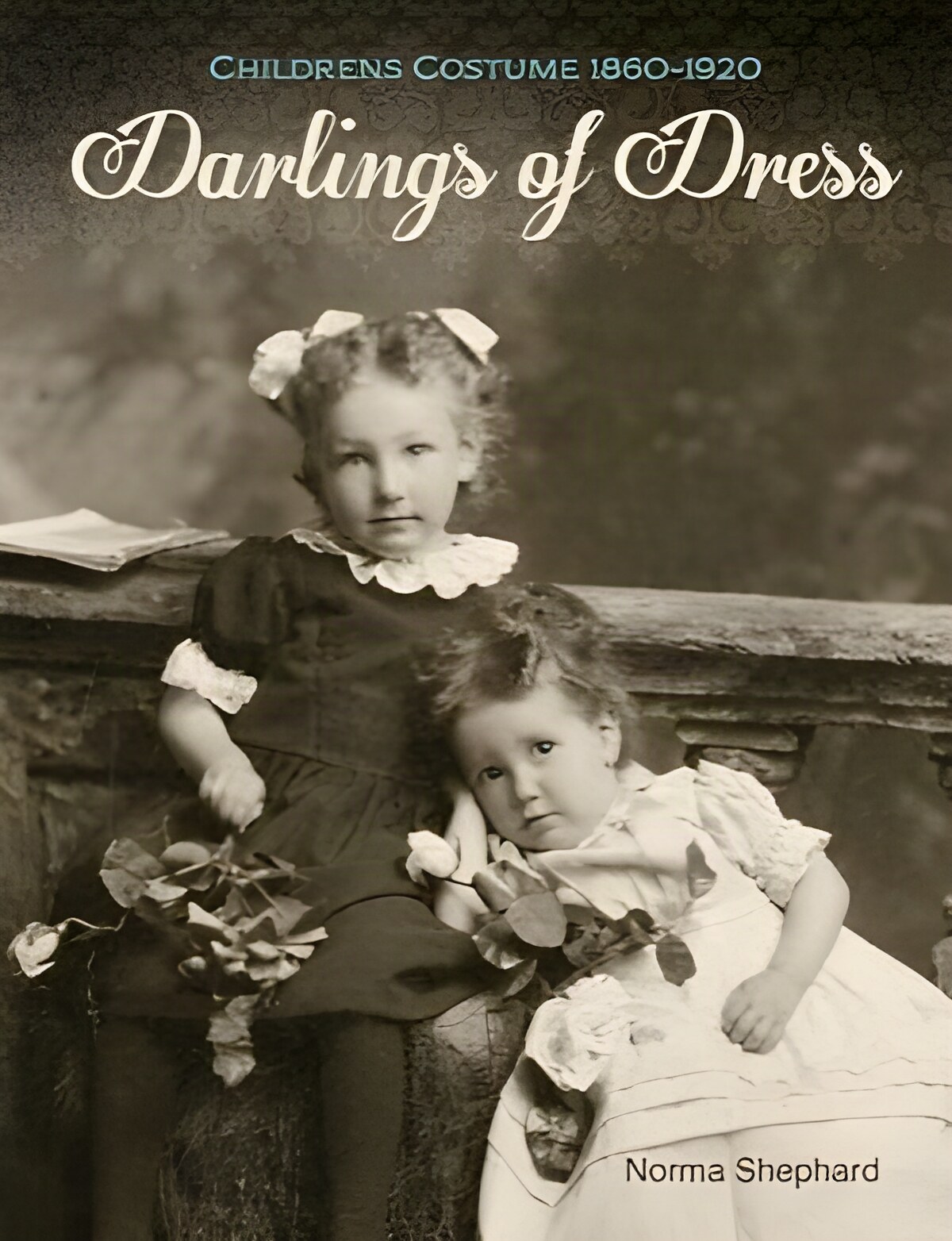
Hardcover. Atglen PA, Schiffer Fashion Press, 1st, 2017, Book: Very Good, Dust Jacket: Very Good, Hardcover in a bright dust jacket. This nostalgic look at children's costume, from 1860 to 1920, reveals diverse cultural influences on its manufacture and design. More than 300 historic photographs, fashion plates, and selections from vintage catalogs and magazines, plus 115 color images, show examples of costume and accessories. See infants in period dress plus school-aged and teen fads and trends. Learn about the history of clothing use and development, fabric types, conservation and storage of textiles, and artistic inspiration, all arranged by decade. All types of clothing are represented, including christening gowns; boys' breeches, knickerbockers, and sack suits; swimwear and underwear; bloomers and blouses; fur, feather boas, and frocks; sailor suits and uniforms; collars and belts; capes and hoods; lingerie and dresses; sweaters and cardigans; overalls; and many more. Whether you are interested in clothing children wore in 1920 or to church in the Victorian era, this reference is a fun and evocative collection. Clean copy.
Hardcover. London, Rodale Press, 1st thus, 1954, Book: Very Good, Dust Jacket: None, Hardcover, publisher's original cream and red pattern paper covered boards, gilt title and author lettering to the black cloth spine. 36 printed pages of text with monochrome illustrations throughout. A small (although not really a miniature) book containing an essay by James which was originally published in the Century Magazine in 1890. Illustrated with a portrait of Honore Daumier and 15 his caricatures. Mild foxing to endpapers otherwise clean.
Hardcover. London, Thames & Hudson, 1st, 2001, Book: Very Good, Dust Jacket: Very Good, Hardcover, 224 pages. In this latest celebration of his art Bailey brings together for the first time the best of all his "beauty" photographs from the 1960s up to the present day. Commissioned by the best-known fashion magazines of the time, these portraits of what Vogue once called "The Bailey Kind of Girl" include models such as Jean Shrimpton, Marie Helvin, Penelope Tree, and Bailey's wife, Catherine Dyer. Blended with these are Bailey's startling ethnographic portraits of, for example, Asaro mud men and Indian dancers, and his own paintings. In his illuminating introduction, Robin Muir sets these photographs in the context of the period in which they were taken and reminds us that for over forty years Bailey has challenged our notions of female beauty with his own highly personal vision. The sensational color images collected here testify that few are more expert than this photographer on a subject that is today preoccupying us more than ever. No admirer of either beauty or Bailey will want to be without this book. 110 color photographs.
Hardcover. New Haven CT, Yale University Press, 1st, 2005, Book: Very Good, Dust Jacket: Very Good, Hardcover, 320 pages. From the 1920s through the 1950s, two individuals, Joseph Urban and Norman Bel Geddes, did more, by far, to create the image of "America" and make it synonymous with modernity than any of their contemporaries. Urban and Bel Geddes were leading Broadway stage designers and directors who turned their prodigious talents to other projects, becoming mavericks first in industrial design and then in commercial design, fashion, architecture, and more. The two men gave shape to the most quintessential symbols of the modern American lifestyle, including movies, cars, department stores, and nightclubs, along with private homes, kitchens, stoves, fridges, magazines, and numerous household furnishings.Illustrated with more than 130 photographs of their influential designs, this book tells the engrossing story of Urban and Bel Geddes. Christopher Innes shows how these two men with a background in theater lent dramatic flair to everything they designed and how this theatricality gave the distinctive modernity they created such wide appeal. If the American lifestyle has been much imitated across the globe over the past fifty years, says Innes, it is due in large measure to the designs of Urban and Bel Geddes. Together they were responsible for creating what has been called the "Golden Age" of American culture.
Hardcover. Koln, Taschen, 1st, 2004, Book: Very Good, Dust Jacket: None, Hardcover, 460 pages, without dustjacket, as issued. Clean, bright copy with hundreds of nudes and scantily-clad women in color and b&w photographs and illustrations.
Hardcover. Koln, Taschen, 1st, 2004, Book: Very Good, Dust Jacket: None, Hardcover, 460 pages, without dust jacket, as issued. Clean, bright copy with hundreds of nudes and scantily-clad women in color and b&w photographs and illustrations.
Hardcover. Koln, Taschen, 1st, 2005, Book: Very Good, Dust Jacket: None, Hardcover, 460 pages, without dust jacket, as issued. Clean, bright copy with hundreds of nudes and scantily-clad women in color and b&w photographs and illustrations.
Hardcover. Koln, Taschen, 1st, 2005, Book: Very Good, Dust Jacket: None, Hardcover, 460 pages, without dust jacket, as issued. Clean, bright copy with hundreds of nudes and scantily-clad women in color and b&w photographs and illustrations.
Hardcover. Germany, Taschen, 1st, 2013, Book: Very Good, Dust Jacket: Very Good, 3-vol set in slip case. Hardcovers. Like new in publisher's shrink-wrap. Editor Dian Hanson traces the fascinating development of the genre from 1900 to 1969 in three compact, informative volumes. In Volume 1 you'll learn about the first magazines that appeared around 1900 in France, Germany, and the U.S., and follow the development of the genre through the First and Second World Wars. Covered are men's magazines masquerading as movie magazines, humor magazines, art magazines, nudist magazines, and "spicy" fiction. Volume 2 documents the proliferation of pin-up magazines following World War II, most notably a little item called Playboy that debuted in December 1953 and spawned dozens of imitators. This volume also charts the emergence of English men's magazines, fetish magazines, and the top five covergirls of the 1950s. Volume 3 begins with an explosion of new American pin-up magazines following the loosening of U.S. obscenity laws, and continues with French titles in decline, England going pervy; nudists going hippy, and Germany going pervy, hippy and political.
Softcover. NY, Harper Design, reprint, 2011, Book: Very Good, Dust Jacket: None, Softcover, 308 pages. Eleanor Dwight delivers the definitive biography of Diana Vreeland, the twentieth century's most influential fashion editor. Lavishly illustrated with exclusive photographs and personal materials from the legendary style maker's private collection, and featuring a new preface from Vogue's Andre LeonTalley, Diana Vreeland is an indispensible look at a grand dame of great couture. Lavishly illustrated with more than three hundred drawings and photographs, many by the best fashion photographers of the time: Louise Dahl-Wolfe, Irving Penn, Cecil Beaton, and Brassai. Here, too, are the trendsetters, artists, models, and celebrities with whom Vreeland worked and played, including Coco Chanel, Yves Saint Laurent, Hubert de Givenchy, Oscar de la Renta, Elsie de Wolfe, Andy Warhol, Truman Capote, and Jacqueline Kennedy.
Hardcover. New York, Aperture, 1st, 1984, Book: Very Good, Dust Jacket: Very Good, Hardcover, 176 pages. Illustrated with black & white photographs by Diane Arbus. Arbus's commercial photography and articles are less well known than her other works. Her assignments for 'Esquire', 'Harper's Bazaar' and the 'Sunday Times Magazine' in London covered the leaders of theater, fashion, show business and literature. Here are over 100 portraits and feature profiles which originally accompanied them. Bottom right corners of covers lightly bumped. Clean, tight copy.
Softcover. New York, Aperture, 1st, 1984, Book: Very Good, Dust Jacket: None, Softcover, 176 pages. Illustrated with black & white photographs by Diane Arbus. Arbus's commercial photography and articles are less well known than her other works. Her assignments for 'Esquire', 'Harper's Bazaar' and the 'Sunday Times Magazine' in London covered the leaders of theater, fashion, show business and literature. Here are over 100 portraits and feature profiles which originally accompanied them. Luminaries include Jayne Mansfield, Mae West, William Golding, Susan Sontag, Norman Mailer, and many others. Clean, tight copy.
Softcover. New York, Aperture, 1st, 1984, Book: Very Good, Dust Jacket: None, Softcover, 176 pages. Illustrated with black & white photographs by Diane Arbus. Arbus's commercial photography and articles are less well known than her other works. Her assignments for 'Esquire', 'Harper's Bazaar' and the 'Sunday Times Magazine' in London covered the leaders of theater, fashion, show business and literature. Here are over 100 portraits and feature profiles which originally accompanied them. Remainder stamp to bottom edge, otherwise a clean, tight copy.
Softcover. New Haven CT, Yale University Press, 1st, 2003, Book: Very Good, Dust Jacket: None, Softcover, 168 pages. Diane Arbus (1923-1971) is renowned for her provocative and unsettling portraits of modern Americans. This book presents a significant body of previously unpublished pictures by Arbus and proposes a radically new way to understand her goals, strategies, and overall work. Diane Arbus: Family Albums examines unknown contact sheets from several of Arbus's portrait sessions, including more than three hundred photographs she took of a New York family one weekend in 1969. Anthony W. Lee and John Pultz put to the test Arbus's claim that she was developing a "family album." They present other images Arbus shot for Esquire magazine (including pictures of the families of Ricky Nelson, Jayne Mansfield, and Ogden Reid) and discuss her interest in photographic groupings of both traditional and alternative families. Challenging common interpretations of Arbus, the authors reveal a photographer far more savvy with the camera, more aware of photography as an artistic and commercial practice, and more sensitive to the social and cultural tensions of the 1960s than has been acknowledged before.
Softcover. New Haven CT, Yale University Press, 1st, 2003, Book: Very Good, Dust Jacket: None, Softcover, 168 pages. Diane Arbus (1923-1971) is renowned for her provocative and unsettling portraits of modern Americans. This book presents a significant body of previously unpublished pictures by Arbus and proposes a radically new way to understand her goals, strategies, and overall work. Diane Arbus: Family Albums examines unknown contact sheets from several of Arbus's portrait sessions, including more than three hundred photographs she took of a New York family one weekend in 1969. Anthony W. Lee and John Pultz put to the test Arbus's claim that she was developing a "family album." They present other images Arbus shot for Esquire magazine (including pictures of the families of Ricky Nelson, Jayne Mansfield, and Ogden Reid) and discuss her interest in photographic groupings of both traditional and alternative families. Challenging common interpretations of Arbus, the authors reveal a photographer far more savvy with the camera, more aware of photography as an artistic and commercial practice, and more sensitive to the social and cultural tensions of the 1960s than has been acknowledged before.
Hardcover. NY, Abrams Press, 1st, 2023, Book: Very Good, Dust Jacket: Very Good, Hardcover in a bright, unclipped dust jacket, 439 pages. In the 1950s, comics meant POW!BAM! superheroes, family-friendly gags, and Sunday funnies, but in the 1960s, inspired by these strips and the satire of MAD magazine, a new generation of creators set out to subvert the medium, and with it, American culture. Their "comix"--spelled that way to distinguish the work from their dime-store contemporaries--presented tales of taboo sex, casual drug use, and a transgressive view of society. Embraced by hippies and legions of future creatives, this subgenre of comic books and strips often ran afoul of the law, but that would not stop them from casting cultural ripples for decades to come, eventually moving the entire comics form beyond the gutter and into fine-art galleries. Brian Doherty weaves together the stories of R. Crumb, Art Spiegelman, Trina Robbins, Spain Rodriguez, Harvey Pekar, and Howard Cruse, among many others, detailing the complete narrative history of this movement. Through dozens of new interviews and archival research, he chronicles the scenes that sprang up around the country in the 1960s and '70s, beginning with the artists' origin stories and following them through success and strife, and concluding with an examination of these creators' legacies. Dirty Pictures is the essential exploration of a truly American art form that recontextualized the way people thought about war, race, sex, gender, and expression.
Hardcover. NY, Abrams Press, 1st, 2023, Book: Very Good, Dust Jacket: Very Good, Hardcover in a bright, unclipped dust jacket, 439 pages. In the 1950s, comics meant POW!BAM! superheroes, family-friendly gags, and Sunday funnies, but in the 1960s, inspired by these strips and the satire of MAD magazine, a new generation of creators set out to subvert the medium, and with it, American culture. Their "comix"--spelled that way to distinguish the work from their dime-store contemporaries--presented tales of taboo sex, casual drug use, and a transgressive view of society. Embraced by hippies and legions of future creatives, this subgenre of comic books and strips often ran afoul of the law, but that would not stop them from casting cultural ripples for decades to come, eventually moving the entire comics form beyond the gutter and into fine-art galleries. Brian Doherty weaves together the stories of R. Crumb, Art Spiegelman, Trina Robbins, Spain Rodriguez, Harvey Pekar, and Howard Cruse, among many others, detailing the complete narrative history of this movement. Through dozens of new interviews and archival research, he chronicles the scenes that sprang up around the country in the 1960s and '70s, beginning with the artists' origin stories and following them through success and strife, and concluding with an examination of these creators' legacies. Dirty Pictures is the essential exploration of a truly American art form that recontextualized the way people thought about war, race, sex, gender, and expression.
Softcover. Port Townsend WA, Feral House., 1st, 2008, Book: Very Good, Dust Jacket: None, Softcover in pictorial wraps, 220 pages. Dope Menace boasts hundreds of full color images from the wicked subgenre of drug-exploitation narratives. The covers that made these authors books so easy to pick up are collected here for the first time, in all their seductive glory. While we now enjoy this exploitative genre for its campy kitsch, gloriously bad writing, and outlandish misinformation, drug paperback books were once a transgressive medium with a perversely seductive quality. Dope Menace collects together hundreds of fabulously lurid and collectible covers in color, from xenophobic turn-of-the century tomes about the opium trade to the beatnik glories of reefer smoking and William S. Burroughs' Junkie to the spaced-out psychedelic '60s. Clean copy.
Hardcover. gr, Editorial RM, 1st, 2009, Book: Near Fine, Dust Jacket: None, Hardcover, Like new in publishers shrink-wrap. With an all-black velvet cover and beautifully printed inside, Health and Efficiency is a sexy little book. The pieces are all derived from a pile of old nudist camp magazines he picked up in Brick Lane market in East London. In the original clippings nubile porcelain-white maidens pose puritanically next to ponds and lillies. But in Lakra's versions they have sailor tattoos and get skewered by monochrome skeletons and mugwumps.
Hardcover. GR, Editorial RM, 1st, 2009-07-31, Book: Near Fine, Dust Jacket: None, Like new in publishers shrink-wrap. Hardcover, Like new in publishers shrink-wrap. With an all-black velvet cover and beautifully printed inside, Health and Efficiency is a sexy little book. The pieces are all derived from a pile of old nudist camp magazines he picked up in Brick Lane market in East London. In the original clippings nubile porcelain-white maidens pose puritanically next to ponds and lillies. But in Lakra's versions they have sailor tattoos and get skewered by monochrome skeletons and mugwumps.
Hardcover. Kansas City, Andrews McMeel Publishing, 1st, 2012, Book: Very Good, Dust Jacket: Very Good, Hardcover, 320 pages. Everyone who grew up entertained, provoked, and enlightened by Dr. Seuss books will love this big, color-saturated volume covering 70 years of published and private art by the master of smart, loopy fun. Here are examples of Theodor Geisel's clever, now ironic advertising work, including a rambunctious campaign for Flit, an insecticide containing DDT. Geisel's political cartoons and magazine illustrations are animated by his phenomenal gift for line and color, mischievous humor, and humanitarian values. It is thrilling, too, to see the original drawings for Green Eggs and Ham and other Seuss classics. But the big discoveries in this bountiful and redefining volume are his "Midnight Paintings," surreal watercolors, oils, and acrylics featuring tiny figures in a vast, labyrinthine world, and private versions of his expressive characters, especially the Cat, his alternate identity. Geisel's vibrant, trippy, hilarious, and poignant art plays on Hieronymus Bosch, M. C. Escher, and Persian miniatures. Every creature, plant, architectural marvel, object, and landscape is wriggling, leaping, flying, arcing, tilting, and rolling. When he dives into abstraction, he plunges into a deep chromatic sea, while his taxidermic sculptures prove just how real his sweet and goofy invented critters were to him. Spectacular reproductions and excellent, if episodic, commentary map Geisel's exuberant, world-altering artistic journey on what he would call "long wiggled roads" into "weirdish wild space."

 "Danger Is My Businessby: Lee Server")

 "David Bailey: Chasing Rainbowsby: Bailey, David and Robin Muir")
 "Designed to Persuade: The Graphic Art of Edward Penfield by: Gibson David; Penfield Edward")
 "Designing Modern America: Broadway to Main Street by: Innes, Christopher")
 "Dian Hanson's : The History of Men's Magazines : Volume 1: 1900 to Post-WWIIby: Hanson, Dian")
 "Dian Hanson's : The History of Men's Magazines : Volume 2: From Post-War to 1959by: Hanson, Dian")
 "Dian Hanson's : The History of Men's Magazines : Volume 3: 1960s at the Newsstandby: Hanson, Dian")
 "Dian Hanson's : The History of Men's Magazines : Volume 4: 1960s Under the Counterby: Hanson, Dian")
 "Dian Hanson's History of Pin-up Magazines Vol. 1-3by: Hanson, Dian (editor)")


 "Diana Vreelandby: Eleanor Dwight")
 "Diane Arbus - Magazine Workby: Arbus, Diane")




 "Diane Arbus: Family Albumsby: Anthony W. Lee and John Pultz")
 "Diane Arbus: Family Albumsby: Anthony W. Lee and John Pultz")



 "Dr. Lakra: Health & Efficiencyby: Cruzvillegas, Abraham, and Lakra, Dr")
 "Dr. Lakra: Health & Efficiencyby: Lakra, Dr.")
 "Dr. Seuss: The Cat Behind the Hatby: Smith, Caroline M.")