Softcover. Burlington VT, privately printed, 3rd pr., 1975, Book: Very Good, Dust Jacket: None, Softcover, 80 pages. Black and white photos, map, and acknowledgments. A biography of the author's mother and a record of life in central Vermont during the turn of the century. SIGNED BY FARNSWORTH on the front fly leaf. Previous owner's signature also on the front fly leaf, otherwise clean.
Hardcover. NY, Frederick A. Stokes, 1st, 1918, Book: Very Good, Dust Jacket: None, Hardcover, terra-cotta cloth with a color paste-down on cover, 263 pages, A collection of 35 Native American animal folklore tales. Wood-lore (or, the ways of wild things) are told in an engaging format - a wise old chief holds evening "story-time" sessions with his very curious grandson, Little Beaver. Running through the linked narrative is the little black bear Moween, of whom Little Beaver is particularly fond. Illustrated with 8 color plates, a color title page and an endpapers drawing by Paul Bransom. Light shelf wear.
Hardcover. NY, Frederick A. Stokes, 1st, 1918, Book: Good, Dust Jacket: None, Hardcover, terra-cotta cloth with a color paste-down on cover, 263 pages, A collection of 35 Native American animal folklore tales. Wood-lore (or, the ways of wild things) are told in an engaging format - a wise old chief holds evening "story-time" sessions with his very curious grandson, Little Beaver. Running through the linked narrative is the little black bear Moween, of whom Little Beaver is particularly fond. Illustrated with 8 color plates, a color title page and an endpapers drawing by Paul Bransom. Light shelf wear.
Hardcover. San Francisco, Pomegranate, 1st, 1992, Book: Very Good, Dust Jacket: Very Good, 164 pages. Hardcover. Black & white photographs by Jazz musician Milt Hinton. Dust jacket with light wear. Clean, tight copy.
Hardcover. Boston, Lothrop & Co., 1st, 1878, Book: Very Good, Dust Jacket: None, Hardcover, color illustrated boards with a black cloth spine, 247 pages, b&w illustrations. Introduction by Leonard Waldo of Harvard College Observatory. An introductory study of Astronomy for the young reader. Previous owner's inscription on front fly leaf otherwise clean. Corner chip to paper on bottom of front cover A fragile binding but still solid.
Hardcover. New York, Atheneum, reprint, 1993, Book: Very Good, Dust Jacket: Very Good, 42 pages. hardcover with dust jacket. Color and black & white illustrations by Bryan. Dust jacket is protected by a mylar cover.
Hardcover. Oxford UK, Clarendon Press, 1st, 1951, Book: Very Good, Dust Jacket: None, 467 pages. Hardcover with dust jacket. B&w plates. Light edgewear to black covers. Dust jacket has heavy chipping and short tears. Gutter cracking in places.
Hardcover. Chicago, Reilly & Lee, reprint, 1939, Book: Good, Dust Jacket: None, 272 pages. Hardcover. Early reprint. Tan cloth covers with full color paste down illustration to front - paste down with abrasions. Front interior hinge cracked. Black & white illustrations by John R. Neill. Moderate rubbing to corners and edges. Interior clean, tight.
Hardcover. Germany, Hatje Cantz Publishers, 1st, 2000, Book: Very Good, Dust Jacket: Very Good, 303 pages. Hardcover with dust jacket. Clean, unmarked copy with only minor wear to dust jacket. Color and Black and white pictures throughout. This catalogue raisonne of Picasso's lithographic work contains 855 pieces with entries for every printed sheet as an individual work, including test and state printings, and unpublished sheets. Scholarly essays from various contributors. Light fraying to bottom spine cover.
Hardcover. Boston, Houghton Mifflin, 1st thus, Book: Very Good, Dust Jacket: Very Good, Hardcover in a bright, price-clipped dust jacket. To mark the fortieth anniversary of Paddington's appearance in America, Houghton Mifflin put out this huge treasury, containing chapters from eleven of the Paddington Bear books published between 1958 and 1979. Thirty five adventures in all. There's a new Introduction by the author. The original black & white drawings of Peggy Fortnum were hand-colored by her step-granddaughter, Caroline Nuttall-Smith. Clean, bright copy.
Hardcover. New Haven, CT, Yale University Press, 1st, 2015, Book: Very Good, Dust Jacket: None, 480 pages. Hardcover with no dust jacket. Very clean, unmarked copy still in shrink wrap. 378 color and 10 black & white illustrations. Tight copy. While European art forms were widely disseminated, copied, and adapted throughout Latin America, colonial painting is not a derivative extension of Europe. The ongoing debate over what to call it-mestizo, hybrid, creole, indo-hispanic, tequitqui-testifies to a fundamental yet unresolved question of identity. Comparing and contrasting the Viceroyalties of New Spain, with its center in modern-day Mexico, and Peru, the authors explore the very different ways the two regions responded to the influence of the Europeans and their art. A wide range of art and artists are considered, some for the first time.
Softcover. New York, American Art Association, 1st, 1978, Book: Very Good, Dust Jacket: None, Softcover. 150 pages. Reprint of 1926 auction catalog. Orange wrappers with black titles, perfect binding, profusely illustrated with b&w plates, foreword by Dana H. Carroll. Slight rubbing to covers; a very clean, tight copy.
Hardcover. London, Cartago, 1st UK, 1999, Book: Very Good, Dust Jacket: Very Good, Hardcover, 224 pages. Color and black & white photography by Nicholas Sapieha. By studying a period of nearly four centuries and examining houses over the entire region of Goa, this lavishly illustrated book, with architectural drawings, attempts to define the specific identity of Indo-Portuguese architecture. It is possible to observe, particularly during the 17th and 18th centuries, a progressive cross-influencing of Indian and Portuguese aesthetic tastes: the resulting mixture has produced a fascinating style of architecture, which this text has captured with more than 200 color photographs.
Softcover. Prospect Heights IL, Waveland Press, reprint, 1994, Book: Very Good, Dust Jacket: None, Softcover, 113 pages. A look at the economic development of the Giriama of Kenya where traditional customs are sometimes at odds with the needs and desires of the individual, enterprising farmers. Illustrated with statistical tables, reproductions of black-&-white photographs, and a map. Appended: Bibliography, Index.
Hardcover. Boston Mills Press , 1st, 2007, Book: Very Good, Dust Jacket: Very Good, Hardcover in a bright, unclipped dust jacket. For a world coming out of economic depression in the 1930s, the Pan American Airways Clipper "flying boats" symbolized elegance and luxury, adventure and romance. Illustrated with rare period photographs, vintage travel posters, magazine ads and colorful company brochures, this fascinating book covers every aspect of the fabulous era of Pan American's graceful clippers. Like their maritime namesakes, the Clippers used the oceans to form a vast global network of travel routes. Pan Am founder Juan Trippe was a visionary who saw the importance of international travel to a changing world. His Clippers would play a key role in the evolution of transoceanic flight, setting time and distance records over the Atlantic and Pacific, providing airmail delivery between countries, and eventually serving the Allies as troop and cargo transports during World War II. A major appeal is the 200 color images and 100 historical black-and-white photographs. Clean copy.
Hardcover. London, Frederick Warne & Co., Ltd., Reprint, n.d., Book: Very Good, Dust Jacket: Very Good, Color, black & white illustrations by Caldecott. Decorative stamped front cover. Clean copy in a nice dust jacket.
Hardcover. UK, Sheffield Academic Press, 1st, 1995, Book: Very Good, Dust Jacket: None, Hardcover, black cloth with gilt lettering, 167 pages. Panorthosia (Universal Reform) is the essential theme of John Amos Comenius's famous Consultation on the Reform of Human Affairs, and chapters 19-26 represent its climax. In this volume is presented the first English translation of this major work of Comenius, which was lost from about 1672 until 1934 when the Latin scholars of Czechoslovakia had it edited for publication in Prague in 1960. Clean copy.
Hardcover. Chicago IL, Albert Whitman & Co, reprint, 1931, Book: Very Good, Dust Jacket: None, Hardcover. 160 pages. Color and black & white illustrations by Eleanore Mineah Hubbard. Previous owner's bookplate and signatures on front end paper and front fly leaf. Top corners bumped. Wear to covners and spine. Scribbling in pencil on rear endpaper. Some soiling to covers.
Hardcover. NY, Harper and Brothers, 1st, 1957, Book: Very Good, Dust Jacket: None, Color, black & white illustrations by Bettina Ehrlich. Excellent condition. Illust. cardboard covers with black cloth spine. Lacking dust jacket.
Hardcover. New York, Charles Scribner's Sons, 1st, 1901, Book: Very Good, Dust Jacket: None, Hardcover, Illustrated with many line drawings by William Glackens. Khaki cloth with black, red and grey cover illustration, illustrated frontispiece, 261 pages. Hinge cracked at half-title page, otherwise very good, clean.
New York, Simon & Schuster , 1st, 1995, Book: Very Good, Dust Jacket: Very Good, Hardcover in a bright dust jacket.Color Illustrations by Floyd Cooper. When Papa tells a story about a brave soldier with a secret message, Chita happily joins in the telling, enjoying the time with her father in a celebration of family and the tradition of the tall tale.
Hardcover. NY, Thames & Hudson, 1st, 2021, Book: Very Good, Dust Jacket: None, Hardcover, pictorial boards, 256 pages. Henri Cartier-Bresson was 'the eye of the 20th century' and one of the world's most acclaimed photographers. Paris was his home, on and off, for most of his life (1908-2004). The photographs he took of the city and its people manage to be both dreamlike and free of affectation. Here are around 160 photographs taken over a more than fifty-year career. Mostly in black and white, this selection reveals the strong influence on Cartier-Bresson of pioneering documentary photographer Eugene Atget (1857-1927), and the clear visual links with Surrealism that infused Cartier-Bresson's early pictures. After an apprenticeship with Cubist painter Andre Lhote, in 1932 Cartier-Bresson bought his first Leica, a small portable camera that allowed him to capture movement and the rhythms of daily life in Paris. Cartier-Bresson observed from close quarters the Liberation in August 1944 and the civil disturbances of May 1968. In between he also succeeded in capturing the faces of Parisians in their natural habitat, celebrated artists and writers and citizens alike. Remainder line to bottom edge, otherwise clean. DUE TO WEIGHT, DOMESTIC SHIPPING ONLY.


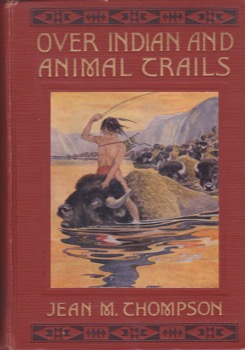
 "Over Indian and Animal Trailsby: Thompson, Jean M. and Paul")
 "Over Time: The Jazz Photographs of Milt Hintonby: Hinton, Milt/David G. Berger/Holly Maxson")
 "Overhead: Or What Harry and Nelly Saw In the Heavensby: Moore, Annie and Laura Nichols")


 "Ox of the Wonderful Horns and Other African Folktales, Theby: Bryan, Ashley")
 "Oxford Dictionary of Nursery Rhymes, Theby: Opie, Iona and Peter")
 "Ozoplaning with The Wizard of OZby: Thompson, Ruth Plumly")
 "Pablo Picasso: The Lithographsby: Reusse, Felix (Compiler)")
 "Paddington Treasuryby: Bond, Michael")
 "Painting in Latin America, 1550-1820: From Conquest to Independenceby: Alcala, Luisa Elena")
 "Paintings and Drawings by J. Francis Murphyby: Murphy, J. Francis")
 "Palaces of Goa - Models and Types of Indo-Portugese Civil Architectureby: Carita, Helder")

 "Pan American Clippers: The Golden Age of Flying Boats by: James Trautman")
 "Panjandrum Picture Book, Theby: Caldecott, Randolph")


 "Pantalette Doll from the Metropolitan Museum, Theby: Beard, Patten")
 "Pantaloniby: Bettina")
 "Papa Bouchardby: Seawell, Molly Elliot")
 "Papa Tells Chita a Storyby: Howard/Floyd Cooper, Elizabeth Fitzgerald")