Softcover. Portland ME, Maine Historic Preservation Commission, 2nd Ed., 1995, Book: Very Good, Dust Jacket: None, Softcover, oblong format, 147 pages. Maine shingle style houses, well illustrated with photographs and drawings, Documents every known architectural project in Maine by Boston architect William R. Emerson. Clean copy.
Hardcover. NY, Rizzoli International, 1st US, 1982, Book: Very Good, Dust Jacket: Very Good, Hardcover in a bright dust jacket. 228 pages, illustrations in color and b/w. Photography by Roberto Schezen. This was the first book to present all of Loos's 180 works and an essay on this architect's relation to the society of his time. Embossed stamp to prelim page, otherwise clean.
Hardcover. NY, Skira, 1st, 2008, Book: Very Good, Dust Jacket: Very Good, Hardcover, 240 pages. Winner of the 1990 Pritzker Architecture Prize, Italian architect and theorist Aldo Rossi (1931-1997) gained international renown for his imaginative and starkly beautiful designs. Rossi's writings, drawings and buildings have distinguished him as one of the great architects of our time. They are unique for their simple forms such as cones, cylinders, prisms, and cubes. His work is at once bold yet ordinary, original without being novel, refreshingly simple in appearance but extremely complex in content and meaning. Rossi has been able to follow the lessons of classical architecture without copying them. In a period of diverse styles and influences, Aldo Rossi has eschewed the fashionable and popular to create an architecture singularly all his own. Sketches, drawings, concepts, watercolors, and collages from the early 1960s through to 1998 help us to understand Aldo Rossi the artist and architect, as well as his mindset and how he elaborated his projects. The volume is complete with a register of the Aldo Rossi Foundation's works. This is truly a valuable tool for scholars.
Hardcover. NY, Harry N. Abrams, 1st, 2000, Book: Very Good, Dust Jacket: Very Good, Hardcover, 300 pages. This book accompanies a major traveling exhibition that showcases works by some of the most visionary designers and architects, from chairs and tables to jewelry and entire buildings.
Hardcover. Hanover NH, University Press of New England, 1st, 2005, Book: Very Good, Dust Jacket: Very Good, Hardcover in a bright duct jacket, 251 pages, b&w illustrations. For years, designers, educators, and community administrators have clamored for a book that will highlight the problems with contemporary playgrounds, tender sorely needed strategies with which to redress them, and stimulate national debate about today's crisis of undervalued public space. Susan Solomon's groundbreaking and marvelously illustrated American Playgrounds is that book. Since the 1970s, Solomon maintains, American playgrounds have degenerated into irrelevance as cultural artifacts and educational tools. Imbedded in Solomon's text is a frank indictment of American attitudes that are stunted by a heavy-handed emphasis on safety that limits the nature of play and the vitality of places for public assembly. During the past decade an elite few American architects, landscape architects, and sculptors, including Stanley Saitowitz, Walter Hood, and Mary Miss, have pioneered the restoration of aesthetic and developmental values to play areas for young people. Solomon appraises these success stories and proposes fresh and urgent remedies that blend excellent design principles, innovative planning, and affordability-a vision for the future of the playground in America. Supplementing her impeccable command of primary and secondary sources with hundreds of hours of interviews with designers and clients, the author confronts a seriously under-developed topic with powerful and complex arguments rich in social history, law, theories of play and childhood, and urbanism. Readers will be inspired-and equipped-to take up the gauntlet of advocacy for superior American playgrounds. Clean copy.
Hardcover. New York, NY, Rizzoli International Publications, 1st, 2000, Book: Near Fine, Dust Jacket: Near Fine, Hardcover, 197 pages, color photographs throughout. Very clean and tight copy. This is the first book to put together all of the extraordinary houses designed by Antoine Predock. Each of the twelve remarkable private houses featured here--ten from Texas, Arizona, and New Mexico, and two from California--harmoniously blend with their landscape in ways for which Predock is now so renowned. Characterized by environmentally conscious design, the houses display both exquisite refinement and an ingenious level of invention.
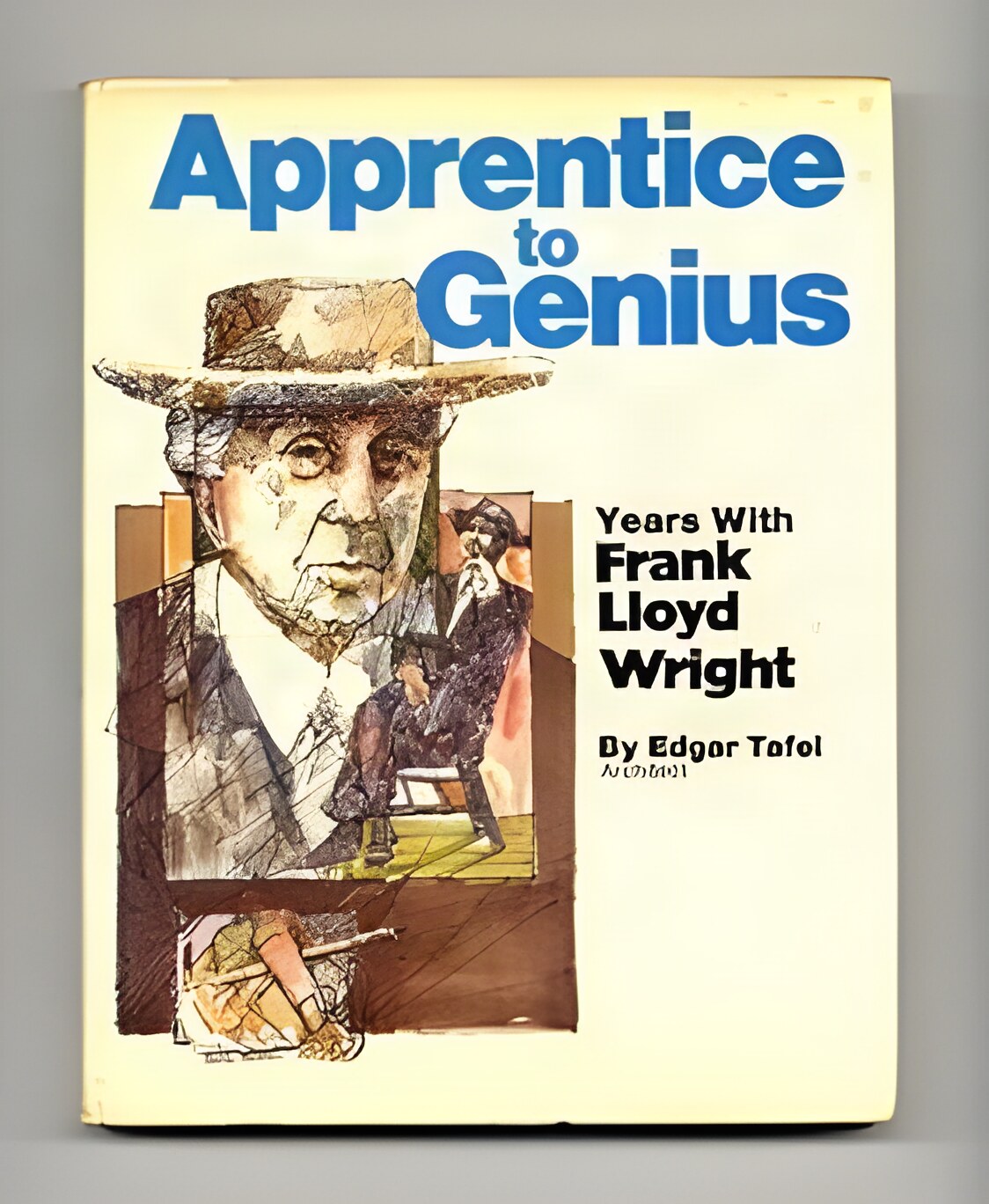
Hardcover. NY, McGraw-Hill , 1st, 1979, Hardcover in a bright, unclipped dust jacket, 228 pages. Edgar Tafel was an apprentice who lived and worked with Frank LLoyd Wright. With his insights and insider information, this fascinating history shows a personal, social, and work life, and how Wright's creativity evolved, the processes in his designs, building, and constructions, and more. Clean copy.
Hardcover. Baltimore, Johns Hopkins University, 1st, 2002, Book: Very Good, Dust Jacket: None, An extraordinary work, unparalleled in its breadth and depth of detail, this three-volume set offers the first comprehensive history of architecture and town planning throughout colonial North America, from Russian Alaska to French Quebec, to Spanish Florida and California, to British, Dutch, and other settlements on the East Coast. Across this vast terrain, James Kornwolf conjures the outlines of the constructed environment as it emerged in settlements and communities, in structures and sites, and in the flourishes and idiosyncrasies of the families and individuals who erected and inhabited colonial buildings and towns. Here as never before readers can observe the impulses and principles of colonial design and planning as they are implemented in the buildings and streets, harbors and squares, gardens and landscapes of the New World. Incorporating more than 3,000 illustrations, Kornwolf's massive work conveys the full range of the colonial encounter with the continent's geography, from the high forms of architecture through formal landscape design and town planning. From these pages emerge the fine arts of environmental design, an understanding of the political and economic events that helped to determine settlement in North America, an appreciation of the various architectural and landscape forms that the settlers created, and an awareness of the diversity of the continent's geography and its peoples. Considering the humblest buildings along with the mansions of the wealthy and powerful, public buildings, forts, and churches, Kornwolf captures the true dynamism and diversity of colonial communities-their rivalries and frictions, their outlooks and attitudes-as they extended their hold on the land. His work conveys for the first time the full scale, from intimate to grand, of their enduring transformation of the natural landscape of North America. NOTE: DOMESTIC SHIPPING ONLY.
Hardcover. Boston, Bulfinch, 1st, 2002, Book: Very Good, Dust Jacket: Very Good, Hardcover, 336 pages. Oversized. Still in publisher's shrinkwrap. Some light wear on dust jacket corners. Color photographs throughout. A bright, clean copy. A foreword by Johnson himself, an essay by his biographer Hilary Lewis, and nearly 400 vivid color and b/w photos accompanied by detailed building descriptions presented in chronological order.
NY, Hearst Books International, 1st, 1997, Book: Very Good, Dust Jacket: Very Good, Hardcover in a bright, unclipped dust jacket. Black & white and color photos and illustrations. 191 pages. Light edgewear to dust jacket.
Hardcover. London, Batsford, 1st, Book: Very Good, Dust Jacket: None, A history of the evolution of the Arts of Building, Decoration and Garden Design under classical influence. Many b&w photos, Illustrations. 528 pgs. Some sun-fading to spines, else a clean, tight set.
Hardcover. New Haven, Yale University, 1st, 1977, Book: Very Good, Dust Jacket: Very Good, Hardcover, 68 pages, b&w illustrations. Introduction by Edmund Pillsbury. INSCRIBED BY BROWN on front fly leaf. Light rubbing to front edge of embossed dust jacket. Published on the occasion of the opening of the building.
Softcover. Munich, Prestel, 1st , 1997, Book: Very Good, Dust Jacket: None, 271 pages. Softcover. Features full color and black & white illustrations. Features the German design groups best work 1965-1997. Clean, unmarked copy with only minor bump to bottom right corner.
Hardcover. Chicago, University Of Chicago Press, 1st, 2010, Book: Very Good, Dust Jacket: Very Good, Hardcover, 110 pages, in a bright dust jacket. Photographer Stanley Greenberg explores the anatomy and engineering of some of our most unusual new buildings, helping us to understand our own fascination with what makes buildings stand up, and what makes them fall down. An historical and critical essay by Joseph Rosa and an afterword by the author.The 80 captivating and thought-provoking images collected here focus on some of the most high-profile design projects of the past decade.
Hardcover. New York, Playbill/ Applause Thetre& Cinama Books, 1st, 2002, Book: Very Good, Dust Jacket: Very Good, 357 pages. Hardcover with dust jacket. Clean, tight copy. Minor wear to dust jacket. Minor rubbing to top spine. Light soil on rear. This is the ultimate backstage tour of Broadway! AT THIS THEATRE tells the complete history of Broadway in the 20th century, theatre by theatre. This gorgeous book is now updated, revised and with a larger format, covering 1900 to 2001. PLAYBILL's columnist, Louis Botto, along with Robert Viagas, opens the doors and lets readers explore the 40 active Broadway theatres in New York. From the conception and design of the buildings, to their original creators, and on to the theatres' transformation, often under duress, from legitimate houses to vaudeville and Burlesque, to movie houses and then back to their original purpose, this book captures the magical world of Broadway. It is a complete and authoritative history that only Botto, the curator of PLAYBILL's incomparable 116-year-old archives, can tell.
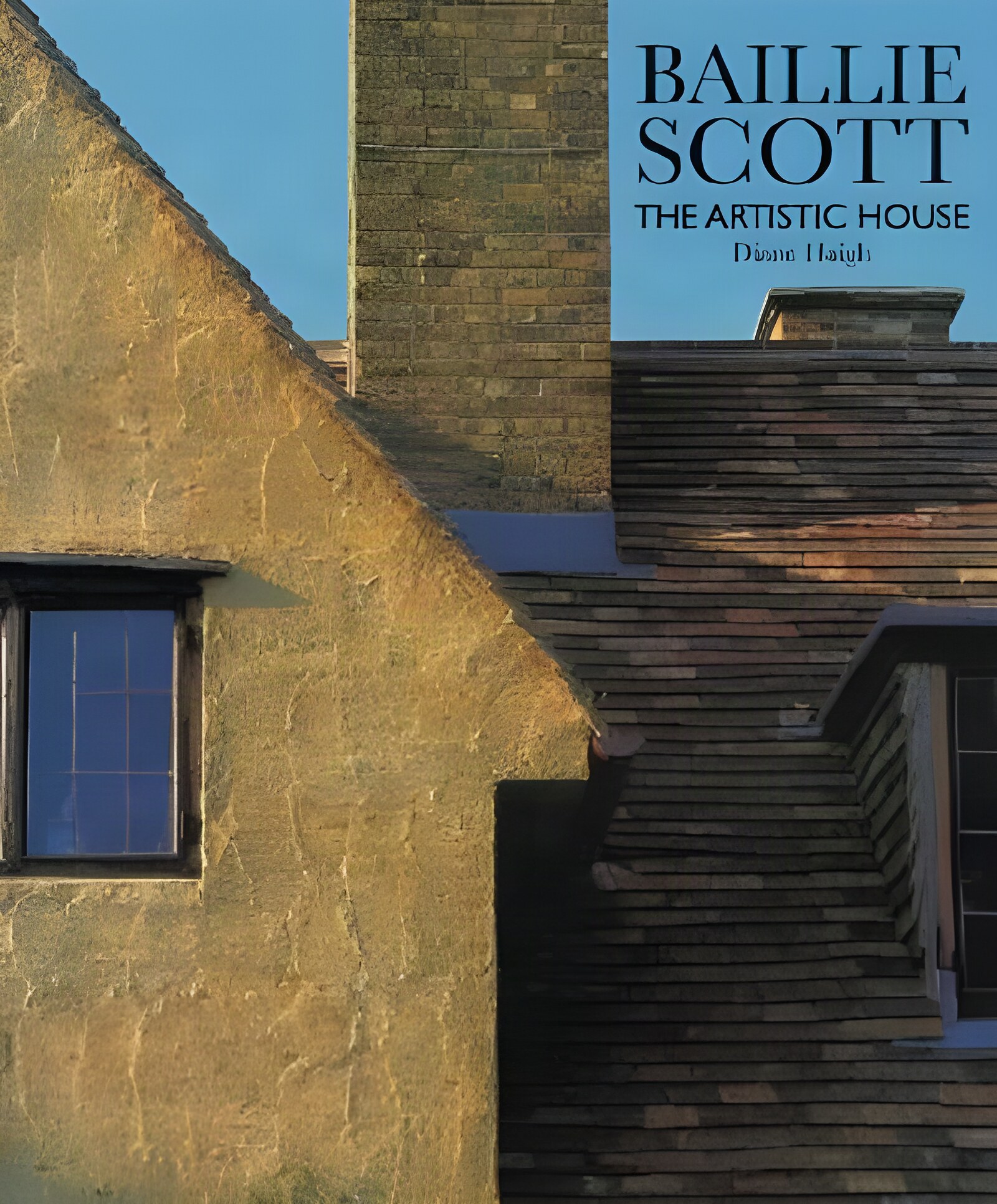
Softcover. London, Academy Editions Ltd, 1st, 1995, Book: Very Good, Dust Jacket: None, Softcover, 128 pages. Illustrated in color and b&w. Baillie Scott's long career spanned the years from 1892 to 1939 - several ages in architecture. He may be considered a third-generation Arts and Crafts architect, who joined the movement after it had become well established and took its ideas to everyman. He invented a new type of small house by opening up a plan around a spacious house-place or hall and extending the interior into the garden. These airy little houses, with their intimate alcoves and sunny verandas, captured William Morris's vision: 'Simplicity of life, even the barest, is not a misery, but the very foundation of refinement: a sanded floor and whitewashed walls, and the green trees, and flowery meads... will turn all "operatives" into workmen, into artists, into men.' This book includes many newly commissioned photographs of Baillie Scott's houses, as well as original drawing and new research. By looking at his writing and revisiting his buildings - some previously unknown - it makes available the work of an important architect of the Arts and Crafts movement. It reveals for the first time the beauty of Baillie Scott's architectural works and the fascinating breadth of his theory and practice. Clean copy.
Hardcover. Milwaukee WI, Bruce Publishing, reprint, 1945, Book: Very Good, Dust Jacket: None, Hardcover, oblong brown cloth with black lettering and design, 62 pages illustrated with b&w illustrations and photos. Detailed instructions on building birdhouses. Foxing to endpapers otherwise a clean copy.
Softcover. Beverly MA, Rockport, 1st, 2012, Book: Very Good, Dust Jacket: None, Flexibound, 312 pages, profusely illustrated in color. Brand Bible is a comprehensive resource on brand design fundamentals. It looks at the influences of modern design going back through time, delivering a short anatomical overview and examines brand treatments and movements in design. You'll learn the steps necessary to develop a successful brand system from defining the brand attributes and assessing the competition, to working with materials and vendors, and all the steps in between. The author, who is the president of the design group at Sterling Brands, has overseen the design/redesign of major brands including Pepsi, Burger King, Tropicana, Kleenex, and many more. Clean, bright copy.
Hardcover. NY, McGraw-Hill, 11th ed., 1946, Hardcover, black cloth in a worn, chipped dust jacket. Small sticker on dj spine. 169 pages, b&w illustrations, Practical reference data on materials, design, and construction methods employed in brick construction; for contractors, builders, architects, engineers, and students...".
Softcover. London, Seven Dials, Cassell & Co., 1st, 2000, Book: Very Good, Dust Jacket: None, 224 pages. Softcover with French flaps. Color and b/w illustrations throughout. Previous bookstore price tag on back cover. Edges of pages slightly yellow, otherwise very clean inside and out.
Hardcover. NY, Harry N Abrams, 1st, 1996, Book: Very Good, Dust Jacket: Very Good, Hardcover in a bright dust jacket. 208 pages illustrated in color. A surprising look at who designed for Disney: Michael Graves, Frank Gehry, Aldo Rossi, Robert Venturi etc. Based on interviews with those involved plus original photos and drawings. From fairy-tale castles to extraordinary buildings designed by the world's most distinguished architects, The Walt Disney Company has set new standards for the imaginative use of popular imagery in architecture. The company's enormously influential architectural philosophy, first expressed more than fifty years ago at Disneyland, draws on characters and settings from the world's most compelling legends and stories, especially Disney's own remarkable animated films. Clean copy.
Softcover. Berkeley CA, University of California Press, 1st, 1999, Book: Very Good, Dust Jacket: None, Softcover, 220 pages. This book provides a fascinating history of the planning, design, and construction of the six-building Getty Center in Los Angeles, one of the great cultural complexes to be built in our time. Writing with wit and passion, Richard Meier takes us behind the scenes of the thirteen-year-long, one-billion-dollar project.
Hardcover. Salt Lake City, Gibbs Smith, 1st, 2005, Book: Very Good, Dust Jacket: Very Good, Hardcover, 229 pages, profusely illustrated in b&w. In "Building with Nature: Inspiration for the Arts & Crafts Home" Freudenheim weaves together the lives and philosophies of William Morris, John Ruskin, Frederick Law Olmsted, John Muir, Greene & Greene, Irving Gill, Bernard Maybeck, and others with the dramatic economic, social, design and cultural changes that took place in America between 1876 and 1916. Chronicling both intellectual theory and architectural history, this ground-breaking book will appeal to general readers as well as to those enthusiastic about the Arts and Crafts Movement, its architecture and furniture. Freudenheim demonstrates how the "simple life" manifested in the rustic architecture found in Yosemite, English cottages, Japanese barns, and Swiss chalets, became the basis for the design of the American Arts and Crafts home advocated by these pioneering thinkers. Their devotion to simplicity for both the interior and exterior design of these houses also helps to explain why they embraced plain, sturdy Mission Style furniture. Freudenheim points out how numerous individuals, both American and British, helped spread these ideas across America.
Softcover. San Francisco, CA, Chronicle Books, 6th pr., 2001, Book: Very Good, Dust Jacket: None, 180 pages. Softcover. Black and white pictures throughout. Clean tight copy.

 "A Delight to All Who Know It: The Maine Summer Architecture of William R. Emerson by: Reed, Roger G.")
 "Adolf Loos, Theory and Works by: Benedetto Gravagnuolo")

 "Aluminum By Designby: Nichols, Sarah")

 "Antoine Predock: Housesby: Collins, Brad (Editor)")
 "Architecture and Town Planning in Colonial North America (3 Vol. Set)by: James D. Kornwolf and Georgiana W. Kornwolf")
 "Architecture of Philip Johnson, The.by: Payne, Richard (Photographer) Philip Johnson, Hilary Lewis")
 "Architecture of Stations and Terminals, The - Airplane Train, Bus and Subwayby: Cerver, Fransico Asensio")
 "Architecture of the Renaissance in France, The 1492-1830 (2 vols)by: Ward, W.H.")
 "Architecture of the Yale Center for British Art, The (SIGNED COPY)by: Brown, Jules David")

 "Architecture under Constructionby: Greenberg, Stanley")
 "At This Theatre: 100 Years of Broadway Shows, Stories and Starsby: Botto, Louis")
 "Boy Bird House Architectureby: Baxter. Leon H.")

 "Brick Structuresby: Stoddard, Ralph P.")
 "Building a Dream: The Art of Disney Architectureby: Beth Dunlop")
 "Building the Gettyby: Meier, Richard")
 "Building with Nature: Inspiration for the Arts and Crafts Homeby: Freudenheim, Leslie M.")
 "California Crazy and Beyond: Roadside Vernacular Architectureby: Heimann, Jim")