Hardcover. NY, Citadel Press, 1st, 2024, Book: Very Good, Dust Jacket: Very Good, Hardcover in a bright dust jacket, 294 pages, b&w illustrations. They were the Godfathers of the Movies. Groundbreaking pioneers of the Hollywood Dream Factory, Joseph and Nicholas Schenck may not have been household names like the Warner brothers or Louis B. Mayer, but they were infinitely more powerful, influential--and ruthless. A pair of Russian immigrants with giant ambitions, the Schencks turned their small nickelodeon business in New York's Bowery into a partnership with Loew's movie theaters and a controlling interest in three major studios: MGM, Twentieth Century-Fox, and United Artists. They painted the silver screen silver, laid the foundations for the all-powerful studio system, and ruled a global movie empire from their Gatsby-sized mansions on the East and West Coasts. Clean copy.
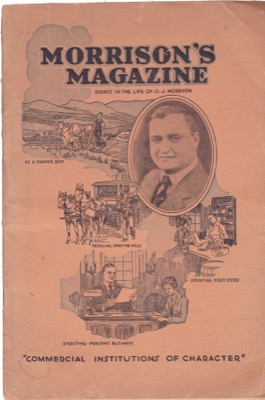
Softcover. Charleston WV, Morrison Department Store, 1928, Book: Very Good, Dust Jacket: None, Softcover, stapled tan wrappers, 72 pages. A brochure featuring the history of a line of department stores in West Virginia. The founder's philosophy laid out in boring detail. Interesting, great photos of his storefronts, store managers. Unusual.
Hardcover. NY, Ticknor & Fields, 1st, 1991, Book: Very Good, Dust Jacket: Very Good, Hardcover, 501 pages, b&w illustrations. The Morgenthaus were one of those German-Jewish families who broke through the snobbish anti-Semitism of the wasp mainstream in the nineteenth and early twentieth centuries to be a force in American public life. This is a charming, intimate portrayal of three fascinating generations in American history. In a bright, unclipped dust jacket.
Hardcover. Santa Fe, Twin Palms Pub, 1st, 1993, Book: Very Good, Dust Jacket: Very Good, Hardcover, unpaginated. Illustrated throughout in b&w. Light shelf-wear and rubbing to dust jacket, else a clean, tight copy. A collection of vintage stock photos depicting the salesman, circa 1950.
Hardcover. Santa Fe, Twin Palms Pub, 1st, 1993-10-01, Book: Very Good, Dust Jacket: Very Good, Hardcover, unpaginated. Illustrated throughout in b&w. Light shelf-wear and rubbing to dust jacket, else a clean, tight copy. A collection of vintage stock photos depicting the salesman, circa 1950.
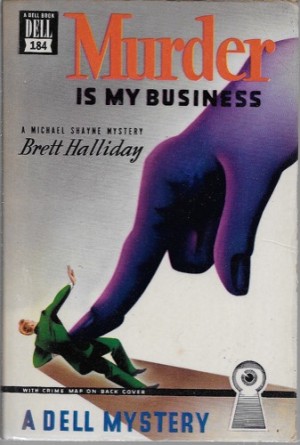
Softcover. New York, Dell Publishing, 1st, 1947, Book: Very Good, Dust Jacket: None, 192 pages. Paperback. Dell Book #184. Minor wear to paper wrappers. Light paper chipping to spine edge. Map on rear cover.
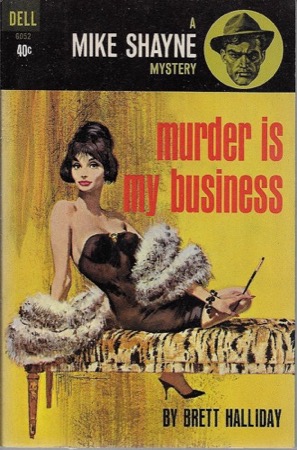
Softcover. New York, Dell Publishing, 1st, 1963, Book: Very Good, Dust Jacket: None, 192 pages. Paperback. Dell Book #6052. Minor wear to paper wrappers. Cover art by Robert McGinnis.
Softcover. New York, Dell Publishing, 1st, 1947, Book: Very Good, Dust Jacket: None, 192 pages. Paperback. Dell Book #184. Minor wear to paper wrappers. Light paper chipping to spine edge. Map on rear cover.
Hardcover. NY, HarperCollins, 2nd pr., 1997, Book: Very Good, Dust Jacket: Very Good, Hardcover in a bright dust jacket, 436 pages. A great historian crowns a lifetime of thought and research by answering a question that has haunted us for more than 50 years: How did one of the most industrially and culturally advanced nations in the world embark on and continue along the path leading to one of the most enormous criminal enterprises in history, the extermination of Europe's Jews? Giving considerable emphasis to a wealth of new archival findings, Saul Friedlander restores the voices of Jews who, after the 1933 Nazi accession to power, were engulfed in an increasingly horrifying reality. We hear from the persecutors themselves: the leaders of the Nazi party, the members of the Protestant and Catholic hierarchies, the university elites, and the heads of the business community. Most telling of all, perhaps, are the testimonies of ordinary German citizens, who in the main acquiesced to increasing waves of dismissals, segregation, humiliation, impoverishment, expulsion, and violence. Clean copy.
Hardcover. NY, Doubleday, 1st, 1964, Book: Very Good, Dust Jacket: Very Good, Hardcover in a bright, unclipped dust jacket with minor edgewear. Illustrated throughout by black and white photographs, including frontispiece, title and contents pages. decorated by half title vignette. An early 1960s portrait of New York City and some of its inhabitants going about their daily business in words and evocative photographs. By journalist, Gilbert Millstein and photojournalist and street photographer, Austrian born Sam Falk (1901-91).
Hardcover. New York, Bloomsberg Press, 1st Edition, 1998, Book: Very Good, Dust Jacket: Very Good, 110 pages. Hardcover. B/w illustrations throughout. Gray cover boards, green quarter cloth, gilt title on spine. Binding tight. Spine straight. Pages clean and unmarked. Dust jacket unclipped, excellent. In beautiful condition. Spanning the years from 1938-1998, each of these 100 classic cartoons pack a time-lsss, powerful punch.
Hardcover. Chicago, University Of Chicago Press , 1st, 2017, Book: Very Good, Dust Jacket: Very Good, Hardcover in a bright dust jacket, 330 pages with index. At the close of the nineteenth century, new printing and paper technologies fueled an expansion of the newspaper business and publishers were soon reeling off as many copies as Americans could be convinced to buy. Newspapers quickly saturated the United States, especially its cities, which were often home to more than a dozen daily papers apiece. Using New York, Philadelphia, Milwaukee, and Chicago as case studies, Julia Guarneri shows how city dailies became active agents in creating metropolitan spaces and distinctive urban cultures. Newsprint Metropolis offers a vivid tour of these papers, from the front to the back pages. Paying attention to much-loved features, including comic strips, sports pages, advice columns, and Sunday magazines, she tells the linked histories of newspapers and the cities they served. Themed sections for women, businessmen, sports fans, and suburbanites illustrated entire ways of life built around consumer products. Guarneri also argues that while papers provided a guide to individual upward mobility, they also fostered a climate of civic concern and responsibility. Charity campaigns and metropolitan sections painted portraits of distinctive, cohesive urban communities. Real estate sections and classified ads boosted the profile of the suburbs, expanding metropolitan areas while maintaining cities' roles as economic and information hubs. Clean, like new.
Softcover. NY, Pegasus Books, reprint, 2012, Book: Very Good, Dust Jacket: None, Softcover, 344 pages. A new Pegasus Crime edition of the landmark noir novel by "the supreme master of suspense." (Marilyn Stasio, The New York Times Book Review) In Woolrich's iconic tale, Detective Tom Shawn saves a lovely young woman from a suicide attempt one night, and later hears her story. She is in despair because the death of her wealthy father has been predicted by a confidence man seemingly gifted with the power of clairvoyance; a man whose predictions have unerringly aided her father in his business many times before. Shawn and a squad of detectives investigate this dire prediction and try to avert the millionaire businessman from meeting his ordained end at the stroke of midnight. Clean, bright copy.
Hardcover. NY, Gallery Books, 1st, 2025, Book: Very Good, Dust Jacket: Very Good, Hardcover in a bright, unclipped dust jacket, 267 pages. Now Departing explores the science, craft, and mindfulness behind Victor M. Sweeney's very peculiar skill set. Working in the funeral business since he was eighteen years old, Sweeney astutely shares the powerful and moving lessons of how we can exist and be remembered with intention and meaning. Each page is filled with reflective observations and true stories from the lives and deaths that Sweeney has come to know through his work in a small Minnesota town. With grace and understanding, he also explores the rituals around preparing and saying goodbye to those we mourn; the love and forgiveness that arises in the face of grief; the universal interplay of walking between the chasm of the mundanity of a required business practice that touches on humanity's deepest metaphysical realities; and ultimately, how loss gives us the opportunity to focus on and celebrate the elements we have gained. Clean copy.
Hardcover. NY, Birch Lane Press, 1st, 1994, Book: Very Good, Dust Jacket: Very Good, Hardcover in a bright dust jacket, 414 pages, b&w illustrations. A biography of controversial designer Calvin Klein draws on interviews with friends, business associates, and lovers to trace his dramatic rise to fame in the fashion world and his self-indulgent personal life.
Hardcover. Boston, Houghton Mifflin, 1st, 1986, Book: Very Good, Dust Jacket: Very Good, Hardcover in a bright, unclipped dust jacket, 190 pages. Explores the world of the North Sea oil installations and describes the life of the men who are engaged in this business. The offshore oil rig represents one of Earth's last frontiers; the ultimate example may be found in the North Sea, 300 miles off the coast of Scotland. What's it like to live in this hostile environment, in unnatural isolation, and to work to the point of exhaustion? Curiosity prompted Alvarez (The Savage God, The Biggest Game in Town to visit the Shell installation at Brent Fields. The people best fitted for offshore work, Alvarez found, are ex-military men. He talked at length to pilots, roustabouts, managers, divers and the chief official of the Shetland Islands. It's an amazing account of humanity triumphing over the elements.
Hardcover. Seattle, University of Washington Press, 1st, 1991, Book: Very Good, Dust Jacket: Very Good, 388 pages, hardcover. B&w plates. INSCRIBED BY ECKERT. Light foxing to edge and light wear to bottom edges of cover. According to conventional interpretations, the Japanese annexation of Korea in 1910 destroyed a budding native capitalist economy on the peninsula and blocked the development of a Korean capitalist class until 1945. In this expansive and provocative study, now available in paperback, Carter J. Eckert challenges the standard view and argues that Japanese imperialism, while politically oppressive, was also the catalyst and cradle of modern Korean industrial development. Ancient ties to China were replaced by new ones to Japan - ties that have continued to shape the South Korean political economy down to the present day. Eckert explores a wide range of themes, including the roots of capitalist development in Korea, the origins of the modern business elite, the nature of Japanese colonial policy and the Japanese colonial state, the relationship between the colonial government and the Korean economic elite, and the nature of Korean collaboration. He conveys a clear sense of the human complexity, archival richness, and intellectual challenge of the historical period. His documentation is thorough; his arguments are compelling and often strikingly innovative.
Softcover. New York, Vintage Books/Random House, 1st thus, 1985, Book: Very Good, Dust Jacket: None, Softcover, 224 pages. Reveals everything Ogilvy has learned about which advertising techniques sell and which don"t sell. Illustrated with 185 advertisements and TV commercials from all over the world in color and b/w . Superbly written and splendidly controversial, the book is as witty and outspoken as the man who wrote it. Clean, bright copy.
Softcover. New York, Vintage Books/Random House, 1st thus, 1985, Book: Very Good, Dust Jacket: None, Softcover, 224 pages. Reveals everything Ogilvy has learned about which advertising techniques sell and which don"t sell. Illustrated with 185 advertisements and TV commercials from all over the world in color and b/w . Superbly written and splendidly controversial, the book is as witty and outspoken as the man who wrote it. Clean, bright copy.
Hardcover. New York, Shell Oil Company, 1947, Book: Good, Dust Jacket: None, 782 pages plus appendix and vocabulary in rear. Leather covers, text pages two-hole punched for updating. Many photographs and diagrams in text. About 40 loose sheets laid in which are 1949 updates to various pages. Some light pencil notations in text, a little dusty but sound.
Hardcover. NY, Farrar Straus Giroux, 1st , 1967, Book: Very Good, Dust Jacket: Very Good, Hardcover. Author's third book, very good in a bright, unclipped dust jacket.
Hardcover. Cheltenham UK, Edward Elgar Publishing, 1st, 2008, Book: Very Good, Dust Jacket: None, Hardcover in glossy pictorial boards, 264 pages. Here the example of the Russian oil industry in the context of transition from a planned to a market economy is used to develop a three-stage framework for organisational transformation. Four longitudinal case studies of Russian oil companies are drawn upon to explain the process of organisational transformation. The book highlights how and why this process differs between companies within the same industry, explores the complexity of the change process and discusses the importance of the top management team. Clean copy.


 "Mostly Morgenthaus: A Family Historyby: Morgenthau, Henry III")
 "Mr. Salesmanby: Keaton, Diane (Ed.)")
 "Mr. Salesmanby: Keaton, Diane (Ed.)")






 "New Yorker Book of Business Cartoons, Theby: Robert Mankoff (Editor)")


 "Newsprint Metropolis City Papers and the Making of Modern Americans by: Guarneri, Julia")


 "Obsession: The Lives and Times of Calvin Kleinby: Steven Gaines, Sharon Churcher")
 "Offshore: A North Sea Journeyby: A. Alvarez")
 "Offspring of Empire: The Koch'ang Kims and the Colonial Origins of Korean Capitalism 1876-1945 (SIGNED COPY)by: Eckert, Carter J.")
 "Ogilvy on Advertisingby: Ogilvy, David")
 "Ogilvy on Advertisingby: Ogilvy, David")
 "Oil From the Ground Up: Textbook for the Basic Marketing Course of the Shell Schoolby: Koch, G.P.")


 "Organizing Asian American Labor: The Pacific Coast Canned Salmon Industry, 1870-1942by: Friday, Chris")