Hardcover. NY, Basic Books, 1st, 2004, Book: Very Good, Dust Jacket: Very Good, Hardcover in a bright, unclipped dust jacket, 364 pages. Dmitrii Mendeleev: It's a name we recognize, but only as the disheveled scientist pictured in our high school chemistry textbook, the creator of the periodic table of elements. Until now little has been known about the man, but A Well-Ordered Thing draws a portrait of this chemist in three full dimensions. Historian Michael Gordin also details Mendeleev's complex relationship with the Russian Empire that was his home. From his attack on Spiritualism to his humiliation at the hands of the Petersburg Academy of Sciences, from his near-mythical hot-air balloon trip to his failed voyage to the Arctic, this is the story of an extraordinary man deeply invested in the good of his country. And the ideals that shaped his work in politics and culture were the same ones that led a young chemistry professor to start putting elements in order. Mendeleev was a loyal subject of the Tsar, but he was also a maverick who thought that only an outsider could perfect a modern Russia. Clean copy.
Hardcover. London, Neville Spearman, 1st, 1972, Book: Good, Dust Jacket: Good, 285 pages. Hardcover with dust jacket. Dj has tape repair on top edges, chipping, fraying and rubbing throughout dust jacket. Cover boards show medium wear on corners, as well as spine. Light foxing to fore edge text block. Black and white illustrations.
Hardcover. New York, VCH Publishers, Inc., 1st, 1988, Book: Very Good, Dust Jacket: None, Hardcover, laminated boards, 337 pages; indexes, appendices, extensive chemical diagramming and tables, with some b&w photographs; bumped bottom corner, previous owner's signature on front endpaper; cover shows minimal wear; "fourteen articles by leading researchers constituting the first book devoted exclusively to the biological utilization of nickel" (from the cover). Very tight, clean copy. No dust jacket.
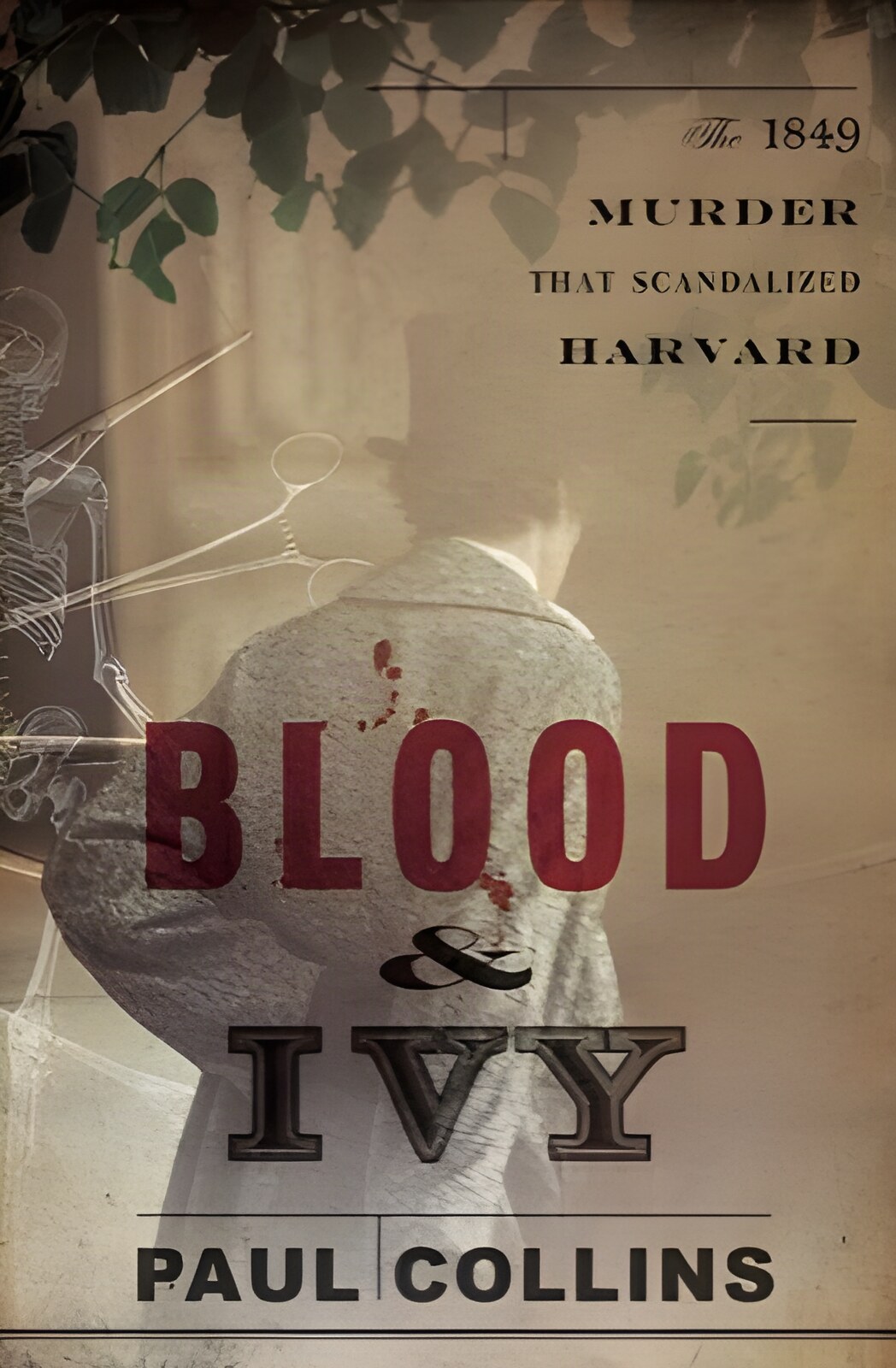
Hardcover. NY, W. W. Norton & Company, 1st, 2018, Book: Very Good, Dust Jacket: Very Good, Hardcover in a bright, unclipped dust jacket. A delectable true-crime story of scandal and murder at America's most celebrated university. On November 23rd of 1849, in the heart of Boston, one of the city's richest men simply vanished. Dr. George Parkman, a Brahmin who owned much of Boston's West End, was last seen that afternoon visiting his alma mater, Harvard Medical School. Police scoured city tenements and the harbor, and offered hefty rewards as leads put the elusive Dr. Parkman at sea or hiding in Manhattan. But one Harvard janitor held a much darker suspicion: that their ruthless benefactor had never left the Medical School building alive. His shocking discoveries in a chemistry professor's laboratory engulfed America in one of its most infamous trials: The Commonwealth of Massachusetts v. John White Webster. A baffling case of red herrings, grave robbery, and dismemberment-of Harvard's greatest doctors investigating one of their own, for a murder hidden in a building full of cadavers-it became a landmark case in the use of medical forensics and the meaning of reasonable doubt. Paul Collins brings nineteenth-century Boston back to life in vivid detail, weaving together newspaper accounts, letters, journals, court transcripts, and memoirs from this groundbreaking case.
Hardcover. New York, Raven Press, 1st, 1982, Book: Very Good, Dust Jacket: Very Good, Hardcover, 316 pages illustrated with b&w diagrams and charts. Tight and clean, review copy with publisher letter laid in.
Hardcover. Netherlands, Kluwer Academic Publishers, 1st, 2000, Book: Very Good, Dust Jacket: Very Good, Hardcover in a bright dust jacket, 223 pages. In Elements, Principles and Particles, Antonio Clericuzio explores the relationships between chemistry and corpuscular philosophy in the age of the Scientific Revolution. Science historians have regarded chemistry and corpuscular philosophy as two distinct traditions. Clericuzio's view is that since the beginning of the 17th century atomism and chemistry were strictly connected. This is attested by Daniel Sennert and by many hitherto little-known French and English natural philosophers. They often combined a corpuscular theory of matter with Paracelsian chemical (and medical) doctrines. Boyle plays a central part in the present book: Clericuzio redefines Boyle's chemical views, by showing that Boyle did not subordinate chemistry to the principles of mechanical philosophy. When Boyle explained chemical phenomena, he had recourse to corpuscles endowed with chemical, not mechanical, properties. The combination of chemistry and corpuscular philosophy was adopted by a number of chemists active in the last decades of the 17th century, both in England and on the Continent. Using a large number of primary sources, the author challenges the standard view of the corpuscular theory of matter as identical with the mechanical philosophy. He points out that different versions of the corpuscular philosophy flourished in the 17th century. Most of them were not based on the mechanical theory, i.e. on the view that matter is inert and has only mechanical properties. Throughout the 17th century, active principles, as well as chemical properties, are attributed to corpuscles. Given its broad coverage, the book is a significant contribution to both history of science and history of philosophy.
Hardcover. NY, John Wiley & Sons, 3rd Ed., 1943, Book: Very Good, Dust Jacket: None, Hardcover, light gray cloth with blue lettering, 611 pages with index. A detailed study of cooking from a scientific point of view. Charts, tables, a few b&w illustrations. Light fading to covers, bookplate on inside front cover otherwise clean and tight copy.
Softcover. London, Black Dog Publishing, 1st, 2008, Book: Very Good, Dust Jacket: None, Softcover, 185 pages, color illustrations. Contemporary designers, artists and scientists explore the evolution of this ubiquitous and endlessly malleable material, through its trademarked names - Spandex, Teflon, Nylon, Rayon, Formica, Tupperware - through to looking at how its function and reputation have changed over its lifetime. It is an essential book for designers, academics and everyone interested in our consumer culture.
Hardcover. New York/Basel, Marcel Dekker, 1st, 1988, Book: Very Good, Dust Jacket: None, Hardcover, laminated boards, 1069 pages. Previous owner's signature on front end paper, otherwise clean and tight.
Hardcover. New York, Oxford University Press, USA, 1st, 1991, Book: Very Good, Dust Jacket: Very Good, Hardcover, Volume 1 only, 491 pages. Very clean and bright copy, unmarked. Unclipped dust jacket with slight rubbing.
Hardcover. New York, Oxford University Press, USA, 1st, 1993, Book: Very Good, Dust Jacket: Very Good, 481 pages. Clean and unmarked copy. Unclipped dust jacket with minor sun-fade to spine.
Hardcover. NY, Random House;, 1st, 2020, Book: Very Good, Dust Jacket: Very Good, Hardcover, 220 pages. Kurt Vonnegut's eldest daughter, Edith, was cleaning out her mother's attic when she stumbled upon a dusty, aged box. Inside, she discovered an unexpected treasure: more than two hundred love letters written by Kurt to Jane, spanning the early years of their relationship. The letters begin in 1941, after the former schoolmates reunited at age nineteen, sparked a passionate summer romance, and promised to keep in touch when they headed off to their respective colleges. And they did, through Jane's conscientious studying and Kurt's struggle to pass chemistry. The letters continue after Kurt dropped out and enlisted in the army in 1943, while Jane in turn graduated and worked for the Office of Strategic Services in Washington, D.C. They also detail Kurt's deployment to Europe in 1944, where he was taken prisoner of war and declared missing in action, and his eventual safe return home and the couple's marriage in 1945.
Softcover. London/Rome, John Libbey, 1st, 1994, Book: Very Good, Dust Jacket: None, Softcover, 585 pages, b&w illustrations. Volume 3 only. Very clean and unmarked copy. Covers have very light wear.
Softcover. London UK, Winsor & Newton Ltd., reprint, Book: Very Good, Dust Jacket: None, Softcover, 20 page booklet, light gray wrappers. First published in 1892 it covers all technical aspects and chemistry of the manufacturer's oil and watercolor paints. No date, probably 1970s.
Hardcover. Philadelphia, The Medical World, 2nd Ed., 1886, Book: Very Good, Dust Jacket: None, Hardcover, 272 pages, brown cloth with gilt lettering on front cover. A collection of pharmaceutical mixtures, enlarged from the previous year's edition. Bright, clean copy.
1940, Book: Very Good, Dust Jacket: None, Female chemistry student, art by John Hyde Phillips. 10 1/2 X 13 1/2", very good. PLEASE NOTE: The image shown is a scan of the actual product you are purchasing. What you see is what you get. The sheet may have some imperfections beyond the cropped area shown. You are buying THIS PAGE ONLY- not the entire magazine. Your order will be placed carefully between stiff paper and an acetate overlay, then packed in a rigid cardboard sleeve to prevent bending.
Hardcover. New York, Academic Press, 1st, 1982, Book: Very Good, Dust Jacket: Very Good, 366 pages, b&w illustrations. Gray cloth with silver lettering on spine, in a bright dust jacket. Previous owner's signature on inside front cover, otherwise clean and tight.
Hardcover. Amsterdam, Elsevier/North-Holland Biomedical Press, 1st thus, 1980, Book: Very Good, Dust Jacket: None, 491 pages. Red boards with white printed illustration & white titles to cover & spine. Black & white illustrations throughout, including figures, chart, tables & photographs. Previous owner's signature to front flyleaf. Otherwise clean, tight copy.
Hardcover. New York, Academic Press, 1st, 1981, Book: Very Good, Dust Jacket: None, Two volumes in blue cloth with gilt lettering. Volume 1: 443 pages, Volume 2: 390 pages. Some light marking to contents page in vol. 1, otherwise clean and tight set. Illustrated with b&w graphs and charts. DUE TO WEIGHT, DOMESTIC SHIPPING ONLY.
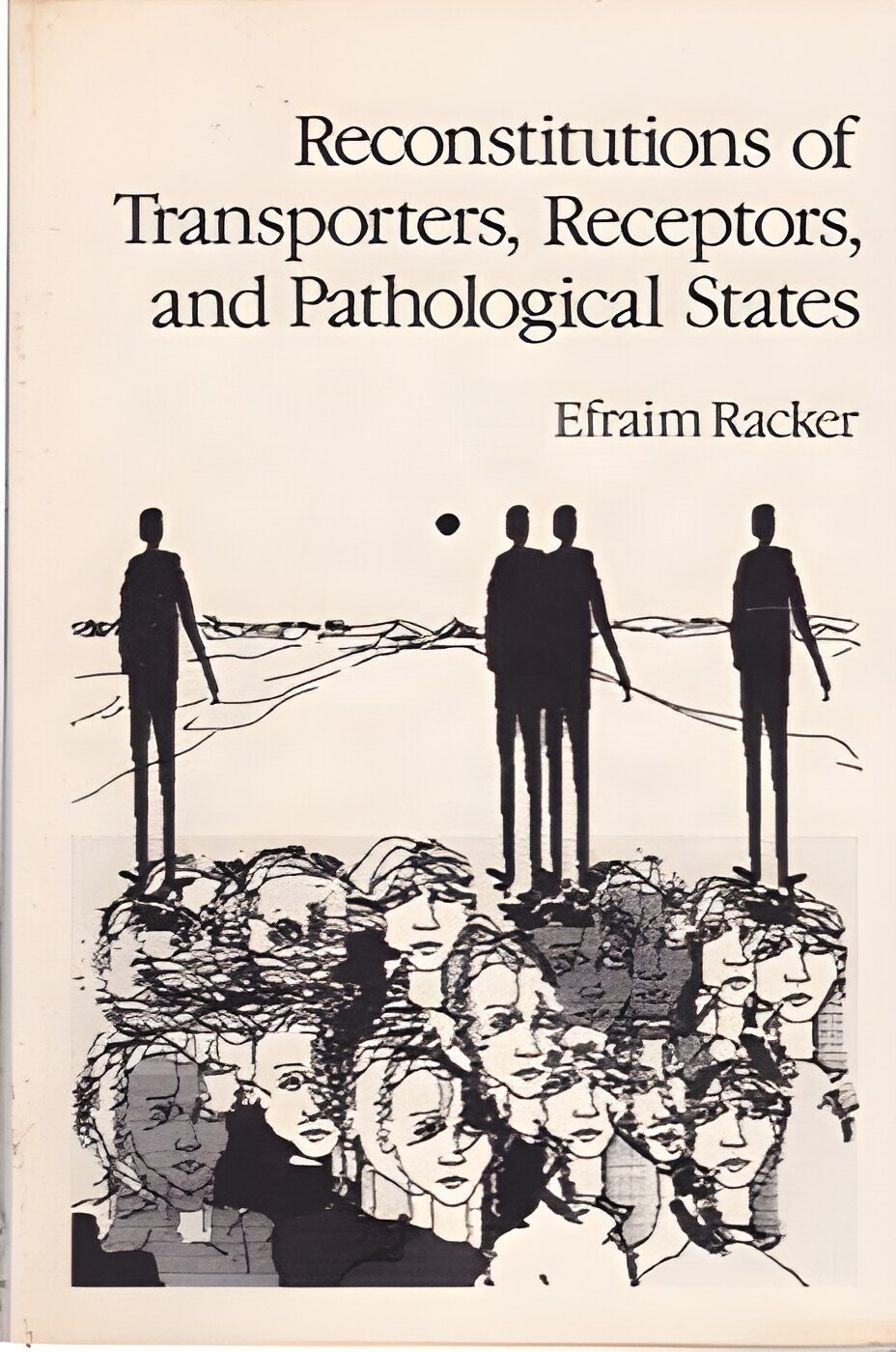
Softcover. NY, Academic Press, 1st, 1985, Book: Very Good, Dust Jacket: None, Softcover, 271 pages. Reconstitutions of Transporters, Receptors, and Pathological States presents lectures about the reconstitutions of transporters, receptors, and pathological states. The book discusses the principles and strategies of the resolution and reconstitution of soluble pathways and membrane complexes; and lessons in the resolution and reconstitution after the natural structure of the membrane has been destroyed. The text then describes the analyses of reconstituted vesicles; the ATP synthetase of oxidative phosphorylation; and the pumps of plasma membranes. The ATP-driven ion pumps in organelles, microorganisms, and plants; the proton motive force generators, electron transport chains, and bacteriorhodopsin; and facilitated diffusion, symporters, and antiporters are also considered. The book further tackles plasma membrane receptors, as well as the reconstitutions of pathological states. Biochemists, molecular biologists, and cell biologists will find the book invaluable. Name on front fly leaf, otherwise clean.
Hardcover. Los Angeles, J. Paul Getty Museum, 1st, 2004, Book: Very Good, Dust Jacket: Very Good, Hardcover, 154 pages. Like new in publishers shrink-wrap. Whatever his subject matter, rubbish bins or the human body, Edmund Teske (1911 - 1996) used the medium of photography: its film, chemistry, optics and mechanics to create serious, reflective and often composite works of art. This volume accompanied an exhibition of his photographs at the J Paul Getty Museum in 2004. As well as over 110 illustrations, the book contains Julian Cox;s biographical and critical essay and an interview with Teske's close friend of 30 years, the artist George Herms.

 "A Well-ordered Thing: Dmitrii Mendeleev And The Shadow Of The Periodic Table by: Michael D. Gordin")
 "Alchemists & Goldby: Sadoul, Jacques")
 "Bioinorganic Chemistry of Nickel, Theby: Lancaster, Jr. (Ed.), Jack")
 "Cytotoxic, Mutagenic and Carcinogenic Potential of Heavy Metals Related to Human Environmentby: Hadjiliadis (Ed.), Nick D.")
 "Electrolyte & Water Transport Across Gastrointestinal Epitheliaby: Case (Ed.), R. Maynard Case and others")
 "Elements, Principles, and Corpuscles: A Study of Atomism and Chemistry in the Seventeenth Century by: Clericuzio, Antonio")


 "Fragrance and flavor substances: Proceedings of the second International Haarman & Reimer Symposium on Fragrance and Flavor Substancesby: Croteau, Rodney (Editor)")
 "Handbook on the Toxicology of Metals: Volume 2by: Friberg Lars; Nordberg Gunnar; Vouk Velimir B; Kessler Elisabeth eds.")
 "Handbook on Toxicity of Inorganic Compoundsby: Seiler, Hans G., others")
 "Hans Krebs: Volume 1: The Formation of a Scientific Life, 1900-1933by: Holmes, Frederic Laurence")
 "Hans Krebs: Volume 2: Architect of Intermediary Metabolism, 1933-1937by: Holmes, Frederic Lawrence")
 "Love, Kurt: The Vonnegut Love Letters, 1941-1945by: Kurt Vonnegut / Edith Vonnegut")
 "Metal Ions in Biology & Medicine: Volume 3by: Philippe Collery and others")


 "Origins of Clinical Chemistry: The Evolution of Protein Analysisby: Rosenfeld, Louis")
 "Progress in Ecdysone Researchby: Hoffmann (Editor), J. A.")
 "Quality of Foods and Beverages, The (2 Vols.)by: Charalambous (Ed.), George and George Inglett")
 "Spirit into Matter: The Photographs of Edmund Teske by: Cox, Julian")