Softcover. Washington DC, National Geographic Society, 1st, 1917, Book: Very Good, Dust Jacket: None, Original magazines January - June 1917, in a maroon pebbled hardcover binding. Magazines are dated and paged, with photographs and maps, but do not have covers, advertisements, etc. Several pages of color plates. Light chipping to spine labels otherwise a bright, clean volume. The half year dominated by America's entrance into World War I. Articles by Newton D. Baker, Secretary of War, America's Duty; Stand by the Soldier, by General John J. Pershing; President Wilson's Proclamation; Bind the Wounds of France, by Herbert Hoover; articles by the ambassadors of Britain and France; Russian Situation and its Significance to America and Russia's Democrats; War, Patriotism, and the Food Supply.
Softcover. Washington DC, National Geographic Society, 1st, 1917, Book: Very Good, Dust Jacket: None, Original magazines July - December 1917, in a maroon pebbled hardcover binding. Magazines are dated and paged, with photographs and maps, but do not have covers, advertisements, etc. Several pages of color plates. Fold-out sepa photo of "Babes in the Woods" torn along one fold. Light chipping to spine labels otherwise a bright, clean volume.
Softcover. Washington DC, National Geographic Society, 1st, 1917, Book: Very Good, Dust Jacket: None, Softcover, illustrated with b&w photos, maps, advertisements. Original yellow and black wrappers, spine with light wear, good to very good. Articles include: The Food Armies of Liberty, The Geography of Medicines, A Few Glimpses into Russia, Conserving the Nation's Man Power.
Softcover. Washington DC, National Geographic Society, 1st, 1917, Book: Very Good, Dust Jacket: None, Mid-Winter Double Issue. Softcover, illustrated with b&w photos, maps, advertisements. Original yellow and black wrappers, spine with light wear, good to very good. Articles include: The Geographical and Historical Environment of America's 32 New Soldier Cities, Training the New Armies of Liberty, The Immediate necessity for Military Highways, From the Trenches to Versailles, others.
Softcover. Washington DC, National Geographic Society, 1st, 1919, Book: Very Good, Dust Jacket: None, Softcover, illustrated with b&w photos, maps, advertisements. Original yellow and black wrappers, spine with light wear, good to very good. Articles include: Chicago Today and Tomorrow, The League of Nations, Medicine Fakes and Fakers of All Ages.
Softcover. Washington DC, National Geographic Society, 1st, 1919, Book: Very Good, Dust Jacket: None, Softcover, illustrated with b&w photos, maps, advertisements. Original yellow and black wrappers, spine with light wear, good to very good. Articles include: The Shattered Capitals of Central America, The Isle of Capri, Shantung-China's Holy Land, America's South Sea Sailors.
Softcover. Washington DC, National Geographic Society, 1st, 1919, Book: Very Good, Dust Jacket: None, Softcover, illustrated with b&w photos, maps, advertisements. Original yellow and black wrappers, spine with light wear, good to very good. Articles include: The Rise of the New Arab Nation, The Land of the Stalking Death, Where Slav and Mongol Meet, Syria- The Land Link of History's Chain. Small chip to front cover.
Hardcover. Washington D. C, National Geographic Society, 1st, 1930, Book: Very Good, Dust Jacket: None, Original magazines January - June 1930, in a green hardcover cloth binding. Magazines are dated and paged, with photographs and maps, but do not have covers, advertisements, etc. Several pages of color plates. 784 pages, 2 color maps. Numerous articles including: 'Seeking the Mountains of Mystery' by Joseph F. Rock; 'Among the Hill Tribes of Sumatra by W. Robert Moore; 'Hunting for Plants in the Canary Islands' by David Fairchild; and 'New Light on Ancient Ur' by M.E. L. Mallowan. Clean, bright volume.
Hardcover. Washington DC, U.S. Government Printing Office, 1st, 1968, Book: Good, Dust Jacket: None, Hardcover, blue cloth with gilt title to front and spine. 1486 pages. VOL. 3 ONLY. Includes maps, illustrations, and facsimiles of contemporary documents. Edited by William Bell Clark. Forewords by President John F. Kennedy and Lyndon B. Johnson. Introduction by Rear Admiral Ernest McNeill Eller. Illustrations and charts by Commander Dermott V. Hickey and W. Bart Greenwood. Maps on endpapers. Primary documents, letters from the Revolutionary War as it was being fought day by day at sea and in Congress. Letters from Ezra Stiles on the Cannons at Ticonderoga. George Washington to John Hancock on forming the Marines, Master's log of H.M. Nautilus. Philip Schuyler letters Maps. Painting of Ezra Hopkins. Original sketch of the American ship Privateer Washington. Ex-Library copy with tape on spine and embossed stamp on title page. Otherwise a clean, tight copy.
Hardcover. Washington DC, U.S. Government Printing Office, reprint, 1970, Book: Very Good, Dust Jacket: None, Hardcover, 1486 pages. B&w illustrations. Decorated endpapers. Introduction by President Nixon. Previous owner's signature on front endpaper. Light wear to cover edges. Pages clean and tight.
Hardcover. Washington, D.C., U.S. Government Printing Office, 1st, 1935, Book: Good, Dust Jacket: None, Hardcover, 653 pages. Gilt top edge. Minor spine and cover edge wear. Minor soiling on cover and spine. Otherwise, a clean and tight copy. Foreword by President Roosevelt and a preface by Captain Dudley W. Knox. plus 10 plates including 2 folded maps and the frontispiece. Fp: U.S. Ship of War Delaware. Cloth cover, gilt title on spine.
Hardcover. Washington, D.C., U.S. Government Printing Office, 1st, 1935, Book: Good, Dust Jacket: None, Hardcover, 624 pages. Gilt top edge. Minor spine and cover edge wear. Minor soiling on cover and spine. Otherwise, a clean and tight copy.
Globe Pequot Press , 1ST, 1987, Book: Very Good, Dust Jacket: Very Good, Hardcover in a bright, price-clipped dust jacket. INSCRIBED BY AUTHOR on the front fly leaf. In a series of colorful vignettes, a veteran newspaperman recreates a madcap era during which more than a dozen newspapers lived and died in 'the Row' on Boston's Washington Street. This is a story of fierce circulation competition and the often-outrageous journalism it inspired. Clean copy.
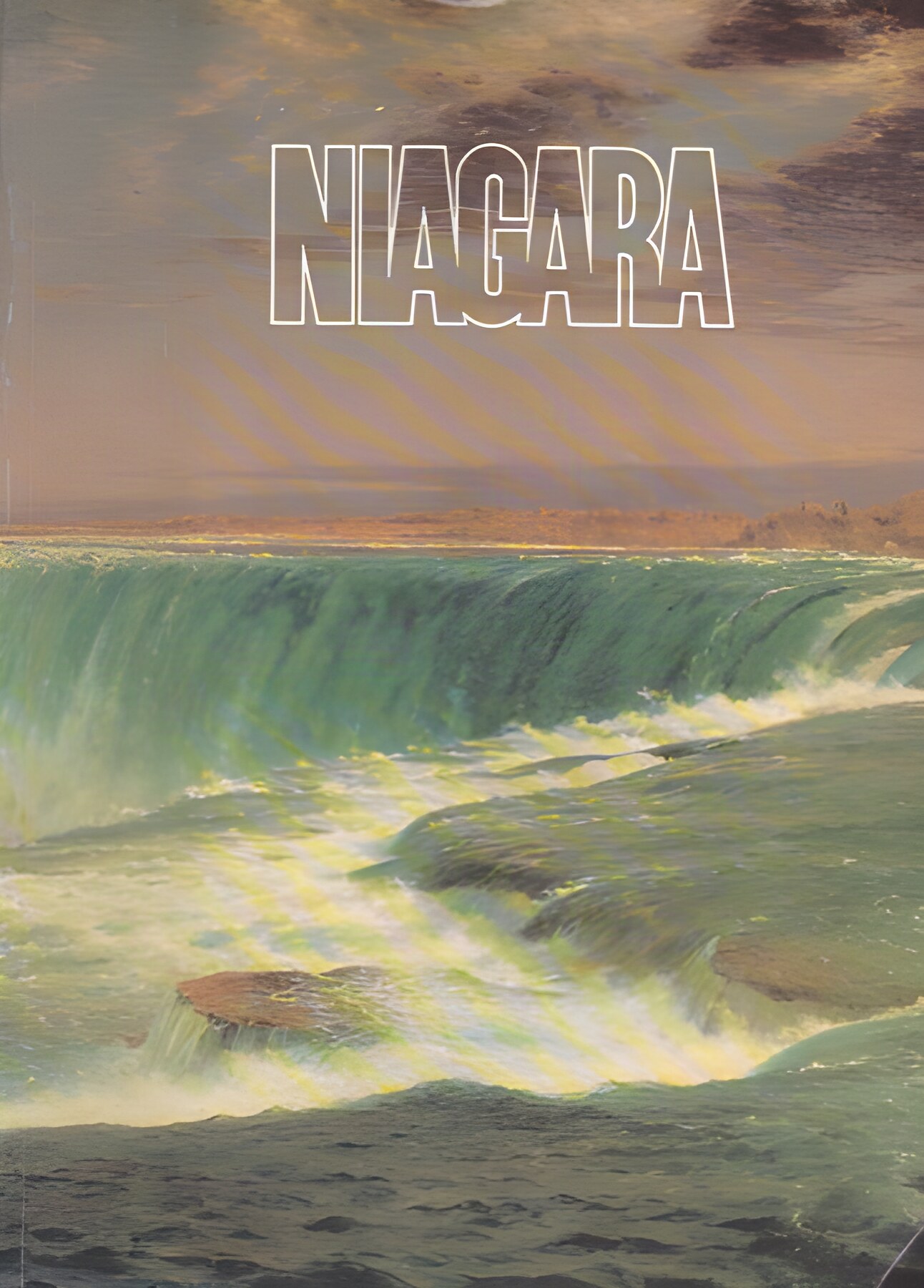
Softcover. Washington DC, Cororan Gallery of Art, 1st, 1985, Book: Very Good, Dust Jacket: None, Softcover, 167 pages illustrated in color and b&w. A pictorial history of Niagara Falls. Three essays on the iconic landmark. Front bottom corner with a light dog-ear crease, otherwise clean.
Hardcover. Washington DC, War Department, 1st, 1905, Book: Very Good, Hardcover, Large folio volume (17x12 inches) in pebbled red embossed cloth with gilt lettering, modest wear at the extremities with bottom corners bumped. Marbled edges, 584 pages. Hundreds of woodcut illustrations with no stains or flaws. Massive work which reproduces hundreds of black and white engravings of the Civil War. The illustrations originally appeared in Leslie's Magazine during the war. Narrative and descriptions by John Clark Ridpath, Rossiter Johnson, General Fitzhugh Lee, General John T. Morgan, George L. Kilmer, General Joseph B. Carr. No makings. DOMESTIC SHIPPING ONLY.
Hardcover. Seattle, University of Washington Press, 1st, 1991, Book: Very Good, Dust Jacket: Very Good, 388 pages, hardcover. B&w plates. INSCRIBED BY ECKERT. Light foxing to edge and light wear to bottom edges of cover. According to conventional interpretations, the Japanese annexation of Korea in 1910 destroyed a budding native capitalist economy on the peninsula and blocked the development of a Korean capitalist class until 1945. In this expansive and provocative study, now available in paperback, Carter J. Eckert challenges the standard view and argues that Japanese imperialism, while politically oppressive, was also the catalyst and cradle of modern Korean industrial development. Ancient ties to China were replaced by new ones to Japan - ties that have continued to shape the South Korean political economy down to the present day. Eckert explores a wide range of themes, including the roots of capitalist development in Korea, the origins of the modern business elite, the nature of Japanese colonial policy and the Japanese colonial state, the relationship between the colonial government and the Korean economic elite, and the nature of Korean collaboration. He conveys a clear sense of the human complexity, archival richness, and intellectual challenge of the historical period. His documentation is thorough; his arguments are compelling and often strikingly innovative.
Hardcover. Baltimore, Johns Hopkins University Press, 1st, 2001, Book: Very Good, Dust Jacket: Very Good, Hardcover, 120 pages. "Vacationers of today," writes C. John Sullivan, "can only dream of what this seaside resort was like for those who visited in the early 1900s." With Old Ocean City, Sullivan brings back those long-ago summers through the words and photographs of the Walker family of Washington, D.C. Avid photographers as well as sports enthusiasts, the Walkers preserved their Ocean City summers in hundreds of snapshots. And the Walkers' son, Robert, kept a detailed record of those days in a small leather-bound journal, titled My Vacation, in which he wrote almost daily from 1912 to 1916. In Old Ocean City, Sullivan mixes his own commentary and explanatory captions with excerpts from Robert Walker's journal and more than one hundred family photographs (discovered in 1994, Sullivan notes, in a sweltering attic in Berlin, Maryland). Views of handsome beach architecture and grass-covered dunes suggest an Ocean City almost unimaginable today. Rare photographs and accounts of shorebird hunting (banned in 1918 to protect sandpipers, plover, herons, and other species) are an arresting contrast to more familiar scenes of boating, fishing, and beachcombing. We see the Walker children growing up-and Ocean City growing up around them. The result is a surprising look at a place "far different than our memories would recall." Sullivan includes a time line of Ocean City history and Walker family visits, starting with the formation of the Atlantic Hotel Company in 1868 (the company's stockholders chose the name Ocean City at their 1875 meeting in Salisbury) and ending with the Walkers' sale of their beloved cottage in 1950.
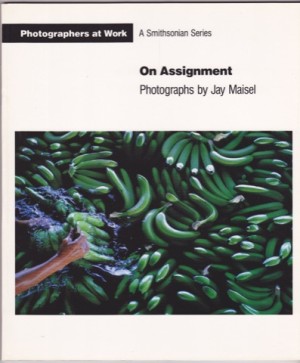
Softcover. Washington DC, Smithsonian Institution, 1st, 1990, Book: Very Good, Dust Jacket: None, Softcover, 64 pages, color illustrations. a noted commercial photogrpher shows how he approaches and executes a given job. 30 color plates with commentary. Also a lengthy interview with Maisel by editor Susan Weiley.
Softcover. Washington DC, Smithsonian Institution, 1st, 1990, Book: Very Good, Dust Jacket: None, Softcover, 64 pages, color illustrations. a noted commercial photogrpher shows how he approaches and executes a given job. 30 color plates with commentary. Also a lengthy interview with Maisel by editor Susan Weiley.
Hardcover. Berkeley CA, University of California Press, 1st, 1998, Book: Very Good, Dust Jacket: Very Good, Hardcover in a bright, unclipped dust jacket, 361 pages. During the Cold War years of the 1950s, William F. Knowland was one of the most important figures in American politics. As the Republican leader of the U.S. Senate, the wealthy California newspaper heir was recognized and respected by millions. His influence with President Eisenhower led to Earl Warren's appointment as chief justice, and Knowland set in motion a U.S.-China policy that remains part of our international direction today. Yet he committed suicide in 1974, following a personal decline that included political humiliation, a ruined marriage, and the loss of his family fortune. This is the first full-scale biography of Bill Knowland, written by two journalists who came to know him after he left Washington in 1958. Gayle B. Montgomery was a political editor at the Oakland Tribune, the newspaper owned by Knowland's father, the power-wielding Joseph R. Knowland. James W. Johnson was a Tribune editorial writer. Both men worked with Knowland when he returned to the newspaper after giving up his Senate seat in a failed bid to become governor of California. Knowland lost the governorship race to Edmund G. (Pat) Brown; had he won, many observers felt Knowland would have had a clear shot at the White House. This is a book not only about Mr. Republican, but also one that illuminates the strengths and deficiencies of Republican party politics during the years when the party was at its zenith. In portraying the life of Bill Knowland, the authors cast a glaring light both on the machinations of political power and on the Republican establishment's aspirations in the Warren-Eisenhower era. Clean copy.
Hardcover. Windsor VT, Washington Benevolent Society, 1st, 1812, Book: Very Good, Dust Jacket: None, 24 pages. Bound in brown leather covers. Stamp on cover with handwritten title. Related clippings mounted to inside front cover. Standard rubbing to leather. Clean, tight copy.
Hardcover. Washington DC /London, Smithsonian/Giles, 1st, 2014, Book: Very Good, Dust Jacket: Very Good, Hardcover in a bright dust jacket, 366 pages including index. E. Carmen Ramos addresses the whole issue of the definition of "Latino art" and how this emerged within the context of the Civil Rights movement of the 1960s as American artists of Latino descent (Mexican American, Puerto Rican, Cuban American, and, more recently, Dominican) began to give a tangible face to their culture and history. Highlights include an installation altar by Amalia Mesa-Bains, the "recycled" films of Raphael Montanez Ortiz, and a 1960 geometric painting by Carmen Herrera. Other notable artists include Olga Albizu, Melesio "Mel" Casas, Maria Magdalena Campos-Pons, Margarita Cabrera, Enrique Chagoya, Teresita Fernandez, Ken Gonzales-Day, Luis Jimenez, Ana Mendieta, Pepon Osorio, Sophie Rivera, Freddy Rodriguez, and John M. Valadez, among many others. Color illustrations explore how one group of Latin American artists express their relationship to American art, history and culture. Clean, bright copy. DOMESTIC SHIPPING ONLY.
Hardcover. NY, powerHouse Books, 1st, 2020, Book: Very Good, Dust Jacket: Very Good, Hardcover in a bright, unclipped dust jacket, 164 pages. The crowds in the street at the 2001 inauguration made it clear America was at a difficult and defining moment after a contentious election. Following the inauguration of 2001 and the tragedy of 9/11, the American streets- as they have been since the country's founding-became the setting for numerous memorials and vigils, parades and protests. These photographs chronicle events in New York, Washington, D.C., and Vermont. The gatherings were large and sometimes small, and in both cases usually unnoticed by the mainstream media. These street portraits show a diversity of Americans: veterans, families of men and women on active duty, families of the victims of the 9/11 tragedy, parents of U.S. servicemen and women killed in the Iraq War, security personnel, police, Muslim Americans, anti-war activists, disenfranchised minorities, and anarchist youth. The common denominators that unite these images are the lens of the Hasselblad camera and the public stage of the American streets.
Softcover. Washington DC, Smithsonian Books, 1st, 1974, Book: Very Good, Dust Jacket: None, Softcover, 512 pages plus index, b&w photographs, map end papers. Previous price sticker on back cover. Light edge wear to wrappers. Else a clean, tight copy. A unique reference for those interested in American heritage sculpture and architecture. This book was published in both paperback and clothbound editions. Photography by David Blume.

 "National Geographic Magazine - Vol. XXXI January - June 1917 (Six Issues)by: National Geographic Society")
 "National Geographic Magazine - Vol. XXXI July - December 1917 (Six Issues)by: National Geographic Society")
 "National Geographic Magazine - Vol. XXXII No. 3 September 1917by: National Geographic Society")
 "National Geographic Magazine - Vol. XXXII No. 5 & 6 November - December 1917by: National Geographic Society")
 "National Geographic Magazine - Vol. XXXV No. 1 January 1919by: National Geographic Society")
 "National Geographic Magazine - Vol. XXXVI No. 3 September 1919by: National Geographic Society")
 "National Geographic Magazine - Vol. XXXVI No. 5 November 1919by: National Geographic Society")
 "National Geographic Magazine. January-June 1930. Six Issuesby: National Geographic Society")

 "Naval Documents of the American Revolution VOLUME 5: American Theatre: May 9, 1776 -July 31, 1776by: Morgan (Ed.), William James")
 "Naval Documents Related to the Quasi-War Between the United States and France: Naval Operations from February 1797 to October 1798by: Swanson, Claude A.")
 "Naval Documents Related to the Quasi-War Between the United States and France: Naval Operations from November 1798 to March 1799by: Swanson, Claude A.")
 "Newspaper Row : Journalism in the Pre-Television Era (SIGNED COPY)by: Kenny, Herbert A.")
 "Official Portfolio of War and Nation: A Graphic and Pictorial History Prepared Directly from Government Records in the Departments of War and Statistics by: Wright, M")
 "Offspring of Empire: The Koch'ang Kims and the Colonial Origins of Korean Capitalism 1876-1945 (SIGNED COPY)by: Eckert, Carter J.")

 "ON ASSIGNMENT (Photographers at Work) by: Maisel, Jay")
 "One Step from the White House: The Rise and Fall of Senator William F. Knowlandby: Gayle B. Montgomery , James W. Johnson, et al.")
 "Oration, in Commemoration of the Birth of our Illustrious Washington, Pronounced at Windsor, February 24, 1812, Before the Washington Benevolent Societyby: Dunham, Jo")

 "Our Voices, Our Streets: American Protests 2001-2011by: Kevin Bubriski, Howard Zinn, et al.")


 "Outdoor Sculpture of Washington, D.C., The: A Comprehensive Historical Guideby: Goode, James M.")