Softcover. Washington DC, National Gallery of Art, 1st, 2010, Book: Very Good, Dust Jacket: None, Softcover, pictorial wrappers, 430 pages. This volume of essays reexamines the establishment and early history of the Accademia di San Luca in Rome, one of the most important centers of governance, education, and theory in the arts for the early modern period and the model for all subsequent academies of art worldwide. It is the most comprehensive history of the Accademia to be published in more than forty years, and the first in nearly two hundred years to be based almost entirely on new primary and documentary material. In reconstructing the early history of the institution, the volume also provides a new basis for tracking the careers of painters, sculptors, and architects working in Rome in the early 16th century, and for understanding the artistic and professional issues that engaged them.
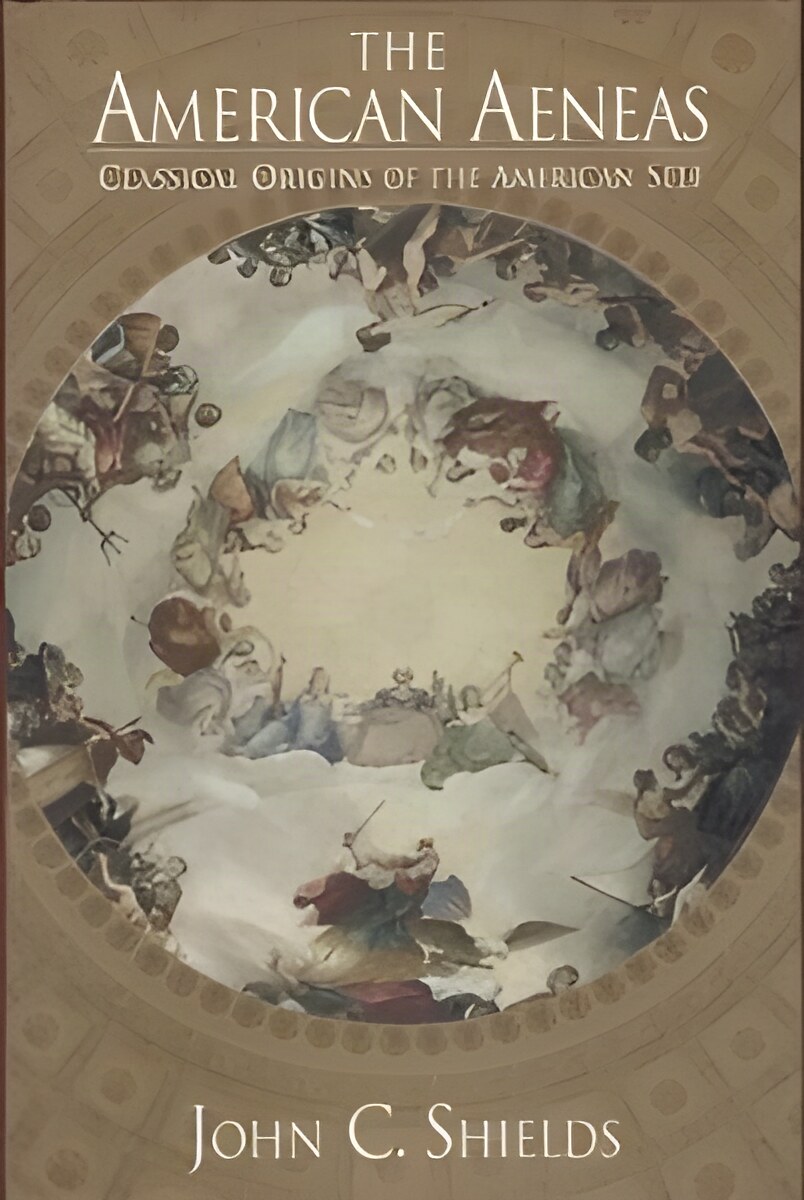
Hardcover. Knoxville, University Of Tennessee Press, 1st, Book: Very Good, Dust Jacket: Very Good, Hardcover in a bright dust jacket, 432 pages. Shields shows how both the myth of Adam and the myth of Aeneas, in crossing over to America from Europe, dynamically intermingled in the thought of the earliest American writers. This rearticulation of the myths of Adam and Aeneas became peculiarly adapted to the demands of the American adventure in freedom. Shields argues that uncovering and acknowledging the classical roots of our culture can allay the American fear of "pastlessness" that the long-standing emphasis on the Adamic myth has generated. The authors probing analysis sheds new light on the works of such seminal figures as Edward Taylor, Cotton Mather, Phillis Wheatley, George Washington, Nathaniel Hawthorne, and Herman Melville.
Hardcover. NY, Pantheon, 1st, 2016, Book: Very Good, Dust Jacket: Very Good, Hardcover in a bright dust jacket. 320 pages illustrated in color by Liew. "Liew's graphic novel is a fascinating look at a cartoonist's growth over time and how his creative output reflects the culture around him, and Liew tells Chye's story in a way that only comic books can....A beautifully multidimensional portrait of the cartoonist, beginning with Chye's personal interpretation o the past before showing comics and sketches that provide further insight....The color palettes, the paper quality, the incorporation of photographs and sketches, they all combine with the text to provide a complex view of Charlie Chan Hock Chye that has a strong sense of history behind it." A 2017 Eisner Award Winner for Best Writer/Artist, Best US Edition of International Material--Asia, and Best Publication Design Winner of the Singapore Literature Prize 2016 A New York Times bestseller An Economist Book of the Year 2016 An NPR Graphic Novel Pick for 2016 A Washington Post Best Graphic Novel of 2016 A New York Post Best Books of 2016 A Publishers Weekly Best Book of 2016
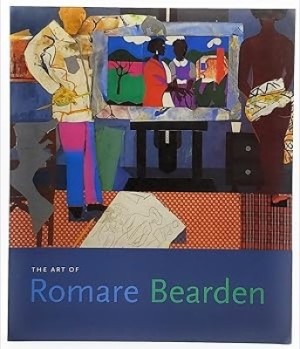
Softcover. Washington DC, National Gallery of Art , 2nd pr., 203, Book: Very Good, Dust Jacket: None, Softcover, 334 pages illustrated with 224 color plates, 86 black & white. One of America's most innovative artists, Romare Bearden (1911-1988) made colorful and passionate images that reflected his life in a time of creative ferment. His influences ranged from the old masters to African art, as well as the world around him: popular religion and ritual, jazz clubs and brothels, the history and literature of his time, and the places he lived (the rural South, Pittsburgh and Harlem, the Caribbean island of St. Martin). The resulting images are fresh and evocative, filled with quirky details and rhythmic forms. This authoritative and beautiful book, which accompanies a major retrospective opening at the National Gallery of Art in Washington, D.C., provides a provocative and absorbing look at a beloved artist. The Art of Romare Bearden showcases compelling examples of his pioneering work: complex collages and photostats; watercolors, gouaches, and oils; little-known landscapes; his only known sculpture; costume designs; and book illustrations. Mildwear to corners otherwise very good, clean copy.
Hardcover. Princeton NJ, Princeton University Press, 1st, 2007, Book: Very Good, Dust Jacket: Very Good, Hardcover, 288 pages. The impact of the humble American snapshot has been anything but humble. Any American who takes a snapshot contributes to a compelling and influential genre. Since 1888, when George Eastman introduced the Kodak camera and roll film, the snapshot has not only changed everyday American life and memory; it has also changed the history of fine art photography. The distinctive subject matter and visual vocabulary of the American snapshot--its poses, facial expressions, viewpoints, framing, and themes--influenced modernist photographers as they explored spontaneity, objectivity, and new topics and perspectives. A richly illustrated chronicle of the first century of snapshot photography in America, The Art of the American Snapshot is the first book to examine the evolution of this most common form of American photography. The book shows that among the countless snapshots taken by American amateurs, some works, through intention or accident, continue to resonate long after their intimate context and original meaning have been lost.The catalogue of a fall 2007 exhibition at the National Gallery of Art in Washington, DC, The Art of the American Snapshot reproduces some 250 snapshots drawn from Robert Jackson's outstanding collection and from a recent gift Jackson made to the museum. Organized decade by decade, the book traces the evolution of American snapshot imagery and describes how technical, social, and cultural factors affected the look of snapshots at different periods.
Hardcover. Seattle, University of Washington Press, 1st, 2009, Book: Very Good, Dust Jacket: Very Good, Hardcover, 210 pages, illustrated throughout in b&w. Clean, unmarked copy with only minor wear to dust jacket. Stafford worked for Commerical Press in Shanghai and his photographs capture both sides of the revolutionary struggle in China.
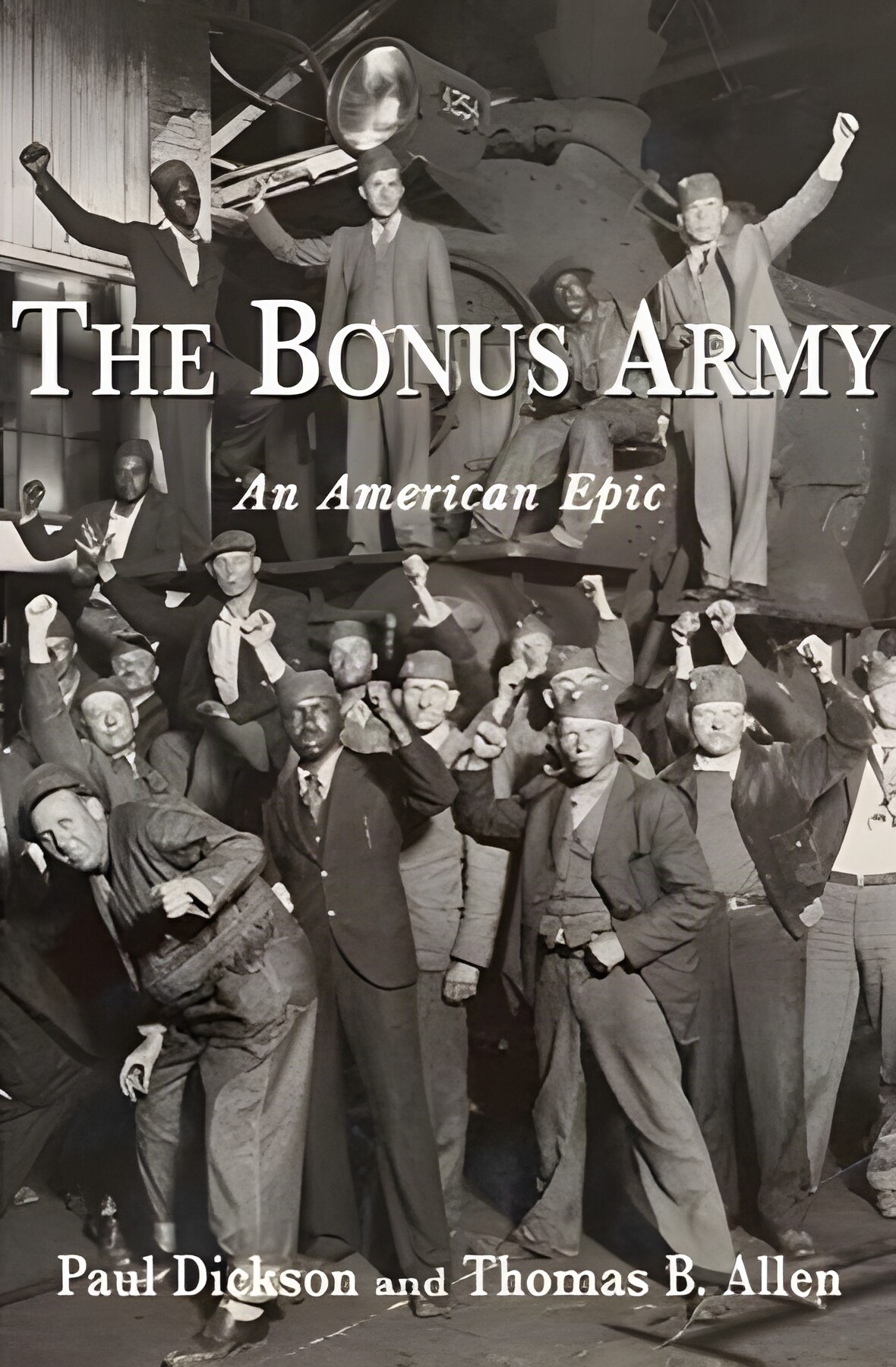
Hardcover. NY, Walker Books, 1st, 2004, Book: Very Good, Dust Jacket: Very Good, Hardcover in a bright, unclipped dust jacket. n the summer of 1932, at the height of the Depression, some forty-five thousand veterans of World War I descended on Washington, D.C., from all over the country to demand the bonus promised them eight years earlier for their wartime service. They lived in shantytowns, white and black together, and for two months they protested and rallied for their cause-an action that would have a profound effect on American history. Clean copy.
Hardcover. NY, Farrar Straus & Giroux, 1st, 2017, Book: Very Good, Dust Jacket: Very Good, Hardcover in a bright, unclipped dust jacket. A groundbreaking new biography of Ezra Pound, one of the most controversial poets of the twentieth century, told through the stories of his illustrious visitors at St Elizabeths Hospital, Washington, DC. An extraordinary book of real passionate research. In 1945, Ezra Pound was due to stand trial for treason for his broadcasts in Fascist Italy during the Second World War. But before the trial could take place Pound was pronounced insane. Escaping a potential death sentence he was shipped off to St Elizabeths Hospital near Washington, DC, where he was held for over a decade. At the hospital, Pound was at his most contradictory and most controversial- a genius writer - 'The most important living poet in the English language' according to T. S. Eliot - but also a traitor and now, seemingly, a madman. But he remained a magnetic figure. Eliot, Elizabeth Bishop, Robert Lowell and John Berryman all went to visit him at what was perhaps the world's most unorthodox literary salon- convened by a fascist and held in a lunatic asylum. Told through the eyes of his illustrious visitors, The Bughouse captures the essence of Pound - the artistic flair, the profound human flaws - whilst telling the grand story of politics and art in the twentieth century. Clean copy.
Hardcover. Westholme Publishing, 1st, 2012, Book: Very Good, Dust Jacket: Very Good, Hardcover in a bright dust jacket, 374 pages, b&w illustrations. Bright, clean. INSCRIBED BY AUTHOR on title page. "Early in the afternoon of May 22, 1856, ardent pro-slavery Congressman Preston S. Brooks of South Carolina strode into the United States Senate Chamber in Washington, D.C., and began beating renowned anti-slavery Senator Charles Sumner with a cane until it splintered and the helpless Massachusetts senator lay unconscious and covered in blood. One of the most shocking and provocative events in American history, the caning convinced each side that the gulf between them was unbridgeable and that they could no longer discuss their vast differences of opinion regarding slavery on any reasonable level."
Hardcover. Washington DC, Counterpoint, 1999, Book: Very Good, Dust Jacket: Very Good, Hardcover, 642 pages. Hailed in 1849 as "a new department in the literature of civilization," the slave narrative forms the foundation of the African American literary tradition. From the late-eighteenth-century narratives by Africans who endured the harrowing Middle Passage, through the classic American fugitive slave narratives of the mid-nineteenth century, slave narratives have provided some of the most graphic and damning documentary evidence of the horrors of slavery. Riveting, passionate, and politically charged, the slave narrative blends personal memory and rhetorical attacks on slavery to create powerful literature and propaganda.The Civitas Anthology presents the seven classic antislavery narratives of the antebellum period in their entirety: The History of Mary Prince, a West Indian Slave , the first slave narrative published by a woman in the Americas; The Confessions of Nat Turner , written when Turner was asked to record his motivation for leading the bloodiest slave revolt in U.S. history; The Narrative of the Life of Frederick Douglass , an international bestseller and the first narrative to fashion the male fugitive slave into an African American cultural hero; The Narrative of William W. Brown , an account that explored with unprecedented realism the slave's survival ethic and the art of the slave trickster; The Narrative of the Life of Henry Bibb , the story of the struggles of the most memorable family man among the classic slave narrators; Running a Thousand Miles for Freedom , a gripping chronicle of one of the most daring and celebrated slave escapes ever recorded; and Incidents in the Life of Slave Girl , a dramatic text that exposed the sexual abuse of female slaves and pioneered the image of the fugitive slave woman as an articulate resister and survivor.Born out of lives of unparalleled suffering, the slave narrative captures all the bravery, drama, and hope that characterized the African American struggle against slavery. From these beginnings came some of the most influential novels in American literature, for the works of writers such as Harriet Beecher Stowe, Mark Twain, and Toni Morrison owe much of their power and social resonance to the slave narrative tradition. The Civitas Anthology gathers the most important narratives in this tradition into one volume for the first time, an indispensable resource for scholars, students, and general readers. Clean copy.
Hardcover. Washington DC, Brookings Institution Press, 1st, 2021, Book: Very Good, Dust Jacket: Very Good, Hardcover in a bright dust jacket, 305 pages. Disinformation. Trolling. Conspiracies. Social media pile-ons. Campus intolerance. On the surface, these recent additions to our daily vocabulary appear to have little in common. But together, they are driving an epistemic crisis: a multi-front challenge to America's ability to distinguish fact from fiction and elevate truth above falsehood. In this path-breaking book, Jonathan Rauch reaches back to the parallel eighteenth-century developments of liberal democracy and science to explain what he calls the "The Constitution of Knowledge" our social system for turning disagreement into truth. By explicating the Constitution of Knowledge and probing the war on reality, Rauch arms defenders of truth with a clearer understanding of what they must protect, why they must do it, and how they can do it. His book is a sweeping and readable description of how every American can help defend objective truth and free inquiry from threats as far away as Russia and as close as the cellphone. Clean copy.
Softcover. Washington DC, Smithsonian Institution, 1st, 1945, Book: Very Good, Dust Jacket: None, Softcover in gray wrappers, 244 pages, 20 full page photo plates on slick paper. 33 text figures. 1 map. Errata slip tipped in. Owner's small sticker on inside cover otherwise clean.
Hardcover. NY, Library of America, 8th pr., Book: Very Good, Dust Jacket: Very Good, Hardcover in a bright dust jacket, 1175 pages. Part Two of a two-volume set. Assembled here in chronological order are hundreds of newspaper articles, pamphlets, speeches, and private letters written or delivered in the aftermath of the Constitutional Convention. Along with familiar figures like Franklin, Madison, Patrick Henry, Jefferson, and Washington, scores of less famous citizens are represented, all speaking clearly and passionately about government. The most famous writings of the ratification struggle - the Federalist essays of Hamilton and Madison - are placed in their original context, alongside the arguments of able antagonists, such as "Brutus" and the "Federal Farmer." Part Two gathers collected press polemics and private commentaries from January to August 1788, including all the amendments proposed by state ratifying conventions as well as dozens of speeches from the South Carolina, Virginia, New York, and North Carolina conventions. Included are dramatic confrontations from Virginia, where Patrick Henry pitted his legendary oratorical skills against the persuasive logic of Madison, and from New York, where Alexander Hamilton faced the brilliant Antifederalist Melancton Smith. Like new.
Hardcover. NY, Simon and Schuster, 1st, 1979, Book: Very Good, Dust Jacket: Very Good, Hardcover in a bright, unclipped dust jacket, 319 pages. SIGNED BY THOMAS on the title page. Minor Jackson is broke when he meets Ploscaru, a dwarf, who tells Jackson that Kurt Oppenheimer's relatives would pay highly to have him found. What Ploscaru doesn't tell Jackson is that Oppenheimer is a professional killer who is being sought by the British, the Americans, and the Russians. Set in 1946, this intricately woven espionage thriller traverses four major settings beginning with Beverly Hills, California and continuing with Mexico, Germany and Washington, D.C. Clean copy.
Softcover. New Haven / Washington DC, Yale University Art Gallery/National Gallery of Art, 1984, Book: Very Good, Dust Jacket: None, Softcver, pictorial wraps, 312 pages. This is the catalog for an exhibition at Yale University Art Gallery, 1984, consisting of 43 folding screens designed by European and American artists from about 1870 to the present were on view. The exhibition was organized by Michael Komanecky of Yale University and by Virginia Butera. Mild sunning to edges of wrappers otherwise clean, tight copy.
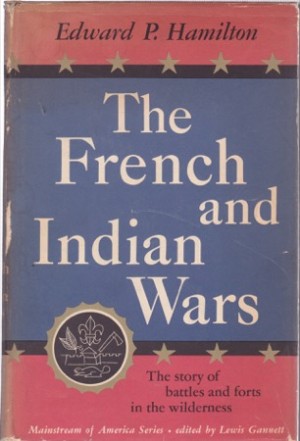
Hardcover. NY, Doubleday & Co., 1st, 1962, Book: Very Good, Dust Jacket: Fair, Hardcover in a worn and chipped dust jacket. A volume in the Mainstream of Americas Series, edited by Lewis Gannett. Between the period of settlements in colonial America and the time of the Revolutionary War, English and French interests clashed in a struggle to determine who would rule the New World. It was a time from which a great deal of fiction draws inspiration, an exciting and dramatic period well~salted with the Washingtons, Johnsons, Frontenacs, Amhersts, Wolfes, and Montcalms who so greatly influenced the early growth of our land. Edward Hamilton has reconstructed this absorbing story of wilderness, forts, and weapons with a scholarly respect for minute detail. Name on half-title page, otherwise clean copy.
Softcover. Washington DC, U.S. Department of Interior, 1st, 1975, Book: Good, Dust Jacket: None, Softcover, 180 pages, b&w illustrations. Fading to red on covers, light musty odor. Name on front fly leaf, otherwise clean.
Hardcover. NY, Alfred A Knopf, 1960, Book: Very Good, Dust Jacket: Very Good, Hardcover in a lightly worn, unclipped dust jacket, 324 pages plus index. Illustrated with 17 halftone reproductions from various sources and with line drawings by Nick Eggenhofer. A comprehensive history of the slaughter of the buffalo, the battles between the hunters and Indians. Also tells of the buffalo hunting for sport by Washington Irving and the Russian Prince Alexis. Describes Buffalo Bill's killing buffaloes to feed the men who were building a railroad across the plains. Most of the book, however chronicles the hide hunters who swarmed over the ranges in 1871 and reduced the herds of nearly forty million buffaloes to fewer than one-thousand, taking the hides and leaving the meat to rot. Bookplate on inside front cover, otherwise clean.
Hardcover. Berkeley CA, University of California Press, 1st, 1975, Book: Very Good, Dust Jacket: Very Good, Hardcover, 433 pages including index. B&w illustrations. Recounts the Wilkes Expedition, whose six ships set out from Norfolk in summer 1838 to sail to the polar regions, the South Pacific, and the coasts of present-day Oregon, Washington, and British Columbia. The expedition discovered new islands and reefs in the Pacific and charted the Fijis and other islands. Its men explored, fought with natives, and gathered copious scientific specimens, many of which were given to the National Museum, the Naval Observatory, and the U.S. Botanical Garden. Dust jacket with light edgewear, clean copy.
Hardcover. NY, Charles Scribner's Sons, 1st, 1936, Book: Very Good, Dust Jacket: None, Hardcover, blue cloth with gilt lettering, 553 pages. "The complete, fully documented, and authoritative story of Herbert Hoover's four years in Washington." Written by Myers, a history scholar whose academic field was the GOP, and Newton, a former member of Congress who was for many years Hoover's personal secretary or roughly his Chief of Staff.This is about as good a defense of Hoover's actions just before and during the Great Depression as anything that has come out since. Bookplate on inside front cover, otherwise clean.
Hardcover. NY, Rizzoli, 1st, 1998, Book: Very Good, Dust Jacket: Very Good, Hardcover in a bright, lightly worn dust jacket. 252 pages illustrated in color. With nearly one thousand commissions executed between 1879 and 1912, McKim, Mead & White was the architectural firm of choice of the most prestigious projects of the era, including the redesign of the White House and the Mall in Washington, D.C., and the campuses of Harvard and Columbia Universities. Among its residential clients were many of the most powerful figures of the Gilded Age-Vanderbilts, Whitneys, Pulitzers-for whom the firm built splendid summer cottages in Newport and throughout Long Island and the Hudson valley and sumptuous town houses in Boston, Washington, Baltimore and New York. More than thirty houses are presented here, their exteriors and interiors elegantly recorded in lush new color photographs. The book also provides the first look at the recent restoration of the Isaac Bell house in Newport and newly reinstalled Venetian room at the Payne Whitney house, now the French Cultural Services, in New York City. Clean copy. DOMESTIC SHIPPING ONLY.
Hardcover. NY, HarperCollins, 1st, 1992, Book: Very Good, Dust Jacket: None, Hardcover, white cloth with gilt lettering on spine, and author's initials on front cover. #253 out of 300, numbered and SIGNED BY DILLARD and in a printed slipcase. Dillard's first novel, a tale of rough settlement life in northwest Washington state in the 1850s. Clean, bright copy.
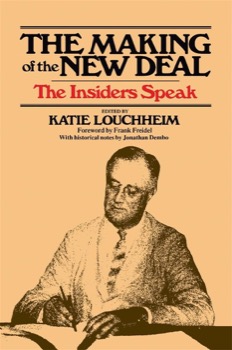
Hardcover. Cambridge MA, Harvard University Press, 1st, 1983, Book: Very Good, Dust Jacket: Good, Hardcover in lightly worn dust jacket with sunning to spine, 368 pages. There has never been a phenomenon in American life to equal the invasion of Washington by the young New Dealers, hundreds of men and women still in their twenties and thirties, brilliant and dedicated, trained in the law, economics, public administration, technology, pouring into public life to do nothing less than restructure American society. They proposed new programs, drafted legislation, staffed the new agencies. They were active in the Administration, the Congress, the courts, the news media. They fanned out all over America to discover the facts, plan ways of easing the pain of their foundering country, and report on the results. Many of them went on to be rich, famous, and powerful, but their early experience in Washington was perhaps the most inspiriting of their lives. Katie Louchheim was among those who arrived in Washington in the 1930s, and being a keen writer as well as the wife of a member of the SEC, she had a front-row seat for the spectacle of social progress. Now, a half-century later, she has gathered reminiscences from her old friends and colleagues, interviewed others, and woven them together into a lively, informal word-picture of that exciting time. Name on front fly leaf, otherwise clean.

 "The Accademia Seminars: The Accademia di San Luca in Rome, c. 1590-1635by: Peter M. Lukehart")
 "The Art of Charlie Chan Hock Chye (Pantheon Graphic Library)by: Sonny Liew")
 "The Art of the American Snapshot, 1888-1978by: Sarah Greenough , Diane Waggoner, et al.")
 "The Birth of a Republic: Francis Stafford's Photographs of China's 1911 Revolution and Beyond (A China Program Book)by: Lu, Hanchao")
![The Bughouse: The Poetry, Politics, and Madness of Ezra Pound by: [Pound, Ezra] Swift, Daniel](https://www.browsingisarousing.com/shop/images/399615.jpg "The Bughouse: The Poetry, Politics, and Madness of Ezra Pound by: [Pound, Ezra] Swift, Daniel")
 "The Caning: The Assault That Drove America to Civil War (SIGNED COPY)by: Puleo, Stephen")
 "The Civitas Anthology of African American Slave Narratives by: William L. Andrews; Henry Louis Gates/editors")
 "The Constitution of Knowledge: A Defense of Truthby: Jonathan Rauch")
 "The Contemporary Culture of The Cahita Indians. Smithsonian Institution, Bureau of American Ethnology, Bulletin 142. by: Beals, Ralph L.")
 "The Debate on the Constitution: Federalist and Antifederalist Speeches Articles and Letters During the Struggle over Ratification Part Two: January to August 1788 by:")
 "The Edge of the Forest: Land, Childhood, and Change in a New Guinea Protoagricultural Societyby: Sorenson, Richard E., Forward by Margaret Mead")

 "The Folding Image: Screens by western artists of the nineteenth and twentieth centuriesby: Komanecky Michael and Butera Virginia Fabbri/Adams Janet W. Introduction/Br")


 "The Great United States Exploring Expedition of 1838-1842 by: Stanton, William")