Hardcover. Schirmer Reference, 1st, Book: Very Good, Dust Jacket: Very Good, Hardcover in a bright dust jacket, 271 pages. The last decade of Mozart's short but amazingly prolific career counts as one of the most remarkable periods--truly golden years--in the history of Western music. Richly illustrated with contemporary paintings and engravings and authoritatively written, this book provides a vivid account of the composer's life in the European music capital, Vienna, from 1781 to 1791. Clean copy.
Hardcover. London, Hodder and Stoughton, 1st, 1916, Book: Fair, Dust Jacket: None, 158 pages. Hardcover. Features 46 tipped-in plates. Foxing throughout. Front hinged cracked. Covers worn with areas of staining, darkening to spine cloth.
Hardcover. London, Arthur L Humphreys, 2nd pr., 1900, Book: Very Good, Dust Jacket: None, Hardcover, maroon cloth with gilt staping. 261 pages including index. 261 pages. Written almost 80 years after the Emperor's death, the author attempts to bring together all the contemporary biographies and memoirs relating to the sojourn on St Helena. Mild foxing, otherwise clean.
Hardcover. NY, HarperCollins, 2nd pr., 1997, Book: Very Good, Dust Jacket: Very Good, Hardcover in a bright dust jacket, 436 pages. A great historian crowns a lifetime of thought and research by answering a question that has haunted us for more than 50 years: How did one of the most industrially and culturally advanced nations in the world embark on and continue along the path leading to one of the most enormous criminal enterprises in history, the extermination of Europe's Jews? Giving considerable emphasis to a wealth of new archival findings, Saul Friedlander restores the voices of Jews who, after the 1933 Nazi accession to power, were engulfed in an increasingly horrifying reality. We hear from the persecutors themselves: the leaders of the Nazi party, the members of the Protestant and Catholic hierarchies, the university elites, and the heads of the business community. Most telling of all, perhaps, are the testimonies of ordinary German citizens, who in the main acquiesced to increasing waves of dismissals, segregation, humiliation, impoverishment, expulsion, and violence. Clean copy.
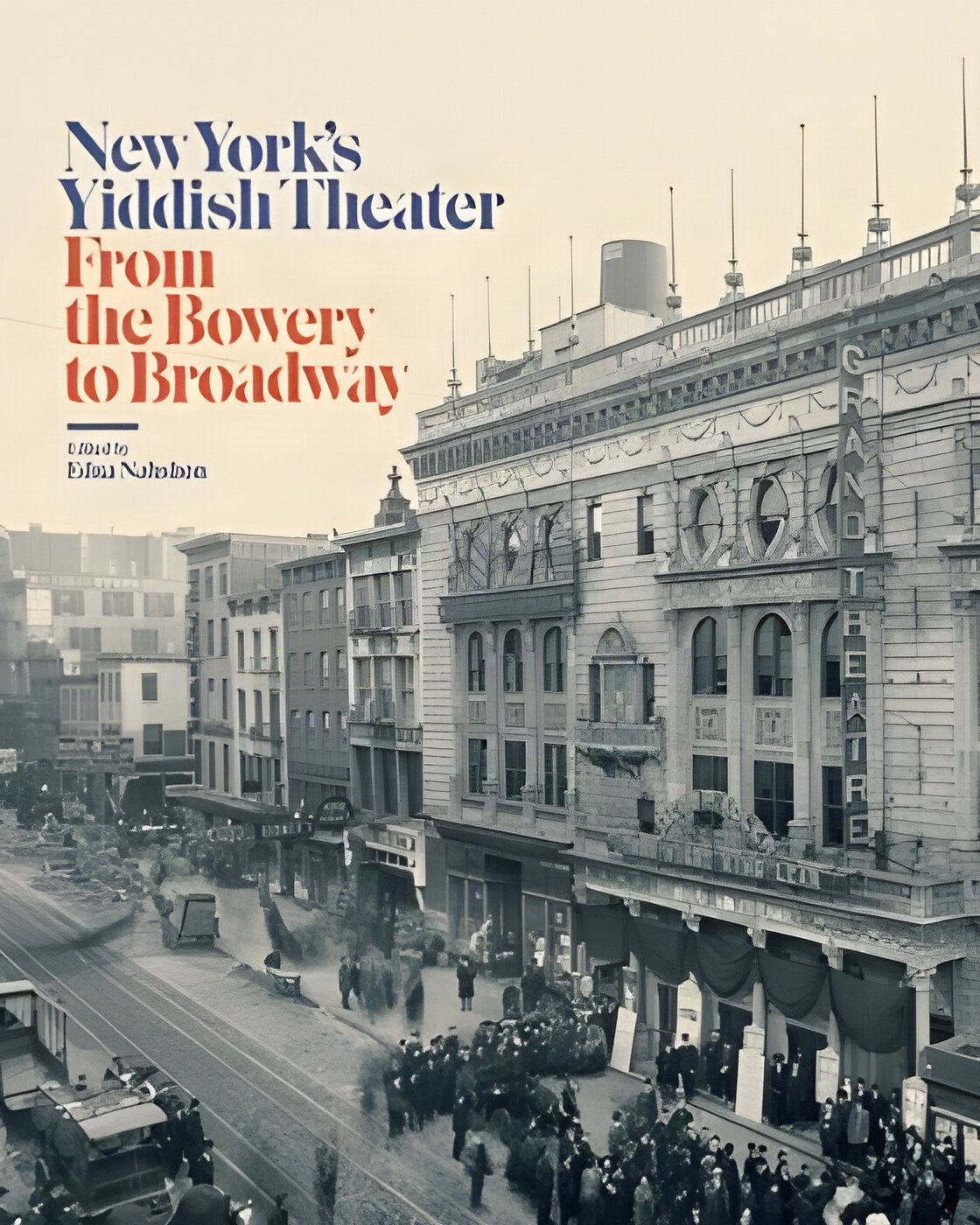
Hardcover. NY, Museum of the City of New York, 1st, 2016, Book: Very Good, Dust Jacket: None, Hardcover, pictorial boards, 327 pages, illustrated in color and b&w. In the early decades of the twentieth century, a vibrant theatrical culture took shape on New York City's Lower East Side. Original dramas, comedies, musicals, and vaudeville, along with sophisticated productions of Shakespeare, Ibsen, and Chekhov, were innovatively staged for crowds that rivaled the audiences on Broadway. Though these productions were in Yiddish and catered to Eastern European, Jewish audiences (the largest immigrant group in the city at the time), their artistic innovations, energetic style, and engagement with politics and the world around them came to influence all facets of the American stage. Vividly illustrated and with essays from leading historians and critics, this book recounts the heyday of "Yiddish Broadway" and its vital contribution to American Jewish life and crossover to the broader American culture. Clean copy.
Softcover. New York, Oxford University Press, 1st paperback, 1968, Book: Very Good, Dust Jacket: None, 355 pages. Softcover. Light pencil underlining in a few places. Wrapper good, with a touch of agewear, no tears, some slight moisture damage at the bottom of the back cover.
Hardcover. Baltimore, The Johns Hopkins University Press, 2nd printing, 1995, Book: Very Good, Dust Jacket: Very Good, Hardcover, 348 pages, illustrated throughout in b&w. Light shelf-wear to dust jacket. Overall, a tight clean copy. "In this original and authoritative work, Vance argues that the railroad in North America is a distinct indigenous creation and not an importation from Britain and Europe. His combined familiarity with railroading, routes and cities, facilities, and North American geography is unsurpassed and the result is quite unlike anything in the historical or specialist literature."--Donald Meinig, Syracuse University "No previous book has presented the over-all picture of the development of the North American railroad network with Vance's emphasis on the reciprocal relationships among the economic and technological conditions on the one hand and the geographic aspects of development on the other. The scope of the presentation is virtually encyclopedic -- and there is no doubt that the book will quickly become a standard reference on the subject." -- Harold M. Mayer, University of Wisconsin, Milwaukee
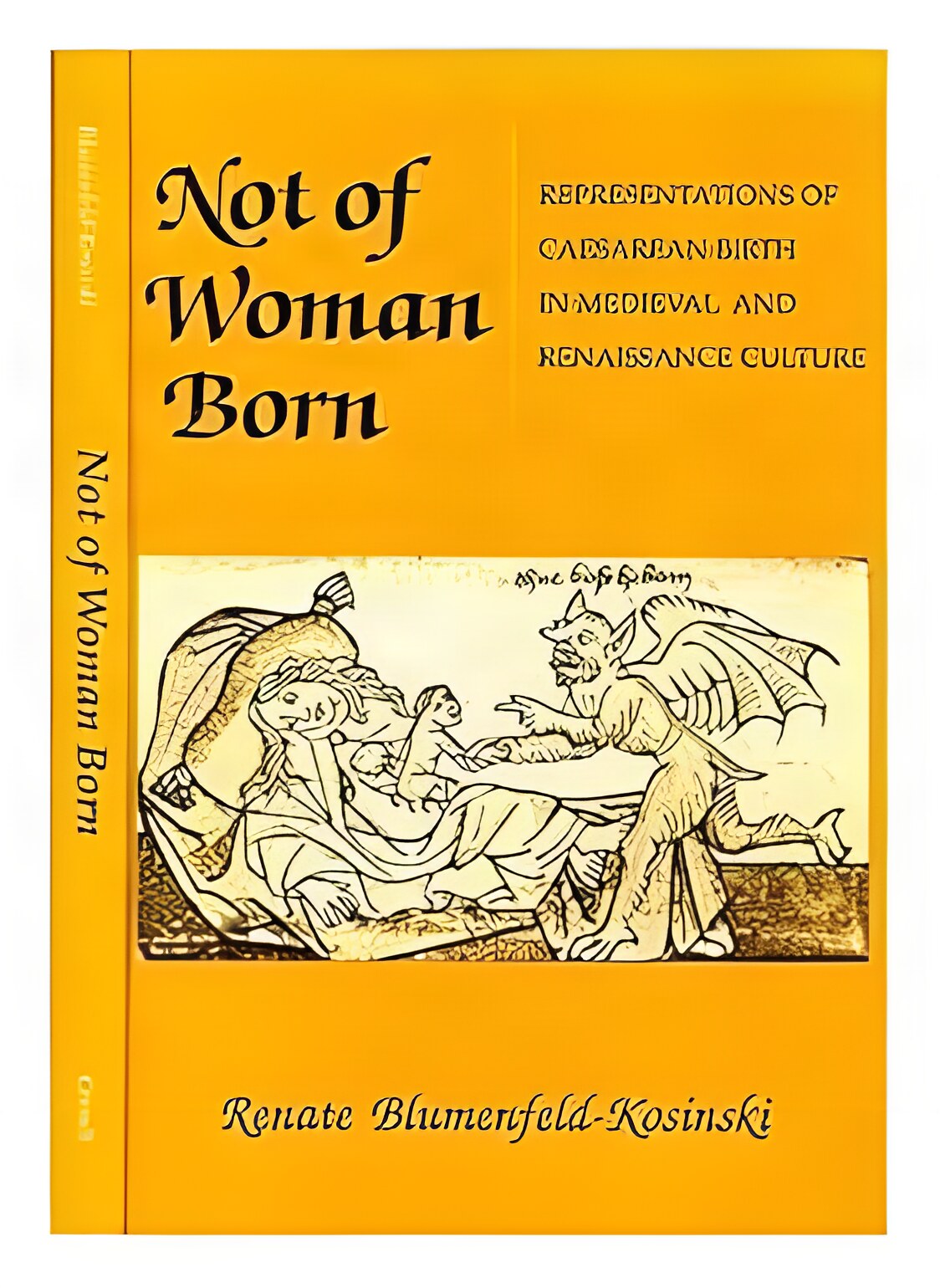
Softcover. Ithaca NY, Cornell University Press, reprint, 1991, Book: Very Good, Dust Jacket: None, Softcover, 204 pages. "Not of woman born," "the Fortunate," "the Unborn" - the terms designating those born by Caesarean section in medieval and Renaissance Europe were mysterious and ambiguous. In antiquity, children fortunate enough to have survived a Caesarean birth were believed to be marked for a special destiny. Vividly tracing the evolution of Caesarean birth from the early 1300s (when the operation was performed almost exclusively by midwives) through the Renaissance period (when midwives were considered witches and male surgeons took control), Blumenfeld-Kosinski . . . does more than provide [an] engrossingly accessible, historical account of the now-commonplace procedure--she unveils the roots of a medical misogyny that still prevails today. A richly cross-disciplined study utilizing depictions of Caesarean delivery in art, literature, and medical texts and illuminations (illustrations), [this book] is a captivating and revealing work that will be relished by readers of medical and cultural history, as well as by those who are interested in the subject of male dominance over women. Clean copy.
Hardcover. London, Scriptum, 1st, 2002, Book: Very Good, Dust Jacket: Very Good, Hardcover in a bright, unclipped dust jacket, 335 pages illustrated in color. The story of this flower, from the hunt for new varieties in the wild in the 1800s to the development of the more than 100,000 hybrids that exist today, is related in fascinating detail in "Orchids". This beautiful book features text by one of the world's foremost orchid authorities alongside spectacular watercolor portraits of prize-winning orchids from the Royal Horticultural Society in London, which spearheaded orchid cultivation in Western Europe beginning in the 19th century. This exquisite collection of paintings commissioned by the RHS every year since 1897 represents the ultimate orchid pictorial history. "Orchids" is an indispensable sourcebook for those captivated by the beauty and infinite variety of this glamorous flower.
Hardcover. Cambridge MA, Harvard University Press, 1st, 2018, Book: Very Good, Dust Jacket: Very Good, Hardcover in a bright dust jacket, 404 pages. The Napoleonic wars did not end with Waterloo. That famous battle was just the beginning of a long, complex transition to peace. After a massive invasion of France by more than a million soldiers from across Europe, the Allied powers insisted on a long-term occupation of the country to guarantee that the defeated nation rebuild itself and pay substantial reparations to its conquerors. Our Friends the Enemies provides the first comprehensive history of the post-Napoleonic occupation of France and its innovative approach to peacemaking. From 1815 to 1818, a multinational force of 150,000 men under the command of the Duke of Wellington occupied northeastern France. From military, political, and cultural perspectives, Christine Haynes reconstructs the experience of the occupiers and the occupied in Paris and across the French countryside. The occupation involved some violence, but it also promoted considerable exchange and reconciliation between the French and their former enemies. Clean copy.
Hardcover. NY, Metropolitan Museum of Art , 1st, 2004, Book: Very Good, Dust Jacket: Very Good, Hardcover, 272 pages. Painters of Reality, titled after an exhibition held in Milan more than fifty years ago, is the first study in English of this major aspect of Italian art. It builds on the work of the art historian Roberto Longhi. Reexamining the subject in light of copious subsequent scholarship, the authors of this volume contribute major essays that define and discuss naturalism as it appeared in both Lombard paintings and drawings. There is also a fresh consideration of the North Italian predecessors whose influence is apparent either directly or indirectly, in the paintings of Caravaggio. More detailed discussions of the subject center on the precise elements that constituted Leonardo's "hypernaturalism": the important schools of paintings that arose in Brescia, Bergamo, Cremona, and Milan; and Caravaggio's most notable successors in northern Italy, who kept Lombard realism alive into the eighteenth century. Among the 136 paintings and drawings, many never before seen outside of Italy, are influential drawings by Leonardo and major paintings by Caravaggio. Other acknowledged masters in the history of European art are represented, including Lorenzo Lotto, Giovanni Girolamo Savoldo, Giovanni Battista Moroni, and Giacomo Ceruti. Works also appear from significant but less widely known artists such as Sofonisba, Anguissola, Vincenzo Campi, Moretto da Brescia, and Fra' Galgario.
Hardcover. New Haven, CT, Yale University Press, 1st, 2015, Book: Very Good, Dust Jacket: None, 480 pages. Hardcover with no dust jacket. Very clean, unmarked copy still in shrink wrap. 378 color and 10 black & white illustrations. Tight copy. While European art forms were widely disseminated, copied, and adapted throughout Latin America, colonial painting is not a derivative extension of Europe. The ongoing debate over what to call it-mestizo, hybrid, creole, indo-hispanic, tequitqui-testifies to a fundamental yet unresolved question of identity. Comparing and contrasting the Viceroyalties of New Spain, with its center in modern-day Mexico, and Peru, the authors explore the very different ways the two regions responded to the influence of the Europeans and their art. A wide range of art and artists are considered, some for the first time.
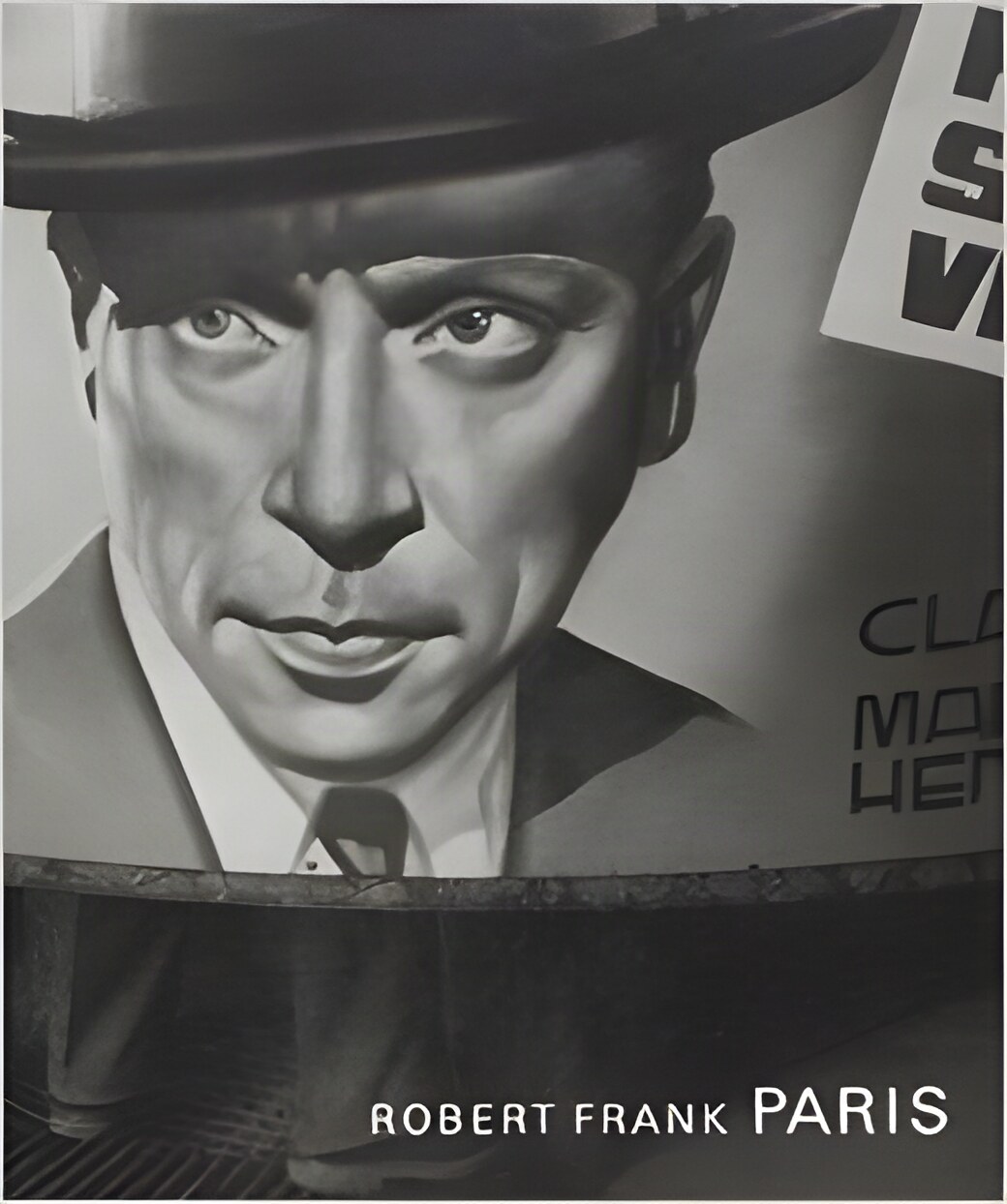
Softcover. Steidl, 2008, 2008, Book: Very Good, Dust Jacket: Very Good, Softcover. Like new in publisher's shrink-wrap. The publication of Paris marks the first time that the significant body of photographs which Robert Frank made in Paris in the early 1950s have been brought together in a single book. Having left Switzerland in 1924, this 1951 trip to France was only Frank's second return to Europe after he had settled in New York City in 1947, and some of the images he made during that visit have become iconic in the history of the medium. The 80 photographs reproduced here, which were selected by Frank and editor Ute Eskildsen, suggest that Frank's experience of the "new world" had sharpened his eye for European urbanism. He saw the city's streets as a stage for human activity and focused particularly on the flower sellers. His work clearly references Atget and invokes the tradition of the flaneur.
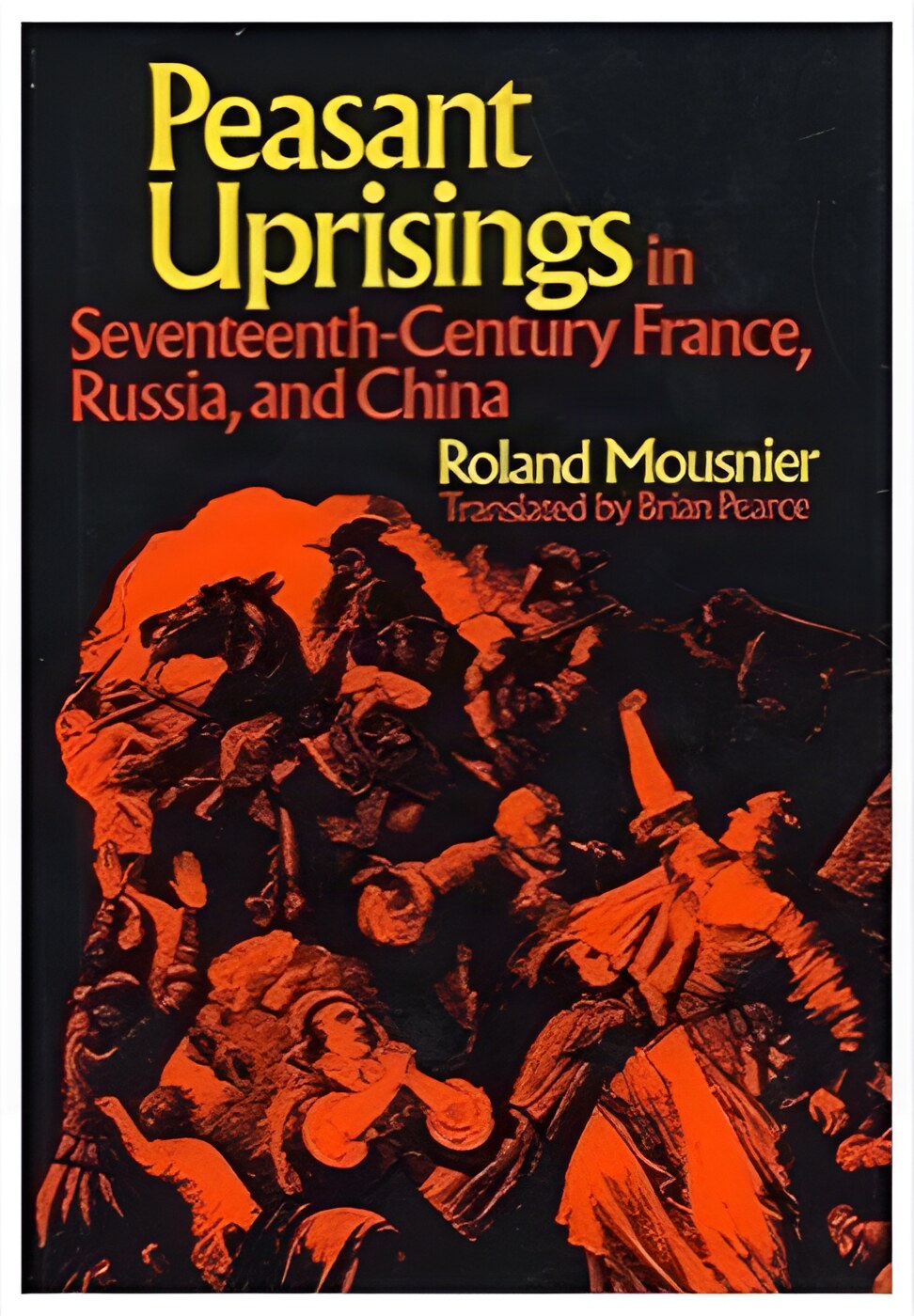
Hardcover. NY, Harper & Row, 1st US, 1970, Book: Very Good, Dust Jacket: Very Good, Hardcover in a lightly worn, price-clipped dust jacket, 358 pages. A close analysis of some of the typical peasant uprisings of the seventeenth century. The goal of the movements in France and China was a return to an older and more traditional society, rather than a profound transformation of the social structure. In Russia, however, the peasants attempted to overturn the rigid order of a two-class structure and replace it with a more democratic society. Clean copy.
Hardcover. New Haven CT, Yale University Press, 1st, 2000, Book: Very Good, Dust Jacket: Very Good, Hardcover in a bright dust jacket, 234 pages, b&w illustrations. Nicolas-Claude Fabri de Peiresc (1580-1637) was, during his lifetime, one of Europe's most famous men. A friend of Pope Urban VIII and Galileo, of Peter-Paul Rubens and Hugo Grotius, of Tommaso Campanella and Marin Mersenne, Peiresc played an important role in the intellectual culture of his time. This book is the first study in English of this extraordinary man, as well as a vivid portrait of his whole circle. Looking through the lens of Peiresc's life, Peter N. Miller brings into focus the early-seventeenth-century world of learning-its people, places, and ideas. Drawing on the extensive Peiresc archive (more than 50,000 pieces of paper), Miller brilliantly evokes the lives of antiquaries, philosophers, theologians, and politicians of Peiresc's day, only some of whom remain known today. He explores the age in which Peiresc's toleration and sociability, his political action and cosmopolitanism, and his serious scholarship without dogmatism were identified as a set of virtues and practices by which to live. Peiresc's notion of scholarship as a moral exercise, the sweep of his interests, and the cross-Continental reach of his intellectual life show with new clarity what it meant to be a man of learning during the decades around 1600. Name on front fly leaf, otherwise clean copy.
Hardcover. NY, Rizzoli, 1st, 2006, Book: Very Good, Dust Jacket: Very Good, Hardcover, 384 pages, profusely illustrated in color and b&w. This thought-provoking volume transports readers to France of the eighteenth, nineteenth, and twentieth centuries, beginning with Napoleon's love of perfume and the erotic importance he attached to it, through the lore and symbolism fragrance enjoyed in eighteenth and nineteenth-century Europe. By the early twentieth century, perfume's place as one of France's most important luxury industries was recognized and celebrated, and timeless fragrances--such as Chanel No. 5, Shalimar, Arpeges, and Joy--were launched. The distinctive bottles for these new essences and the art movements that inspired their design are detailed throughout the book, as are paintings, poetry, and literature that reveal the power of perfume and its ability to recall the past and evoke sensuality. According to nineteenth-century perfumer Eugene Rimmel, "the history of perfume is, in some manner, the history of civilization." Through fascinating text accompanied by gorgeous imagery, including packaging, labels, and advertisements, Perfume: Joy, Scandal, Sin explores perfume's impact on history, culture, society, art, and attitudes.
Hardcover. London, B. T. Batsford Ltd., 1st, 1949, Book: Very Good, Dust Jacket: Good, 169 pages. Hardcover. Red cloth edition. Top edge stained red. Illustrated with 126 black & white photographs and a few in color. Previous owners name embossed at top of rear interior dust jacket flap. Dust jacket with darkening to spine, minor smudges at upper left corner - jacket now protected with clear plastic cover. Clean, tight copy.
Hardcover. New York, Macmillan Company, 1st Edition, 1918, Book: Very Good, Dust Jacket: None, 310 pages including publisher advertisements. B/w illustrations throughout, including frontispiece. Decorated ribbon bookmark, no longer attached, but laid in. Black cloth cover boards, gilight title on spine. Tanning to pages and edges, otherwise unmarked.
Hardcover. Cambridge MA, Harvard University Press , 1st, 1967, Book: Very Good, Dust Jacket: Good, Hardcover in an edgeworn dust jacket with minor tape repairs. 346 pages. A study of the bakufu, or administrative structure of the predominant ruling family in early modern Japan. The achievements of the Tokugawa family, who gave Japan 250 years of peace, are placed in a broad context through comparisons with contemporary institutional developments in other Asian countries and in Europe. Name on front fly leaf, otherwise clean.
Hardcover. New Haven CT, Yale University Press , 1st, 2002, Book: Very Good, Dust Jacket: Very Good, Hardcover, 184 pages. ARTnews, the oldest art magazine in America and the most widely circulated art magazine in the world, is celebrating its one-hundredth anniversary in 2002. This attractive book celebrates and commemorates this milestone event, presenting one hundred of the best photographic portraits commissioned by and reproduced in the magazine since its origin. These fascinating photographs chronicle the history of the magazine and present a "who's who" of people who have shaped the art world over the last century. Portrait of the Art World includes photographs of many of the great European and American artists of the twentieth century, including George Bellows, Francis Bacon, Pablo Picasso, Piet Mondrian, Jackson Pollock, Alexander Calder, and Alice Neel. The photographers-often as fascinating as their subjects-range from Zaida Ben-Yusuf, Alice Boughton (early members of Alfred Stieglitz's circle), and Jessie Tarbox Beals (perhaps the first woman photojournalist) to Stieglitz himself, Man Ray, and Cecil Beaton. Contemporary photographers featured in the book include Timothy Greenfield-Sanders, Arnold Newman, Richard Avedon, and Robert Mapplethorpe. The book also presents an essay by William F. Stapp exploring the historical context of portrait photography in ARTnews; an essay on the history of ARTnews by Pete Hamill; and an essay by Milton Esterow, the current editor and publisher of ARTnews, discussing his personal view of the magazine. This handsomely illustrated book is the catalogue for an exhibition at the New-York Historical Society from September 27, 2002, to January 5, 2003, which will then travel to Washington, Chicago, and San Francisco
Hardcover. London, Macmillan, 1st, 1963, Book: Very Good, Dust Jacket: Good, Hardcover in worn dust jacket, 383 pages. fold-out map, bibliographical notes. A seminal study of the infiltration of European influence into West Africa (1860s-90s) from Senegal to Cameroon, the tension between French and English leading to partition.. Light pencil marking throughout. Name on front fly leaf.
Hardcover. Twin Palms, 1st, 2002, Book: Very Good, Dust Jacket: Very Good, Hardcover, unpaginated, black cloth in pictorial dust jacket (with pink belly band dj present and intact). Lavishly illustrated in duotone photographs of female nudes. During the 1920s. a time when the United States was, from all appearances, open to artistic experimentation, a Bay Area photographer named Albert Arthur Allen unwittingly took on the Goliath of nudity and politics. An obscure figure who operated outside the margins of the fine art community, Allen was known to a small coterie of clients who bought boudoir studies, pictures of comely young voluptuaries. (In Europe these photographic etudes were an acknowledged integral part of the academic tradition.) A homespun aesthetician who had a marked propensity for self-invention, Allen produced photographic protfolios that were initially inspired by the naturist movement. Today his images, which are typically perceived as high camp, are more familiar than his name.
Hardcover. Oxford UK, Clarendon Press, 1st, 1923, Book: Very Good, Hardcover, red cloth, 296 pages. Gilt title on spine. Folding maps in rear. Contents: Relation of Bantu to other African races: Africa & Africans - Study of Bantu life & thought: Spirits of things; Spirits of people; Tribal law & politics; Woman & marriage; Training of Bantu youths - Europeanization of Bantu Africa: Discovery of Bantu; White man's burden & how he got it; Some problems of government in Bantu areas; Native labour; Colour bar; Task of Church. Newsp. clippings re author laid in, leaving tan mark.
Hardcover. New York, NYUP, 1st, 1970, Book: Very Good, Dust Jacket: Good, 303 pages. Hardcover. 246 black & white illustrations, 6 in color. Light wear to dust jacket at corners, edges. Clean, tight copy. Raphael (The Wrightsman Lectures, Delivered Under the Auspices of the New York University Institute of Fine Arts) [Oct 01, 1979].


 "Mr. Poilu - Notes and Sketches with the Fighting French by: Ward, Herbert")





 "North American Railroad, The : Its Origin, Evolution, and Geographyby: Vance Jr., James E.")
 "Orchids. From the Archives of the Royal Horticultural Societyby: Mark Griffiths")

 "Painters of Reality: The Legacy of Leonardo and Caravaggio in Lombardy (Metropolitan Museum of Art Series)by: Andrea Bayer and Mina Gregori")
 "Painting in Latin America, 1550-1820: From Conquest to Independenceby: Alcala, Luisa Elena")

 "Perfume: Joy, Scandal, Sin - A Cultural History of Fragrance from 1750 to the Presentby: Stamelman, Richard")
 "Peter Carl Faberge - Goldsmith and Jeweller to the Russian Imperial Court and the Principal Crowned Heads of Europe - An Illustrated Record and Review of his Life and Work, A.D. 1846-1920by:")
 "Pilgrims and their History, Theby: Usher, Roland G.")


 "Portrait of the Art World: A Century of ARTnews Photographsby: William F. Stapp")


 "Race Problems in the New Africa A Study of the Relation of Bantu and Britons in Those Parts of Bantu Africa Which Are under British Controlby: Willoughby, Rev. W. C.")
 "Raphael - The Wrightsman Lectures by: Pope-Hennessy, John")