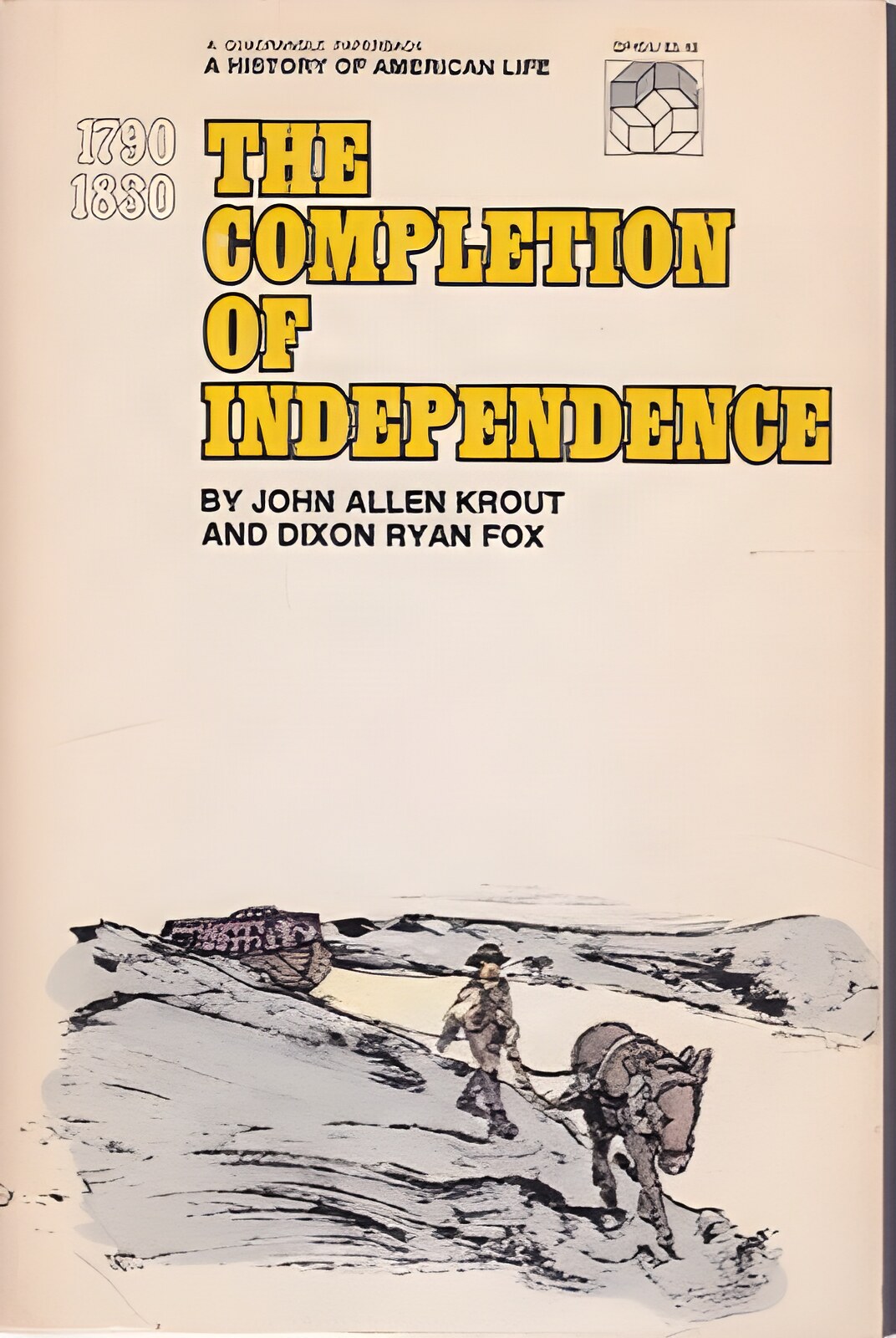
Softcover. Chicago, Quadrangle, reprint, 1971, Book: Very Good, Dust Jacket: None, Softcover, 487 pages. This "Early National" period, one of yearning adolescence in the life of the nation, is the subject of this study which shows how the United States went about winning economic and cultural independence from Europe to match the political emancipation gained by the Revolution.
Softcover. Italy, Leo S. Olschki Editore, 1st, 2002, Book: Very Good, Dust Jacket: Very Good, Softcover in a dust jacket, 313 pages. The first complete collection of all that is conserved of the correspondence that endured for more than thirty years between two great scholars of 16th century religious toleration. The ample introduction and detailed erudite comments accompanying each letter provide precious information on four decades of American and European historiography on the 16th century. Name on cover
Hardcover. NY, Princeton Architectural Press, 1st, 2015, Book: Very Good, Dust Jacket: Very Good, Hardcover in a bright, unclipped dust jacket, 224 pages. The Dakota is arguably the best-known residential address in the world, home to dozens of New York City's most famous artists, performers, and successful executives. The rare sale of an apartment there, usually at jaw-dropping prices, is newsworthy, as is the financial and architectural health of the building itself, a landmark in every sense of the word. The first true luxury apartment house built in New York City, more than 130 years ago, the Dakota is still the gold standard against which all other apartment buildings are weighed. Historian Andrew Alpern tells the fascinating story of how the Dakota came to be, how Singer sewing magnate Edward Clark dared to build an apartment building luxurious enough to coax the city's wealthy from their mansions downtown for ultra-modern living on what was then the swamplands of the Upper West Side. Redrawn plans of the entire building, published here for the first time, show how Clark created apartments glamorous enough that they made living under a shared roof as acceptable in Manhattan as it already was in Europe's grand capitals, forever revolutionizing apartment life in New York City.
Hardcover. Boston, Little, Brown and Company, 1st US, 1945, Book: Very Good, Dust Jacket: None, Hardcover, red cloth with front and spine printed in black and gilt, 417 pages. This volume publishes his speeches, broadcasts, messages, statements, and letters made, sent, and issued between 22 February and 31 December 1944. A full and momentous year, 1944 included the Normandy invasion, the largest amphibious operation in history, which re-established the Allied military presence in German-occupied Europe. Light spotting to covers, otherwise clean.
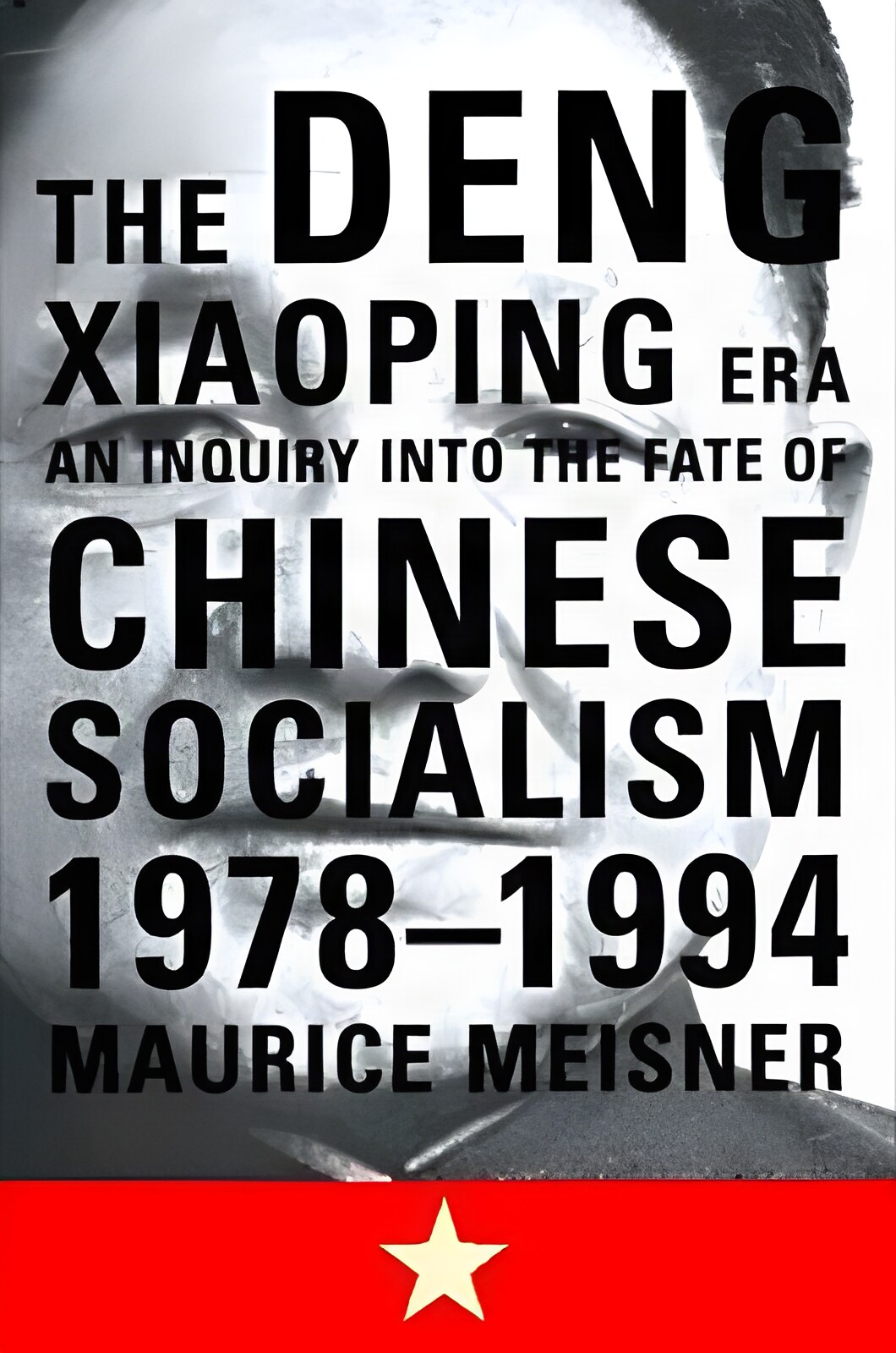
Hardcover. NY, Hill & Wang, 1st, 1996, Book: Very Good, Dust Jacket: Very Good, Hardcover in a bright, unclipped dust jacket, 544 pages. A bold new history of the Deng years by a leading China scholar. Unlike the former Soviet Union and the once "socialist" countries of Eastern Europe, China's current economy is now the world's second largest and most rapidly growing. Remarkably, today's problems in China are spiritual in nature-"a crisis of faith"-stemming from the clash between capitalist realities and lingering socialist values and ideas. "The Deng Xiaoping Era "is the story of that crisis and of Deng Xiaoping's promise of socialist democracy that has degenerated into bureaucratic capitalism. Maurice Meisner shows how the social contract between the Chinese Communist Party and the people was grossly violated by the Deng regime, and why capitalism has emerged as the dynamic force in today's socioeconomic and cultural life. Now, after more than a decade of capitalist reforms, he argues that Chinese spiritual malaise is deepening with the brutal suppression of the 1989 Democracy Movement and its politically repressive aftermath. This is an indispensable study of contemporary Chinese history-from the Chinese Revolution and the founding of the Maoist state to the establishment of the Deng regime and the social consequences of Deng's reforms-as well as a formidable analysis of the failure of the world's greatest socialist experiment. Clean copy.
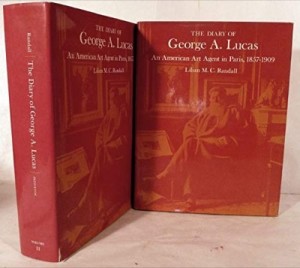
Hardcover. Princeton NJ, Princeton University Press, 1st, 1979, Book: Very Good, Dust Jacket: Very Good, Two volume set. Matching gold cloth boards with titles in gold on spine, in bright dust jackets. Transcribed and with Introduction by Lilian M.C. Randall. B&w illustrations of the sculptures, paintings, drawings and etchings that Lucas dealt with while in Europe. Double-column English text. Provides an extraordinary archive for historians and dealers. Provides a hugely empirical database for prices paid and commissions issued to artists, dealers, and craftsmen. George A. Lucas's acquaintances include Daumier, Cassatt, Whistler and Barye, among many, many others. Volume Two is given over wholly to Lucas's daily diary, which ran for an extraordinary length of time. Volume 1: xv [2], 3-148 pages.; Volume 2: iv [ii], 3-965 pages. DUE TO WEIGHT, DOMESTIC SHIPPING ONLY.
Hardcover. NY, Alfred A. Knopf, 1st, 1935, Book: Very Good, Dust Jacket: None, Hardcover, maroon cloth with gilt lettering on spine, pages 415-797, plus index. Volume 2 ONLY. No dust jacket. Name on front fly leaf otherwise a clean, bright copy.
Hardcover. NY, Alfred A. Knopf, 1st, 1935, Book: Very Good, Dust Jacket: None, Hardcover, maroon cloth with gilt lettering on spine, 414 pages. Volume 1 ONLY. No dust jacket. Name on front fly leaf otherwise a clean, bright copy.
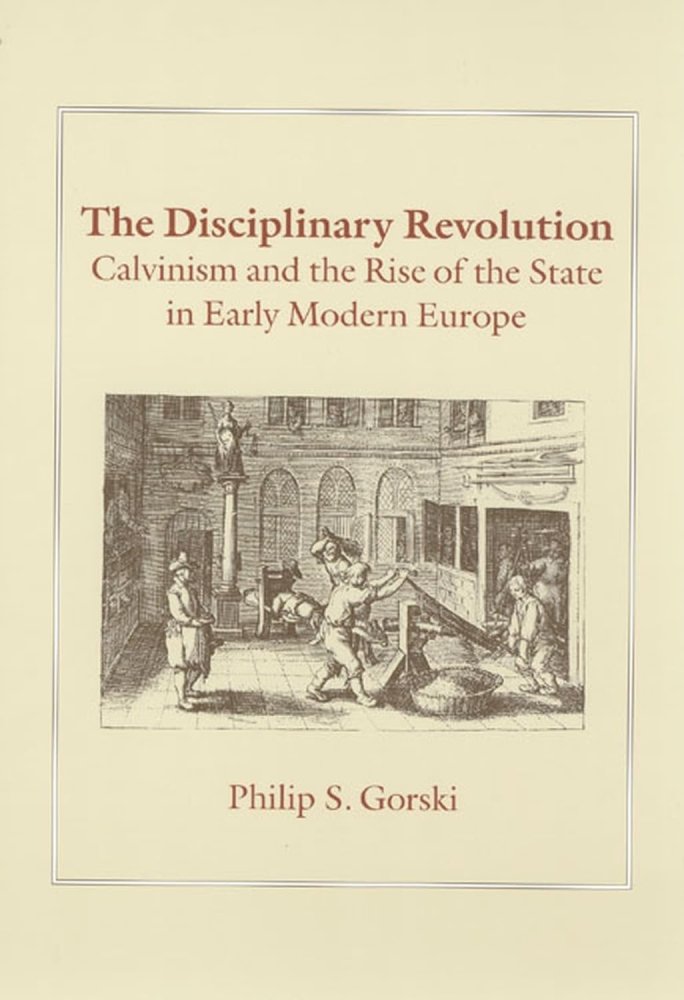
Softcover. University of Chicago Press, reprint, 2010, Book: Very Good, Dust Jacket: None, Softcover, 249 pages. What explains the rapid growth of state power in early modern Europe? While most scholars have pointed to the impact of military or capitalist revolutions, Philip S. Gorski argues instead for the importance of a disciplinary revolution unleashed by the Reformation. By refining and diffusing a variety of disciplinary techniques and strategies, such as communal surveillance, control through incarceration, and bureaucratic office-holding, Calvin and his followers created an infrastructure of religious governance and social control that served as a model for the rest of Europe--and the world. Clean, bright copy.
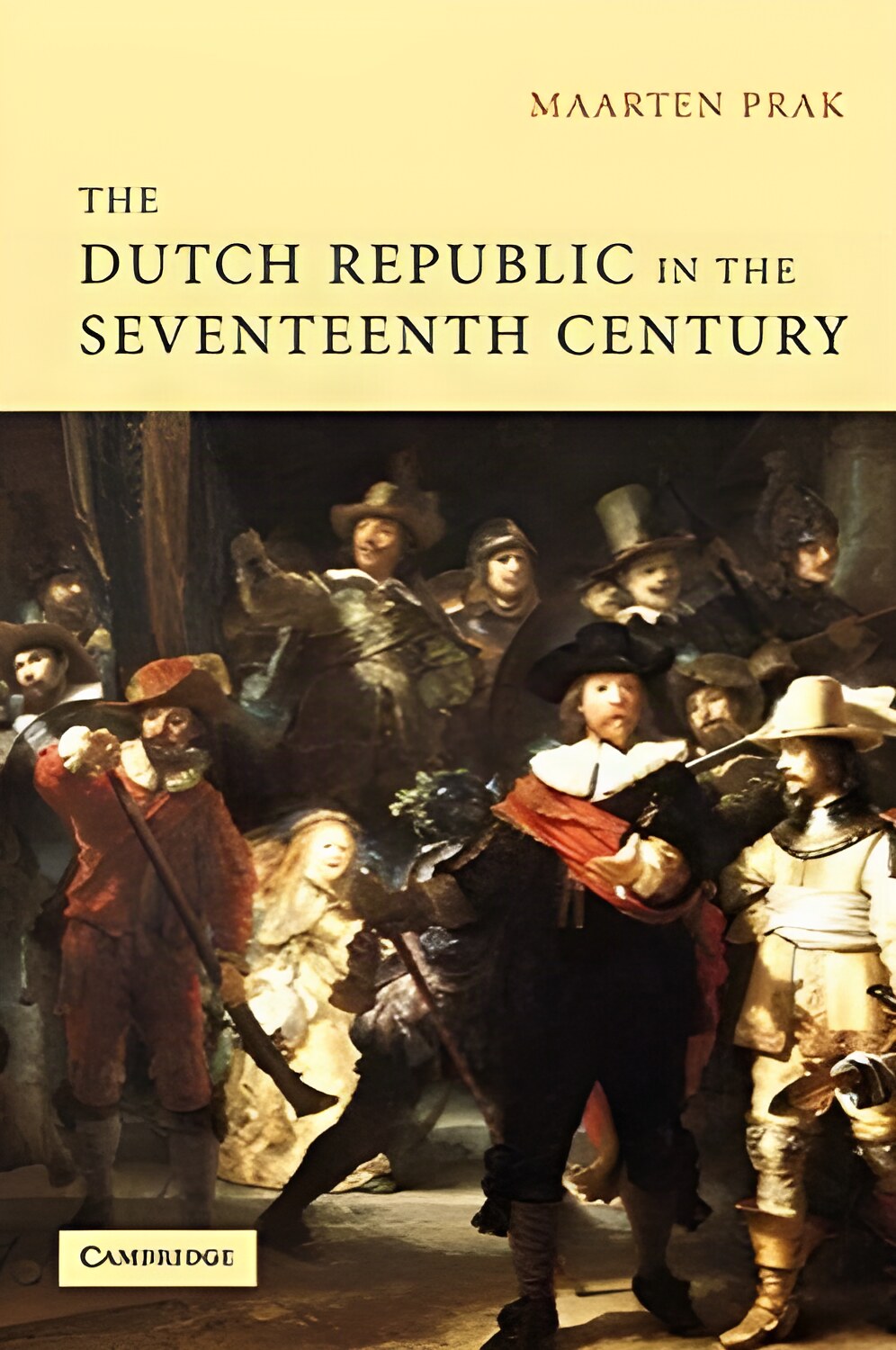
Softcover. UK, Cambridge University Press, 1st, 2005, Book: Very Good, Dust Jacket: None, Softcover, 317 pages, b&w illustrations. Translated from the Dutch by Diane Webb. "Rembrandt, Hals and Vermeer are still household names, even though they died over three hundred years ago. In their lifetimes they witnessed the extraordinary consolidation of the newly independent Dutch Republic and its emergence as one of the richest nations on earth. As one contemporary wrote in 1673: the Dutch were 'the envy of some, the fear of others, and the wonder of all their neighbours'. During the Dutch Golden Age, the arts blossomed and the country became a haven of religious tolerance. However, despite being self-proclaimed champions of freedom, the Dutch conquered communities in America, Africa and Asia and were heavily involved in both slavery and the slave trade on three continents." Clean copy.
Hardcover. NY, New York University Press, 1st, 1992, Book: Good, Dust Jacket: Very Good, Hardcover in a bright dust jacket, 240 pages. Under the influence of European historians, scholarship about the Dutch in America has generally emphasized what was derived from the urban and merchant character of the Netherlands, particularly the single province of Holland in the seventeenth century. But it was among the farmers of New York and New Jersey, according to David Steven Cohen, rather than the urban merchants of Albany and New York City, that a distinctive Dutch-American regional subculture arose, thrived, and survived through the end of the nineteenth century. By examining the life of the early emigrant Dutch settlers, the author constructs a picture of their culture through the farmhouses they built, the landscapes they cultivated, and the tools and equipment they used, relating it all to the structure of their families, their folklore, and folklife. It was in the second quarter of the eighteenth century, according to Cohen, that a change occurred in the culture of the Dutch in America by which they became Dutch-American, and the most striking material evidence of this transformation was in the development of a new type of farmhouse, which began to replace those still traceable to the Netherlands.Thirty black-and-white illustrations. Many pages with light pencil notations.
Softcover. London, Penguin Books , reprint, 2020, Book: Very Good, Dust Jacket: None, Softcover, 553 pages. The Europeans is richly enthralling, panoramic cultural history of nineteenth-century Europe, told through the intertwined lives of three remarkable people: a great singer, Pauline Viardot, a great writer, Ivan Turgenev, and a great connoisseur, Pauline's husband Louis. Their passionate, ambitious lives were bound up with an astonishing array of writers, composers and painters all trying to make their way through the exciting, prosperous and genuinely pan-European culture that came about as a result of huge economic and technological change. This culture - through trains, telegraphs and printing - allowed artists of all kinds to exchange ideas and make a living, shuttling back and forth across the whole continent from the British Isles to Imperial Russia, as they exploited a new cosmopolitan age. Clean copy.
Hardcover. London, Conway Maritime Press, 1st, 1995, Book: Very Good, Dust Jacket: Very Good, Hardcover in a bright dust jacket, 264 pages, many b&w illustrations. The editor of this volume has created a fascinating and coherent narrative which describes the development of the sailing ship in both northern and southern Europe from mediaeval times through to the renaissance. Amongst the contributors are R Morton Nance, H H Brindley and Geoffrey Callender who might be viewed as the very fathers of modern maritime research. Beautifully written and clearly illustrated with the original line drawings, these extracts will come as a revelation to modern-day enthusiasts and historians, and represent a valuable reference tool for all those with an interest in the age of sail. Clean copy.
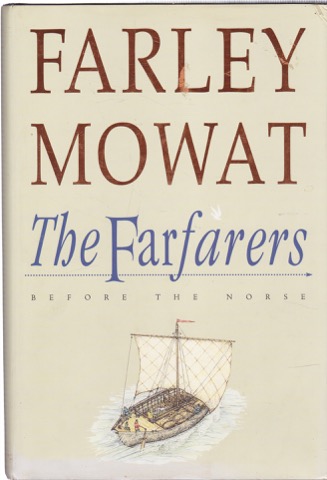
Hardcover. Toronto, Key Porter Books, 2nd pr., 1998, Book: Very Good, Dust Jacket: Very Good, Hardcover in a lightly worn dust jacket, 377 pages. SIGNED BY MOWAT on the title page. Blue endpaper maps, b&w photo illustrations. chronology. notes. After years of research, sparked by his discovery of roofless ruins in Hudson Bay, Farley Mowat presents a speculative history of the first Europeans in North America and a challenge to the presently held notion that the Vikings were the first to inhabit northern Canada. Carbon dating placed these ruins hundreds of years before the Vikings landed in Newfoundland, but the conventional accepted historical theory could offer no explanation for them. Mowat`s search led him to Scotland and the Northern Isles where he discovered ruins that resembled those he had seen on the other side of the Atlantic. He painstakingly researched early historical accounts from Roman and pre-Roman times for answers and was able to reconstruct the story of a forgotten people.
Hardcover. NY, Thomas Y. Crowell, Book Club, Book: Very Good, Dust Jacket: Good, Hardcover in a lightly worn dust jacket, 768 pages, b&w illustrations. Clean copy.
Hardcover. Princeton NJ, Princeton University Press, 4th pr., 2007, Book: Very Good, Dust Jacket: Very Good, Hardcover in a bright dust jacket, 553 pages including index, b&w illustrations. Roughly half the world's population speaks languages derived from a shared linguistic source known as Proto-Indo-European. But who were the early speakers of this ancient mother tongue, and how did they manage to spread it around the globe? Until now their identity has remained a tantalizing mystery to linguists, archaeologists, and even Nazis seeking the roots of the Aryan race. The Horse, the Wheel, and Language lifts the veil that has long shrouded these original Indo-European speakers, and reveals how their domestication of horses and use of the wheel spread language and transformed civilization. Clean, bright copy.
Softcover. Urbana, University of Illinois Press, 1st, 2005, Book: Very Good, Dust Jacket: None, Softcover, 277 pages. Starting in the 1980s, anti-immigrant discourse shifted away from the "color" of immigrants to their religion and culture. It focused in particular on newcomers from Muslim countries--people feared both as terrorists and as products of tribal societies with values opposed to those of secular Western Europe. Leo Lucassen tackles the question of whether the integration process of these recent immigrants will fundamentally differ in the long run (over multiple generations) from the experiences of similar immigrant groups in the past. For comparison, Lucassen focuses on "large and problematic groups" from Western Europe's past (the Irish in the United Kingdom, the Poles in Germany, and the Italians in France) and demonstrates a number of structural similarities in the way migrants and their descendants integrated into these nation states. Lucassen emphasizes that the geographic sources of the "threat" have changed and that contemporaries tend to overemphasize the threat of each successive wave of immigrants, in part because the successfully incorporated immigrants of the past have become invisible in national histories. Clean copy.
Hardcover. NY, Oxford University Press, 1st, 1985, Book: Very Good, Dust Jacket: Very Good, Hardcover in a bright, unclipped dust jacket, 364 pages. The Second World War's Pacific conflict was one of the most complex in history. It embrioled peoples from opposite sides of the globe; it was fought in China, across the expanses of the Pacific, and in the jungles of Southeast Asia; and it was devastating in its consequences for civilians and servicemen alike. It saw the first use of atomic weapons, hastened the end of the Western empires in Asia, and marked America's rise to the position of the most powerful nation in the world. Christopher Thorne, whose previous studies of the war in the Pacific have become landmarks in the field, here weaves together both the entire network of international relations surrounding the war and the impact the war had on all the societies involved--Indian as well as American; Australian and New Zealand as well as Japanese; Korean, Chinese, and Southeast Asian as well as British, French, and Dutch. The Issue of War draws on material gathered over many years in the Far East, Western Europe, and the U.S.--material including wartime films, broadcasts, and newspapers,as well as countless private and offical papers. Representing a synthesis of military, diplomatic, economic, intellectual, and social history, it not only places the war in the context of developments before 1941, but illuminates various patterns that cut across the familiar distinctions between Asia and the West or between Japan and the Allies. Name on front fly leaf, otherwise clean.
Hardcover. Pinceton NJ, Princeton University Press, 1st, 1979, Book: Very Good, Dust Jacket: Very Good, Hardcover in a bright dust jacket, 315 pages. The Western ideal of individualism had a pervasive influence on the culture of the Meiji period in Japan (1868-1912). Janet Walker argues that this ideal also had an important influence on the development of the modern Japanese novel. Focusing on the work of four late Meiji writers, she analyzes their contribution to the development of a type of novel whose aim was the depiction of the modern Japanese individual. Professor Walker suggests that Meiji novels of the individual provided their readers with mirrors in which to confront their new-found sense of individuality. Her treatment of these novels as confessions allows her to discuss the development of modern Japanese literature and "the modern literary self" both in themselves and as they compare their prototypes and analogues in European literature. The author begins by examining the evolution of a literary concept of the inner self in Futabatei Shimei's novel Ukigumo (The Floating Clouds), Kitamura Tokoku's essays on the inner life, and Tayama Katai's I-novel Futon (The Quilt). She devotes the second half of her book to Shimazaki Toson, the Meiji novelist who was most influenced by the ideal of individualism. Here she traces Toson's development of a personal ideal of selfhood and analyzes in detail two examples of the lengthy confessional novel form that he created as a vehicle for its expression.
Softcover. Jerusalem, Gefen Publishing House, reprint, Book: Very Good, Dust Jacket: None, Softcover. Masha Greenbaum delivered an excellent history of the Jews of Lithuania, from the earliest years, beginning in the 9th Century through WWII. The author discusses the many kings, their courts, the Church, the various social strata and their relationships with the Jews throughout the centuries. Politics, religion, areas of livelihood and social standing are detailed in each time period. Clean, like new.
Hardcover. NY/Oxford UK, Berghahn Books, 1st, 2003, Book: Very Good, Dust Jacket: None, Hardcover, 232 pages, pictorial boards. Milena Jesenska, born in Prague in 1896, is most famous as one of Franz Kafka's great loves. Although their relationship lasted only a short time, it won the attention of the literary world with the 1952 publication of Kafka's letters to Milena. Her own letters did not survive. Later biographies showed her as a fascinating personality in her own right. In the Czech Republic, she is remembered as one of the most prominent journalists of the interwar period and as a brave one: in 1939 she was arrested for her work in the resistance after the German occupation of Bohemia and Moravia, and died in Ravensbruck concentration camp in 1944. It is estimated that Jesenska wrote well over 1,000 articles but only a handful have been translated into English. In this book her own writings provide a new perspective on her personality, as well as the changes in Central Europe between the two world wars as these were perceived by a woman of letters. The articles in this volume cover a wide range of topics, including her perceptions of Kafka, her understanding of social and cultural changes during this period, the threat of Nazism, and the plight of the Jews in the 1930s. Clean copy.
Hardcover. NY, WW Norton, 1wst, 2014, Book: Very Good, Dust Jacket: Very Good, Hardcover in a bright, unclipped dust jacket. A landmark collection, spanning ninety years of U.S. history, of the never-before-published diaries of George F. Kennan, America's most famous diplomat. Through it all, Kennan kept a diary. Spanning a staggering eighty-eight years and totaling over 8,000 pages, his journals brim with keen political and moral insights, philosophical ruminations, poetry, and vivid descriptions. In these pages, we see Kennan rambling through 1920s Europe as a college student, despairing for capitalism in the midst of the Depression, agonizing over the dilemmas of sex and marriage, becoming enchanted and then horrified by Soviet Russia, and developing into America's foremost Soviet analyst. But it is the second half of this near-century-long record--the blossoming of Kennan the gifted author, wise counselor, and biting critic of the Vietnam and Iraq wars--that showcases this remarkable man at the height of his singular analytic and expressive powers, before giving way, heartbreakingly, to some of his most human moments, as his energy, memory, and finally his ability to write fade away.

 "The Dakota: A History of the World's Best-Known Apartment Buildingby: Andrew Alpern/Christopher Gray/Kenneth Grant (Photos)")






 "The Europeans: Three Lives and the Making of a Cosmopolitan Cultureby: Orlando Figes")
 "The Evolution of the Sailing Ship, 1250-1580by: Basil Greenhill (Editor)")


 "The Hungarian Revolutionby: George Mikes")
 "The Immigrant Threat: The Integration of Old and New Migrants in Western Europe since 1850 by: Leo Lucassen")
 "The Japanese Novel of the Meiji Period and the Ideal of Individualismby: Janet A. Walker")
 "The Jews of Lithuania: A History of a Remarkable Community 1316-1945by: Greenbaum, Masha")

 "The Kennan Diariesby: George F Kennan and Frank Costigliola")