Softcover. West Lafayette IN, Purdue University Press , 1st, 2020, Book: Very Good, Dust Jacket: None, Softcover, 529 pages, b&w illustrations. Eva and Otto is a true story about German opposition and resistance to Hitler as revealed through the early lives of Eva Lewinski Pfister (1910-1991) and Otto Pfister (1900-1985). It is an intimate and epic account of two Germans-Eva born Jewish, Otto born Catholic-who worked with a little-known German political group that resisted and fought against Hitler in Germany before 1933 and then in exile in Paris before the German invasion of France in May 1940. After their improbable escapes from separate internment and imprisonment in Europe, Eva obtained refuge in America in October 1940 where she worked to rescue other endangered political refugees, including Otto, with the help of Eleanor Roosevelt. As revealed in recently declassified records, Eva and Otto later engaged in different secret assignments with the US Office of Strategic Services (OSS) in support of the Allied war effort. Despite their vastly different backgrounds, Eva and Otto gave each other hope and strength as they acted upon what they understood to be an ethical duty to help others threatened by fascism. The book provides a sobering insight into the personal risks and costs of a commitment to that duty. Their unusually beautiful writing-directed to each other in diaries and correspondence during two long periods of wartime separation-also reveals an unlikely and inspiring love story.
Softcover. Durham NC, Duke University Press, 2nd pr., 1994, Book: Very Good, Dust Jacket: None, Softcover, 342 pages. In Extended Play, one of the country's most innovative music writers conducts a wide-ranging tour through the outer limits of contemporary music. Over the course of more than twenty-five portraits, interviews, and essays, John Corbett engages artists from lands as distant as Sweden, Siberia, and Saturn. With a special emphasis on African American and European improvisers, the book explores the famous and the little known, from John Cage and George Clinton to Anthony Braxton and Sun Ra. Employing approaches as diverse as the music he celebrates, Corbett illuminates the sound and theory of funk and rap, blues and jazz, contemporary classical, free improvisation, rock, and reggae. Using cultural critique and textual theory, Corbett addresses a broad spectrum of issues, such as the status of recorded music in postmodern culture, the politics of self-censorship, experimentation, and alternativism in the music industry, and the use of metaphors of space and madness in the work of African American musicians. He follows these more theoretically oriented essays with a series of extensive profiles and in-depth interviews that offer contrasting and complementary perspectives on some of the world's most creative musicians and their work. Clean copy.
Softcover. London/NY, Bloomsbury, 1st, 2016, Book: Very Good, Dust Jacket: None, Softcover, 346 pages. This volume makes the key essays of 19th century French philosopher Felix Ravaisson available in English for the first time. In recent years, Ravaisson has emerged as an extremely important and influential figure in the history of modern European philosophy. The volume contains the classic 1838 dissertation Of Habit, studies of Pascal, Stoicism and the wider history of philosophy together with the Philosophical Testament that he left unfinished when he died in 1900. The volume also features Ravaisson's work in archaeology, the history of religions and art-theory, and his essay on the Venus de Milo, which occupied him over a period of twenty years after he noticed, when hiding the statue behind a false wall in a dingy Parisian basement during the Franco-Prussian war, that it had previously been presented in a way that deformed its original bearing and meaning. Clean copy.
Hardcover. London, Routledge & Kegan Paul, 1961, Book: Very Good, Dust Jacket: None, Hardcover, blue cloth with gilt lettering on spine, 498 pages, b&w illustrations. I: The Growth of Ties of Independence. II: Social Classes and Political Organization. Translated from the French by L. A. Manyon. Foreword by M. M. Postan. In this outstanding and magisterial work, which has introduced generations of readers to the feudal period, Marc Bloch treats feudalism as living, breathing force in Western Europe from the ninth to the thirteenth century. Bloch said that his goal in writing Feudal Society was to go beyond the technical study a medievalist would typically write and 'dismantle a social structure.' For Bloch, history is a process of constant evolution and he brilliantly describes the slow process by which feudal societies turned into what would become nation states. A tour de force of historical writing, Feudal Society is essential reading for anyone interested in both Western Europe's past and present. Mild soil to covers otherwise a clean, tight copy.
Hardcover. St. Paul MN, Voyageur Press, 1st, 2007, Book: Very Good, Dust Jacket: Very Good, Hardcover in a bright dust jacket, 208 pages. The days of full service gas stations are a thing of the past, but it will never be forgotten in the minds of many petroliana enthusiasts. Catchy slogans, architecture and color schemes of the station itself, incentives and giveaways, stamps, and clever advertising from the first few decades of the twentieth century until today's fully stocked convenience stores are covered in this book. The highly detailed text also offers a glimpse of what was happening to the gas stations in Europe and serves wonderfully as a comparison with the gas stations in North America at the time. Vintage photography and advertisements provide a wonderful visual trip back in time to the days of being greeted by a smiling attendant every time you pulled into the gas station. Clenn copy.
Hardcover. NY, Da Capo Press, 1st, 2012, Book: Very Good, Dust Jacket: Very Good, Hardcover in a bright, unclipped dust jacket. When the wartime 1944 presidential election campaign geared up late that spring, Franklin D. Roosevelt had already occupied the White House years longer than any other president. Sensing likely weakness, the Republicans mounted an energetic and expensive campaign, hitting hard at FDR's liberal domestic policies and the war's ongoing cost. Despite gravely deteriorating health, FDR and his feisty running mate, the unexpected Harry Truman, campaigned vigorously against young governor Thomas E. Dewey of New York and old-line Ohio governor John Bricker. Roosevelt's charm and wit, as well as the military successes in Europe and the Pacific, contributed to his sweeping electoral victory. But the hard-fought campaign would soon take its toll on America's only four-term president. Preeminent historian and biographer Stanley Weintraub recaptures FDR's striking "last campaign" and the year's momentous events, from the rainy city streets where Roosevelt, his legs paralyzed by polio since 1922, rode in an open car, to the battlefronts where the commander-in-chief's forces were closing in on Hitler and Hirohito.
Hardcover. London, Frances Lincoln, 1st, 2015, Book: Very Good, Dust Jacket: None, Hardcover, 10 x 12", 304 pages. Over 300 color plates. A comprehensive document of the talent and artistry that went into the design and making of European fashion images from the second half of the sixteenth century to the first half of the twentieth century. No dust jacket issued.
Hardcover. Boston, Little, Brown and Company, 1st, 1970, Book: Good, Dust Jacket: Fair, 272 pages. Hardcover. Red cloth cover with gilt titles. Black & white illustrations. Dust jacket with tears, creasing along edges. Clean, unmarked pages.
Hardcover. NY, Harcourt Brace and Company, 1st US, 1939, Book: Very Good, Dust Jacket: Good, Hardcover in a lightly worn and faded dust jacket, 366 pages. A collection of speeches by the Right Hon. Anthony Eden in the House of Commons and elsewhere through 1938, which offers a criticism on British foreign policy. Previous owner's inscription on front fly leaf, otherwise clean.
Hardcover. New York , Arno Press, reprint, 1976, Book: Very Good, Dust Jacket: None, 295 pages, green cloth covers with gilt lettering. Previous owner's stamp on front fly leaf, otherwise clean, very good. Facsimile reprint of the 1933 edition. Scarce in hardcover.
Hardcover. Canberra/London, Australian Institute of Aboriginal Studies/Gerald Duckworth and Co., 1st, 1977, Book: Very Good, Dust Jacket: Very Good, Oblong hardcover in a lightly worn dust jacket. 486 pages with illustrations in b&w and color. From Papers presented to a symposium at the 1974 meeting of the Australian Institute of Aboriginal Studies. A look at the art works of Aboriginal Australia from the past & present, as seen in the context of the art of prehistoric Europe. An attempt at an ethnographic juxtaposition of prehistoric art. Clean copy.
hardcover. London, Sinclair-Stevenson , 1st, 1994, Book: Very Good, Dust Jacket: Very Good, 293 pages. Hardcover. INSCRIBED BY AUTHOR on title page. Gilt titles on spine. Illustrated end papers and paste downs. Clean, unmarked copy with only minor wear to dust jacket. Novel based on a true piece of colonial history when 25 European radicals met on Lamu planning to travel inland & set up a Utopia on Mount Kenya.
Chicago, University of Chicago Press, 1st, 1989, Book: Very Good, Dust Jacket: Very Good, Hardcover, 256 pages. Lavishly illustrated, this volume is the first complete catalog of the French daguerreotype collection of the International Museum of Photography at George Eastman House. Janet E. Buerger uses this remarkable collection of images to produce a cultural history of the daguerreotype's most learned following--an elite group of mid-nineteenth-century intellectuals who sought to understand and develop the usefulness, potential, and beauty of this camera image. This varied group, including entrepreneurs, painters, scientists, and historians, enables Buerger to trace the influence of photography into virtually every area of nineteenth-century European intellectual life.
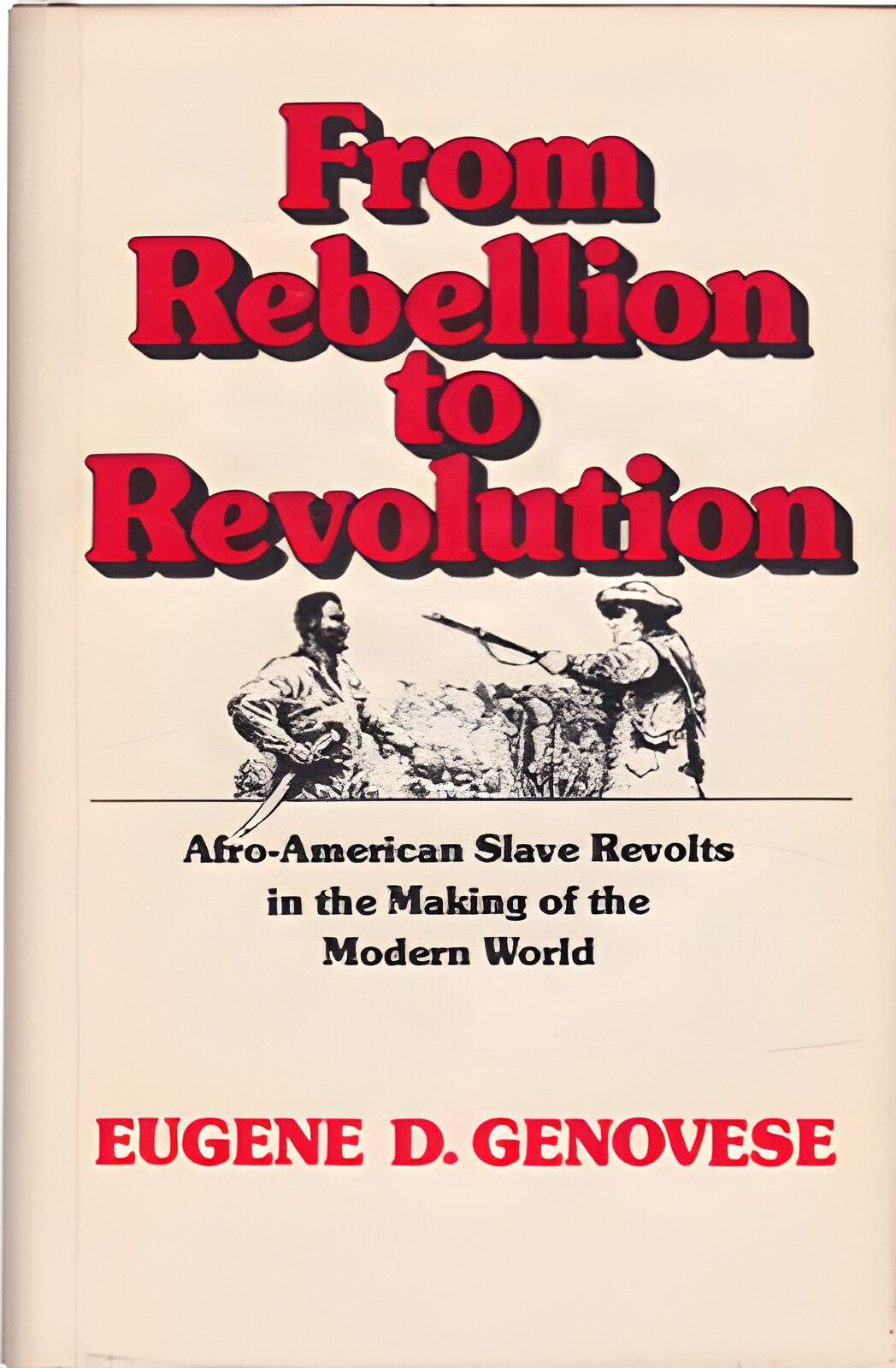
Hardcover. Baton Rouge, Louisiana State University , 1st, 1979, Book: Very Good, Dust Jacket: Very Good, Hardcover in a bright dust jacket, 173 pages. This work is a brief look at worldwide slave revolts in the 17th through 19th centuries, emphasizing their interrelations with European power struggles, which gave rebels hope of finding weak spots in the defenses of the slave powers. The French Revolution also had an influence on slave revolts, but the canny European powers used indigenous peoples to suppress slave revolts (e.g., native Americans) and took advantage of African ethnic divisions as well. American slaves stood little chance of revolt and were under constant surveillance from Southerners, who coward in fear after the successful rebellions in the Caribbean, particularly in Hispaniola, and after Nat Turner and John Brown's efforts. Genovese also brings up religion's double-edged sword: one side used to pacify slaves and the other side to inspire them to break their chains. In short, this scholarly treatise is thought-provoking as well as informative and ends with an inspirational quote from one of Frederick Douglass's lectures. Name on front fly leaf, otherwise a clean copy.
Hardcover. New Haven CT, Yale University Press, 1st, 2015, Book: Very Good, Dust Jacket: Very Good, Hardcover in a bright dust jacket. 282 pages, illustrated in b&w and color. Although Surrealism is usually associated with the 1920s and 1930s, it remained a vital force in Paris throughout the postwar period. This important book offers the first detailed account in English of the trajectory of the French Surrealists in the 1950s and 1960s, giving particular emphasis to the significance of myth for the group in its reception of science fiction and its engagement with fantastic art. Offering new readings of the art and writings of the later generation of Surrealists, Gavin Parkinson demonstrates how they were connected to the larger cultural and political debates of the time. Whereas earlier Surrealist art and writing drew on psychoanalytic practices, younger Surrealists engaged with contemporary issues, ideas, and themes of the period of the Cold War and Algerian War such as parapsychology, space travel, fantastic art, increasing consumerism in Europe, emerging avant-gardes such as Nouveau Realisme, and the rise of the whole genre of conspiracy theory, from Nazi occultism to flying saucers. Futures of Surrealism offers a unique perspective on this brave new world. Clean copy.
Softcover. Baltimore, Clearfield, reprint, 2000, Book: Very Good, Dust Jacket: None, Softcover, light gray wrappers, 278 pages. This volume consists of abstracts of genealogical data from four of New York's earliest newspapers--the New-York Gazette (1726-1744) and the New-York Weekly Journal (1733-1751), the two earliest city papers, and the New-York Mercury and the Weekly Mercury (1752-1783). These newspapers were originally produced as weeklies and usually consisted of four pages, with occasional supplementary issues. Their subject matter encompassed essays, treatises, parliamentary proceedings, governors' messages, European and West Indian news, shipping news, incidents culled from other newspapers, and many advertisements. In this volume of abstracts may be found items yielding information concerning marriage, birth, death, age, status, place of residence, and place of origin, covering, in all, the years 1726 through most of 1783. Treatment is not confined to New York, for among individuals mentioned are those from all the other colonies, especially New Jersey (which had no newspaper in the colonial period), New England, Pennsylvania, and Maryland.
Hardcover. Boston, Houghton Mifflin, 1st, 1994, Book: Very Good, Dust Jacket: Very Good, Hardcover on a lightly worn dust jacket, 641 pages, b&w illustrations. This is the first full-length biography of the man historian Michael Beschloss calls the keystone figure in the history of American intelligence. Allen Dulles (1893-1969) served in the Office of Strategic Services in Europe during WWII and was named director of the Central Intelligence Agency in 1953, serving under Eisenhower and Kennedy. In an overlong, sometimes tedious narrative, Grose (Israel in the Mind of America) describes how Dulles oversaw the firm establishment of the CIA in the Washington power structure during the Eisenhower years (his older brother, John Foster Dulles, was then the Secretary of State), only to be forced out after the CIA's failure in the 1961 Bay of Pigs invasion. Later appointed to the Warren Commission to investigate the assassination of President Kennedy, Dulles became its most diligent member, according to Grose, and a supporter of the view that Lee Harvey Oswald acted alone. Other controversial issues explored include Dulles's exploitation of ex-Nazi Reinhard Gehler's spy network in the early years of the Cold War, and whether JFK authorized, or even knew about, CIA attempts to liquidate Castro. Grose delves unenlighteningly into Dulles's shortcomings as husband and father; he kept a mistress or two and spent little time at home.
Hardcover. NY, Harper, 1st, 2014, Book: Very Good, Dust Jacket: Very Good, Hardcover in a bright, unclipped dust jacket. A major historical biography of George C. Marshall--the general who ran the U.S. campaign during the Second World War, the Secretary of State who oversaw the successful rebuilding of post-war Europe, and the winner of the Nobel Peace Prize--and the first to offer a complete picture of his life. While Eisenhower Patton, Bradley, Montgomery, MacArthur, Nimitz, and Leahy waged battles in Europe and the Pacific, one military leader actually ran World War II for America, overseeing personnel and logistics: Chief of Staff of the U.S. Army from 1939 to 1945, George C. Marshall. This interpretive biography of George C. Marshall follows his life from his childhood in Western Pennsylvania and his military training at the Virginia Military Institute to his role during and after World War II and his death in 1959 at the age of seventy-eight. It brings to light the virtuous historical role models who inspired him, including George Washington and Robert E. Lee, and his relationships with the Washington political establishment, military brass, and foreign leaders, from Harry Truman to Chiang Kai-shek. It explores Marshall's successes and failures during World War II, and his contributions through two critical years of the emerging Cold War--including the transformative Marshall Plan, which saved Western Europe from Soviet domination, and the failed attempt to unite China's nationalists and communists.
Hardcover. New York , George H. Doran, unknown, ND, Book: Very Good, Dust Jacket: None, Hardcover, red cloth, 249 pages. Faint foxing to edges, Previous owner's inscription on front end paper, else a clean, tight copy.
Hardcover. New York, Other Press, 1st US, 2002, Book: Very Good, Dust Jacket: Very Good, 584 pages. Hardcover with dust jacket. A very clean, unmarked copy with only minor wear to dust jacket edges. SIGNED BY AUTHOR ON TITLE PAGE. Publishers note within. A tight copy.
Hardcover. NY, Metropolitan Museum of Art, 1st, 1986, Book: Very Good, Dust Jacket: Very Good, Hardcover, 499 pages, profusely illustrated throughout with 562 plates, including 148 in full color. Previous owner's blind stamp on front end paper. Light shelf-wear to dust jacket, else a clean, tight copy.
Hardcover. New York, Harry N. Abrams, Inc., 1st English, 1972, Book: Very Good, Dust Jacket: Very Good, 527 pages. Hardcover. Previous owners name and brief inscription on front endpaper. Illustrated with black & white photographs. Dust jacket with light wear. Clean, tight copy.
Hardcover. San Marino CA, The Huntington Library, 1st, 2015, Book: Very Good, Dust Jacket: Very Good, Hardcover in a bright dust jacket, 326 pages, b&w illustrations. Early modern European governments and their subjects had difficulty agreeing to laws governing behavior on the sea - an environment that featured watery borders, rampant piracy, the threat of free trade, and the large-scale transportation of human cargo. The essays in this volume explore how the exploitation of the oceans changed the institution of slavery, long-distance trade, property crime, the environment, literature, and memory from medieval times to the nineteenth century. Clean copy.
Hardcover. New York, Tim Duggan Books, 1st, 2017, Book: Very Good, Dust Jacket: Very Good, Hardcover, 248 pages, b&w illustrations. The first great portrait photographer, a pioneering balloonist, the first person to take an aerial photograph, and the prime mover behind the first airmail service, Nadar was one of the original celebrity artist-entrepreneurs. A kind of 19th-century Andy Warhol, he knew everyone worth knowing and photographed them all, conferring on posterity psychologically compelling portraits of Manet, Sarah Bernhardt, Delacroix, Daumier and countless others--a priceless panorama of Parisian celebrity. Born Gaspard-Felix Tournachon, he adopted the pseudonym Nadar as a young bohemian, when he was a budding writer and cartoonist. Later he affixed the name Nadar to the facade of his opulent photographic studio in giant script, the illuminated letters ten feet tall, the whole sign fifty feet long, a garish red beacon on the boulevard. Nadar became known to all of Europe and even across the Atlantic when he launched "The Giant," a gas balloon the size of a twelve-story building, the largest of its time. With his daring exploits aboard his humongous balloon (including a catastrophic crash that made headlines around the world), he gave his friend Jules Verne the model for one of his most dynamic heroes.

 "Eva and Otto: Resistance, Refugees, and Love in the Time of Hitlerby: Pfister, Tom; Pfister, Kathy; Pfister, Peter")



 "Fill'er Up!: The Great American Gas Station by: Tim Russell")
 "Final Victory: FDR's Extraordinary World War II Presidential Campaignby: Stanley Weintraub")
 "Fine Art of Fashion Illustration, The by: Robinson, Julian and Gracie Calvey")
 "First Lady of the Renaissance - A Biography of Isabella d'Esteby: Meyer, Edith Patterson")

 "Foreign Bonds; An Autopsy - A Study of Defaults and Repudiations of Government Obligationsby: Winkler, Max")
 "Form in Indigenous Art. Schematisation in the art of Aboriginal Australia and prehistoric Europeby: Ucko, Peter J. (Ed.)")
 "Freeland (SIGNED COPY)by: Jones, J. D. F.")


 "French Daguerreotypesby: Buerger, Janet E.")
 "Futures of Surrealism Myth, Science Fiction and Fantastic Art in France 1936-1969 by: Parkinson, Gavin")
 "Genealogical Data from Colonial New York Newspapers: A Consolidation of Articles from The New York Genealogical and Biographical Record by: Kenneth Scott (Compiler)")
 "Gentleman Spy: The Life of Allen Dullesby: Peter Grose")
 "George Marshall: A Biographyby: Debi Unger / Irwin Unger /Stanley Hirshson")
 "German Fury in Belgium, Theby: Mokveld, L.")
 "Good People in an Evil Time (SIGNED COPY)by: Broz, Svetlana")
 "Gothic and Renaissance Art in Nuremberg, 1300-1550by: Metropolitan Museum of Art, New York.")
 "Gothic Sculpture in France 1140-1270by: Sauerlander, Willibald/Max Hirmer")

 "Great Nadar, The: The Man Behind the Cameraby: Begley, Adam")